
Summary of French conquest of Algeria (1830-1847)
Unveiling the untold story of France's conquest of Algeria.
How Do You Learn Best?
Learn by Reading
Immerse yourself in the 10-minute visual lesson for a comprehensive understanding of the topic.
Learn by Reviewing
Jump directly to the key facts, timeline, and vocabulary lists to build a solid foundation of details.
Learn by Doing
Challenge yourself! Jump straight into the interactive games to learn by trial, error, and discovery.
French conquest of Algeria in 10 Minutes
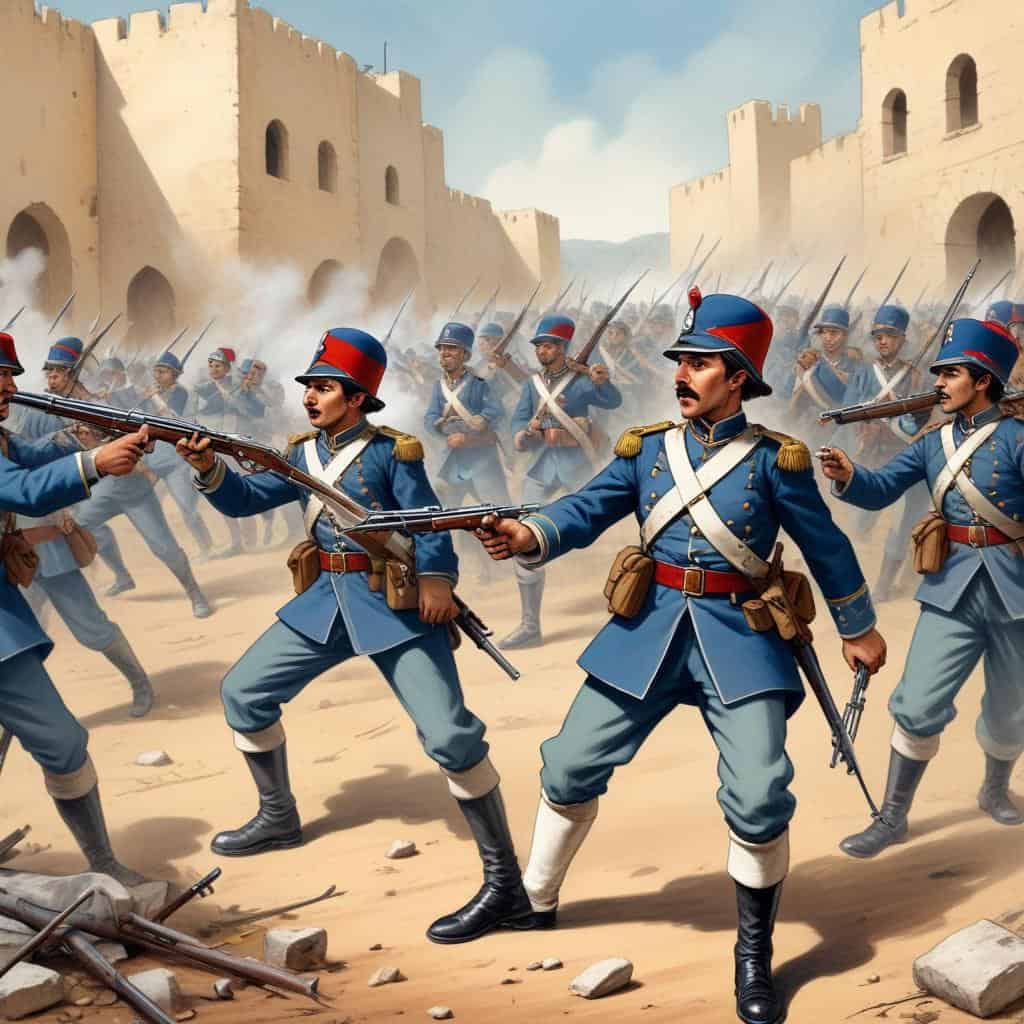
Introduction

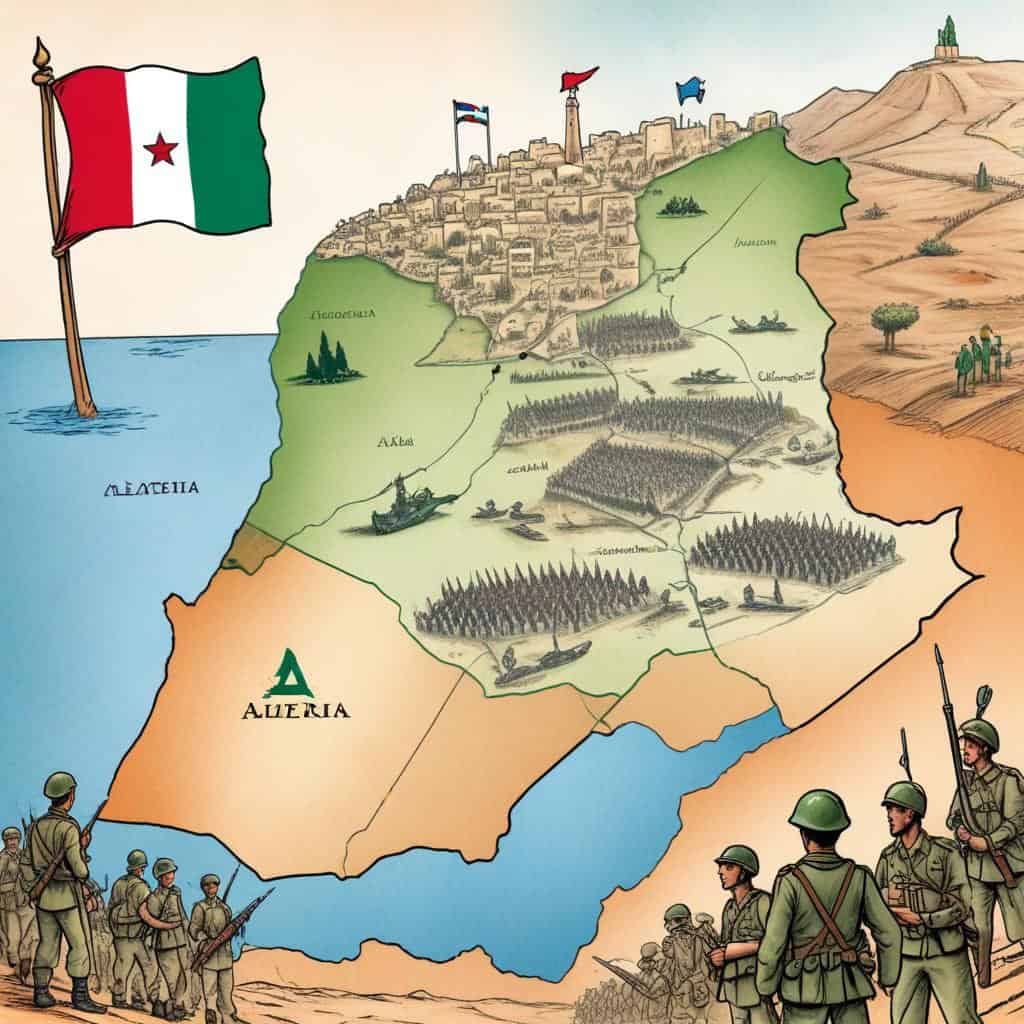

Charles X
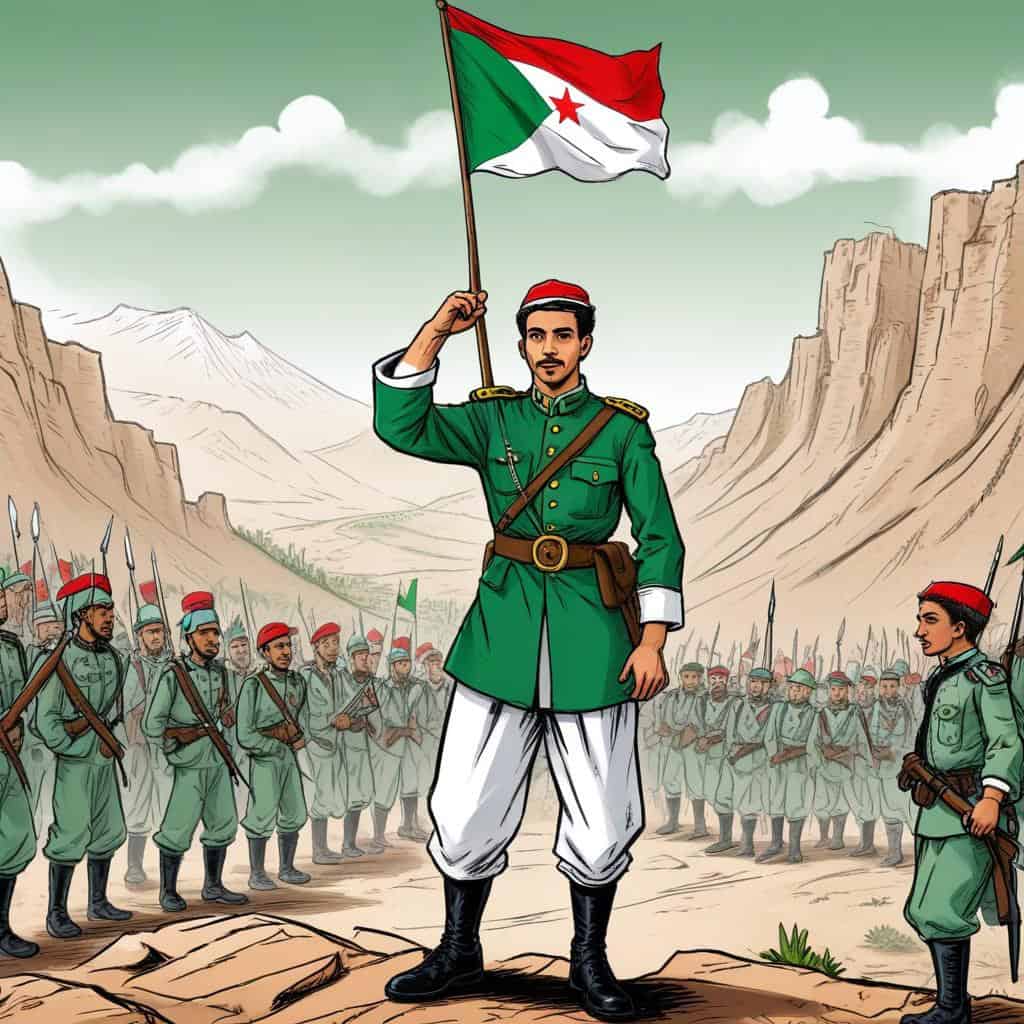
Abdelkader El Djezairi
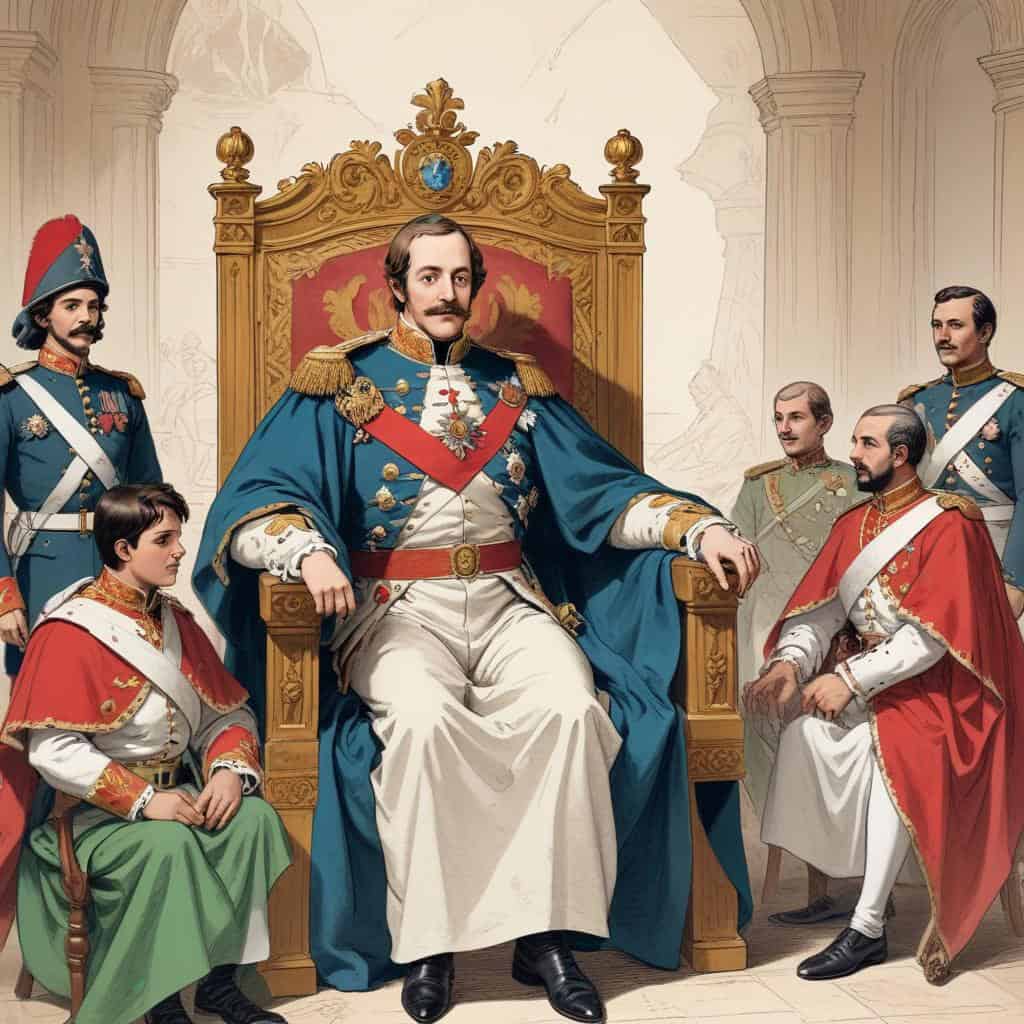
Louis-Philippe I

General Thomas-Robert Bugeaud

Emir Abd al-Qadir

The Invasion of Algiers

The Treaty of Tafna

The French Expansion

The Battle of Isly

The Surrender of Abdelkader

The Conquest of Constantine

The Establishment of French Colonies

The Resistance of the Kabyle People

The Impact on Algerian Society

The Legacy of French Occupation
Lesson Details & Resources
In a Nutshell
- What: French conquest of Algeria (1830-1847)
- When: 1830-1847
- Who: French forces, Algerian resistance fighters, Abd al-Qadir
- Outcome: French colonization of Algeria, leading to a significant impact on the region’s culture and history
Famous Figures in the French conquest of Algeria
-
Napoleon III
Napoleon III was the Emperor of the French who initiated the colonization of Algeria in 1830.
-
Abdelkader El Djezairi
Abdelkader El Djezairi, also known as Emir Abdelkader, was an Algerian religious and military leader who led a resistance against the French conquest.
-
Emir Abdelkader
Emir Abdelkader was a prominent Algerian leader who fought against the French invasion and later became a symbol of resistance.
-
Ahmed Bey
Ahmed Bey was the last ruler of Constantine before it fell to the French in 1837.
-
Thomas-Robert Bugeaud
Thomas-Robert Bugeaud was a French general who played a key role in the conquest of Algeria, serving as the Governor-General of the colony.
Timeline of French conquest of Algeria
French invasion of Algiers
Capture of Algiers by the French forces
Treaty of Desmichels signed between France and the Dey of Algiers
Establishment of French control over Algiers
Occupation of Oran by French forces
Battle of Staoueli resulting in French victory
French capture of Tlemcen
French capture of Constantine
Treaty of Tafna signed between France and Emir Abdelkader
French capture of Mascara
French capture of Biskra
French capture of Laghouat
French capture of Saida
French capture of Oujda
Battle of Isly resulting in French victory
French capture of Macta
French capture of Tlemcen
Emir Abdelkader surrenders to the French
French conquest of Kabylie
French annexation of Algeria
Vocabulary List
- Colonization
- The French colonization of Algeria began in 1830 when they invaded the country and eventually established control over it.
- Resistance
- The Algerian people put up a strong resistance against the French conquest, leading to several years of conflict.
- Occupation
- After the French successfully conquered Algeria, they began to occupy the land and impose their rule on the local population.
- Indigenous
- The indigenous people of Algeria faced discrimination and marginalization under French rule.
- Assimilation
- The French attempted to assimilate the Algerian population into French culture, leading to tensions and conflict.
Key Facts
This is the information used in the fact matching game
- The French conquest of Algeria began in 1830 with the invasion of Algiers.
- The French saw Algeria as an important strategic location due to its proximity to Europe and its resources.
- The French faced strong resistance from the Algerian population, led by Emir Abdelkader.
- The French used a combination of military force and diplomacy to gradually gain control over Algeria.
- In 1842, the French signed the Treaty of Tafna with Emir Abdelkader, temporarily ending hostilities.
- The French gradually expanded their control over Algeria, establishing a colonial administration.
- The French introduced new laws and institutions in Algeria, imposing their culture on the local population.
- The French also implemented a policy of land confiscation, dispossessing Algerians of their traditional lands.
- The French faced several uprisings and revolts from the Algerian population throughout the conquest.
- In 1847, the French launched a major military campaign to crush the resistance in Algeria.
- The French victory in 1847 marked the effective end of the Algerian resistance to colonial rule.
- The French conquest of Algeria laid the groundwork for over a century of colonial rule in the country.
- The French implemented policies of assimilation and discrimination against the Algerian population during their rule.
- The Algerian War of Independence began in 1954 as a result of decades of French colonial rule.
- The French withdrawal from Algeria in 1962 marked the end of colonial rule in the country.
- The legacy of the French conquest of Algeria continues to impact the country's politics, society, and culture to this day.
- Algeria gained independence from France in 1962 after a long and bloody war of liberation.
- The French conquest of Algeria is often cited as a key example of European imperialism in Africa.
- The French colonization of Algeria had a lasting impact on the country's demographics and social structure.
- The French conquest of Algeria is a controversial and sensitive topic in both French and Algerian history.
Analysis & Significance
Immediate Consequences
The French conquest of Algeria in 1830 led to the immediate collapse of the ruling Ottoman regime and the establishment of French colonial rule in the region. This resulted in widespread resistance from the Algerian population and a protracted conflict that lasted for over a decade.
Long-Term Impact
The French conquest of Algeria had lasting effects on the region, shaping its politics, economy, and society for years to come. It led to the displacement of thousands of Algerians, the imposition of French culture and language, and the exploitation of Algeria’s resources for the benefit of France.
Cultural Significance Today
The legacy of the French conquest of Algeria continues to be a contentious issue, with many Algerians viewing it as a symbol of colonial oppression and a violation of their national identity. The events of this period have influenced modern Algerian society and politics, shaping the country’s struggle for independence and its ongoing efforts to reclaim its cultural heritage.
French conquest of Algeria Games


Take Your Learning Offline
Want a convenient, print-ready study guide for this lesson? Become a Memory Wizards Pro member to unlock the downloadable " Memory Scrolls" for this topic and our entire library!
- ✓ Complete Vocabulary Lists
- ✓ Key Facts & Timelines
- ✓ Beautifully Formatted for Print & Mobile