
Summary of The Tudors
Uncover the fascinating secrets and scandals of Tudor royalty.
How Do You Learn Best?
Learn by Reading
Immerse yourself in the 10-minute visual lesson for a comprehensive understanding of the topic.
Learn by Reviewing
Jump directly to the key facts, timeline, and vocabulary lists to build a solid foundation of details.
Learn by Doing
Challenge yourself! Jump straight into the interactive games to learn by trial, error, and discovery.
The Tudors in 10 Minutes
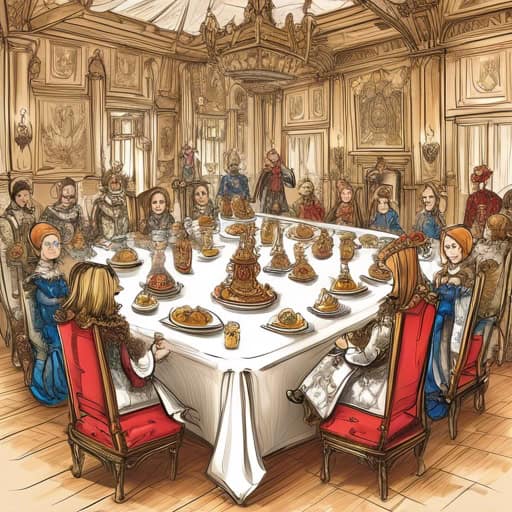
Introduction
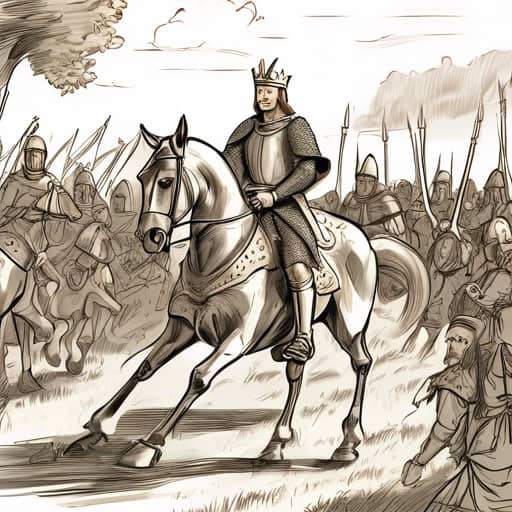
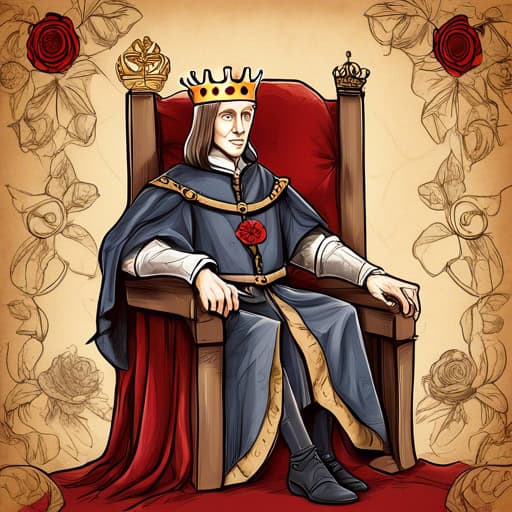
King Henry VII
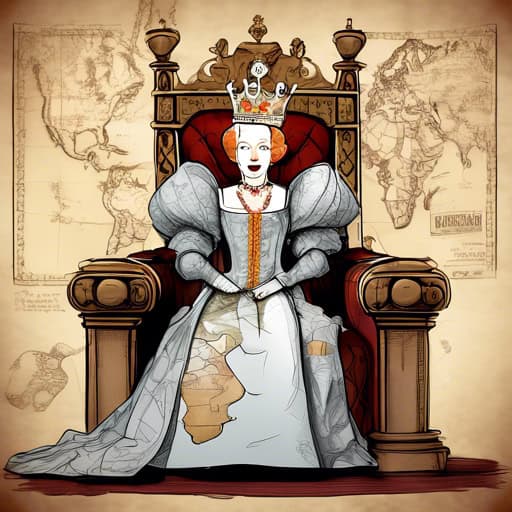
Queen Elizabeth I
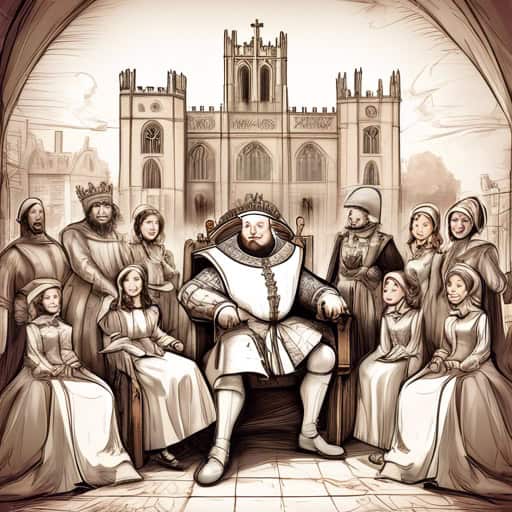
King Henry VIII
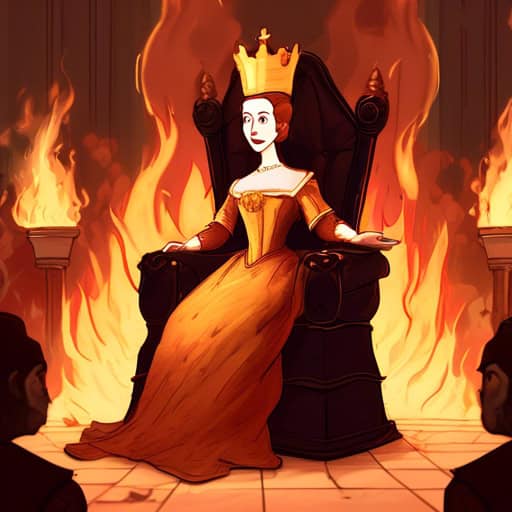
Queen Mary I
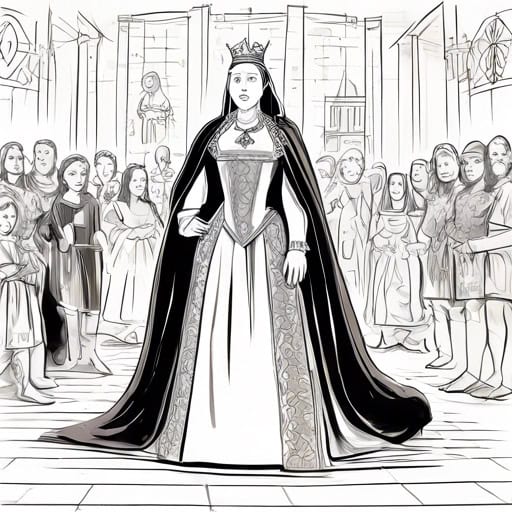
Queen Catherine of Aragon

1. Henry VII Becomes King

2. Henry VIIIs Six Wives

3. The Birth of Elizabeth I

4. Mary Is Reign

5. The Spanish Armada
6. The Reign of Edward VI

7. The Tudor Succession

8. The Legacy of the Tudors

9. Tudor Family Tree

10. Remembering the Royal Tudors
Lesson Details & Resources
In a Nutshell
- What: A period in English history known for the reign of the Tudor dynasty.
- When: 1485-1603
- Who: Monarchs such as Henry VII, Henry VIII, Mary I, and Elizabeth I.
- Outcome: The Tudor period saw significant religious and political changes in England, including the English Reformation and the defeat of the Spanish Armada.
Famous Figures in the The Tudors
-
Henry VIII
Henry VIII was the King of England from 1509 until his death in 1547. He is well-known for his six marriages and his role in the English Reformation.
-
Anne Boleyn
Anne Boleyn was the second wife of Henry VIII and the mother of Elizabeth I. She was executed on charges of adultery and treason.
-
Elizabeth I
Elizabeth I, also known as the 'Virgin Queen,' was the daughter of Henry VIII and Anne Boleyn. She became one of England's most successful monarchs.
-
Mary I
Mary I, also known as 'Bloody Mary,' was the daughter of Henry VIII and Catherine of Aragon. She is notorious for her persecution of Protestants.
-
Thomas Cromwell
Thomas Cromwell was a key figure in the English Reformation and served as Henry VIII's chief minister. He played a significant role in the break with Rome.
-
Thomas More
Thomas More was an English lawyer, philosopher, and statesman. He opposed the English Reformation and was executed for treason.
-
Catherine of Aragon
Catherine of Aragon was the first wife of Henry VIII. Their divorce led to the English Reformation and the establishment of the Church of England.
-
Jane Seymour
Jane Seymour was the third wife of Henry VIII and the mother of Edward VI. She died shortly after giving birth to their son.
-
Anne of Cleves
Anne of Cleves was the fourth wife of Henry VIII. Their marriage was annulled after a short period, and she became known as the 'Flanders Mare.'
-
Edward VI
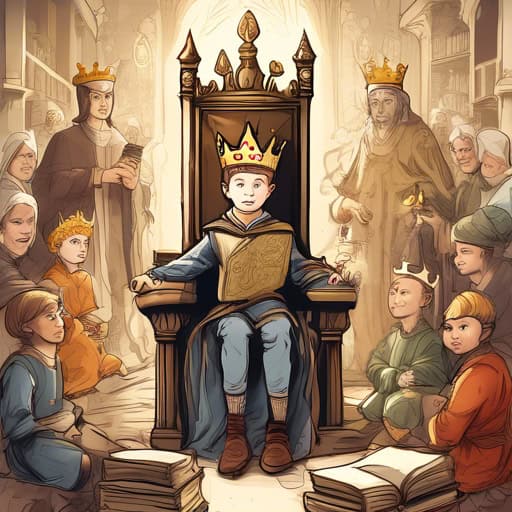
Edward VI was the son of Henry VIII and Jane Seymour. He became the King of England at the age of nine and ruled until his death at fifteen.
Timeline of The Tudors
Henry VII becomes King of England
Henry VIII is born
Henry VIII marries Catherine of Aragon
Henry VIII becomes King of England
Henry VIII's divorce from Catherine of Aragon
Henry VIII marries Anne Boleyn
The Act of Supremacy declares Henry VIII as the head of the Church of England
Anne Boleyn is executed
Henry VIII marries Jane Seymour
Henry VIII's son Edward VI is born
Jane Seymour dies
Henry VIII marries Anne of Cleves
Henry VIII divorces Anne of Cleves
Henry VIII marries Catherine Howard
Catherine Howard is executed
Henry VIII marries Catherine Parr
Henry VIII dies
Edward VI becomes King of England
Edward VI dies
Lady Jane Grey becomes Queen of England
Mary I becomes Queen of England
Vocabulary List
- Henry VIII
- King of England during the Tudor period, known for his six marriages and the English Reformation
- Anne Boleyn
- Second wife of Henry VIII, executed on charges of adultery and treason
- Elizabeth I
- Daughter of Henry VIII and Anne Boleyn, known as the 'Virgin Queen,' one of the most influential monarchs in English history
- Mary I
- Daughter of Henry VIII and Catherine of Aragon, known as 'Bloody Mary' for her persecution of Protestants
- Edward VI
- Son of Henry VIII and Jane Seymour, became king at a young age and played a significant role in the English Reformation
- Catherine of Aragon
- First wife of Henry VIII, divorced by Henry due to her failure to produce a male heir
- Thomas Cromwell
- Chief minister to Henry VIII, instrumental in the English Reformation and the dissolution of the monasteries
- The Spanish Armada
- A fleet of Spanish ships sent by Philip II to invade England in 1588, defeated by the English navy
- The Dissolution of the Monasteries
- A process initiated by Henry VIII to seize the assets and disband Catholic monasteries in England
- The English Reformation
- A series of events in the 16th century that led to the establishment of the Church of England and the break from Catholicism
Key Facts
This is the information used in the fact matching game
- Henry VIII was the second Tudor king of England.
- The Tudor dynasty lasted for 118 years, from 1485 to 1603.
- Henry VIII had six wives: Catherine of Aragon, Anne Boleyn, Jane Seymour, Anne of Cleves, Catherine Howard, and Catherine Parr.
- Anne Boleyn, the second wife of Henry VIII, was executed on charges of adultery, incest, and treason.
- Henry VIII broke away from the Catholic Church and established the Church of England.
- Elizabeth I, daughter of Henry VIII and Anne Boleyn, was one of the most successful Tudor monarchs.
- The Tudor period is known for its flourishing of arts and literature, including the works of William Shakespeare.
- Mary I, also known as 'Bloody Mary,' earned her nickname due to her persecution of Protestants during her reign.
- The Tudor rose, a combination of the white rose of York and the red rose of Lancaster, became the symbol of the Tudor dynasty.
- The Armada Portrait, depicting Elizabeth I, is one of the most famous paintings of the Tudor era.
- The Tudor era saw the expansion of England's naval power and exploration, including the voyages of Sir Francis Drake.
- The Dissolution of the Monasteries was a significant event during the reign of Henry VIII, leading to the closure of many monastic institutions.
- The Battle of Bosworth in 1485 marked the end of the Wars of the Roses and the beginning of the Tudor dynasty.
- Thomas Cromwell, a key figure in Henry VIII's reign, played a significant role in the English Reformation.
- The Field of Cloth of Gold was a grand meeting between Henry VIII and Francis I of France in 1520, showcasing their wealth and power.
- The Tudor monarchs faced several rebellions, including the Pilgrimage of Grace in 1536 and the Wyatt's Rebellion in 1554.
- The Tudor dynasty ended with the death of Elizabeth I in 1603, as she had no direct heirs.
- The Tudor period witnessed significant advancements in navigation and cartography.
- During the Tudor era, England experienced a cultural and intellectual Renaissance, inspired by the European Renaissance.
- The Tudor dynasty left a lasting impact on the English legal system, with reforms introduced by Henry VII and his successors.
Analysis & Significance
Immediate Consequences
The Tudors were a powerful and influential royal family in England during the 16th century. Their reign brought about significant changes in religion, politics, and society. The immediate consequences of the Tudor dynasty included the establishment of the Church of England, the dissolution of the monasteries, and the centralization of power in the monarchy.
Long-Term Impact
The Tudors left a lasting impact on English history, culture, and government. Their rule marked the beginning of the English Renaissance, a period of cultural and artistic flourishing. The Tudor era also saw the expansion of English influence abroad through exploration and colonization. Additionally, the Tudors laid the groundwork for the modern British monarchy and the development of a strong centralized government.
Cultural Significance Today
The Tudors continue to captivate our imagination today through books, movies, and television shows. Their legacy is remembered for its drama, intrigue, and larger-than-life personalities, such as Henry VIII and Elizabeth I. The Tudor era is also celebrated for its contributions to literature, architecture, and the arts, shaping the cultural landscape of England and beyond.
The Tudors Games


Take Your Learning Offline
Want a convenient, print-ready study guide for this lesson? Become a Memory Wizards Pro member to unlock the downloadable " Memory Scrolls" for this topic and our entire library!
- ✓ Complete Vocabulary Lists
- ✓ Key Facts & Timelines
- ✓ Beautifully Formatted for Print & Mobile