
Summary of Treaty of Etaples (1492)
Unravel the secrets of the Treaty of Etaples and its impact.
How Do You Learn Best?
Learn by Reading
Immerse yourself in the 10-minute visual lesson for a comprehensive understanding of the topic.
Learn by Reviewing
Jump directly to the key facts, timeline, and vocabulary lists to build a solid foundation of details.
Learn by Doing
Challenge yourself! Jump straight into the interactive games to learn by trial, error, and discovery.
Treaty of Etaples in 10 Minutes
Introduction

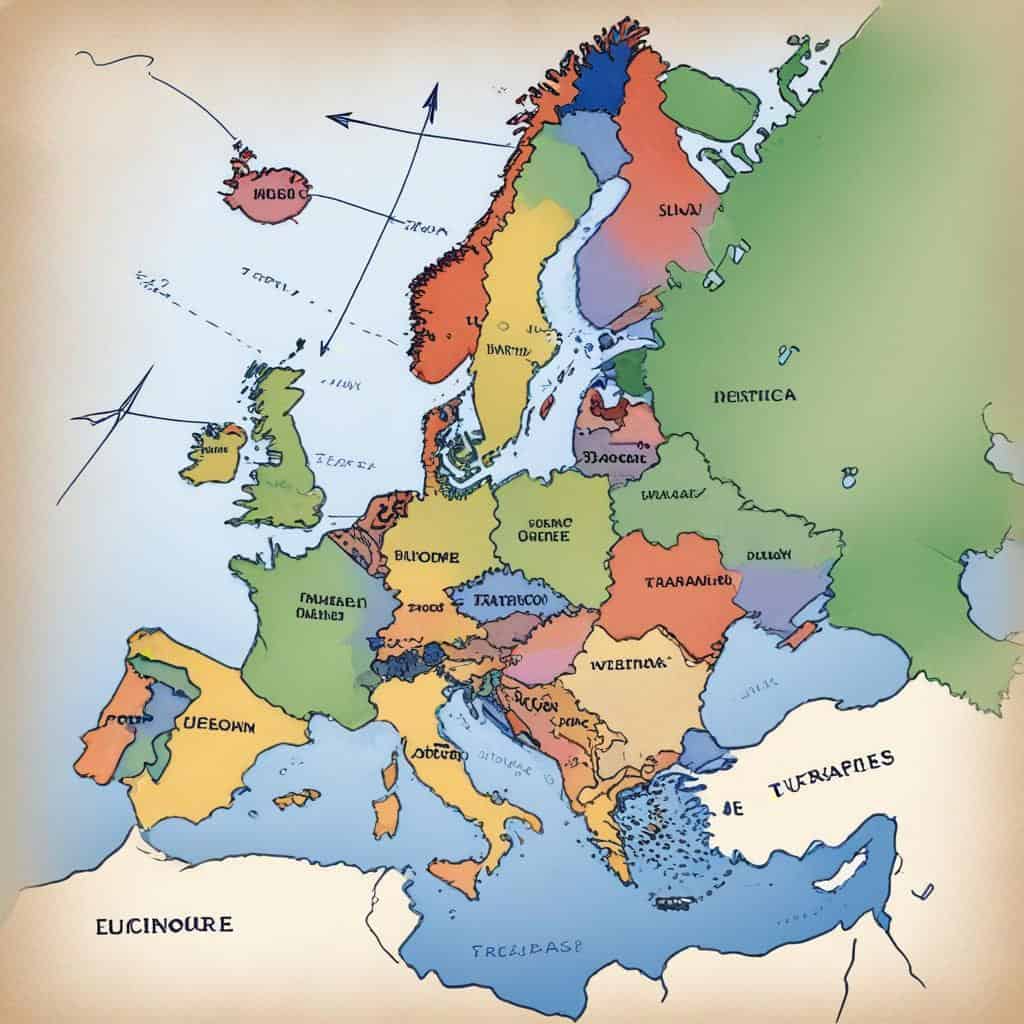

King Henry VII of England
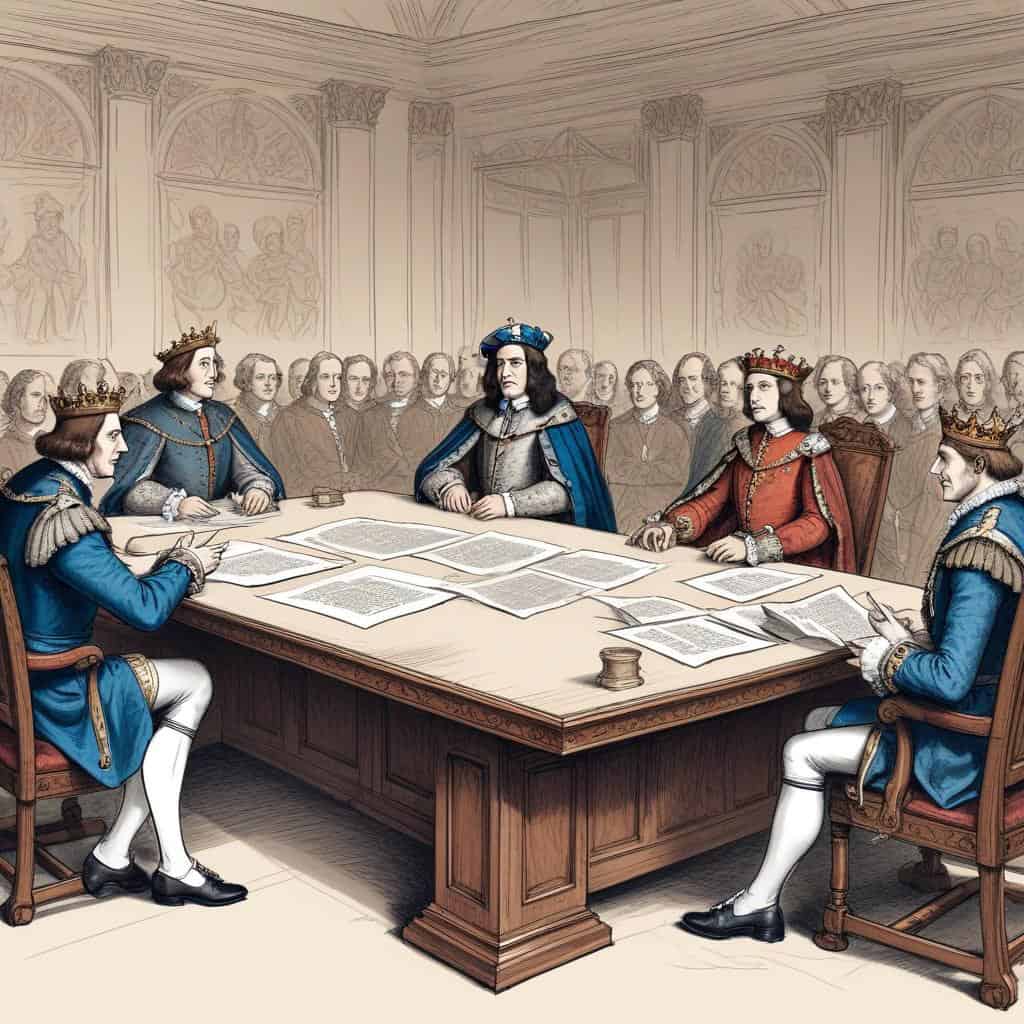
King Charles VIII of France
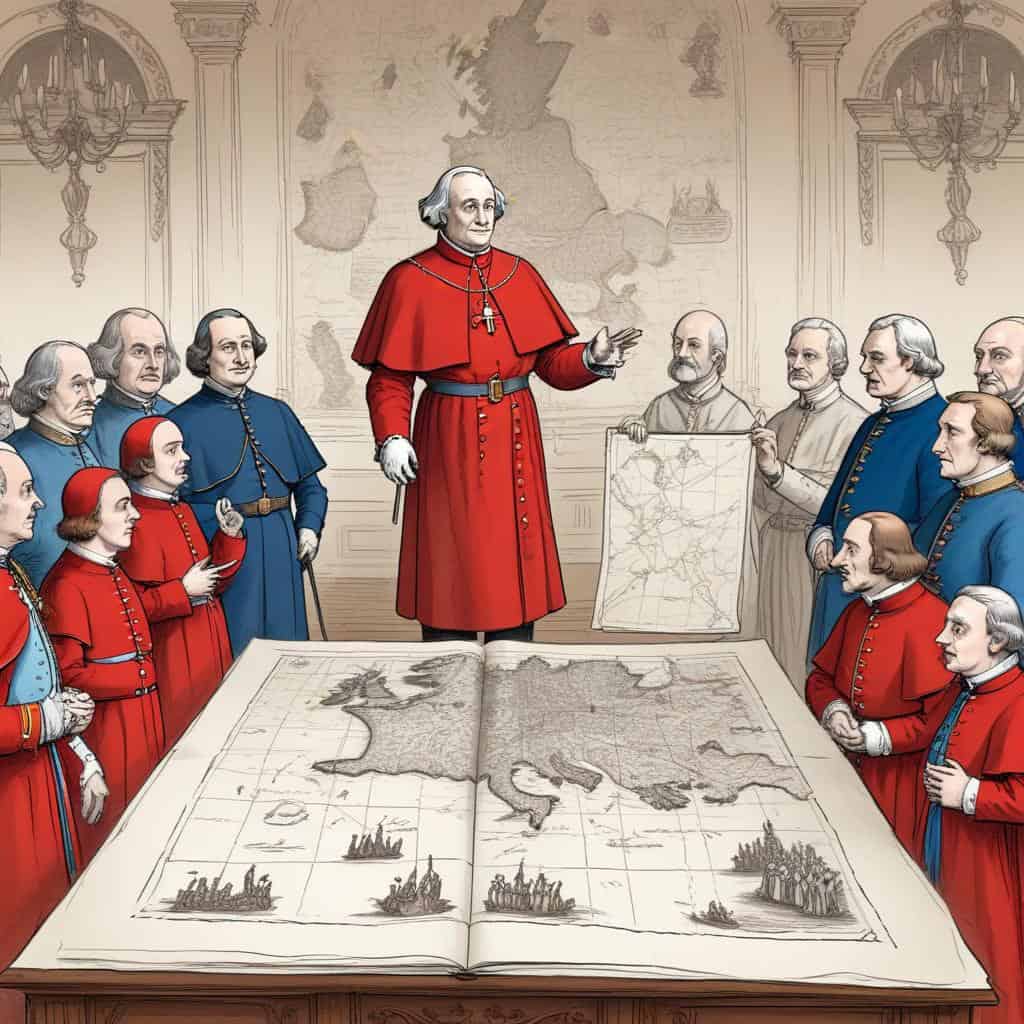
Cardinal Georges dAmboise

Sir Edward Poynings

1. Negotiations Begin

2. Terms of the Treaty

3. End of the War

4. Impact on England

5. Impact on France

6. Legacy of the Treaty

7. Long-Term Effects

8. Historical Significance

9. Modern Relevance

10. Conclusion of the Treaty
Lesson Details & Resources
In a Nutshell
- What: A treaty signed between England and France.
- When: 1492
- Who: King Henry VII of England and King Charles VIII of France.
- Outcome: Ended hostilities between England and France, securing peace for several years.
Famous Figures in the Treaty of Etaples
-
Henry VII of England
Henry VII of England was the reigning monarch of England during the signing of the Treaty of Etaples. He sought to secure peace with France and protect England's interests.
-
Charles VIII of France
Charles VIII of France was the King of France who signed the Treaty of Etaples with England. The treaty aimed to end the conflict between the two nations.
-
Anne of Brittany
Anne of Brittany was the Queen Consort of France and the Duchess of Brittany. She played a crucial role in the negotiations and was involved in securing the treaty.
-
Perkin Warbeck
Perkin Warbeck was a pretender to the English throne who posed a threat to Henry VII's rule. The Treaty of Etaples included provisions for the expulsion of Warbeck from France.
-
Treaty of Etaples negotiators
The negotiators of the Treaty of Etaples were diplomats and representatives from both England and France. Their efforts led to the successful conclusion of the treaty.
Timeline of Treaty of Etaples
Henry VII of England signs the Treaty of Etaples
End of the War of the League of Brittany
England agrees to withdraw its troops from France
England recognizes Charles VIII as the rightful King of France
France agrees to pay a yearly pension to England
France promises not to support any pretenders to the English throne
France agrees to stop supporting the rebellious pretender Perkin Warbeck
England agrees to return the town of Boulogne-sur-Mer to France
France agrees to pay compensation to England for damages caused during the war
England and France agree to a truce for seven years
Henry VII returns to England
Treaty ratified by the English Parliament
Treaty ratified by the French Estates-General
Treaty of Etaples officially proclaimed
Henry VII receives the first payment of the annual pension from France
England begins the process of withdrawing its troops from France
France starts making annual payments to England as per the treaty
England returns Boulogne-sur-Mer to France
Henry VII pardons Perkin Warbeck
Perkin Warbeck executed
Vocabulary List
- Treaty
- The Treaty of Etaples was a peace treaty signed between England and France.
- Etaples
- The treaty was named after the town of Etaples in northern France where it was signed.
- 1492
- The Treaty of Etaples was signed in the year 1492.
- England
- The Treaty of Etaples was signed between England and France to end hostilities between the two nations.
- France
- The Treaty of Etaples was signed between England and France to end hostilities between the two nations.
- Peace
- The Treaty of Etaples aimed to establish peace between England and France.
Key Facts
This is the information used in the fact matching game
- The Treaty of Etaples was signed on November 3, 1492.
- It was a peace treaty between England and France.
- The treaty ended the conflict known as the Italian Wars.
- It was negotiated by King Henry VII of England and King Charles VIII of France.
- England agreed to pay an annual pension to France as part of the treaty.
- The treaty allowed English troops to withdraw from France.
- France agreed to stop supporting English rebels.
- The treaty aimed to bring stability to the region after years of warfare.
- It confirmed the territorial gains made by France in previous conflicts.
- The treaty included a marriage agreement between the French king and Henry VII's daughter, Mary.
- The marriage agreement was later annulled.
- The treaty helped secure peace between England and France for several years.
- It marked the end of England's involvement in continental wars for some time.
- The Treaty of Etaples allowed Henry VII to focus on internal affairs and strengthening his reign.
- The peace treaty was highly beneficial for France, as it gained financial compensation and stability.
- The Treaty of Etaples contributed to a brief period of peace in Europe.
- The treaty was seen as a diplomatic success for Henry VII.
- Despite the treaty, tensions between England and France resurfaced in later years.
- The Treaty of Etaples is considered one of the major treaties of the late 15th century.
- It laid the foundation for future diplomatic relations between England and France.
Analysis & Significance
Immediate Consequences
The Treaty of Etaples in 1492 marked the end of hostilities between France and England, bringing a temporary peace to the region. It allowed both countries to focus on internal matters and avoid further bloodshed in the short term.
Long-Term Impact
The treaty had lasting effects on the balance of power in Europe, as it shifted alliances and influenced future conflicts. It also set a precedent for diplomatic negotiations and treaties between nations, shaping the way international relations were conducted in the centuries to come.
Cultural Significance Today
The Treaty of Etaples is remembered as a pivotal moment in European history, highlighting the importance of diplomacy in resolving conflicts. Its legacy continues to influence modern diplomacy and serves as a reminder of the enduring impact of historical agreements on global politics.
Treaty of Etaples Games


Take Your Learning Offline
Want a convenient, print-ready study guide for this lesson? Become a Memory Wizards Pro member to unlock the downloadable " Memory Scrolls" for this topic and our entire library!
- ✓ Complete Vocabulary Lists
- ✓ Key Facts & Timelines
- ✓ Beautifully Formatted for Print & Mobile