
Summary of Rule of Lady Jane Grey (1553)
Unravel the tragic tale of England's nine-day queen, Lady Jane Grey.
How Do You Learn Best?
Learn by Reading
Immerse yourself in the 10-minute visual lesson for a comprehensive understanding of the topic.
Learn by Reviewing
Jump directly to the key facts, timeline, and vocabulary lists to build a solid foundation of details.
Learn by Doing
Challenge yourself! Jump straight into the interactive games to learn by trial, error, and discovery.
Rule of Lady Jane Grey in 10 Minutes
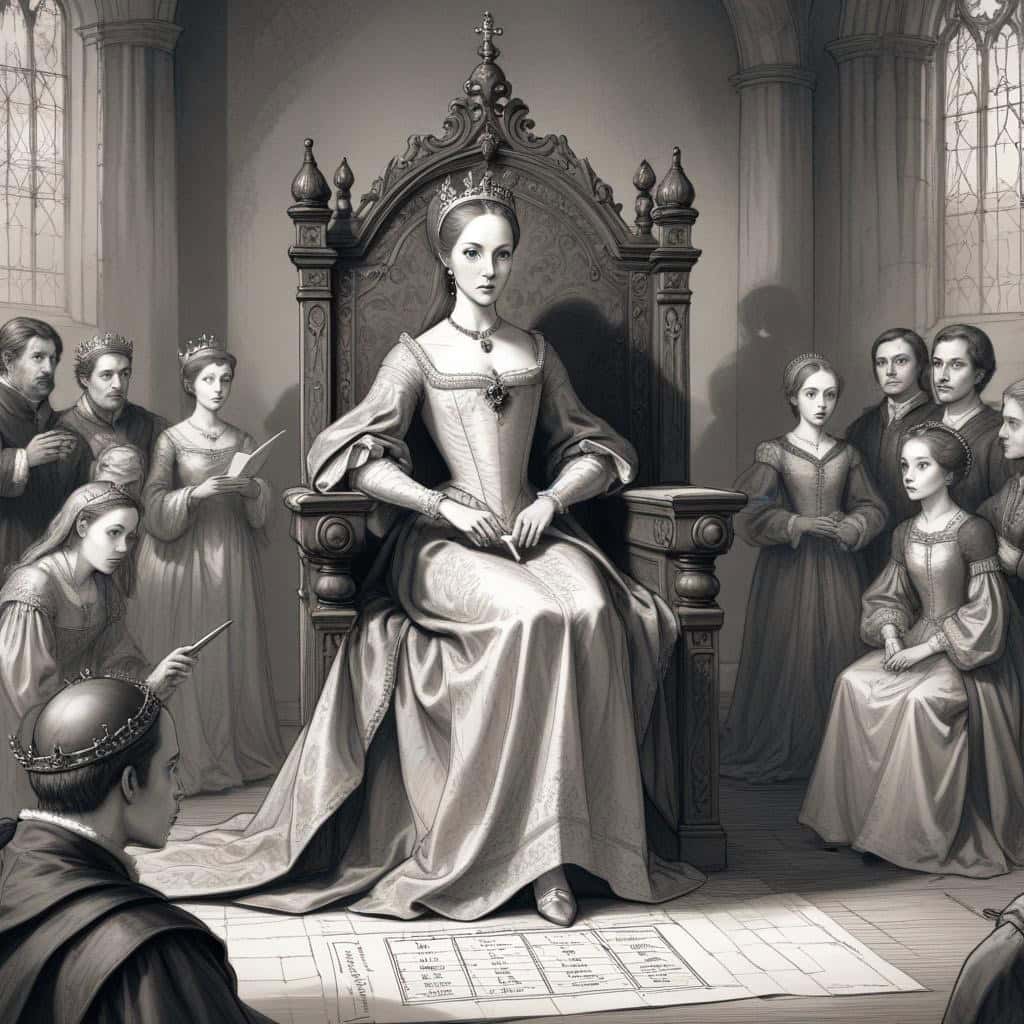
Introduction

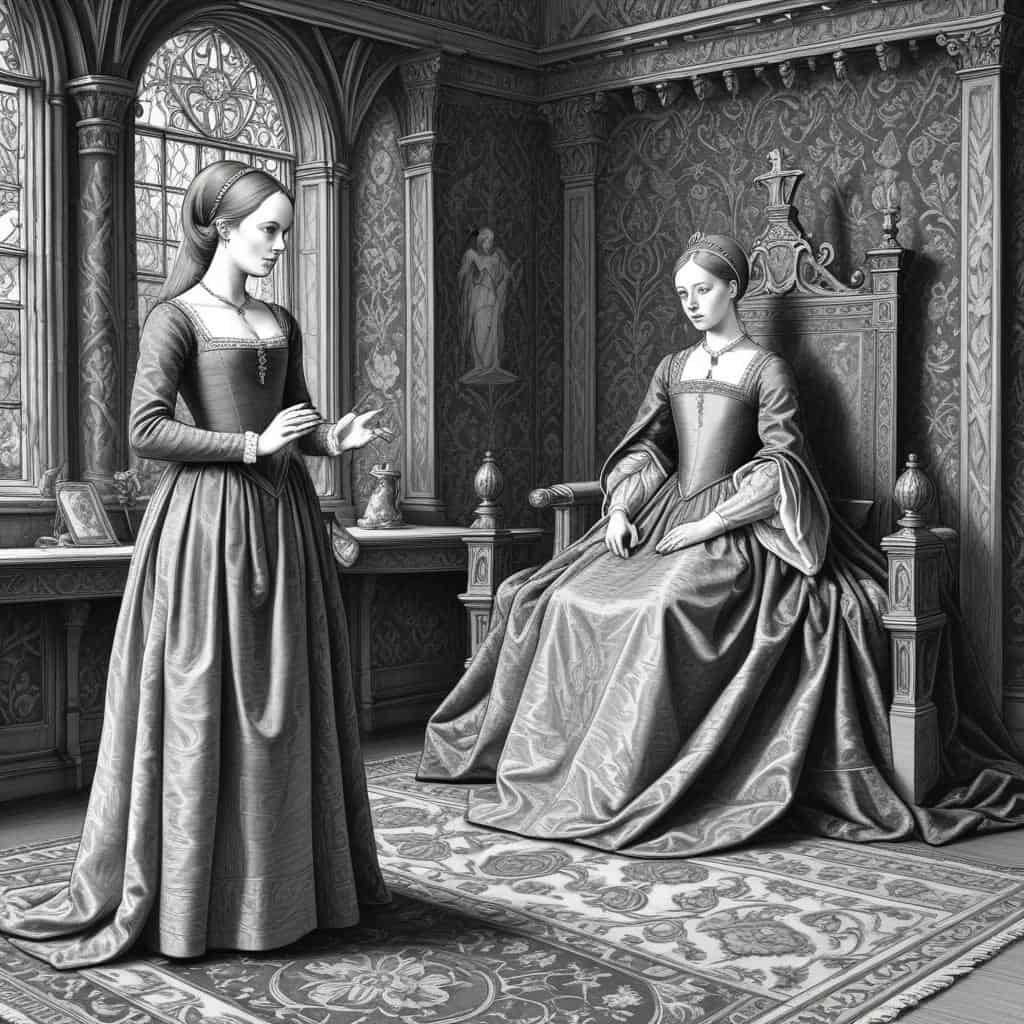
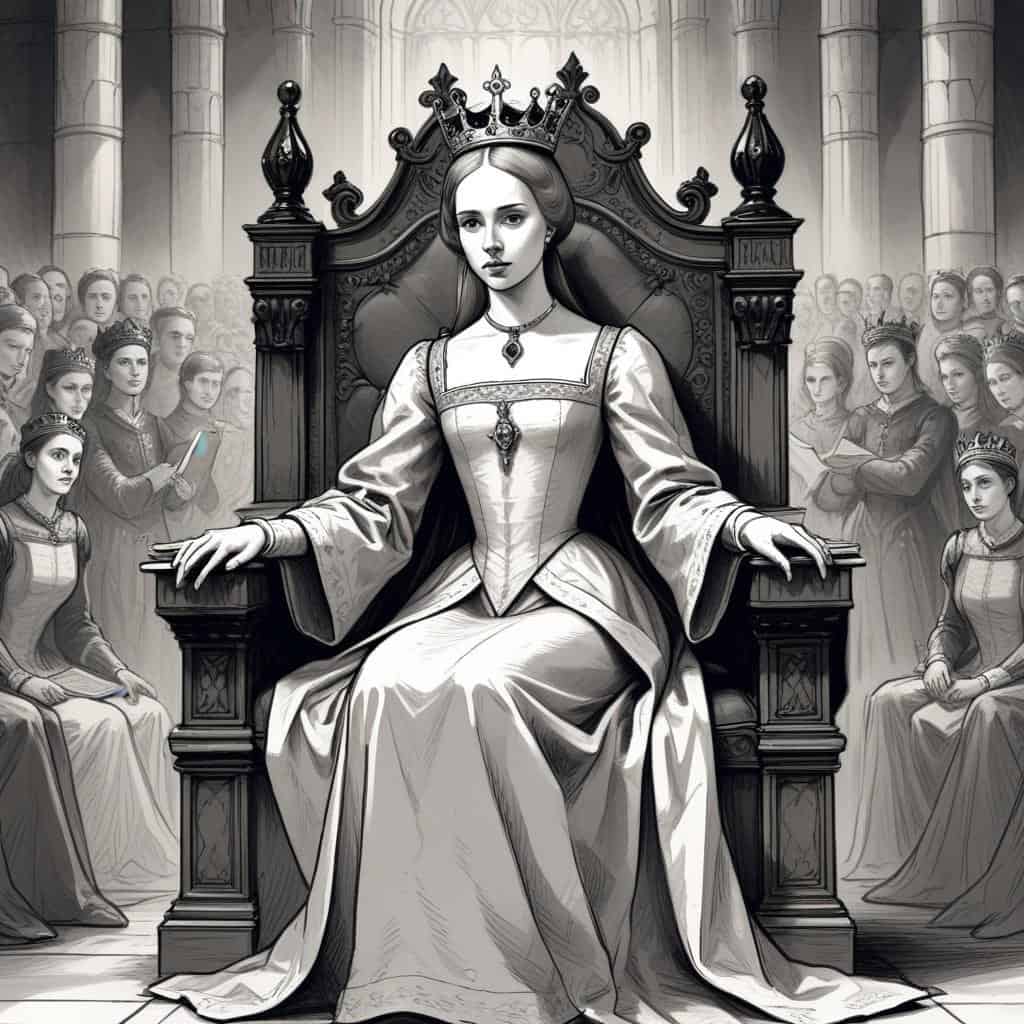
Lady Jane Grey
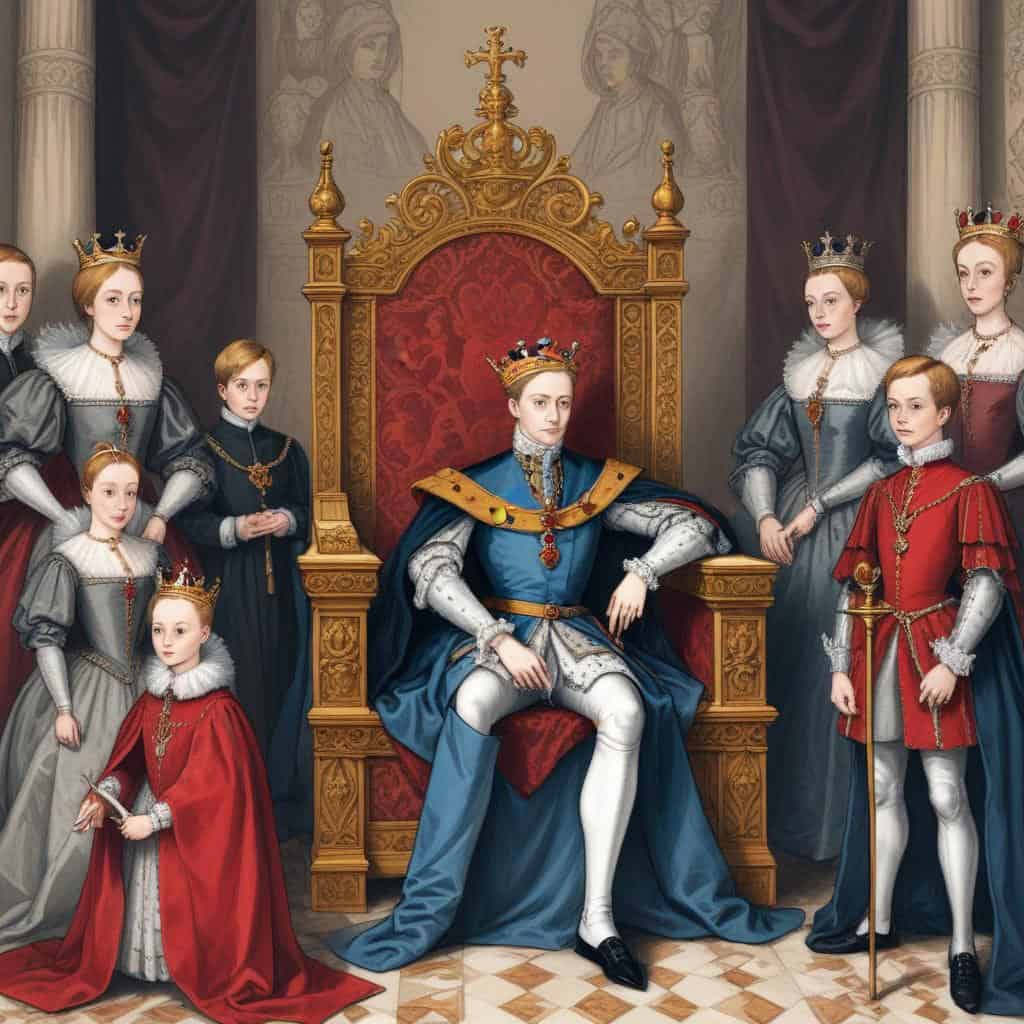
King Edward VI
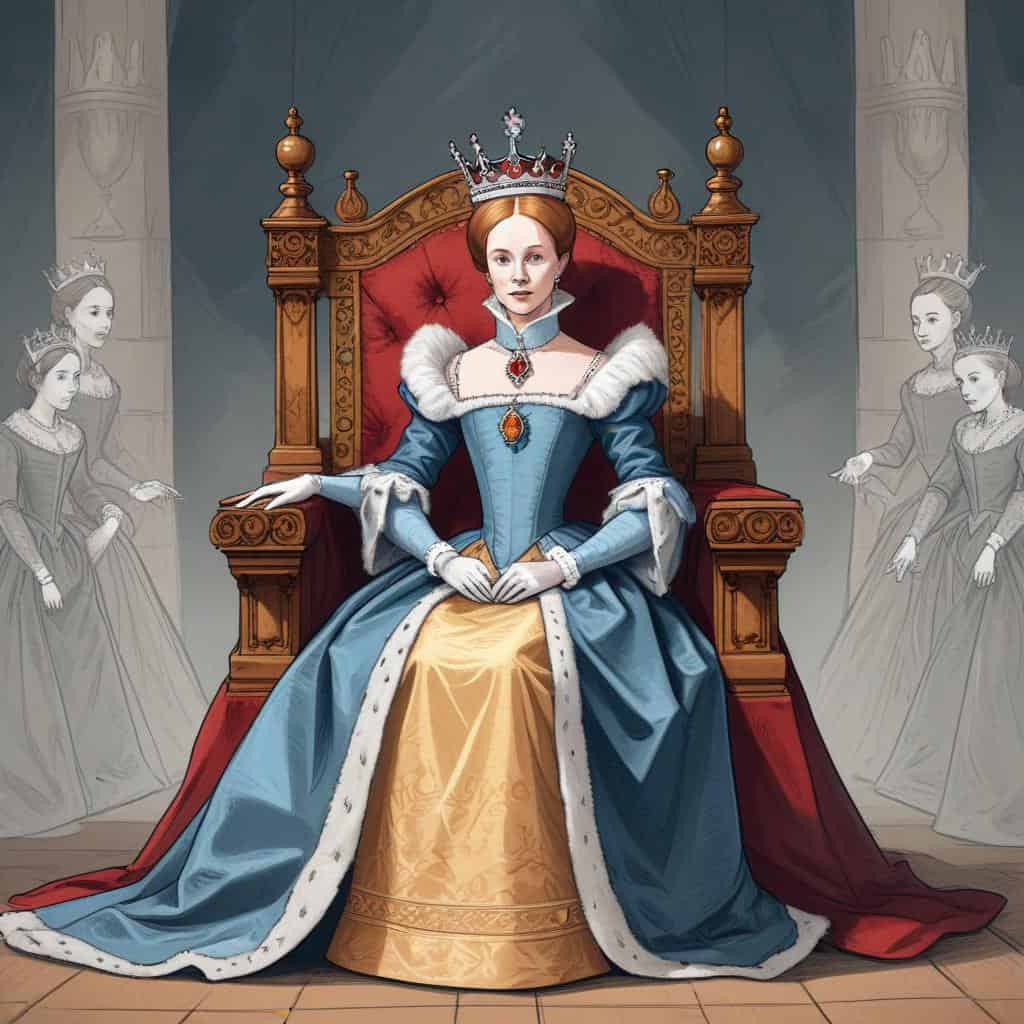
Queen Mary I

The Proclamation of Lady Jane Grey

The Nine-Day Reign
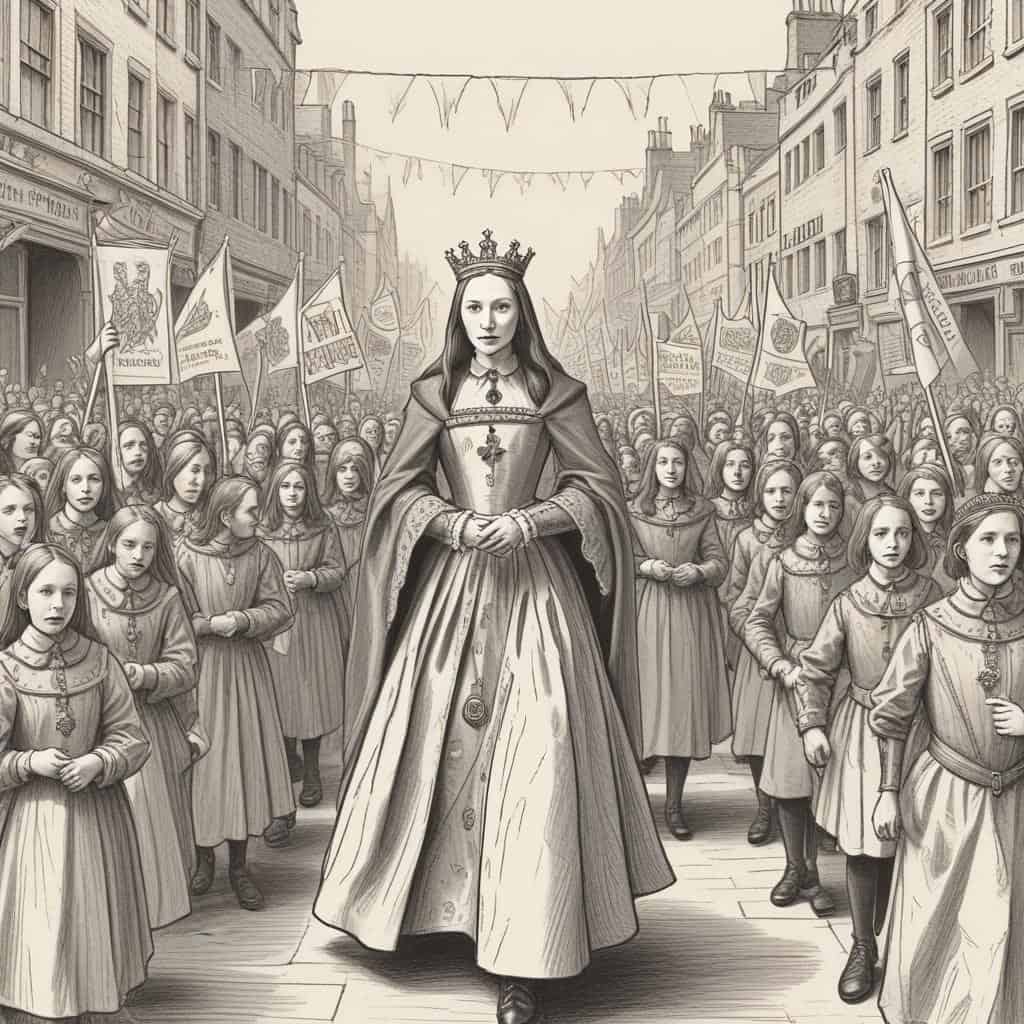
The Opposition of Mary Tudor
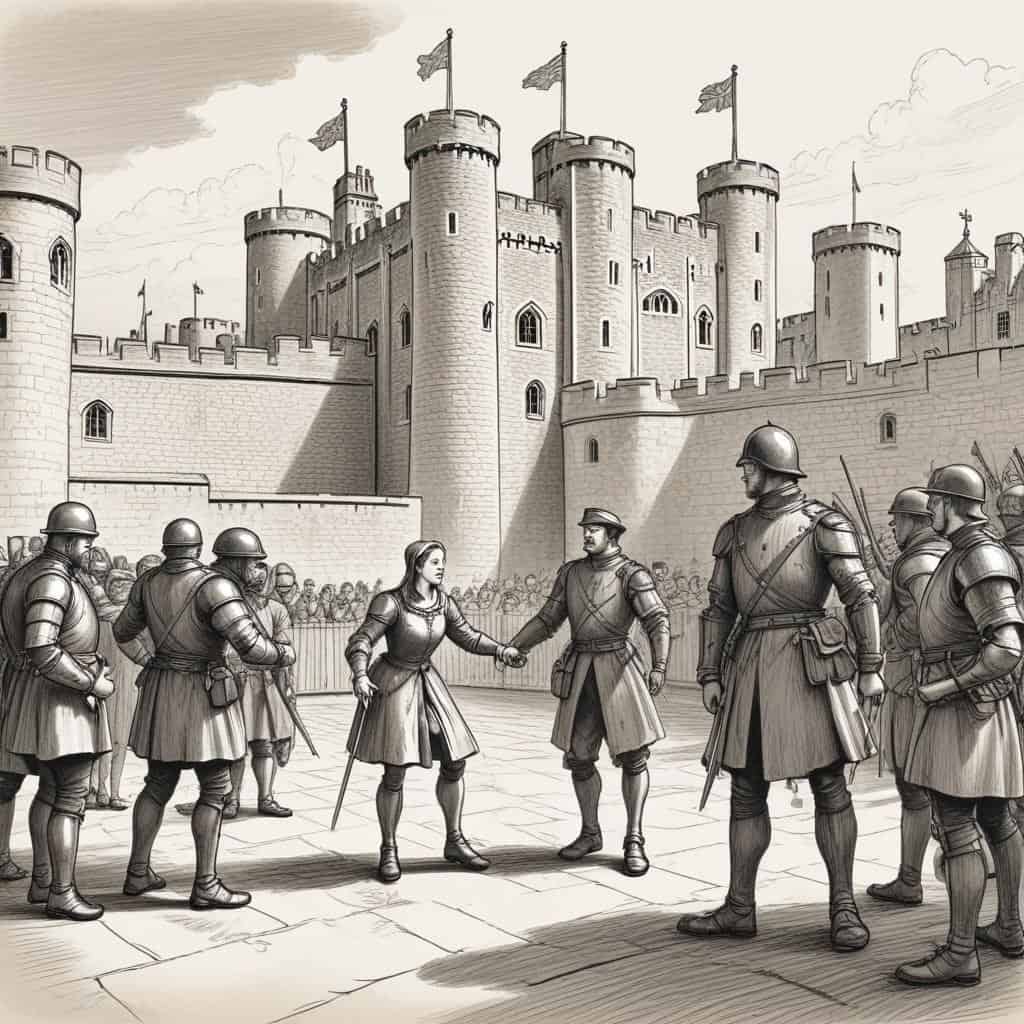
The Capture of Lady Jane Grey

The Trial and Sentencing of Lady Jane Grey

The Execution of Lady Jane Grey

The Legacy of Lady Jane Grey

The Protestant Martyr

The Impact on English Succession

The Tragic Fate of Lady Jane Grey
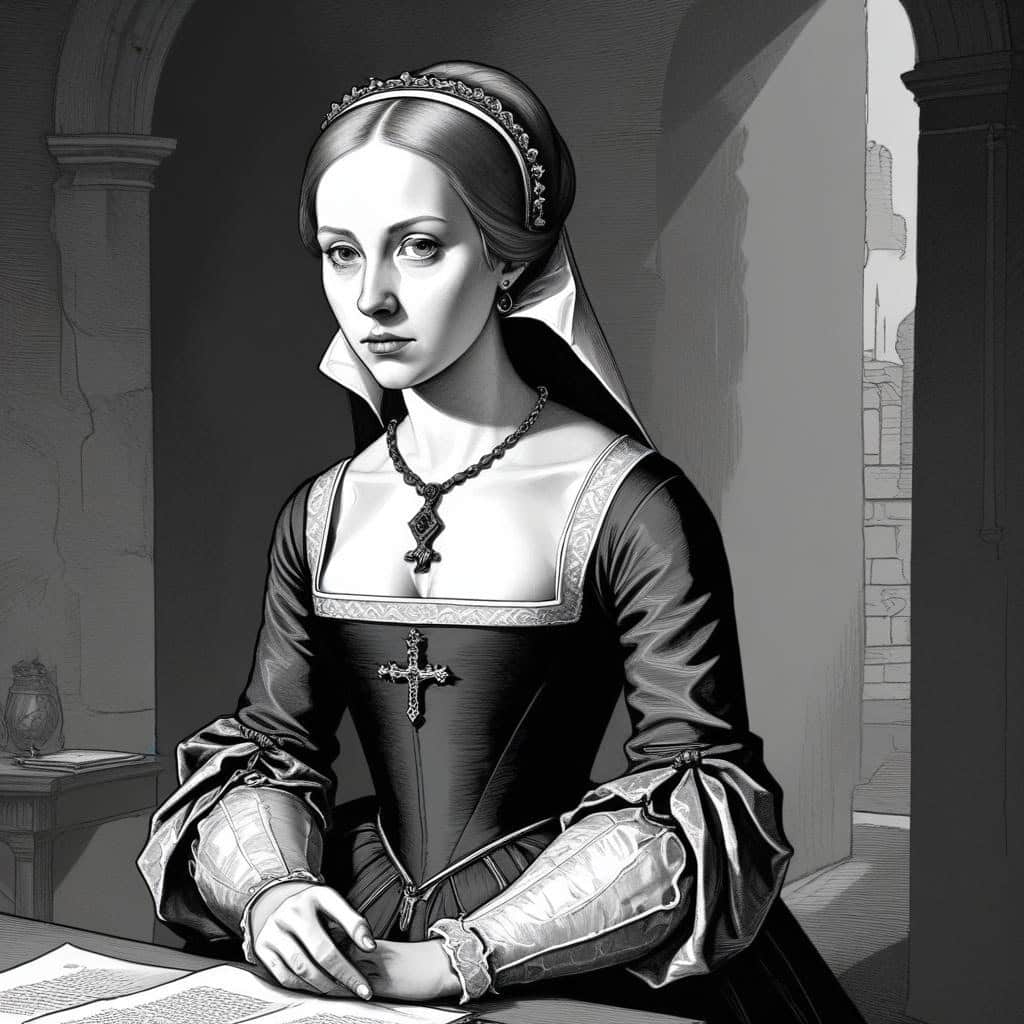
Lesson Details & Resources
In a Nutshell
- What: A brief nine-day reign of Lady Jane Grey as Queen of England
- When: July 10, 1553 – July 19, 1553
- Who: Lady Jane Grey, Mary I of England, supporters of the Tudor dynasty
- Outcome: Lady Jane Grey was deposed and eventually executed, Mary I became Queen of England
Famous Figures in the Rule of Lady Jane Grey
-
Lady Jane Grey
Lady Jane Grey was the Queen of England for nine days in July 1553, following the death of King Edward VI.
-
King Edward VI
King Edward VI was the son of Henry VIII and the one who named Lady Jane Grey as his successor before his death.
-
Mary I of England
Mary I of England, also known as Bloody Mary, overthrew Lady Jane Grey to become the Queen of England.
-
John Dudley, Duke of Northumberland
John Dudley, Duke of Northumberland, was instrumental in placing Lady Jane Grey on the throne but ultimately failed to secure her position.
-
Thomas Cranmer
Thomas Cranmer was the Archbishop of Canterbury who reluctantly declared Lady Jane Grey as queen and later recanted his support.
Timeline of Rule of Lady Jane Grey
Lady Jane Grey is proclaimed Queen of England
Lady Jane Grey is deposed as Queen after only 9 days
Edward VI dies, leaving Lady Jane Grey as his chosen successor
Mary Tudor raises an army to claim the throne from Lady Jane Grey
Mary Tudor is declared Queen of England
Lady Jane Grey is imprisoned in the Tower of London
Lady Jane Grey's husband, Lord Guildford Dudley, is also imprisoned
Lady Jane Grey's father, Henry Grey, is executed for treason
Lady Jane Grey and Lord Guildford Dudley are both executed for treason
Mary Tudor marries Philip II of Spain
The Wyatt Rebellion, a protest against Mary Tudor's marriage to Philip II, is crushed
Mary Tudor restores Catholicism as the official religion of England
Mary Tudor's reign is marked by the persecution of Protestants, earning her the nickname 'Bloody Mary'
Mary Tudor dies and is succeeded by her half-sister, Elizabeth I
Lady Jane Grey is posthumously remembered as the 'Nine Days' Queen'
Lady Jane Grey's story inspires numerous works of literature, including novels, plays, and films
Vocabulary List
- Lady Jane Grey
- The nine-day queen who ruled England from 10 July 1553 to 19 July 1553.
- Tudor
- The Tudor dynasty was in power during Lady Jane Grey's short reign.
- Succession
- The disputed succession of Lady Jane Grey to the English throne.
- Protestant
- Lady Jane Grey was a devout Protestant, which influenced her brief rule.
- Coup
- Lady Jane Grey's rule was the result of a political coup.
- Monarch
- Lady Jane Grey was briefly proclaimed as the monarch of England.
- Execution
- Lady Jane Grey was executed for treason after her rule was overthrown.
- Rebellion
- The rebellion against Lady Jane Grey's rule led to her downfall.
- Regency
- Lady Jane Grey's advisors acted as regents during her brief reign.
- Tower of London
- Lady Jane Grey was imprisoned in the Tower of London before her execution.
Key Facts
This is the information used in the fact matching game
- Lady Jane Grey was proclaimed Queen of England on 10 July 1553 after the death of King Edward VI.
- Lady Jane Grey reigned as Queen for only nine days, from 10 July 1553 to 19 July 1553.
- Lady Jane Grey was a great-granddaughter of King Henry VII and a cousin of King Edward VI.
- Lady Jane Grey was known for her intelligence and education, having been well-educated in classical languages and literature.
- Lady Jane Grey was deposed as Queen on 19 July 1553 by supporters of Mary I, who claimed the throne.
- After being deposed, Lady Jane Grey was imprisoned in the Tower of London.
- Lady Jane Grey was executed on 12 February 1554 at the age of 16 or 17.
- Lady Jane Grey's execution was carried out by beheading, as was customary for nobility at the time.
- Lady Jane Grey's short reign as Queen is often referred to as the 'Nine Days' Queen.'
- Lady Jane Grey's claim to the throne was contested by Mary I, who eventually became Queen of England.
Analysis & Significance
Immediate Consequences
The rule of Lady Jane Grey, also known as the Nine Days’ Queen, resulted in political turmoil and confusion in England. Her brief reign stirred up resistance from supporters of Mary I, leading to Jane’s eventual downfall and execution.
Long-Term Impact
Lady Jane Grey’s rule had a lasting impact on English history as it highlighted the instability of the Tudor succession. Her claim to the throne challenged traditional notions of royal succession and paved the way for future debates and conflicts over the English monarchy.
Cultural Significance Today
Lady Jane Grey’s story remains a cautionary tale of the dangers of political ambition and power struggles. Her legacy serves as a reminder of the complexities and uncertainties of leadership and the importance of stability in government. Her tragic fate continues to intrigue and inspire discussions on the nature of authority and legitimacy.
Rule of Lady Jane Grey Games


Take Your Learning Offline
Want a convenient, print-ready study guide for this lesson? Become a Memory Wizards Pro member to unlock the downloadable " Memory Scrolls" for this topic and our entire library!
- ✓ Complete Vocabulary Lists
- ✓ Key Facts & Timelines
- ✓ Beautifully Formatted for Print & Mobile