
Summary of The Dissolution of the Monasteries
Unveil the secrets behind Henry VIII's controversial power move.
How Do You Learn Best?
Learn by Reading
Immerse yourself in the 10-minute visual lesson for a comprehensive understanding of the topic.
Learn by Reviewing
Jump directly to the key facts, timeline, and vocabulary lists to build a solid foundation of details.
Learn by Doing
Challenge yourself! Jump straight into the interactive games to learn by trial, error, and discovery.
The Dissolution of the Monasteries in 10 Minutes
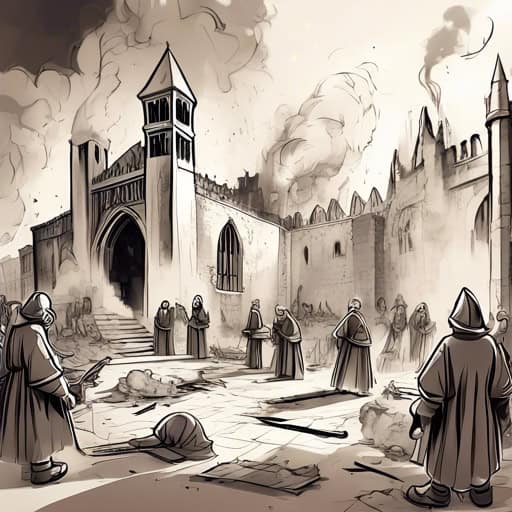
Introduction
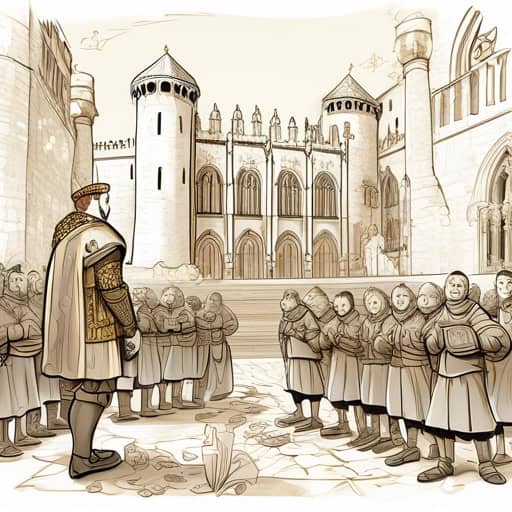
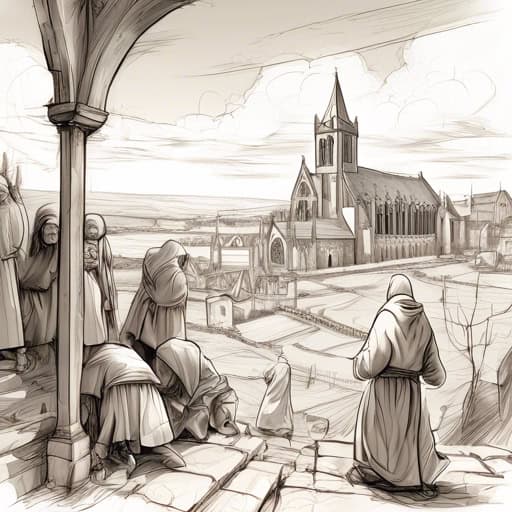
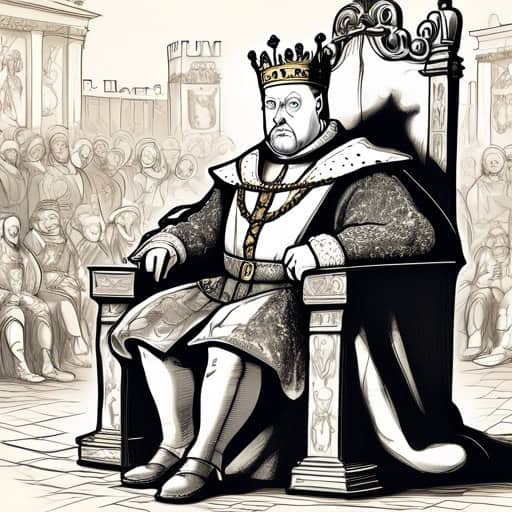
King Henry VIII
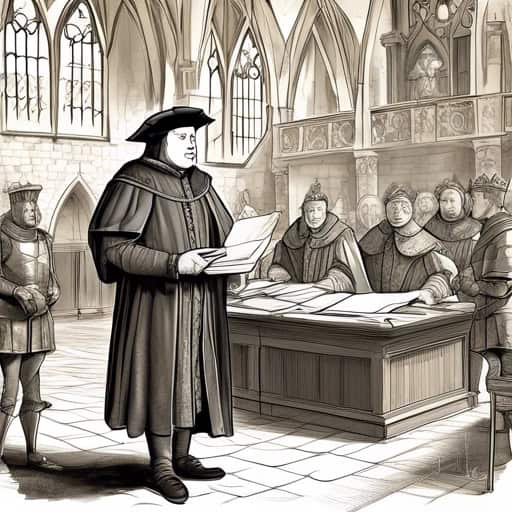
Thomas Cromwell
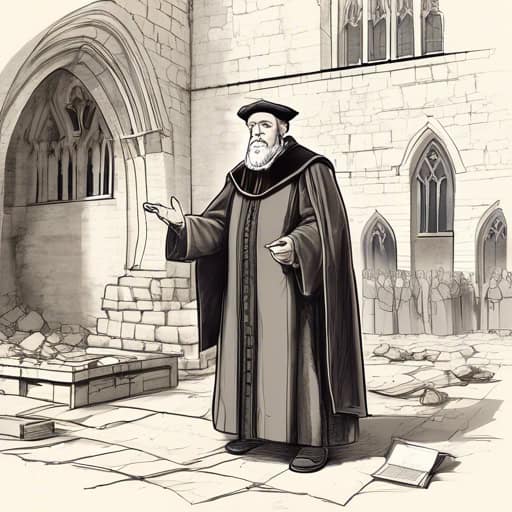
Thomas Cranmer
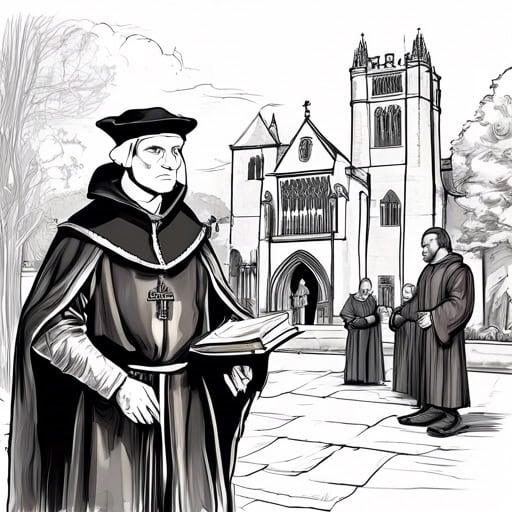
Thomas More
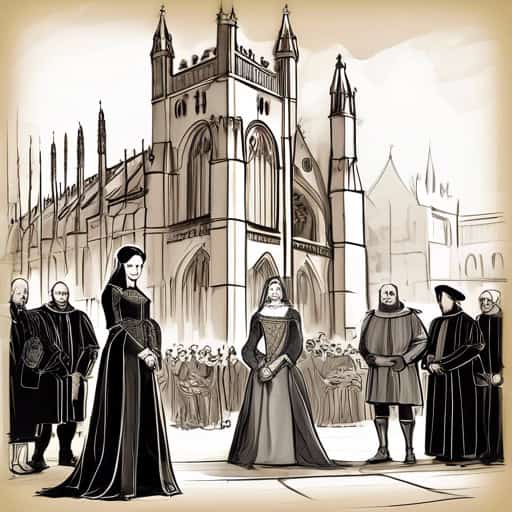
Anne Boleyn

The Beginnings of the Dissolution

The Act of Supremacy

The Valor Ecclesiasticus

The Pilgrimage of Grace

The Destruction of Monastic Buildings

The Redistribution of Wealth

The Impact on Monastic Communities

The Reformation Parliament

The Legacy of the Dissolution

The Aftermath of the Dissolution
Lesson Details & Resources
In a Nutshell
- What: The Dissolution of the Monasteries was the process by which Henry VIII disbanded monasteries, priories, convents, and friaries in England.
- When: 1536-1541
- Who: Henry VIII, Thomas Cromwell, Monastic communities
- Outcome: The dissolution led to the transfer of wealth and land from the Catholic Church to the Crown, contributing to the English Reformation and the establishment of the Church of England.
Famous Figures in the The Dissolution of the Monasteries
-
Thomas Cromwell
A powerful minister in the court of Henry VIII, he played a key role in the Dissolution of the Monasteries.
-
Henry VIII
The King of England during the Dissolution of the Monasteries, Henry VIII sought to gain control over the Catholic Church in England.
-
Thomas Wolsey
A cardinal and Lord Chancellor, he fell out of favor with Henry VIII and was unable to prevent the Dissolution of the Monasteries.
-
Anne Boleyn
The second wife of Henry VIII, she was influential in pushing for religious reforms and the Dissolution of the Monasteries.
-
Thomas More
A prominent philosopher and statesman, he opposed Henry VIII's religious reforms and was executed for treason.
-
Thomas Cranmer
The Archbishop of Canterbury, he supported Henry VIII's divorce from Catherine of Aragon and played a role in the Dissolution of the Monasteries.
-
Charles Brandon
A close friend and advisor to Henry VIII, he supported the Dissolution of the Monasteries and benefited from the resulting land grants.
-
Catherine of Aragon
The first wife of Henry VIII, she refused to accept the annulment of their marriage and the subsequent religious changes.
-
Edward Seymour
The brother of Jane Seymour, he played a significant role in the Dissolution of the Monasteries as Lord Protector of England.
-
John Fisher
A bishop and theologian, he opposed the Dissolution of the Monasteries and was executed for treason.
Timeline of The Dissolution of the Monasteries
1536: The Act for the dissolution of the smaller monasteries is passed.
1536: Henry VIII orders the survey of larger monasteries.
1536: Pilgrimage of Grace, a rebellion against the dissolution, occurs.
1537: The First Suppression Act is passed, dissolving larger monasteries.
1539: The Act of Six Articles reaffirms Catholic doctrine.
1539: The Second Suppression Act dissolves the remaining monasteries.
1539: The publication of the Great Bible in English is authorized.
1540: The establishment of the Court of Augmentations for monastic property.
1540: Thomas Cromwell is executed.
1540: Henry VIII marries Anne of Cleves.
1540: The Dissolution of the Lesser Monasteries Act is passed.
1541: The remaining monastic properties are dissolved.
1541: Dissolved monastic lands are granted to Henry VIII's supporters.
1541: The establishment of the Court of Wards and Liveries.
1541: The Act for the Advancement of True Religion is passed.
1541: The English translation of the Bible by Miles Coverdale is authorized.
1541: The dissolution of the monasteries is officially complete.
1541: The Crown gains control over the remaining monastic finances.
1541: The establishment of the Court of First Fruits and Tenths.
1541: The Valor Ecclesiasticus is published, documenting monastic wealth.
Vocabulary List
- Dissolution
- The Dissolution of the Monasteries refers to the period of time when monasteries and religious houses were dissolved and their assets confiscated.
- Monasteries
- The Dissolution of the Monasteries targeted religious houses such as monasteries, abbeys, and convents.
- Confiscated
- During the Dissolution, the assets of the monasteries were confiscated by the English Crown.
- Religious houses
- The Dissolution of the Monasteries affected various religious houses, including monasteries, abbeys, priories, and friaries.
- Henry VIII
- King Henry VIII initiated the Dissolution of the Monasteries as part of his break with the Catholic Church and the establishment of the Church of England.
- Catholic Church
- The Dissolution of the Monasteries was a significant event in England's separation from the authority of the Catholic Church.
- Protestant Reformation
- The Dissolution of the Monasteries was a result of the Protestant Reformation, which aimed to reform the Catholic Church and led to the creation of Protestant churches.
- Assets
- The assets of the monasteries, including land, buildings, treasures, and wealth, were confiscated by the English Crown.
- Abbeys
- Abbeys, along with monasteries, were targeted for dissolution during the period of the Dissolution of the Monasteries.
- Convents
- Convents, which were religious communities of women, were also dissolved during the period of the Dissolution of the Monasteries.
Key Facts
This is the information used in the fact matching game
- The Dissolution of the Monasteries was a series of events that took place in England between 1536 and 1541
- It was initiated by King Henry VIII
- The Dissolution aimed to close down and confiscate the property of monasteries, nunneries, and friaries
- Henry VIII's motivation for the Dissolution was primarily financial
- The King wanted to use the monastic wealth to fund his military campaigns and lavish lifestyle
- The Dissolution affected both Catholic and non-Catholic religious houses
- Over 800 religious houses were dissolved during this period
- The Dissolution resulted in the destruction of numerous religious artifacts and libraries
- Many monks and nuns were forced to leave their religious life and seek alternative means of survival
- The Dissolution led to the redistribution of monastic lands to Crown, nobles, and gentry
- Some monastic buildings were repurposed, while others were left to decay
- The Dissolution had a significant impact on the local economy, as monasteries were major employers and landowners
- Many former monastic lands became parks or were used for agriculture
- The Dissolution also had repercussions on education and healthcare, as monasteries played a role in these areas
- The Dissolution was met with resistance in some areas, leading to rebellions such as the Pilgrimage of Grace
- The Dissolution marked a turning point in English history, as it furthered the process of the English Reformation
- The Dissolution was not only a religious but also a political and economic event
- Henry VIII used the Dissolution to weaken the power of the Catholic Church and increase his own authority
- The Dissolution was followed by the establishment of the Church of England as the official religion
- The Dissolution had long-term consequences for the religious landscape of England.
Analysis & Significance
Immediate Consequences
The dissolution of the monasteries in the 16th century led to immediate chaos and disruption in the religious landscape of England. Monasteries were closed, monks and nuns were displaced, and valuable treasures were seized by the crown. The dissolution also resulted in economic upheaval as the monasteries had been significant landowners and employers.
Long-Term Impact
The long-term impact of the dissolution of the monasteries was profound. It marked the beginning of the English Reformation, as Henry VIII used the dissolution to break away from the authority of the Catholic Church. The land and wealth seized from the monasteries helped to solidify the power and wealth of the crown, leading to significant changes in the social and political structure of England.
Cultural Significance Today
The dissolution of the monasteries continues to have cultural significance today. Many former monastic buildings still stand as historic landmarks, serving as a reminder of this tumultuous period in English history. The event also influenced the development of Protestantism in England and shaped the country’s religious identity, leaving a lasting impact on the cultural and religious landscape of the nation.
The Dissolution of the Monasteries Games


Take Your Learning Offline
Want a convenient, print-ready study guide for this lesson? Become a Memory Wizards Pro member to unlock the downloadable " Memory Scrolls" for this topic and our entire library!
- ✓ Complete Vocabulary Lists
- ✓ Key Facts & Timelines
- ✓ Beautifully Formatted for Print & Mobile