
Summary of The Battle of Flodden (1513)
Uncover the tragic clash that shaped the fate of nations.
How Do You Learn Best?
Learn by Reading
Immerse yourself in the 10-minute visual lesson for a comprehensive understanding of the topic.
Learn by Reviewing
Jump directly to the key facts, timeline, and vocabulary lists to build a solid foundation of details.
Learn by Doing
Challenge yourself! Jump straight into the interactive games to learn by trial, error, and discovery.
The Battle of Flodden in 10 Minutes
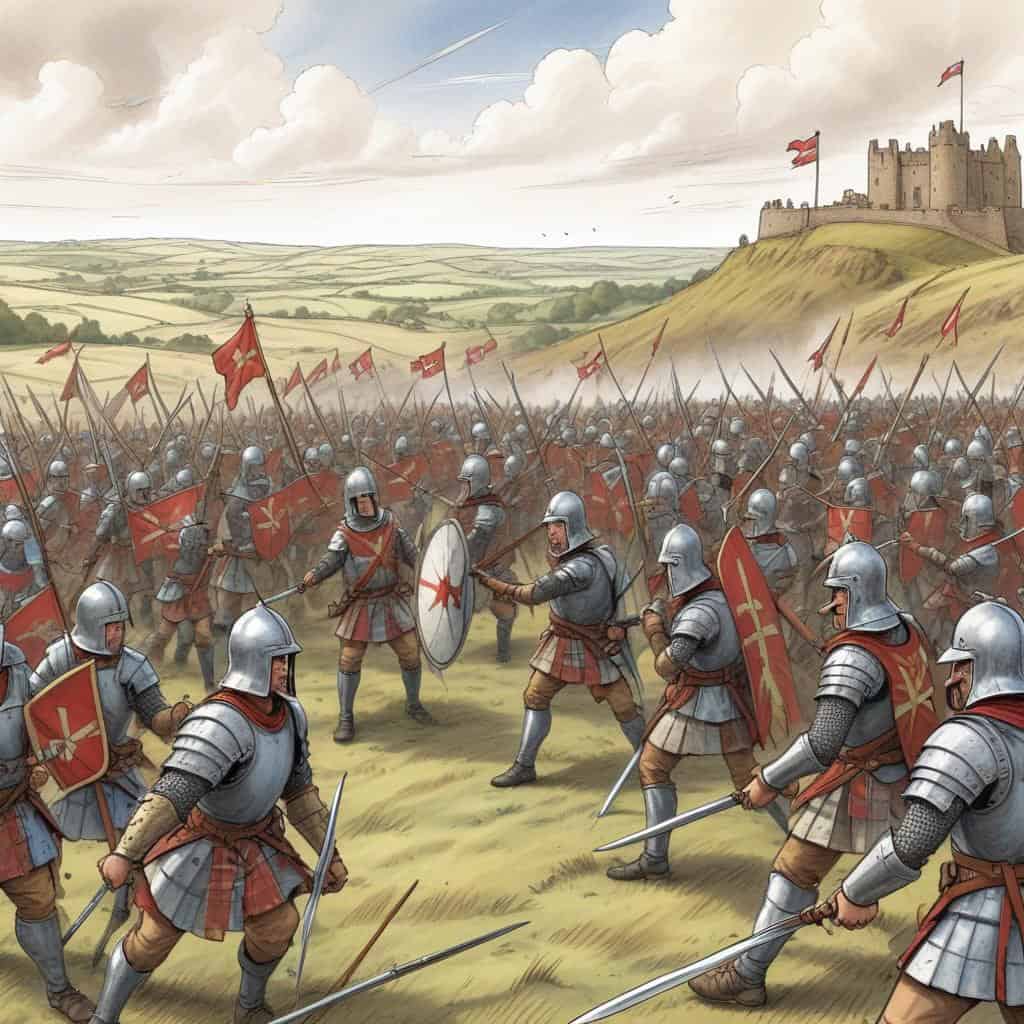
Introduction
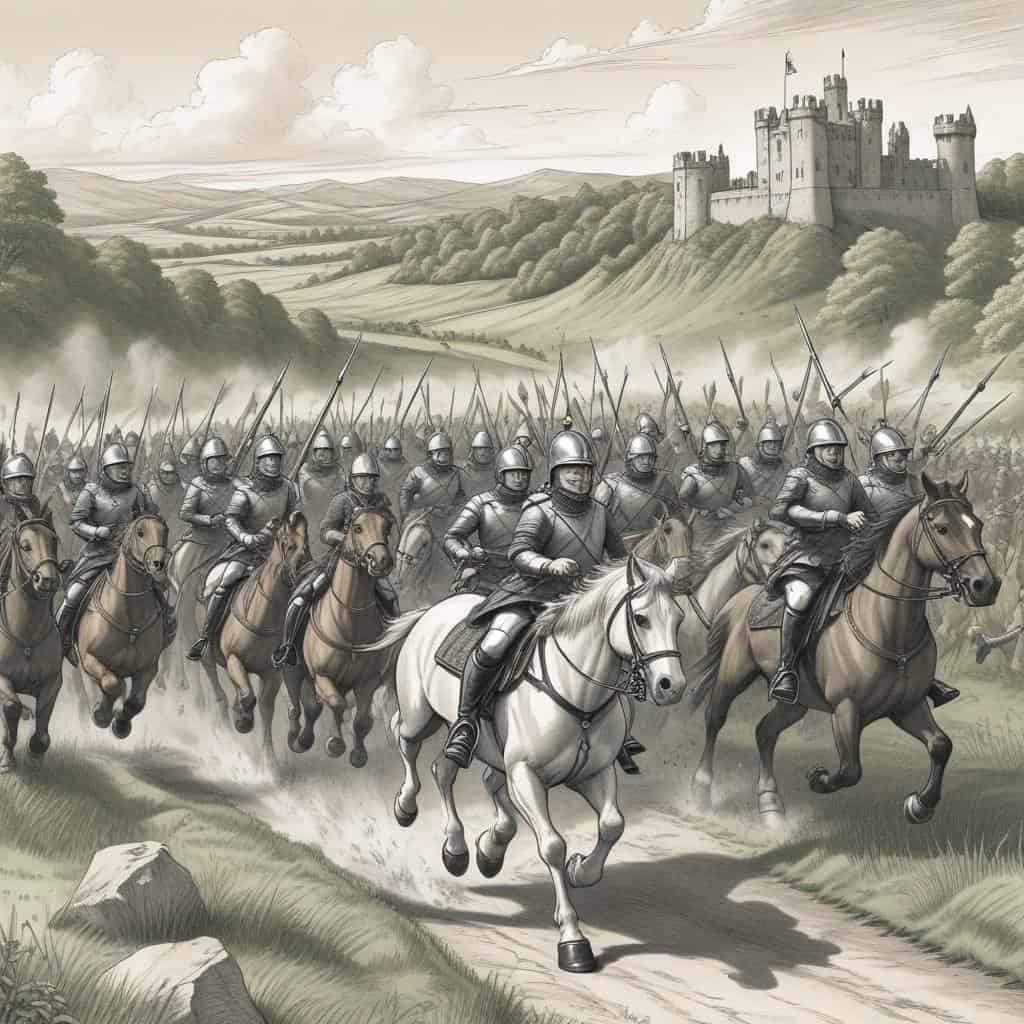
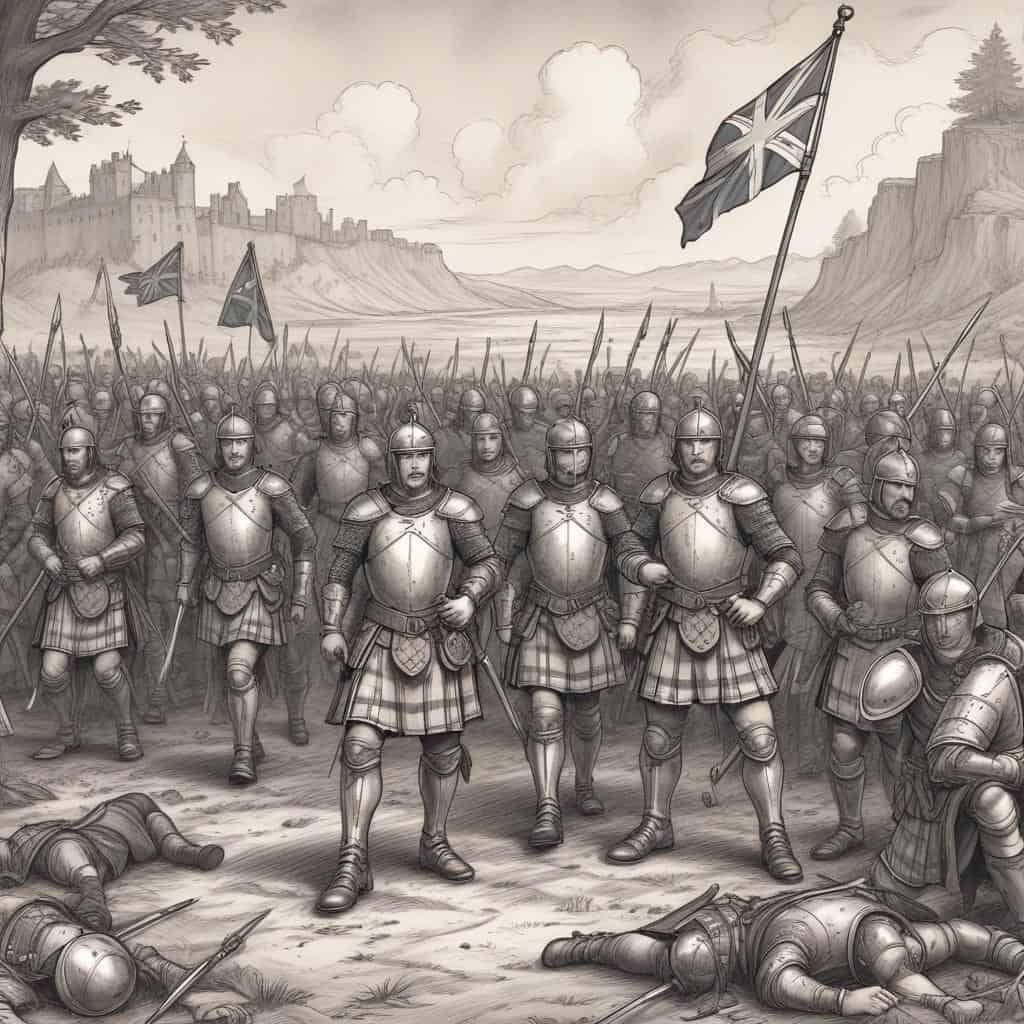
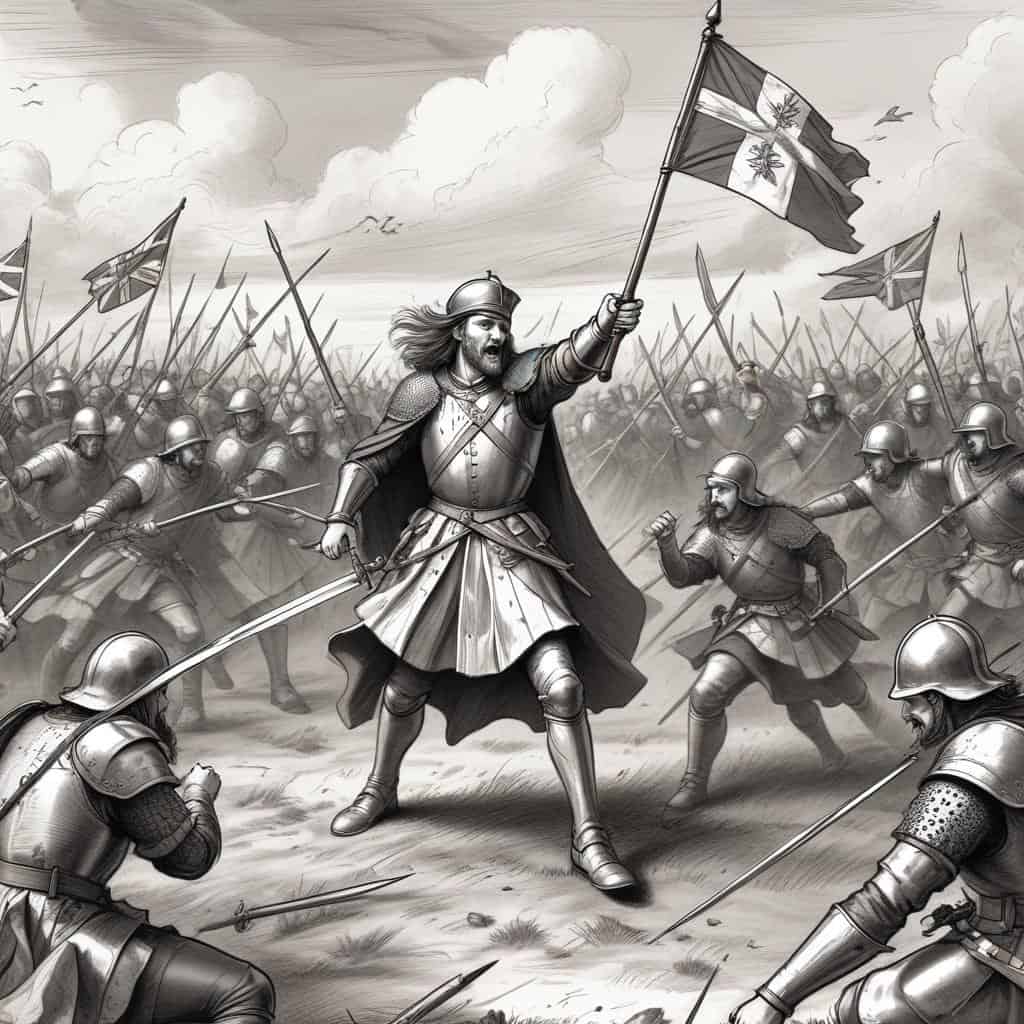
King James IV of Scotland
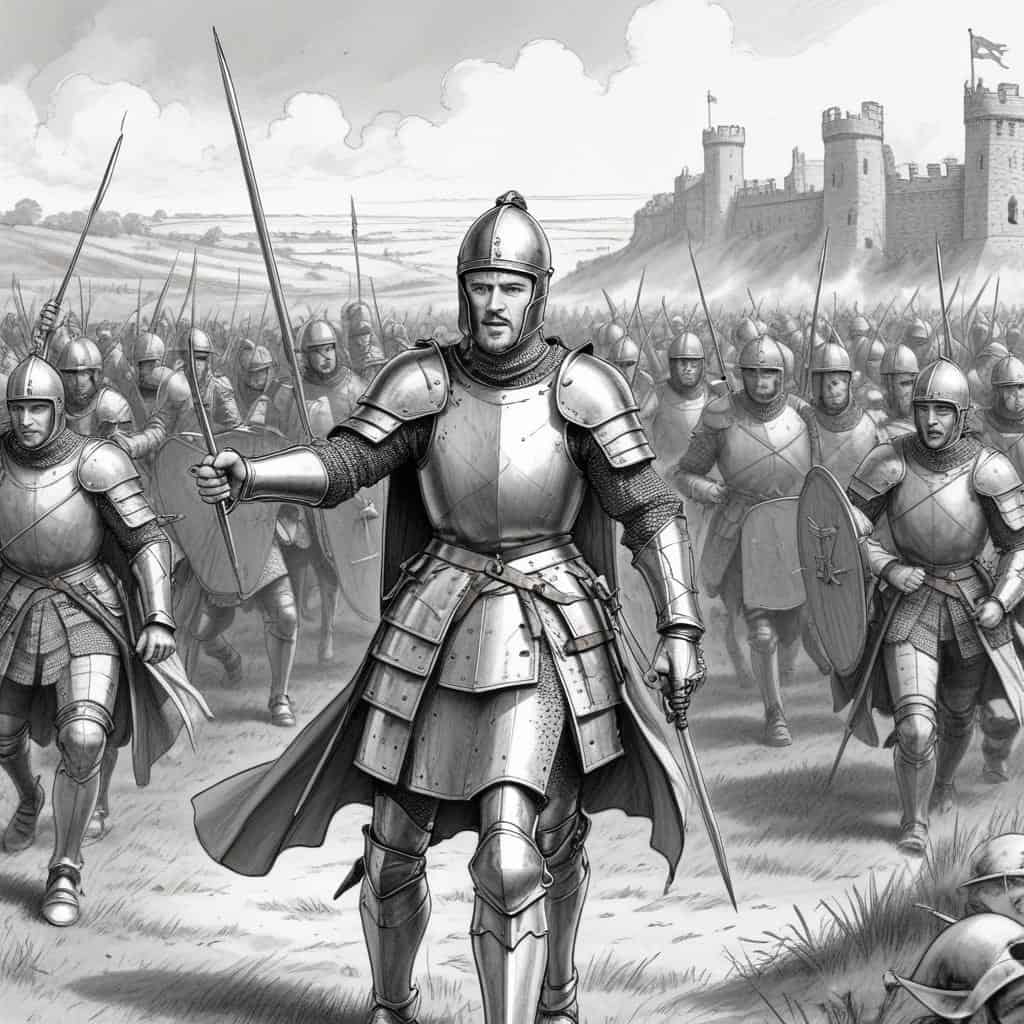
Thomas Howard, Earl of Surrey
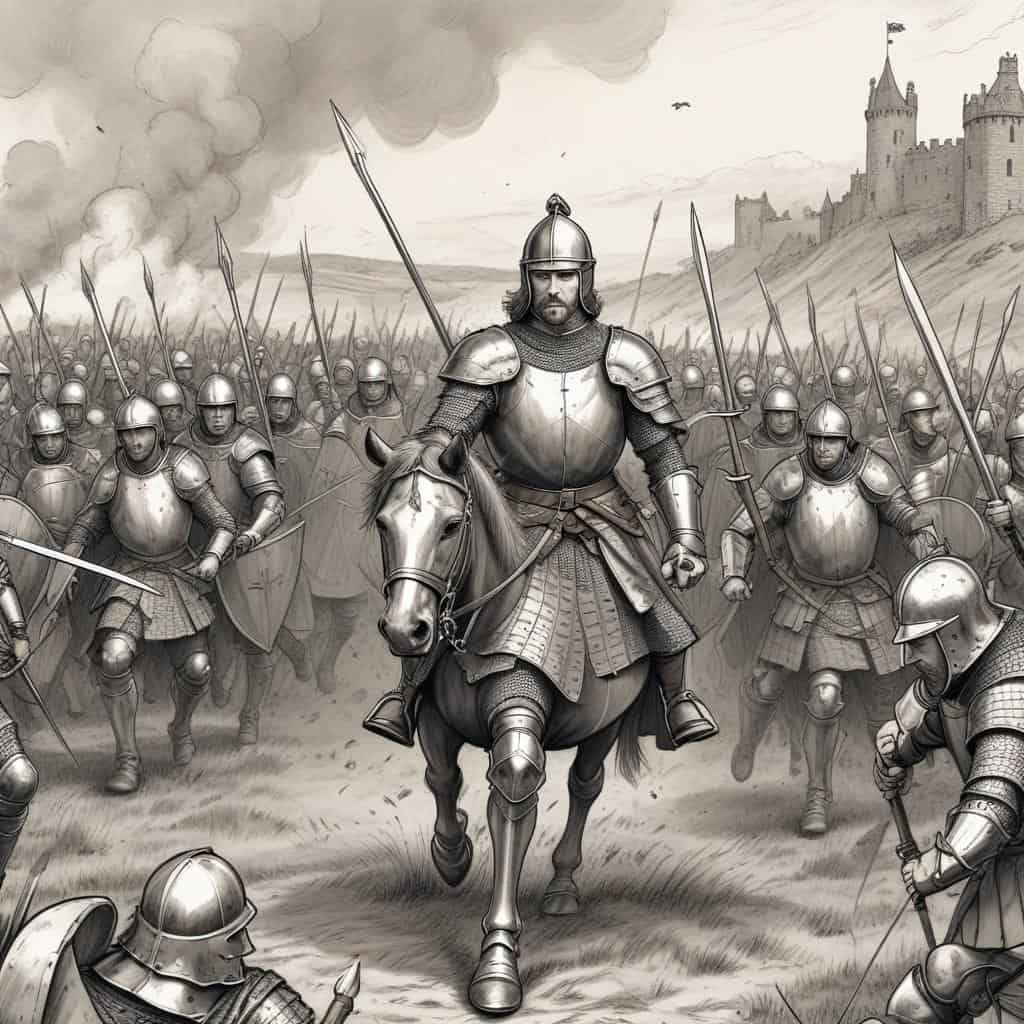
Archibald Douglas, Earl of Angus
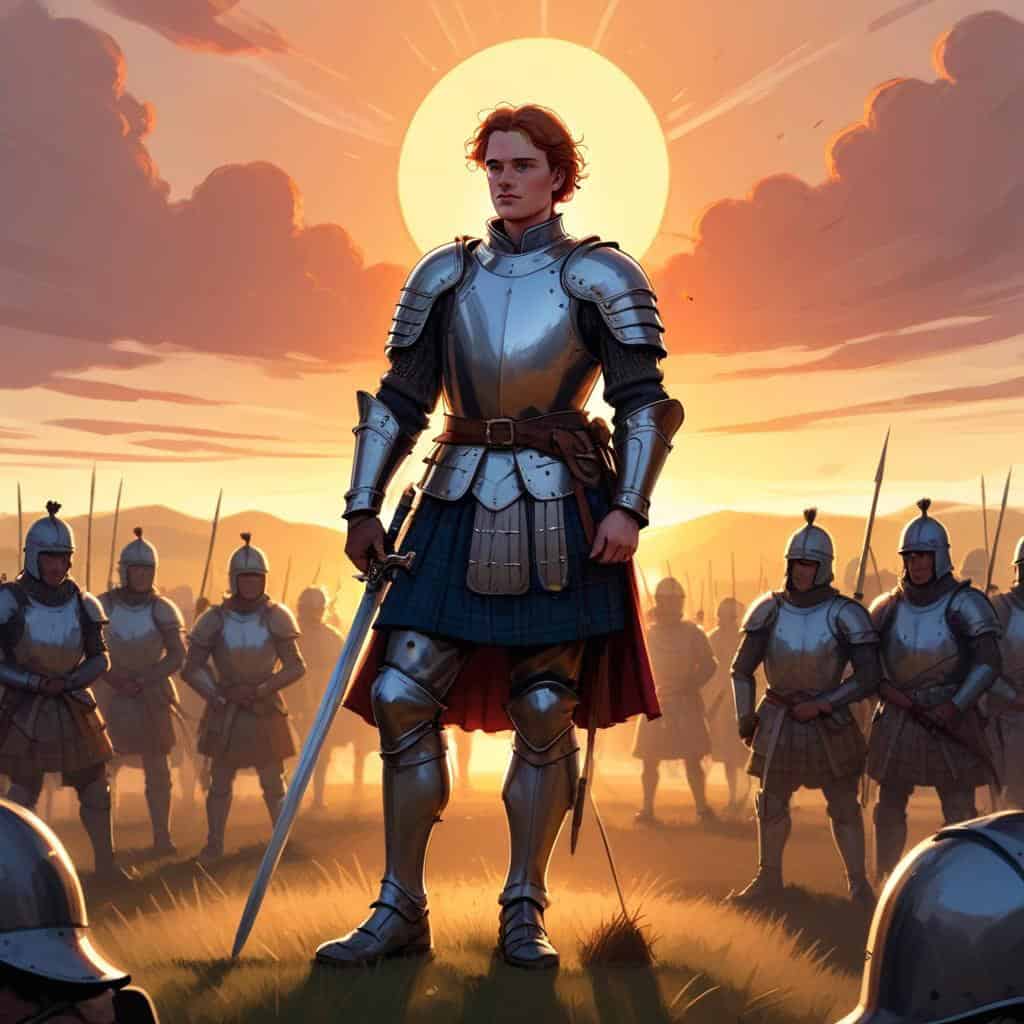
Lord Home

The Build-Up to the Battle

The Scottish Armys Position

The English Armys Strategy

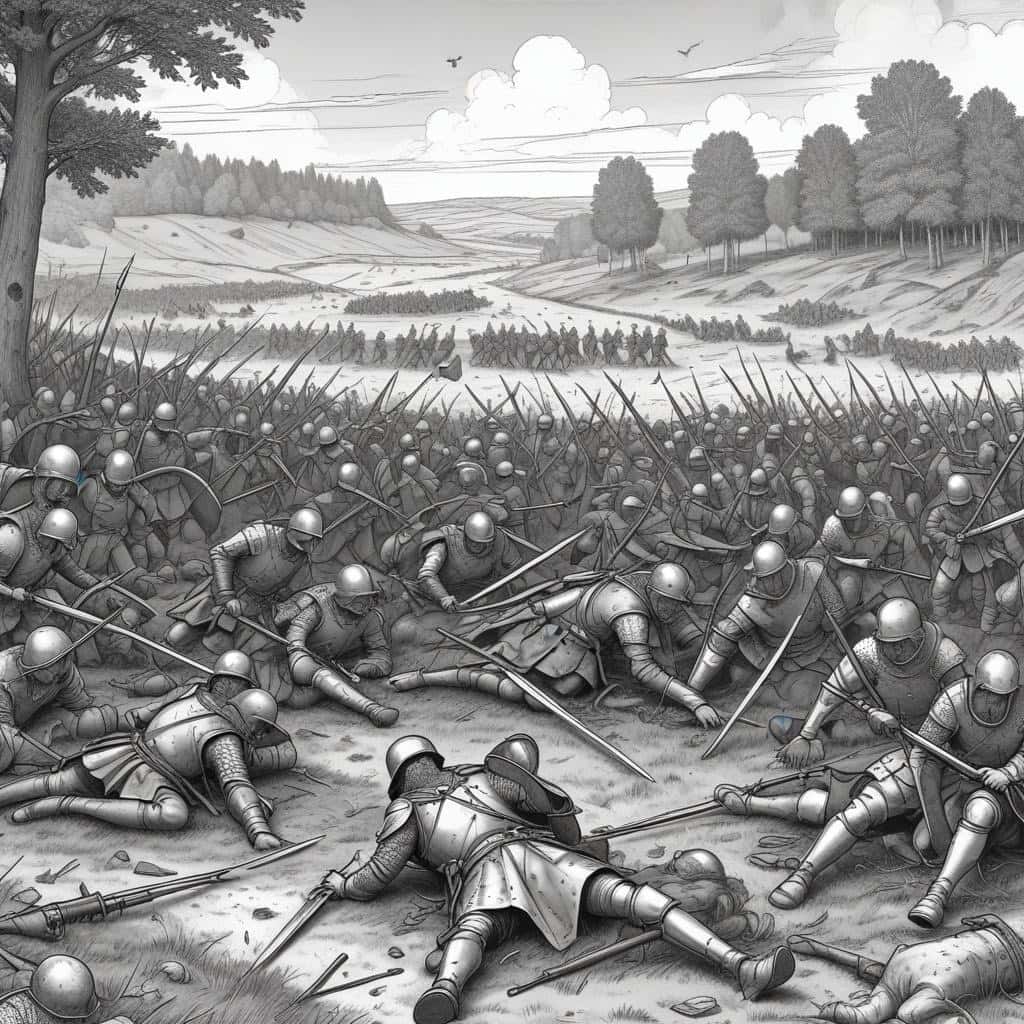
The Battle Begins

The Scottish Charge

The Turning Point

The Death of King James IV

The Aftermath

The Impact on Scotland
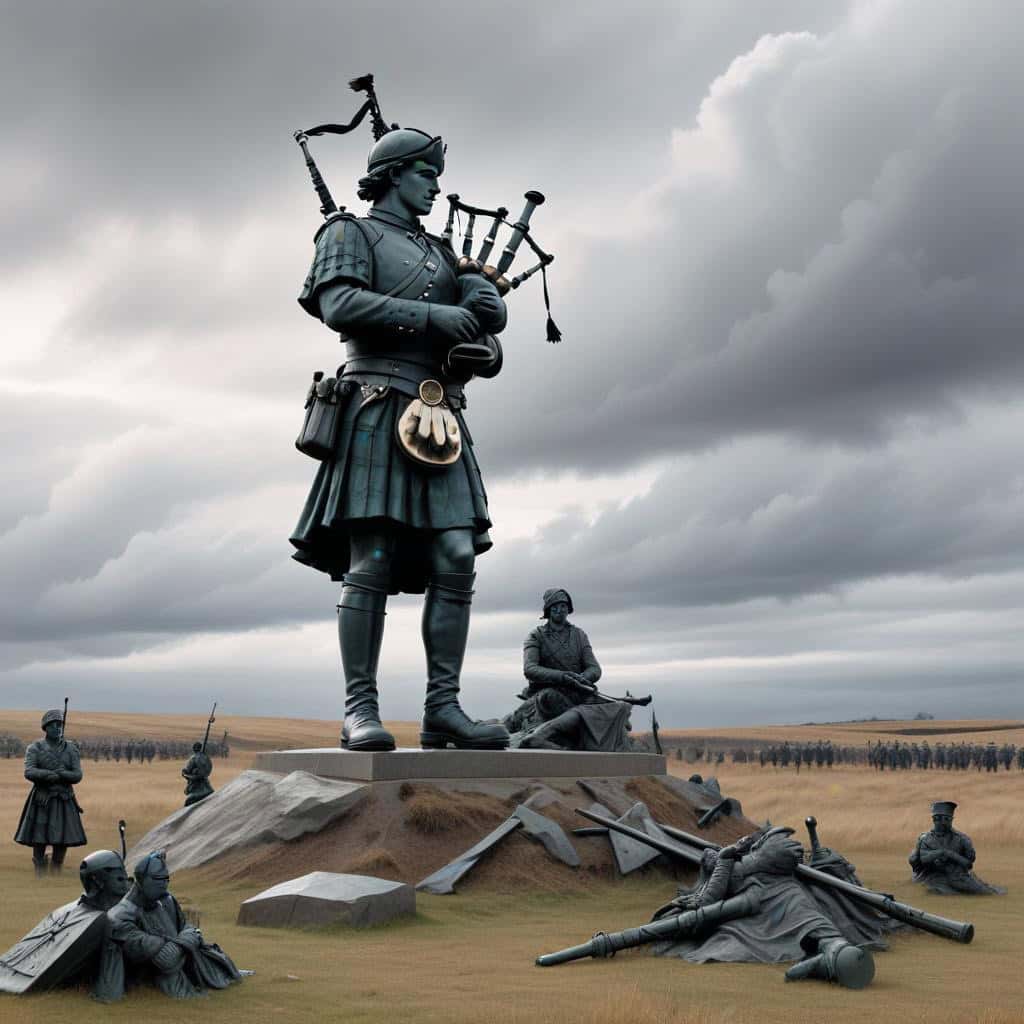
The Legacy of Flodden
Lesson Details & Resources
In a Nutshell
- What: A significant battle between England and Scotland during the War of the League of Cambrai.
- When: September 9, 1513
- Who: King James IV of Scotland, King Henry VIII of England
- Outcome: Decisive victory for the English, resulting in the death of King James IV of Scotland.
Famous Figures in the The Battle of Flodden
-
James IV of Scotland
James IV of Scotland was the King of Scotland who led the Scottish forces in the Battle of Flodden. He died during the battle.
-
Thomas Howard, 2nd Duke of Norfolk
Thomas Howard, 2nd Duke of Norfolk was an English nobleman who commanded the English army in the Battle of Flodden.
-
Archibald Douglas, 6th Earl of Angus
Archibald Douglas, 6th Earl of Angus was a Scottish nobleman who played a significant role in the Scottish army during the Battle of Flodden.
-
Alexander Stewart, Duke of Albany
Alexander Stewart, Duke of Albany was a Scottish prince who fought alongside the Scottish forces in the Battle of Flodden.
-
Patrick Hepburn, 1st Earl of Bothwell
Patrick Hepburn, 1st Earl of Bothwell was a Scottish nobleman who commanded a division of the Scottish army in the Battle of Flodden.
-
George Home, 4th Lord Home
George Home, 4th Lord Home was a Scottish nobleman who fought on the Scottish side in the Battle of Flodden.
-
Adam Hepburn, 2nd Earl of Bothwell
Adam Hepburn, 2nd Earl of Bothwell was a Scottish nobleman and military commander who fought in the Battle of Flodden.
-
Thomas Dacre, 2nd Baron Dacre
Thomas Dacre, 2nd Baron Dacre was an English nobleman who led the English forces in the Battle of Flodden.
-
James Douglas, 3rd Earl of Morton
James Douglas, 3rd Earl of Morton was a Scottish nobleman who fought on the Scottish side in the Battle of Flodden.
-
George Gordon, 2nd Earl of Huntly
George Gordon, 2nd Earl of Huntly was a Scottish nobleman who fought in the Battle of Flodden.
Timeline of The Battle of Flodden
King Henry VIII of England declares war on France
King James IV of Scotland signs treaty of alliance with France
King James IV of Scotland invades England
Battle of Flodden begins
English army led by Earl of Surrey defeats Scottish army
King James IV of Scotland killed in battle
Scottish army suffers heavy casualties
English army captures Scottish banners and artillery
Scottish Earl of Huntly surrenders
English army marches towards Edinburgh
Scottish army disbands
King Henry VIII of England receives news of victory at Flodden
English forces capture Edinburgh
English forces capture Stirling Castle
English forces capture Dunbar Castle
Peace treaty signed between England and Scotland
King Henry VIII of England marries Catherine of Aragon
King James IV of Scotland marries Margaret Tudor, sister of Henry VIII
King James V of Scotland succeeds his father James IV
Battle of Pinkie Cleugh between England and Scotland
Vocabulary List
- Flodden
- The Battle of Flodden, also known as the Battle of Flodden Field, was fought on 9 September 1513 between the Kingdom of England and the Kingdom of Scotland.
- Tudor
- The Battle of Flodden took place during the reign of King Henry VIII of England, who was from the Tudor dynasty.
- Cavalry
- Both English and Scottish armies had cavalry units that played a crucial role in the Battle of Flodden.
- Pike
- Pikes were long weapons used by infantry soldiers in the Battle of Flodden.
- Archers
- Archers were an important part of the English army at the Battle of Flodden, using their longbows to rain arrows down on the Scots.
- Siege
- The aftermath of the Battle of Flodden saw several Scottish castles under siege by the English forces.
- Casualties
- The Battle of Flodden resulted in a high number of casualties for both the English and Scottish armies.
- Knights
- Knights were an elite class of warriors who fought on horseback in the Battle of Flodden.
- Military tactics
- Military tactics played a crucial role in the outcome of the Battle of Flodden, with the English army using their longbowmen to devastating effect.
- Strategy
- The Battle of Flodden highlighted the importance of strategy in warfare, with the English forces outmaneuvering the Scots on the battlefield.
Key Facts
This is the information used in the fact matching game
- The Battle of Flodden was fought on September 9, 1513.
- It took place near the village of Branxton in Northumberland, England.
- The battle was fought between the Kingdom of England and the Kingdom of Scotland.
- King James IV of Scotland led the Scottish forces in the battle.
- King Henry VIII of England was not personally present in the battle.
- The English forces were led by Thomas Howard, Earl of Surrey.
- The battle resulted in a decisive victory for England.
- King James IV of Scotland was killed in the battle.
- The death of King James IV made him the last British monarch to die in battle.
- The Scottish army suffered heavy casualties, with estimates ranging from 4,000 to 14,000 men killed.
- The English losses were comparatively low, with around 1,500 men killed.
- The battle marked the end of an era of Scottish expansionism.
- It also led to a period of political instability and regency in Scotland.
- The battle is sometimes referred to as the 'Flodden Field' or 'Brankston Field' in historical accounts.
- The Battle of Flodden is considered one of the bloodiest battles in British history.
- The defeat at Flodden had a significant impact on Scottish national identity and memory.
- The battle was depicted in various artworks and literature, including the famous painting 'The Death of General Wolfe' by Benjamin West.
- Numerous archaeological investigations have been carried out at the Flodden battlefield to uncover its historical details.
- The Battle of Flodden is still commemorated annually in the village of Branxton.
- A monument, known as the 'Flodden Memorial', was erected in 1910 to honor the fallen soldiers of both sides.
Analysis & Significance
Immediate Consequences
The Battle of Flodden in 1513 resulted in the death of King James IV of Scotland and many of his nobles, causing a power vacuum and political instability in Scotland. The defeat also weakened the Scottish military and left the country vulnerable to further invasions.
Long-Term Impact
The Battle of Flodden had lasting effects on the relationship between Scotland and England, leading to a series of conflicts and tensions that shaped the two nations’ history for centuries. It also marked the end of the traditional Highland clan system in Scotland and accelerated the centralization of power in the monarchy.
Cultural Significance Today
The Battle of Flodden is still remembered in both Scotland and England as a significant and tragic event in their shared history. It is often commemorated through reenactments, monuments, and cultural events, serving as a reminder of the cost of war and the importance of diplomacy and cooperation between nations.
The Battle of Flodden Games


Take Your Learning Offline
Want a convenient, print-ready study guide for this lesson? Become a Memory Wizards Pro member to unlock the downloadable " Memory Scrolls" for this topic and our entire library!
- ✓ Complete Vocabulary Lists
- ✓ Key Facts & Timelines
- ✓ Beautifully Formatted for Print & Mobile