
Aristotle's Theory Of Final Causes
What is the ultimate purpose behind everything in the universe?
How Do You Learn Best?
Learn by Reading
Immerse yourself in the 10-minute visual lesson for a comprehensive understanding of the topic.
Learn by Reviewing
Jump directly to the key facts, timeline, and vocabulary lists to build a solid foundation of details.
Learn by Doing
Challenge yourself! Jump straight into the interactive games to learn by trial, error, and discovery.
Aristotle's Theory Of Final Causes in 10 Minutes
Introduction
1. Aristotle
2. Socrates

3. Plato
4. Thomas Aquinas
5. John Locke

1. Introduction to Aristotles Theory of Final Causes
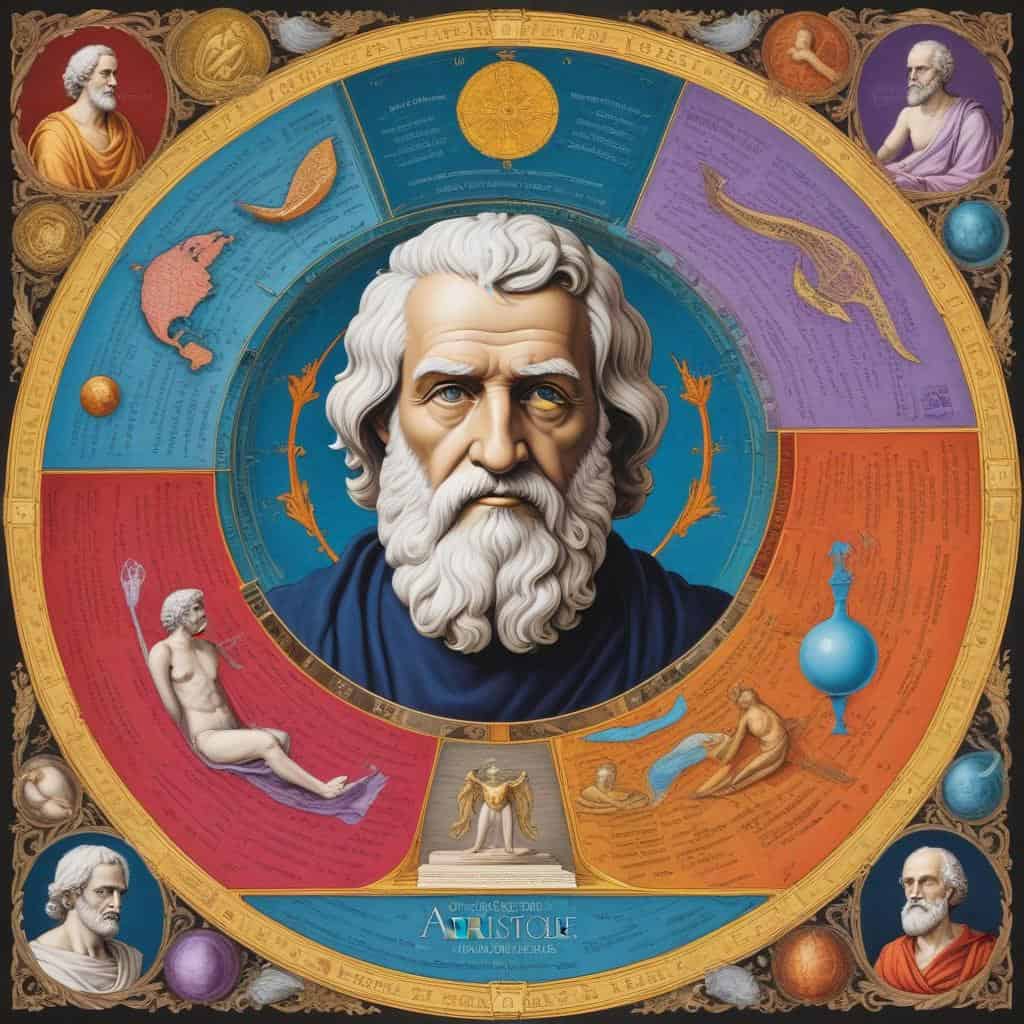
2. Four Causes in Aristotles Philosophy
3. Teleology in Aristotles Philosophy

4. Examples of Final Causes
5. Criticisms of Aristotles Theory of Final Causes
6. Relevance of Final Causes Today

7. Influence of Aristotles Theory of Final Causes
8. Application of Final Causes in Ethics
Lesson Details & Resources
In a Nutshell
- Concept: The belief that everything has a purpose or goal towards which it naturally tends.
- Thinkers: Aristotle, 4th Century BC
- Central Question: What is the ultimate purpose or goal of things in the world?
- Core Implication: Understanding the final causes of things can help us understand their nature and function better.
Timeline of Aristotle's Theory Of Final Causes
Vocabulary List
Key Facts
Analysis & Significance
The Core Argument
Aristotle’s Theory of Final Causes posits that every natural object has a purpose or end goal towards which it strives. This teleological perspective suggests that everything in the universe has a specific function or purpose, and that understanding this purpose is essential to understanding the nature of the object.
Criticisms and Counterarguments
Critics of Aristotle’s Theory of Final Causes argue that it is often difficult to determine the true purpose or end goal of an object, leading to subjective interpretations and potential misunderstandings. Additionally, some philosophers question the validity of attributing inherent purposes to objects, as they argue that natural phenomena may not have intentional goals.
Modern Relevance
Aristotle’s Theory of Final Causes can be applied to contemporary ethical dilemmas by prompting individuals to consider the ultimate purpose or goal of their actions. In personal life, this concept encourages individuals to reflect on the intentions behind their decisions and behaviors. In modern society, understanding the final causes of natural objects can inform sustainable practices and environmental ethics.
Aristotle's Theory Of Final Causes Games


Take Your Learning Offline
Want a convenient, print-ready study guide for this lesson? Become a Memory Wizards Pro member to unlock the downloadable " Memory Scrolls" for this topic and our entire library!
- ✓ Complete Vocabulary Lists
- ✓ Key Facts & Timelines
- ✓ Beautifully Formatted for Print & Mobile