
Exploring Different Schools Of Aesthetic Criticism
Do we define beauty or does beauty define us?
How Do You Learn Best?
Learn by Reading
Immerse yourself in the 10-minute visual lesson for a comprehensive understanding of the topic.
Learn by Reviewing
Jump directly to the key facts, timeline, and vocabulary lists to build a solid foundation of details.
Learn by Doing
Challenge yourself! Jump straight into the interactive games to learn by trial, error, and discovery.
Exploring Different Schools Of Aesthetic Criticism in 10 Minutes

Introduction
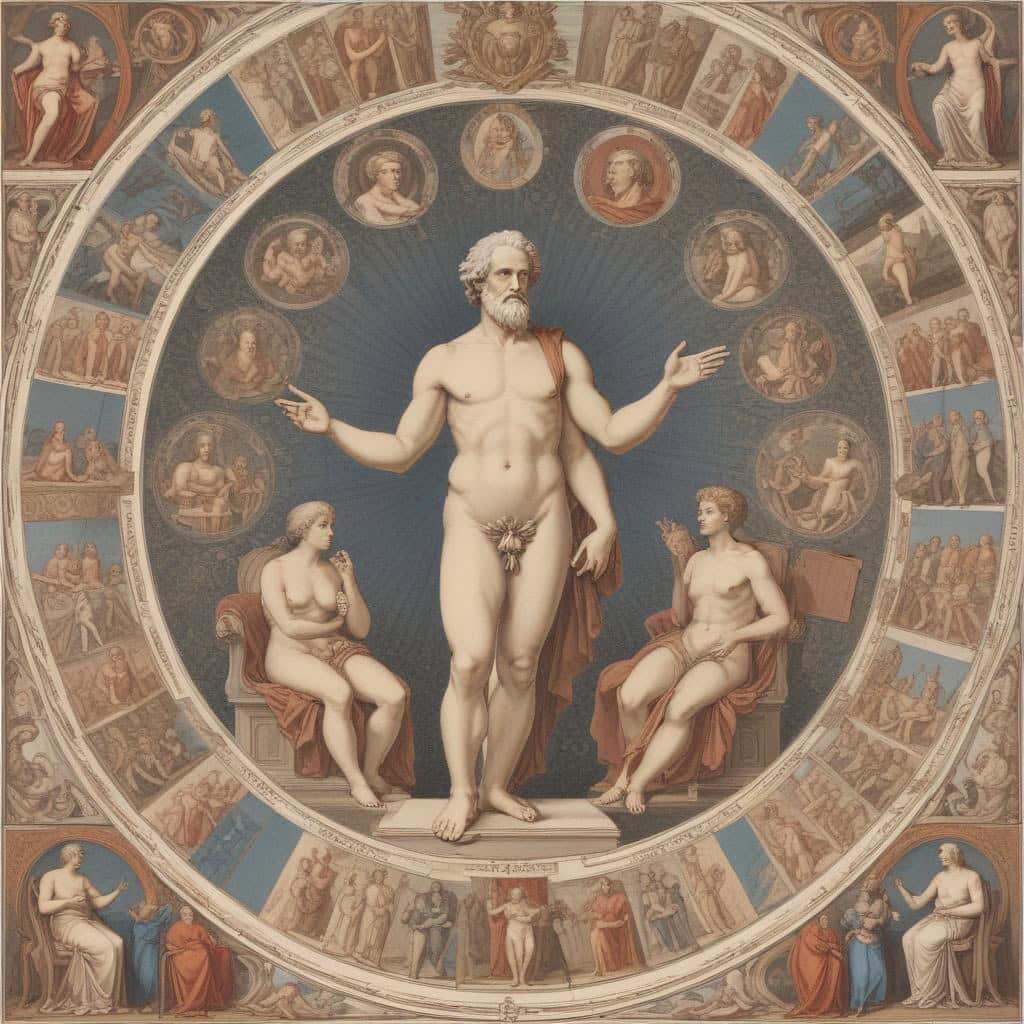


The Emotional Response School

The Intentionalism School

The Formalism School

The Postmodernism School

The Contextualism School

The Subjectivism School

The Culturalism School

The Radicalism School

The Naturalism School

The Avant-Garde School
Lesson Details & Resources
In a Nutshell
- Concept: Exploring Different Schools of Aesthetic Criticism
- Thinkers: Immanuel Kant, David Hume, Arthur Schopenhauer, Walter Benjamin
- Central Question: How do we determine what is considered beautiful or artistic?
- Core Implication: Aesthetic judgments are subjective and influenced by personal experiences and cultural contexts.
Timeline of Exploring Different Schools Of Aesthetic Criticism
Plato's theory of mimesis in 'The Republic'
Aristotle's 'Poetics' outlining principles of tragedy and poetry
Horace's 'Ars Poetica' on the nature of poetry and art
Plotinus' Neoplatonic aesthetics emphasizing the importance of beauty
St. Augustine's view on beauty as a reflection of God's creation
Thomas Aquinas' theological aesthetics linking beauty to goodness and truth
Immanuel Kant's 'Critique of Judgment' on aesthetics and teleology
Georg Wilhelm Friedrich Hegel's dialectical approach to aesthetics
Friedrich Schiller's 'On the Aesthetic Education of Man' on the role of art in society
Arthur Schopenhauer's pessimistic view on aesthetics and the role of art in alleviating suffering
John Ruskin's influence on the Arts and Crafts movement and environmental aesthetics
Walter Benjamin's 'The Work of Art in the Age of Mechanical Reproduction'
Theodor Adorno and Max Horkheimer's critique of the culture industry
Maurice Merleau-Ponty's phenomenological approach to aesthetics and perception
Jacques Derrida's deconstruction of aesthetic hierarchies and binary oppositions
Gilles Deleuze and Félix Guattari's 'Anti-Oedipus' on desire and aesthetics
Judith Butler's gender performativity and its implications for aesthetics
Slavoj Žižek's analysis of ideology and aesthetics in contemporary culture
Sianne Ngai's exploration of 'ugly feelings' and their impact on aesthetic experience
Timothy Morton's 'dark ecology' and its implications for aesthetics and environmentalism
Vocabulary List
- Aesthetic
- In exploring different schools of aesthetic criticism in philosophy, one must consider various definitions of what is considered 'aesthetic'.
- Criticism
- Different schools of aesthetic criticism in philosophy may have varying approaches to criticism and evaluation of artistic works.
- Philosophy
- Exploring different schools of aesthetic criticism in philosophy involves examining the underlying principles and theories that guide aesthetic judgments.
- Schools
- There are several different schools of thought within aesthetic criticism in philosophy, each offering unique perspectives on art and beauty.
- Beauty
- One of the central themes in exploring different schools of aesthetic criticism in philosophy is the concept of beauty and its role in art and aesthetics.
Key Facts
This is the information used in the fact matching game
- Aesthetic criticism in philosophy explores the nature of beauty and art.
- Different schools of aesthetic criticism include formalism, emotionalism, and contextualism.
- Formalist critics focus on the formal elements of a work of art, such as its composition and color.
- Emotionalist critics prioritize the emotional impact of art on the viewer.
- Contextualist critics consider the historical and cultural context in which a work of art was created.
- Aesthetic criticism can also involve philosophical inquiries into the nature of taste and aesthetic experience.
- Some critics argue that aesthetic judgments are subjective and based on individual preferences.
- Others believe that there are objective criteria for evaluating art and beauty.
- Aesthetic criticism can intersect with other philosophical disciplines, such as ethics and metaphysics.
- The concept of the sublime is often explored in aesthetic criticism, referring to experiences that are both awe-inspiring and terrifying.
- Postmodernist critics challenge traditional notions of beauty and art, often emphasizing irony and playfulness.
- Feminist critics examine how gender influences aesthetic judgments and representations in art.
- Marxist critics analyze how economic and social structures impact artistic production and reception.
- Psychoanalytic critics explore the unconscious motivations behind artistic creation and reception.
- Ecocritics consider the relationship between art and the environment, advocating for more sustainable and ecologically conscious artistic practices.
- Aesthetic criticism can involve interdisciplinary approaches that draw from fields such as psychology, sociology, and anthropology.
- Some critics argue that aesthetic experiences have the potential to transform individuals and society.
- Aesthetic criticism is not limited to traditional forms of art, but can also encompass everyday experiences and objects.
- The relationship between aesthetics and ethics is a central concern in philosophical discussions of art and beauty.
- Aesthetic criticism challenges us to think critically about the role of art in shaping our perceptions and values.
Analysis & Significance
The Core Argument
Exploring different schools of aesthetic criticism is crucial for understanding the diverse ways in which individuals interpret and evaluate art. By delving into various philosophical perspectives such as formalism, expressionism, and postmodernism, we can gain a deeper appreciation for the complexities of aesthetic experience and the underlying principles that shape our judgments of beauty and artistic value.
Criticisms and Counterarguments
Some critics argue that the subjective nature of aesthetic judgment makes it impossible to establish universal criteria for evaluating art, leading to a skepticism towards the validity of aesthetic theories. Additionally, the emphasis on intellectual analysis and theoretical frameworks in some schools of aesthetic criticism has been criticized for overlooking the emotional and intuitive aspects of aesthetic experience.
Modern Relevance
In today’s digital age, where the boundaries between art, technology, and popular culture are constantly evolving, understanding different schools of aesthetic criticism can help us navigate the diverse forms of artistic expression and cultural production. By engaging with various critical perspectives, we can develop a more nuanced understanding of contemporary art practices and the ways in which they reflect and shape our society’s values and beliefs.
Exploring Different Schools Of Aesthetic Criticism Games


Take Your Learning Offline
Want a convenient, print-ready study guide for this lesson? Become a Memory Wizards Pro member to unlock the downloadable " Memory Scrolls" for this topic and our entire library!
- ✓ Complete Vocabulary Lists
- ✓ Key Facts & Timelines
- ✓ Beautifully Formatted for Print & Mobile