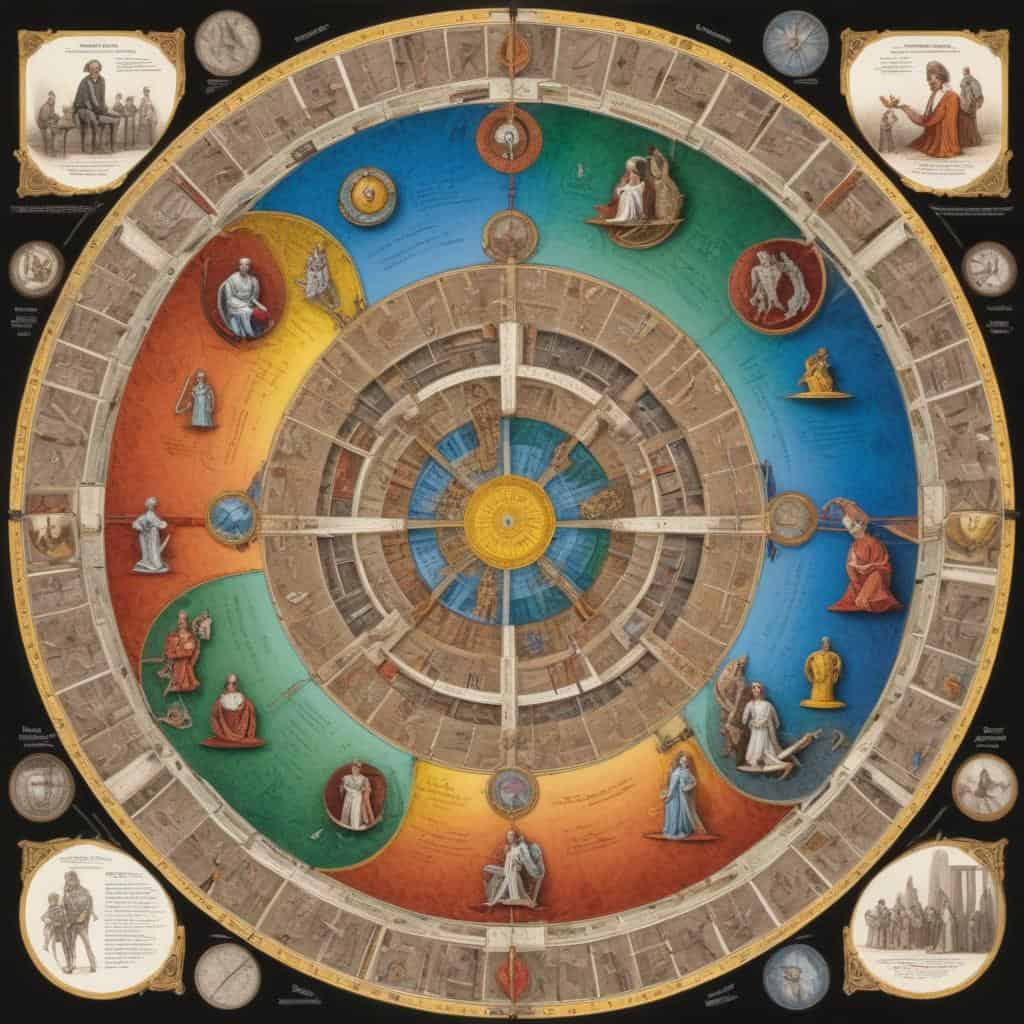
Coherentism: The Web Of Belief

Can our beliefs stand strong in the intricate tapestry of truth?

How Do You Learn Best?

Note: You can explore any or all of these paths in any order you prefer!

Coherentism: The Web Of Belief in 10 Minutes

Introduction

Introduction

Coherentism is a philosophical viewpoint that suggests our beliefs form a web, interconnected and mutually supporting. This theory proposes that the justification for a belief comes from its coherence with other beliefs in the web, rather than from any foundational or basic beliefs.

Within the web of belief, each belief is interconnected with others, forming a complex network that provides support and justification for each individual belief. This perspective challenges the traditional foundationalist approach to epistemology, which posits that beliefs are justified by building upon a set of basic, self-evident beliefs.

Coherentism encourages critical thinking and examination of the relationships between beliefs, as well as the overall structure of the web. By analyzing the connections and coherence within our beliefs, we can better understand the reasoning behind our beliefs and evaluate their validity.

1. W.V.O. Quine

1. W.V.O. Quine

W.V.O. Quine was an American philosopher who developed the Coherentism theory of knowledge, arguing that beliefs are interconnected and form a web of beliefs rather than being justified individually.

2. BonJour

2. BonJour

Laurence BonJour is a contemporary philosopher who has further developed and refined the Coherentism theory, emphasizing the importance of coherence and consistency in forming beliefs.

3. Donald Davidson

3. Donald Davidson

Donald Davidson was another influential philosopher who contributed to the development of Coherentism, focusing on the holistic nature of beliefs and the role of interpretation in shaping our understanding of the world.

1. Introduction to Coherentism

1. Introduction to Coherentism

Coherentism is a philosophical viewpoint that emphasizes the interconnectedness of beliefs. Instead of evaluating beliefs individually, coherentism argues that beliefs should be assessed as a whole system.

2. The Foundation of Coherentism

2. The Foundation of Coherentism

Coherentism rejects the idea of foundationalism, which posits that beliefs are justified by some foundational beliefs or evidence. Instead, coherentism holds that beliefs are justified by their coherence with other beliefs in a web-like structure.

3. The Web of Belief

3. The Web of Belief

In the web of belief, each belief is interconnected with other beliefs, forming a coherent structure. If a belief does not fit within this structure, it may need to be revised or rejected in order to maintain coherence.

4. Justification in Coherentism

4. Justification in Coherentism

Justification in coherentism comes from the overall coherence of a set of beliefs, rather than from any individual belief. A belief is justified if it coheres with the rest of the beliefs in the web.

5. Challenges to Coherentism

5. Challenges to Coherentism

One challenge to coherentism is the problem of circularity - if beliefs are justified by their coherence with other beliefs, how do we ensure that the system is not just circular reasoning? Critics argue that coherentism struggles to provide a solid foundation for knowledge.

6. Responses to Criticisms

6. Responses to Criticisms

Proponents of coherentism respond to criticisms by emphasizing the importance of coherence in forming beliefs. They argue that coherence is a key factor in determining the credibility of a belief and that the web of belief can be expanded and revised over time.

7. Coherentism in Epistemology

7. Coherentism in Epistemology

Coherentism is a prominent theory in epistemology, the branch of philosophy that deals with the nature of knowledge. It offers an alternative to foundationalism and provides a framework for understanding how beliefs are justified.

8. Application of Coherentism

8. Application of Coherentism

Coherentism can be applied to various fields, such as ethics, science, and religion. By examining the coherence of beliefs within these domains, one can evaluate the rationality and justification of different viewpoints.

9. Continuing Debate

9. Continuing Debate

The debate between coherentism and foundationalism continues to be a central topic in epistemology. Both sides offer compelling arguments, and philosophers are still exploring the implications of each theory on our understanding of knowledge.

1 / 19

Lesson Details & Resources

In a Nutshell

  • Concept: A theory of knowledge that asserts beliefs are justified by their coherence within a system of beliefs.
  • Thinkers: W.V.O. Quine, mid-20th Century.
  • Central Question: How can we determine the justification of our beliefs?
  • Core Implication: Justification of beliefs is dependent on their coherence within a network of beliefs, rather than individual beliefs in isolation.

Timeline of Coherentism: The Web Of Belief

No timeline events found.

Vocabulary List

No vocabulary terms found.

Key Facts

This is the information used in the fact matching game

    No key facts found.

Analysis & Significance

The Core Argument

Coherentism posits that the justification of beliefs relies on their coherence within a network of interconnected beliefs, rather than on individual beliefs being independently verified. This web of belief allows for mutual support and reinforcement, creating a holistic framework that can account for uncertainties and discrepancies.

Criticisms and Counterarguments

One major criticism of Coherentism is the challenge of circular reasoning, where individual beliefs may end up reinforcing each other without any external validation. Critics argue that this could lead to a closed system that is immune to external critique and unable to revise itself in light of new evidence.

Modern Relevance

In today’s information age, where fake news and misinformation abound, Coherentism offers a valuable perspective on how we form and evaluate our beliefs. By emphasizing the interconnectedness of beliefs and the need for consistency within our belief systems, Coherentism encourages critical thinking and reflection on the sources and coherence of the information we encounter in our daily lives.

Coherentism: The Web Of Belief Games

Was This Lesson Helpful?

Please log in or sign up to rate this lesson. 

Take Your Learning Offline

Want a convenient, print-ready study guide for this lesson? Become a Memory Wizards Pro member to unlock the downloadable " Memory Scrolls" for this topic and our entire library!

  • ✓ Complete Vocabulary Lists
  • ✓ Key Facts & Timelines
  • ✓ Beautifully Formatted for Print & Mobile
Upgrade to Pro

You must be logged in to provide feedback. Please log in or create a free account.

Scroll to Top