
How Do You Learn Best?
Learn by Reading
Immerse yourself in the 10-minute visual lesson for a comprehensive understanding of the topic.
Learn by Reviewing
Jump directly to the key facts, timeline, and vocabulary lists to build a solid foundation of details.
Learn by Doing
Challenge yourself! Jump straight into the interactive games to learn by trial, error, and discovery.
Antigone in 10 Minutes

Introduction
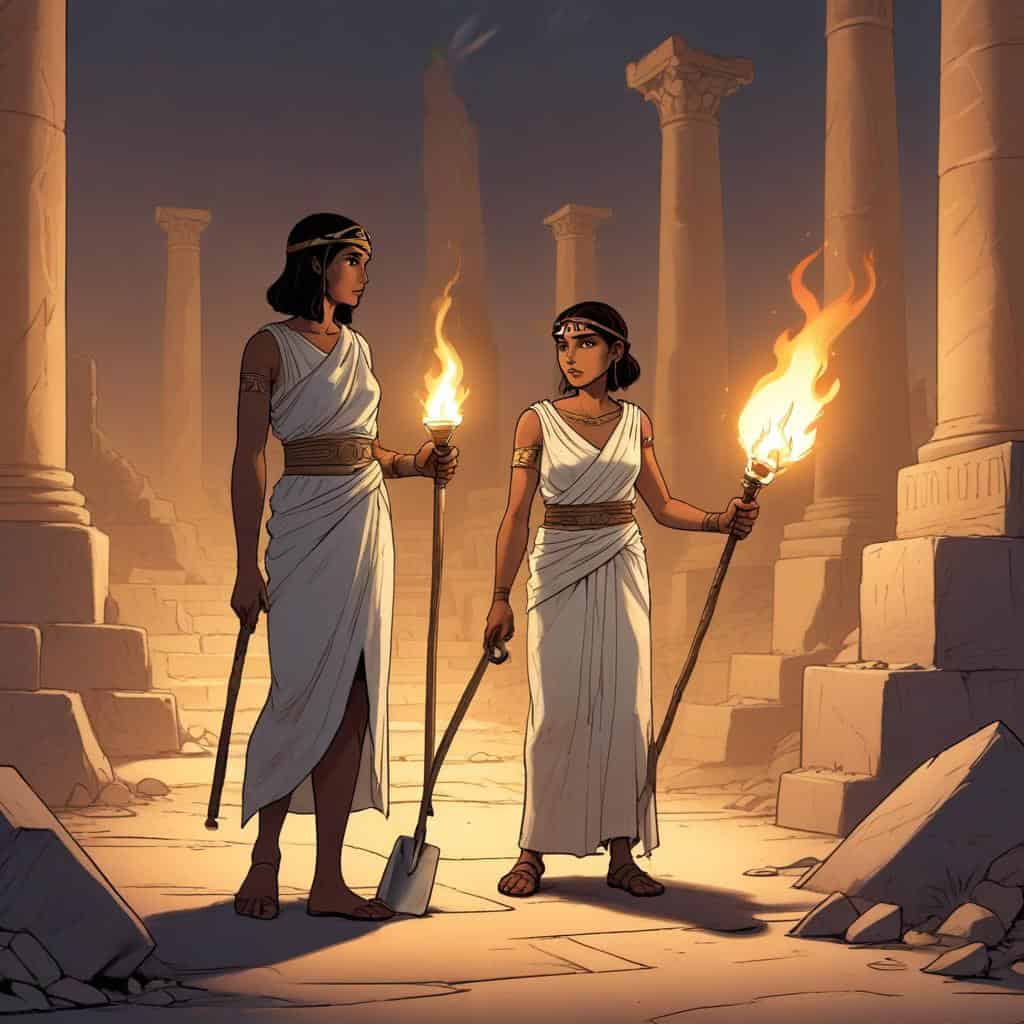


Antigone

Creon

Ismene

Haemon

Tiresias
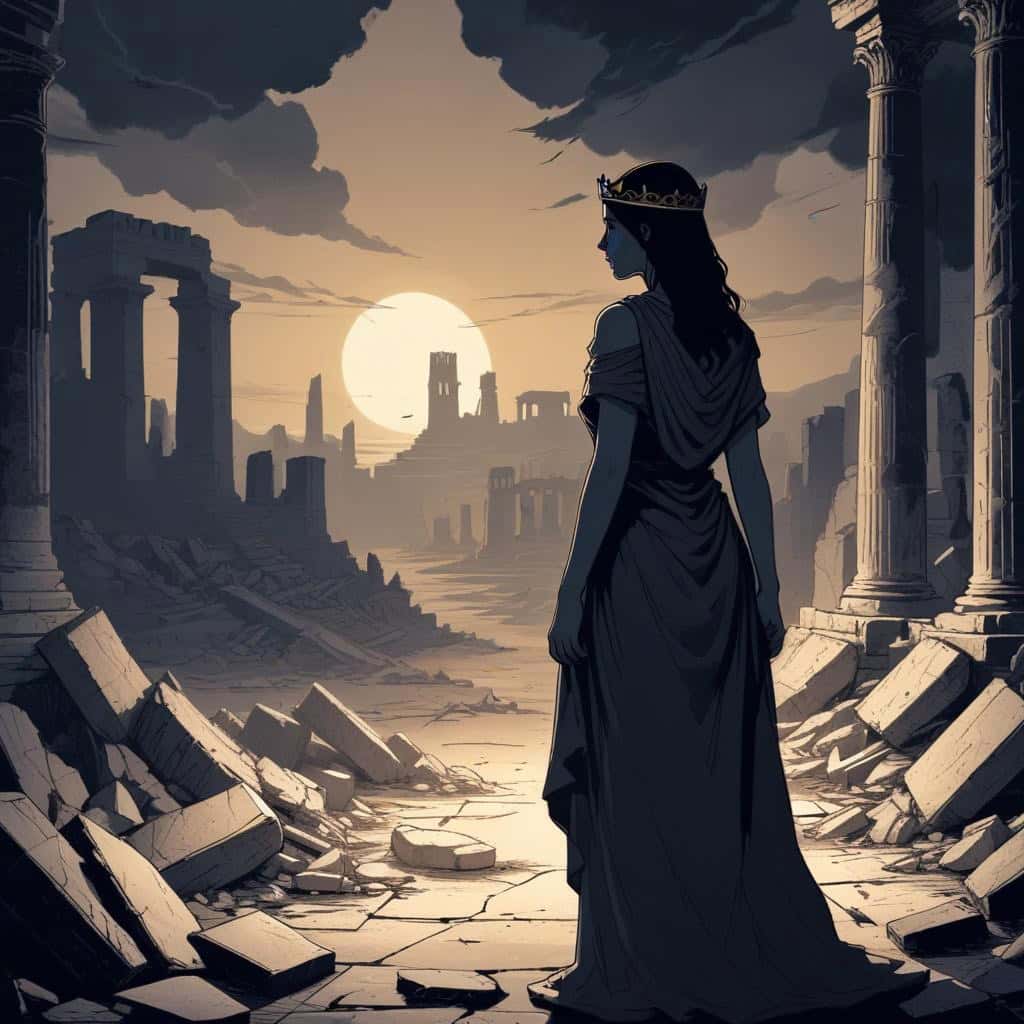
The Background of Antigone
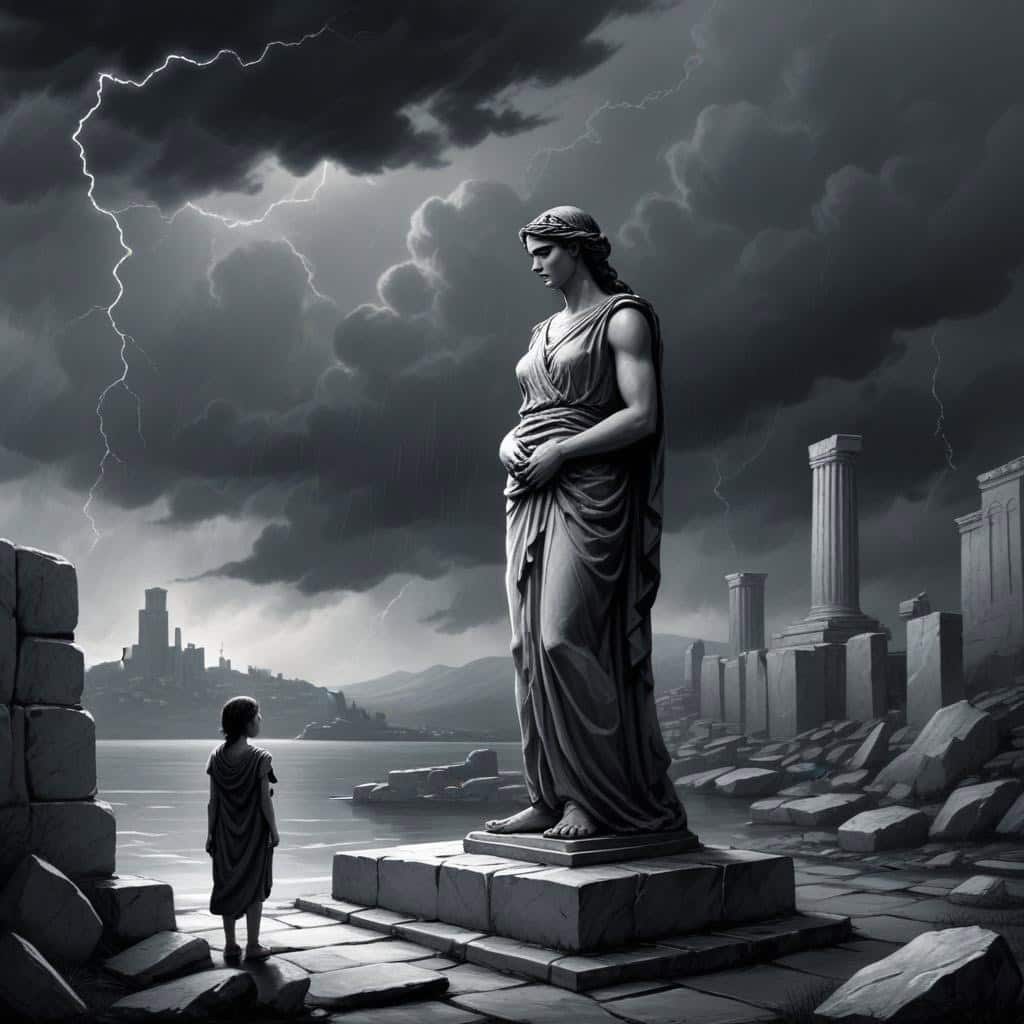
Creons Decree

Antigones Defiance

Creons Punishment
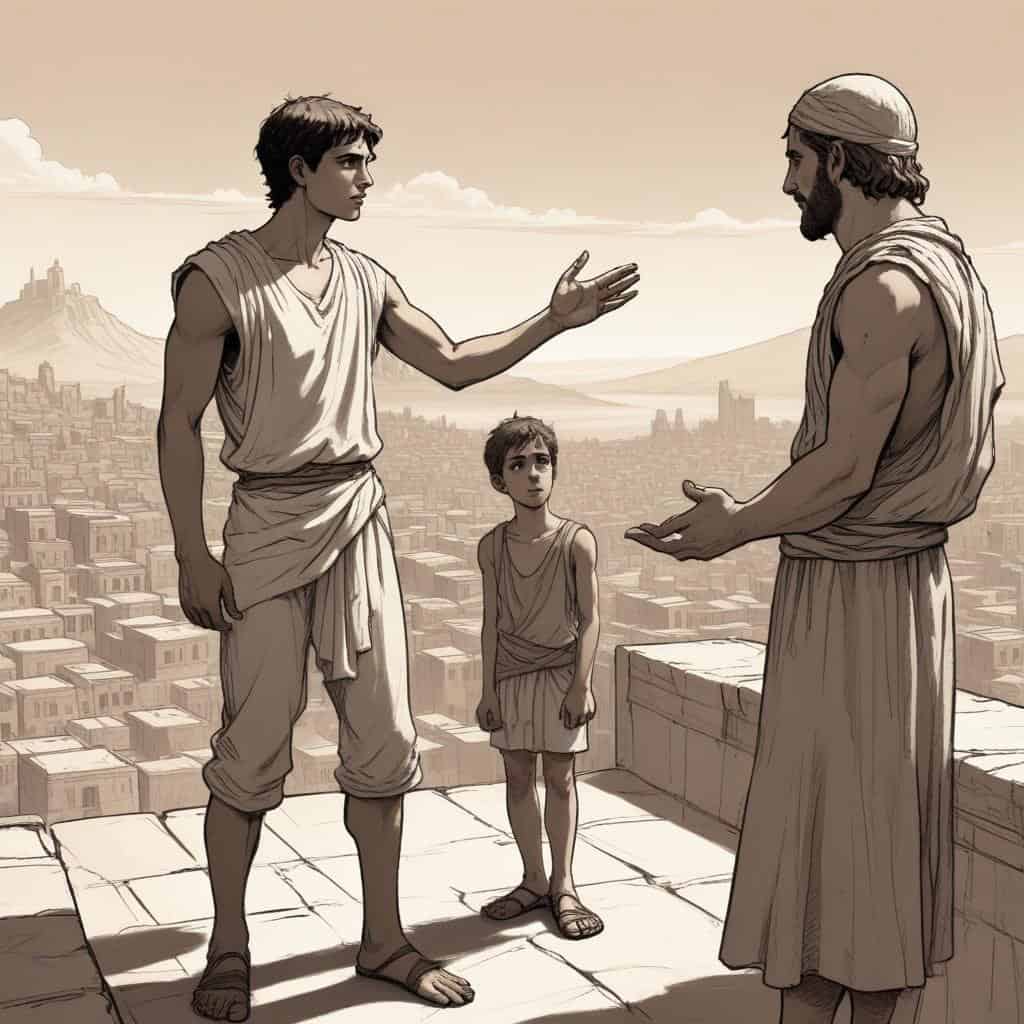
Haemons Plea
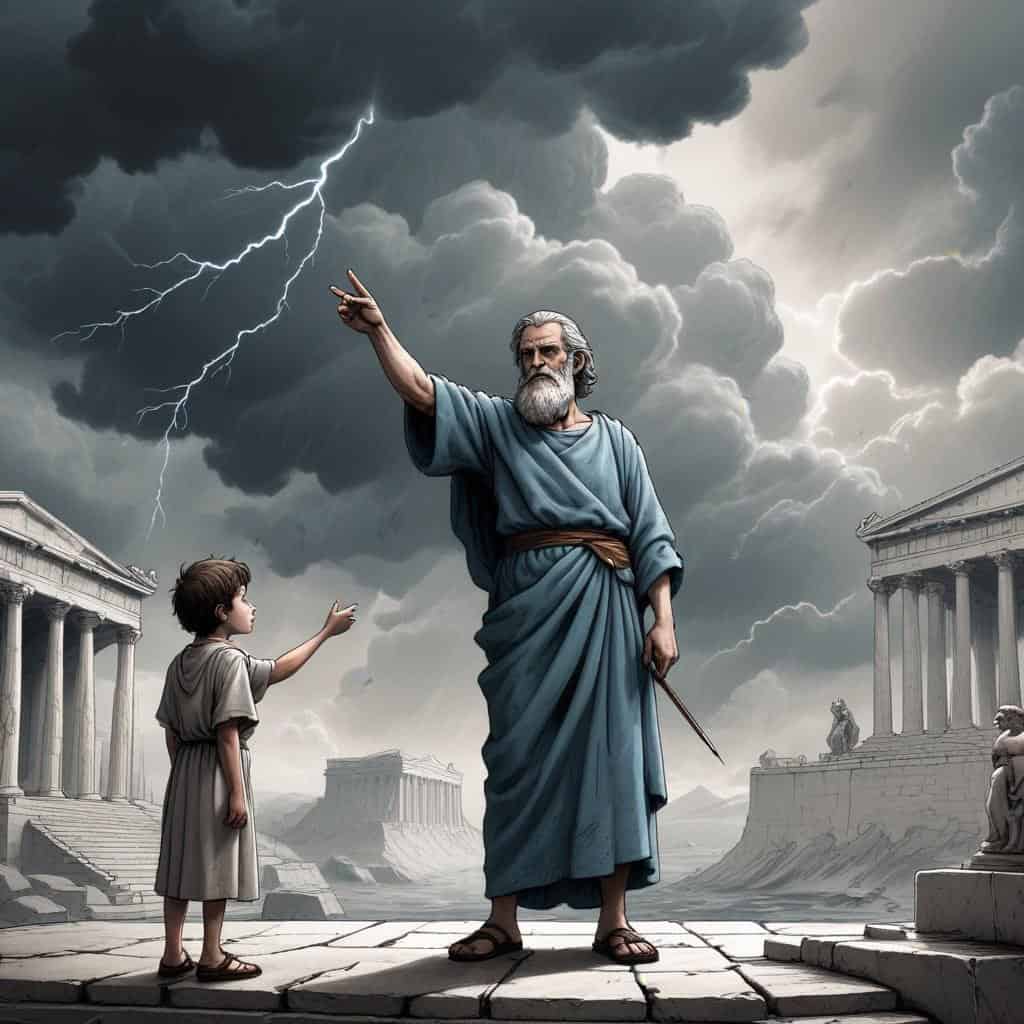
Tiresias Warning

Tragic Endings
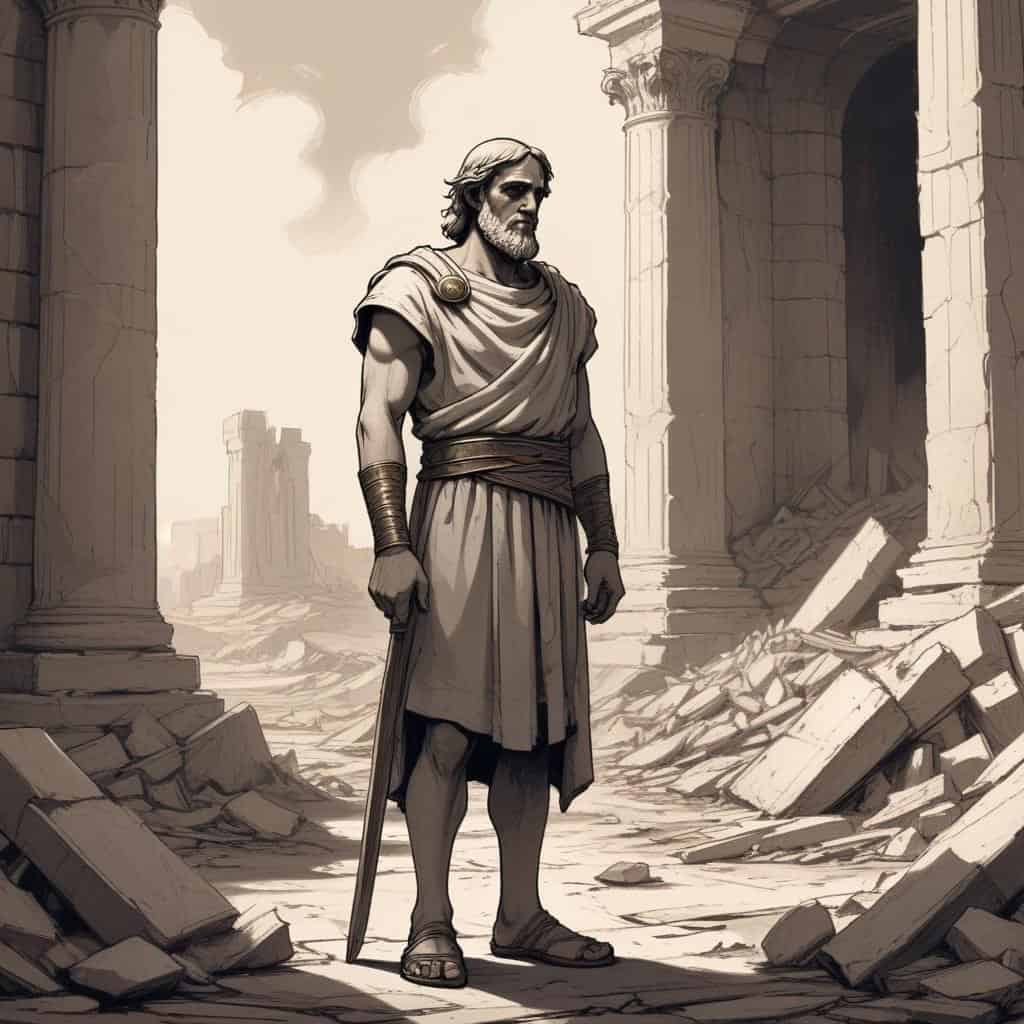
Creons Regret
The Moral of the Story
Lesson Details & Resources
In a Nutshell
- What: Tragedy by Sophocles
- When: Ancient Greek period
- Who: Antigone, Creon, Ismene
- Theme: Conflict between moral duty and state law
List of Characters in Antigone
-
Antigone
Antigone is the daughter of Oedipus and Jocasta, who defies Creon's orders to bury her brother Polynices.
-
Creon
Creon is the king of Thebes who issues a decree that Polynices, who fought against Thebes, must not be buried.
-
Ismene
Ismene is Antigone's sister who initially refuses to help her bury Polynices, but later regrets her decision.
-
Haemon
Haemon is Creon's son who is engaged to Antigone and tries to convince his father to spare her life.
-
Eurydice
Eurydice is Creon's wife who takes her own life after learning about the deaths of her son Haemon and Antigone.
-
Tiresias
Tiresias is a blind prophet who warns Creon about the consequences of his actions and advises him to change his ways.
Timeline of Antigone
Antigone's brother, Polyneices, dies in battle against his own brother, Eteocles, in their quest for the throne of Thebes.
Creon, the new king of Thebes, declares that Eteocles will receive a proper burial, but Polyneices will be left unburied as punishment for his betrayal.
Antigone defies Creon's decree and buries her brother Polyneices, believing it is her duty to honor her family.
Creon discovers the burial and orders Antigone to be buried alive as punishment for her disobedience.
Antigone is taken to the tomb and entombed alive, despite protests from her fiance, Haemon, who is Creon's son.
Teiresias, the blind prophet, warns Creon that the gods are angry with him for defying their laws and not allowing proper burial rites for Polyneices.
Creon decides to release Antigone, but it is too late as she has already taken her own life in the tomb.
Haemon, upon discovering Antigone's death, also takes his own life.
Creon's wife, Eurydice, upon hearing of her son's death, also takes her own life, leaving Creon alone and devastated by the consequences of his actions.
Vocabulary List
- Tragedy
- Antigone is a Greek tragedy written by Sophocles.
- Hubris
- Creon's hubris leads to his downfall in Antigone.
- Fate
- The characters in Antigone are driven by their belief in fate.
- Loyalty
- Antigone demonstrates loyalty to her family by burying her brother.
- Justice
- The conflict in Antigone revolves around the idea of justice.
- Hubris
- Creon's hubris leads to his downfall in Antigone.
- Civil disobedience
- Antigone engages in civil disobedience by defying Creon's orders.
- Sacrifice
- Antigone sacrifices her life for her beliefs in the play.
- Tyranny
- Creon's rule is seen as tyrannical by the characters in Antigone.
- Tragic flaw
- Creon's tragic flaw is his excessive pride in Antigone.
Key Facts
This is the information used in the fact matching game
- Antigone is a play written by Sophocles around 441 BC.
- Antigone is the third of the three Theban plays written by Sophocles.
- The play is set in the aftermath of a civil war in Thebes.
- Antigone is the daughter of Oedipus and Jocasta.
- Antigone's two brothers, Eteocles and Polynices, have killed each other in battle.
- Creon, the king of Thebes, decrees that Eteocles will be buried with honors while Polynices will be left unburied.
- Antigone defies Creon's decree and buries Polynices, leading to her arrest.
- Antigone argues that divine law is more important than human law.
- Creon condemns Antigone to be buried alive in a cave.
- Haemon, Creon's son and Antigone's fiancé, tries to intervene on her behalf.
- Creon eventually relents and tries to free Antigone, but she has already taken her own life.
- The Chorus in Antigone represents the voice of the people of Thebes.
- Antigone's actions are driven by her loyalty to her family and her belief in divine justice.
- The character of Antigone has been a symbol of civil disobedience and resistance throughout history.
- Sophocles' portrayal of Antigone's defiance of authority has been interpreted in various ways by different scholars.
- Antigone is considered one of the greatest works of ancient Greek drama.
- The themes of Antigone include the conflict between individual conscience and state authority.
- Antigone's tragic fate serves as a cautionary tale about the dangers of hubris and stubbornness.
- Antigone's story has inspired numerous adaptations and retellings in literature, theater, and film.
- Antigone continues to be studied and performed around the world as a timeless exploration of moral and political dilemmas.
Analysis & Significance
Impact on Literature
Antigone, written by Sophocles in ancient Greece, is a timeless tragedy that has influenced countless works of literature throughout history. Its exploration of moral dilemmas, the conflict between personal beliefs and societal expectations, and the consequences of defying authority have served as a blueprint for many future playwrights and authors.
Enduring Themes
The themes of loyalty, family, justice, and the struggle between individual conscience and the law in Antigone continue to resonate with modern audiences. The character of Antigone, a strong-willed woman who stands up for her beliefs despite the consequences, remains a powerful symbol of resistance and defiance against unjust authority.
Cultural Significance Today
Antigone’s legacy can be seen in various adaptations and retellings in modern literature, theater, and film. Its influence can be found in works such as Jean Anouilh’s Antigone, Martha Graham’s ballet production, and even in contemporary discussions of civil disobedience and social justice. The play’s enduring relevance underscores its importance in shaping cultural conversations about morality and power dynamics.
Antigone Games


Take Your Learning Offline
Want a convenient, print-ready study guide for this lesson? Become a Memory Wizards Pro member to unlock the downloadable " Memory Scrolls" for this topic and our entire library!
- ✓ Complete Vocabulary Lists
- ✓ Key Facts & Timelines
- ✓ Beautifully Formatted for Print & Mobile