
Socratic Dialogue
Is wisdom found in questioning everything?
How Do You Learn Best?
Learn by Listening
Start with the 3-minute audio summary to get the key facts and narrative highlights quickly.
Learn by Reading
Immerse yourself in the 10-minute visual lesson for a comprehensive understanding of the topic.
Learn by Reviewing
Jump directly to the key facts, timeline, and vocabulary lists to build a solid foundation of details.
Learn by Doing
Challenge yourself! Jump straight into the interactive games to learn by trial, error, and discovery.
Audio Library
As one of our featured lessons, this topic includes premium audio guides.
Unlock the Wizard's Cram Session
This powerful audio study guide is a Pro-exclusive feature. Upgrade to Memory Wizards Pro to access this and all of our premium learning tools.
Upgrade to ProSocratic Dialogue in 10 Minutes
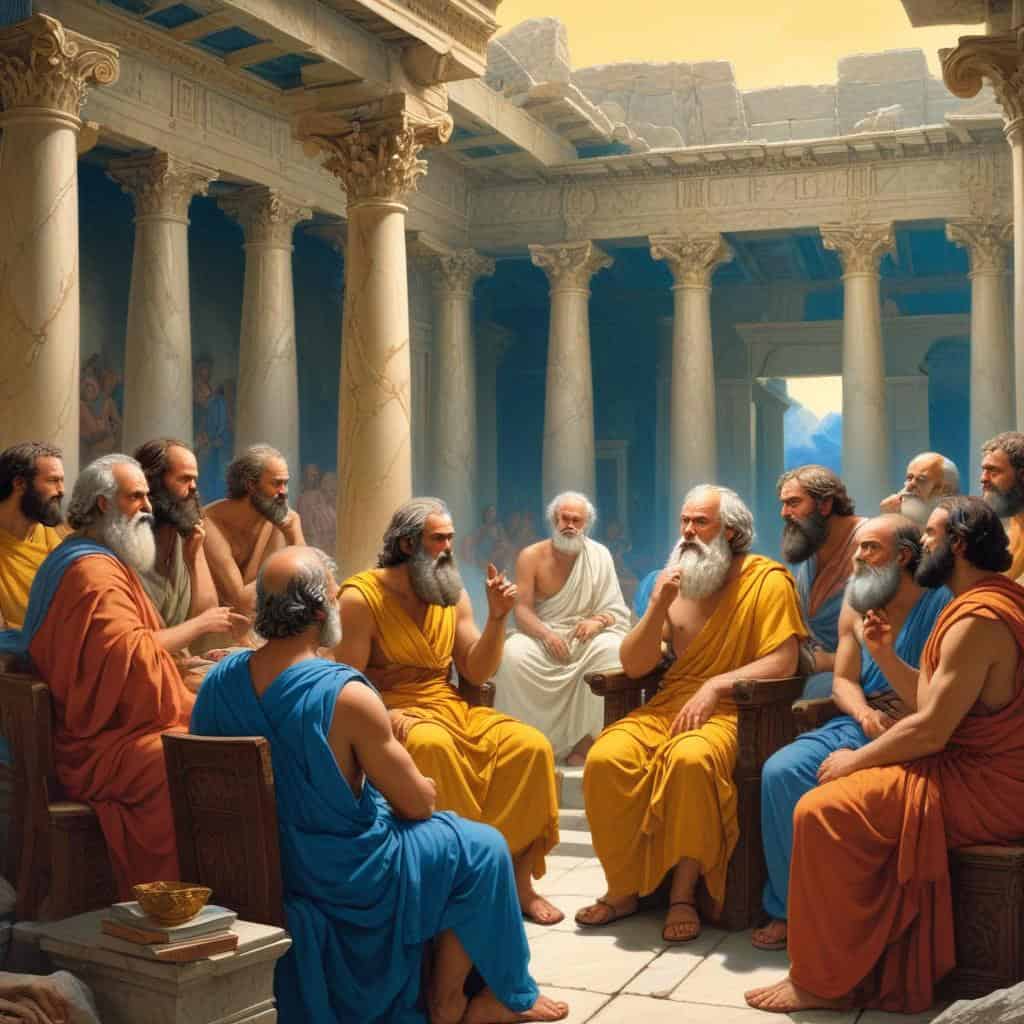
Introduction

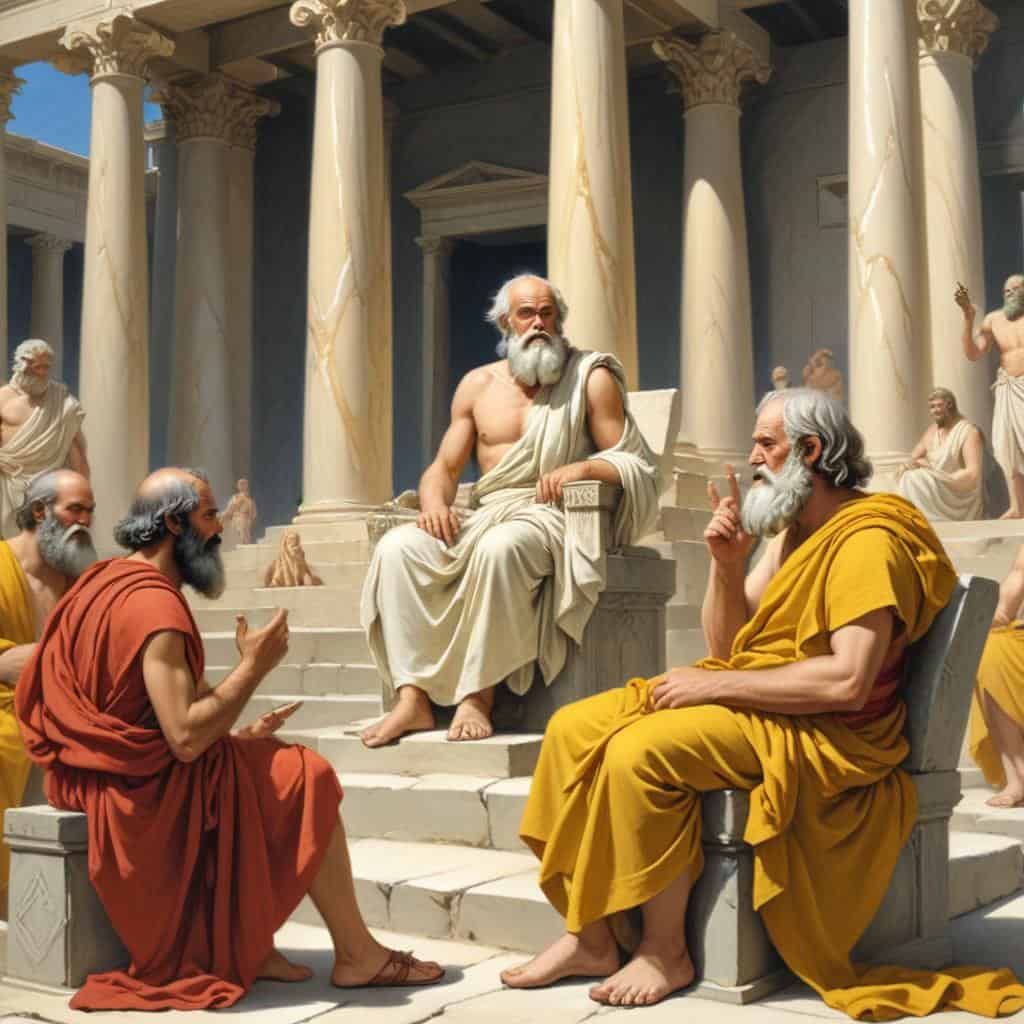
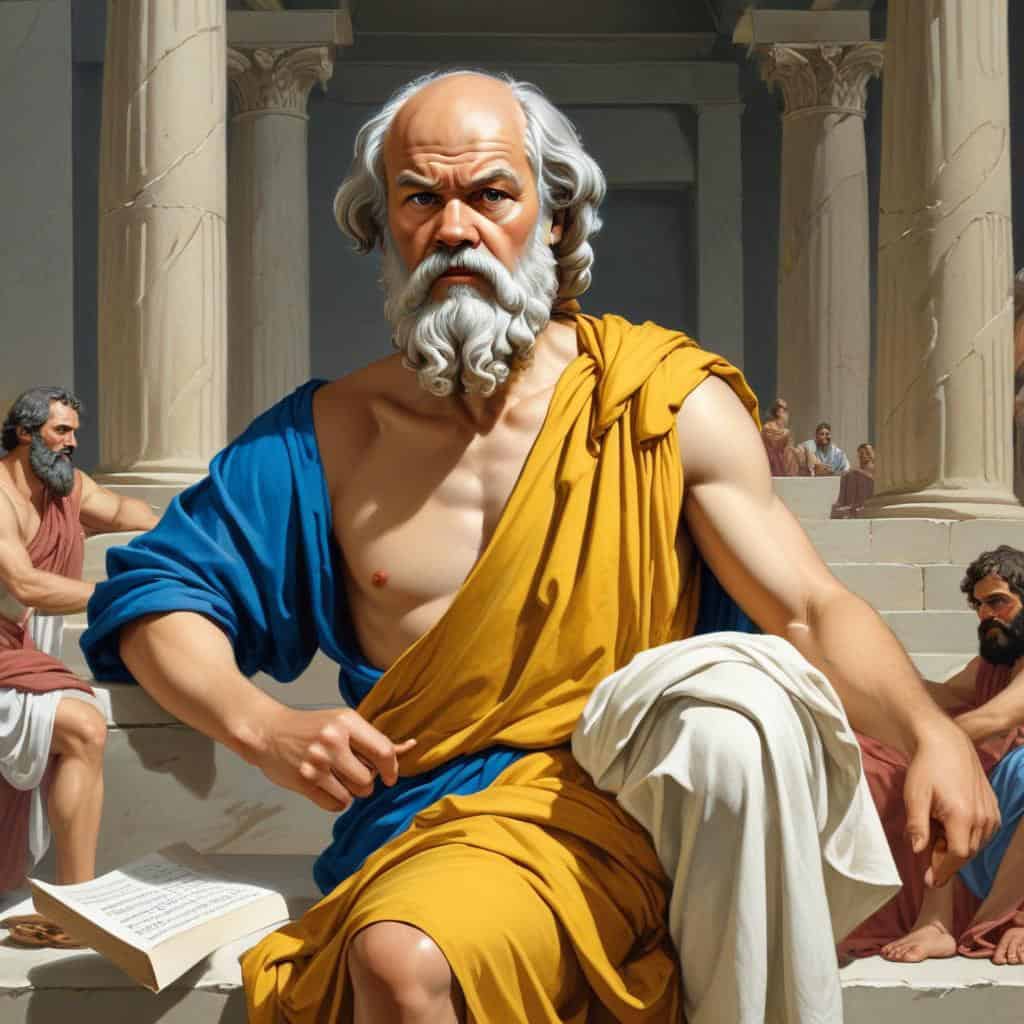
Socrates

Plato

Aristotle

Xenophon
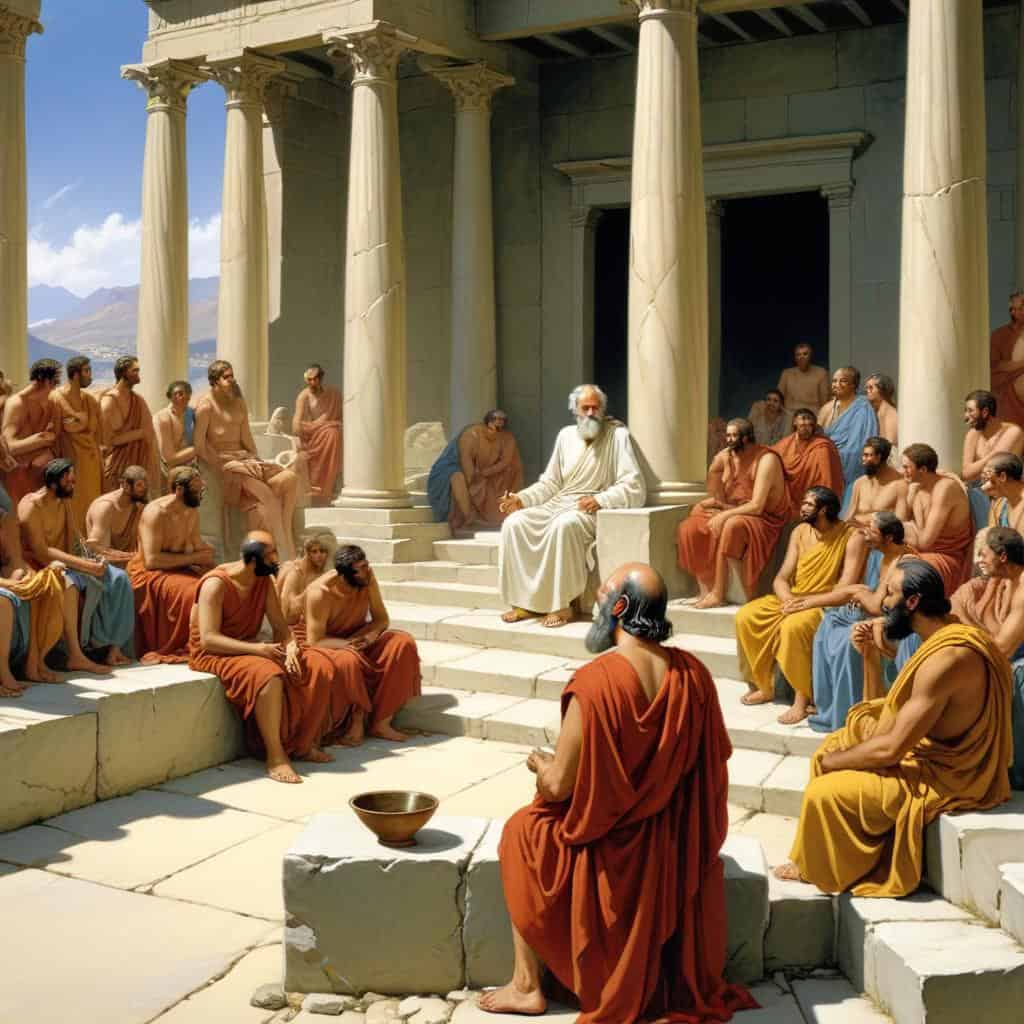
The Birth of Socratic Dialogue

The Purpose of Socratic Dialogue

The Structure of Socratic Dialogue

The Role of Questioning in Socratic Dialogue

The Importance of Active Listening in Socratic Dialogue

The Benefits of Socratic Dialogue

The Challenges of Socratic Dialogue
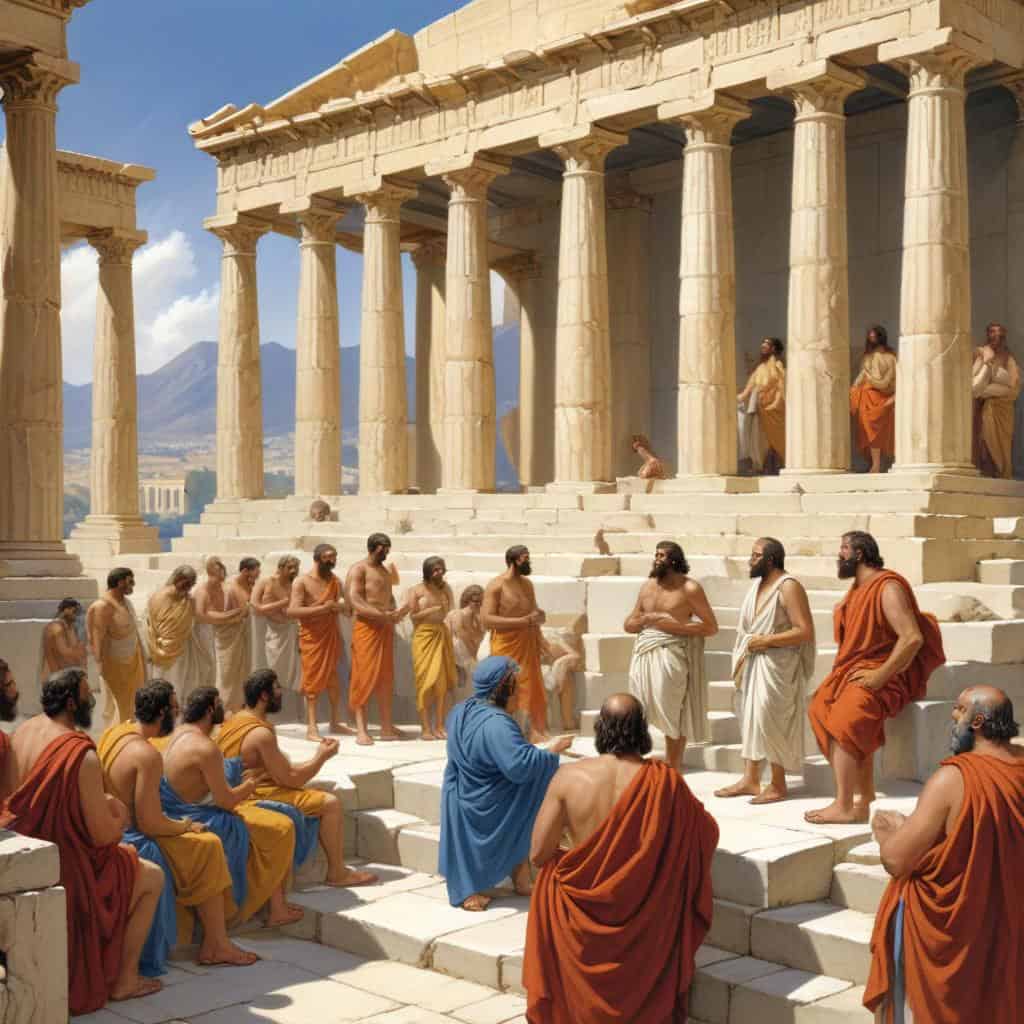
The Evolution of Socratic Dialogue

The Future of Socratic Dialogue


Lesson Details & Resources
In a Nutshell
- Concept: A method of philosophical inquiry developed by Socrates.
- Thinkers: Socrates, 5th Century BC.
- Central Question: How can we arrive at true knowledge and understanding?
- Core Implication: True wisdom comes from admitting one's own ignorance.
Timeline of Socratic Dialogue
Socrates begins engaging in philosophical dialogues in Athens
Socrates is put on trial and sentenced to death for impiety and corrupting the youth
Plato writes dialogues featuring Socrates as the main character
Aristotle studies under Plato at the Academy and is influenced by Socratic dialogues
Xenophon writes dialogues featuring Socrates as a wise teacher
Socratic dialogue becomes a popular method of philosophical inquiry in ancient Greece
Socratic dialogues inspire later philosophical traditions, such as Stoicism and Neoplatonism
Cicero adopts the Socratic dialogue format in his philosophical works
Medieval philosophers like Thomas Aquinas and Augustine of Hippo engage in Socratic dialogues
Renaissance humanists revive interest in Socratic dialogues and ancient philosophy
Enlightenment thinkers like Voltaire and Rousseau critique traditional authority through Socratic dialogues
19th-century existentialists like Kierkegaard and Nietzsche use Socratic dialogues to explore individual freedom and morality
20th-century philosophers like Wittgenstein and Popper engage in Socratic dialogues to challenge traditional philosophical methods
Contemporary philosophers continue to use the Socratic dialogue format to explore complex ethical and metaphysical issues
Vocabulary List
- Socratic Method
- The Socratic Method is a key component of Socratic Dialogues in Philosophy.
- Elenchus
- Socrates often employed elenchus to challenge and uncover inconsistencies in his interlocutors' arguments.
- Irony
- Socrates' use of irony in his dialogues allowed him to challenge assumptions and provoke deeper thinking.
- Maieutics
- Through the process of maieutics, Socrates aimed to help his interlocutors reach a deeper understanding of complex concepts.
- Dialogue
- Socratic Dialogues in Philosophy involve a structured dialogue between Socrates and other characters to explore philosophical questions and concepts.
Key Facts
This is the information used in the fact matching game
- Socratic dialogue is a form of philosophical inquiry that involves a series of questions and answers to stimulate critical thinking and illuminate ideas.
- Socrates used dialogue as a method to uncover underlying assumptions and contradictions in his interlocutors' beliefs.
- The Socratic method is characterized by a teacher/student dynamic in which the teacher poses questions to guide the student towards discovering truths on their own.
- Socratic dialogue emphasizes the importance of inquiry, self-examination, and open-mindedness in the pursuit of wisdom.
- Socratic dialogue can be seen as a form of cooperative argumentation where participants work together to uncover the truth.
- The Socratic method is not about providing answers, but rather about asking the right questions to stimulate critical thinking.
- Socratic dialogue often involves the use of hypothetical scenarios and thought experiments to explore ethical dilemmas and philosophical concepts.
- The Socratic method encourages humility and intellectual honesty by challenging assumptions and inviting self-reflection.
- Socratic dialogue can be used as a tool for moral education and character development, as it encourages individuals to think critically about their values and beliefs.
- Socrates believed that wisdom lies in recognizing the limits of one's knowledge and being open to learning from others.
- Socratic dialogue can be a means of fostering empathy and understanding by encouraging individuals to consider different perspectives and engage in respectful debate.
- The Socratic method has been influential in the development of Western philosophy, particularly in the areas of ethics, epistemology, and political theory.
- Socratic dialogue is not limited to academic settings and can be applied in everyday conversations to facilitate deeper understanding and meaningful communication.
- The Socratic method challenges individuals to critically examine their beliefs and values, leading to personal growth and intellectual development.
- Socratic dialogue encourages individuals to question authority and challenge societal norms in pursuit of truth and justice.
- The Socratic method can be a powerful tool for teaching and learning, as it promotes active engagement and critical thinking skills.
- Socratic dialogue can help cultivate intellectual virtues such as curiosity, open-mindedness, and intellectual humility.
- The Socratic method can be adapted for use in various fields, including law, education, and business, to facilitate problem-solving and decision-making.
- Socratic dialogue is not about winning arguments or proving a point, but rather about engaging in a collaborative search for truth and understanding.
- The Socratic method values the process of inquiry and self-examination over the final conclusions reached, emphasizing the journey of philosophical exploration.
Analysis & Significance
The Core Argument
Socratic Dialogue is a method of philosophical inquiry that involves a series of questions and answers to stimulate critical thinking and uncover underlying beliefs. Through this process, participants are encouraged to question their assumptions and engage in self-examination, ultimately leading to a deeper understanding of complex concepts.
Criticisms and Counterarguments
One major criticism of Socratic Dialogue is that it can be seen as overly simplistic or manipulative, with the questioner leading the respondent towards a predetermined conclusion. Critics argue that this approach may not always lead to genuine insights and can be used to reinforce existing biases rather than challenge them.
Modern Relevance
In today’s world, where echo chambers and confirmation bias are prevalent, the practice of Socratic Dialogue remains highly relevant. By encouraging individuals to question their beliefs and engage in open, honest dialogue, this method can help foster critical thinking, empathy, and understanding in a society often polarized by differing viewpoints. It can also be a valuable tool in resolving conflicts and addressing ethical dilemmas by promoting thoughtful reflection and mutual respect.
Socratic Dialogue Games


Take Your Learning Offline
Want a convenient, print-ready study guide for this lesson? Become a Memory Wizards Pro member to unlock the downloadable " Memory Scrolls" for this topic and our entire library!
- ✓ Complete Vocabulary Lists
- ✓ Key Facts & Timelines
- ✓ Beautifully Formatted for Print & Mobile