
How Do You Learn Best?
Learn by Reading
Immerse yourself in the 10-minute visual lesson for a comprehensive understanding of the topic.
Learn by Reviewing
Jump directly to the key facts, timeline, and vocabulary lists to build a solid foundation of details.
Learn by Doing
Challenge yourself! Jump straight into the interactive games to learn by trial, error, and discovery.
Apology in 10 Minutes

Introduction
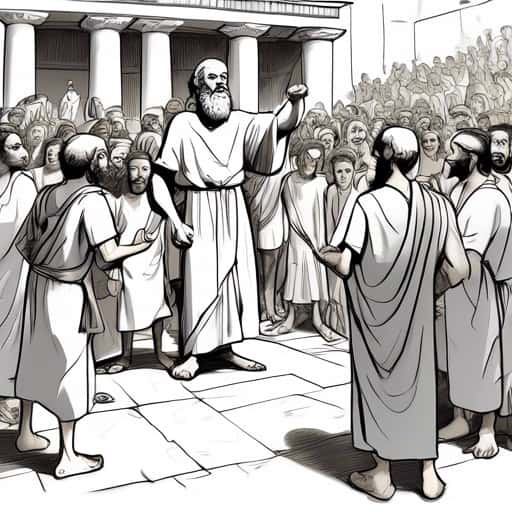
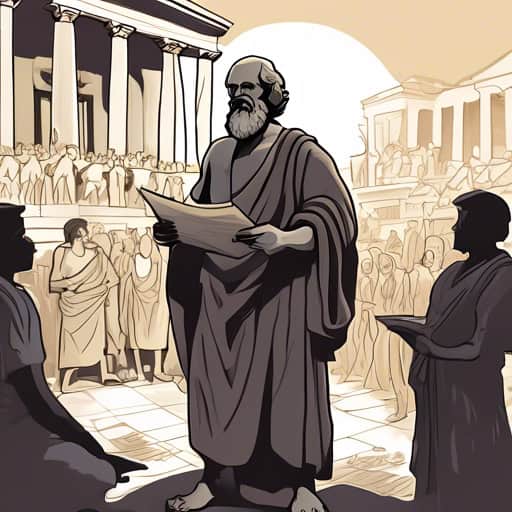
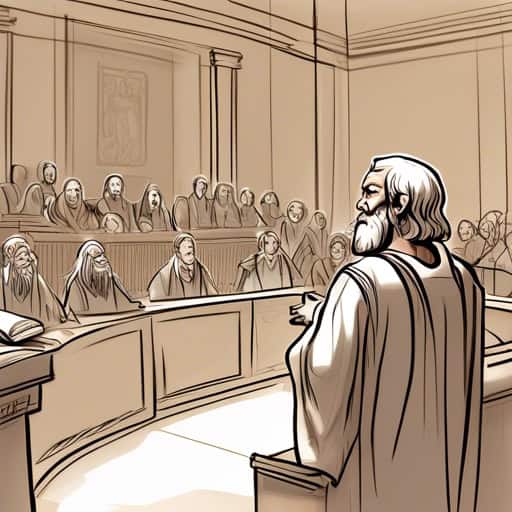
Socrates

Meletus

Anytus

Plato
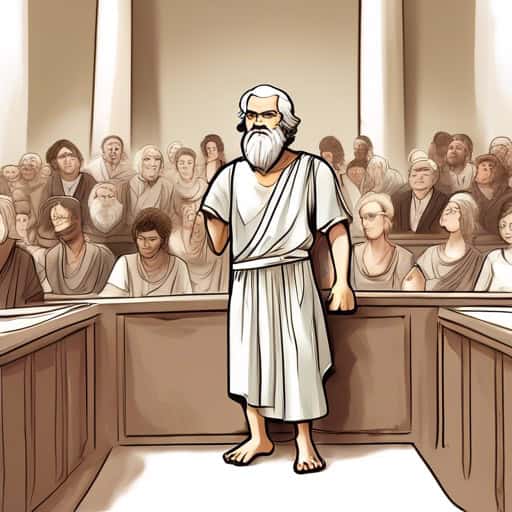
Socrates Trial
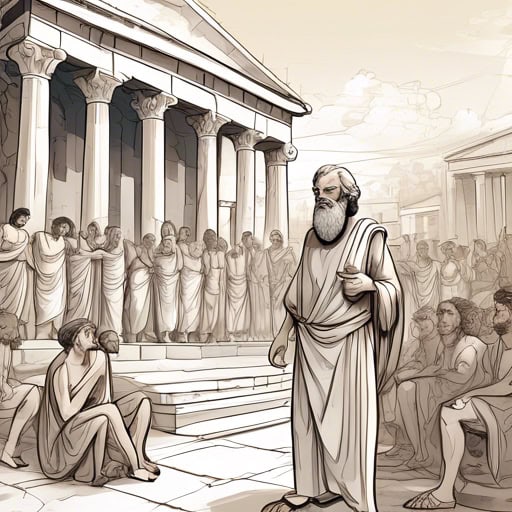
Challenging Meletus
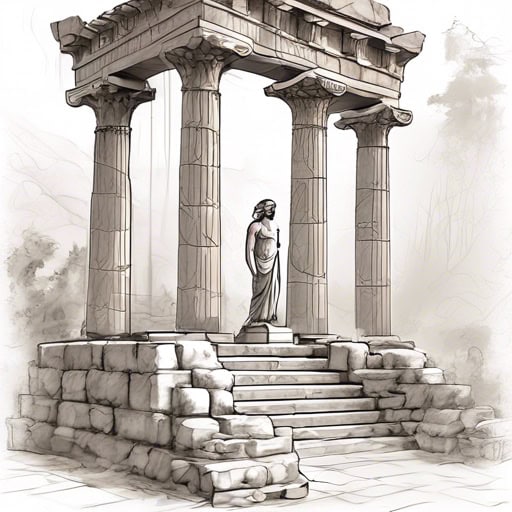
The Oracle of Delphi
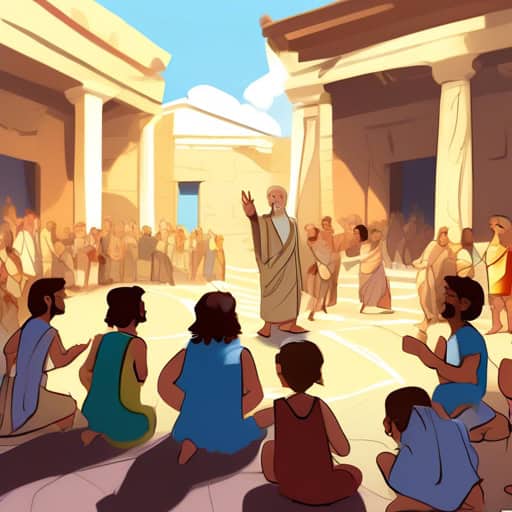
Socratic Method

Accepting Death
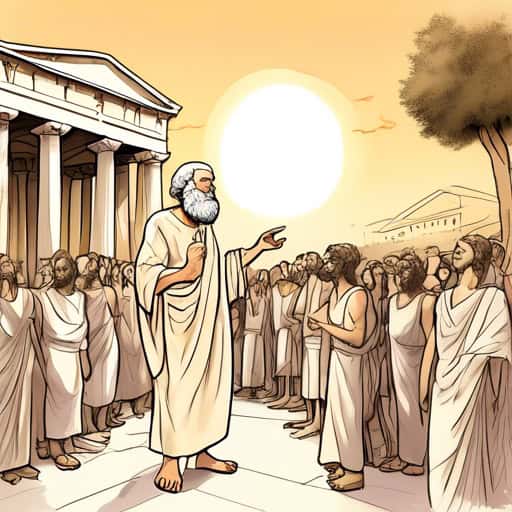
Defending his Actions
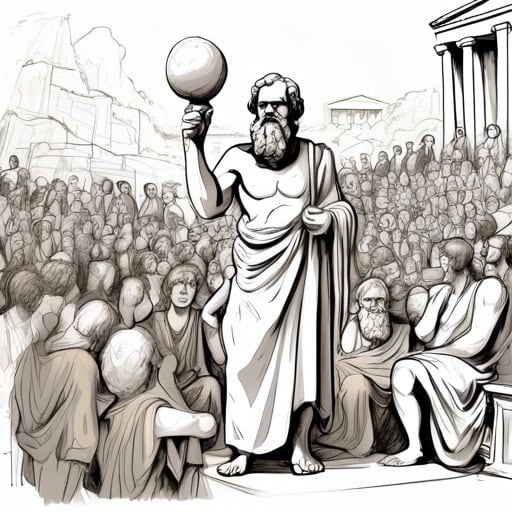
Apology
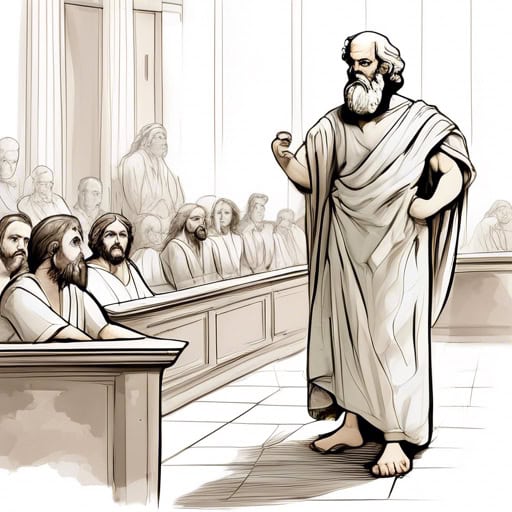
Conviction and Sentencing
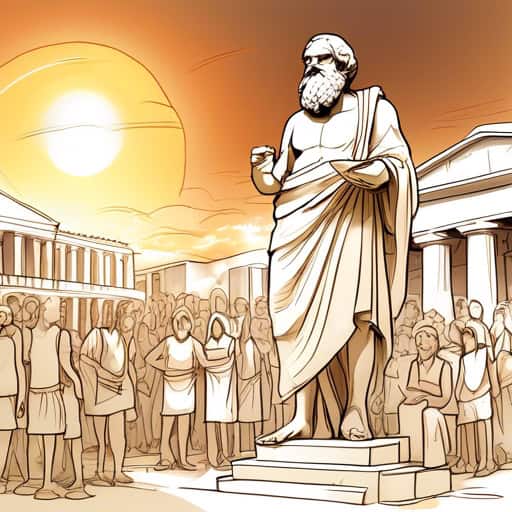
Legacy of Socrates

Lesson Details & Resources
In a Nutshell
- What: The literary work ‘Apology’ by Plato
- When: Written in the Classical period
- Who: Socrates
- Theme: Defending oneself and the pursuit of truth
List of Characters in Apology
-
Socrates
Socrates - the philosopher who is on trial for corrupting the youth and impiety
-
Meletus
Meletus - one of Socrates' accusers who claims Socrates corrupts the youth
-
Anytus
Anytus - another accuser of Socrates who claims he does not believe in the gods of the city
-
Crito
Crito - a friend of Socrates who tries to persuade him to escape from prison
-
Athenian jurors
Athenian jurors - the group of citizens who will decide Socrates' fate in his trial
Timeline of Apology
Socrates is accused of corrupting the youth and impiety in Athens
Socrates defends himself in court against the charges brought by Meletus, Anytus, and Lycon
Socrates explains his method of questioning and his pursuit of knowledge through dialogue
Socrates argues that he does not fear death and believes it is a transition to a better existence
Socrates is found guilty by the jury and sentenced to death
Socrates delivers his final speech, known as the Apology, in which he expresses his defiance of the verdict and reaffirms his commitment to his beliefs
Socrates drinks the hemlock poison and dies, surrounded by his followers and friends
Vocabulary List
- Socratic method
- Socrates used the Socratic method to engage in dialogue with others and uncover truth.
- Ignorance
- Socrates believed that true wisdom comes from acknowledging one's ignorance.
- Justice
- Socrates discusses the concept of justice and its importance in society.
- Corruption
- Socrates was accused of corrupting the youth of Athens with his teachings.
- Wisdom
- Socrates valued wisdom and believed in questioning everything to find the truth.
- Moral
- Socrates examined moral principles and ethics in his discussions.
- Accusation
- Socrates faced accusations of impiety and corrupting the youth.
- Trial
- Socrates was put on trial and ultimately sentenced to death for his beliefs.
Key Facts
This is the information used in the fact matching game
- Socrates was put on trial and ultimately sentenced to death for impiety and corrupting the youth of Athens through his teachings.
- The Apology is one of Socrates' most famous philosophical works, recorded by his student Plato.
- Socrates' defense in the Apology is focused on the pursuit of truth and wisdom, rather than personal gain or reputation.
- Socrates famously claimed that 'an unexamined life is not worth living,' a central theme in the Apology.
- The Apology is structured as a dialogue between Socrates and his accusers during his trial in 399 BC.
- Socrates' defense in the Apology includes an exploration of the Oracle of Delphi's statement that he is the wisest man in Athens.
- Socrates' defense in the Apology is considered by many to be a key text in the development of Western philosophy.
- The Apology is part of a larger work by Plato known as the 'Dialogues of Plato,' which includes other writings about Socrates.
- Socrates' defense in the Apology emphasizes his commitment to questioning assumptions and seeking knowledge through dialogue.
- The Apology is often studied as an example of the Socratic method, a form of philosophical inquiry based on asking and answering questions.
- Socrates' defense in the Apology challenges his accusers to examine their own beliefs and values, rather than simply accepting convention.
- The Apology ends with Socrates being found guilty and sentenced to death, despite his attempts to defend himself.
- Socrates' defense in the Apology highlights his commitment to living a virtuous life and following his own moral principles.
- The Apology is considered a foundational text in the history of philosophy, influencing thinkers for centuries after Socrates' death.
- Socrates' defense in the Apology includes a critique of the Athenian legal system and the values of society at the time.
- The Apology is a key text in the study of ethics and moral philosophy, exploring questions of justice, virtue, and the nature of the good life.
- Socrates' defense in the Apology is characterized by his willingness to accept the consequences of his actions, even if it means facing death.
- The Apology is often studied alongside other works by Plato, such as the Republic and the Symposium, to gain a deeper understanding of Socrates' philosophy.
- Socrates' defense in the Apology is a powerful example of intellectual courage and a commitment to seeking truth, regardless of the consequences.
- The Apology continues to be a source of inspiration for philosophers, scholars, and individuals seeking to understand the nature of justice, truth, and the good life.
Analysis & Significance
Impact on Literature
Plato’s “Apology” is a foundational text in the Western literary tradition, setting the standard for philosophical dialogues and the exploration of justice, morality, and the nature of truth. Its influence can be seen in works ranging from Socrates’ defense speeches to modern courtroom dramas.
Enduring Themes
The themes of truth, integrity, and individual conscience explored in “Apology” continue to resonate with modern audiences. The idea of questioning authority, standing up for one’s beliefs, and the pursuit of knowledge are universal concepts that remain relevant across cultures and time periods.
Cultural Significance Today
“Apology” remains culturally significant today as a testament to the power of intellectual inquiry and the importance of defending one’s beliefs. It has been adapted into numerous plays, films, and literary works, solidifying its place as a timeless exploration of ethics and the complexities of human nature.
Apology Games


Take Your Learning Offline
Want a convenient, print-ready study guide for this lesson? Become a Memory Wizards Pro member to unlock the downloadable " Memory Scrolls" for this topic and our entire library!
- ✓ Complete Vocabulary Lists
- ✓ Key Facts & Timelines
- ✓ Beautifully Formatted for Print & Mobile