Skepticism In Modern Philosophy

Can we truly know anything for certain in this world?

How Do You Learn Best?

Note: You can explore any or all of these paths in any order you prefer!

Skepticism In Modern Philosophy in 10 Minutes

Introduction
Introduction

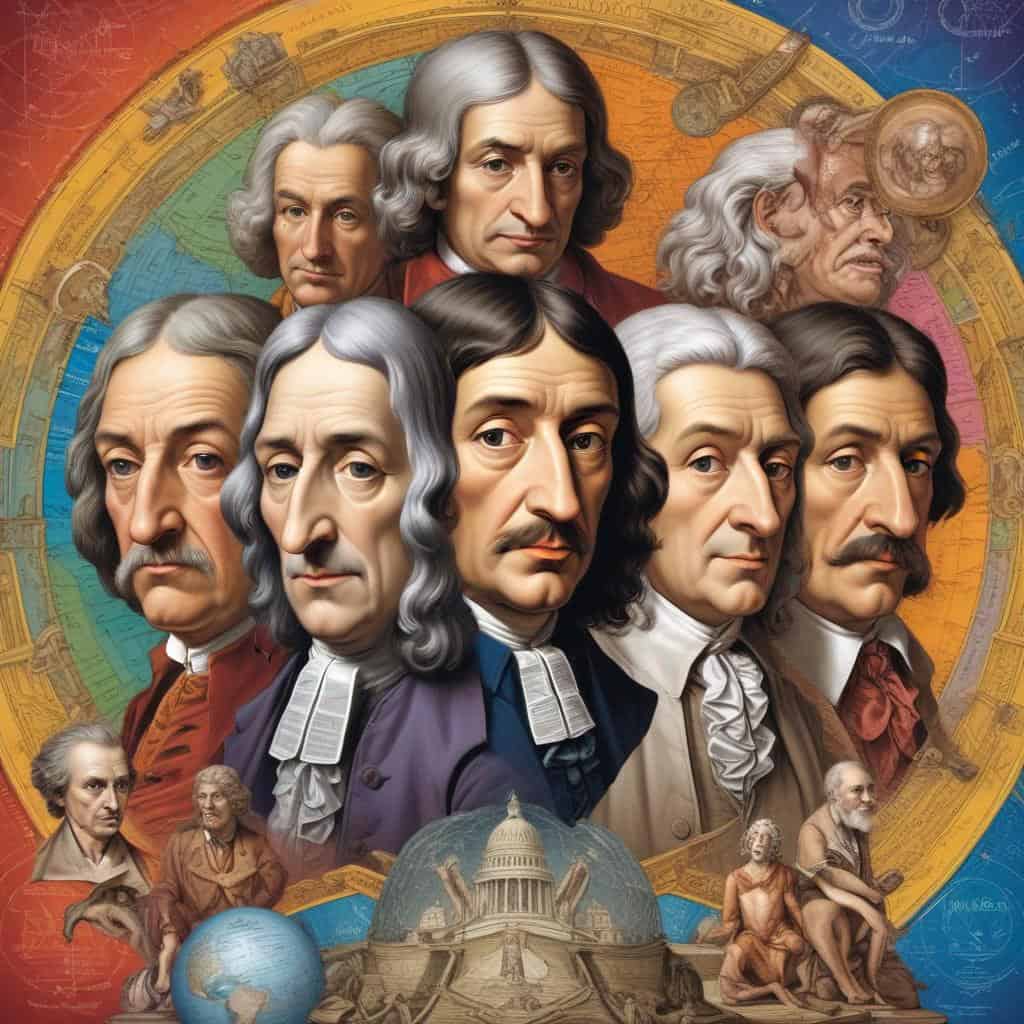
What is skepticism in modern philosophy? This article provides a brief overview of the essence of skepticism and its role in shaping philosophical thought in the modern era.

From Descartes to Hume to Kant, skepticism has been a central theme in the development of modern philosophy. By questioning the certainty of knowledge and beliefs, skeptics have challenged traditional ways of thinking and opened up new avenues of inquiry.

This article will explore the key ideas and arguments of major skeptics in modern philosophy, shedding light on how their skepticism has influenced the way we understand the world and our place in it.

Ren\u00e9 Descartes

René Descartes

Descartes is known for his method of doubt, where he doubted everything he knew in order to find a foundation for knowledge that cannot be doubted. This skepticism led him to the famous phrase Cogito, ergo sum (I think, therefore I am).

David Hume

David Hume

Hume was a Scottish philosopher who emphasized the limitations of human understanding and the fallibility of our senses. He argued that we cannot know the true nature of reality, as our perceptions are limited and subjective.

Immanuel Kant

Immanuel Kant

Kant sought to reconcile skepticism with reason by proposing that our perceptions are shaped by our mental faculties. He argued that our understanding of the world is limited by the categories of our mind, and that we can never know things as they truly are.

George Berkeley

George Berkeley

Berkeley was an idealist philosopher who believed that the only things that truly exist are minds and ideas. He argued that material objects are nothing more than collections of ideas, and that our perceptions are all we can truly know.

Friedrich Nietzsche

Friedrich Nietzsche

Nietzsche was a German philosopher who critiqued traditional notions of truth and knowledge. He argued that all knowledge is subjective and influenced by our own biases, and that we must embrace skepticism in order to create our own values and meaning in life.

The Origins of Skepticism

The Origins of Skepticism

Skepticism in modern philosophy traces back to the early modern period, particularly with thinkers like René Descartes and David Hume. These philosophers raised doubts about the possibility of knowledge and the reliability of human perception.

The Role of Doubt

The Role of Doubt

Central to skepticism in modern philosophy is the role of doubt. Philosophers question the validity of knowledge claims and the certainty of beliefs. By engaging in doubt, they aim to uncover the limits of human understanding.

The Problem of Induction

The Problem of Induction

One of the key challenges in modern skepticism is the problem of induction, as highlighted by Hume. This problem questions the validity of making generalizations based on past observations, as it relies on the assumption of uniformity in nature.

The Cartesian Skepticism

The Cartesian Skepticism

Descartes famously introduced the idea of radical skepticism, casting doubt on the reliability of sense perception and the external world. His method of doubt aimed to establish a foundation of knowledge through reason and doubt.

The Response to Skepticism

The Response to Skepticism

Philosophers have offered various responses to skepticism in modern philosophy. Some argue for the possibility of certain knowledge through reason, while others embrace a more fallibilist approach, acknowledging the limitations of human understanding.

The Problem of Solipsism

The Problem of Solipsism

Skepticism in modern philosophy also raises the problem of solipsism, the idea that only one's own mind is certain to exist. This radical form of skepticism challenges the existence of an external world independent of one's perceptions.

The Influence of Skepticism

The Influence of Skepticism

Skepticism in modern philosophy has had a profound influence on various areas of thought, including epistemology, metaphysics, and ethics. It has sparked debates about the nature of knowledge, truth, and reality.

The Limits of Skepticism

The Limits of Skepticism

While skepticism poses significant challenges to our understanding of the world, some philosophers argue that it has its limits. They suggest that while skepticism is valuable for questioning assumptions, it may not provide a complete or satisfying account of reality.

The Legacy of Skepticism

The Legacy of Skepticism

The legacy of skepticism in modern philosophy continues to shape contemporary debates and discussions. Philosophers continue to grapple with the questions raised by skepticism, seeking new insights and perspectives on the nature of knowledge and belief.

In conclusion, skepticism in modern philosophy challenges us to question our beliefs and knowledge, encouraging us to seek deeper understanding and clarity. By embracing skepticism, we can cultivate a critical mindset that leads to intellectual growth and open-mindedness.

Ultimately, skepticism serves as a powerful tool for philosophical inquiry, pushing us to examine our assumptions and engage in meaningful dialogue with others. It is through skepticism that we can truly expand our perspectives and approach the world with a sense of curiosity and humility.

1 / 19

Lesson Details & Resources

In a Nutshell

  • Concept: A philosophical position that questions the possibility of knowledge and truth.
  • Thinkers: René Descartes, David Hume, Immanuel Kant, 17th-18th Century.
  • Central Question: How can we be certain of anything we claim to know?
  • Core Implication: Doubt is a fundamental aspect of human understanding and must be acknowledged in our pursuit of knowledge.

Timeline of Skepticism In Modern Philosophy

1641

Descartes introduces methodological skepticism in 'Meditations on First Philosophy'

1748

Hume discusses skepticism in 'An Enquiry Concerning Human Understanding'

1781

Kant responds to skepticism in 'Critique of Pure Reason'

1785

Reid criticizes skepticism in 'Essays on the Intellectual Powers of Man'

1807

Hegel addresses skepticism in 'Phenomenology of Spirit'

1818

Schopenhauer explores skepticism in 'The World as Will and Representation'

1883

Nietzsche challenges skepticism in 'Thus Spoke Zarathustra'

1921

Wittgenstein discusses skepticism in 'Tractatus Logico-Philosophicus'

1951

Quine critiques skepticism in 'Two Dogmas of Empiricism'

1984

Stroud examines skepticism in 'The Significance of Philosophical Scepticism'

1981

Putnam responds to skepticism in 'Reason, Truth, and History'

1978

Williams explores skepticism in 'Descartes: The Project of Pure Enquiry'

1985

BonJour discusses skepticism in 'The Structure of Empirical Knowledge'

1991

Sosa addresses skepticism in 'Knowledge in Perspective'

2010

Brueckner critiques skepticism in 'Essays on Skepticism'

2003

Chalmers explores skepticism in 'The Matrix as Metaphysics'

2011

Stroud examines skepticism in 'Engagement and Metaphysical Dissatisfaction'

1986

Cohen challenges skepticism in 'Knowledge and Context'

1994

McDowell responds to skepticism in 'Mind and World'

2002

Williams explores skepticism in 'Truth and Truthfulness'

Vocabulary List

Skepticism
Descartes famously introduced skepticism in his Meditations on First Philosophy, questioning the reliability of our senses and the existence of an external world.
Cogito ergo sum
Descartes used the cogito as a starting point in his quest for certain knowledge, as he doubted everything except his own existence as a thinking thing.
Empiricism
Empiricists like John Locke and David Hume questioned the rationalist claims of innate ideas and emphasized the importance of empirical evidence.
Phenomenalism
Berkeley's idealism can be seen as a form of phenomenalism, as he argued that material objects are nothing more than bundles of sensory qualities.
Epistemology
Epistemology explores questions about what we can know, how we can know it, and whether knowledge is possible in the first place.

Key Facts

This is the information used in the fact matching game

    No key facts found.

Analysis & Significance

The Core Argument

Skepticism in modern philosophy challenges the reliability of our senses and reasoning by questioning the possibility of knowing anything with certainty. Philosophers use thought experiments, like Descartes’ evil demon or brain in a vat, to illustrate how our perceptions may deceive us.

Criticisms and Counterarguments

Critics argue that extreme skepticism leads to a paralyzing doubt that undermines all knowledge claims. They suggest that a moderate form of skepticism, like fallibilism, is more practical as it allows for tentative beliefs without absolute certainty.

Modern Relevance

In today’s fast-paced world of information overload and fake news, skepticism in modern philosophy reminds us to critically evaluate the sources of our beliefs. It encourages us to question authority and think for ourselves, promoting a healthy skepticism towards dogmatic beliefs and blind faith. This philosophical concept is crucial in cultivating a more discerning and intellectually responsible society.

Skepticism In Modern Philosophy Games

Was This Lesson Helpful?

Please log in or sign up to rate this lesson. 

Take Your Learning Offline

Want a convenient, print-ready study guide for this lesson? Become a Memory Wizards Pro member to unlock the downloadable " Memory Scrolls" for this topic and our entire library!

  • ✓ Complete Vocabulary Lists
  • ✓ Key Facts & Timelines
  • ✓ Beautifully Formatted for Print & Mobile
Upgrade to Pro

You must be logged in to provide feedback. Please log in or create a free account.

Scroll to Top