
Arguments For Skepticism
Are we truly seeing reality as it is?
How Do You Learn Best?
Learn by Reading
Immerse yourself in the 10-minute visual lesson for a comprehensive understanding of the topic.
Learn by Reviewing
Jump directly to the key facts, timeline, and vocabulary lists to build a solid foundation of details.
Learn by Doing
Challenge yourself! Jump straight into the interactive games to learn by trial, error, and discovery.
Arguments For Skepticism in 10 Minutes

Introduction



Pyrrho
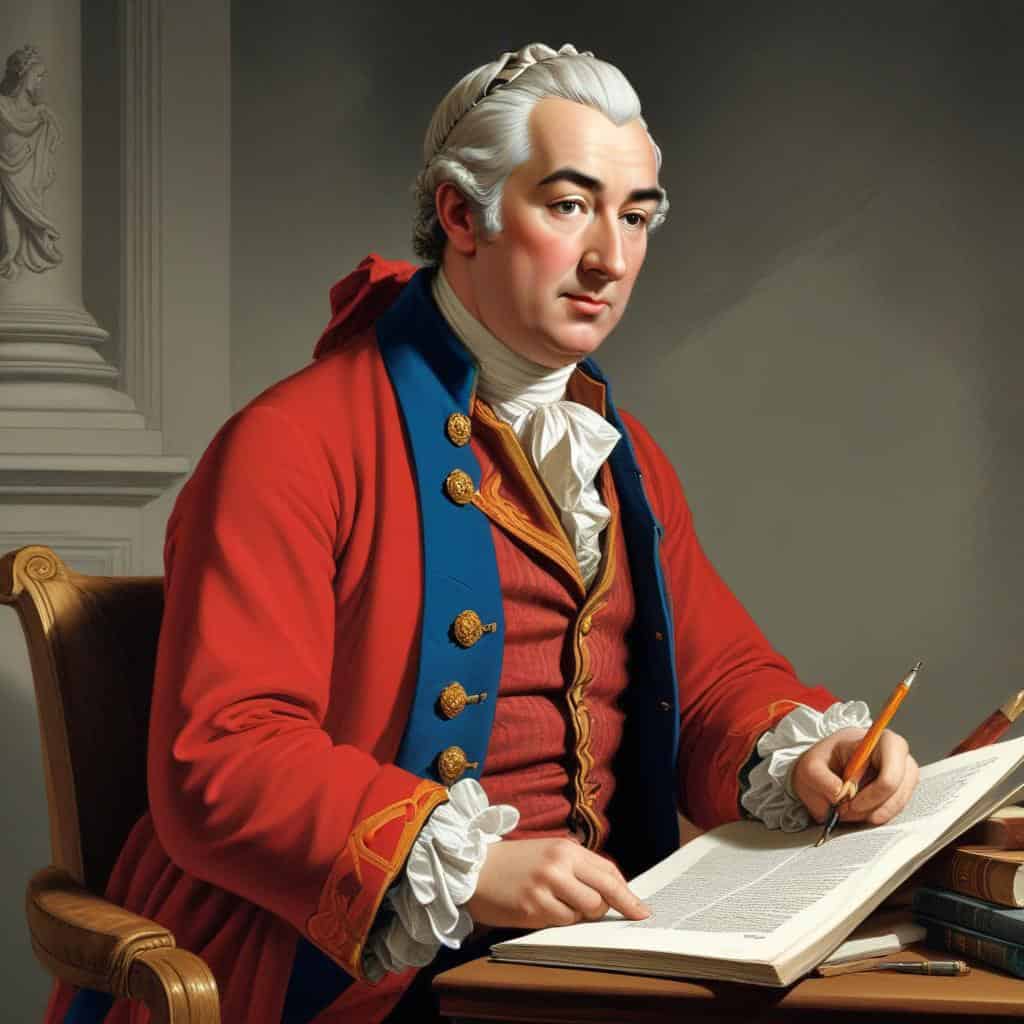
David Hume

Rene Descartes

Gorgias

Baruch Spinoza

Examining the Nature of Skepticism

Historical Roots of Skepticism
The Problem of Induction
The Limits of Reason

The Veil of Perception

The Role of Language
The Problem of Other Minds

The Influence of Cultural Relativism

The Cartesian Doubt

The Search for Certainty


Lesson Details & Resources
In a Nutshell
- Concept: Arguments for Skepticism
- Thinkers: Pyrrho of Elis, Sextus Empiricus, David Hume
- Central Question: Can we truly know anything for certain?
- Core Implication: The limits of human knowledge and the possibility of radical doubt.
Timeline of Arguments For Skepticism
Pyrrho of Elis develops Pyrrhonian skepticism
Academic skepticism founded by Arcesilaus
Sextus Empiricus writes 'Outlines of Pyrrhonism'
Descartes introduces methodological skepticism in 'Meditations on First Philosophy'
Hume's empiricist skepticism presented in 'An Enquiry Concerning Human Understanding'
Kant's transcendental idealism challenges skepticism in 'Critique of Pure Reason'
Moore's response to skepticism with 'Proof of an External World'
Wittgenstein's 'On Certainty' explores the limits of skepticism
Quine's 'Two Dogmas of Empiricism' critiques analytic-synthetic distinction
Stroud's 'The Significance of Philosophical Scepticism' reexamines skepticism
Putnam's 'Brains in a Vat' argument challenges skepticism
Williams' 'Epistemology and Externalism' explores responses to skepticism
Stanley's 'Knowledge and Practical Interests' discusses pragmatic responses to skepticism
DeRose's 'Solving the Skeptical Problem' proposes contextualist approach to skepticism
Cohen's 'Contextualism, Skepticism, and the Structure of Reasons' critiques contextualism
Pritchard's 'Epistemological Disjunctivism' offers an alternative to skepticism
Williamson's 'Knowledge and its Limits' argues for anti-luck epistemology
Boghossian's 'Fear of Knowledge' critiques relativism and skepticism
Goldman's 'Reliabilism and Contemporary Epistemology' introduces reliabilist approach to skepticism
Lackey's 'Memory and Epistemic Standing' addresses skepticism in relation to memory
Vocabulary List
- Skepticism
- Arguments for skepticism in philosophy often challenge the reliability of our senses and reasoning abilities.
- Epistemology
- Epistemological arguments for skepticism examine the limits of human understanding and the possibility of knowing anything with certainty.
- Relativism
- Relativism can be seen as a response to skepticism, as it suggests that truth may be subjective and not universally knowable.
- Fallibilism
- Fallibilism is often invoked in arguments for skepticism to highlight the limitations of human knowledge and the potential for error.
Key Facts
This is the information used in the fact matching game
- Skepticism questions our ability to have true knowledge about the world.
- Skeptics argue that our senses can deceive us, leading to false beliefs.
- Descartes famously argued for skepticism by doubting everything until he reached the certainty of his own existence.
- Skeptics challenge the reliability of memory as a source of knowledge.
- Some skeptics argue that our beliefs are shaped by our cultural and societal influences, rather than objective truths.
- Skepticism questions the possibility of accessing knowledge beyond our own subjective experiences.
- Hume's problem of induction raises doubts about our ability to make predictions based on past experiences.
- Skeptics question the reliability of language as a tool for communicating truths about the world.
- Some skeptics argue that the limitations of human cognition prevent us from ever attaining true knowledge.
- Skepticism challenges the idea of objective moral truths, questioning the basis of ethical beliefs.
- Some skeptics argue that the boundaries of language and thought constrain our understanding of the world.
- Skeptics point to the diversity of conflicting beliefs held by different cultures as evidence of the relativity of truth.
- Pyrrhonian skeptics argue for suspension of judgment, maintaining a state of epoche towards all beliefs.
- Skeptics question the reliability of reason as a means of acquiring knowledge, highlighting the potential for cognitive biases.
- Some skeptics argue that the limitations of human perception prevent us from perceiving reality as it truly is.
- Skepticism challenges the idea of progress in knowledge, questioning whether we can ever reach a final, definitive understanding of the world.
- Skeptics question the reliability of testimony as a source of knowledge, pointing to the potential for deception and error in communication.
- Some skeptics argue that the nature of consciousness itself raises doubts about our ability to know the world objectively.
- Skepticism challenges the notion of self-evidence, questioning whether any beliefs can be considered inherently true without justification.
- Some skeptics argue that the limitations of human language prevent us from accurately capturing the complexity of reality.
Analysis & Significance
The Core Argument
Arguments for skepticism center around the idea that our senses and reasoning can often deceive us, leading to doubt about the true nature of reality. Philosophers use thought experiments to challenge our assumptions about knowledge and the reliability of our beliefs.
Criticisms and Counterarguments
Critics of skepticism argue that while doubt is healthy, complete skepticism can lead to paralysis and the inability to function in the world. They also question whether it is possible to refute skepticism without relying on the very senses and reasoning that skepticism calls into question.
Modern Relevance
In today’s world of fake news, misinformation, and deepfake technology, the concept of skepticism is more relevant than ever. It reminds us to question the sources of our information, critically evaluate what we believe to be true, and guard against manipulation and deception in an increasingly complex and interconnected society.
Arguments For Skepticism Games


Take Your Learning Offline
Want a convenient, print-ready study guide for this lesson? Become a Memory Wizards Pro member to unlock the downloadable " Memory Scrolls" for this topic and our entire library!
- ✓ Complete Vocabulary Lists
- ✓ Key Facts & Timelines
- ✓ Beautifully Formatted for Print & Mobile