
How Do You Learn Best?
Learn by Listening
Start with the 3-minute audio summary to get the key facts and narrative highlights quickly.
Learn by Reading
Immerse yourself in the 10-minute visual lesson for a comprehensive understanding of the topic.
Learn by Reviewing
Jump directly to the key facts, timeline, and vocabulary lists to build a solid foundation of details.
Learn by Doing
Challenge yourself! Jump straight into the interactive games to learn by trial, error, and discovery.
Audio Library
As one of our featured lessons, this topic includes premium audio guides.
Unlock the Wizard's Cram Session
This powerful audio study guide is a Pro-exclusive feature. Upgrade to Memory Wizards Pro to access this and all of our premium learning tools.
Upgrade to ProMacbeth in 10 Minutes
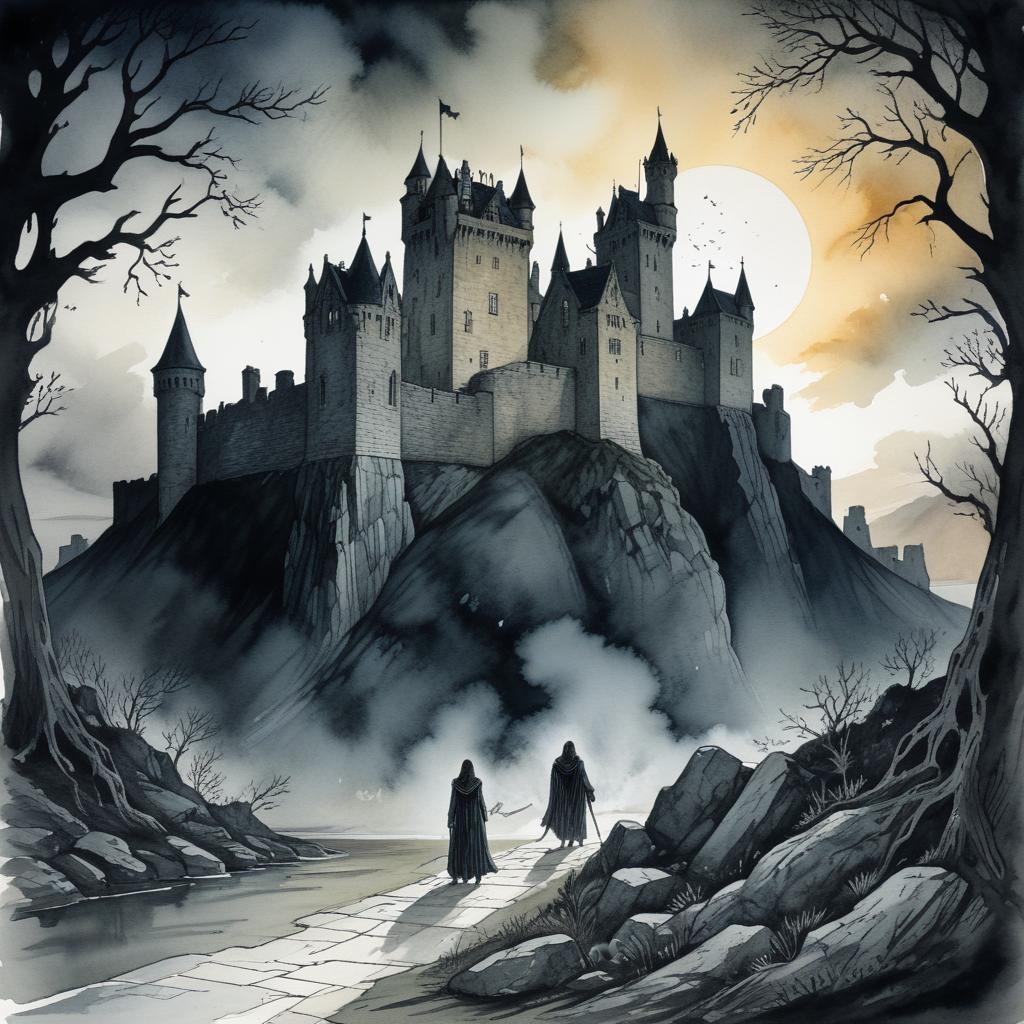
Introduction
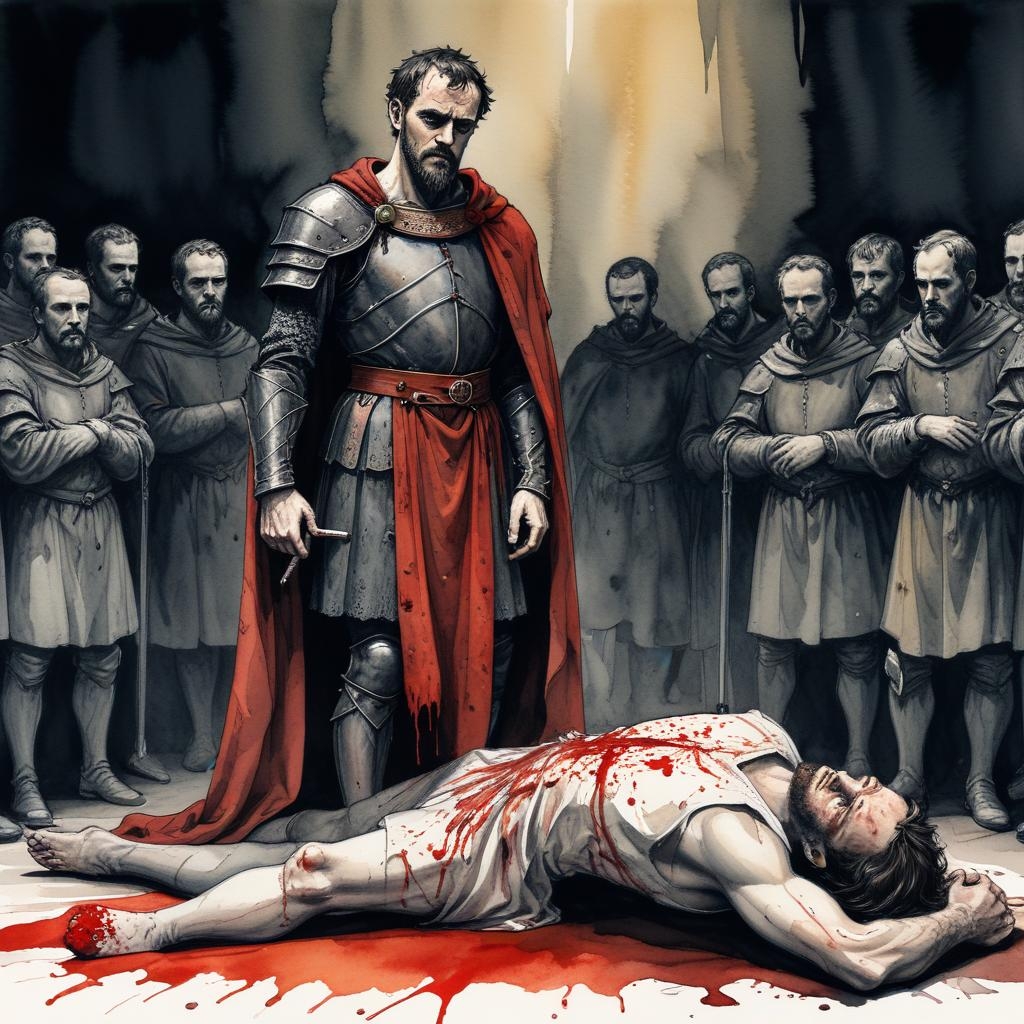
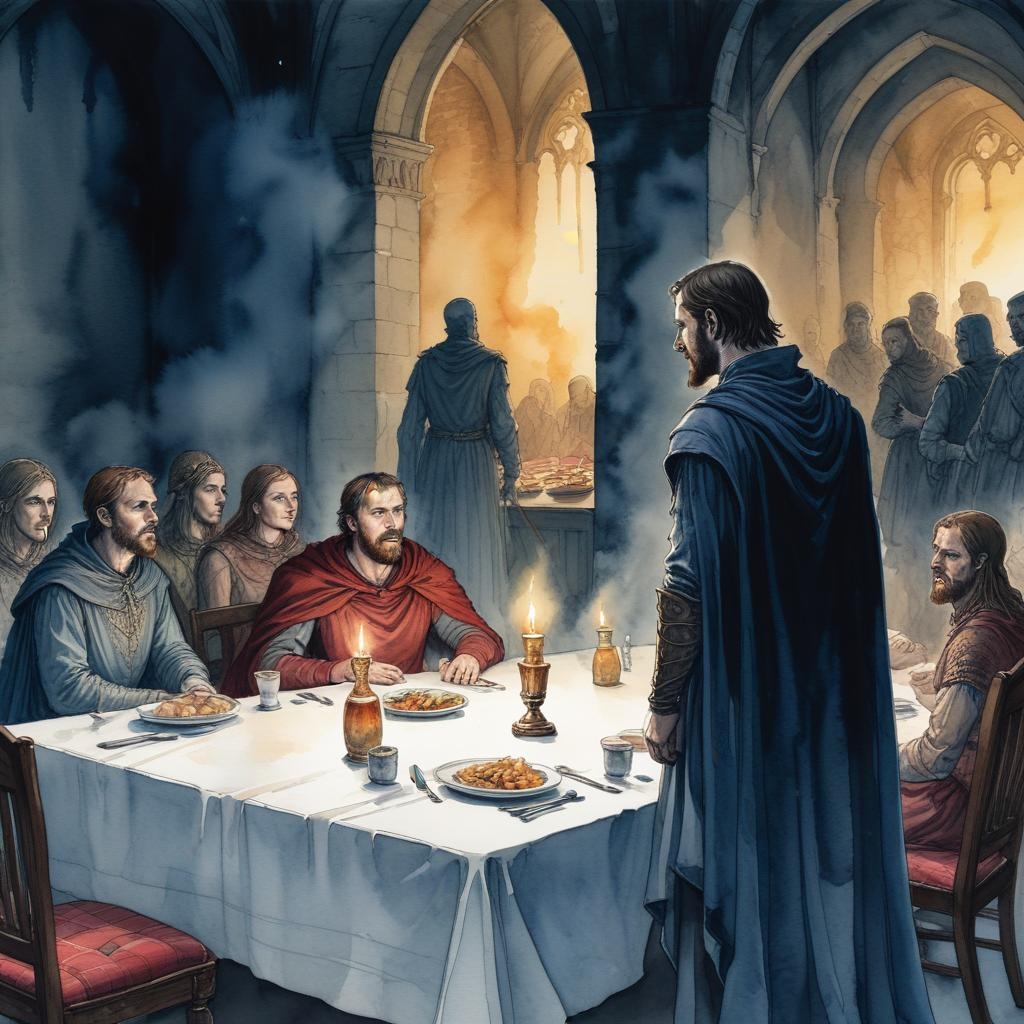

Macbeth

Lady Macbeth

King Duncan

Banquo

Macduff

The Witches

Macbeth Meets Three Witches
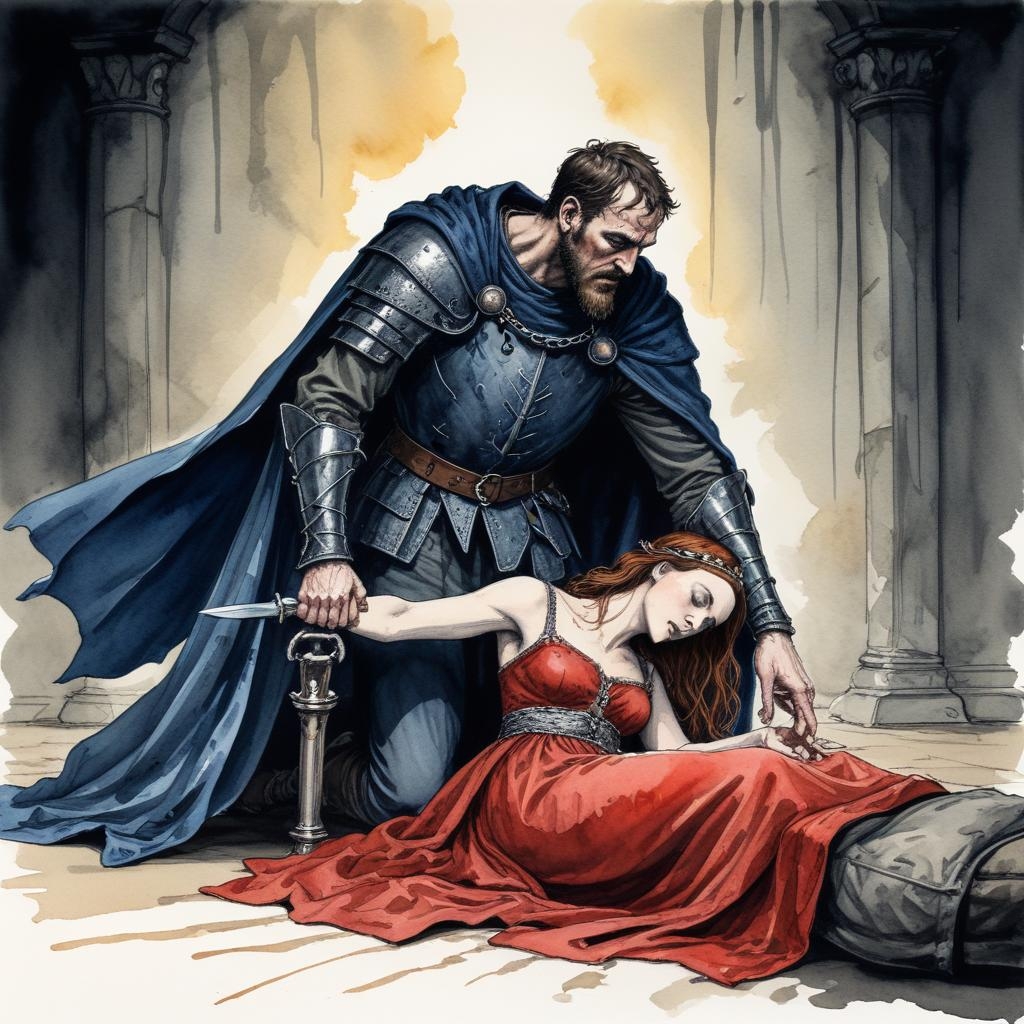
Macbeth Murders King Duncan
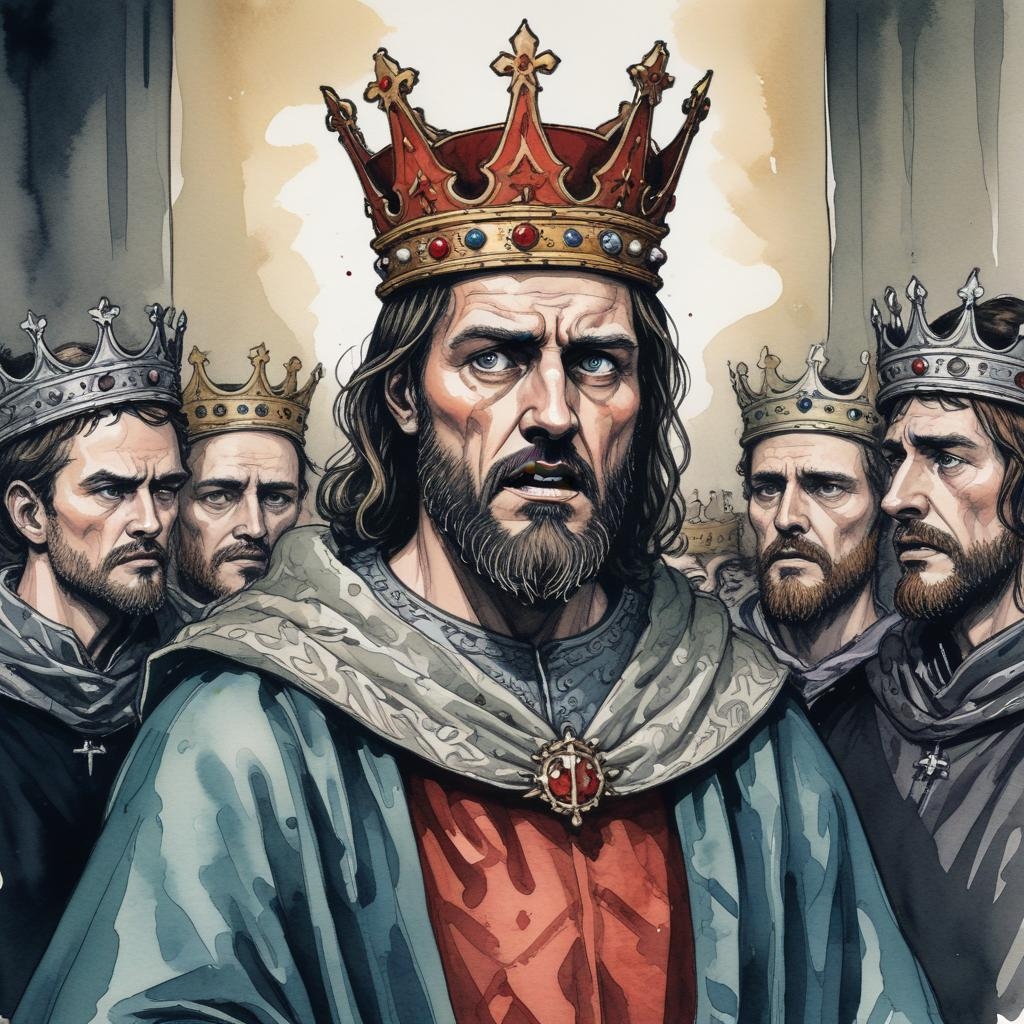
Macbeth Becomes King
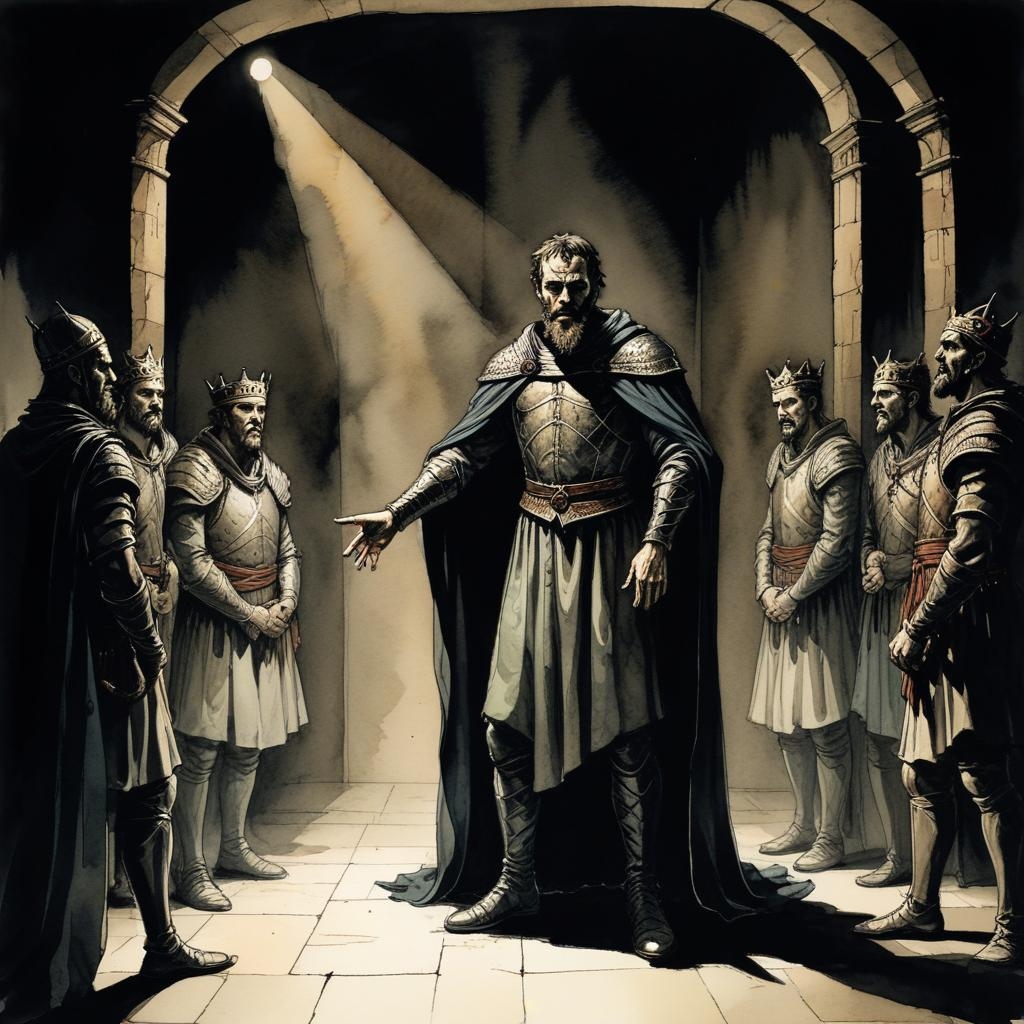
Macbeth Orders the Murder of Banquo
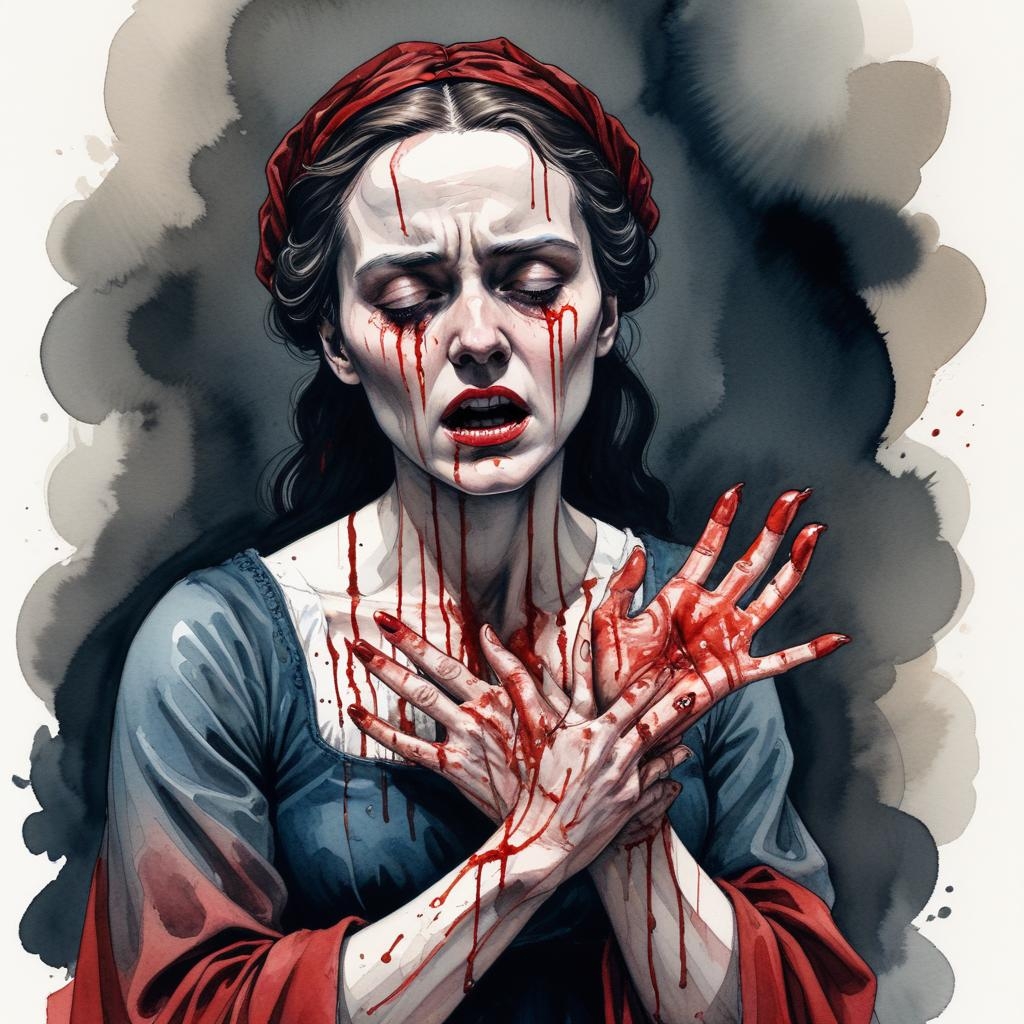
Lady Macbeth Descends into Madness
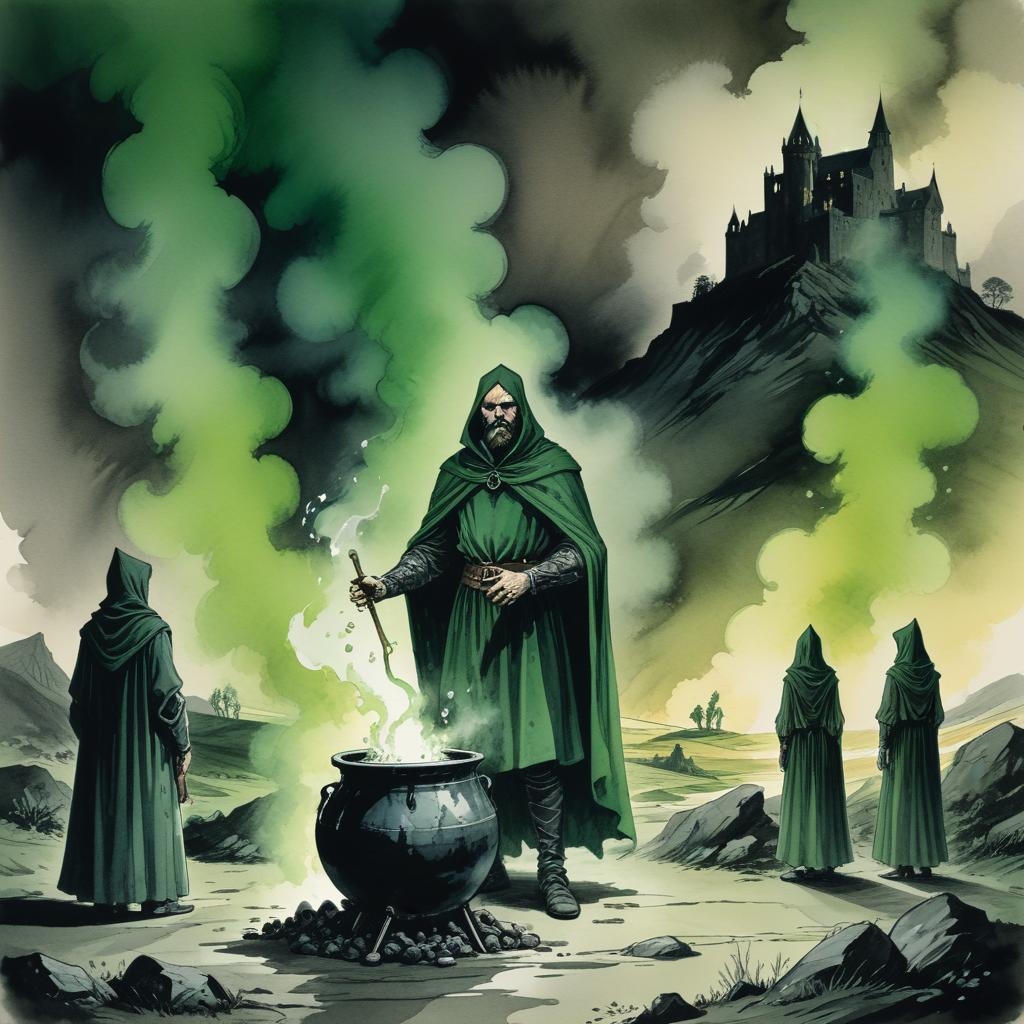
Macbeth Visits the Witches Again
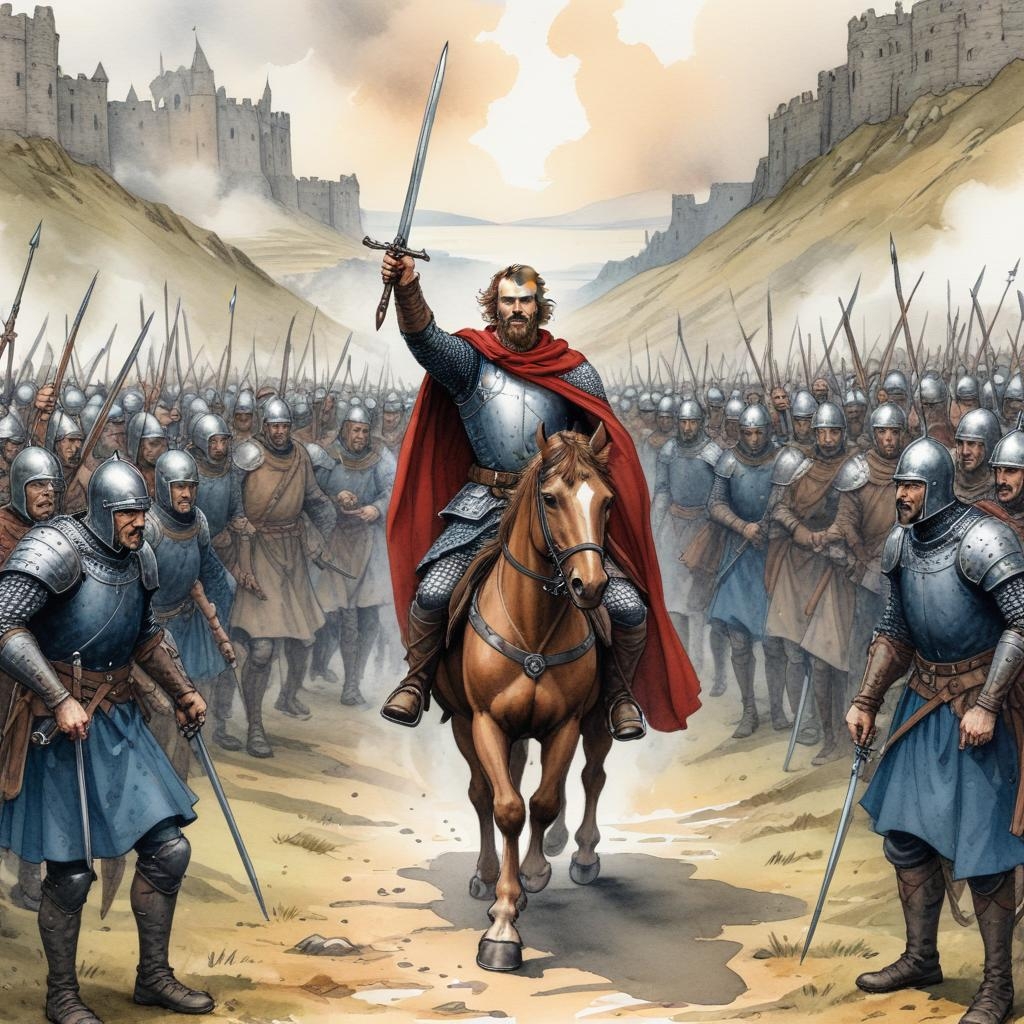
Macduff Seeks Revenge

Macbeths Downfall

Malcolm Becomes King
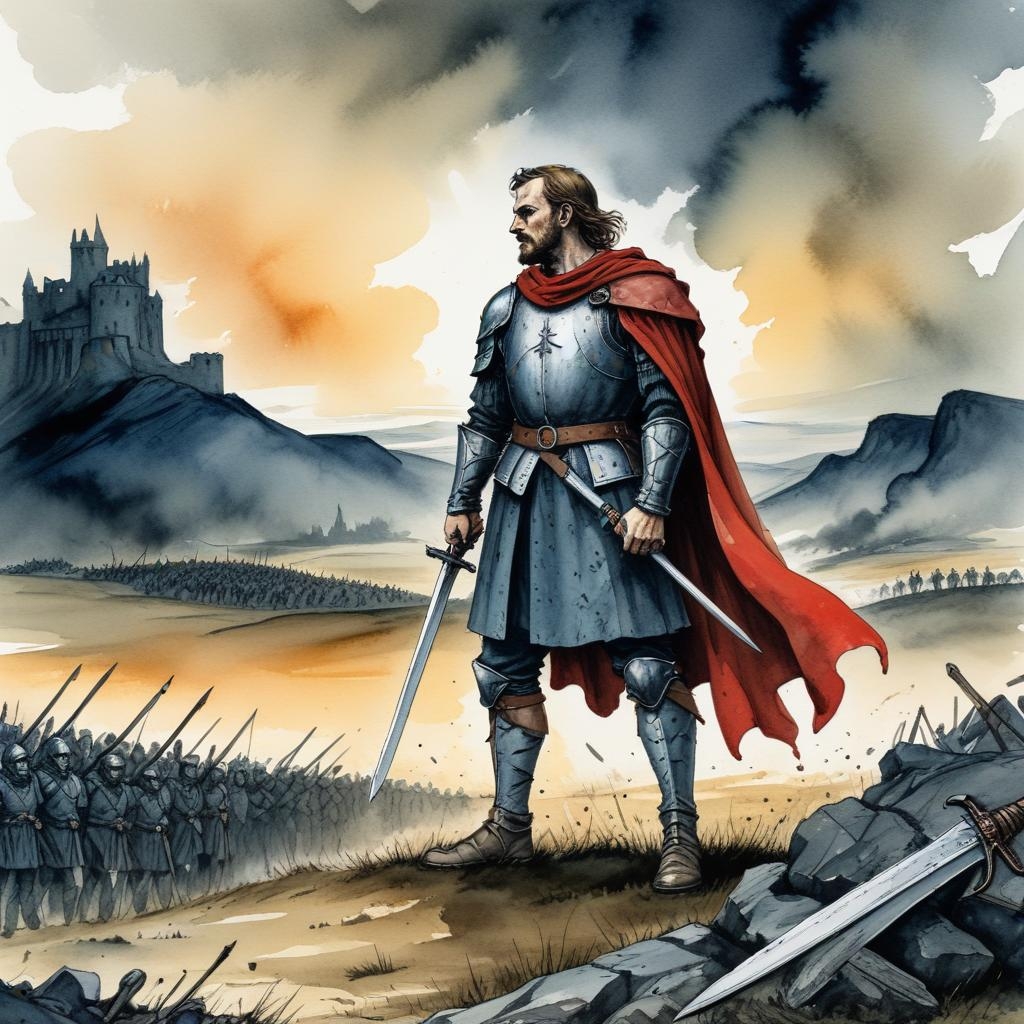
The Tragic End
Lesson Details & Resources
In a Nutshell
- What: ‘Macbeth’ by William Shakespeare
- When: Written in the early 17th century
- Who: Macbeth, Lady Macbeth, Banquo
- Theme: Ambition, Power, Guilt
List of Characters in Macbeth
-
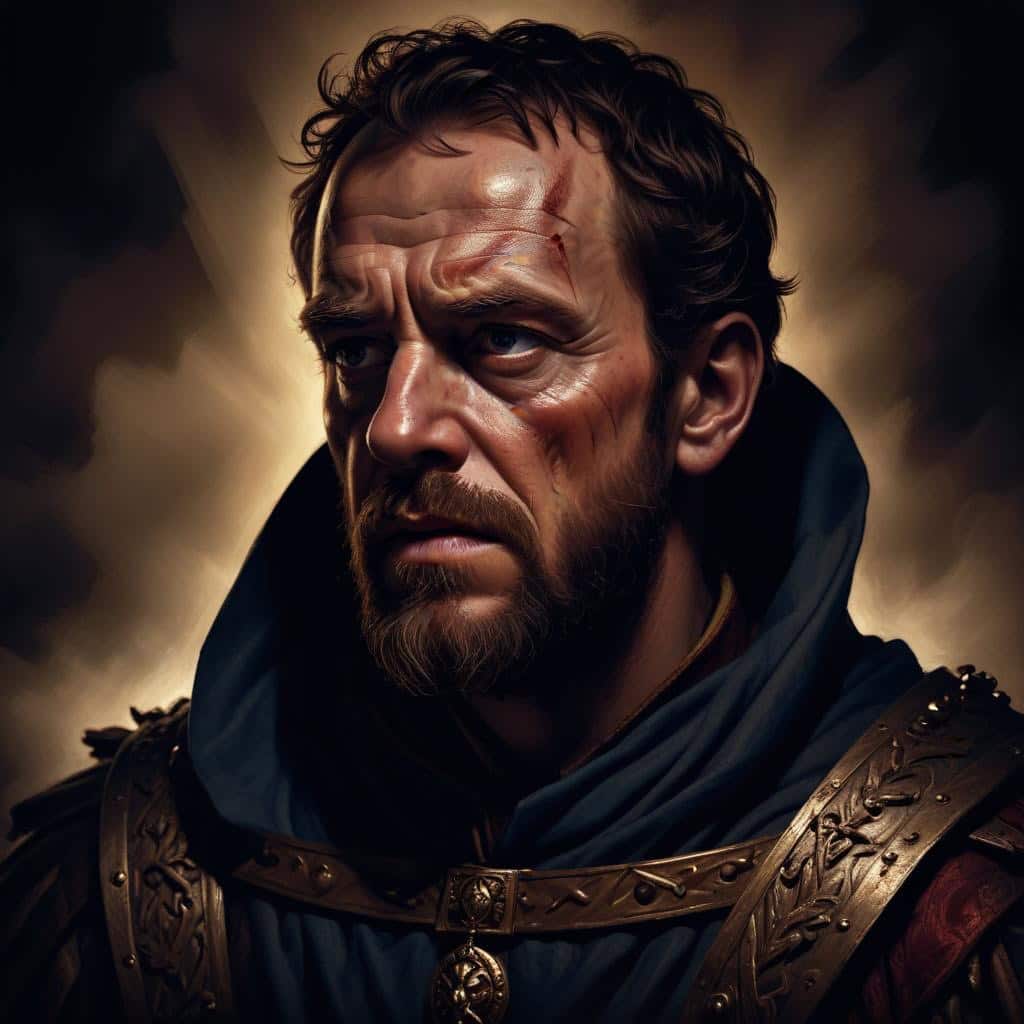
Macbeth
A courageous and ambitious Scottish general who becomes consumed by his own ambition.
-
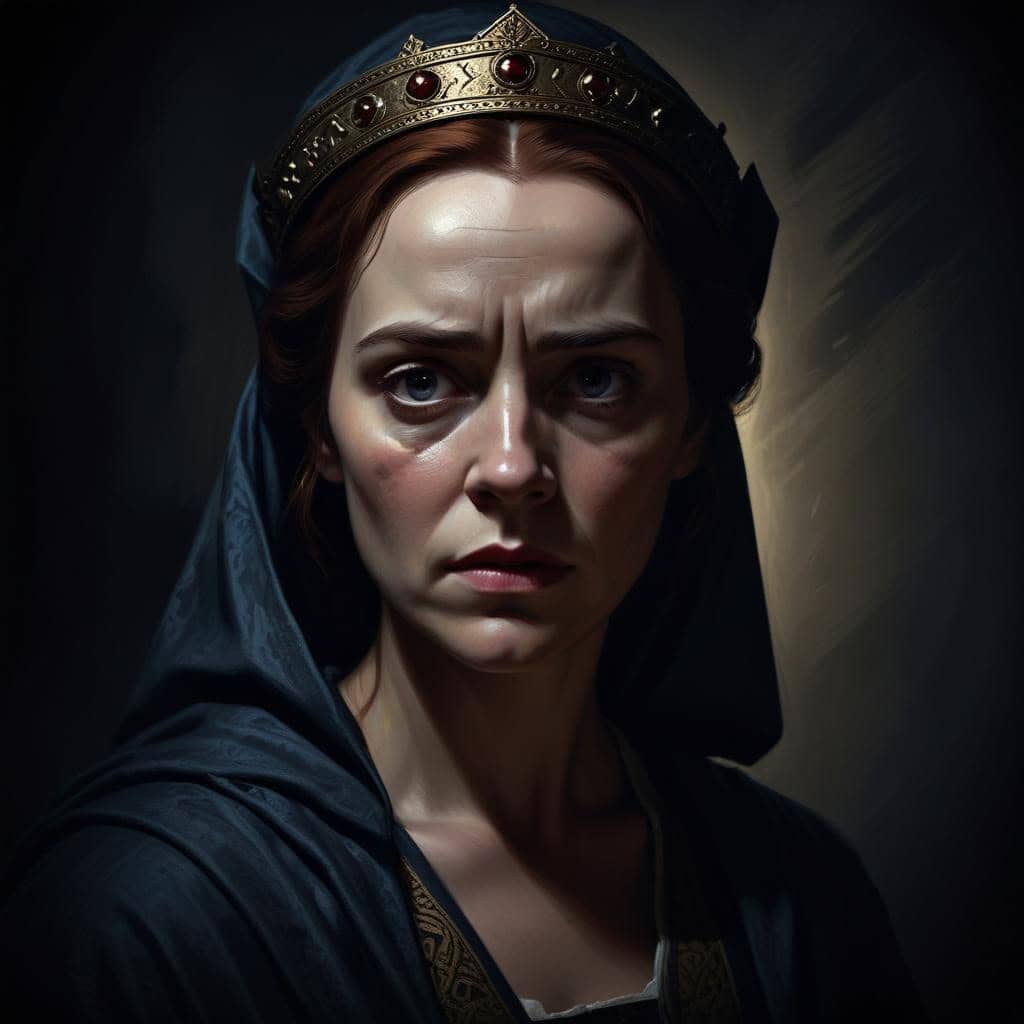
Lady Macbeth
Macbeth's ruthless and manipulative wife who pushes him to commit murder to fulfill their ambitions.
-

Banquo
Macbeth's loyal friend and fellow general who suspects foul play in the rise of Macbeth's power.
-
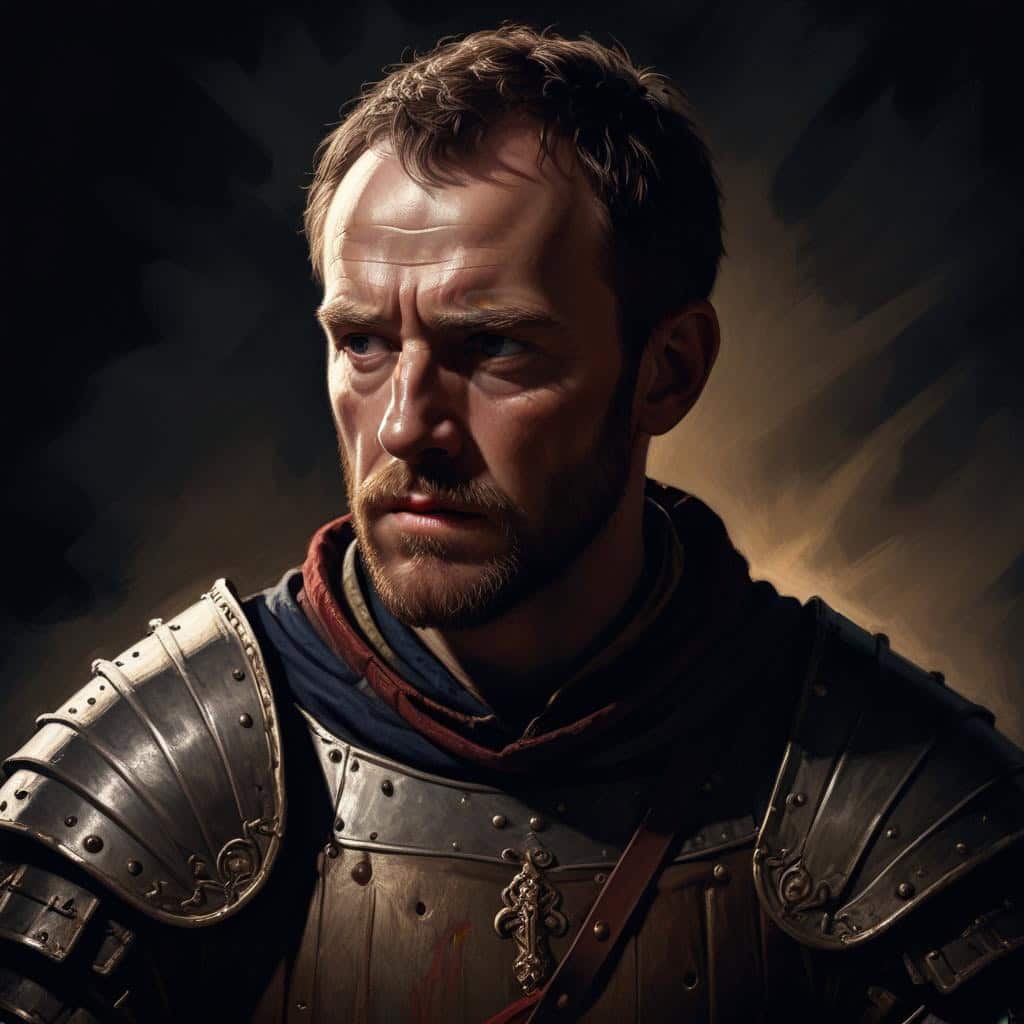
Macduff
A nobleman who leads the rebellion against Macbeth's tyrannical rule.
-
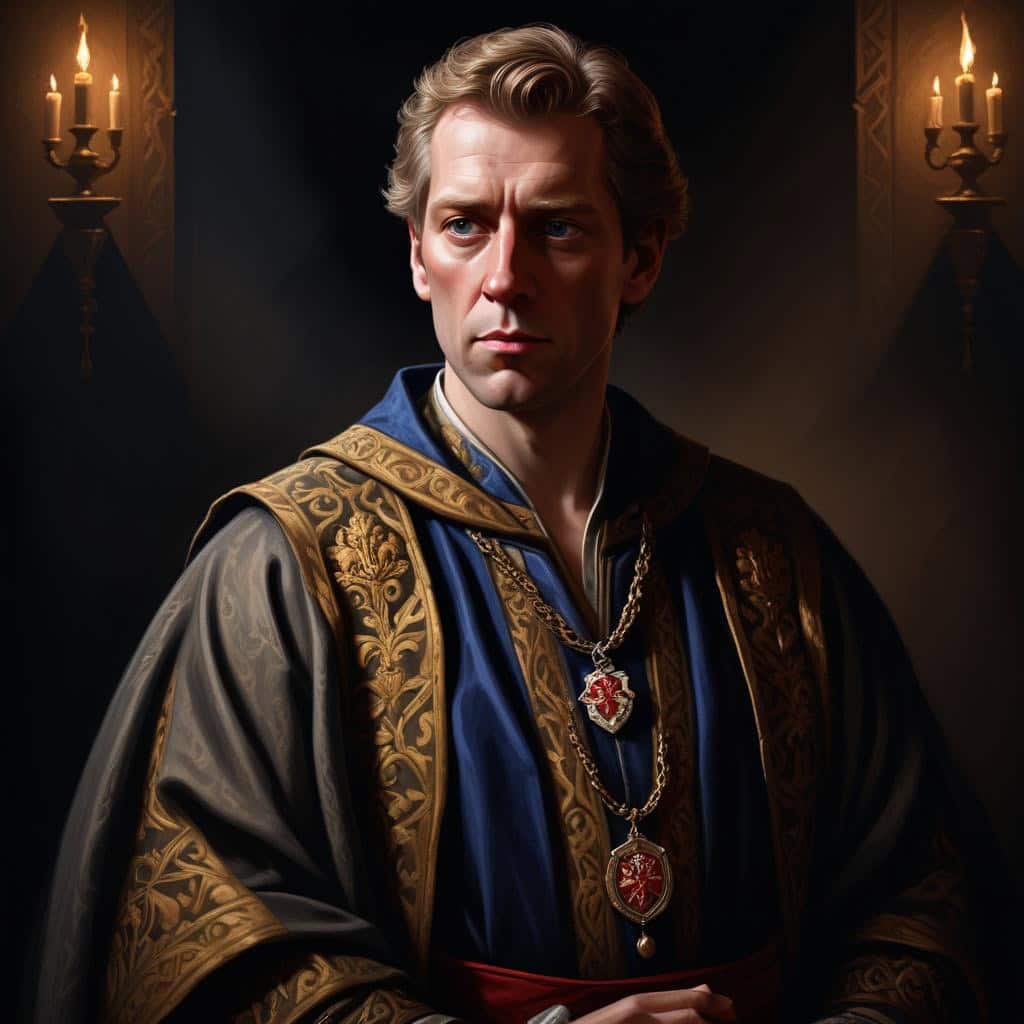
Duncan
The kind and virtuous King of Scotland who is murdered by Macbeth.
-

Malcolm
Duncan's eldest son who flees to England to gather support against Macbeth's rule.
-

Donalbain
Duncan's youngest son who also flees to Ireland for safety.
-

Three Witches
Supernatural beings who prophesy Macbeth's rise to power and eventually his downfall.
Timeline of Macbeth
- Macbeth and Banquo encounter the three witches on the heath.
- The witches prophesy that Macbeth will become Thane of Cawdor and later king, while Banquo's descendants will also be kings.
- Macbeth receives the news that he has been appointed Thane of Cawdor.
- Lady Macbeth reads a letter from Macbeth informing her about the witches' prophecies and his new title.
- Lady Macbeth urges Macbeth to seize the opportunity to become king by any means necessary.
- Macbeth and Lady Macbeth plot to murder King Duncan while he visits their castle.
- Macbeth hesitates in carrying out the plan but is convinced by Lady Macbeth to go through with it.
- Macbeth murders King Duncan while he sleeps.
- Macbeth becomes overwhelmed with guilt and paranoia.
- Macbeth is crowned king of Scotland.
- Macbeth orders the murder of Banquo and his son Fleance in order to prevent Banquo's descendants from becoming kings.
- Macbeth is haunted by the ghost of Banquo during a celebratory banquet.
- Macbeth visits the witches again and they provide him with further prophecies and apparitions.
- Macbeth orders the murder of Macduff's family in revenge for Macduff's loyalty to Duncan's line.
- Macbeth receives news of Lady Macbeth's death.
- Macduff leads an army against Macbeth's forces.
- Macbeth learns that the witches' prophecies are misleading and that he will be defeated by a man not born of a woman.
- Macbeth encounters Macduff in battle and is killed.
- Malcolm becomes the new king of Scotland.
Vocabulary List
- Ambition
- A strong desire to achieve something, typically power or success
- "Macbeth's ambition to become king led him to commit heinous acts" betrayal
- The action of betraying one's country, a group, or a person
- "Lady Macbeth's betrayal of her husband's trust ultimately led to their downfall" guilt
- The feeling of having committed a wrongdoing or offense
- "Macbeth is consumed by guilt after murdering King Duncan" tyranny
- Cruel and oppressive government or rule
- "Macbeth's tyrannical reign brought suffering to the kingdom" prophecy
- A prediction or foretelling of what is to come
- "The witches' prophecy about Macbeth becoming king drives his actions" fate
- The development of events beyond a person's control, regarded as determined by a supernatural power
- "Macbeth believed his fate was sealed after hearing the prophecies" regicide
- The act of killing a king
- "Macbeth's ultimate crime was committing regicide" ambivalence
- The state of having mixed feelings or contradictory ideas
- "Macbeth experiences ambivalence about his actions, torn between ambition and guilt" treachery
- Betrayal of trust
- "Macbeth's treachery towards his closest allies leads to their demise" manipulation
- The act of controlling or influencing someone or something, often in a deceptive manner
- "Lady Macbeth manipulates Macbeth into committing murder" soliloquy
- An act of speaking one's thoughts aloud when alone, especially by a character in a play
- "Macbeth's soliloquies provide insight into his inner turmoil" conscience
- An inner feeling or voice viewed as acting as a guide to the rightness or wrongness of one's behavior
- "Macbeth's conscience torments him after his crimes" hubris
- Excessive pride or self-confidence
- "Macbeth's hubris leads him to believe he is invincible" vengeance
- Punishment inflicted or retribution exacted for an injury or wrong
- "Macduff seeks vengeance for the murder of his family" illusion
- A deceptive appearance or impression
- "Macbeth is trapped in an illusion of power and invincibility" tragedy
- A play dealing with tragic events and having an unhappy ending, especially one concerning the downfall of the main character
- "Macbeth is often considered one of Shakespeare's greatest tragedies" supernatural
- Attributed to some force beyond scientific understanding or the laws of nature
- "The witches in Macbeth possess supernatural powers" guise
- An external form, appearance, or manner of presentation
- "Macbeth hides his true intentions under the guise of loyalty" foreshadowing
- A warning or indication of a future event
- "The thunderstorm in Act 1 foreshadows the chaos and darkness that will follow" deception
- The act of misleading or tricking someone
Key Facts
This is the information used in the fact matching game
- Macbeth is a tragedy written by William Shakespeare.
- It is believed to have been written between 1603 and 1607.
- The play is set in medieval Scotland.
- Macbeth is the protagonist and tragic hero of the play.
- Lady Macbeth is Macbeth's ambitious and manipulative wife.
- The play explores themes of ambition, power, guilt, and fate.
- The three witches, or the Weird Sisters, play a significant role in the story.
- They prophesy Macbeth's rise to power and downfall.
- Macbeth murders King Duncan in order to take the throne.
- He is plagued by guilt and paranoia after committing the act.
- Banquo, Macbeth's loyal friend, is murdered by hired assassins.
- Macbeth becomes increasingly tyrannical and ruthless as he holds onto power.
- He consults the witches again, who provide him with further prophecies.
- Macduff, a nobleman, seeks revenge for the murder of his family by Macbeth.
- Macbeth's descent into madness and his ultimate downfall are tragic.
- The play is filled with supernatural elements and imagery.
- Many famous quotes and soliloquies are found in Macbeth, such as "Is this a dagger which I see before me?"
- The play has been adapted into numerous films, operas, and other works of art.
- Macbeth remains one of Shakespeare's most popular and frequently performed plays.
- It is considered one of the greatest tragedies in Western literature.
Analysis & Significance
Impact on Literature
Shakespeare’s ‘Macbeth’ has had a profound influence on literature, shaping the development of tragedy as a genre. Its exploration of ambition, power, and the consequences of unchecked desire set a standard for complex character studies and psychological depth in storytelling.
Enduring Themes
The timeless themes of guilt, fate, and the corrupting influence of power in ‘Macbeth’ continue to resonate with modern audiences. The play’s exploration of the human condition and the consequences of one’s actions remains relevant and thought-provoking today.
Cultural Significance Today
‘Macbeth’ holds a significant place in cultural history and has been adapted in various forms across different mediums, from film to opera. Its themes and characters have inspired countless reinterpretations, making it a staple in the world of literature and a touchstone for exploring the darker aspects of human nature.
Macbeth Games


Take Your Learning Offline
Want a convenient, print-ready study guide for this lesson? Become a Memory Wizards Pro member to unlock the downloadable " Memory Scrolls" for this topic and our entire library!
- ✓ Complete Vocabulary Lists
- ✓ Key Facts & Timelines
- ✓ Beautifully Formatted for Print & Mobile