
How Do You Learn Best?
Learn by Listening
Start with the 3-minute audio summary to get the key facts and narrative highlights quickly.
Learn by Reading
Immerse yourself in the 10-minute visual lesson for a comprehensive understanding of the topic.
Learn by Reviewing
Jump directly to the key facts, timeline, and vocabulary lists to build a solid foundation of details.
Learn by Doing
Challenge yourself! Jump straight into the interactive games to learn by trial, error, and discovery.
Audio Library
As one of our featured lessons, this topic includes premium audio guides.
Unlock the Wizard's Cram Session
This powerful audio study guide is a Pro-exclusive feature. Upgrade to Memory Wizards Pro to access this and all of our premium learning tools.
Upgrade to ProJulius Caesar in 10 Minutes
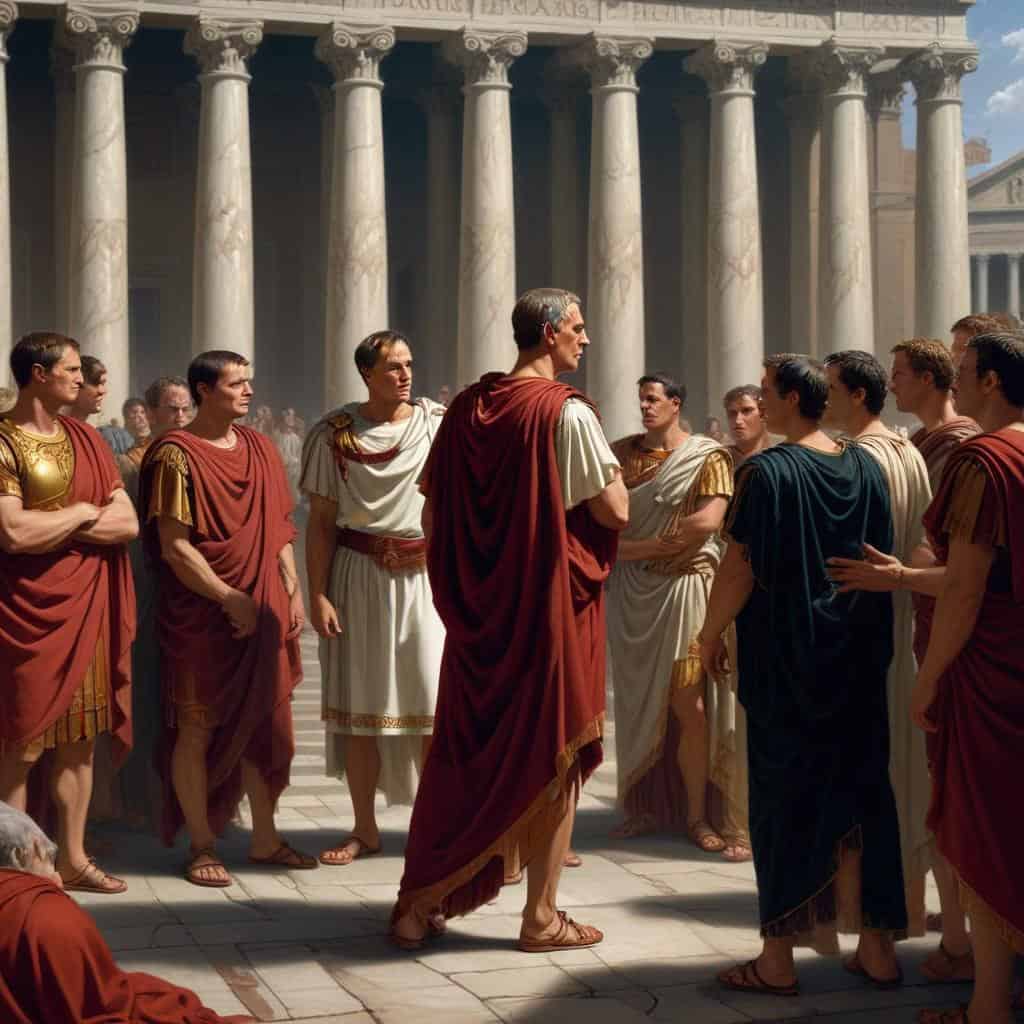
Introduction
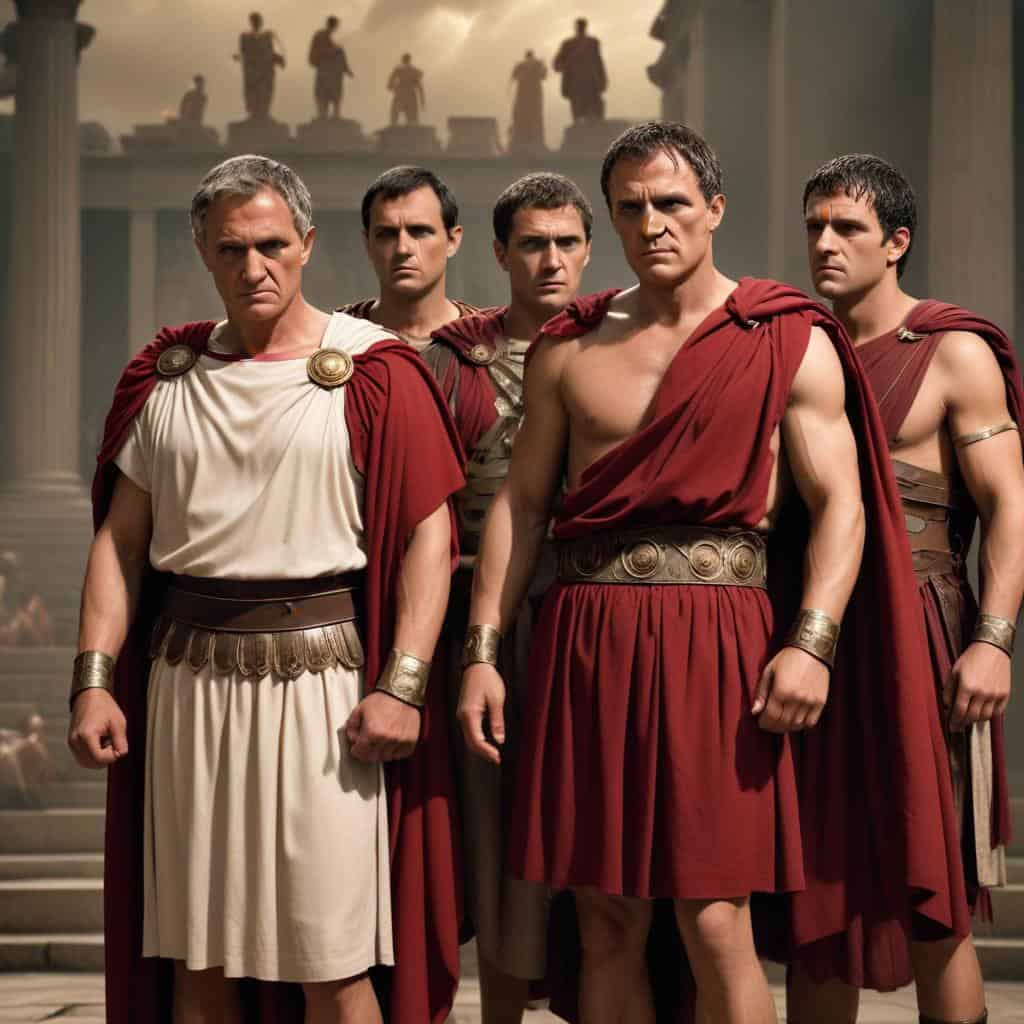
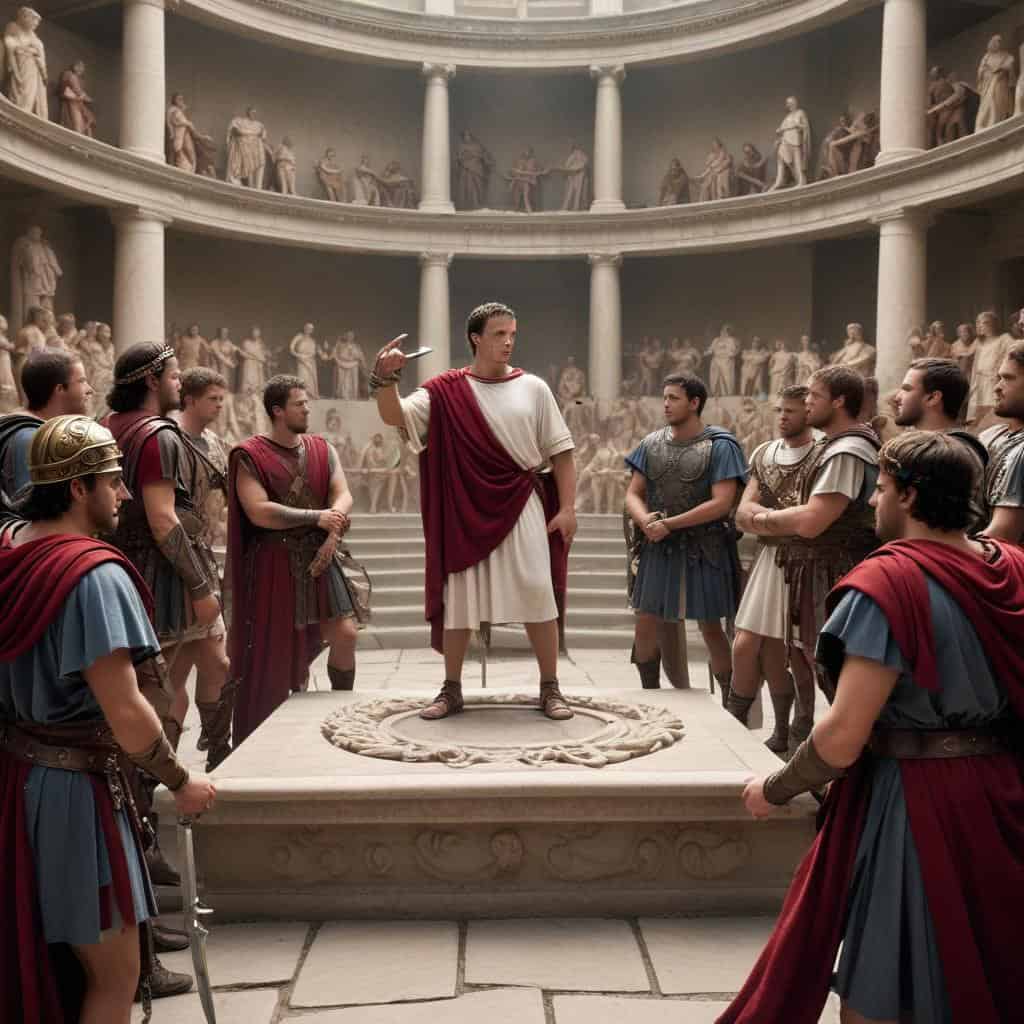
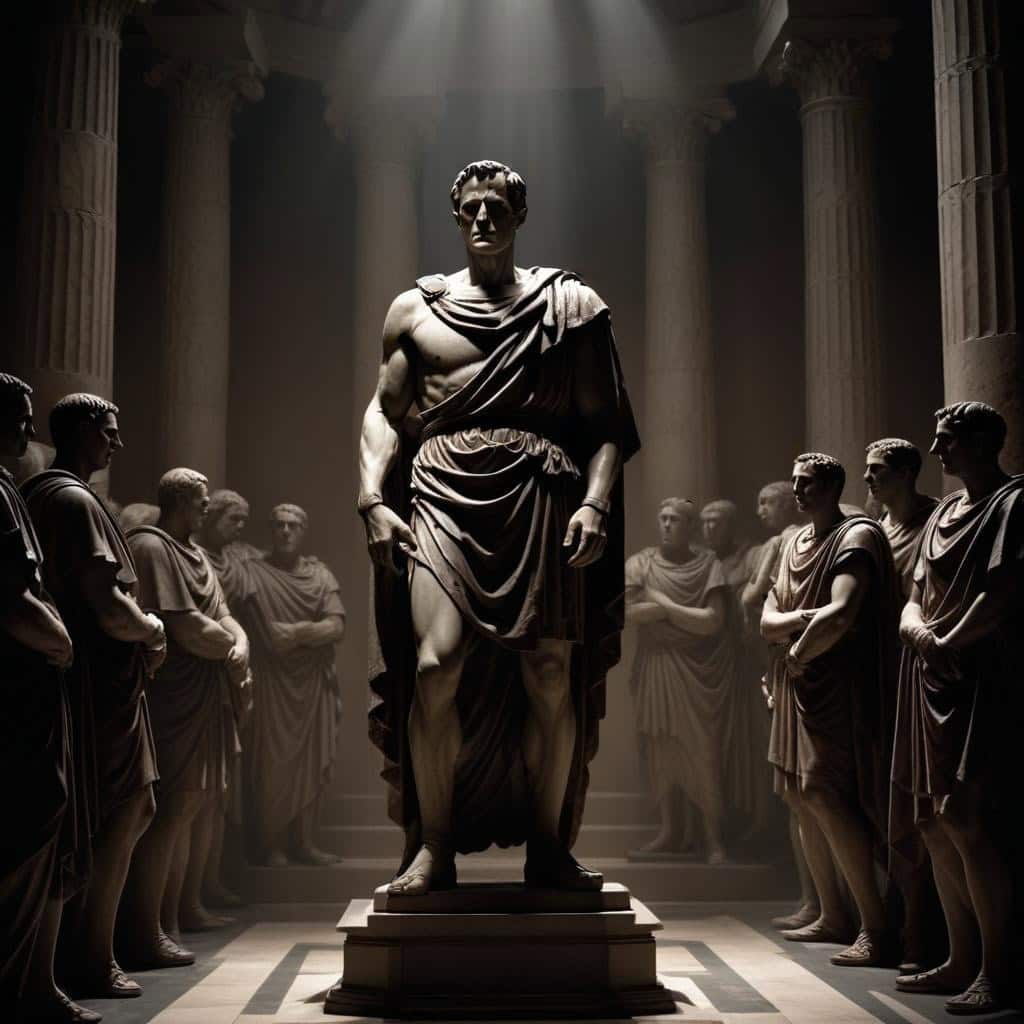
Julius Caesar

Brutus

Mark Antony

Cassius

Octavius Caesar
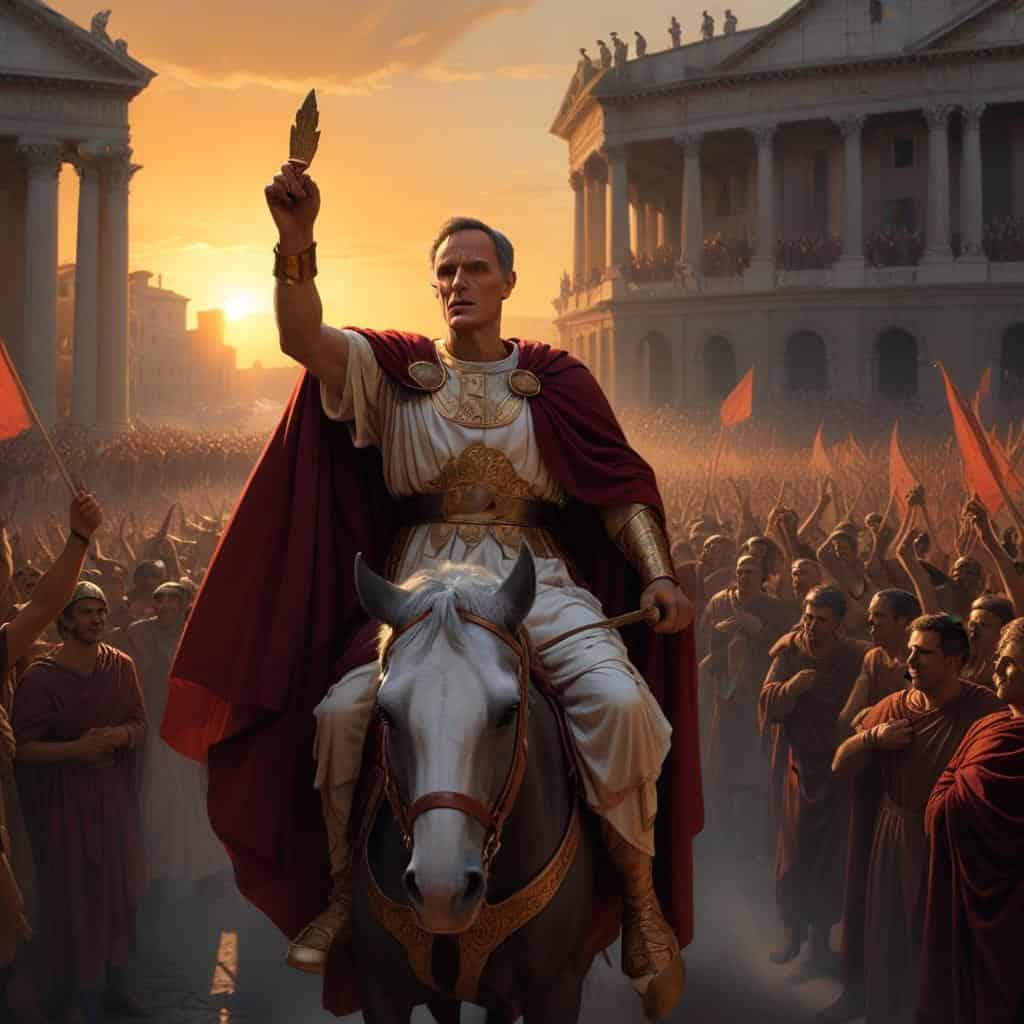
The Rise of Julius Caesar

The Plot Against Caesar
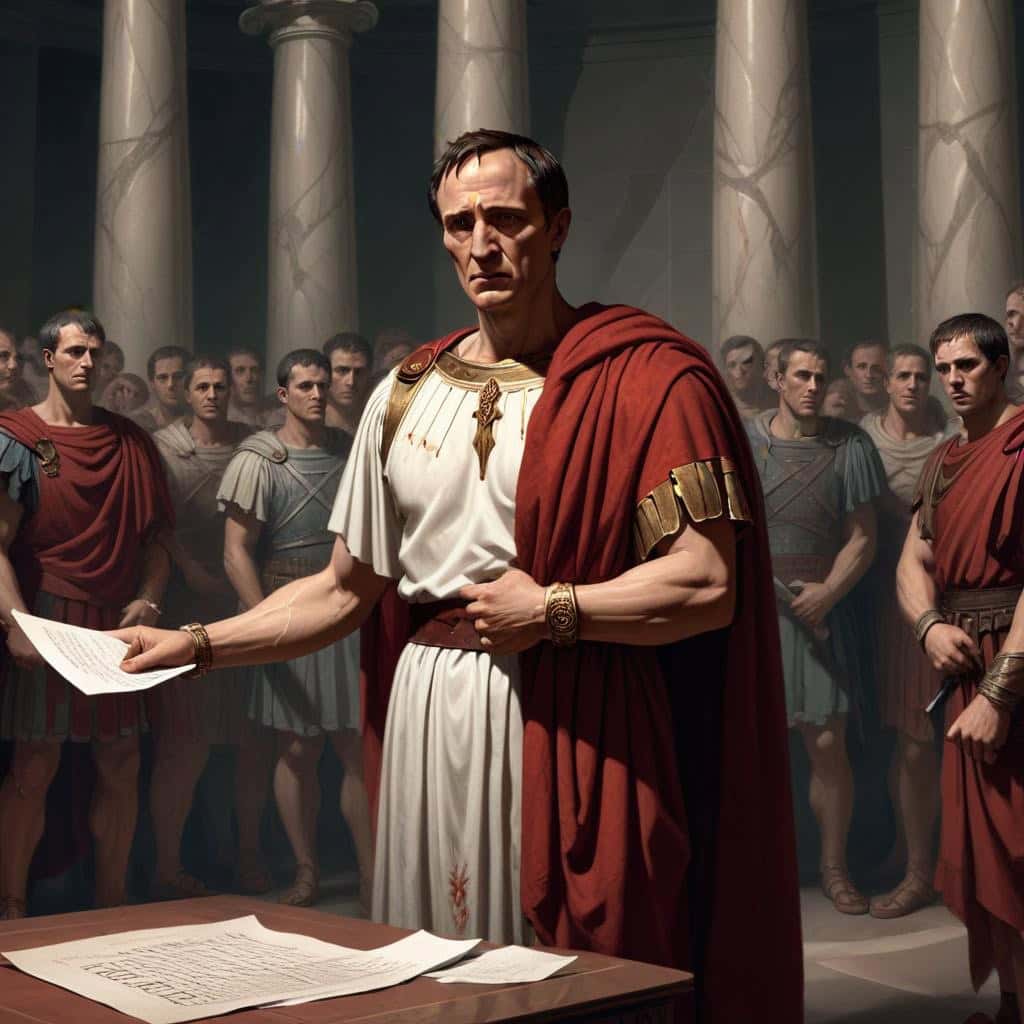
The Ides of March
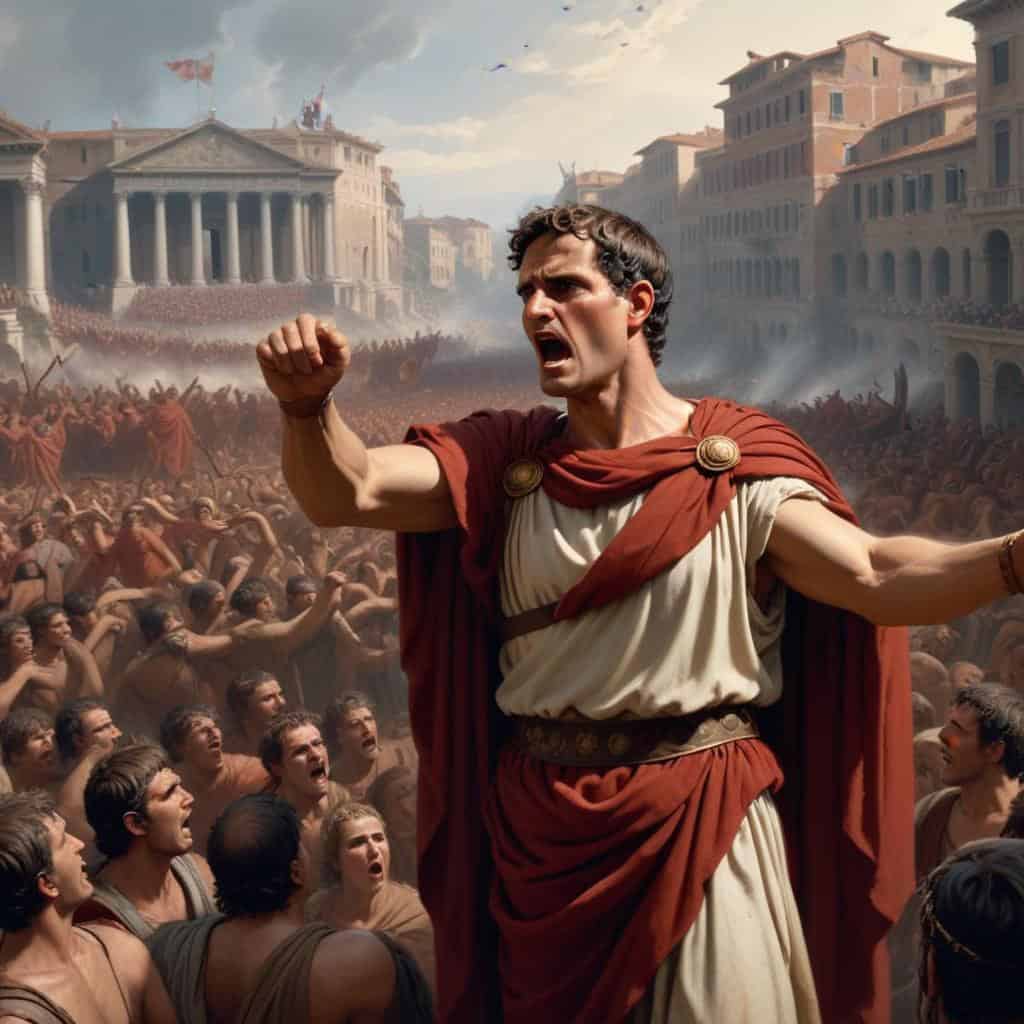
The Aftermath of Caesars Assassination
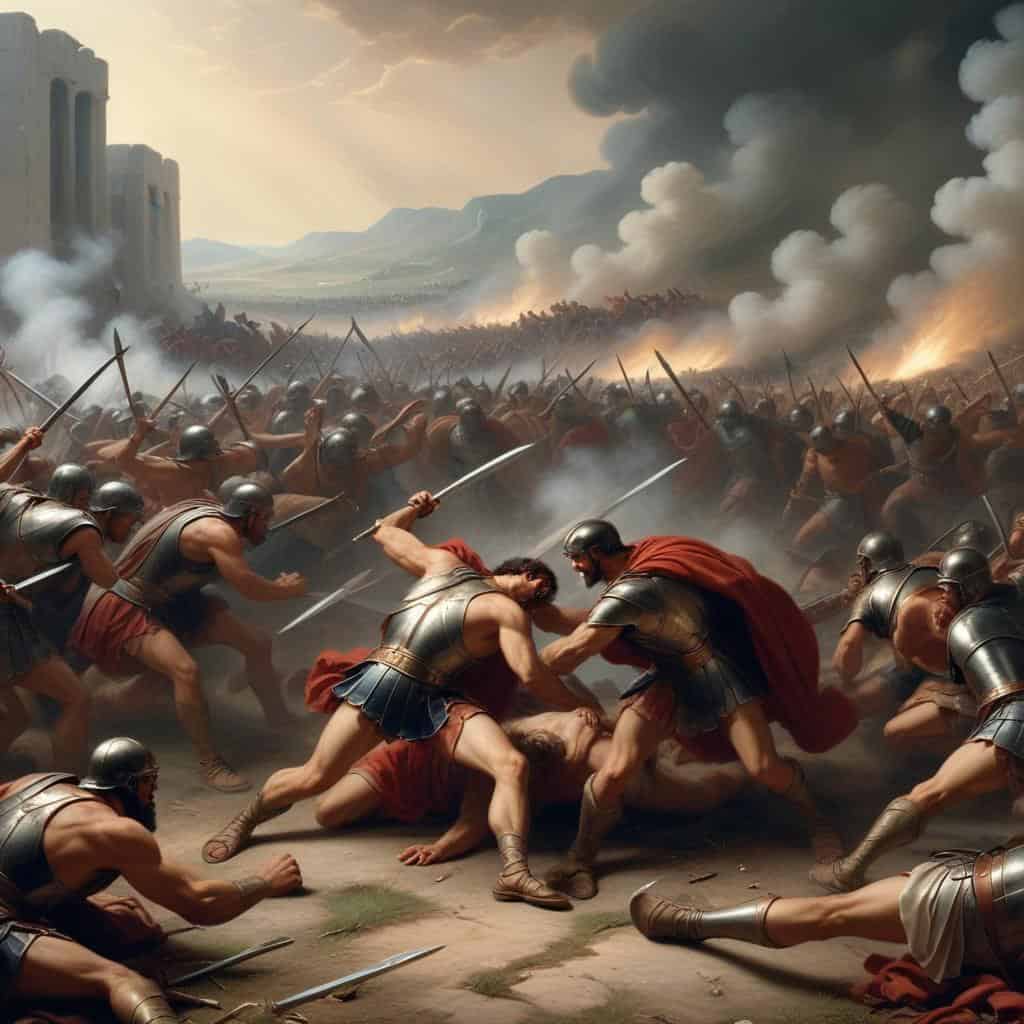
The Battle of Philippi
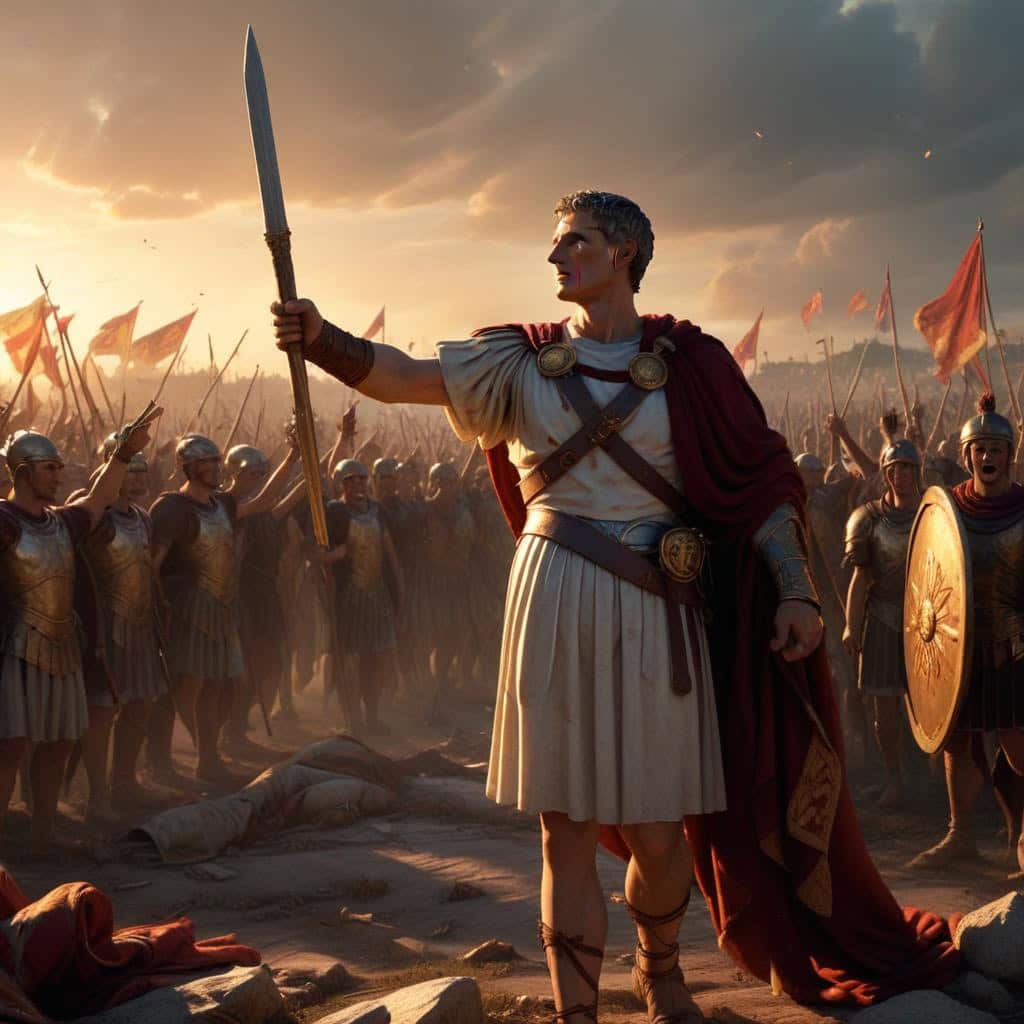
The Triumph of Octavius Caesar
Lesson Details & Resources
In a Nutshell
- What: ‘Julius Caesar’ by William Shakespeare
- When: Written in the Elizabethan era
- Who: Julius Caesar, Brutus, Mark Antony
- Theme: Betrayal, power, ambition
List of Characters in Julius Caesar
-
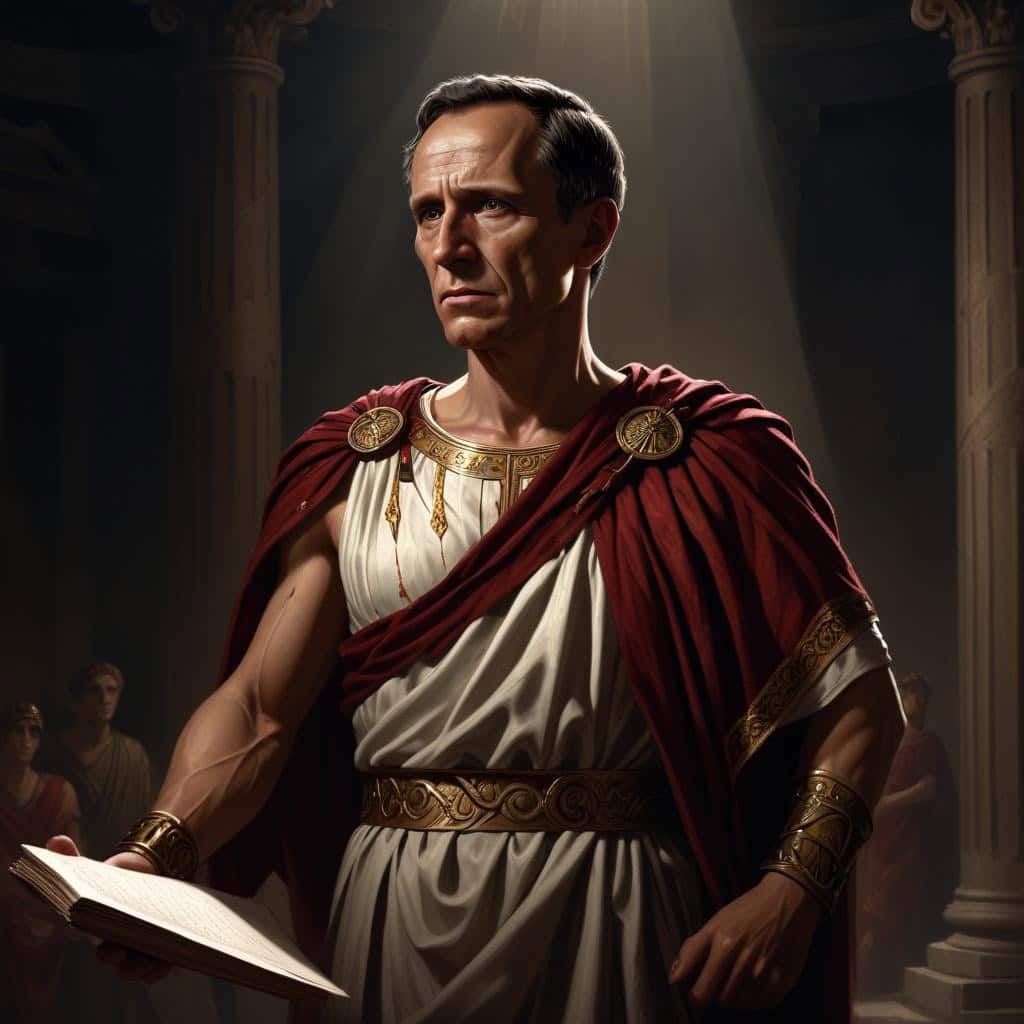
Julius Caesar
A powerful Roman general who becomes a target of conspiracy due to his growing ambition.
-
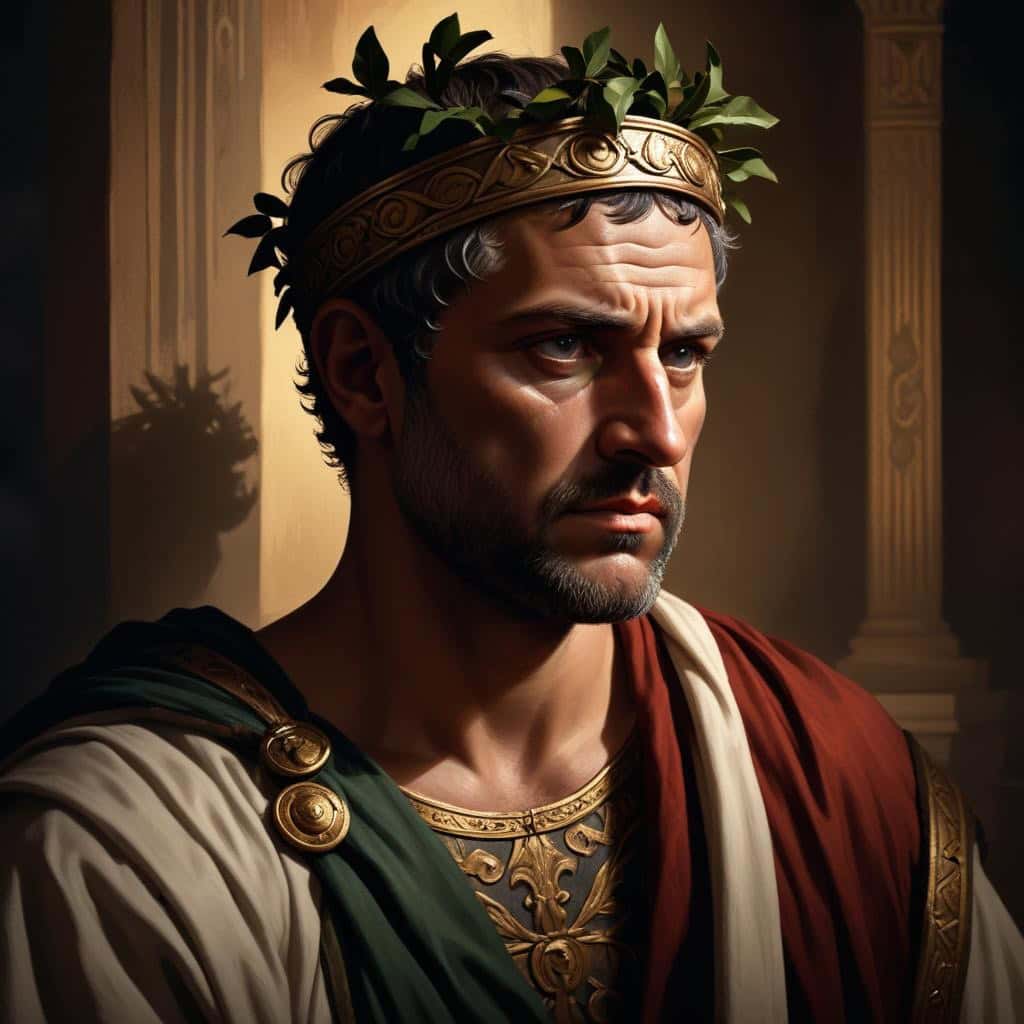
Marcus Brutus
A close friend of Julius Caesar who is torn between loyalty to his friend and the good of Rome.
-
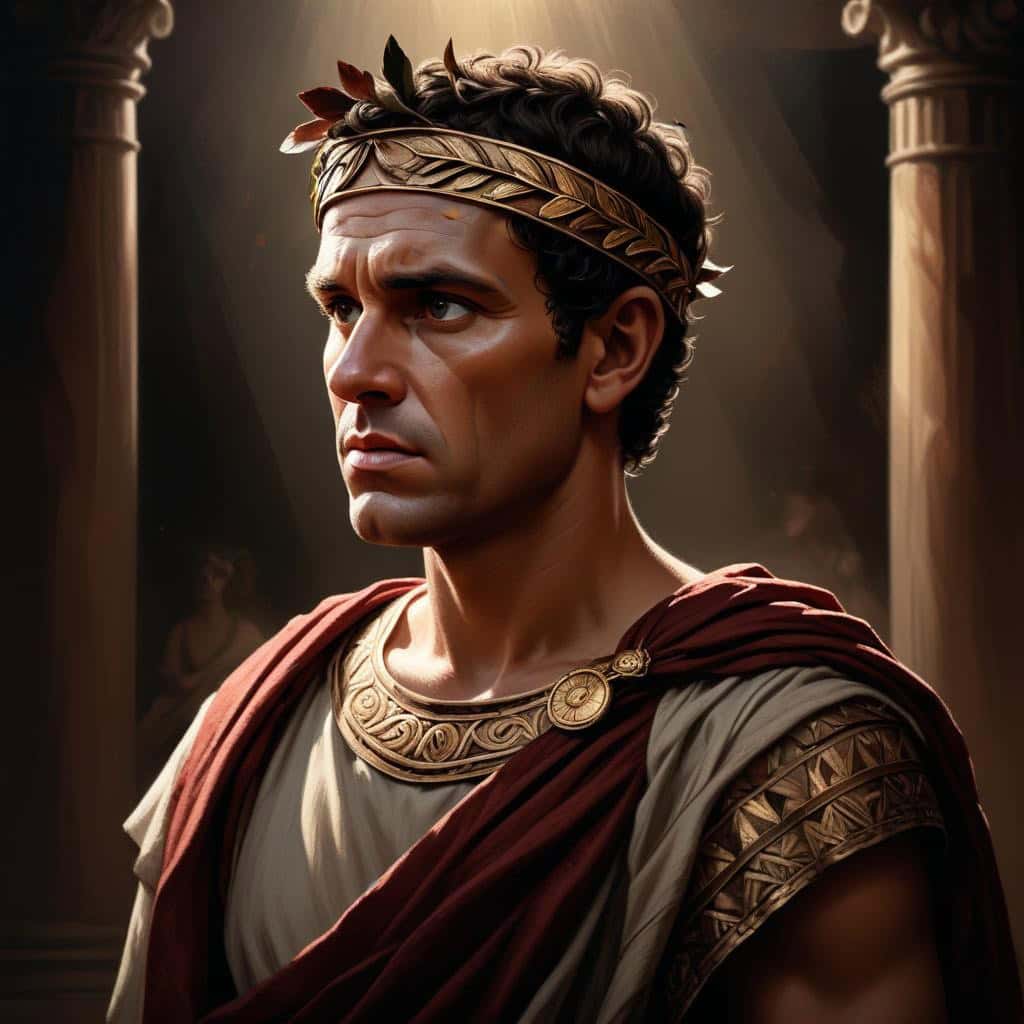
Mark Antony
A loyal supporter of Julius Caesar who seeks revenge after his assassination.
-
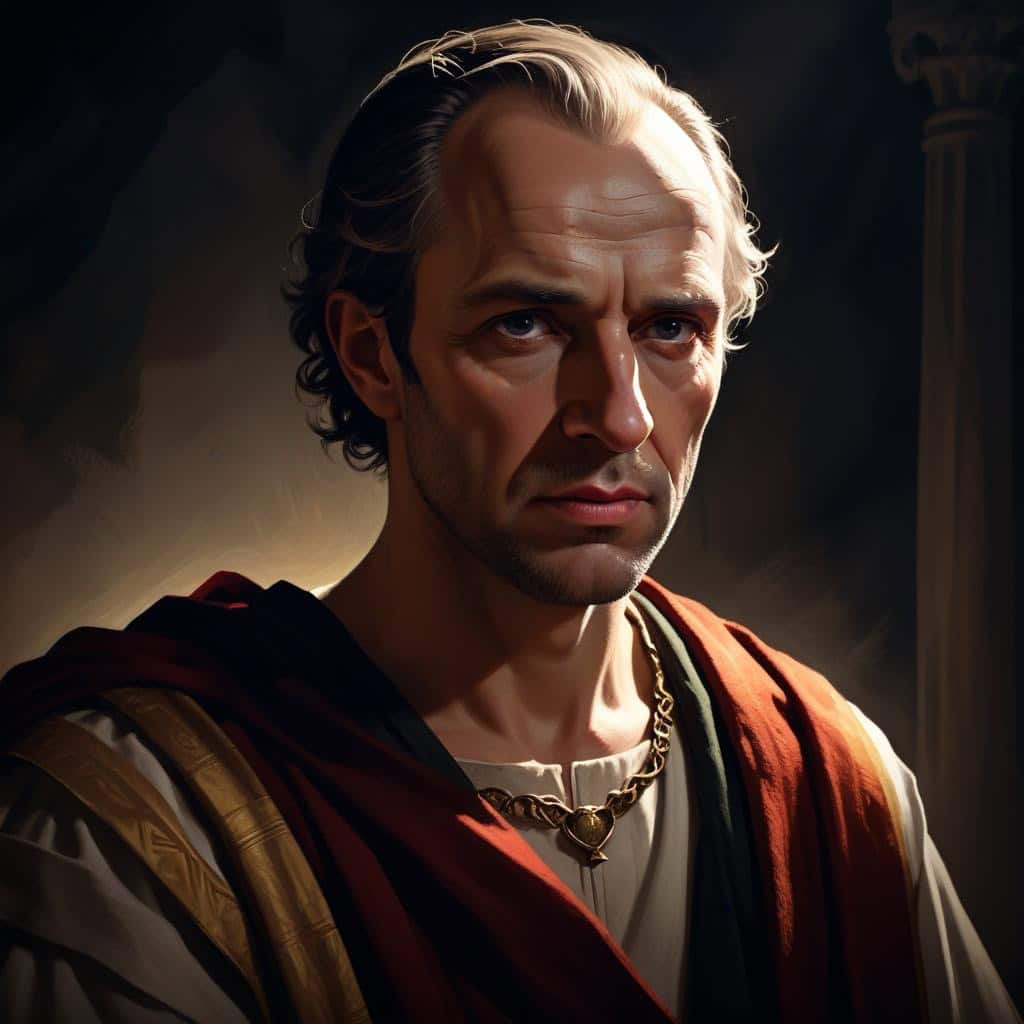
Caius Cassius
A skilled politician who leads the conspiracy against Julius Caesar.
-

Calpurnia
Caesar's devoted wife who has ominous dreams warning about her husband's fate.
-

Portia
Brutus' wife who proves to be a strong and determined woman.
-
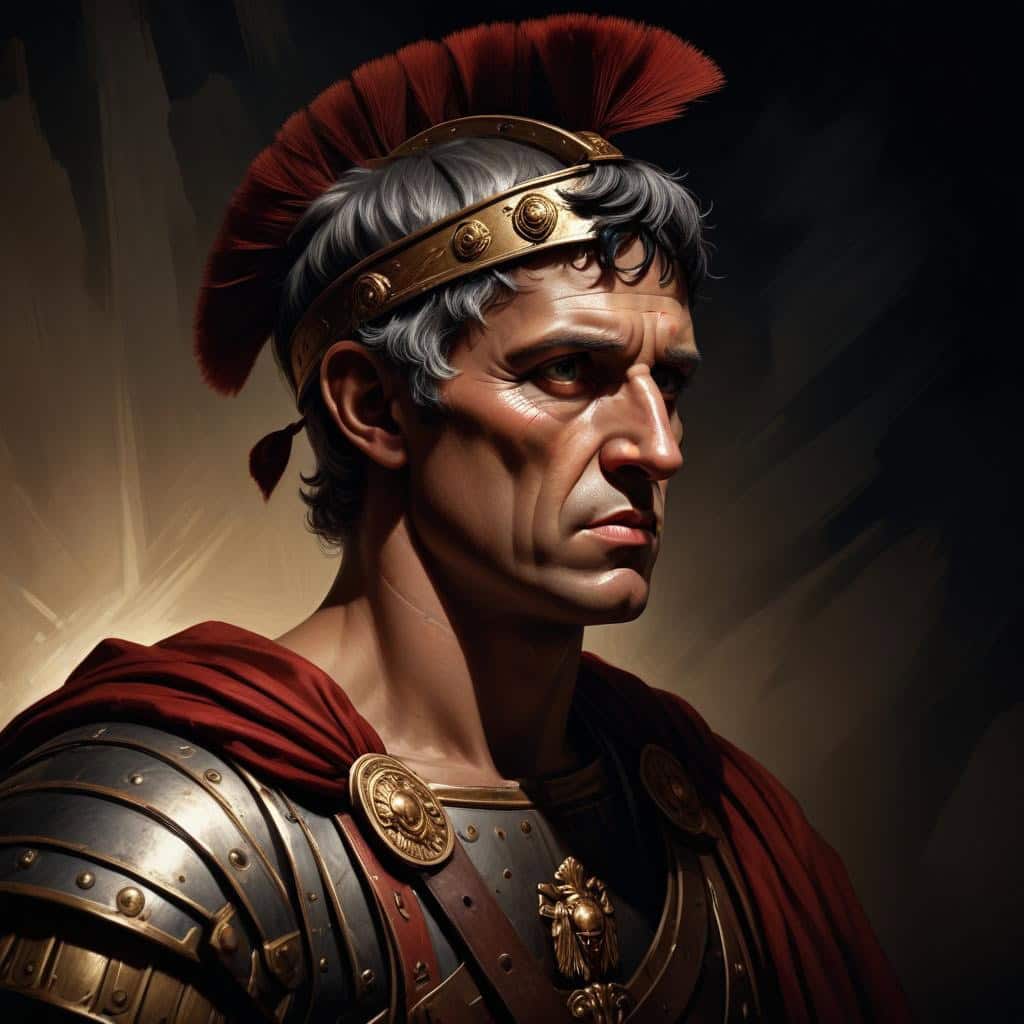
Octavius Caesar
Julius Caesar's adopted heir and the future emperor of Rome.
-
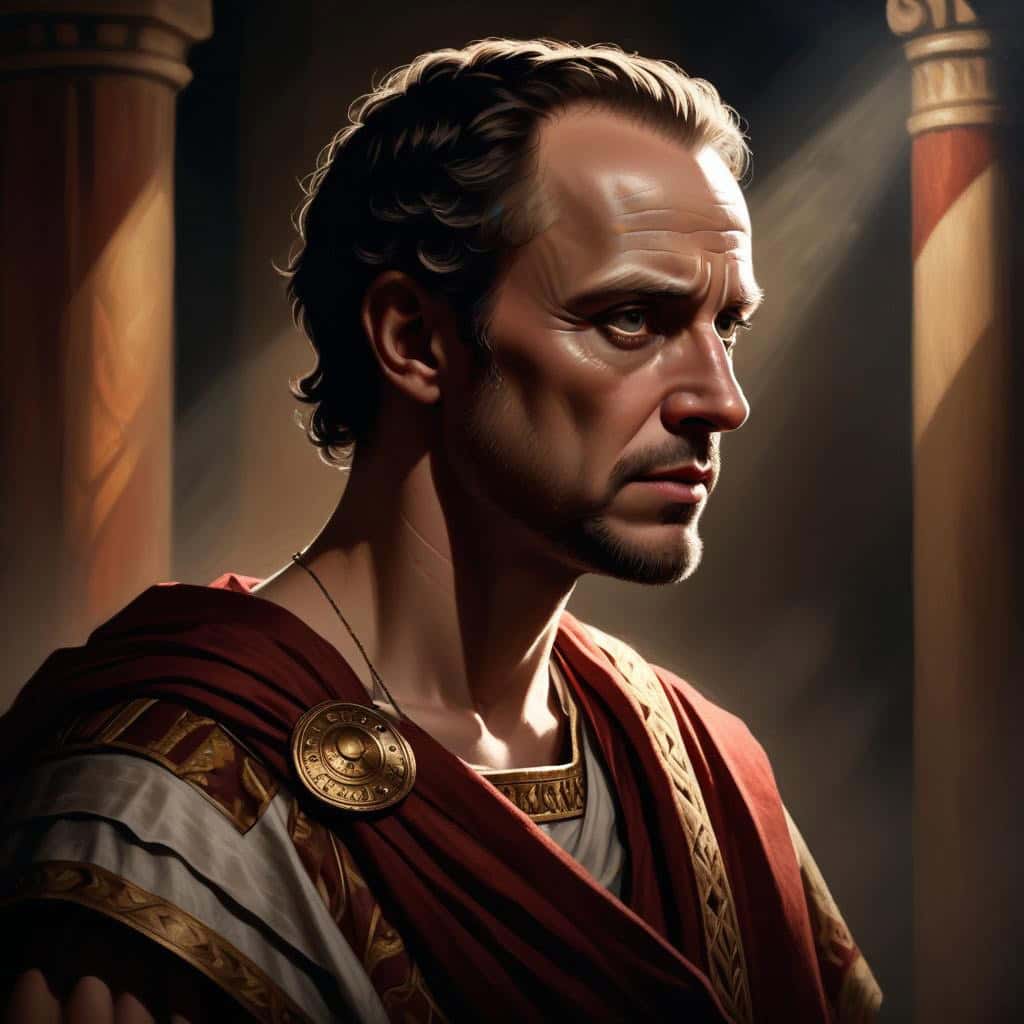
Lucius
A young servant to Brutus who remains faithful to his master throughout the play.
Timeline of Julius Caesar
1. Julius Caesar returns to Rome after defeating Pompey
2. Caesar is offered the crown three times and refuses each time
3. Cassius forms a conspiracy against Caesar
4. Brutus joins the conspiracy, motivated by his love for Rome
5. The conspirators plan to assassinate Caesar on the Ides of March
6. Calpurnia, Caesar's wife, has a nightmare and urges him not to go to the Senate
7. Decius convinces Caesar to go to the Senate by interpreting Calpurnia's dream as positive
8. Caesar is warned by a soothsayer to beware the Ides of March
9. The conspirators gather at the Senate, and Caesar is assassinated by Brutus and others
10. Antony delivers a funeral speech, stirring up the crowd against the conspirators
11. Brutus and Cassius flee Rome, leaving Antony and Octavius in control
12. Antony forms an alliance with Octavius and Lepidus to defeat the conspirators
13. Brutus and Cassius raise an army and prepare for battle against Antony and Octavius
14. Brutus receives a ghostly visit from Caesar, warning him of his impending defeat
15. The Battle of Philippi takes place, and Brutus and Cassius are defeated
16. Brutus dies by his own sword, choosing to avoid capture
17. Antony gives a eulogy for Brutus, praising his noble intentions
18. Octavius becomes the sole ruler of Rome
19. Antony and Octavius discuss who should be executed in their quest for power
20. The play ends with the promise of a new era under the rule of Octavius
Vocabulary List
- Conspirator
- A person who takes part in a secret plan to do something harmful or illegal
- Assassinate
- To murder someone, especially a famous person or a politician, by a sudden violent attack
- Ambitious
- Having a strong desire to achieve success, power, or wealth
- Tragedy
- A serious play or novel with a sad ending, especially one in which the main character dies
- Betray
- To be disloyal to someone who trusts you, especially by telling someone else a secret or by cheating them
- Noble
- Having high moral qualities and ideals, such as honesty, courage, and generosity
- Assassination
- The act of murdering someone, especially a famous person or a politician, by a sudden violent attack
- Conspiracy
- A secret plan by a group of people to do something harmful or illegal
- Power-hungry
- Having an excessive desire for power or control
- Loyalty
- The quality of being faithful and devoted to someone or something
- Vengeance
- The act of taking revenge for a past wrong or injury
- Brutal
- Extremely violent and cruel
- Ambivalence
- The state of having mixed feelings or contradictory ideas about something or someone
- Deception
- The act of tricking or deceiving someone by concealing or misrepresenting the truth
- Ruthless
- Showing no mercy or compassion
- Vengeful
- Having a strong desire for revenge
- Manipulation
- The act of controlling or influencing someone or something in a clever or dishonest way
- Treachery
- Betrayal of trust
- Tyrant
- A cruel and oppressive ruler
- Cunning
- Having or showing skill in achieving one's ends by deceit or evasion.
Key Facts
This is the information used in the fact matching game
- Julius Caesar was written by William Shakespeare in 1599
- The play is based on the historical events surrounding the assassination of Julius Caesar in 44 BC
- It is one of Shakespeare's most famous tragedies
- The play explores themes of power, betrayal, and political ambition
- Julius Caesar is one of the shortest plays written by Shakespeare
- The play is divided into five acts
- The famous quote "Et tu, Brute?" is from Julius Caesar
- Julius Caesar was the first play performed in Shakespeare's Globe Theatre
- The character of Julius Caesar is not the central protagonist but appears in fewer scenes than other characters
- The play depicts the conspiracy against Caesar and the aftermath of his assassination
- The character of Brutus struggles with his loyalty to Caesar and his loyalty to the Roman Republic
- Shakespeare takes some liberties with historical accuracy in the play for dramatic effect
- The play includes several famous speeches, such as Antony's "Friends, Romans, countrymen" speech
- Julius Caesar was a popular play during Shakespeare's time and remains widely performed today
- The play has been adapted into various films, including the 1953 adaptation starring Marlon Brando as Mark Antony
- The character of Brutus is often seen as a tragic hero in the play
- Shakespeare's portrayal of Julius Caesar as an ambitious and powerful leader has influenced the popular perception of him
- The play explores the consequences of political violence and its impact on society
- The character of Mark Antony delivers a powerful and persuasive speech at Caesar's funeral
- Julius Caesar has been translated into numerous languages and performed around the world.
Analysis & Significance
Impact on Literature
William Shakespeare’s ‘Julius Caesar’ has had a lasting impact on literature, particularly in the realm of historical drama. Its exploration of power, betrayal, and political intrigue has influenced countless writers and playwrights, shaping the way stories of political ambition and conflict are told.
Enduring Themes
The themes of loyalty, ambition, and the consequences of power in ‘Julius Caesar’ continue to resonate with modern audiences. The play’s examination of the complexities of human nature and the moral dilemmas faced by its characters are timeless and still relevant in today’s society.
Cultural Significance Today
‘Julius Caesar’ remains culturally significant today through its many adaptations in film, television, and theater. Its characters and iconic lines have become ingrained in popular culture, with the play serving as a touchstone for discussions on leadership, betrayal, and the consequences of one’s actions. Its exploration of political power dynamics continues to be a source of inspiration for artists and audiences alike.
Julius Caesar Games


Take Your Learning Offline
Want a convenient, print-ready study guide for this lesson? Become a Memory Wizards Pro member to unlock the downloadable " Memory Scrolls" for this topic and our entire library!
- ✓ Complete Vocabulary Lists
- ✓ Key Facts & Timelines
- ✓ Beautifully Formatted for Print & Mobile