
How Do You Learn Best?
Learn by Listening
Start with the 3-minute audio summary to get the key facts and narrative highlights quickly.
Learn by Reading
Immerse yourself in the 10-minute visual lesson for a comprehensive understanding of the topic.
Learn by Reviewing
Jump directly to the key facts, timeline, and vocabulary lists to build a solid foundation of details.
Learn by Doing
Challenge yourself! Jump straight into the interactive games to learn by trial, error, and discovery.
Audio Library
As one of our featured lessons, this topic includes premium audio guides.
Unlock the Wizard's Cram Session
This powerful audio study guide is a Pro-exclusive feature. Upgrade to Memory Wizards Pro to access this and all of our premium learning tools.
Upgrade to ProHamlet in 10 Minutes
Introduction

Hamlet

Gertrude

Claudius

Ophelia

Laertes
Polonius

Horatio
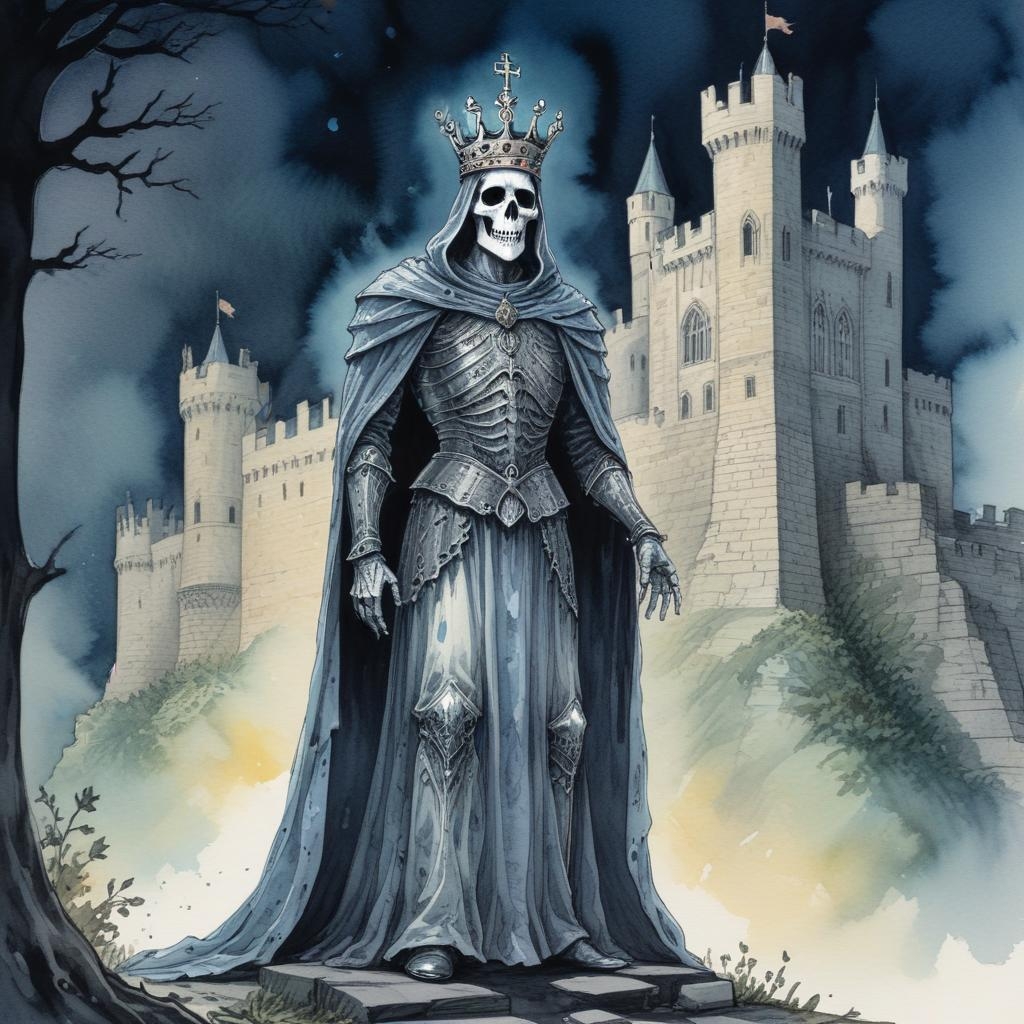
Ghost of King Hamlet
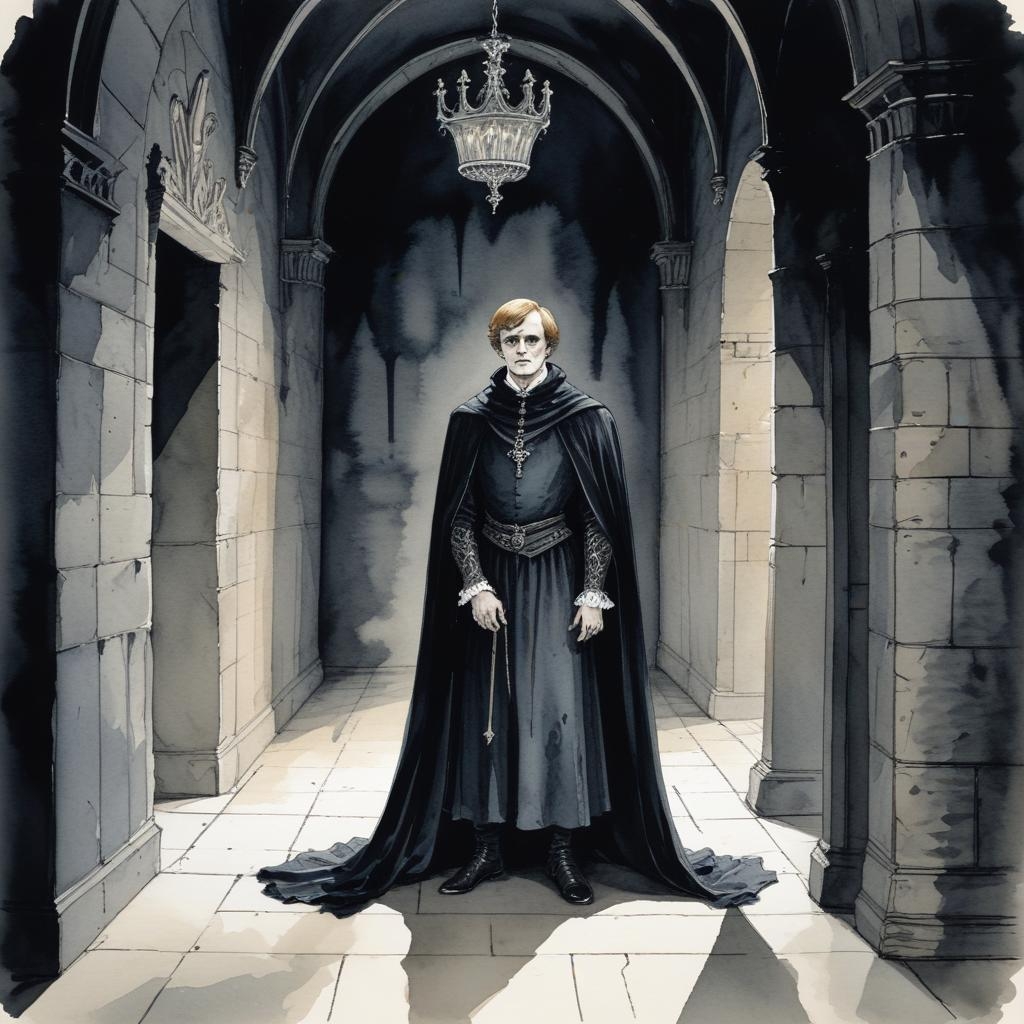
The Ghostly Encounter
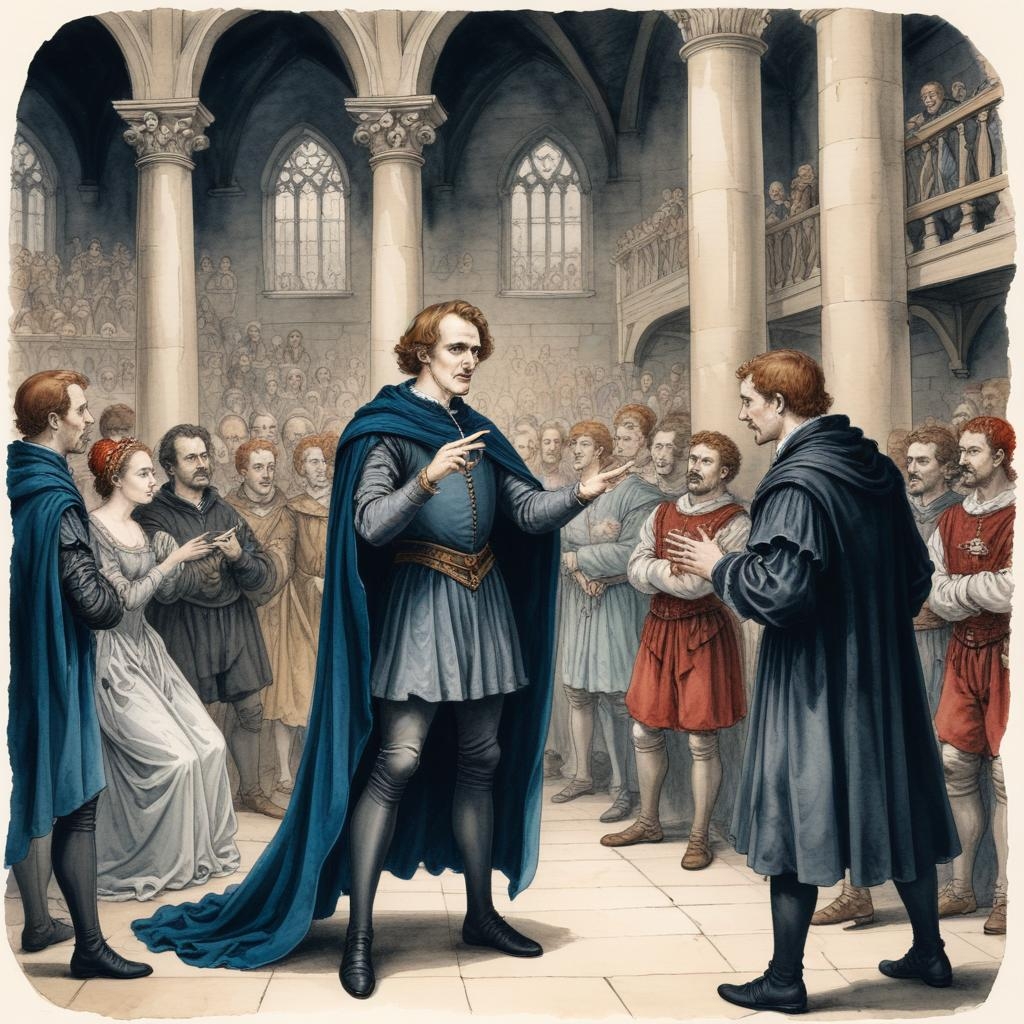
Feigned Madness
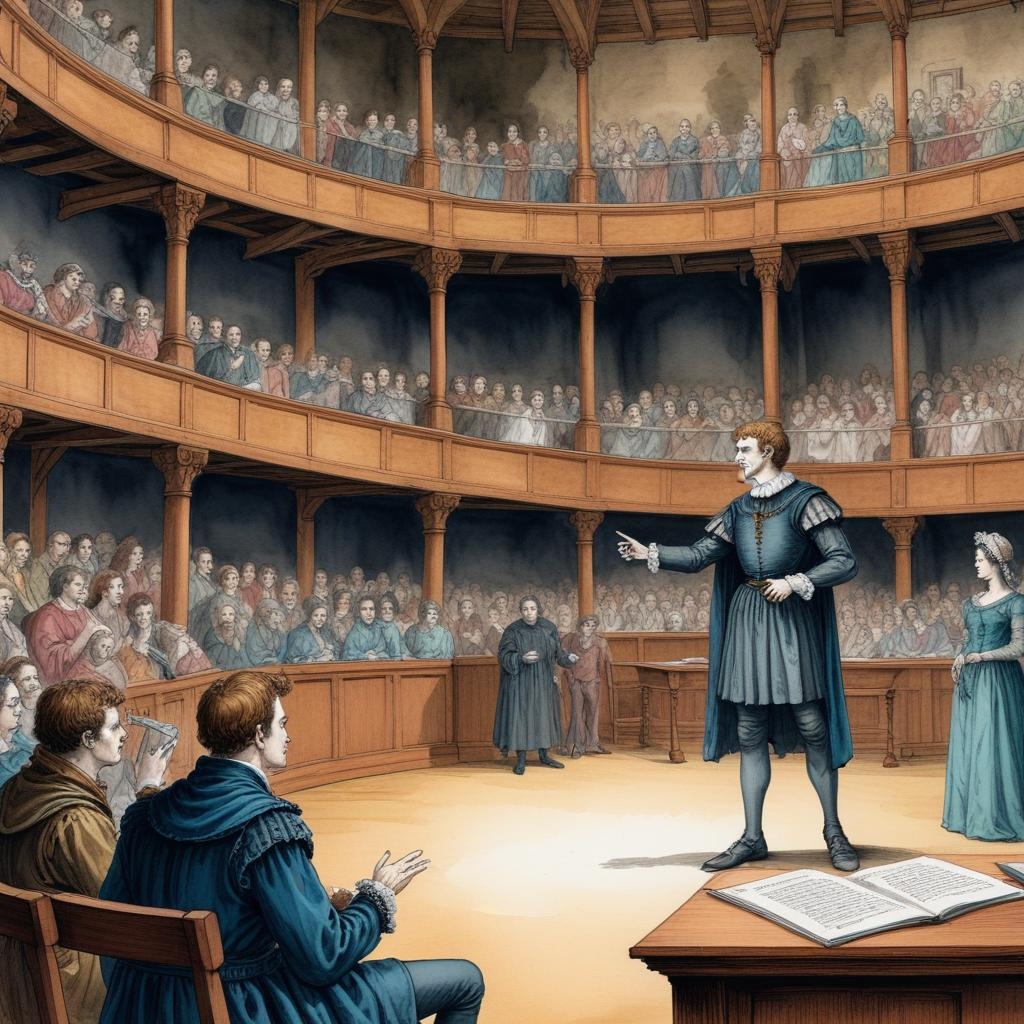
The Play Within a Play
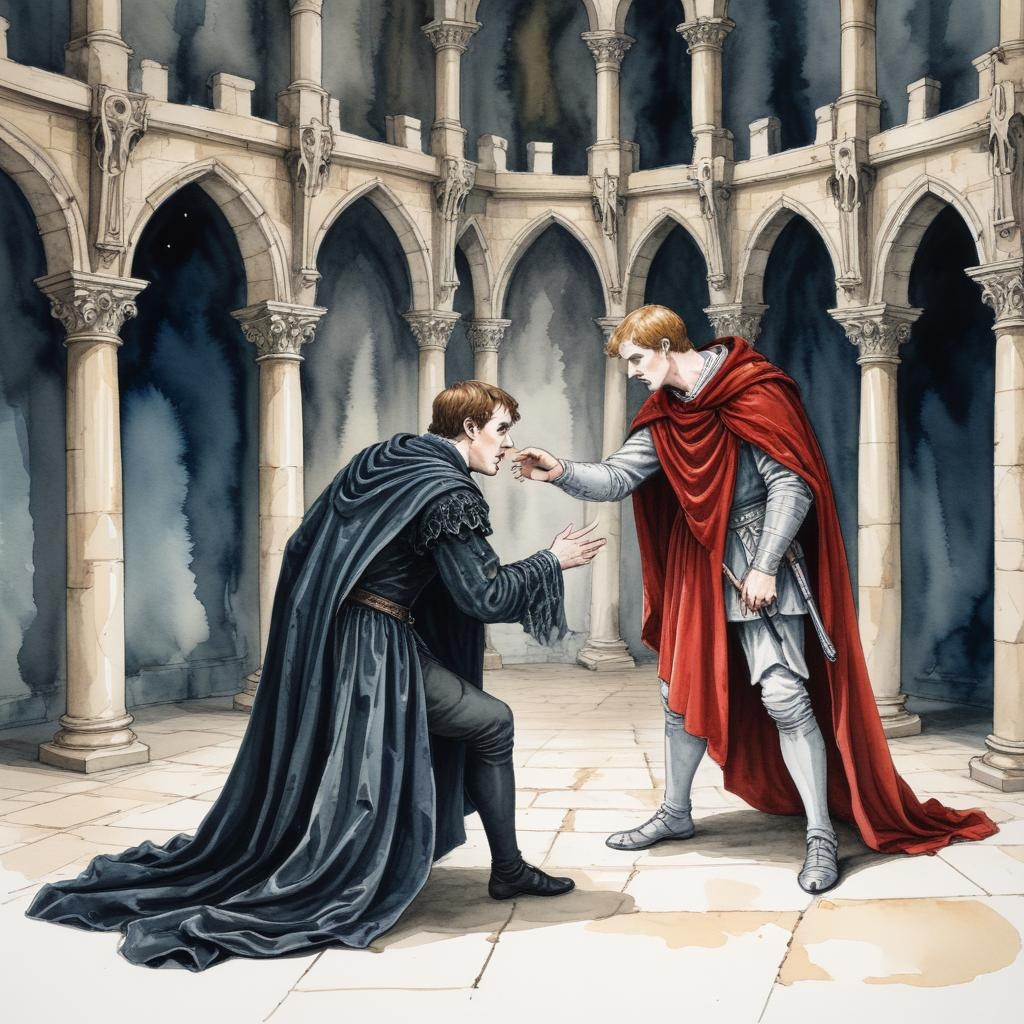
The Murder of Polonius
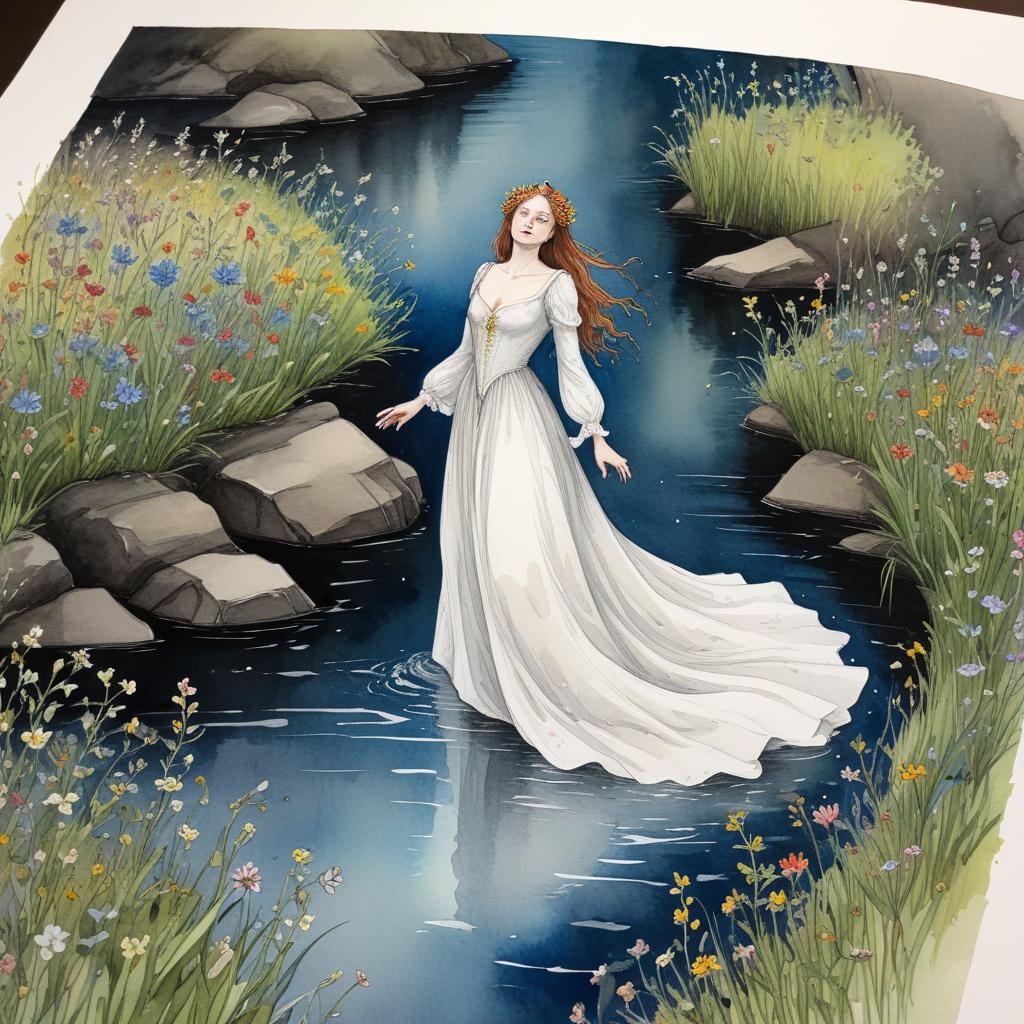
Ophelias Tragic End
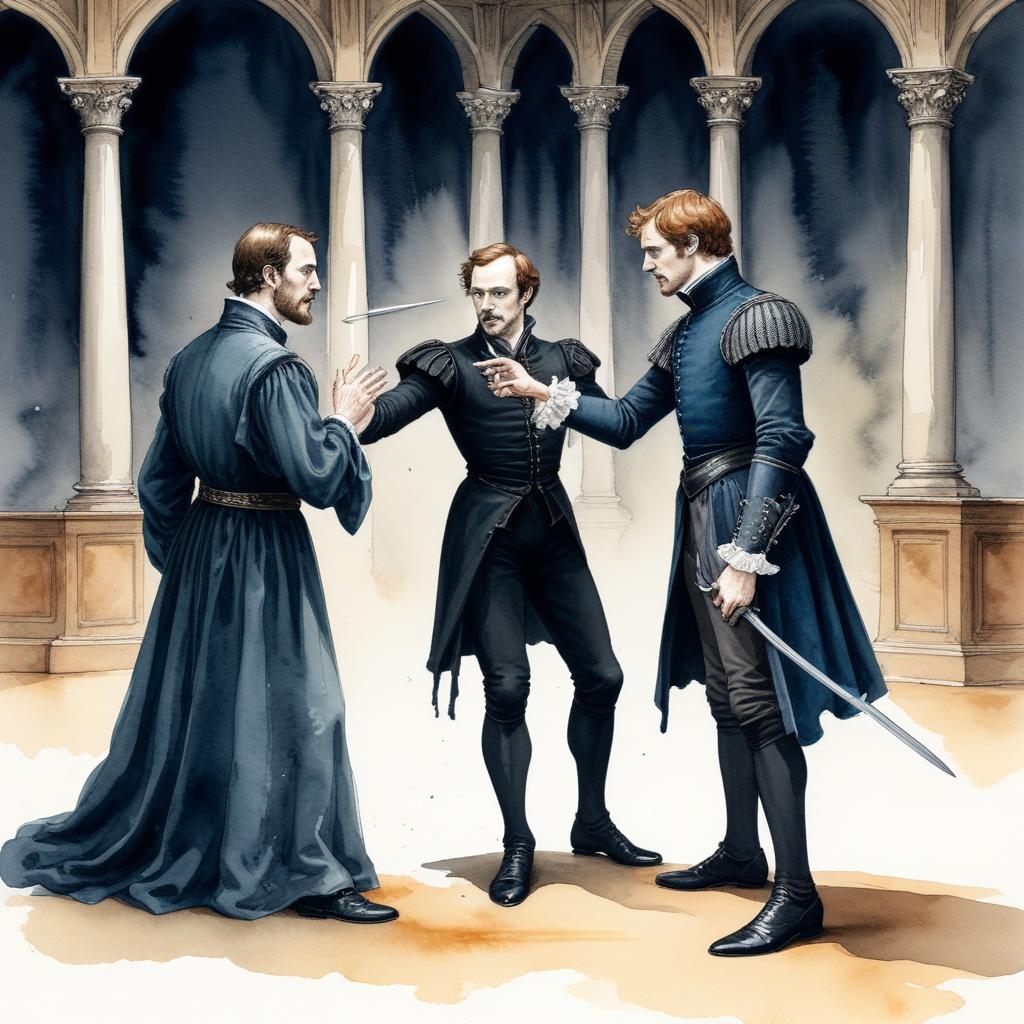
The Duel
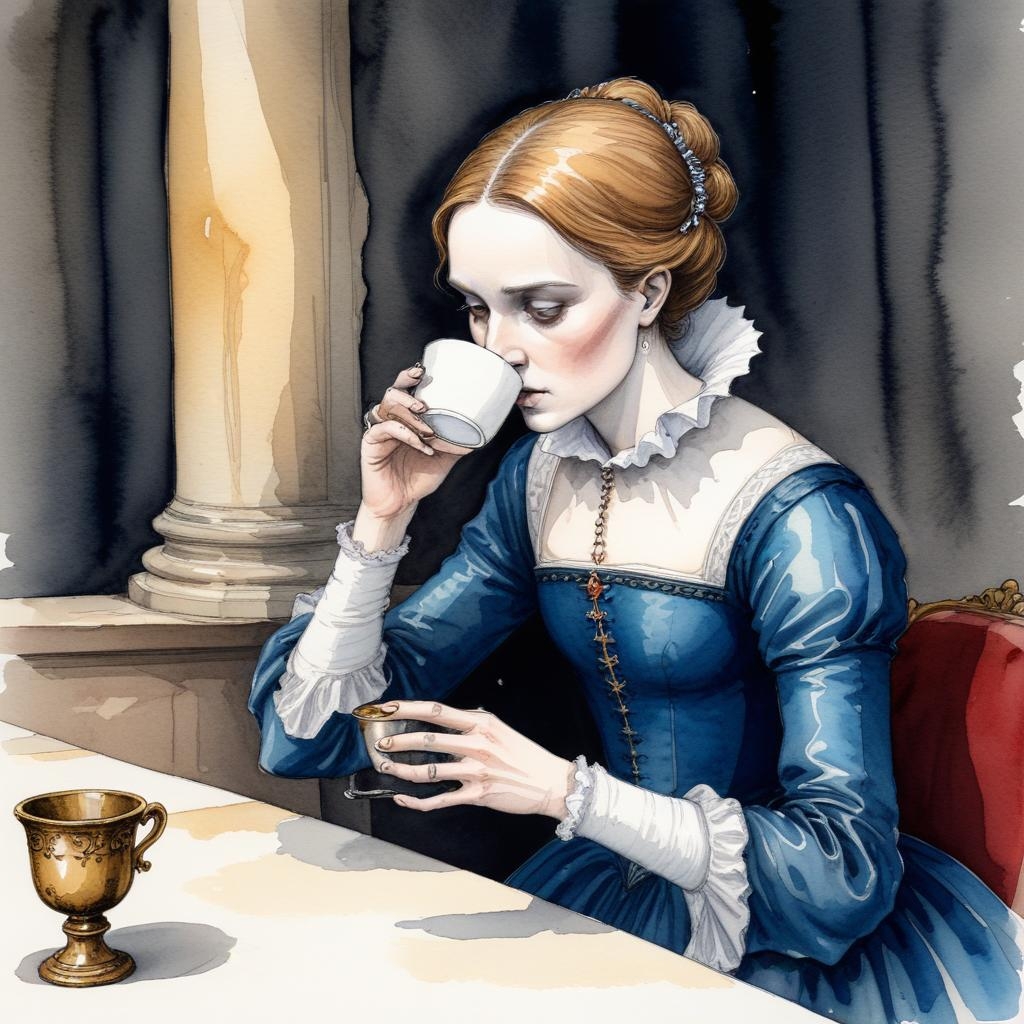
The Poisoned Cup
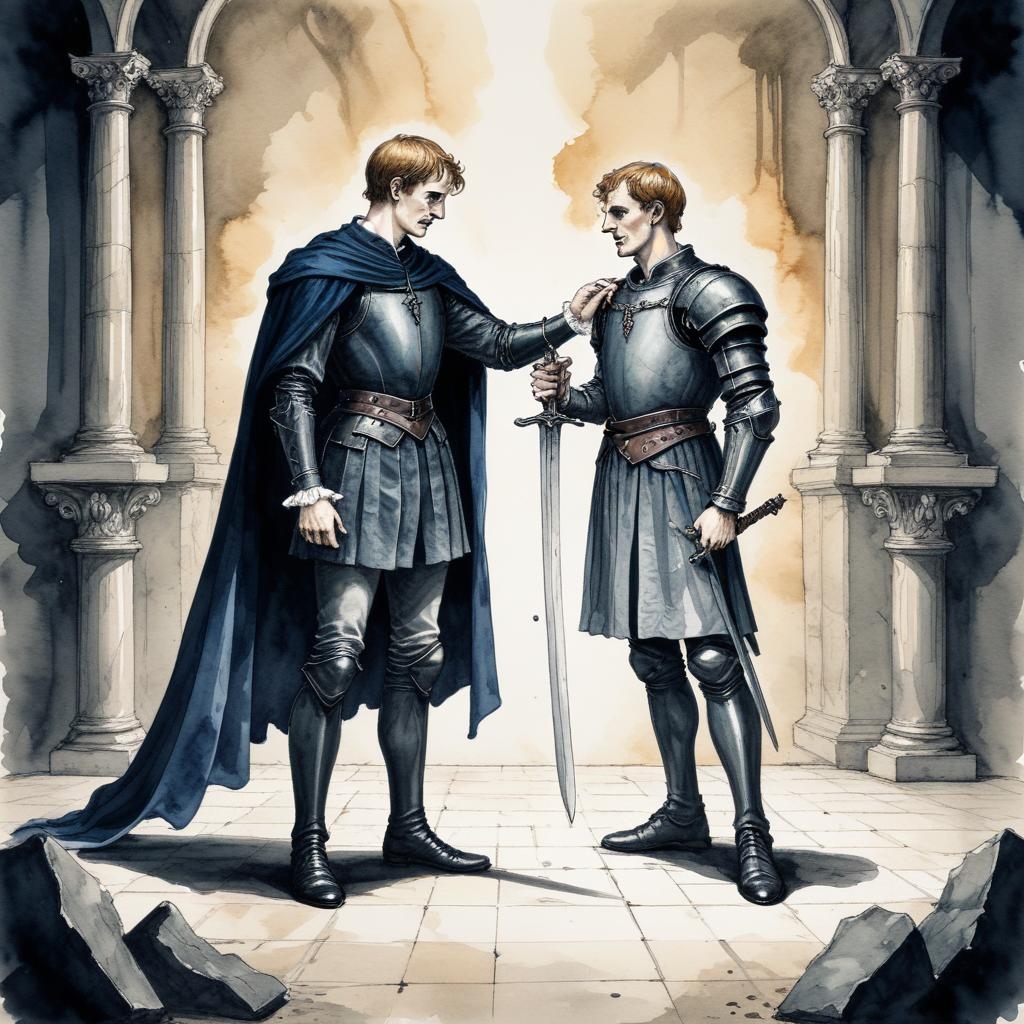
Revenge and Redemption
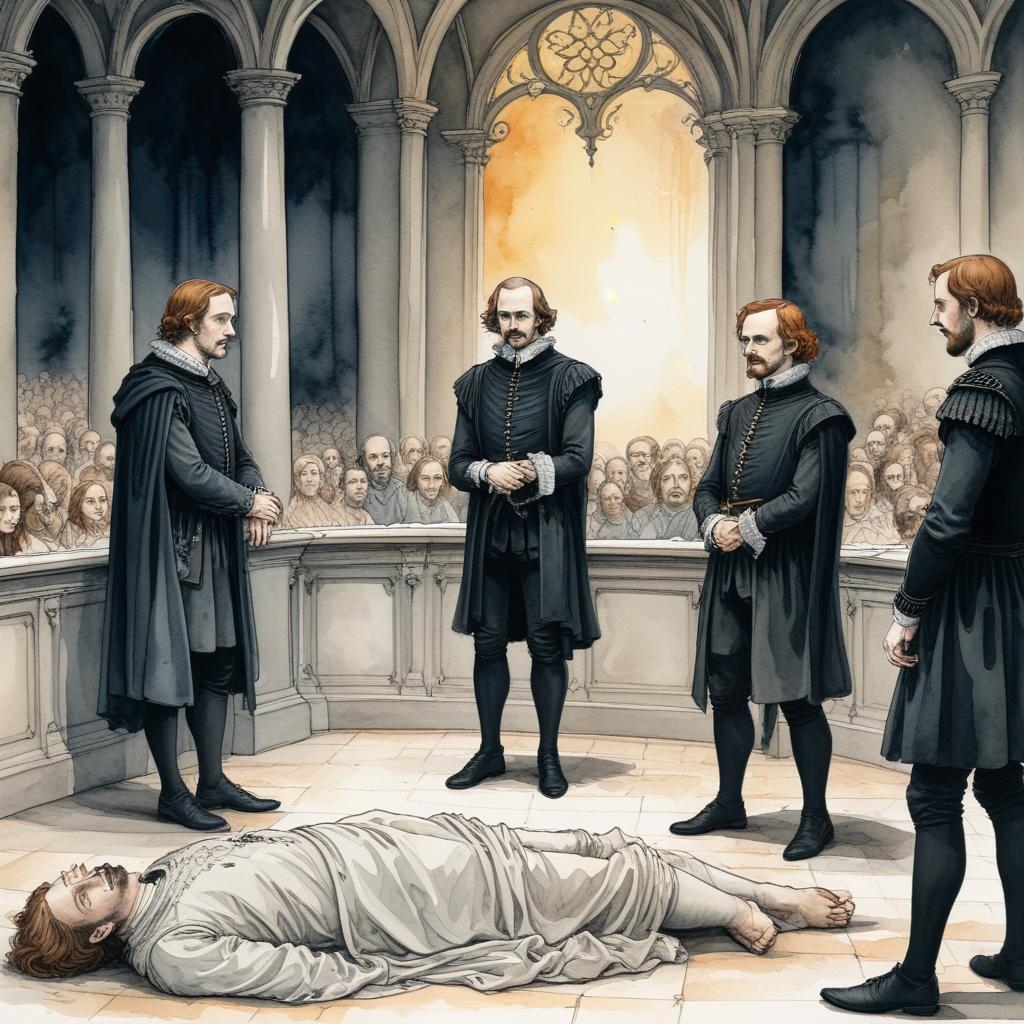
The Tragic End
Lesson Details & Resources
In a Nutshell
- What: Play by William Shakespeare
- When: Written in the Elizabethan era
- Who: Hamlet, Claudius, Ophelia
- Theme: Revenge and madness
List of Characters in Hamlet
-

Hamlet
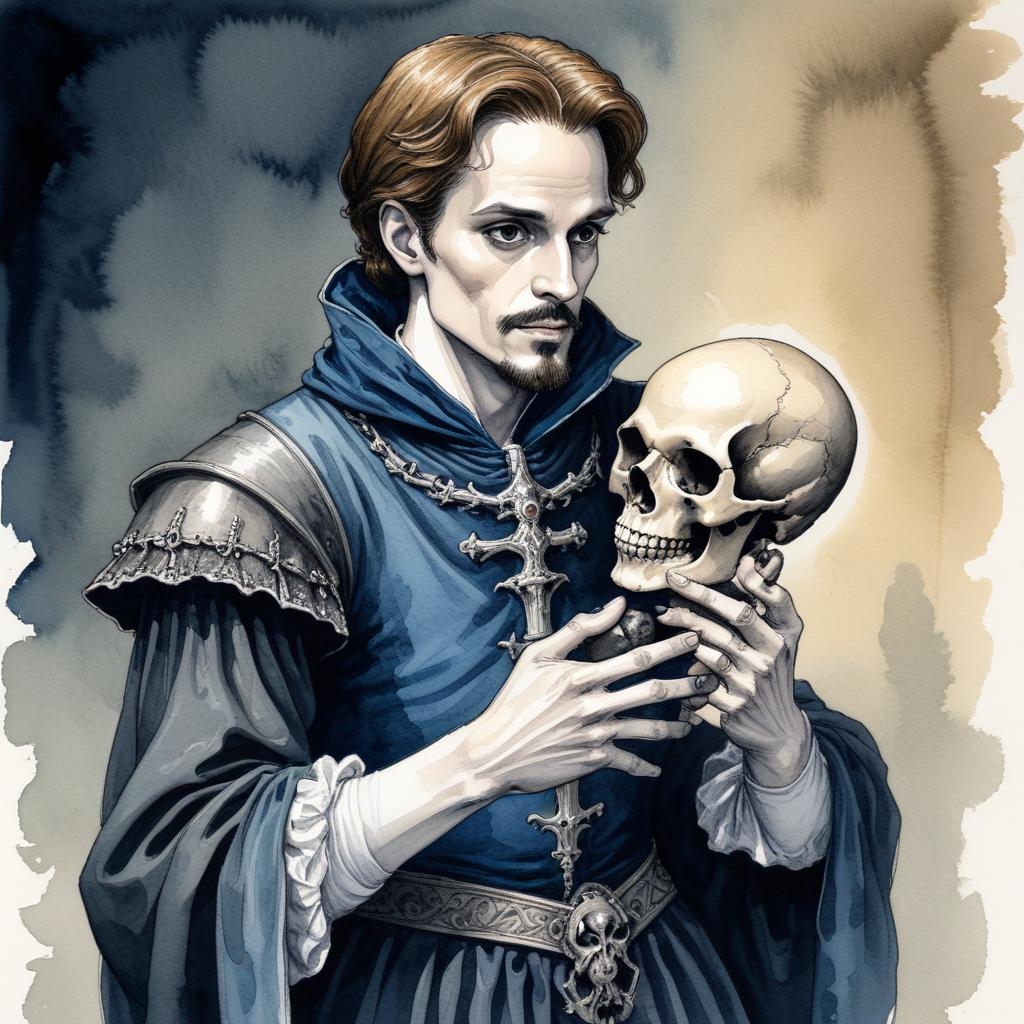
The main protagonist of the play, he is a troubled young prince who seeks revenge for his father's death.
-
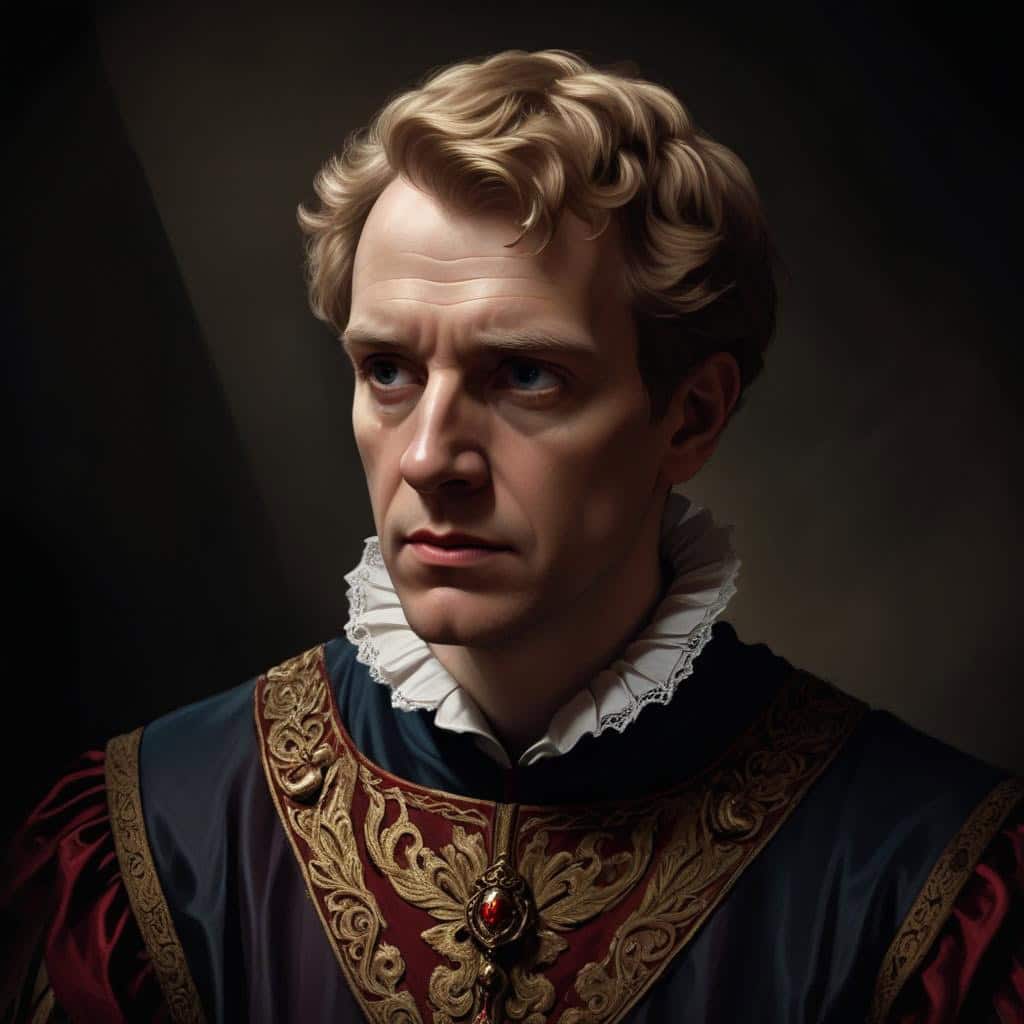
Claudius
The current king of Denmark and Hamlet's uncle, he is ambitious and manipulative.
-
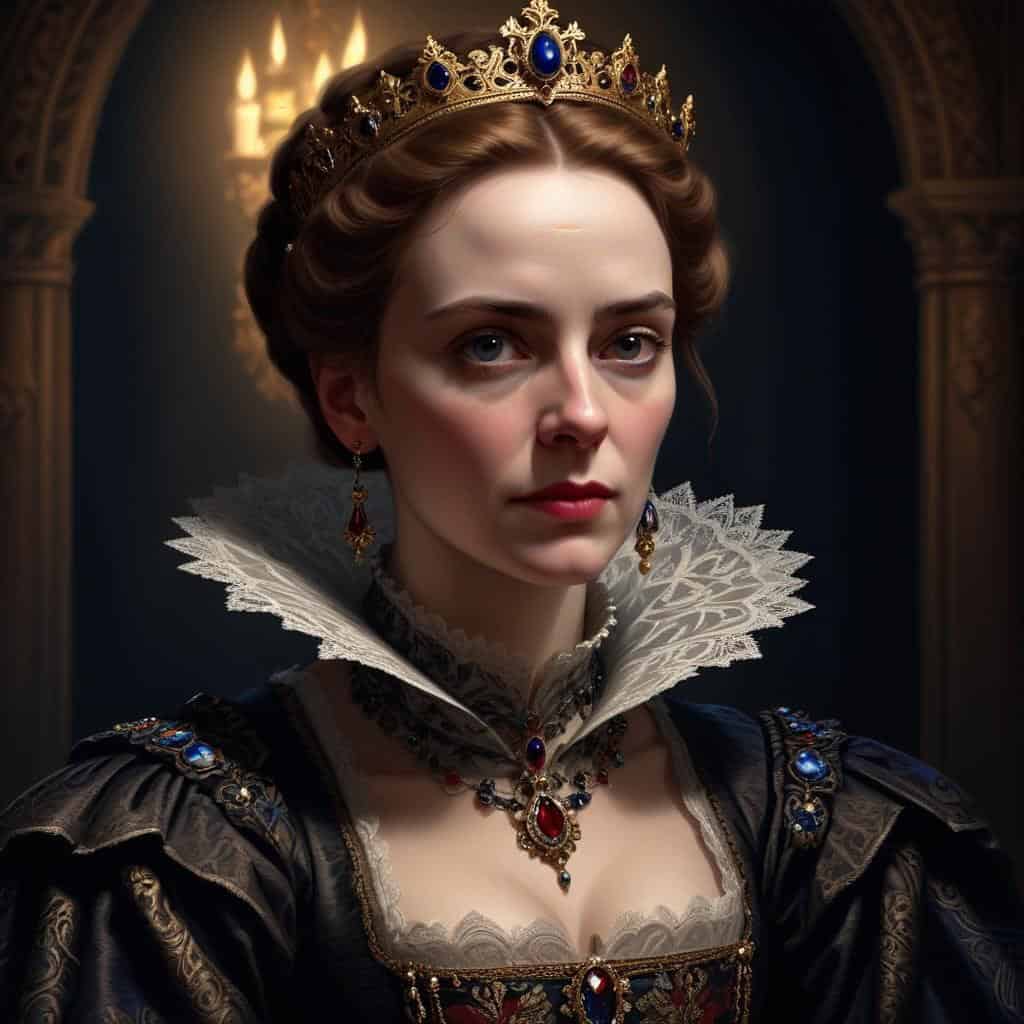
Gertrude
Hamlet's mother and the queen of Denmark, she is torn between her son and her new husband.
-
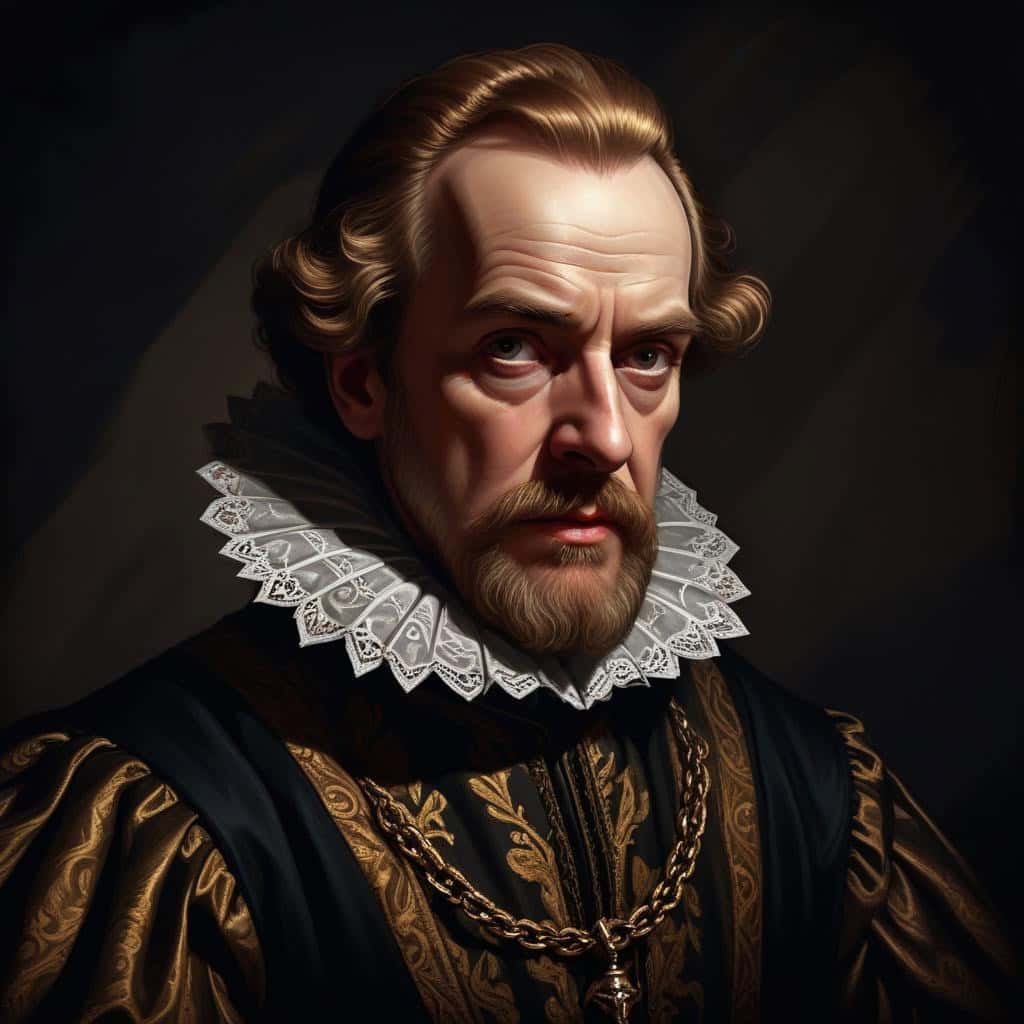
Polonius
The Lord Chamberlain of Claudius' court, he is a wise and conniving advisor.
-

Ophelia
Polonius' daughter, she is in love with Hamlet but is driven to madness.
-

Horatio
Hamlet's loyal friend and confidant, he is a rational and level-headed companion.
-

Laertes
Polonius' son and Ophelia's brother, he seeks revenge for his father's death.
-

Rosencrantz and Guildenstern
Two childhood friends of Hamlet, they are used by Claudius to spy on him.
-
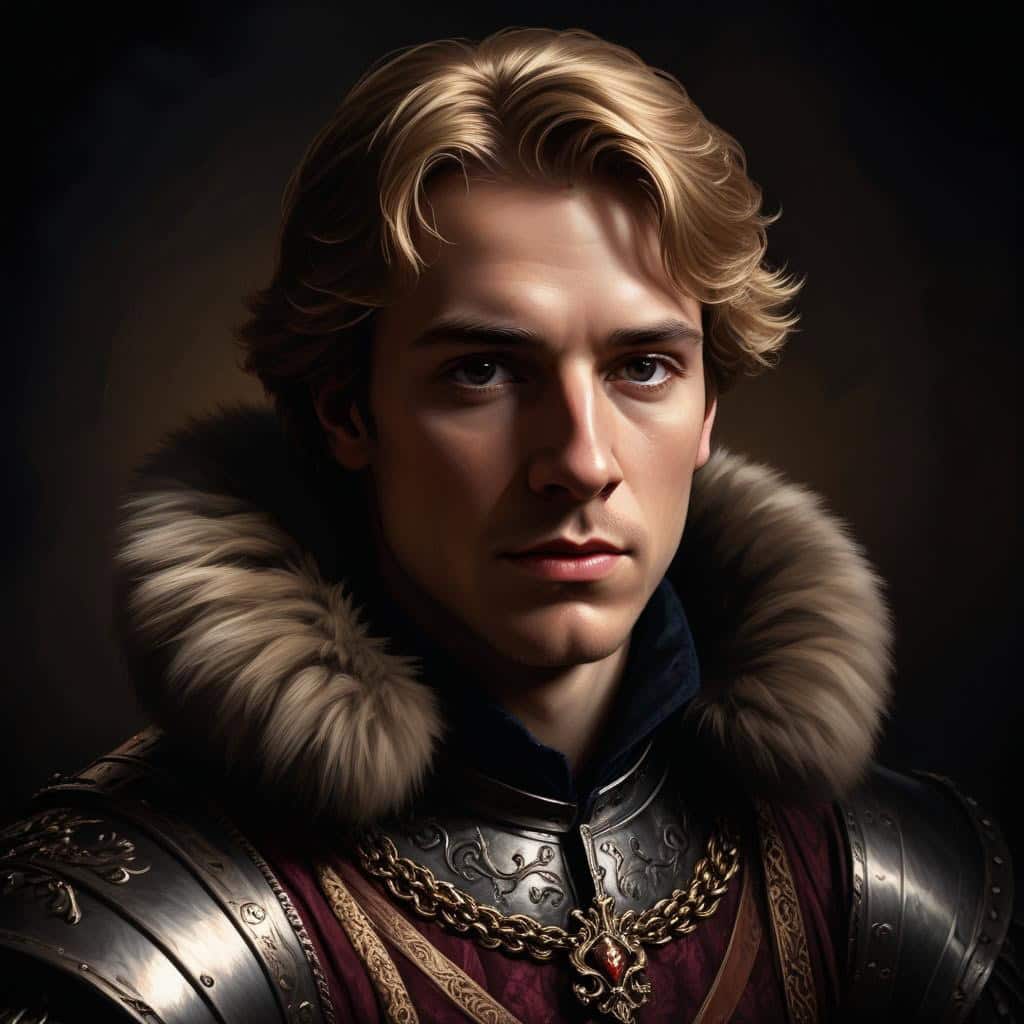
Fortinbras
The Prince of Norway, he seeks to reclaim the lands lost by his father.
Timeline of Hamlet
Hamlet's father, the King of Denmark, dies
Hamlet's mother, Gertrude, marries his uncle Claudius
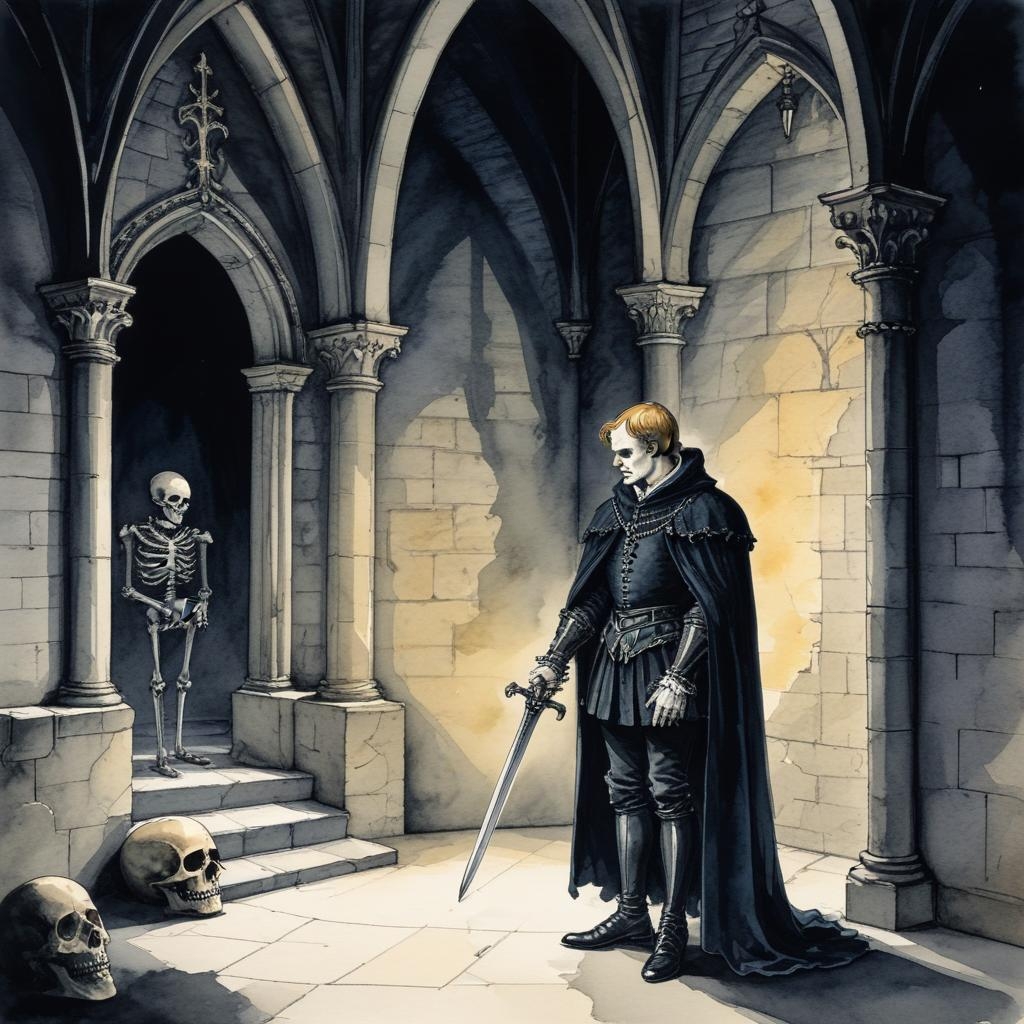
The ghost of Hamlet's father appears to him and reveals that he was murdered by Claudius
Hamlet decides to avenge his father's death and pretends to be insane
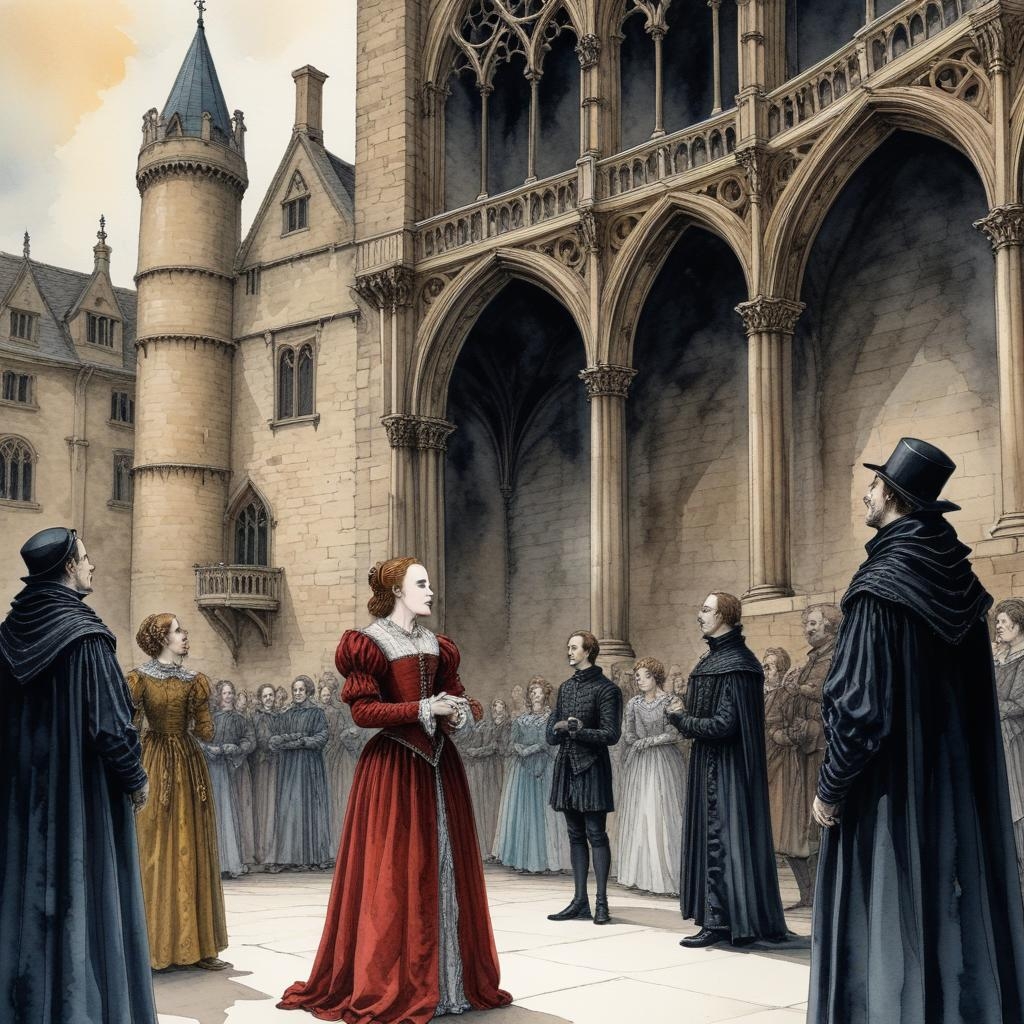
Hamlet stages a play within a play to confirm Claudius' guilt
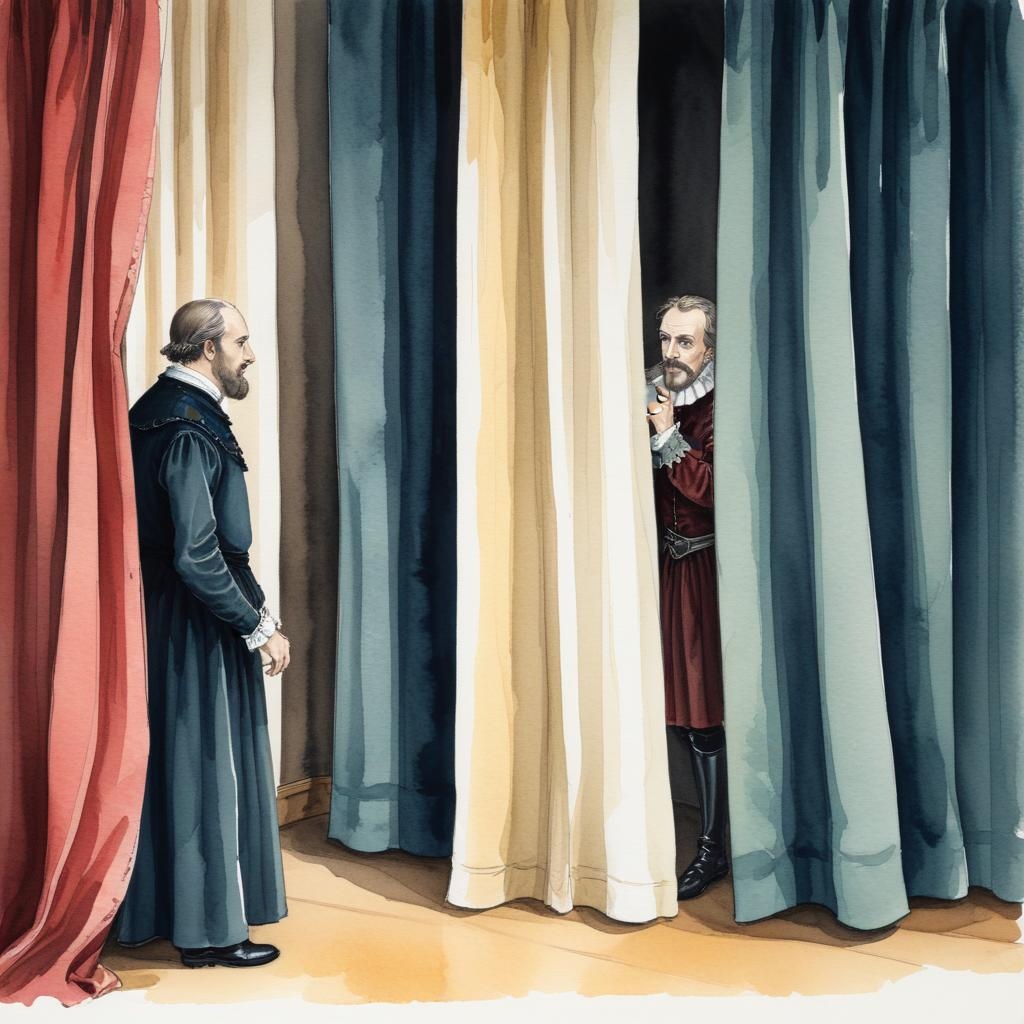
Hamlet accidentally kills Polonius, thinking he is Claudius
Ophelia, Hamlet's love interest, goes mad and drowns herself
Hamlet confronts his mother about her hasty marriage and her role in his father's murder
Hamlet encounters Fortinbras, the Prince of Norway, on his way to invade Denmark
Laertes, Ophelia's brother, seeks revenge for his family's deaths and challenges Hamlet to a duel
Hamlet and Laertes both die in the duel
Fortinbras takes over the throne of Denmark.
Vocabulary List
- Soliloquy
- A speech in which a character speaks their thoughts aloud, often revealing their innermost feelings and intentions
- Tragedy
- A play, novel, or other narrative work that portrays serious and important events, typically ending in the downfall of the protagonist
- Vengeance
- The act of taking revenge, usually in response to a perceived wrong or injustice
- Melancholy
- A feeling of deep sadness or gloom
- Ambivalence
- The state of having mixed or contradictory feelings about something or someone
- Procrastination
- The act of delaying or postponing something, often out of habit or indecisiveness
- Deception
- The act of intentionally misleading or tricking someone
- Foreshadowing
- A literary device used to hint at or suggest future events or outcomes
- Existentialism
- A philosophical theory that emphasizes the existence of the individual as a free and responsible agent determining their own development through acts of their will
- Indecisiveness
- The inability to make decisions quickly or effectively
- Vengeful
- Feeling or showing a strong desire for revenge
- Solitude
- The state of being alone or isolated from others
- Betrayal
- The act of being disloyal or unfaithful, often resulting in harm to someone's trust or confidence
- Tragic flaw
- A character trait or characteristic that leads to the downfall or destruction of the protagonist in a tragedy
- Dramatic irony
- A situation in which the audience or reader knows something that the characters do not, creating tension or suspense
- Ambiguity
- Uncertainty or vagueness in meaning, often intentionally used to create multiple interpretations
- Existential crisis
- A moment of intense self-examination and questioning of one's purpose or existence
- Resolute
- Firmly resolved or determined
- Profound
- Having deep meaning or significance
- Despair
- A state of deep sadness or hopelessness.
Key Facts
This is the information used in the fact matching game
- Hamlet is a tragedy written by William Shakespeare
- It is believed to have been written between 1599 and 1601
- The play is set in Denmark
- The main character, Hamlet, is the Prince of Denmark
- Hamlet is one of Shakespeare's most famous and frequently performed plays
- The play explores themes of revenge, madness, and moral corruption
- The famous quote "To be, or not to be: that is the question" is from Hamlet
- The play is divided into five acts
- The ghost of Hamlet's father appears and sets the events of the play in motion
- Hamlet's famous soliloquy begins with the line "To be, or not to be"
- The character Ophelia is driven to madness and eventually drowns
- The play features a play within a play called "The Murder of Gonzago"
- Hamlet's best friend is Horatio
- The play is full of complex and memorable characters, including Claudius, Gertrude, and Polonius
- The play is written mostly in verse, with some prose sections
- There are several film adaptations of Hamlet, including one directed by Kenneth Branagh and another by Franco Zeffirelli
- The play's full title is "The Tragedy of Hamlet, Prince of Denmark"
- Hamlet is one of Shakespeare's longest plays, with an estimated time of four hours to perform in its entirety
- The play has been translated into numerous languages and performed all over the world
- Hamlet is considered a masterpiece of English literature.
Analysis & Significance
Impact on Literature
‘Hamlet’ is widely regarded as one of the greatest tragedies in English literature, influencing countless works in the centuries since its publication. Its complex characters, intricate plot, and exploration of themes such as revenge, madness, and mortality have set a benchmark for storytelling in the genre of tragedy.
Enduring Themes
The themes of betrayal, revenge, and the complexity of human nature explored in ‘Hamlet’ continue to resonate with modern audiences. The protagonist’s struggle with indecision and the consequences of his actions are universal themes that have stood the test of time, making the play relevant even today.
Cultural Significance Today
‘Hamlet’ remains a cultural touchstone, with numerous adaptations in film, television, and literature. Its influence can be seen in works ranging from ‘The Lion King’ to ‘Sons of Anarchy’, highlighting the enduring legacy of Shakespeare’s masterpiece and its ability to be reimagined in new and creative ways for contemporary audiences.
Hamlet Games


Take Your Learning Offline
Want a convenient, print-ready study guide for this lesson? Become a Memory Wizards Pro member to unlock the downloadable " Memory Scrolls" for this topic and our entire library!
- ✓ Complete Vocabulary Lists
- ✓ Key Facts & Timelines
- ✓ Beautifully Formatted for Print & Mobile