
How Do You Learn Best?
Learn by Reading
Immerse yourself in the 10-minute visual lesson for a comprehensive understanding of the topic.
Learn by Reviewing
Jump directly to the key facts, timeline, and vocabulary lists to build a solid foundation of details.
Learn by Doing
Challenge yourself! Jump straight into the interactive games to learn by trial, error, and discovery.
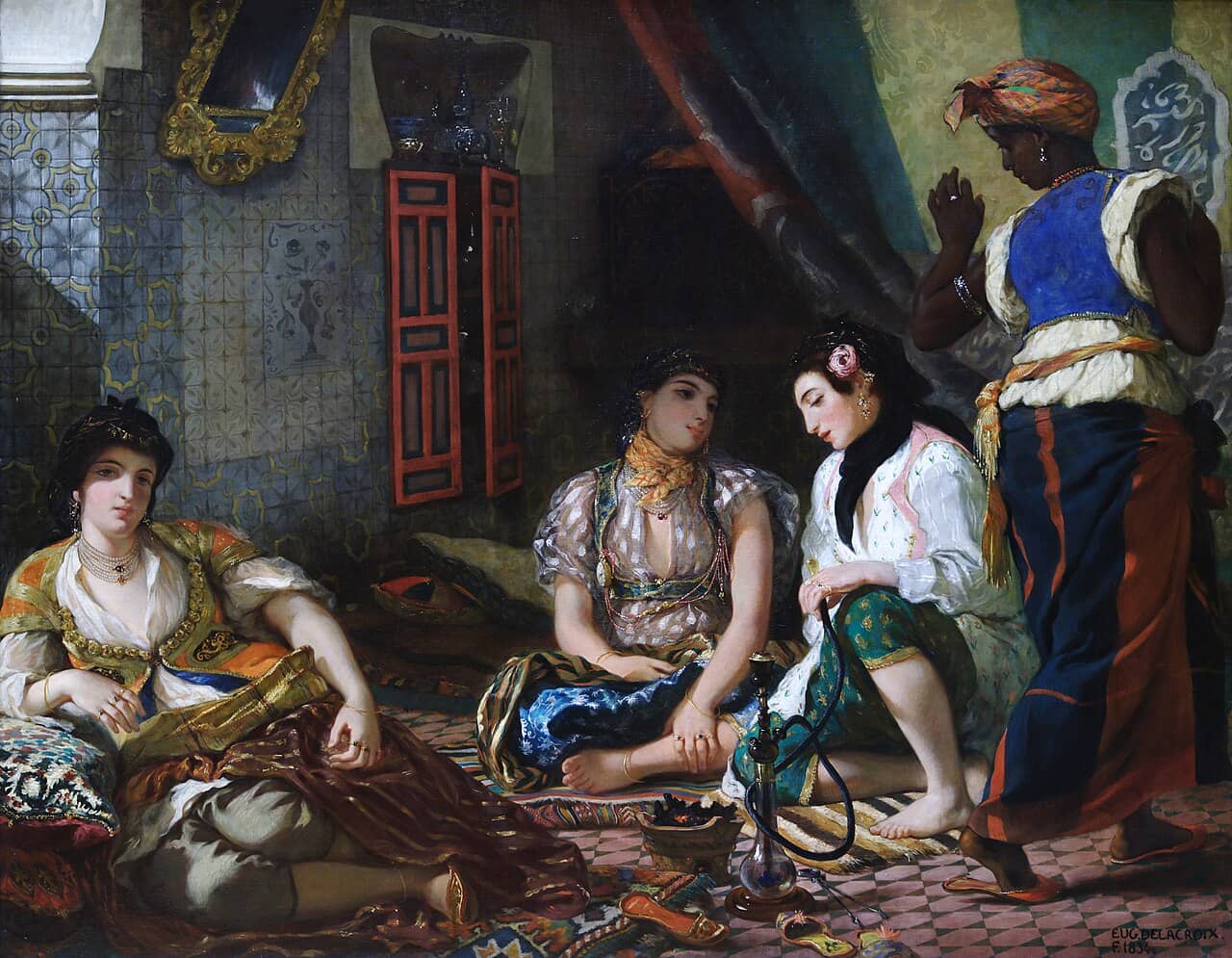
The Masterpiece: The Women of Algiers by Eugène Delacroix
Deconstructing the Masterpiece
Exotic Setting
The depiction of a luxurious harem interior filled with rich fabrics, ornate decorations, and exotic objects creates a sense of otherness and fascination with the East.
Sensual Poses
The languid and seductive poses of the women, draped in vibrant fabrics and jewels, evoke a sense of mystery and allure, emphasizing their exotic beauty.
Vibrant Color Palette
The use of bold and intense colors, such as deep reds, blues, and golds, adds to the exotic atmosphere and richness of the scene.
Expressive Brushwork
Delacroix's loose and energetic brushstrokes, combined with dramatic lighting and dynamic compositions, convey a sense of movement and emotion, enhancing the exotic allure of the painting.
‘Orientalism and The Exotic: An Analysis’ in 10 Minutes
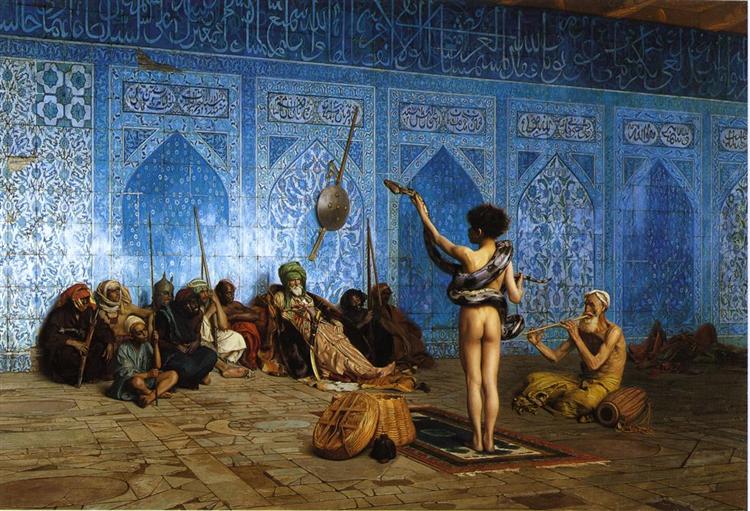
1. The Romantic Obsession with North Africa and the Middle East
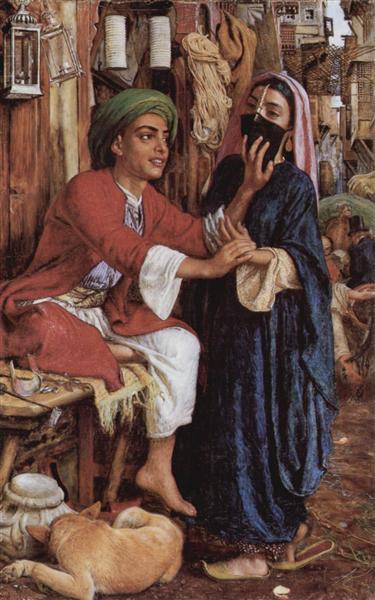
2. The Allure of the Exotic
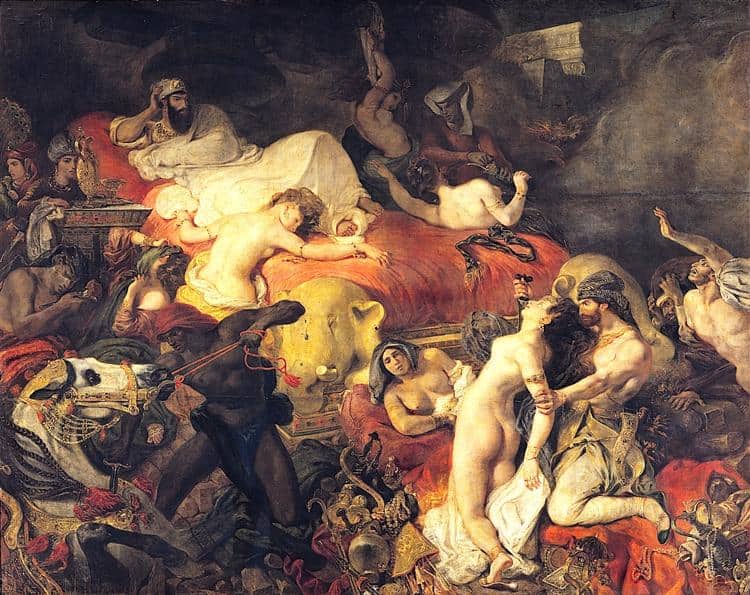
3. The Influence of Art and Literature
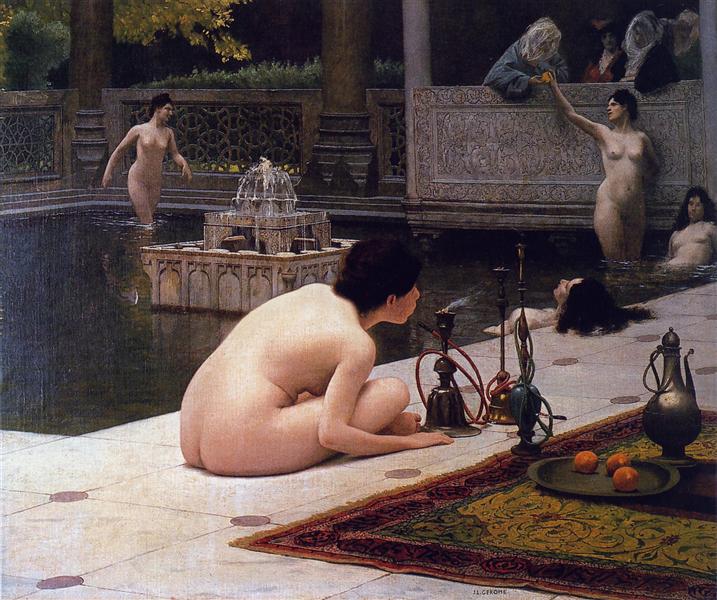
4. The Construction of Stereotypes
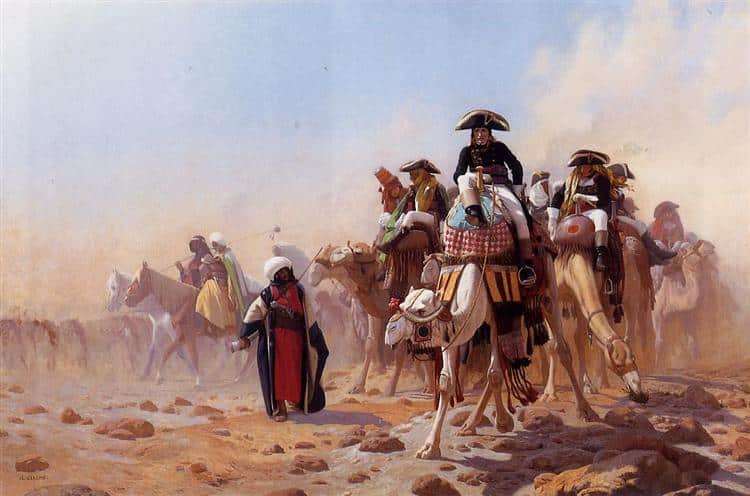
5. The Impact on Western Society
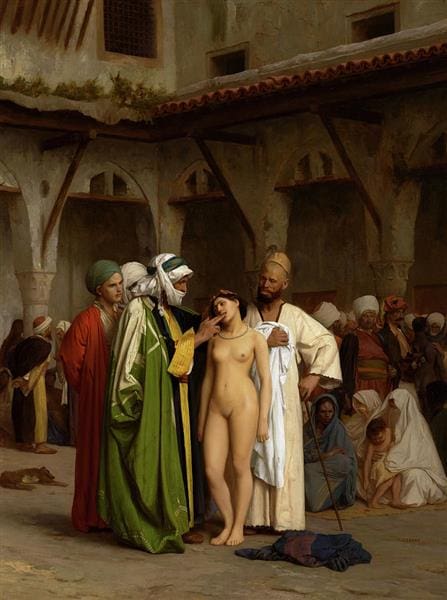
6. Critiques of Orientalism
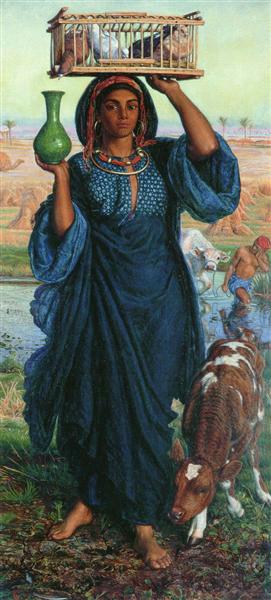
7. The Legacy of Orientalism
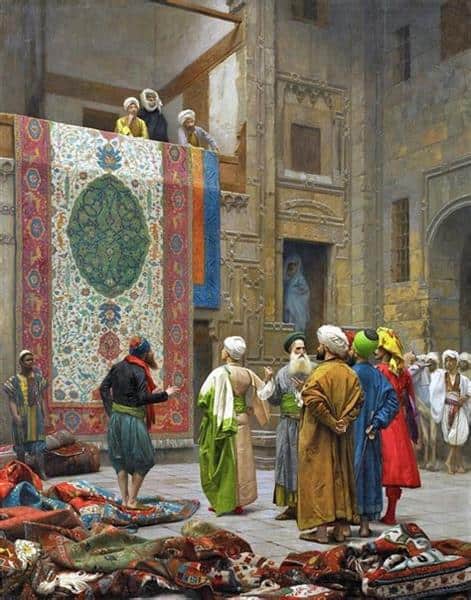
8. Rediscovering the East
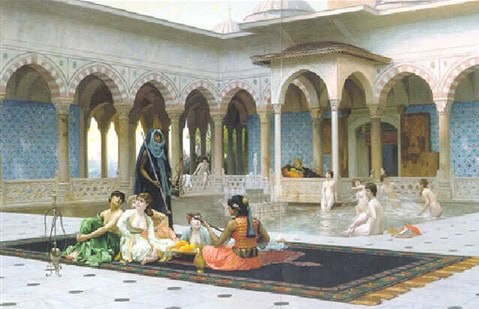
9. Challenging Western Perspectives
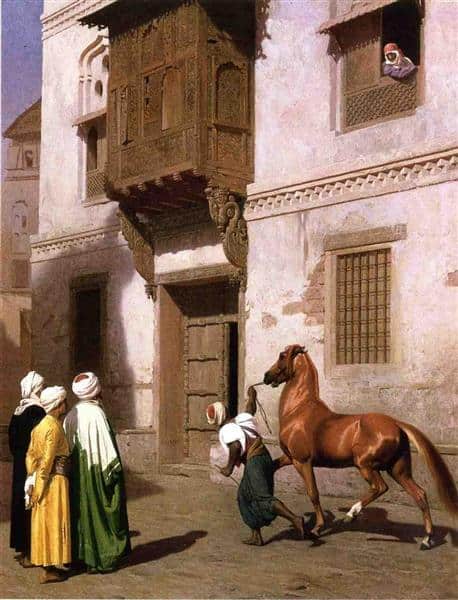
10. Embracing Cultural Exchange
Lesson Details & Resources
In a Nutshell
- When: 19th century
- Characteristics: Exotic, romanticized, idealized
- Key Artists: Eugène Delacroix, Jean-Léon Gérôme, John Frederick Lewis
- Major Work: “The Women of Algiers” by Eugène Delacroix
Vocabulary List
- Orientalism
- The artistic representation of the Middle East, Asia, and North Africa by Western artists, often depicting exoticized and stereotypical images.
- Exotic
- Referring to something foreign, unfamiliar, or unusual, often associated with the idea of the Orient in Western art.
- Harem
- A private space in Middle Eastern and North African homes where women are secluded, often depicted in Orientalist paintings as a symbol of luxury and sensuality.
- Moorish architecture
- Architectural style inspired by the Islamic architecture of North Africa and Spain, characterized by intricate geometric patterns and arches.
- Turban
- A type of headwear traditionally worn in the Middle East and South Asia, often depicted in Orientalist paintings as a symbol of exoticism.
- Hookah
- A water pipe used for smoking tobacco, commonly associated with Middle Eastern cultures and depicted in Orientalist art as a symbol of leisure and luxury.
- Odalisque
- A female slave or concubine in a harem, often depicted in Orientalist paintings in sensual and exoticized poses.
- Caravan
- A group of travelers journeying together through the desert, often depicted in Orientalist paintings as a romantic and adventurous scene.
- Crescent moon
- A symbol commonly associated with Islam and the Middle East, often depicted in Orientalist art to evoke a sense of mystery and exoticism.
- Serpent charmer
- A performer who uses music and movement to control snakes, often depicted in Orientalist paintings as a symbol of exotic entertainment.
- Mosaic
- An art form using small pieces of colored glass, stone, or other materials to create intricate patterns, often found in Islamic architecture and depicted in Orientalist art.
- Sultan
- A ruler or leader in the Middle East or Asia, often depicted in Orientalist paintings as a figure of power and luxury.
- Belly dancer
- A performer who dances using movements of the hips and abdomen, often depicted in Orientalist art as a symbol of exoticism and sensuality.
- Palanquin
- A covered litter carried by porters, often used by royalty and wealthy individuals in the Middle East and Asia, depicted in Orientalist paintings as a symbol of luxury.
- Minaret
- A tall, slender tower attached to a mosque, often depicted in Orientalist art as a symbol of Islamic architecture.
- Silk Road
- An ancient network of trade routes connecting the East and West, often depicted in Orientalist art as a symbol of exotic goods and cultural exchange.
- Scheherazade
- The legendary storyteller from the collection of Middle Eastern folk tales known as One Thousand and One Nights, often depicted in Orientalist paintings as a symbol of exotic storytelling.
- Souk
- An outdoor marketplace or bazaar in the Middle East and North Africa, often depicted in Orientalist art as a vibrant and bustling scene.
- Taj Mahal
- A white marble mausoleum in India, often depicted in Orientalist paintings as a symbol of exotic beauty and romance.
- Fez
- A type of brimless hat traditionally worn in the Middle East and North Africa, often depicted in Orientalist art as a symbol of exoticism and tradition.
Timeline of ‘Orientalism and The Exotic: An Analysis’
Publication of 'Oriental Tales' by Antoine Galland
Publication of 'Orientalism' by Edward Said
J.M.W. Turner's painting 'The Decline of the Carthaginian Empire' is exhibited, featuring orientalist themes
Eugene Delacroix's painting 'The Women of Algiers in their Apartment' is exhibited, showcasing orientalist themes
Publication of 'The Arabian Nights' translated by Richard Burton
Opening of the Suez Canal, increasing Western fascination with the Orient
French colonization of Algeria begins, influencing Western perceptions of the exotic
Rudyard Kipling publishes 'The Jungle Book', featuring exoticized portrayals of India
Paul Gauguin's travels to Tahiti inspire his exotic paintings
Henri Matisse's visit to Morocco influences his use of exotic motifs in his art
Salvador Dali incorporates exotic elements into his surrealist paintings
Museum of Islamic Art in Qatar opens, showcasing orientalist art and artifacts
Jean-Leon Gerome's painting 'The Snake Charmer' is exhibited, popularizing orientalist themes in art
Pierre-Auguste Renoir's trip to Algeria inspires his orientalist paintings
Vincent van Gogh's interest in Japanese art influences his painting style
Publication of 'Thousand and One Nights' by Antoine Galland
Exhibition of orientalist art at the Palace of Fine Arts in San Francisco
Pablo Picasso's African art collection influences his cubist paintings
French artist Eugene Fromentin publishes 'The Art of Painting in the East', promoting orientalist art
The term 'exoticism' is first used in relation to art and culture
Key Facts
This is the information used in the fact matching game
- Orientalism refers to the fascination with the Middle East and Asia in Western art during the 19th century.
- The Exoticism movement in art sought to depict foreign cultures and landscapes in a way that was unfamiliar and enticing to Western audiences.
- Artists like Eugène Delacroix and Jean-Léon Gérôme were prominent Orientalist painters who captured scenes of the East in their works.
- Orientalist paintings often featured imagery of harems, mosques, and desert landscapes, portraying a romanticized view of the East.
- The Exoticism movement was influenced by colonialism and imperialism, as Western powers sought to dominate and control foreign lands.
- Orientalist art often perpetuated stereotypes and misconceptions about Eastern cultures, presenting them as exotic and mysterious.
- European artists who traveled to the Middle East and Asia were inspired by the vibrant colors, intricate patterns, and architectural marvels they encountered.
- The Exoticism movement was also influenced by the Romantic fascination with the supernatural, the unknown, and the mysterious.
- Orientalist paintings often depicted scenes of opulence and luxury, showcasing the wealth and grandeur of Eastern societies.
- The Exoticism movement in art sought to challenge traditional Western artistic conventions by introducing new themes and subject matter.
- Orientalist art became popular in Europe during the 19th century, reflecting a growing interest in the East and a desire for exotic experiences.
- The Exoticism movement in art was criticized for its tendency to exoticize and objectify non-Western cultures, reducing them to mere aesthetic objects.
- Orientalist paintings often featured depictions of violence and conflict, reflecting Western fears and anxieties about the 'otherness' of Eastern cultures.
- The Exoticism movement in art influenced other artistic movements, such as Symbolism and Art Nouveau, by introducing new themes and motifs.
- Orientalist paintings were often commissioned by wealthy patrons who sought to decorate their homes with images of exotic lands and cultures.
- The Exoticism movement in art was characterized by its use of vivid colors, elaborate details, and fantastical imagery.
- Orientalist art played a role in shaping Western perceptions of the Middle East and Asia, influencing how these regions were viewed and understood.
- The Exoticism movement in art reflected a desire for escapism and fantasy, offering viewers a glimpse into exotic and unfamiliar worlds.
- Orientalist paintings often featured female figures in exotic costumes, emphasizing the sensuality and allure of Eastern women.
- The Exoticism movement in art was criticized for its tendency to romanticize and idealize non-Western cultures, ignoring the complexities and realities of these societies.
Analysis & Significance
Artistic Innovation
The artwork ‘Orientalism and The Exotic’ introduced a new approach to depicting the East in Western art, focusing on exoticism, fantasy, and romanticized imagery. Artists utilized vibrant colors, intricate patterns, and luxurious settings to create a sense of escapism and otherness, challenging traditional European artistic conventions.
Influence on Art History
This work had a profound impact on later artists, inspiring a wave of Orientalist paintings that shaped the 19th-century art world. It also sparked debates about cultural appropriation, representation, and the power dynamics inherent in depicting non-Western subjects. ‘Orientalism and The Exotic’ paved the way for a more nuanced understanding of cross-cultural artistic exchange.
Cultural Significance Today
Today, ‘Orientalism and The Exotic’ continues to provoke discussions about colonialism, identity, and the construction of cultural stereotypes. It remains a touchstone for contemporary artists exploring themes of cultural hybridity, globalization, and postcolonialism. The artwork’s enduring relevance underscores the ongoing importance of critically engaging with historical representations of the ‘Other.’
‘Orientalism and The Exotic: An Analysis’ Games


Take Your Learning Offline
Want a convenient, print-ready study guide for this lesson? Become a Memory Wizards Pro member to unlock the downloadable " Memory Scrolls" for this topic and our entire library!
- ✓ Complete Vocabulary Lists
- ✓ Key Facts & Timelines
- ✓ Beautifully Formatted for Print & Mobile