
How Do You Learn Best?
Learn by Reading
Immerse yourself in the 10-minute visual lesson for a comprehensive understanding of the topic.
Learn by Reviewing
Jump directly to the key facts, timeline, and vocabulary lists to build a solid foundation of details.
Learn by Doing
Challenge yourself! Jump straight into the interactive games to learn by trial, error, and discovery.
The Masterpiece: El Tres de Mayo by Francisco de Goya
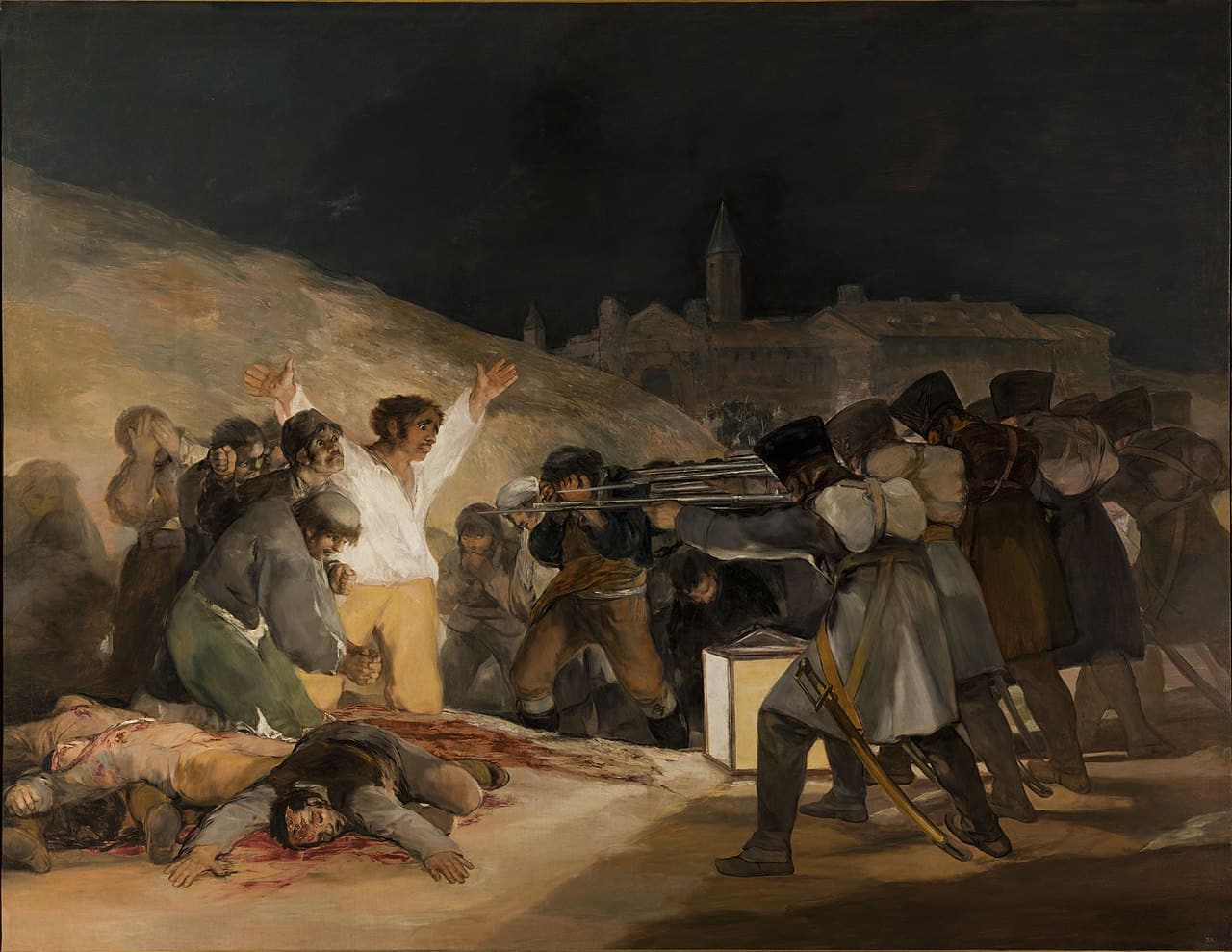
Deconstructing the Masterpiece
Central Figure
The man in white at the center draws focus, symbolizing sacrifice and defiance against oppression.
Light and Shadow
Harsh lighting emphasizes the figures' emotions and the brutality of the scene.
Color Contrast
The contrast between the dark background and the bright figures intensifies the sense of despair and hope.
Gestures and Expressions
The dramatic gestures and expressions of the figures convey their fear, anguish, and resistance to tyranny.
Francisco Goya: An Analysis in 10 Minutes
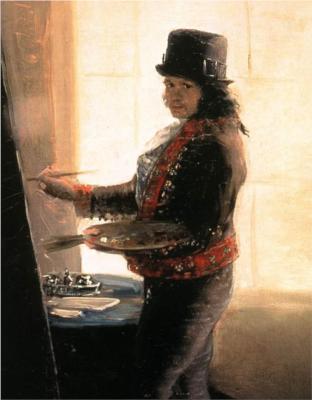
The Early Life of Francisco Goya
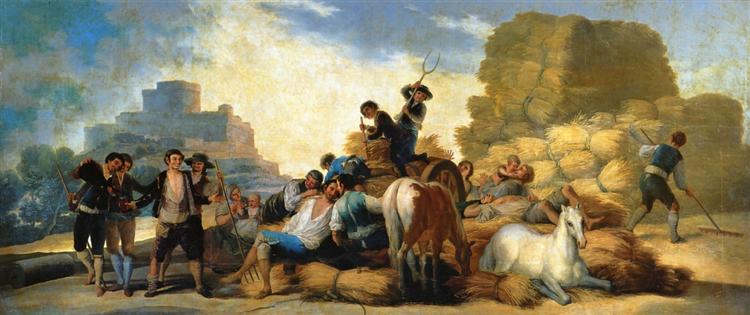
Goyas Evolution as an Artist
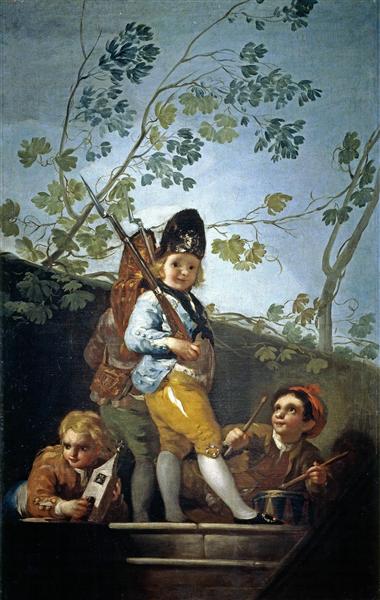
The Influence of Romanticism on Goya
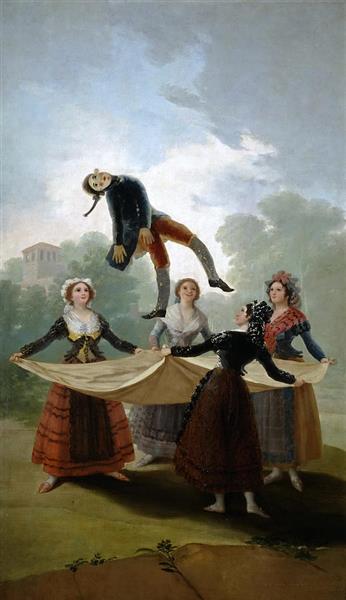
Goyas Masterpieces
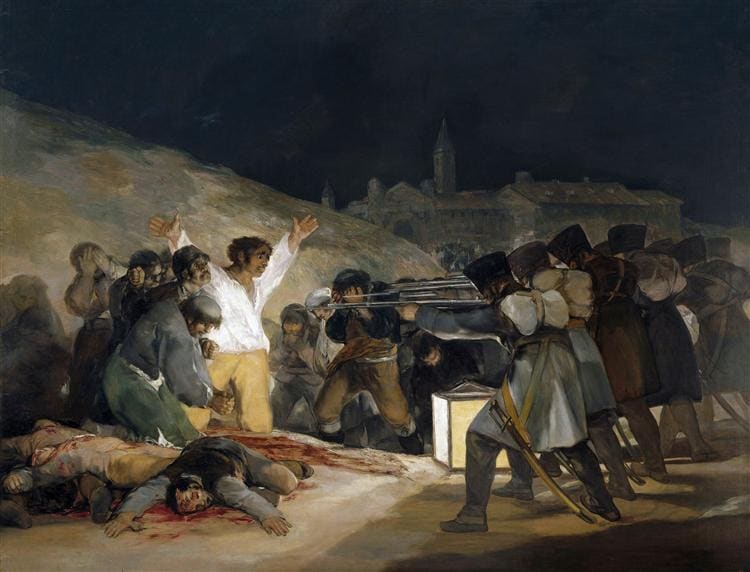
The Dark Period in Goyas Life
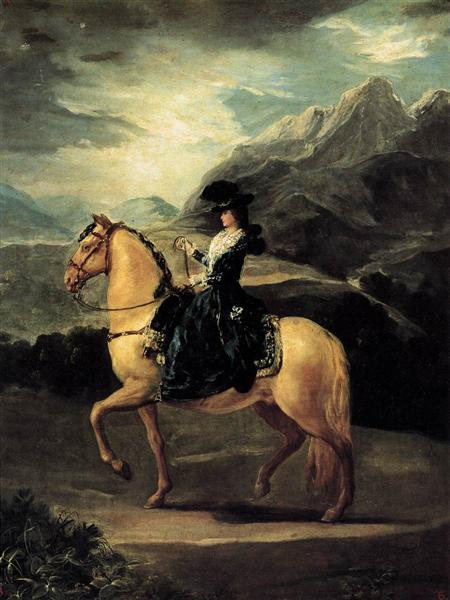
Goyas Legacy
Lesson Details & Resources
In a Nutshell
- Born: March 30, 1746 in Fuendetodos, Spain
- Occupation: Painter and printmaker
- Known for: His dark and haunting paintings, like “The Third of May 1808” and “Saturn Devouring His Son”
- Health issues: Goya suffered from a mysterious illness that left him deaf in his later years
- Style: He is considered one of the most important Spanish artists of the late 18th and early 19th centuries, known for his realistic and sometimes disturbing portrayals of human suffering
Vocabulary List
- Saturn Devouring His Son
- One of Goya's most famous paintings depicting the mythological scene of Saturn eating his child.
- Caprichos
- A series of etchings by Goya that satirized Spanish society and politics.
- The Third of May 1808
- A painting by Goya depicting the Spanish resistance to Napoleon's army during the Peninsular War.
- Black Paintings
- A series of murals painted by Goya on the walls of his house, including the haunting image of 'Witches' Sabbath'.
- Disasters of War
- A series of etchings by Goya depicting the horrors of the Napoleonic Wars.
- La Maja Desnuda
- A controversial painting by Goya of a nude woman.
- Los Caprichos
- Another series of etchings by Goya that critiqued the superstitions and follies of Spanish society.
- The Sleep of Reason Produces Monsters
- One of the etchings from Goya's 'Los Caprichos' series, depicting the artist asleep surrounded by grotesque creatures.
- The Disrobing of Christ
- A painting by Goya depicting the moment before Christ is crucified.
- La Tauromaquia
- A series of etchings by Goya depicting scenes from bullfighting.
- Old Master
- A term used to describe Goya's skill and influence in the art world.
- Romanticism
- The artistic movement that Goya is often associated with, characterized by emotion, nature, and the supernatural.
- Spanish Inquisition
- An institution that Goya critiqued in his 'Caprichos' series for its cruelty and superstition.
- Majas
- A term used to describe the women depicted in Goya's paintings, often with a sense of mystery and sensuality.
- Enlightenment
- The intellectual movement that influenced Goya's criticism of social and political institutions.
- The Colossus
- A painting by Goya depicting a giant figure looming over a landscape, possibly symbolizing the chaos of war.
- Etching
- A printmaking technique used by Goya to create detailed and expressive images.
- Court Painter
- A title given to Goya for his role as a painter for the Spanish royal family.
- Rococo
- The artistic style that Goya transitioned from to develop his own unique and expressive style.
- Darkness
- A recurring theme in Goya's work, symbolizing the chaos and brutality of the human condition.
Timeline of Francisco Goya: An Analysis
Francisco Goya is born in Fuendetodos, Spain
Goya moves to Madrid to study painting
Goya becomes a court painter to King Charles III of Spain
Goya falls seriously ill and becomes deaf
Goya creates his famous work 'The Third of May 1808'
Goya begins work on his 'Black Paintings' series
Goya moves to Bordeaux, France to escape political turmoil in Spain
Goya dies in Bordeaux
Goya's 'Disasters of War' series is published posthumously
Goya's works influence later artists like Manet and Picasso
Goya's 'The Sleep of Reason Produces Monsters' is created
Goya creates his portrait of the Duchess of Alba
Goya is appointed as First Court Painter to King Charles IV of Spain
Goya paints the 'Naked Maja' and 'Clothed Maja'
Goya's 'Saturn Devouring His Son' is created
Goya's 'The 2nd of May 1808' is painted
Goya is appointed as the Spanish court painter to King Charles III
Goya's 'The Family of Charles IV' is completed
Goya's 'The Colossus' is painted
Goya's 'The Disasters of War' series is created
Key Facts
This is the information used in the fact matching game
- Francisco Goya was a Spanish painter and printmaker.
- Goya is considered one of the most important artists in the Spanish Romantic movement.
- Goya's most famous painting is 'The Third of May 1808', depicting the Spanish resistance to Napoleon's troops.
- He was the court painter to four successive Spanish kings.
- Goya's art often critiqued the social and political issues of his time.
- He suffered from a mysterious illness that left him deaf in his later years.
- Goya created a series of etchings called 'Los Caprichos' that satirized Spanish society.
- He painted a series of black paintings on the walls of his house, known for their dark and haunting themes.
- Goya's work influenced many later artists, including Pablo Picasso and Edouard Manet.
- He was known for his use of bold brushwork and expressive use of light and shadow.
- Goya's 'La Maja Desnuda' and 'La Maja Vestida' were controversial for their nudity.
- He was a master of portraiture, capturing the essence of his subjects with great detail.
- Goya's 'Saturn Devouring His Son' is a haunting depiction of the mythological tale.
- He was influenced by the works of Velazquez and Rembrandt in his later years.
- Goya's 'The Sleep of Reason Produces Monsters' is a well-known print from his 'Los Caprichos' series.
- He was a versatile artist, working in a variety of mediums including painting, etching, and lithography.
- Goya's works were highly influential in the development of modern art.
- He is often referred to as the last of the Old Masters and the first of the modern artists.
- Goya's 'The Dog' is a famous painting of a dog looking out at the viewer, often interpreted as a symbol of loyalty.
- He lived through a tumultuous period in Spanish history, including the Napoleonic Wars and the Spanish Inquisition.
Analysis & Significance
Artistic Innovation
Francisco Goya’s use of bold, expressive brushwork and dark, haunting imagery in works like “The Third of May 1808” introduced a raw emotional intensity and political commentary that was groundbreaking for its time. His unflinching portrayal of the horrors of war and the human condition pushed the boundaries of traditional artistic representation.
Influence on Art History
Goya’s works laid the foundation for the Romantic movement in art, inspiring artists like Eugène Delacroix and Théodore Géricault. His use of personal expression to convey universal themes influenced later generations of artists to explore deeper emotional and psychological depths in their works, challenging traditional artistic norms.
Cultural Significance Today
Goya’s paintings continue to captivate audiences around the world for their powerful imagery and profound social commentary. His works are seen as masterpieces of art history, shedding light on timeless issues such as war, injustice, and the human experience. Goya’s legacy as a visionary artist remains relevant in today’s society, sparking discussions on art’s role in reflecting and shaping cultural values.
Francisco Goya: An Analysis Games


Take Your Learning Offline
Want a convenient, print-ready study guide for this lesson? Become a Memory Wizards Pro member to unlock the downloadable " Memory Scrolls" for this topic and our entire library!
- ✓ Complete Vocabulary Lists
- ✓ Key Facts & Timelines
- ✓ Beautifully Formatted for Print & Mobile