
How Do You Learn Best?
Learn by Reading
Immerse yourself in the 10-minute visual lesson for a comprehensive understanding of the topic.
Learn by Reviewing
Jump directly to the key facts, timeline, and vocabulary lists to build a solid foundation of details.
Learn by Doing
Challenge yourself! Jump straight into the interactive games to learn by trial, error, and discovery.
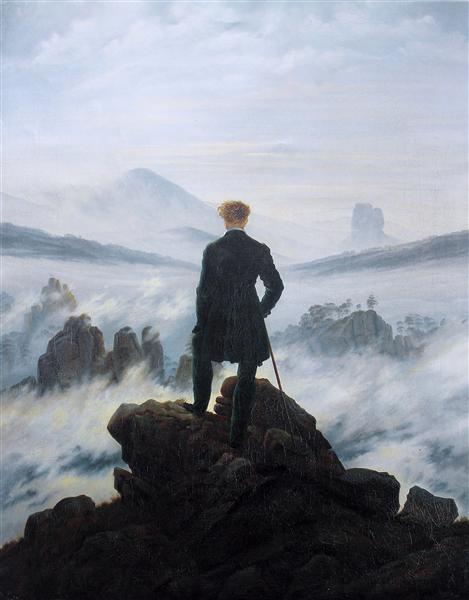
The Masterpiece: Wanderer Above Sea Fog -

Deconstructing the Masterpiece
Isolation
The lone figure stands above the fog, emphasizing a sense of solitude and introspection.
Sublime Nature
The vast, untamed landscape with towering cliffs and swirling fog conveys the awe-inspiring power and beauty of nature.
Verticality
The vertical composition with the figure at the center creates a sense of upward movement and spiritual transcendence.
Caspar David Friedrich: An Analysis in 10 Minutes

The Early Life of Caspar David Friedrich
The Influence of Nature on Friedrichs Work

The Symbolism in Friedrichs Paintings
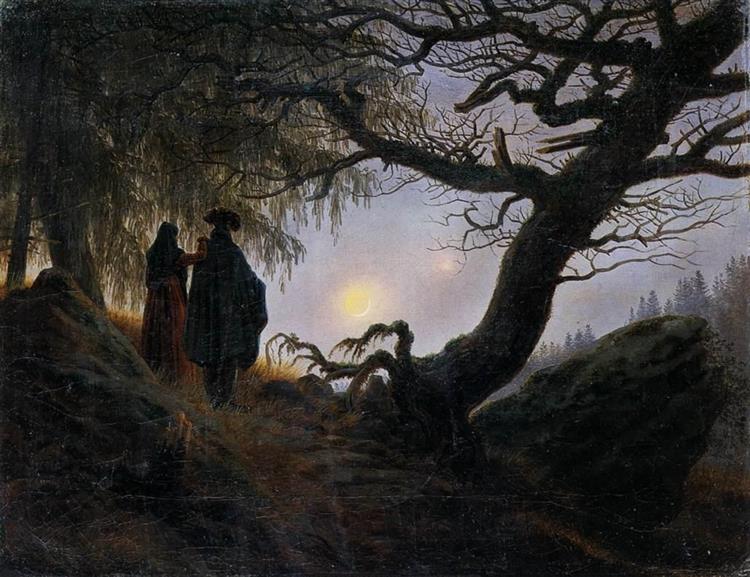
The Sublime in Friedrichs Art

The Influence of German Romanticism on Friedrich

Friedrichs Use of Light and Color

The Legacy of Caspar David Friedrich
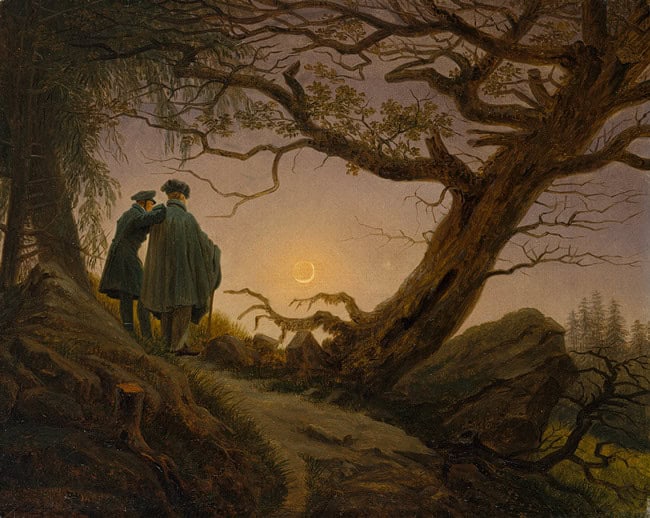
The Mystery of Friedrichs Personal Life
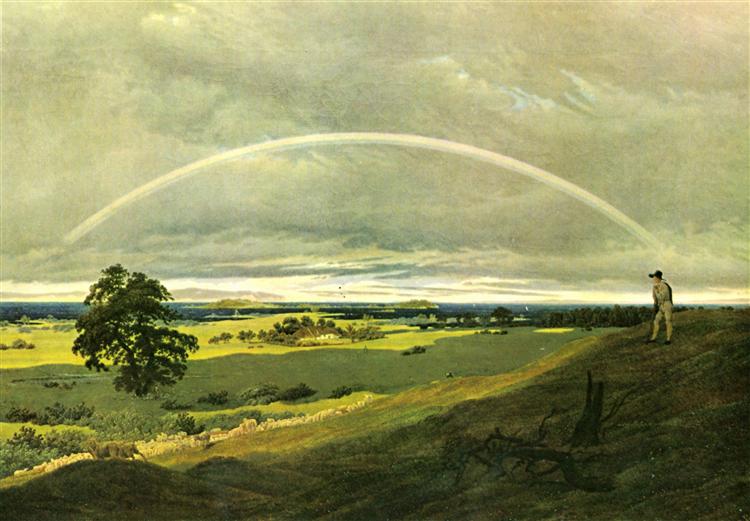
The Enduring Popularity of Friedrichs Art
Lesson Details & Resources
In a Nutshell
- Born: September 5, 1774 in Greifswald, Germany
- Died: May 7, 1840 in Dresden, Germany
- Known for: Being one of the most important German Romantic painters
- Style: Friedrich’s paintings often depict landscapes with a sense of melancholy and solitude
- Influences: Friedrich was influenced by nature, religion, and philosophy in his artwork
- Famous works: “Wanderer above the Sea of Fog,” “The Sea of Ice,” “The Monk by the Sea”
Vocabulary List
- Sublime
- Friedrich's paintings often evoke a sense of the sublime, with their dramatic landscapes and awe-inspiring scenes.
- Romanticism
- Friedrich was a key figure in the German Romanticism movement, which emphasized emotion, nature, and individualism.
- Symbolism
- Many of Friedrich's works contain symbolic elements, such as the use of crosses to represent spirituality.
- Solitude
- Friedrich's figures are often depicted in solitude, emphasizing the individual's connection to nature.
- Mysticism
- There is a sense of mysticism in Friedrich's paintings, with their dreamlike quality and spiritual themes.
- Transcendental
- Friedrich's work often explores themes of transcendentalism, such as the connection between the natural world and the divine.
- Atmospheric
- Friedrich's use of light and shadow creates an atmospheric quality in his paintings.
- Silhouette
- Friedrich was known for his use of silhouettes, which add a sense of mystery and drama to his compositions.
- Horizon
- The horizon is a recurring motif in Friedrich's work, symbolizing the boundary between the earthly and the divine.
- Contemplation
- Friedrich's figures are often shown in contemplation, reflecting on the mysteries of nature and existence.
- Emotive
- Friedrich's paintings are highly emotive, evoking a range of feelings from awe to melancholy.
- Ethereal
- There is an ethereal quality to Friedrich's landscapes, with their otherworldly beauty and dreamlike atmosphere.
- Awe
- Viewers often feel a sense of awe when confronted with Friedrich's monumental landscapes and dramatic compositions.
- Melancholy
- Friedrich's work is often tinged with a sense of melancholy, reflecting on the transience of life and the impermanence of nature.
- Subtle
- Friedrich's use of color and light is subtle, creating a sense of depth and atmosphere in his paintings.
- Spirituality
- Spirituality is a key theme in Friedrich's work, with his paintings often depicting religious symbols and themes.
- Mystery
- There is a sense of mystery in Friedrich's work, with his enigmatic compositions inviting viewers to ponder their deeper meaning.
- Serene
- Friedrich's landscapes have a serene quality, with their tranquil settings and quiet contemplative figures.
- Nostalgia
- Friedrich's paintings often evoke a sense of nostalgia, harkening back to a simpler time and a closer connection to nature.
- Awe-inspiring
- Friedrich's work is often described as awe-inspiring, with its grand scale and majestic landscapes leaving viewers breathless.
Timeline of Caspar David Friedrich: An Analysis
Caspar David Friedrich is born in Greifswald, Swedish Pomerania
Friedrich's father dies when he is seven years old
Friedrich enters the University of Greifswald to study theology
Friedrich moves to Copenhagen to study under landscape painter Jens Juel
Friedrich marries Caroline Bommer
Friedrich becomes a member of the Berlin Academy of Arts
Friedrich's painting 'Wanderer above the Sea of Fog' is completed
Friedrich's mother dies
Friedrich's brother Johann Christoffer Friedrich dies
Friedrich's painting 'The Sea of Ice' is completed
Friedrich is appointed professor at the Dresden Academy of Fine Arts
Friedrich's wife Caroline dies
Friedrich's painting 'The Abbey in the Oakwood' is completed
Friedrich exhibits his works at the first major German art exhibition in Berlin
Friedrich's painting 'Monk by the Sea' is completed
Friedrich's painting 'The Cross in the Mountains' is completed
Friedrich's painting 'The Chasseur in the Forest' is completed
Friedrich's painting 'Winter Landscape' is completed
Friedrich's painting 'Moonrise over the Sea' is completed
Caspar David Friedrich dies in Dresden
Key Facts
This is the information used in the fact matching game
- Caspar David Friedrich was a German Romantic landscape painter.
- Friedrich's work often features contemplative figures in silhouette against vast landscapes.
- He was known for his use of light and shadow to create a sense of mystery and melancholy in his paintings.
- Friedrich's paintings often depict the sublime power of nature, with a focus on themes of spirituality and the human connection to the natural world.
- He was influenced by German Romantic philosophy, particularly the ideas of nature as a reflection of the divine and the importance of individual experience and emotion.
- Friedrich's most famous painting is 'Wanderer above the Sea of Fog' (1818), which encapsulates many of the themes and techniques of his work.
- He often painted scenes of ruins, graveyards, and barren landscapes, reflecting his interest in themes of transience and mortality.
- Friedrich's work had a significant influence on the development of landscape painting in the 19th century, particularly in the United States.
- He was a master of capturing the mood and atmosphere of a scene, using subtle details and symbolism to evoke a sense of awe and wonder in the viewer.
- Friedrich's paintings often feature a lone figure contemplating the natural world, highlighting the individual's relationship to the vastness of the universe.
- He was deeply influenced by his upbringing in the countryside of northern Germany, where he developed a deep connection to the landscape and the natural world.
- Friedrich's use of color was subtle and subdued, with a focus on creating a sense of harmony and balance in his compositions.
- He was a member of the Romantic movement, which emphasized the importance of emotion, imagination, and the sublime in art.
- Friedrich's work was rediscovered in the 20th century and has since been recognized as a major influence on modern art and photography.
- He often painted scenes of shipwrecks and storms, using these dramatic events as metaphors for the struggles and uncertainties of human life.
- Friedrich's paintings are characterized by their attention to detail, with intricate textures and patterns that draw the viewer into the scene.
- He had a lifelong fascination with the idea of the 'Wanderer', a figure who roams the earth in search of meaning and enlightenment.
- Friedrich's work often features symbolic elements such as crosses, ruins, and trees, which carry deeper meanings related to spirituality and the human experience.
- He was a pioneer of the plein air painting technique, which involved painting outdoors directly from nature to capture the essence of a scene.
- Friedrich's paintings have been interpreted in many different ways, with some critics seeing them as expressions of melancholy and existential angst, while others view them as celebrations of the beauty and power of nature.
Analysis & Significance
Artistic Innovation
Caspar David Friedrich’s use of symbolic landscapes to evoke deep emotional and spiritual themes was groundbreaking for its time. His emphasis on nature as a reflection of the human soul and his contemplative, solitary figures set against vast, sublime landscapes introduced a new level of introspection and symbolism in art.
Influence on Art History
Friedrich’s work had a profound impact on the Romantic movement and later artists such as Turner and Constable. His focus on the individual’s relationship with nature, the sublime, and the spiritual realm paved the way for a more personal, emotive approach to landscape painting, challenging traditional notions of landscape as mere scenery.
Cultural Significance Today
Today, Friedrich’s paintings are revered as masterpieces that continue to inspire awe and contemplation. His ability to capture the ineffable beauty of nature and the human experience resonates with audiences worldwide, transcending time and place. Friedrich’s works remain highly sought after by collectors and are celebrated for their enduring relevance and emotional impact.
Caspar David Friedrich: An Analysis Games


Take Your Learning Offline
Want a convenient, print-ready study guide for this lesson? Become a Memory Wizards Pro member to unlock the downloadable " Memory Scrolls" for this topic and our entire library!
- ✓ Complete Vocabulary Lists
- ✓ Key Facts & Timelines
- ✓ Beautifully Formatted for Print & Mobile