
Summary of the Second Triumvirate
Unveiling the power struggles and alliances of ancient Rome.
How Do You Learn Best?
Learn by Listening
Start with the 3-minute audio summary to get the key facts and narrative highlights quickly.
Learn by Reading
Immerse yourself in the 10-minute visual lesson for a comprehensive understanding of the topic.
Learn by Reviewing
Jump directly to the key facts, timeline, and vocabulary lists to build a solid foundation of details.
Learn by Doing
Challenge yourself! Jump straight into the interactive games to learn by trial, error, and discovery.
Audio Library
As one of our featured lessons, this topic includes premium audio guides.
Unlock the Wizard's Cram Session
This powerful audio study guide is a Pro-exclusive feature. Upgrade to Memory Wizards Pro to access this and all of our premium learning tools.
Upgrade to Prothe Second Triumvirate in 10 Minutes
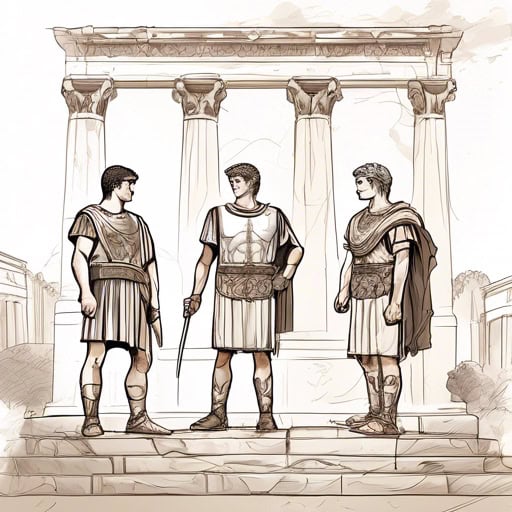
Introduction
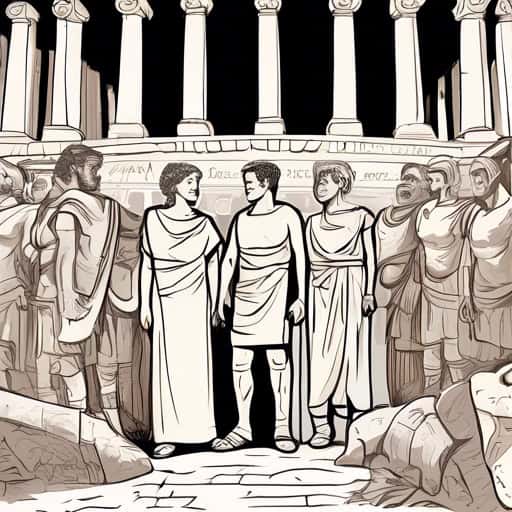

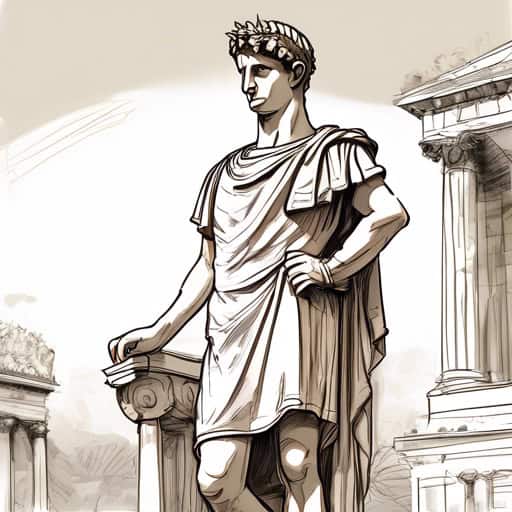
Octavian (later Augustus)
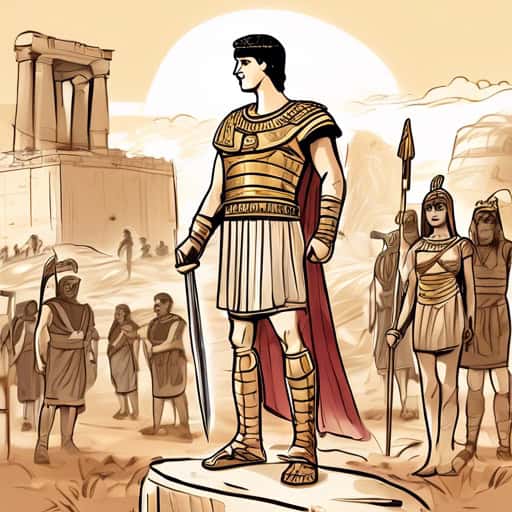
Mark Antony
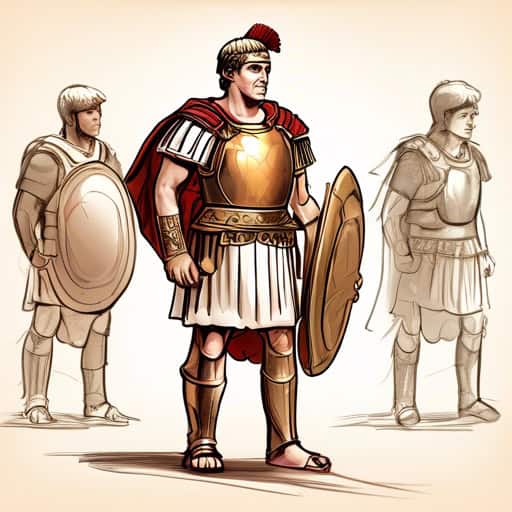
Lepidus

Formation of the Second Triumvirate

Execution of Caesars Assassins

Division of the Roman Empire

War against the Liberators

Antonys Relationship with Cleopatra

Exile of Lepidus

Octavians Rise to Power

Final Conflict between Octavian and Antony

End of the Second Triumvirate

Legacy of the Second Triumvirate
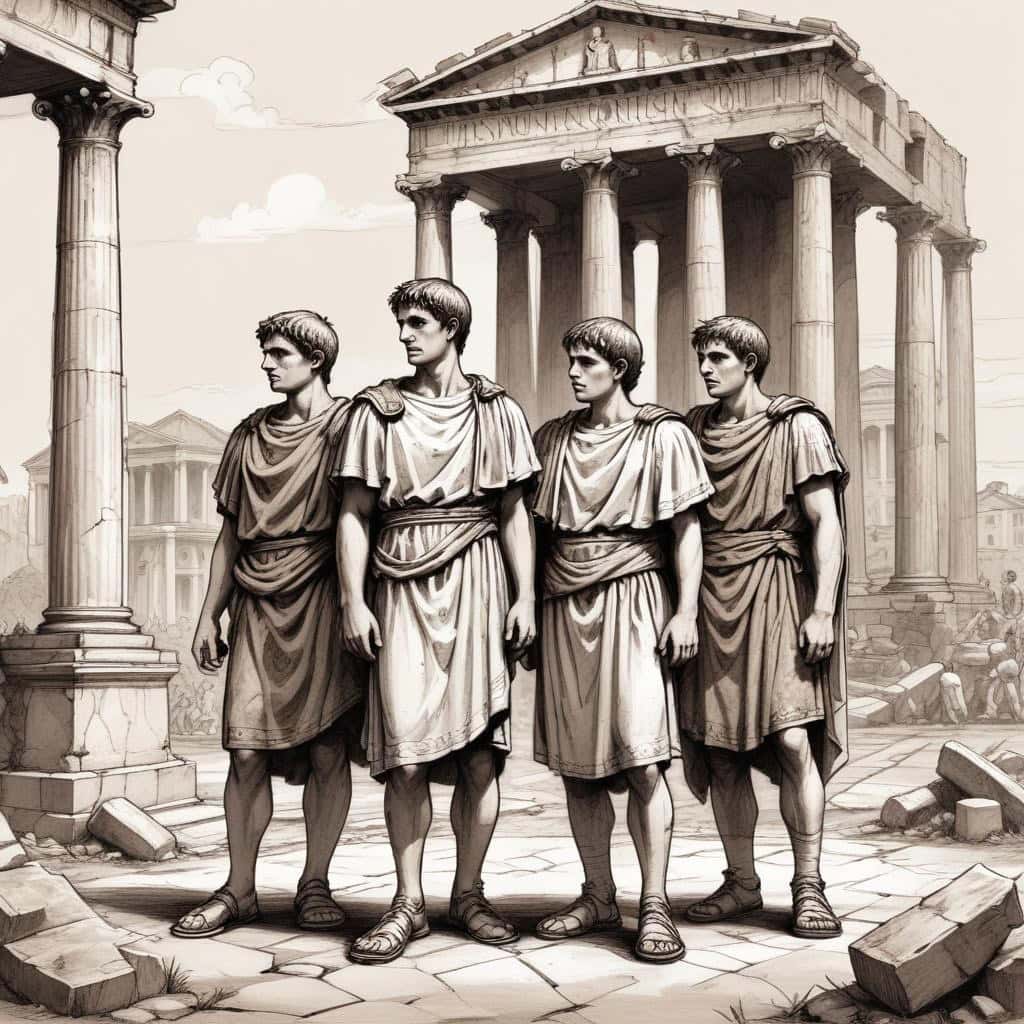
Lesson Details & Resources
In a Nutshell
- What: The formation of a political alliance in Ancient Rome.
- When: 43 BC
- Who: Octavian, Mark Antony, Lepidus
- Outcome: The Second Triumvirate led to the defeat of the forces of Brutus and Cassius at the Battle of Philippi.
Famous Figures in the the Second Triumvirate
-
Gaius Julius Caesar Octavianus
He was a skilled politician and military strategist, who later became the first Emperor of Rome.
-
Marcus Aemilius Lepidus
He was a Roman general and politician, known for his loyalty and military accomplishments.
-
Marcus Antonius
He was a powerful Roman general and politician, who later became a member of the Second Triumvirate.
-
Gnaeus Domitius Ahenobarbus
He was a Roman senator and consul known for his support of the Second Triumvirate.
-
Gnaeus Calpurnius Piso
He was a Roman senator who played a role in the political dynamics of the Second Triumvirate.
-
Lucius Cornificius
He was a Roman military officer and supporter of the Second Triumvirate.
-
Marcus Tullius Cicero
He was a renowned Roman philosopher, lawyer, and statesman who opposed the Second Triumvirate.
-
Gaius Cassius Longinus
He was a Roman senator and one of the conspirators against Julius Caesar, who later supported the Second Triumvirate.
-
Publius Cornelius Dolabella
He was a Roman senator and supporter of Julius Caesar, who later joined the Second Triumvirate.
-
Marcus Aemilius Lepidus (brother of triumvir)
He was the brother of Marcus Aemilius Lepidus and a supporter of the Second Triumvirate.
Timeline of the Second Triumvirate
Battle of Mutina
Octavian, Antony, and Lepidus form the Second Triumvirate
First proscriptions begin
Cicero is assassinated
Battle of Philippi
Antony marries Octavia
Lepidus is stripped of his provinces
Treaty of Brundisium
Antony meets Cleopatra in Egypt
Antony divorces Octavia
Battle of Actium
Octavian captures Alexandria
Antony and Cleopatra commit suicide
Octavian becomes the sole ruler of Rome
End of the Second Triumvirate
Octavian assumes the title Augustus
Beginning of the Roman Empire
Antony's son by Cleopatra is executed
Death of Lepidus
Death of Octavian (Augustus)
Vocabulary List
- Lepidus
- A Roman politician and general who was a member of the Second Triumvirate
- Antony
- A Roman politician and general who was a member of the Second Triumvirate
- Octavian
- A Roman politician and military leader who was a member of the Second Triumvirate
- Triumvirate
- A political alliance between three individuals who share power equally
- Rome
- The capital city of the Roman Empire
- Civil war
- A war between different groups within the same country
- Caesar's assassination
- The murder of Julius Caesar in 44 BC by a group of senators
- Mark Antony
- A Roman general and politician who played a significant role in the Second Triumvirate
- Octavian's adoption
- The adoption of Octavian (later known as Augustus) by Julius Caesar as his heir
- Cicero
- A Roman philosopher, lawyer, and politician who opposed the Second Triumvirate
- Ides of March
- The 15th of March, the day Julius Caesar was assassinated
- Legions
- A large unit of the Roman army, typically consisting of around 5,000 soldiers
- Philippi
- The location where the Battle of Philippi took place, a key conflict during the Second Triumvirate
- Sextus Pompeius
- A Roman military leader and pirate who posed a threat to the Second Triumvirate
- Parthian Empire
- An ancient empire located in present-day Iran and Iraq that was a rival of Rome
- Proscriptions
- A list of individuals who were declared enemies of the state and had their property confiscated
- Gaul
- An ancient region in Europe, encompassing present-day France, Belgium, and parts of adjacent countries
- Cleopatra
- The last active ruler of the Ptolemaic Kingdom of Egypt, who had romantic relationships with both Caesar and Antony
- Tiberius
- The stepson of Augustus and the second Roman emperor
- Battle of Actium
- A naval battle in 31 BC between the forces of Octavian and those of Antony and Cleopatra.
Key Facts
This is the information used in the fact matching game
- The Second Triumvirate was formed in 43 BC after the assassination of Julius Caesar
- The members of the Second Triumvirate were Octavian, Mark Antony, and Lepidus
- The Second Triumvirate was a political alliance to restore order to the Roman Republic
- It was officially recognized by the Roman Senate
- The Second Triumvirate effectively ended the Roman Republic and established the Roman Empire
- The Triumvirs were given extraordinary powers, including the ability to pass laws and appoint officials
- Octavian, later known as Augustus, was Caesar's adopted heir and became the most powerful member of the Triumvirate
- Mark Antony was a powerful military leader and a former ally of Caesar
- Lepidus was a Roman general and politician, although he played a lesser role in the Triumvirate
- The Triumvirs divided the Roman provinces among themselves
- Octavian took control of the western provinces, Antony took the east, and Lepidus was given Africa
- The Triumvirs faced opposition from the forces of Brutus and Cassius, who assassinated Caesar
- They defeated Brutus and Cassius at the Battle of Philippi in 42 BC
- One of the first acts of the Triumvirate was to declare many of Caesar's assassins as enemies of the state
- Antony formed an alliance with Cleopatra, the queen of Egypt, which later caused tension with Octavian
- Lepidus was eventually removed from power by Octavian and forced into retirement
- The Second Triumvirate lasted for ten years, until the tensions between Octavian and Antony erupted into war
- The conflict between Octavian and Antony culminated in the Battle of Actium in 31 BC
- Octavian emerged victorious, and Antony and Cleopatra committed suicide shortly after
- The end of the Second Triumvirate marked the beginning of Octavian's sole rule and the transformation of Rome into an empire.
Analysis & Significance
Immediate Consequences
The formation of the Second Triumvirate in 43 BC marked a significant shift in Roman politics, as power was consolidated among its members: Octavian, Mark Antony, and Lepidus. This alliance was formed to avenge Julius Caesar’s assassination and to maintain stability in the Roman Republic, resulting in the defeat of Caesar’s assassins at the Battle of Philippi in 42 BC.
Long-Term Impact
The Second Triumvirate ultimately led to the end of the Roman Republic and the beginning of the Roman Empire. The power struggle between Octavian and Mark Antony following the defeat of their enemies at Philippi culminated in the Battle of Actium in 31 BC, where Octavian emerged victorious and became the first Roman Emperor, Augustus.
Cultural Significance Today
The legacy of the Second Triumvirate continues to influence modern politics and power dynamics. The transition from Republic to Empire marked a turning point in Roman history, setting the stage for centuries of imperial rule. The rise of Augustus and the establishment of the Roman Empire shaped Western civilization and its institutions, leaving a lasting impact on governance and political structures worldwide.
the Second Triumvirate Games


Take Your Learning Offline
Want a convenient, print-ready study guide for this lesson? Become a Memory Wizards Pro member to unlock the downloadable " Memory Scrolls" for this topic and our entire library!
- ✓ Complete Vocabulary Lists
- ✓ Key Facts & Timelines
- ✓ Beautifully Formatted for Print & Mobile