
Summary of the Roman Constitution
Uncover the ancient secrets behind Rome's birth of democracy.
How Do You Learn Best?
Learn by Listening
Start with the 3-minute audio summary to get the key facts and narrative highlights quickly.
Learn by Reading
Immerse yourself in the 10-minute visual lesson for a comprehensive understanding of the topic.
Learn by Reviewing
Jump directly to the key facts, timeline, and vocabulary lists to build a solid foundation of details.
Learn by Doing
Challenge yourself! Jump straight into the interactive games to learn by trial, error, and discovery.
Audio Library
As one of our featured lessons, this topic includes premium audio guides.
Unlock the Wizard's Cram Session
This powerful audio study guide is a Pro-exclusive feature. Upgrade to Memory Wizards Pro to access this and all of our premium learning tools.
Upgrade to Prothe Roman Constitution in 10 Minutes
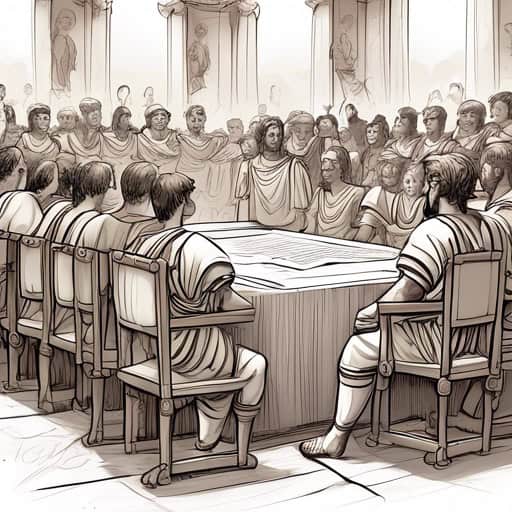
Introduction

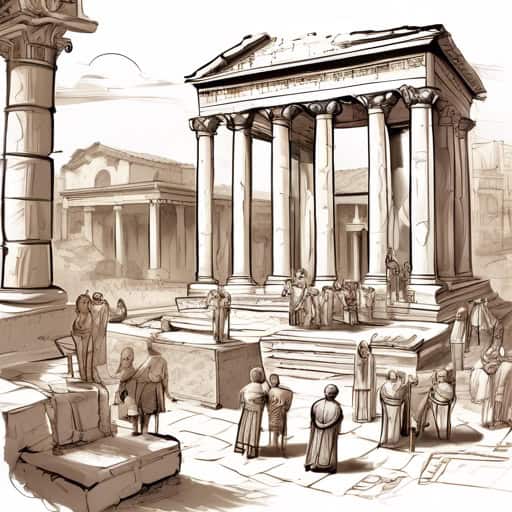

Lucius Junius Brutus
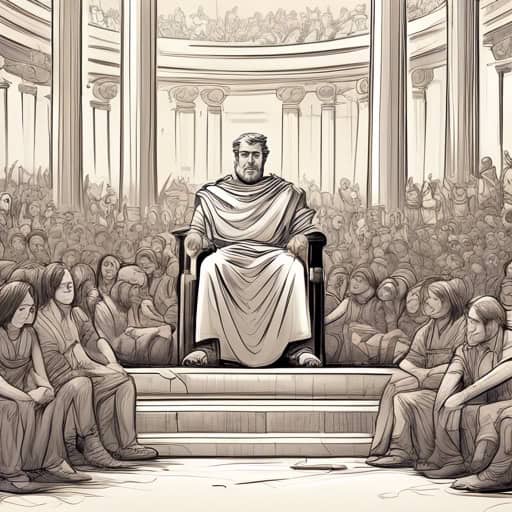
Tarquin the Proud

Publius Valerius Publicola
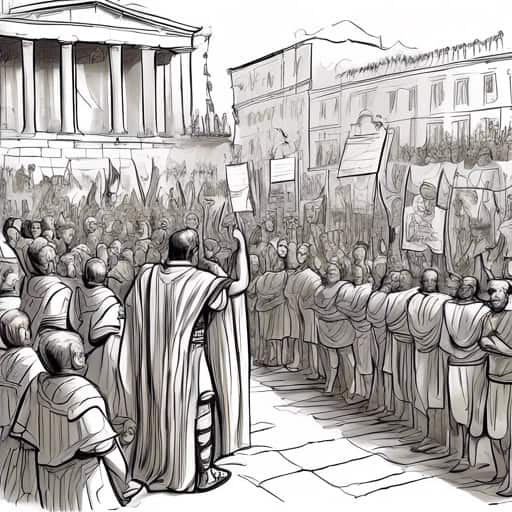
1. Overthrow of the Roman Monarchy

2. Establishment of Two Consuls

3. Creation of the Roman Senate

4. Division of Power

5. Protection of Individual Rights

6. Expansion of Roman Territory

7. Conflict with Neighboring Tribes

8. Influence of Etruscan Culture

9. Legacy of the Roman Republic

10. Impact on Western Civilization
Lesson Details & Resources
In a Nutshell
- What: Adoption of the Roman Constitution – 509 BC
- When: 509 BC
- Who: Roman people, Roman Senate, Lucius Junius Brutus
- Outcome: Establishment of the Roman Republic, expulsion of the Etruscan kings, creation of a new government system
Famous Figures in the the Roman Constitution
-
Roman Senators
The Roman Senators were members of the highest political body in ancient Rome, responsible for proposing and passing laws.
-
Roman Consuls
The Roman Consuls were the highest-ranking elected officials in the Roman Republic, serving as both military commanders and civil administrators.
-
Roman Tribunes
The Roman Tribunes were elected representatives of the plebeians, tasked with protecting their rights and interests within the Roman government.
-
Roman Patricians
The Roman Patricians were the noble and aristocratic families of ancient Rome, holding significant political and social influence.
-
Roman Plebeians
The Roman Plebeians were the common citizens of ancient Rome, comprising the majority of the population and demanding greater political representation.
-
Roman Censors
The Roman Censors were responsible for conducting the census, supervising public morality, and overseeing the membership of the Senate.
-
Roman Dictator
The Roman Dictator was a temporary position granted in times of crisis, providing a single individual with absolute power to restore order.
-
Roman Magistrates
The Roman Magistrates were elected officials who held various administrative and judicial roles within the Roman Republic.
-
Roman Pontifex Maximus
The Roman Pontifex Maximus was the high priest of the College of Pontiffs, responsible for overseeing religious matters and rituals.
-
Roman Quaestors
The Roman Quaestors were financial officers responsible for managing the treasury and public finances of ancient Rome.
Timeline of the Roman Constitution
Overthrow of the Roman monarchy
Establishment of the Roman Republic
Creation of the Roman Senate
Creation of the office of the consul
Creation of the office of the praetor
Creation of the office of the quaestor
Creation of the office of the aedile
Creation of the office of the tribune of the plebs
Introduction of the Comitia Centuriata
Introduction of the Comitia Curiata
Creation of the office of the censor
Creation of the office of the dictator
Introduction of the Twelve Tables
Creation of the office of the praefectus urbi
Establishment of the Roman Forum
Formation of the Roman Legions
Creation of the office of the pontifex maximus
Introduction of the Lex Canuleia
Introduction of the Lex Hortensia
Introduction of the Lex Ogulnia
Vocabulary List
- Patrician
- A member of the wealthy upper class in ancient Rome
- Plebeian
- A commoner or member of the lower class in ancient Rome
- Senate
- The supreme governing body of ancient Rome, composed of patricians
- Consul
- One of the two annually elected chief magistrates in ancient Rome
- Tribune
- An official elected by the plebeians to protect their rights in ancient Rome
- Censor
- A magistrate in ancient Rome responsible for conducting the census and overseeing public morality
- Dictator
- A ruler with absolute power appointed in times of emergency in ancient Rome
- Centuriate assembly
- A political assembly in ancient Rome organized by classes based on wealth
- Comitia centuriata
- An assembly of the citizens of ancient Rome organized by centuries
- Plebeian council
- A legislative assembly in ancient Rome composed of plebeians
- Popular assembly
- An assembly in ancient Rome open to all citizens, regardless of social class
- Patrician assembly
- An assembly in ancient Rome composed exclusively of patricians
- Praetor
- A magistrate in ancient Rome responsible for administering justice
- Vestal virgin
- A priestess of the goddess Vesta in ancient Rome
- Augur
- A priest in ancient Rome who interpreted omens to guide public policy
- Pontifex maximus
- The high priest of ancient Rome
- Curule chair
- A folding chair used by magistrates in ancient Rome as a symbol of their authority
- Fasces
- A bundle of rods with an axe, carried by lictors as a symbol of magisterial power in ancient Rome
- Collegium
- An association or guild in ancient Rome
- Lex
- A law or statute in ancient Rome.
Key Facts
This is the information used in the fact matching game
- The adoption of the Roman Constitution in 509 BC marked the end of the Roman Kingdom and the beginning of the Roman Republic.
- The Roman Constitution established a system of checks and balances to prevent any one individual from gaining too much power.
- The Roman Constitution divided power among various branches of government, including the Senate, the magistrates, and the assemblies.
- The Roman Constitution also established the principle of separation of powers, with different branches of government responsible for different functions.
- The adoption of the Roman Constitution in 509 BC was a response to the oppressive rule of the last Roman king, Tarquin the Proud.
- The Roman Constitution included provisions for the election of magistrates, the creation of laws, and the conduct of trials.
- The Roman Constitution also established the office of the consul, which was the highest elected position in the Roman Republic.
- The Roman Constitution granted certain rights and privileges to Roman citizens, such as the right to vote and the right to stand for office.
- The Roman Constitution was not a single written document, but rather a collection of laws, customs, and traditions that evolved over time.
- The adoption of the Roman Constitution in 509 BC was a pivotal moment in Roman history, paving the way for the expansion of the Roman Republic and its eventual transformation into an empire.
- The Roman Constitution established the principle of the rule of law, with all citizens subject to the same legal standards.
- The Roman Constitution allowed for the creation of new laws and the amendment of existing ones through a process of debate and voting in the assemblies.
- The Roman Constitution also included provisions for the protection of private property and the rights of individuals against arbitrary government action.
- The adoption of the Roman Constitution in 509 BC helped to solidify the Roman people's commitment to the principles of liberty, equality, and justice.
- The Roman Constitution served as a model for later republican governments, including those of the United States and France.
- The Roman Constitution was based on the idea that government should serve the common good and protect the rights of all citizens, not just the interests of the ruling elite.
- The adoption of the Roman Constitution in 509 BC was the result of a popular uprising against the rule of Tarquin the Proud, who had been accused of tyranny and corruption.
- The Roman Constitution helped to establish the Roman Republic as a stable and enduring political system that lasted for over 500 years.
- The Roman Constitution underwent several revisions and amendments over the centuries, as the needs and priorities of the Roman state changed.
- The principles of the Roman Constitution continue to influence political thought and practice to this day, shaping ideas about democracy, citizenship, and the role of government in society.
Analysis & Significance
Immediate Consequences
The adoption of the Roman Constitution in 509 BC marked the end of the Roman Kingdom and the establishment of the Roman Republic. This transition led to the creation of a system of checks and balances, with the introduction of elected officials and the Senate, which aimed to prevent the concentration of power in the hands of a single monarch.
Long-Term Impact
The Roman Constitution laid the foundation for the development of Roman law and governance, which would shape the course of Western civilization for centuries to come. The principles of representative government and the rule of law that emerged from this event influenced later political systems and legal traditions, including those of modern democracies.
Cultural Significance Today
The adoption of the Roman Constitution remains a milestone in the history of political thought and constitutional development. Its legacy can be seen in the enduring influence of Roman law and the concept of citizenship in contemporary legal systems. The idea of a government accountable to its citizens and the importance of upholding fundamental rights and freedoms continue to resonate in societies around the world today.
the Roman Constitution Games


Take Your Learning Offline
Want a convenient, print-ready study guide for this lesson? Become a Memory Wizards Pro member to unlock the downloadable " Memory Scrolls" for this topic and our entire library!
- ✓ Complete Vocabulary Lists
- ✓ Key Facts & Timelines
- ✓ Beautifully Formatted for Print & Mobile