
Summary of Julius Caesar’s conquest of Gaul
Unravel the epic tale of Julius Caesar's legendary conquest of Gaul.
How Do You Learn Best?
Learn by Listening
Start with the 3-minute audio summary to get the key facts and narrative highlights quickly.
Learn by Reading
Immerse yourself in the 10-minute visual lesson for a comprehensive understanding of the topic.
Learn by Reviewing
Jump directly to the key facts, timeline, and vocabulary lists to build a solid foundation of details.
Learn by Doing
Challenge yourself! Jump straight into the interactive games to learn by trial, error, and discovery.
Audio Library
As one of our featured lessons, this topic includes premium audio guides.
Unlock the Wizard's Cram Session
This powerful audio study guide is a Pro-exclusive feature. Upgrade to Memory Wizards Pro to access this and all of our premium learning tools.
Upgrade to ProJulius Caesar’s conquest of Gaul in 10 Minutes
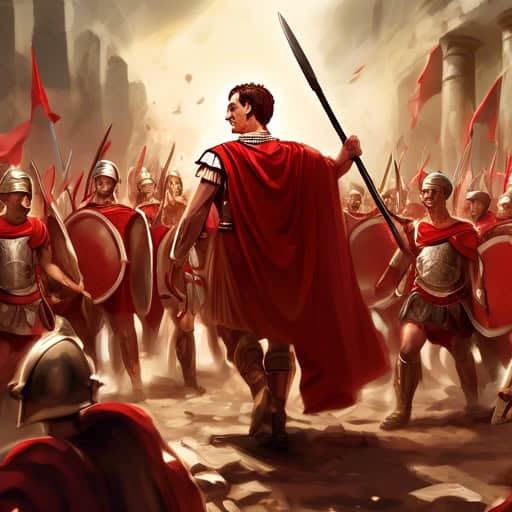
Introduction
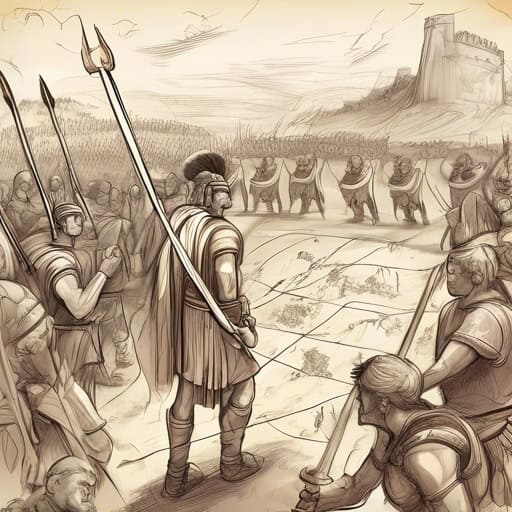
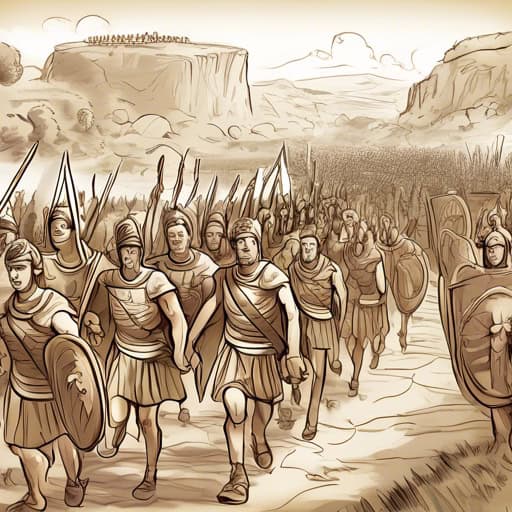
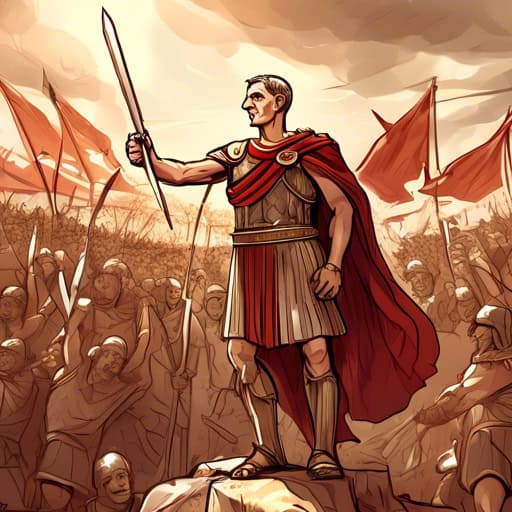
Julius Caesar
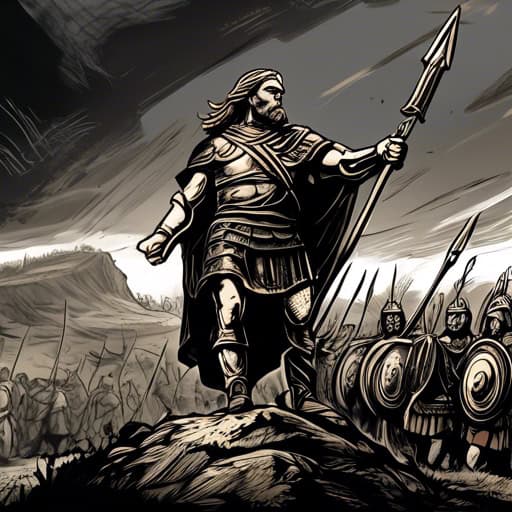
Vercingetorix
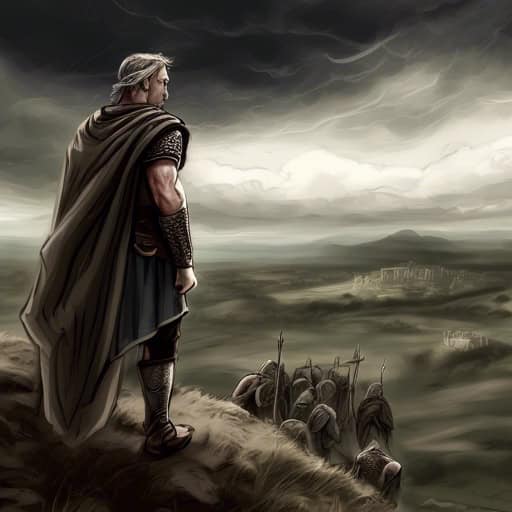
Cassivellaunus
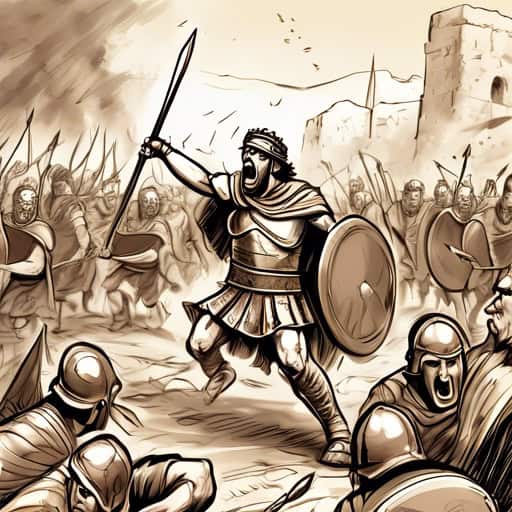
Ambiorix

The Beginning of the Conquest

The Subjugation of the Gallic Tribes

The Siege of Alesia
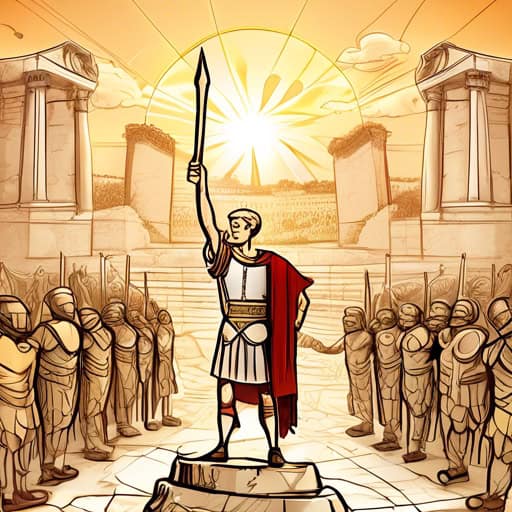
The End of the Conquest
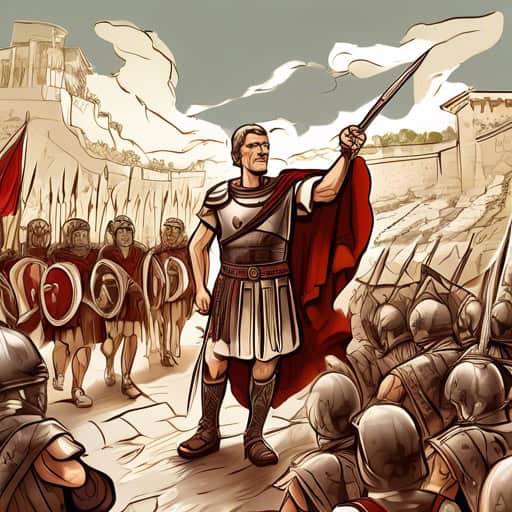
Lesson Details & Resources
In a Nutshell
- What: Julius Caesar’s conquest of Gaul
- When: 58-49 BC
- Who: Julius Caesar, Gallic tribes
- Outcome: Caesar’s successful military campaigns expanded Roman territories, increased his popularity, and laid the groundwork for his eventual rise to power in Rome.
Famous Figures in the Julius Caesar’s conquest of Gaul
-
Roman soldiers
Roman soldiers were the military personnel of the Roman Republic and Empire, who played a crucial role in Julius Caesar's conquest of Gaul.
-
Gallic tribes
Gallic tribes were the Celtic peoples inhabiting the region of Gaul during Julius Caesar's conquest. They fiercely resisted Roman expansion.
-
Julius Caesar
Julius Caesar was a Roman general and statesman who led the Roman Republic during the Gallic Wars, successfully conquering Gaul through military campaigns.
-
Vercingetorix
Vercingetorix was a chieftain of the Arverni tribe who united the Gallic tribes against Julius Caesar's conquest of Gaul, but was eventually defeated at the Battle of Alesia.
-
Ariovistus
Ariovistus was a Germanic chieftain who allied with some Gallic tribes against Julius Caesar, but was also defeated in battle.
-
Ambiorix
Ambiorix was a leader of the Eburones tribe who revolted against the Roman occupation of Gaul, causing a major setback for Julius Caesar's forces.
-
Dumnorix
Dumnorix was an Aeduan nobleman who initially supported Julius Caesar's campaigns in Gaul, but later conspired against him and was eventually killed.
-
Diviciacus
Diviciacus was an Aeduan druid and statesman who played a significant role in Gaul as an ally of Julius Caesar, assisting him in various military and diplomatic endeavors.
-
Orgetorix
Orgetorix was a nobleman from the Helvetii tribe who attempted to unite the Gallic tribes and overthrow Roman rule in Gaul, but his plan was discovered and thwarted.
-
Gergovia
Gergovia was a Gallic oppidum that became a site of a major battle between Julius Caesar and the Gallic leader Vercingetorix, resulting in a significant victory for the Gauls.
Timeline of Julius Caesar’s conquest of Gaul
Caesar appointed governor of Gaul
Caesar begins the Gallic Wars
Battle of the Arar (Saône)
Battle of Bibracte
Siege of Avaricum
Battle of Gergovia
Battle of the Sabis
Battle of Alesia
Battle of Uxellodunum
End of the Gallic Wars
Caesar's second invasion of Britain
Caesar's third invasion of Britain
Revolt of Vercingetorix
Battle of Gergovia (second)
Battle of Alesia (second)
Vercingetorix surrenders to Caesar
Caesar returns to Rome
Caesar's dictatorship proclaimed
Assassination of Julius Caesar
Vocabulary List
- Gallic Wars
- The series of military campaigns led by Julius Caesar in Gaul from 58-49 BC.
- Vercingetorix
- A Gallic chieftain who united the tribes of Gaul against Caesar during the Gallic Wars.
- Alesia
- The final decisive battle in the Gallic Wars where Caesar defeated Vercingetorix.
- Gaul
- The ancient region that roughly corresponds to modern-day France and parts of surrounding countries, conquered by Caesar.
- Legions
- The basic unit of the Roman army that Caesar used to conquer Gaul.
- Siege
- A military tactic where an army surrounds a city or fortress in order to force its surrender, used by Caesar during the Gallic Wars.
- Triumph
- A ceremony in ancient Rome to celebrate a victorious general, such as the one Caesar received after his conquest of Gaul.
Key Facts
This is the information used in the fact matching game
- Julius Caesar's conquest of Gaul lasted from 58-49 BC
- Gaul, also known as Gallia, was a region in Western Europe
- Caesar's conquest of Gaul was a significant military campaign in his rise to power
- The Gauls were a Celtic people who inhabited the region
- Caesar fought against various Gallic tribes, including the Helvetii, Belgae, and Arverni
- The Gallic Wars were a series of military campaigns led by Caesar in Gaul
- Caesar's forces consisted of Roman legions and auxiliary troops
- Vercingetorix, the leader of the Arverni, emerged as one of Caesar's most formidable opponents
- The Battle of Alesia in 52 BC was a decisive victory for Caesar, where Vercingetorix was captured
- Caesar's conquest of Gaul resulted in the Romanization of the region
- He brought Roman infrastructure, laws, and customs to Gaul
- Caesar wrote extensively about his campaigns in his book "Commentarii de Bello Gallico" (Commentaries on the Gallic War)
- Gaul was rich in resources, including gold, timber, and fertile land
- Caesar used his victories in Gaul to gain political support and establish himself as a prominent figure in Rome
- His conquests also provided a vast source of wealth for Rome
- During the Gallic Wars, Caesar faced multiple revolts and uprisings from conquered tribes
- The Romans employed siege warfare tactics to conquer Gallic cities and fortifications
- Gaul was divided into three parts by the Romans after the conquest: Gallia Aquitania, Gallia Lugdunensis, and Gallia Belgica
- The Gallic Wars had a lasting impact on the history and culture of Gaul
- Caesar's success in Gaul played a significant role in his later political career and eventual appointment as dictator of Rome.
Analysis & Significance
Immediate Consequences
Julius Caesar’s conquest of Gaul in 58-49 BC had immediate consequences that included expanding the Roman Empire’s territory, increasing Caesar’s political power and wealth, and solidifying his reputation as a military genius.
Long-Term Impact
The lasting impact of Caesar’s conquest of Gaul reshaped the political landscape of ancient Rome, leading to the downfall of the Roman Republic and the rise of the Roman Empire. It also influenced the development of Roman military tactics and strategies for centuries to come.
Cultural Significance Today
Today, Caesar’s conquest of Gaul is still remembered as a pivotal moment in ancient history that forever altered the course of the Roman Empire. His legacy as a conqueror and statesman continues to influence modern military leaders and politicians, serving as a cautionary tale of the dangers of unchecked ambition and power.
Julius Caesar’s conquest of Gaul Games


Take Your Learning Offline
Want a convenient, print-ready study guide for this lesson? Become a Memory Wizards Pro member to unlock the downloadable " Memory Scrolls" for this topic and our entire library!
- ✓ Complete Vocabulary Lists
- ✓ Key Facts & Timelines
- ✓ Beautifully Formatted for Print & Mobile