
Summary of the Battle of Pharsalus
Unravel the secrets of Caesar's victory in ancient Pharsalus.
How Do You Learn Best?
Learn by Listening
Start with the 3-minute audio summary to get the key facts and narrative highlights quickly.
Learn by Reading
Immerse yourself in the 10-minute visual lesson for a comprehensive understanding of the topic.
Learn by Reviewing
Jump directly to the key facts, timeline, and vocabulary lists to build a solid foundation of details.
Learn by Doing
Challenge yourself! Jump straight into the interactive games to learn by trial, error, and discovery.
Audio Library
As one of our featured lessons, this topic includes premium audio guides.
Unlock the Wizard's Cram Session
This powerful audio study guide is a Pro-exclusive feature. Upgrade to Memory Wizards Pro to access this and all of our premium learning tools.
Upgrade to Prothe Battle of Pharsalus in 10 Minutes
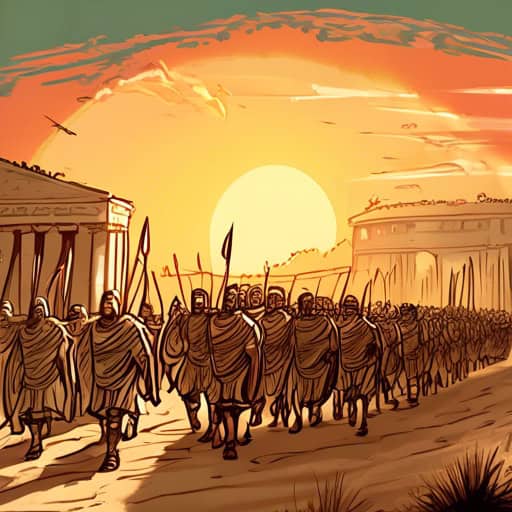
Introduction
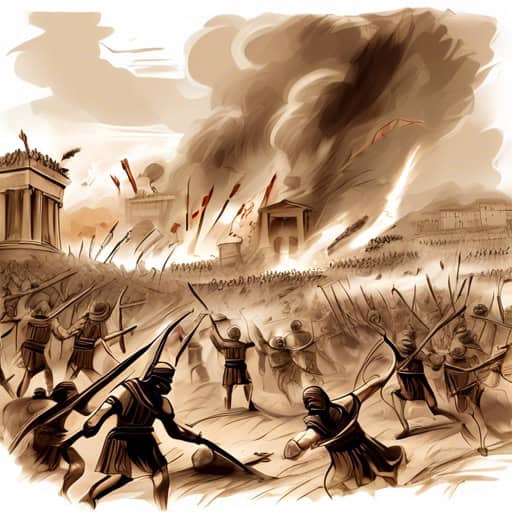
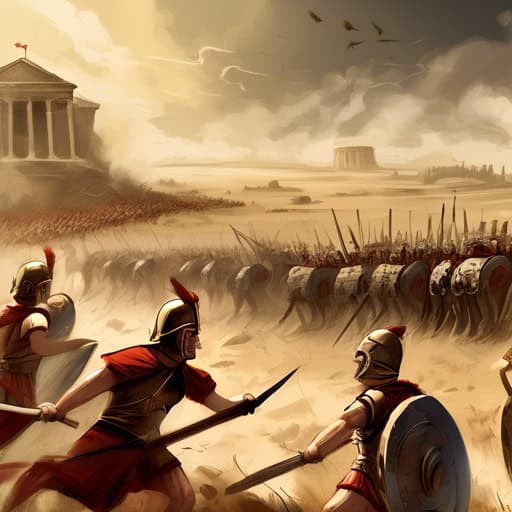
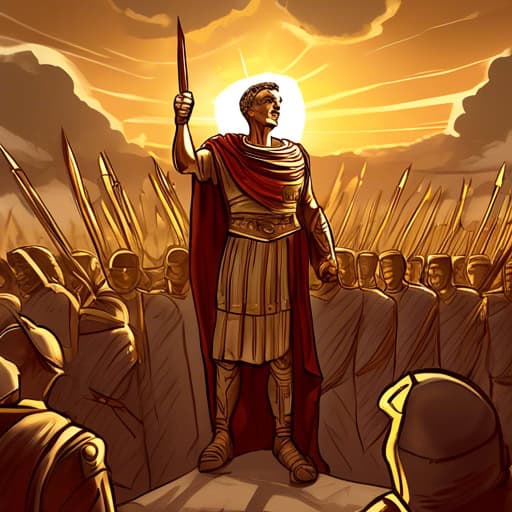
Julius Caesar
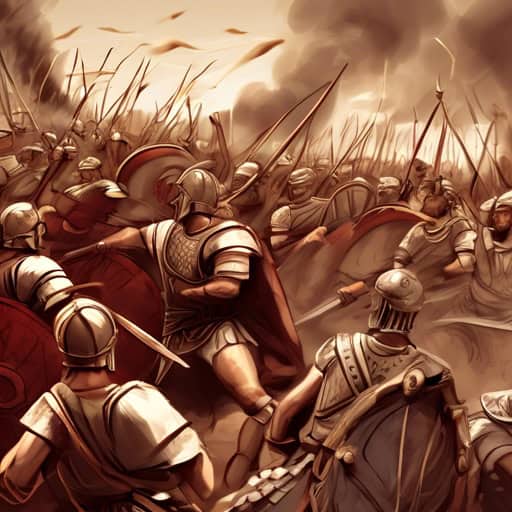
Pompey
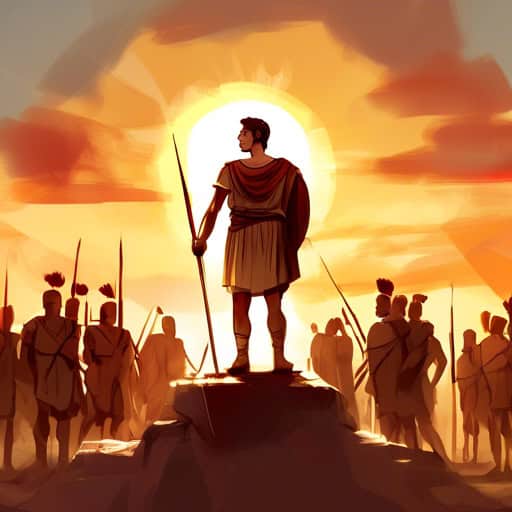
Mark Antony
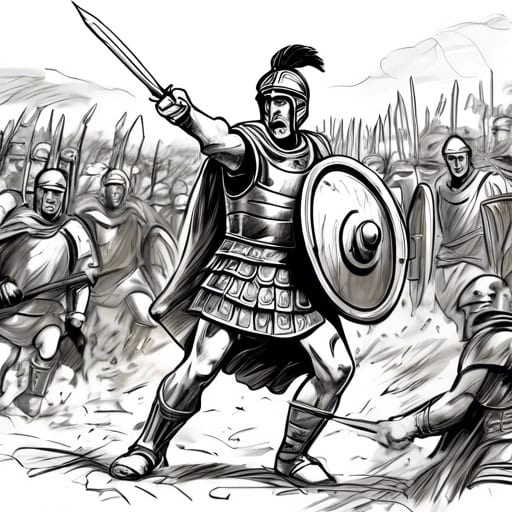
Cassius Longinus
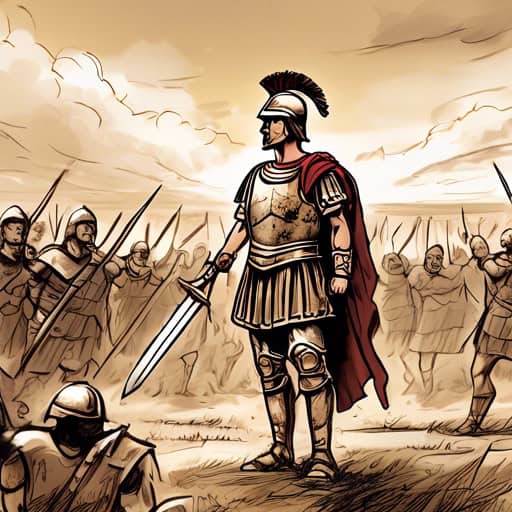
Titus Labienus
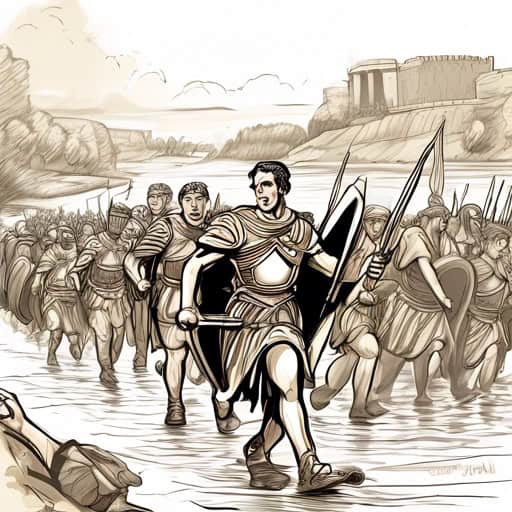
1. Caesar vs. Pompey

2. Pharsalus Battlefield

3. Pompeys Initial Success

4. Caesars Bold Move

5. Pompeys Retreat

6. Pompeys Escape

7. Caesars Victory

8. End of the Republic

9. Caesars Assassination

10. Legacy of Pharsalus
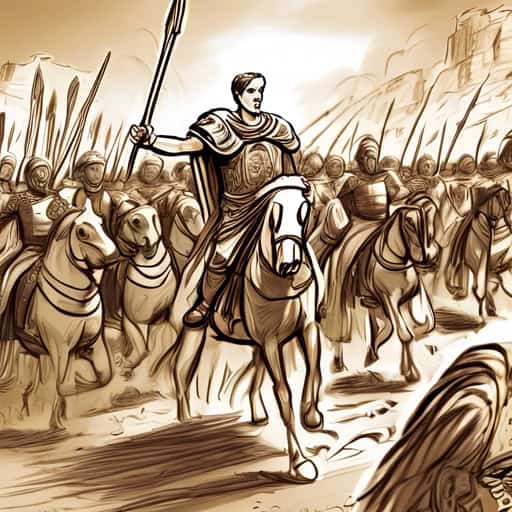
Lesson Details & Resources
In a Nutshell
- What: A significant battle during the Roman Civil War between Julius Caesar and Pompey the Great.
- When: 48 BC
- Who: Julius Caesar and Pompey the Great
- Outcome: Decisive victory for Julius Caesar, leading to his consolidation of power in Rome.
Famous Figures in the the Battle of Pharsalus
-
Julius Caesar
The victor of the Battle of Pharsalus, this person was a Roman military general and statesman. They played a crucial role in the transformation of the Roman Republic into the Roman Empire.
-
Pompey the Great
One of the key figures in the Roman Republic, this person was a military and political leader. They were a rival of Julius Caesar and fought against him in the Battle of Pharsalus.
-
Mark Antony
A loyal supporter of Julius Caesar, this person was a Roman general and politician. They served as one of Caesar's most trusted officers and later became a powerful figure in Rome.
-
Cato the Younger
A prominent senator and statesman, this person was an opponent of Julius Caesar during the Roman Civil War. They were known for their unwavering commitment to the principles of the Republic.
-
Aemilius Paullus
As a Roman general, this person fought on the side of Pompey the Great in the Battle of Pharsalus. They led a significant portion of Pompey's forces and played a crucial role in the battle.
-
Gaius Scribonius Curio
A Roman politician and supporter of Julius Caesar, this person played a key role in the events leading up to the Battle of Pharsalus. They served as a tribune and later as consul.
-
Marcus Calpurnius Bibulus
This person was a Roman politician and general who opposed Julius Caesar during the civil war. They served as consul and played a significant role in the political events of the time.
-
Titus Labienus
A trusted military officer and loyal ally of Julius Caesar, this person fought alongside him in the Battle of Pharsalus. They held the rank of legatus and commanded Caesar's cavalry.
-
Lucius Afranius
A Roman general who fought against Julius Caesar in the Battle of Pharsalus, this person was a prominent supporter of Pompey the Great. They played a crucial role in the battle.
-
Quintus Caecilius Metellus Scipio
A Roman general and politician, this person was a key figure in the opposition to Julius Caesar. They served as a commander of Pompey's forces and played a significant role in the battle.
Timeline of the Battle of Pharsalus
Julius Caesar gains control of Rome after defeating Pompey's forces in the Battle of Pharsalus
Pompey flees to Egypt
Caesar pursues Pompey to Egypt
Pompey is assassinated upon arrival in Egypt
Caesar becomes involved in the Alexandrine Civil War
Caesar defeats the forces of Ptolemy XIII and Cleopatra in the Battle of the Nile
Caesar establishes Cleopatra as the ruler of Egypt
Caesar returns to Rome and is declared dictator
Caesar implements various political and social reforms in Rome
Caesar is appointed dictator for ten years
Caesar is assassinated on the Ides of March by a group of conspirators led by Brutus and Cassius
Mark Antony delivers a speech at Caesar's funeral, inciting public anger towards the conspirators
Octavian, Caesar's adopted son, arrives in Rome and aligns himself with Mark Antony
Octavian, Antony, and Lepidus form the Second Triumvirate to avenge Caesar's death
The Second Triumvirate defeats the forces of Brutus and Cassius in the Battle of Philippi
Lepidus is stripped of his powers and exiled
Octavian takes control of the western provinces
Mark Antony aligns himself with Cleopatra and becomes involved in the East
Octavian declares war on Cleopatra and Antony
Octavian defeats Antony and Cleopatra in the Battle of Actium
Vocabulary List
- Pompey
- Roman general and statesman who commanded the Senate's forces in the Battle of Pharsalus
- Caesar
- Roman general and statesman who led his forces to victory in the Battle of Pharsalus
- Civil war
- A war between factions or regions of the same country
- Triumvirate
- A ruling body of three members, in this case, consisting of Caesar, Pompey, and Crassus
- Legion
- A large unit of the Roman army, typically consisting of around 5,000 soldiers
- Cavalry
- A branch of the military mounted on horseback, used for warfare
- Infantry
- Soldiers on foot, typically armed with weapons
- Siege
- A military operation in which forces surround and isolate a location to force its surrender
- Strategy
- A plan of action designed to achieve a long-term or overall aim
- Tactics
- The particular methods used to carry out a strategy
- Alliance
- A formal agreement or union between two or more parties to achieve a common goal
- Cohort
- A unit of the Roman army, consisting of around 480 soldiers
- Centurion
- A professional officer of the Roman army who commanded a century (approximately 80 soldiers)
- Phalanx
- A rectangular formation of tightly packed soldiers, typically armed with long spears and shields
- Surrender
- To cease resistance and submit to an enemy or opponent
- Retreat
- To withdraw or move back from a dangerous or unfavorable situation
- Reinforcement
- Additional troops or support sent to strengthen an army or position
- Ambush
- A surprise attack by people lying in wait in a concealed position
- Terrain
- The physical features of a tract of land
- Decisive
- Having the power to settle a specific outcome or result.
Key Facts
This is the information used in the fact matching game
- The Battle of Pharsalus took place on August 9, 48 BC
- It was fought in the Roman province of Thessaly, Greece
- The battle was part of the Great Roman Civil War between Julius Caesar and Pompey the Great
- Julius Caesar commanded the Caesarian faction, while Pompey led the senatorial faction
- The battle was a major turning point in the Civil War
- The Caesarians won a decisive victory over the senatorial forces
- Pompey's army outnumbered Caesar's, but Caesar's troops were more experienced and better disciplined
- Caesar's tactics focused on attacking Pompey's weaker right flank
- Pompey's cavalry, which was usually superior, was neutralized due to the terrain and Caesar's skillful deployment
- The battle lasted for only a few hours
- The outcome of the battle led to Pompey's flight and eventual assassination in Egypt
- Caesar's victory at Pharsalus solidified his position as the sole ruler of Rome
- The battle resulted in a significant loss of life on both sides
- Pompey's army suffered heavy casualties, with estimates ranging from 6,000 to 15,000 soldiers killed
- Caesar's forces also experienced significant losses, with approximately 2000 casualties
- Pharsalus was the largest land battle fought in the Roman Republic up until that time
- The battle showcased Caesar's superior military strategy and leadership abilities
- Following his victory, Caesar pursued Pompey to Egypt, where he became embroiled in further conflicts
- The Battle of Pharsalus marked the beginning of the end for the Roman Republic and set the stage for the rise of the Roman Empire
- The battle is considered one of the most important battles in Roman history.
Analysis & Significance
Immediate Consequences
The Battle of Pharsalus in 48 BC marked a decisive victory for Julius Caesar over his rival Pompey, leading to the collapse of the Roman Republic. Pompey fled to Egypt, where he was later assassinated, solidifying Caesar’s power in Rome.
Long-Term Impact
The aftermath of the Battle of Pharsalus paved the way for Caesar to become the sole ruler of Rome, effectively ending the era of the Republic and setting the stage for the Roman Empire. The power struggle between Caesar and Pompey also highlighted the fragility of the Roman political system.
Cultural Significance Today
The Battle of Pharsalus continues to be studied and remembered as a turning point in Roman history, illustrating the consequences of unchecked ambition and political turmoil. It serves as a cautionary tale about the dangers of authoritarian rule and the importance of maintaining democratic principles in society.
the Battle of Pharsalus Games


Take Your Learning Offline
Want a convenient, print-ready study guide for this lesson? Become a Memory Wizards Pro member to unlock the downloadable " Memory Scrolls" for this topic and our entire library!
- ✓ Complete Vocabulary Lists
- ✓ Key Facts & Timelines
- ✓ Beautifully Formatted for Print & Mobile