
Summary of the Assassination of Julius Caesar
Unveiling the treachery and legacy of Caesar's fateful demise.
How Do You Learn Best?
Learn by Listening
Start with the 3-minute audio summary to get the key facts and narrative highlights quickly.
Learn by Reading
Immerse yourself in the 10-minute visual lesson for a comprehensive understanding of the topic.
Learn by Reviewing
Jump directly to the key facts, timeline, and vocabulary lists to build a solid foundation of details.
Learn by Doing
Challenge yourself! Jump straight into the interactive games to learn by trial, error, and discovery.
Audio Library
As one of our featured lessons, this topic includes premium audio guides.
Unlock the Wizard's Cram Session
This powerful audio study guide is a Pro-exclusive feature. Upgrade to Memory Wizards Pro to access this and all of our premium learning tools.
Upgrade to Prothe Assassination of Julius Caesar in 10 Minutes

Introduction
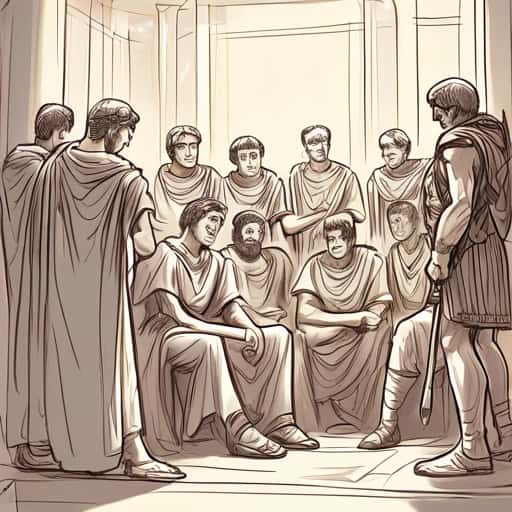
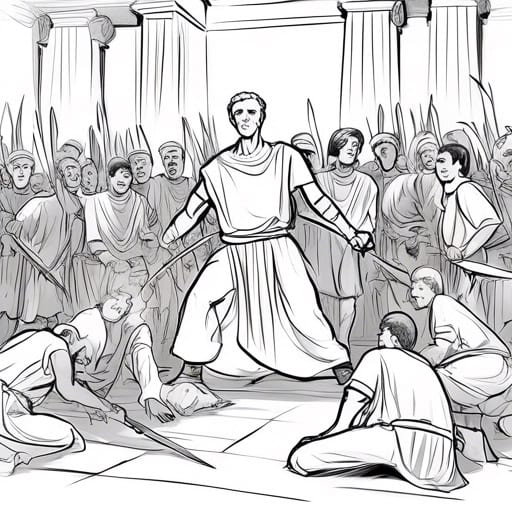
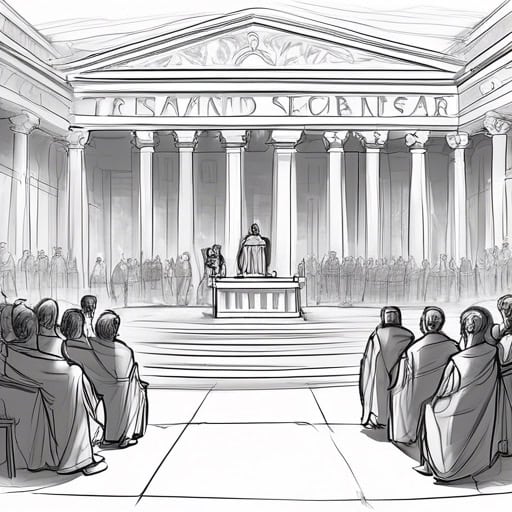
1. Julius Caesar
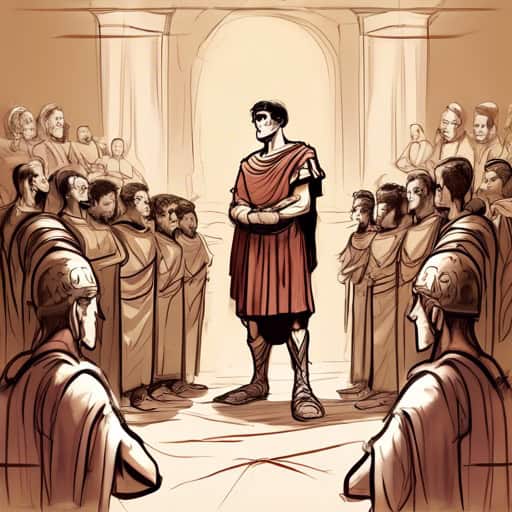
2. Brutus
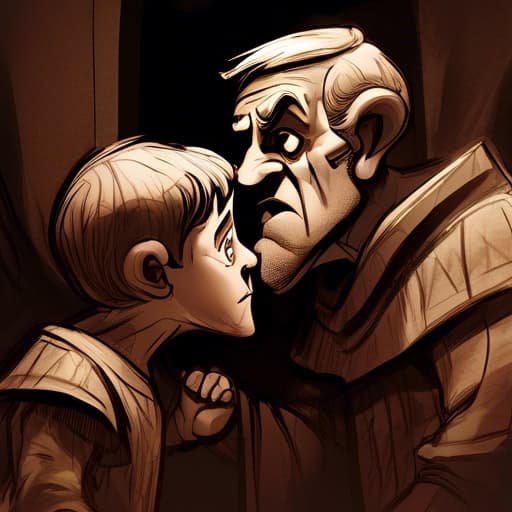
3. Cassius
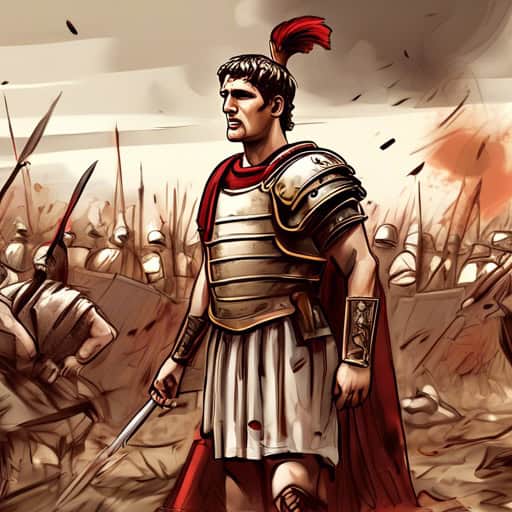
4. Mark Antony
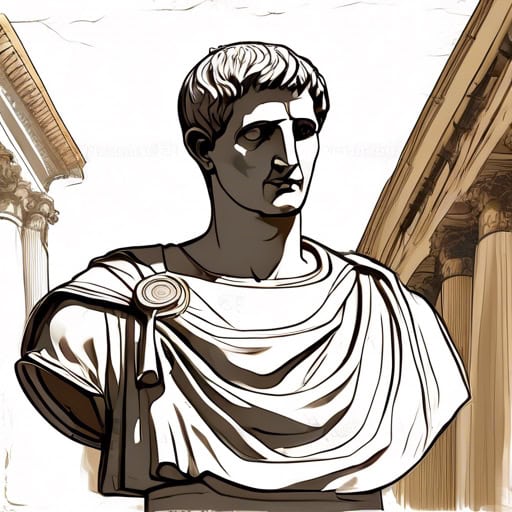
5. Octavian

The Senates Plot

The Ides of March

The Assassination

The Aftermath

The Legacy of Julius Caesar
Lesson Details & Resources
In a Nutshell
- What: The assassination of Julius Caesar
- When: 44 BC
- Who: Julius Caesar, Roman senators, Marcus Brutus
- Outcome: Caesar’s death led to a power struggle in Rome and the eventual rise of the Roman Empire.
Famous Figures in the the Assassination of Julius Caesar
-
Roman senators
A group of Roman senators who conspired to assassinate Julius Caesar, believing his power threatened the Roman Republic.
-
Gaius Cassius Longinus
One of the principal conspirators against Caesar, known for his involvement in the plot and his role in the Battle of Philippi against Caesar's supporters.
-
Marcus Junius Brutus
A Roman senator and one of the main conspirators against Caesar, who was known for his close friendship with Caesar but turned against him due to concerns over his ambition.
-
Decimus Junius Brutus Albinus
A Roman senator and military commander, who was a trusted ally of Caesar but ultimately joined the conspiracy against him.
-
Gaius Trebonius
A Roman senator and general who joined the conspiracy against Caesar, known for his role in capturing Caesar's attention during the assassination.
-
Publius Servilius Casca
A Roman senator who struck the first blow against Caesar during the assassination, initiating the attack by stabbing him in the neck.
-
Lucius Tillius Cimber
A Roman senator who was part of the conspiracy against Caesar and played a role in distracting him during the attack.
-
Marcus Tullius Cicero
One of Rome's greatest orators and philosophers, who was not directly involved in the assassination but had expressed concerns about Caesar's increasing power.
-
Mark Antony
A loyal supporter of Caesar, who sought revenge for his assassination and played a key role in the power struggle following Caesar's death.
-
Octavian
Octavian, later known as Augustus, was Caesar's adopted heir and became one of the most powerful politicians in Rome after Caesar's assassination.
Timeline of the Assassination of Julius Caesar
Julius Caesar declared perpetual dictator
Julius Caesar begins to centralize power in Rome
Julius Caesar becomes involved in the Civil War against Pompey
Julius Caesar defeats Pompey at the Battle of Pharsalus
Julius Caesar appointed as dictator for ten years
Julius Caesar implements various reforms in Rome
Julius Caesar declared dictator for life
The Roman Senate becomes increasingly wary of Julius Caesar's power
Julius Caesar plans to leave Rome for a military campaign in Parthia
The Ides of March (15th of March)
Julius Caesar attends a Senate meeting at the Theatre of Pompey
Gaius Cassius Longinus initiates the assassination plot
Marcus Junius Brutus joins the conspiracy
Julius Caesar is warned of the assassination plot but ignores the warning
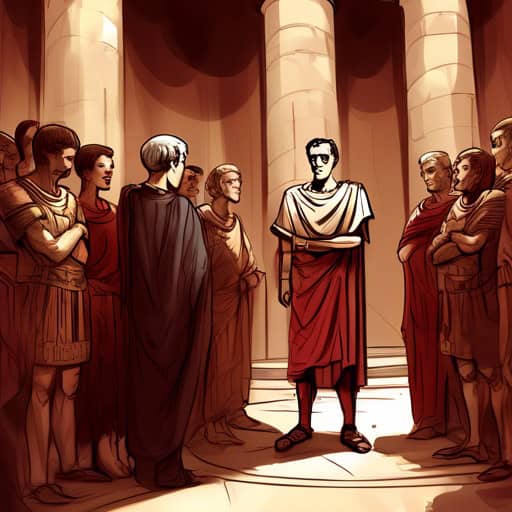
Julius Caesar arrives at the Senate and is surrounded by conspirators
Gaius Trebonius engages Mark Antony outside the Senate
Julius Caesar is stabbed multiple times, including by Brutus
Julius Caesar utters the famous phrase 'Et tu, Brute?' ('And you, Brutus?')
Julius Caesar succumbs to his wounds and dies
Mark Antony delivers a funeral speech for Julius Caesar, inciting public outrage
Vocabulary List
- Conspiracy
- A secret plan by a group to do something harmful or illegal
- Dictator
- A ruler who has complete control over a country and its government
- Senate
- A group of people who represent the citizens and make laws in ancient Rome
- Stab
- To pierce or wound with a pointed object
- Betray
- To be disloyal or treacherous towards someone
- Assassinate
- To murder someone, especially a famous person or a political leader
- Tyrant
- A ruler who exercises power oppressively or cruelly
- Assailant
- A person who physically attacks someone
- Cloak
- A loose outer garment, often worn to conceal one's identity
- Ambition
- A strong desire to achieve something, typically requiring determination and hard work
- Treason
- The crime of betraying one's country, especially by attempting to kill or overthrow the sovereign or government
- Vengeance
- Punishment inflicted or retribution exacted for an injury or wrong
- Conquer
- To overcome and take control of a place or people by military force
- Loyalty
- A strong feeling of support or allegiance towards someone or something
- Crown
- A circular ornamental headdress worn by a monarch as a symbol of authority
- Dagger
- A short, pointed knife used as a weapon
- Ruler
- A person who exercises governmental or sovereign authority
- Martyr
- A person who is killed because of their beliefs or principles
- Republic
- A state in which supreme power is held by the people and their elected representatives
- Power struggle
- A conflict or competition between individuals or groups for power or control.
Key Facts
This is the information used in the fact matching game
- Julius Caesar was assassinated on March 15, 44 BC
- The assassination took place at the Theatre of Pompey in Rome
- The conspirators planned to restore the Roman Republic by killing Caesar
- There were about 60 conspirators involved in the assassination plot
- Brutus and Cassius were the leaders of the conspiracy
- Caesar was stabbed 23 times during the assassination
- The conspirators used daggers known as "pugiones"
- The senators who participated in the assassination believed they were defending the Roman Republic
- Caesar's assassination was a result of political rivalry and fears of his growing power
- The conspirators wanted to prevent Caesar from becoming a dictator for life
- Caesar's last words were reportedly, "Et tu, Brute?" meaning "And you, Brutus?"
- Despite being involved in the conspiracy, Brutus and Cassius were not able to gain control of Rome after Caesar's death
- The assassination of Julius Caesar marked the end of the Roman Republic and the beginning of the Roman Empire
- Following Caesar's assassination, a power struggle ensued, leading to the rise of Caesar's adopted heir, Octavian, also known as Augustus
- The assassination of Caesar is one of the most famous assassinations in history
- The event has been depicted in numerous works of art, literature, and theater
- The assassination was a pivotal moment in Roman history and had far-reaching consequences
- Julius Caesar's death led to a series of civil wars that would ultimately result in the downfall of the Roman Republic
- The Ides of March, the date of Caesar's assassination, has become synonymous with treachery and betrayal
- Julius Caesar was a highly influential and controversial figure in ancient Rome
- The assassination of Caesar was a turning point that shaped the course of history.
Analysis & Significance
Immediate Consequences
The assassination of Julius Caesar in 44 BC immediately plunged Rome into chaos and political turmoil. The power struggle that ensued led to a series of civil wars, ultimately resulting in the end of the Roman Republic and the rise of the Roman Empire under the rule of Caesar’s adopted heir, Octavian.
Long-Term Impact
The assassination of Julius Caesar had a profound impact on the course of Western history. It marked the beginning of the transition from the Roman Republic to the Roman Empire, which would dominate the Mediterranean world for centuries. Caesar’s death also served as a cautionary tale about the dangers of unchecked power and political ambition.
Cultural Significance Today
The assassination of Julius Caesar continues to be a widely studied and debated event in history and literature. It has inspired countless works of art, literature, and film, and its themes of betrayal, power, and ambition remain relevant in contemporary society. The phrase “Et tu, Brute?” (meaning “Even you, Brutus?”) has become a symbol of ultimate betrayal and is still used today to express shock and disbelief at betrayal by someone close.
the Assassination of Julius Caesar Games


Take Your Learning Offline
Want a convenient, print-ready study guide for this lesson? Become a Memory Wizards Pro member to unlock the downloadable " Memory Scrolls" for this topic and our entire library!
- ✓ Complete Vocabulary Lists
- ✓ Key Facts & Timelines
- ✓ Beautifully Formatted for Print & Mobile