
Summary of the Codification of the Twelve Tables
Unveiling the ancient laws that shaped Roman society for centuries.
How Do You Learn Best?
Learn by Listening
Start with the 3-minute audio summary to get the key facts and narrative highlights quickly.
Learn by Reading
Immerse yourself in the 10-minute visual lesson for a comprehensive understanding of the topic.
Learn by Reviewing
Jump directly to the key facts, timeline, and vocabulary lists to build a solid foundation of details.
Learn by Doing
Challenge yourself! Jump straight into the interactive games to learn by trial, error, and discovery.
Audio Library
As one of our featured lessons, this topic includes premium audio guides.
Unlock the Wizard's Cram Session
This powerful audio study guide is a Pro-exclusive feature. Upgrade to Memory Wizards Pro to access this and all of our premium learning tools.
Upgrade to Prothe Codification of the Twelve Tables in 10 Minutes
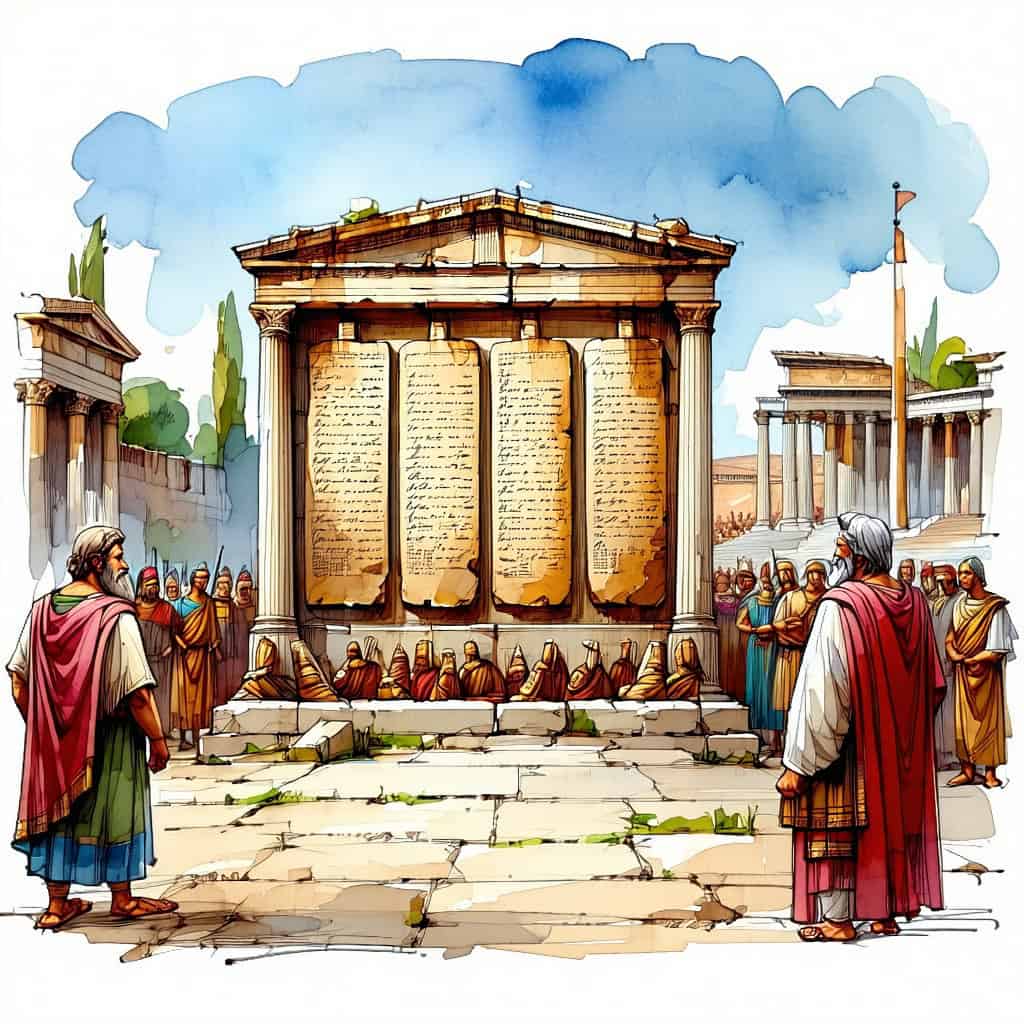
Introduction


Appius Claudius
Lucius Valerius Potitus
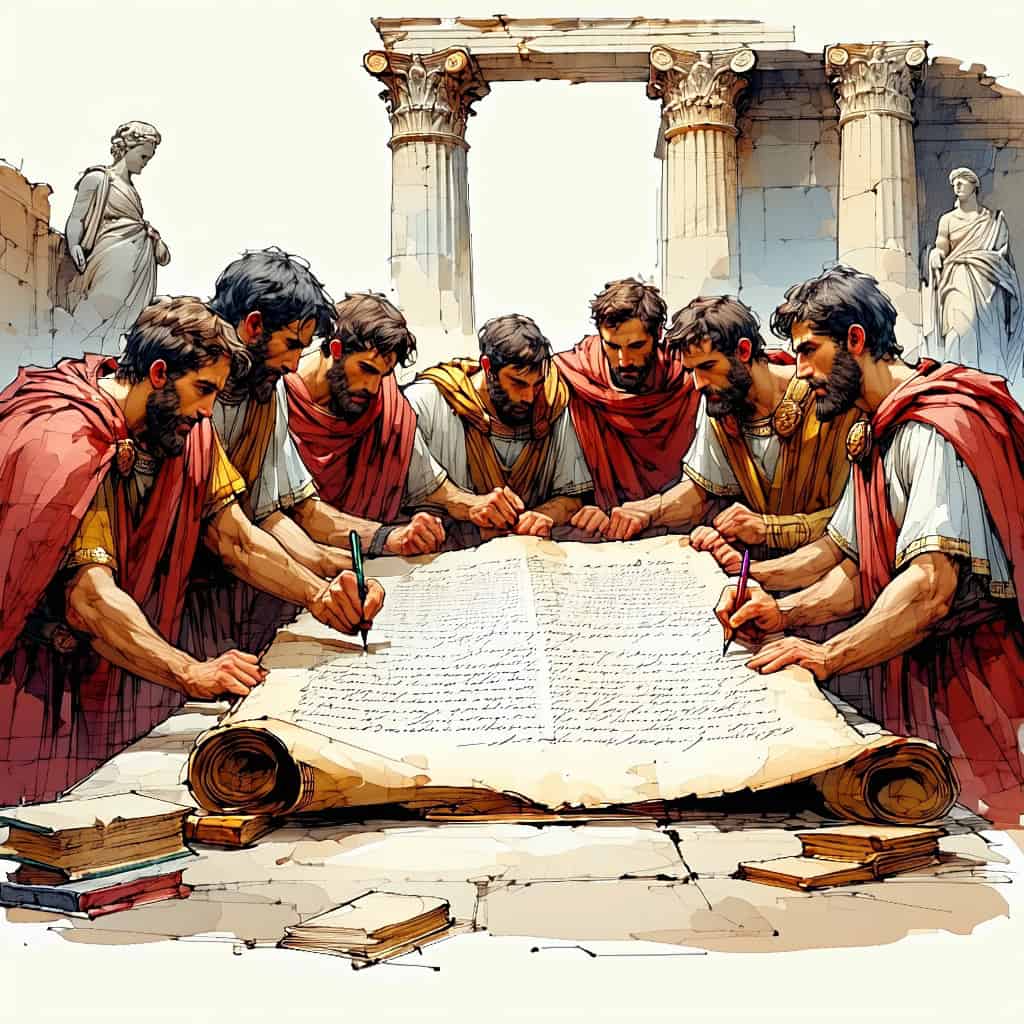
Decemviri
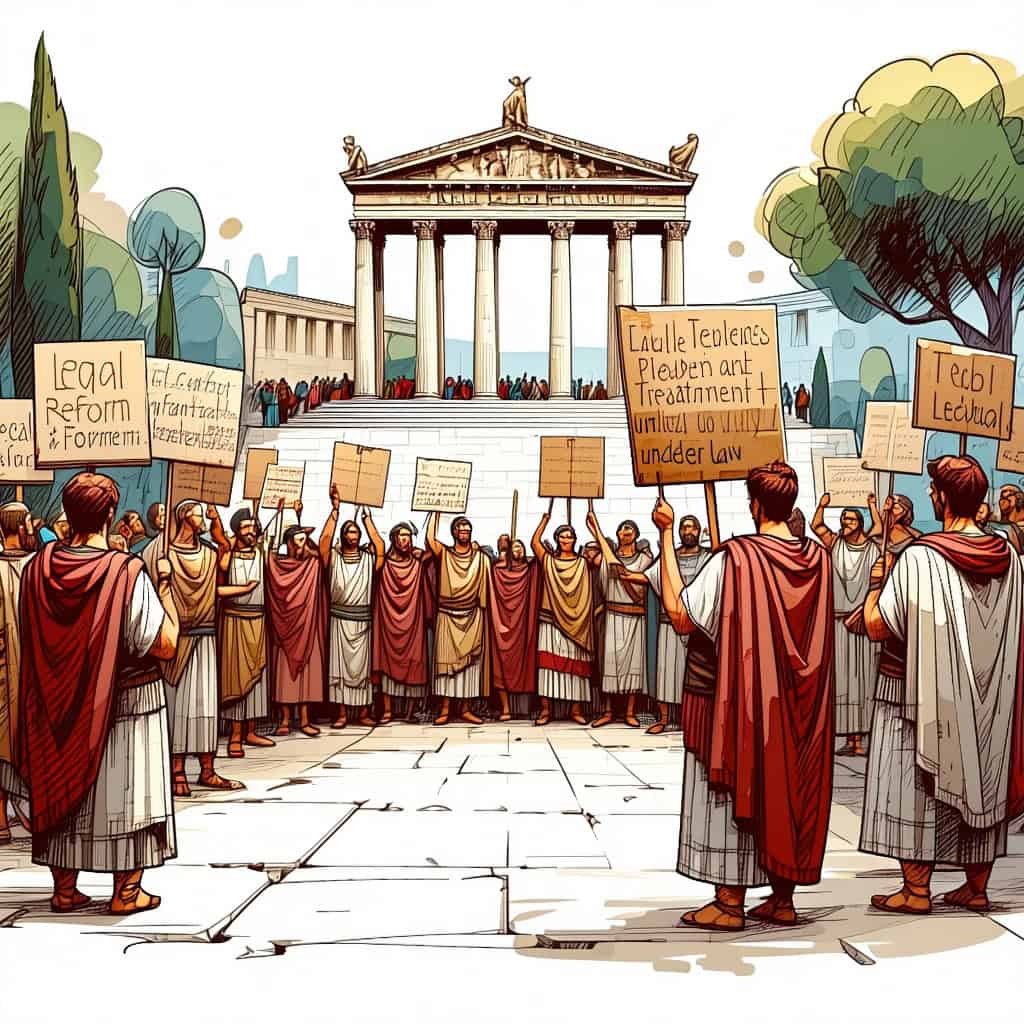
Plebeians

1. Establishment of the Twelve Tables

2. Content of the Twelve Tables

3. Protection of Citizens Rights

4. Influence on Roman Law

5. Public Display and Enforcement

6. Legal Equality for Citizens

7. Resolving Legal Disputes

8. Legacy of the Twelve Tables

9. Preservation of the Twelve Tables

10. Significance of the Codification
Lesson Details & Resources
In a Nutshell
- What: The codification of the Twelve Tables in 450 B.C.
- When: 450 B.C.
- Who: Roman lawmakers and legal experts
- Outcome: The first written laws of ancient Rome, establishing basic rights and procedures for Roman citizens.
Famous Figures in the the Codification of the Twelve Tables
-
Appius Claudius Caecus
Appius Claudius Caecus was a Roman statesman and one of the main proponents of the Twelve Tables.
-
Decemviri
The Decemviri were a group of ten men appointed to draft the Twelve Tables.
-
Gaius Terentillius Arsa
Gaius Terentillius Arsa was one of the Decemviri involved in the codification of the Twelve Tables.
-
Lucius Valerius Potitus
Lucius Valerius Potitus was one of the Decemviri involved in the codification of the Twelve Tables.
-
Horatius Pulvillus
Horatius Pulvillus was one of the Decemviri involved in the codification of the Twelve Tables.
-
Marcus Cornelius Maluginensis
Marcus Cornelius Maluginensis was one of the Decemviri involved in the codification of the Twelve Tables.
-
Titus Genucius Augurinus
Titus Genucius Augurinus was one of the Decemviri involved in the codification of the Twelve Tables.
-
Aulus Manlius Vulso
Aulus Manlius Vulso was one of the Decemviri involved in the codification of the Twelve Tables.
-
Publius Sestius Capitolinus Vaticanus
Publius Sestius Capitolinus Vaticanus was one of the Decemviri involved in the codification of the Twelve Tables.
-
Lucius Veturius Philo
Lucius Veturius Philo was one of the Decemviri involved in the codification of the Twelve Tables.
-
Gaius Julius Iullus
Gaius Julius Iullus was one of the Decemviri involved in the codification of the Twelve Tables.
-
Publius Papirius Crassus
Publius Papirius Crassus was one of the Decemviri involved in the codification of the Twelve Tables.
Timeline of the Codification of the Twelve Tables
Formation of a commission of ten men to draft the Twelve Tables
Commission drafts the Twelve Tables
The Twelve Tables are publicly displayed in the Forum Romanum
Debate and revisions of the Twelve Tables by the Roman assembly
The Twelve Tables are formally adopted as Roman law
The Twelve Tables become the foundation of Roman civil law
First Table of the Twelve Tables deals with legal procedures and trials
Second Table of the Twelve Tables covers debt and property rights
Third Table of the Twelve Tables addresses issues of family law
Fourth Table of the Twelve Tables focuses on inheritance and guardianship
Fifth Table of the Twelve Tables concerns property and land rights
Sixth Table of the Twelve Tables deals with delicts and torts
Seventh Table of the Twelve Tables covers legal procedures and trials
Eighth Table of the Twelve Tables addresses issues of family law
Ninth Table of the Twelve Tables focuses on inheritance and guardianship
Tenth Table of the Twelve Tables concerns property and land rights
Eleventh Table of the Twelve Tables deals with delicts and torts
Twelfth Table of the Twelve Tables covers various laws and regulations
The Twelve Tables remain in force for centuries and heavily influence Roman law
Vocabulary List
- Codification
- The codification of the Twelve Tables in 450 B.C. was a significant milestone in Roman legal history.
- Twelve Tables
- The codification of the Twelve Tables in 450 B.C. was the first written legislation in Ancient Rome.
- 450 B.C.
- The codification of the Twelve Tables occurred in 450 B.C. during the early Roman Republic.
- Roman legal history
- The codification of the Twelve Tables marked a pivotal point in Roman legal history, providing a foundation for future legal developments.
- Written legislation
- The Twelve Tables were the first written legislation in Ancient Rome, providing a set of laws that applied to all citizens.
- Ancient Rome
- The codification of the Twelve Tables took place in Ancient Rome, shaping the legal system of the time.
- Roman Republic
- The Twelve Tables were codified during the early Roman Republic, establishing legal rights and procedures for Roman citizens.
Key Facts
This is the information used in the fact matching game
- The Codification of the Twelve Tables was a set of laws established in ancient Rome in 450 B.C.
- It was the first written legislation in Roman history.
- The Twelve Tables were created to ensure fairness and prevent arbitrary judgments.
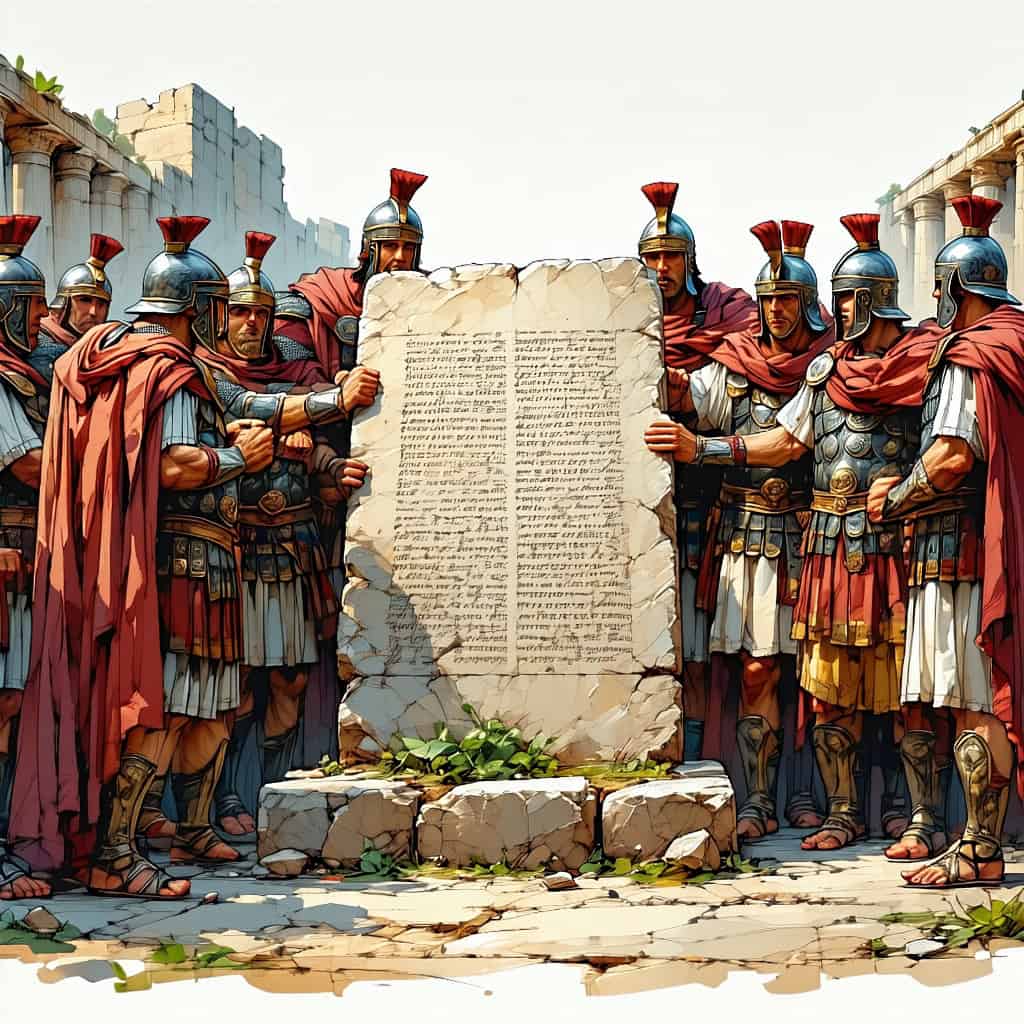
- The laws were displayed publicly for all citizens to see.
- The Twelve Tables covered various aspects of Roman life, including property rights, family law, and criminal offenses.
- The laws were written on 12 bronze tablets.
- The tablets were displayed in the Roman Forum.
- The Twelve Tables were based on existing customary laws and practices.
- The codification aimed to provide legal protection for all Roman citizens.
- The laws were overseen by a commission of ten men known as the Decemviri.
- The Decemviri were responsible for drafting and implementing the laws.
- The Twelve Tables were written in Latin.
- The laws aimed to establish equality before the law and protect the rights of individuals.
- The Twelve Tables played a crucial role in shaping Roman legal principles and institutions.
- The laws remained in effect throughout the Roman Republic and influenced subsequent legal systems.
- The Codification of the Twelve Tables served as a foundation for Roman jurisprudence.
- The Twelve Tables were revised and expanded over time.
- The last known version of the Twelve Tables was lost in the 5th century A.D.
- Many aspects of Roman law were influenced by the Twelve Tables, even after their disappearance.
- The Twelve Tables laid the groundwork for the development of civil law systems in many modern-day countries.
Analysis & Significance
Immediate Consequences
The codification of the Twelve Tables in 450 B.C. marked a significant development in Roman law, providing a written set of laws that were publicly displayed for all citizens to see. This helped to bring clarity and transparency to legal proceedings, ensuring that all citizens were aware of their rights and obligations under the law.
Long-Term Impact
The Twelve Tables had a lasting impact on Roman society, serving as the foundation for Roman law for centuries to come. These laws influenced legal systems throughout Europe and beyond, shaping the development of modern legal principles and practices. The emphasis on written laws and the idea of equality before the law laid the groundwork for the rule of law in Western civilization.
Cultural Significance Today
Today, the codification of the Twelve Tables continues to be studied and revered as a foundational document in the history of law. Its principles of justice, equality, and the rule of law are still relevant and influential in contemporary legal systems around the world. The legacy of the Twelve Tables reminds us of the importance of a fair and just legal system in maintaining a stable and prosperous society.
the Codification of the Twelve Tables Games


Take Your Learning Offline
Want a convenient, print-ready study guide for this lesson? Become a Memory Wizards Pro member to unlock the downloadable " Memory Scrolls" for this topic and our entire library!
- ✓ Complete Vocabulary Lists
- ✓ Key Facts & Timelines
- ✓ Beautifully Formatted for Print & Mobile