
Summary of The Sabine Women – 750 BC
Unveil the ancient myth of love, betrayal, and Roman history.
How Do You Learn Best?
Learn by Listening
Start with the 3-minute audio summary to get the key facts and narrative highlights quickly.
Learn by Reading
Immerse yourself in the 10-minute visual lesson for a comprehensive understanding of the topic.
Learn by Reviewing
Jump directly to the key facts, timeline, and vocabulary lists to build a solid foundation of details.
Learn by Doing
Challenge yourself! Jump straight into the interactive games to learn by trial, error, and discovery.
Audio Library
As one of our featured lessons, this topic includes premium audio guides.
Unlock the Wizard's Cram Session
This powerful audio study guide is a Pro-exclusive feature. Upgrade to Memory Wizards Pro to access this and all of our premium learning tools.
Upgrade to ProThe Sabine Women – 750 BC in 10 Minutes
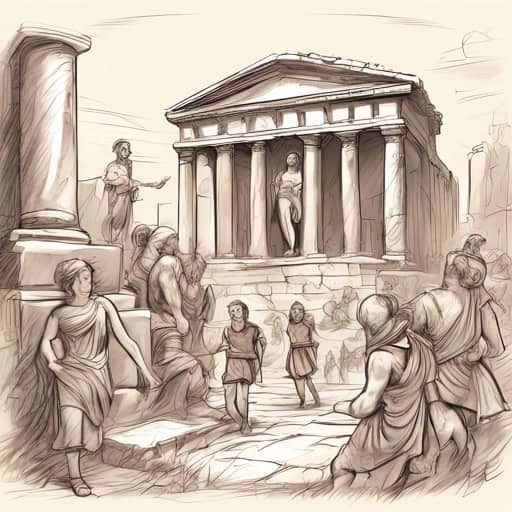
Introduction
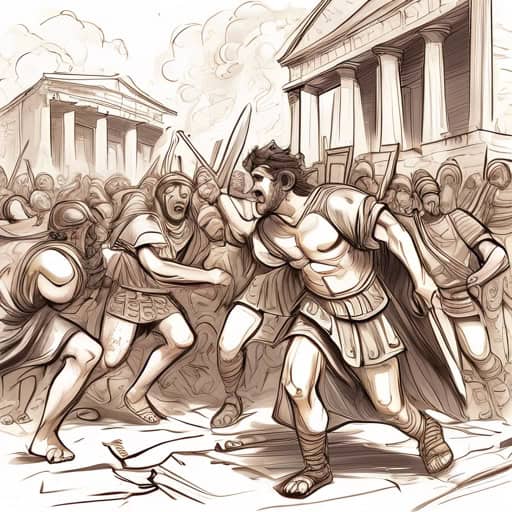

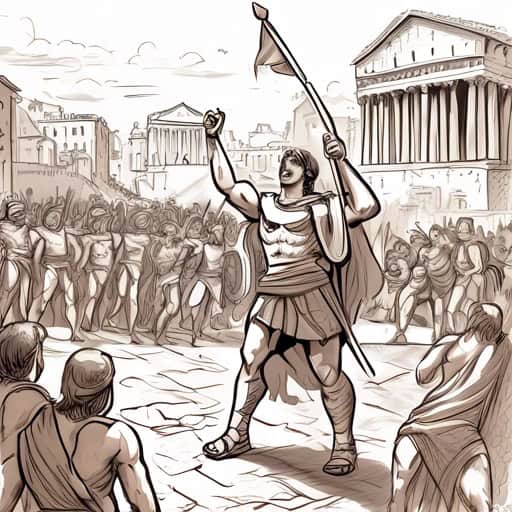
Romulus
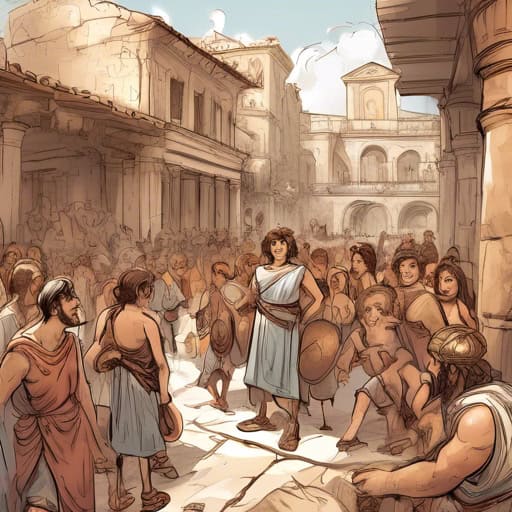
Sabine Women
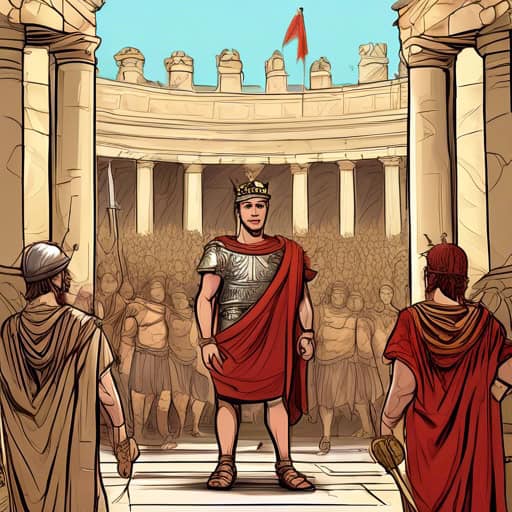
Tatius
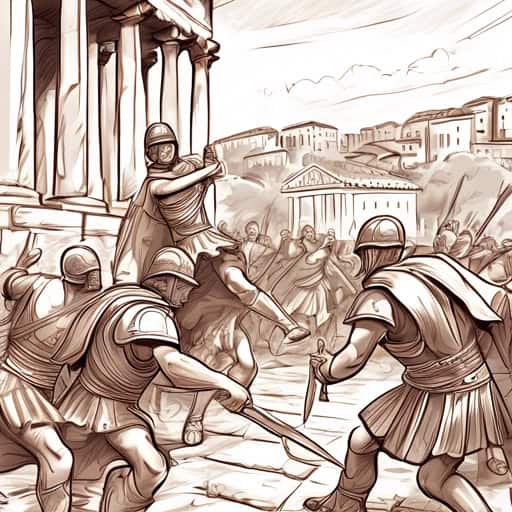
Romans

The Abduction
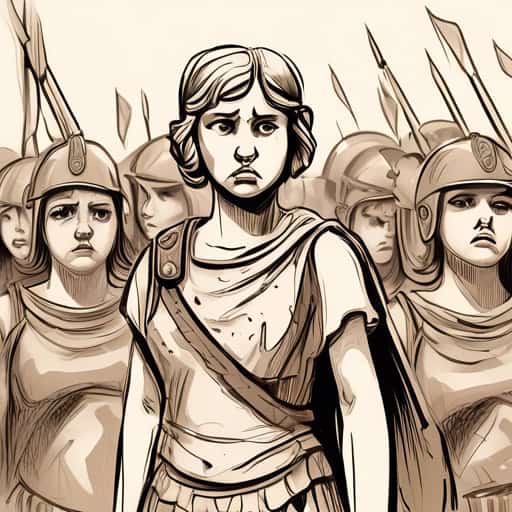
The Intervention of the Sabine Women

The Battle of the Sabines

The Reconciliation

The Legacy of the Sabine Women

Lesson Details & Resources
In a Nutshell
- What: The abduction of Sabine women by Roman men.
- When: 750 BC
- Who: Roman men and Sabine women.
- Outcome: The integration of the Sabine women into Roman society and their eventual acceptance of their new husbands.
Famous Figures in the The Sabine Women – 750 BC
-
Roman king
The Roman king who founded the city of Rome and played a key role in the Rape of the Sabine Women.
-
Romulus
The legendary founder and first king of Rome, who initiated the abduction of the Sabine women to increase the population of his city.
-
Roman men
The Roman men who participated in the abduction of the Sabine women, following their leader Romulus.
-
Sabine women
The women from the Sabine tribe who were taken by force by the Roman men to become their wives and bear children for Rome.
-
Hersilia
The wife of Romulus, who was herself a Sabine woman and played a significant role in mediating between the Romans and Sabines during the conflict.
-
Sabine men
The men from the Sabine tribe who fought against the Romans in defense of their abducted women.
-
Tatius
The Sabine king who sought revenge for the abduction of the women and engaged in warfare against the Romans.
-
Hersilia's father
The father of Hersilia, who was one of the abducted Sabine women and later became the wife of Romulus.
-
Roman soldiers
The soldiers from Rome who fought alongside Romulus and his men during the abduction of the Sabine women.
-
Sabine warriors
The warriors from the Sabine tribe who resisted the Roman invasion and fought against them to protect their women.
Timeline of The Sabine Women – 750 BC
Romulus, the legendary founder of Rome, establishes a settlement on the Palatine Hill
Romulus organizes the Consualia festival, inviting the neighboring Sabines
During the festival, Romulus and his men seize the Sabine women
The Sabine women are taken back to Rome against their will
The Sabine men, led by their king Titus Tatius, prepare for war against Rome
Romulus and Tatius agree to a truce and form a joint monarchy
The two communities merge into one, with the Sabines becoming part of Roman society
The incident becomes known as 'The Rape of the Sabine Women'
Romulus founds the Roman Senate and establishes laws and institutions
Romulus mysteriously disappears during a storm and is believed to have been taken up to the gods
Romulus is deified as the god Quirinus
Numa Pompilius becomes the second King of Rome
Numa Pompilius establishes religious rituals and reforms Roman society
Tullus Hostilius becomes the third King of Rome
Tullus Hostilius leads Rome into a series of victorious wars
Tullus Hostilius dies, possibly struck by lightning
Ancus Marcius becomes the fourth King of Rome
Ancus Marcius expands Roman territory and builds infrastructure
Ancus Marcius dies of natural causes
Lucius Tarquinius Priscus becomes the fifth King of Rome
Vocabulary List
- Rape
- The latin word Raptio is a Latin term for, among several other meanings of "taking", the large-scale abduction of women.
- Sabine Women
- The Sabine women were the women of the Sabine tribe, who were kidnapped by the Roman men in the legendary incident known as The Rape of the Sabine Women.
- Abduction
- The story of The Rape of the Sabine Women revolves around the abduction of the Sabine women by the Roman men.
- Violation
- The Rape of the Sabine Women portrays the violation and mistreatment of the Sabine women by the Roman men.
- Roman
- The Roman men were the perpetrators of The Rape of the Sabine Women, as they abducted and violated the Sabine women.
- Tribe
- The Sabine women belonged to the Sabine tribe, which was targeted by the Roman men in The Rape of the Sabine Women.
- Legendary
- The Rape of the Sabine Women is a legendary tale from ancient Rome that has been passed down through generations.
- Incident
- The Rape of the Sabine Women is based on the historical incident of the abduction of the Sabine women by the Roman men.
- Central theme
- The central theme of The Rape of the Sabine Women is the abduction and violation of the Sabine women by the Roman men.
Key Facts
This is the information used in the fact matching game
- The Rape of the Sabine Women is a legendary event in Roman mythology
- It occurred around 750 BC
- The story is about the founding of Rome
- The event is described in the mythological works of Livy, Plutarch, and Ovid
- According to the myth, the Romans abducted women from the neighboring Sabine tribe
- The Roman men did this as they needed wives to populate their new city
- The Sabines were a nearby tribe that inhabited the central Apennines in Italy
- Romulus, the legendary founder of Rome, is said to have devised the plan for the abduction
- The Sabine women were taken during the celebration of a festival in Rome
- The incident sparked a war between the Romans and the Sabines
- The conflict lasted for several years
- The war ended when the Sabine women intervened to stop the fighting
- The women, who had become wives and mothers to both the Romans and the Sabines, pleaded for peace
- A truce was reached, and the Sabines and Romans formed a unified community
- The Sabine women became an important part of Roman society and were highly respected
- The story of the Rape of the Sabine Women has been depicted in various works of art throughout history
- The event is often seen as symbolizing the blending of different cultures and the creation of a new society
- The term "rape" in this context does not refer to sexual assault but rather to the act of abduction
- The term "rape" comes from the Latin word "rapere," which means "to seize" or "to carry off"
- The legend of the Rape of the Sabine Women has had a lasting impact on Roman culture and history.
Analysis & Significance
Immediate Consequences
The immediate consequence of the Rape of the Sabine Women was a violent conflict between the Romans and the Sabines. The abduction of the Sabine women led to a war between the two tribes, resulting in bloodshed and chaos.
Long-Term Impact
The long-term impact of this event was the unification of the Romans and Sabines into one society. The abduction of the Sabine women eventually led to a peace treaty between the two tribes, leading to the merging of their cultures and the formation of a stronger Roman state.
Cultural Significance Today
The Rape of the Sabine Women is a significant event in Roman mythology that continues to be remembered and studied today. It serves as a cautionary tale about the consequences of conflict and the importance of unity. The story also highlights the complex relationships between different cultures and the ways in which history shapes our understanding of the past.
The Sabine Women – 750 BC Games


Take Your Learning Offline
Want a convenient, print-ready study guide for this lesson? Become a Memory Wizards Pro member to unlock the downloadable " Memory Scrolls" for this topic and our entire library!
- ✓ Complete Vocabulary Lists
- ✓ Key Facts & Timelines
- ✓ Beautifully Formatted for Print & Mobile