
Summary of The Latin League
Unveiling the ancient alliance that shaped Rome's destiny.
How Do You Learn Best?
Learn by Listening
Start with the 3-minute audio summary to get the key facts and narrative highlights quickly.
Learn by Reading
Immerse yourself in the 10-minute visual lesson for a comprehensive understanding of the topic.
Learn by Reviewing
Jump directly to the key facts, timeline, and vocabulary lists to build a solid foundation of details.
Learn by Doing
Challenge yourself! Jump straight into the interactive games to learn by trial, error, and discovery.
Audio Library
As one of our featured lessons, this topic includes premium audio guides.
Unlock the Wizard's Cram Session
This powerful audio study guide is a Pro-exclusive feature. Upgrade to Memory Wizards Pro to access this and all of our premium learning tools.
Upgrade to ProThe Latin League in 10 Minutes
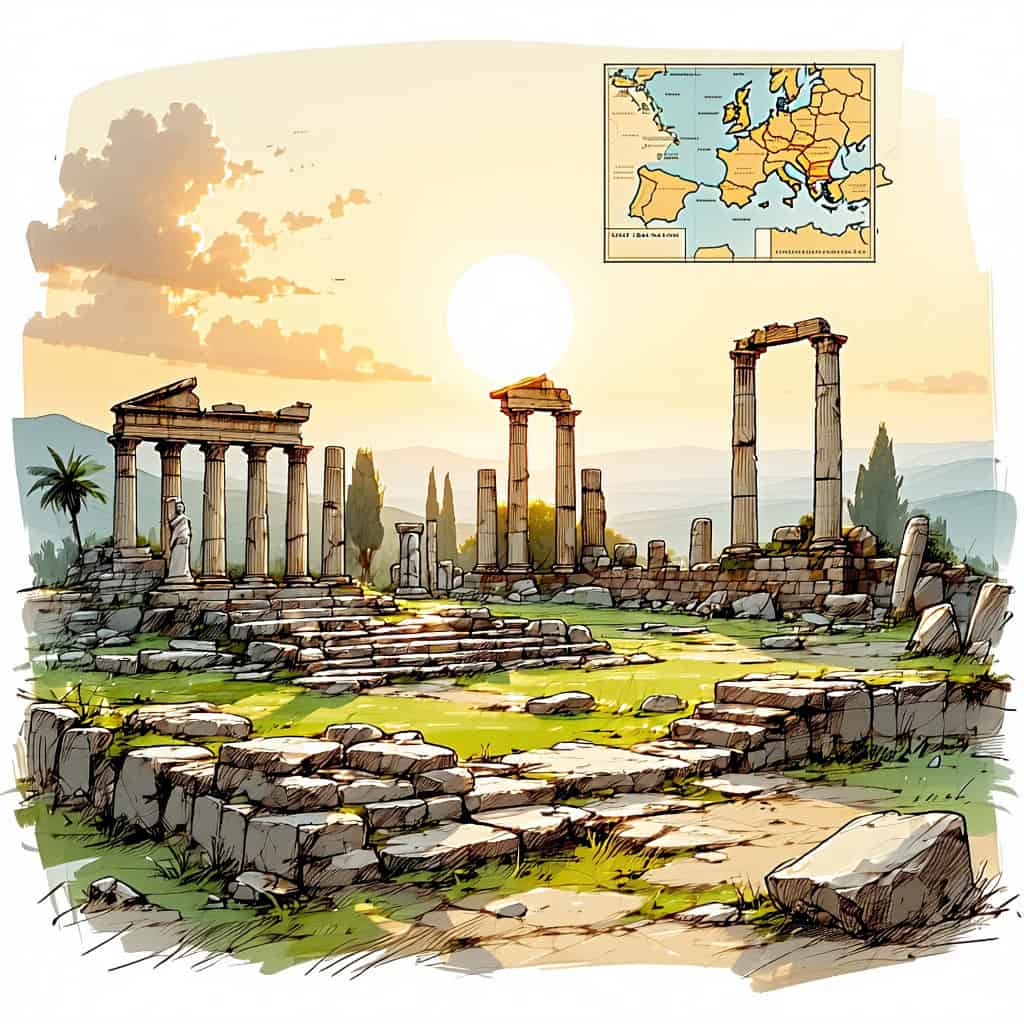
Introduction
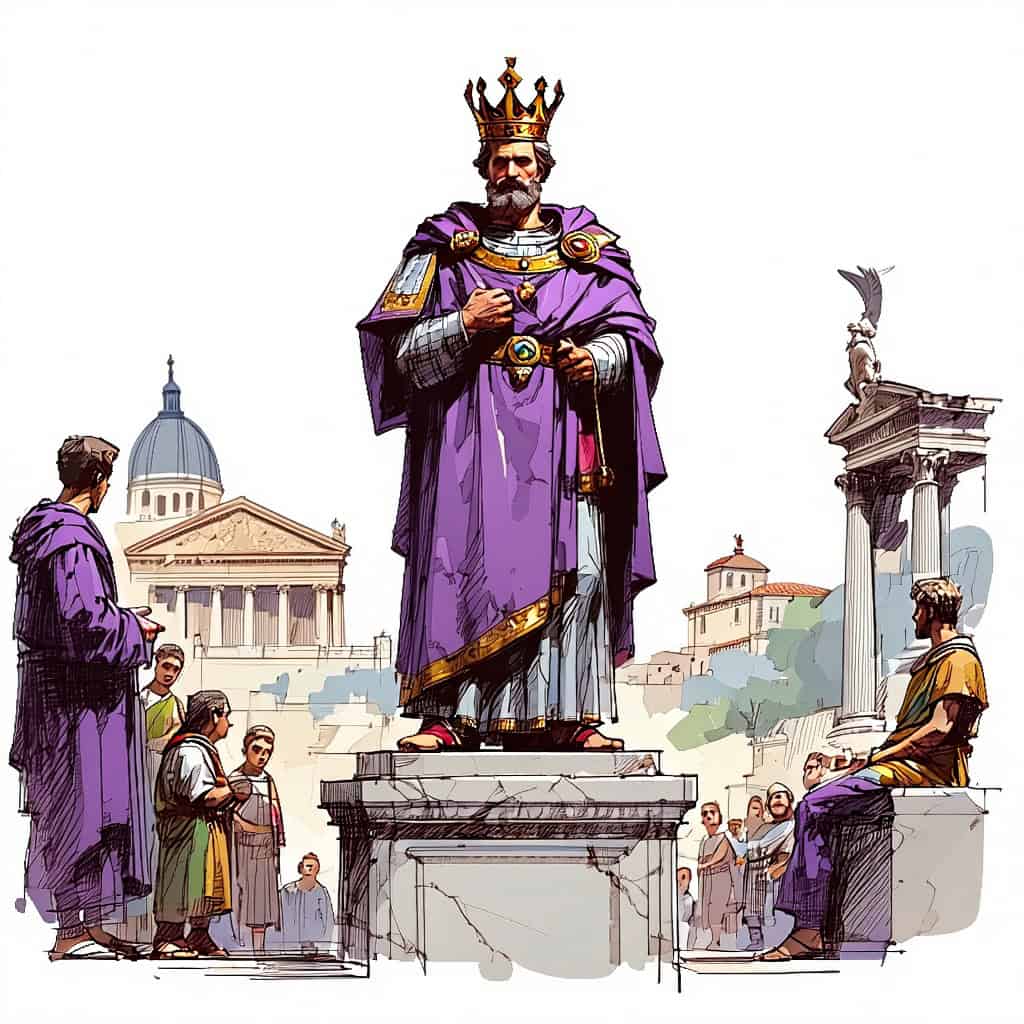
King Tarquin the Proud
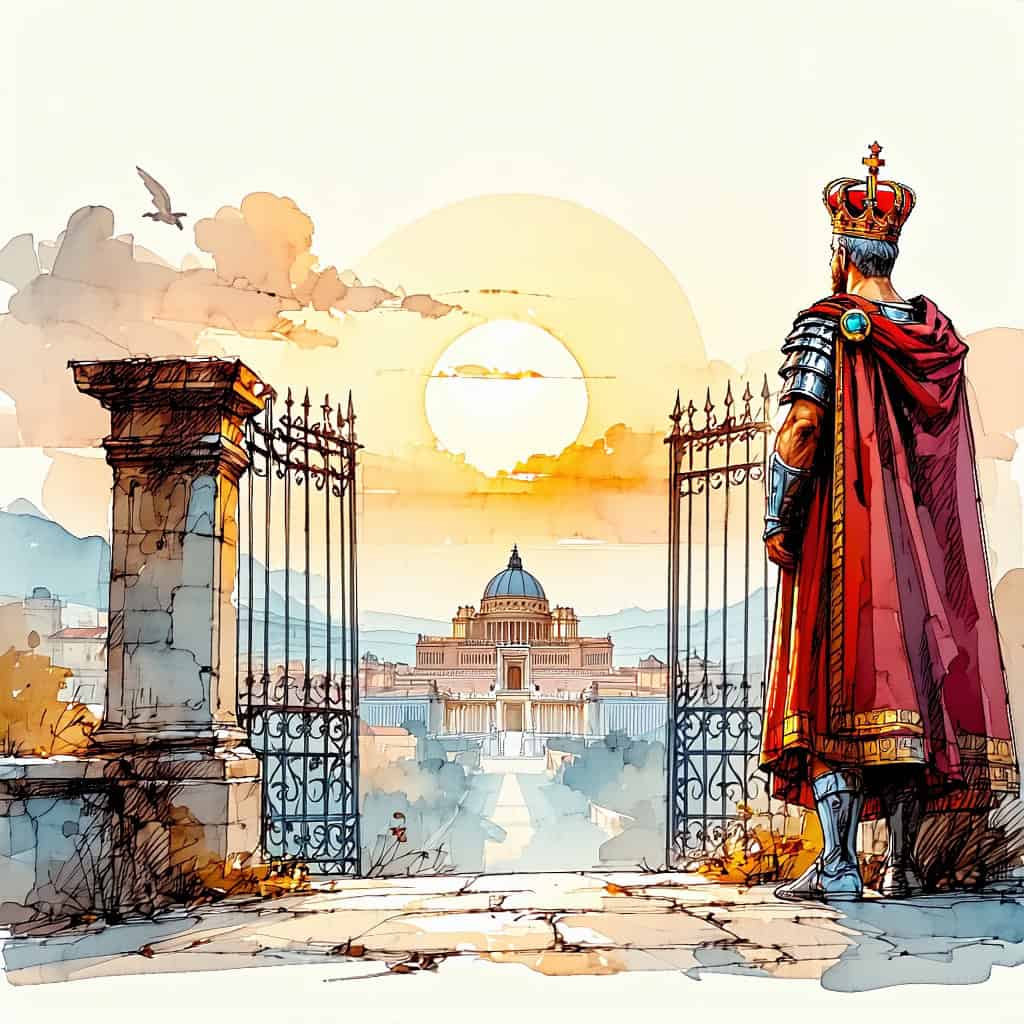
Lucius Tarquinius Superbus
Titus Livius

The Founding of The Latin League

The Treaty of Cassius

The Latin War

The Dissolution of The Latin League

The Legacy of The Latin League

The Influence of The Latin League

The Revival of The Latin League

The Decline of The Latin Language

The Resurgence of Latin Studies

The Enduring Legacy of The Latin League
Lesson Details & Resources
In a Nutshell
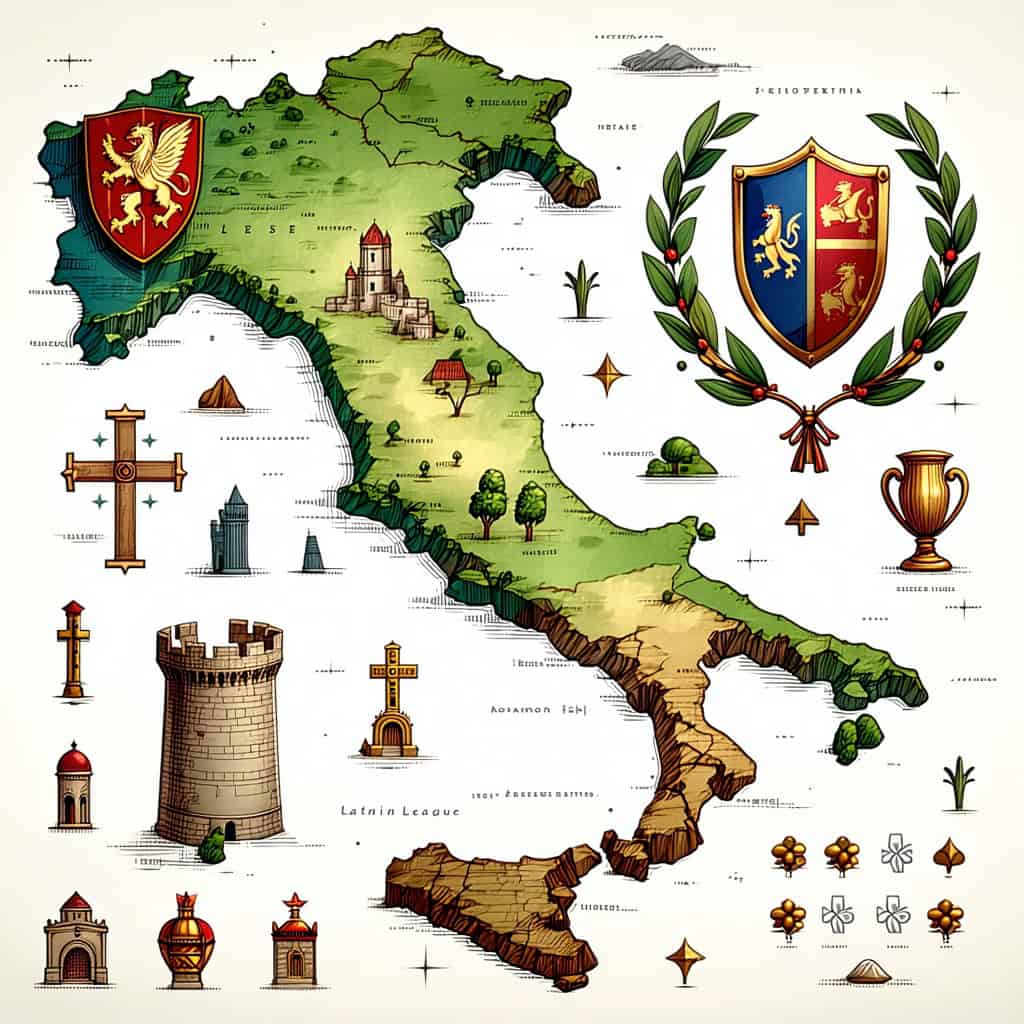
- What: An ancient alliance of Latin city-states in central Italy.
- When: 7th to 4th centuries BC.
- Who: City-states like Rome, Alba Longa, and Lavinium.
- Outcome: The Latin League played a significant role in the early history of Rome and helped establish its dominance in the region.
Famous Figures in the The Latin League
-
Romulus
Romulus was the legendary founder and first king of Rome.
-
Tarquinius Priscus
Tarquinius Priscus was the fifth king of Rome and played a role in the formation of the Latin League.
-
Servius Tullius
Servius Tullius was the sixth king of Rome and expanded the Latin League.
-
Tarquinius Superbus
Tarquinius Superbus was the seventh and final king of Rome and had conflicts with the Latin League.
-
Coriolanus
Coriolanus was a Roman general who played a role in the Roman-Latin wars.
-
Camillus
Camillus was a Roman general who led victorious campaigns against the Latin League.
-
Manlius Capitolinus
Manlius Capitolinus was a Roman general who defended Rome against the Latin League.
-
Decius Mus
Decius Mus was a Roman consul who sacrificed himself for victory against the Latin League.
-
Fabius Maximus
Fabius Maximus was a Roman general who had conflicts with the Latin League during the Samnite Wars.
-
Scipio Africanus
Scipio Africanus was a Roman general who defeated the Latin League in the Battle of Mount Vesuvius.
Timeline of The Latin League
Formation of The Latin League
Battle of Lake Regillus
Latin War
Treaty of Cassius
Dissolution of the Latin League
Roman conquest of Latium
Latin colonies established by Rome
Latin colonies revolt against Rome
Latin War against Rome
Rome's victory in the Latin War
Roman citizenship granted to Latin allies
Latin colonies become Roman municipia
Latin colonies participate in Roman wars
Social War
Latin colonies demand Roman citizenship
Roman victory in the Social War
Latin colonies granted Roman citizenship
Latin colonies integrated into Roman society
Latin language declines and Vulgar Latin emerges
End of the Latin League
Vocabulary List
- Latin League
- The Latin League was a confederation of about 30 Latin-speaking city-states in the ancient region of Latium, Italy.
- Confederation
- The Latin League was a confederation, meaning it was an alliance or union of independent states for a common purpose.
- City-states
- The Latin League consisted of various city-states, such as Rome, Alba Longa, Tusculum, and Aricia, each with its own government and administration.
- Latium
- Latium was the region in central Italy where the Latin League was located. It included present-day Rome and its surrounding areas.
- Alliance
- The Latin League formed an alliance to protect its members from external threats and to maintain peace within the region.
- Union
- The Latin League aimed to create a union of Latin-speaking communities that would promote cooperation, trade, and mutual defense.
- Ancient
- The Latin League existed in ancient times, specifically during the 5th and 4th centuries BCE.
- Region
- The Latin League was a regional organization, focusing on the area of Latium and its neighboring territories.
- Independent
- Each city-state within the Latin League was independent, having its own government and sovereignty.
- Purpose
- The purpose of the Latin League was to protect the interests of its member cities, promote trade, and collectively defend against external threats.
Key Facts
This is the information used in the fact matching game
- The Latin League was a confederation of about 30 ancient villages and tribes in the region of Latium in central Italy.
- The Latin League was established around the 6th century BC as a means of mutual defense against neighboring tribes and city-states.
- The Latin League had its own council and assembly where decisions were made collectively by its member states.
- The Latin League played a significant role in the early history of Rome, as it was a key ally in Rome's wars of expansion.
- The Latin League was dissolved in 338 BC when Rome defeated its members in the Latin War.
- After the Latin War, many of the former members of the Latin League were incorporated into the Roman Republic as full citizens.
- The Latin League served as a model for the Roman Confederation, which was a system of alliances between Rome and other Italian city-states.
- The Latin League was initially formed to defend against the neighboring Etruscans, but it later became a bulwark against the expansionist ambitions of Rome itself.
- The Latin League had its own currency and minted coins, which were used for trade and commerce among its member states.
- The Latin League was governed by a system of annual magistrates who were elected by its member states.
- The Latin League had a common language and religious practices that helped to unify its members and foster a sense of shared identity.
- The Latin League was involved in several conflicts with Rome, including the Latin War and the Latin Revolt, as its members sought to assert their independence from Roman domination.
- The Latin League was instrumental in spreading Roman culture and civilization throughout central Italy, as its members adopted Roman customs and institutions.
- The Latin League played a key role in the establishment of the Roman Republic, as its members helped to overthrow the Roman monarchy and establish a more democratic form of government.
- The Latin League was eventually absorbed into the Roman Empire as Rome's power and influence expanded throughout Italy and the Mediterranean.
- The Latin League provided a forum for its member states to negotiate disputes and resolve conflicts peacefully, which helped to maintain stability and order in the region.
- The Latin League's system of alliances and treaties with other city-states in Italy laid the groundwork for Rome's eventual domination of the Italian peninsula.
- The Latin League's legacy lived on in the Roman Empire, as many of its customs and traditions were preserved and integrated into Roman society.
- The Latin League's influence extended beyond Italy to other parts of the Mediterranean, as its members established colonies and trading outposts in Sicily, North Africa, and Greece.
- The Latin League's military prowess and strategic alliances with other city-states made it a formidable force in ancient Italy, capable of challenging even the mightiest empires of the time.
Analysis & Significance
Immediate Consequences
The formation of the Latin League in ancient Italy led to increased cooperation and alliances among the Latin city-states. This allowed them to better defend themselves against external threats and expand their territories through joint military campaigns.
Long-Term Impact
The Latin League played a significant role in shaping the political landscape of early Rome. The league’s dissolution paved the way for Rome’s rise to power as it absorbed many of the former member states. This consolidation of power laid the foundation for the Roman Republic and ultimately the Roman Empire.
Cultural Significance Today
The legacy of the Latin League can still be seen in modern-day Italy. Many of the ancient Latin city-states have evolved into major cities, each with its own unique cultural identity. The league’s emphasis on cooperation and unity also resonates in contemporary European efforts towards integration and collaboration.
The Latin League Games


Take Your Learning Offline
Want a convenient, print-ready study guide for this lesson? Become a Memory Wizards Pro member to unlock the downloadable " Memory Scrolls" for this topic and our entire library!
- ✓ Complete Vocabulary Lists
- ✓ Key Facts & Timelines
- ✓ Beautifully Formatted for Print & Mobile