
Tiberius: A Roman Emperor’s Biography
The enigmatic Roman emperor who ruled with an iron fist and cunning mind.
How Do You Learn Best?
Learn by Reading
Immerse yourself in the 10-minute visual lesson for a comprehensive understanding of the topic.
Learn by Reviewing
Jump directly to the key facts, timeline, and vocabulary lists to build a solid foundation of details.
Learn by Doing
Challenge yourself! Jump straight into the interactive games to learn by trial, error, and discovery.
Tiberius: A Roman Emperor’s Biography in 10 Minutes
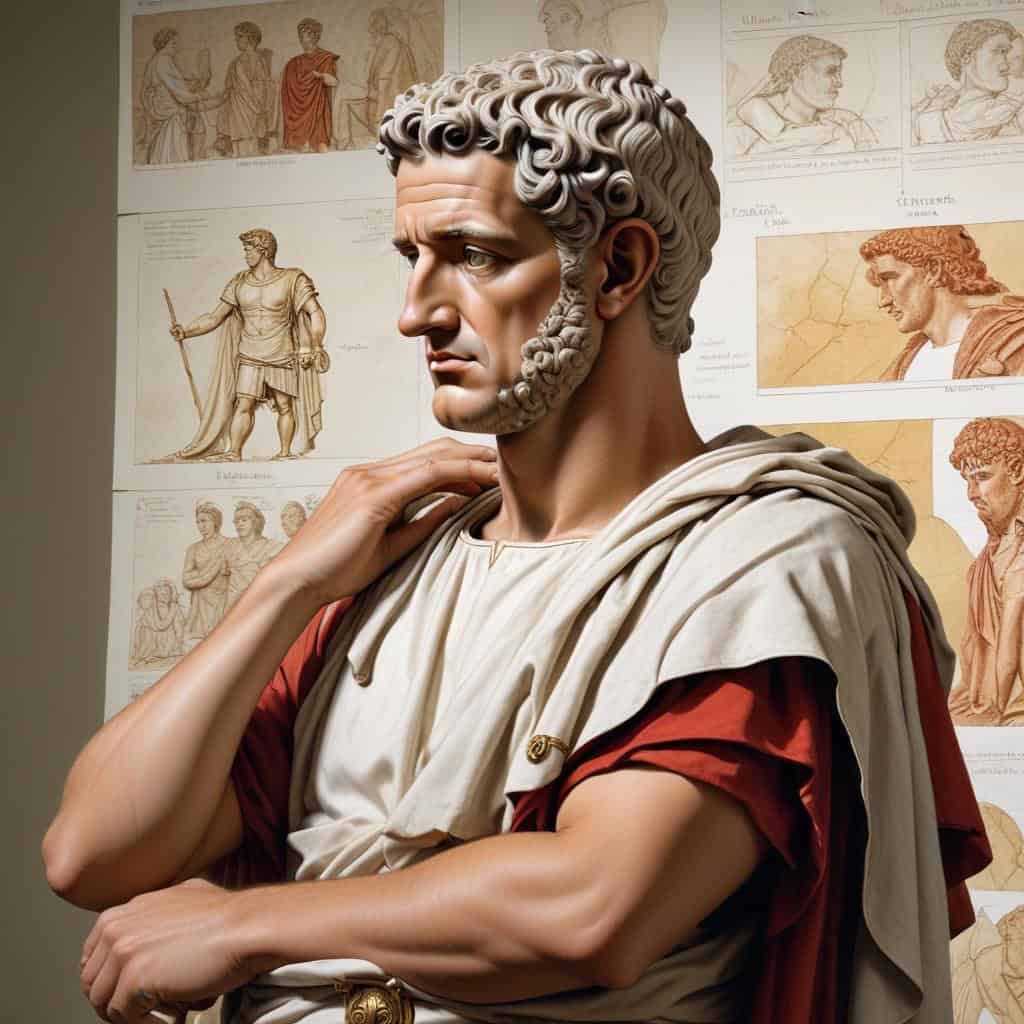
Introduction
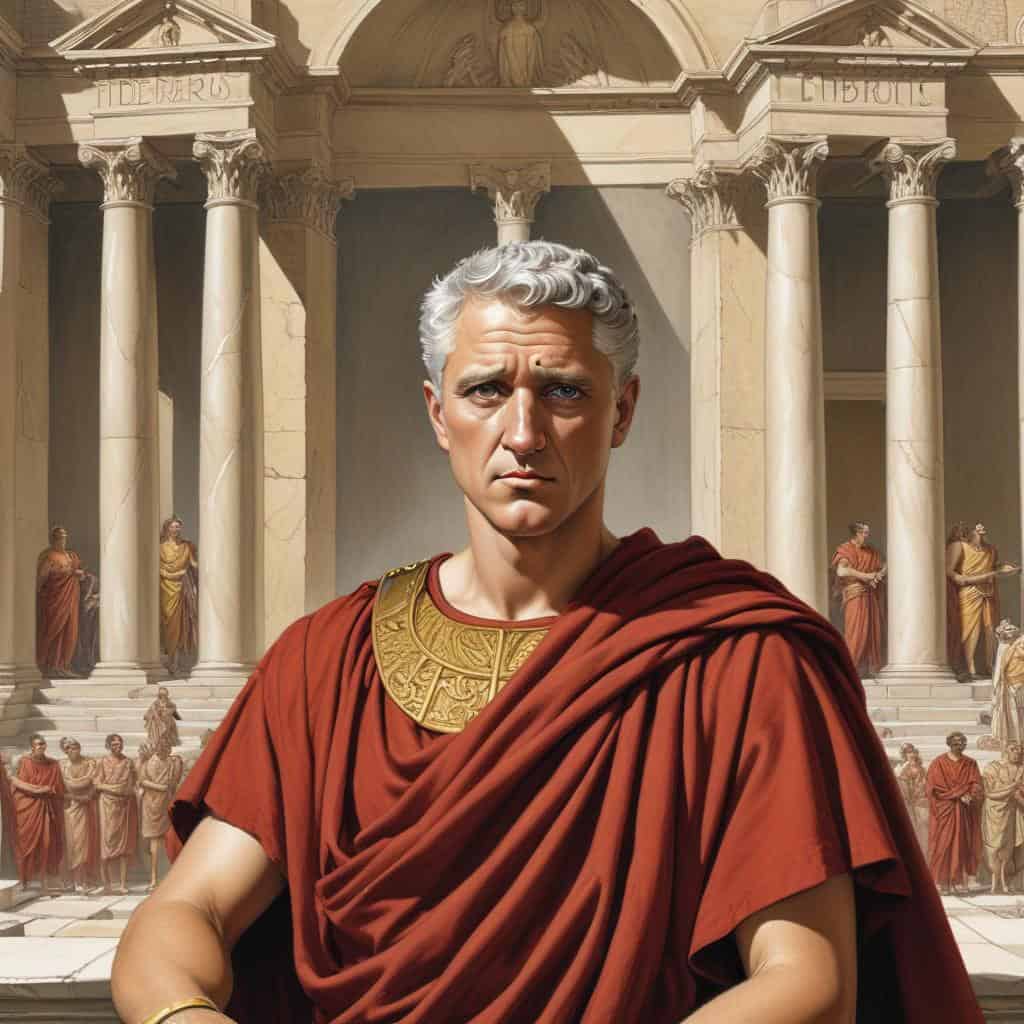
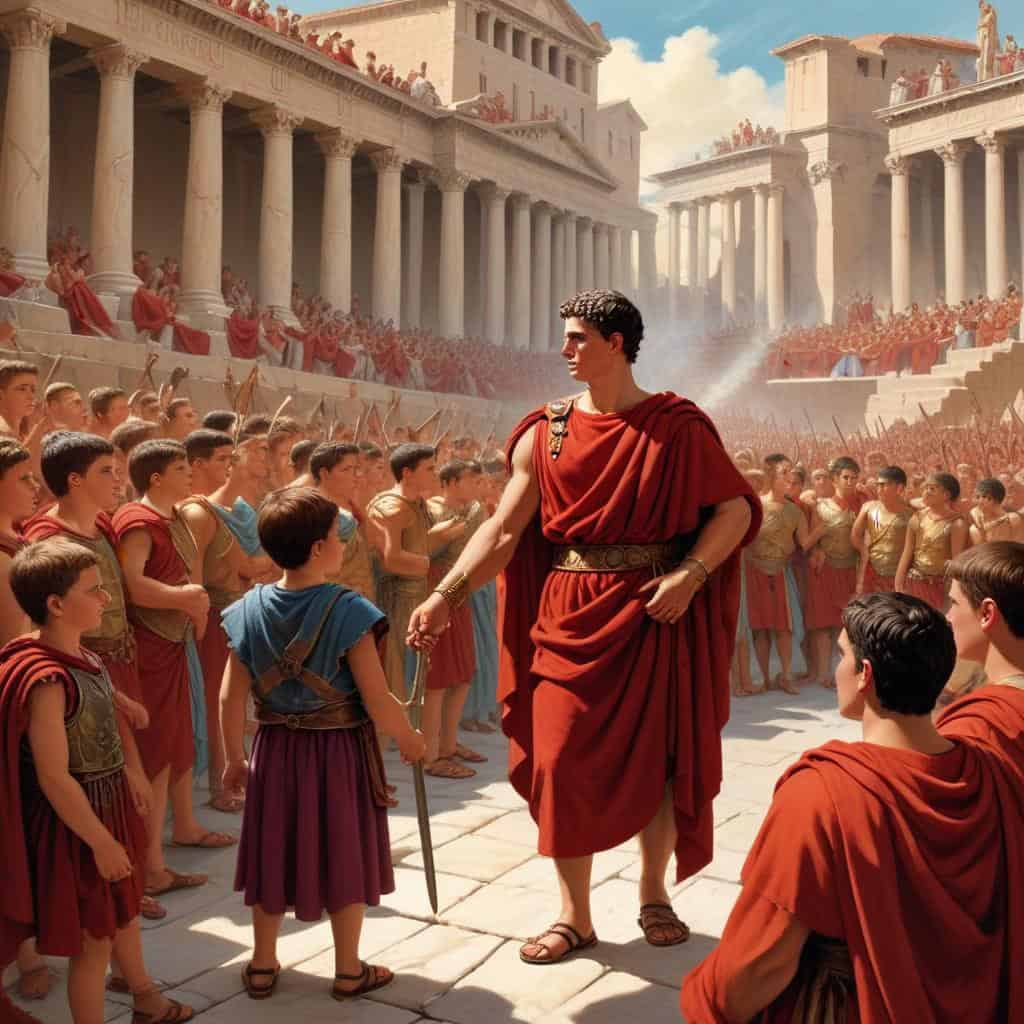
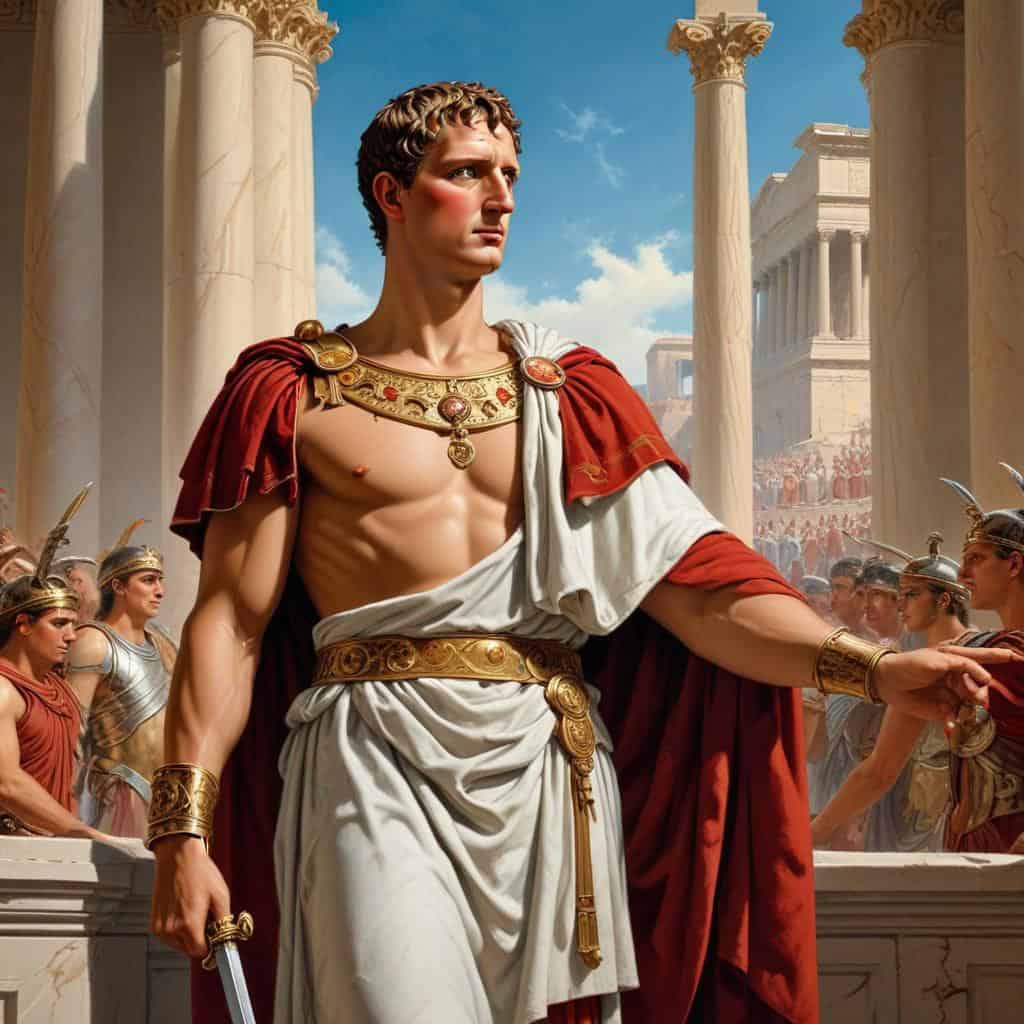
Augustus
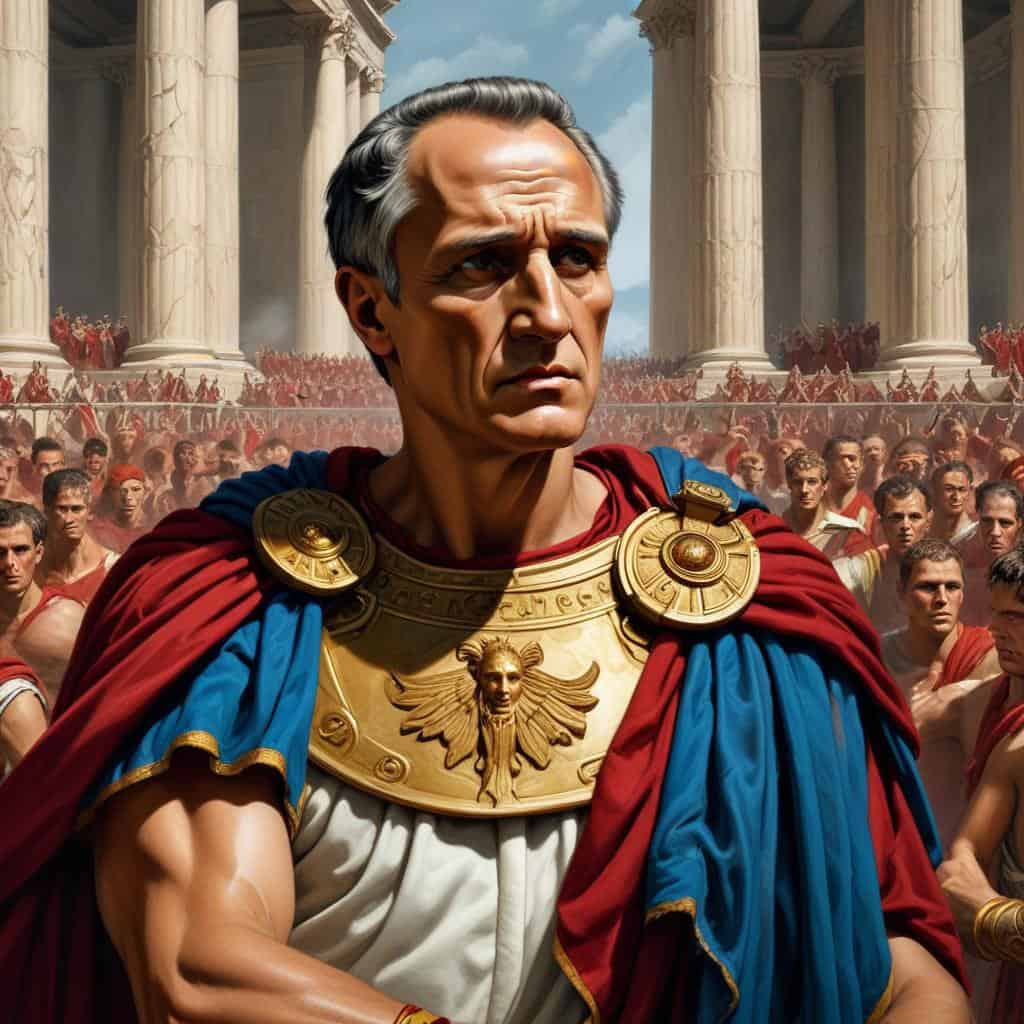
Julius Caesar
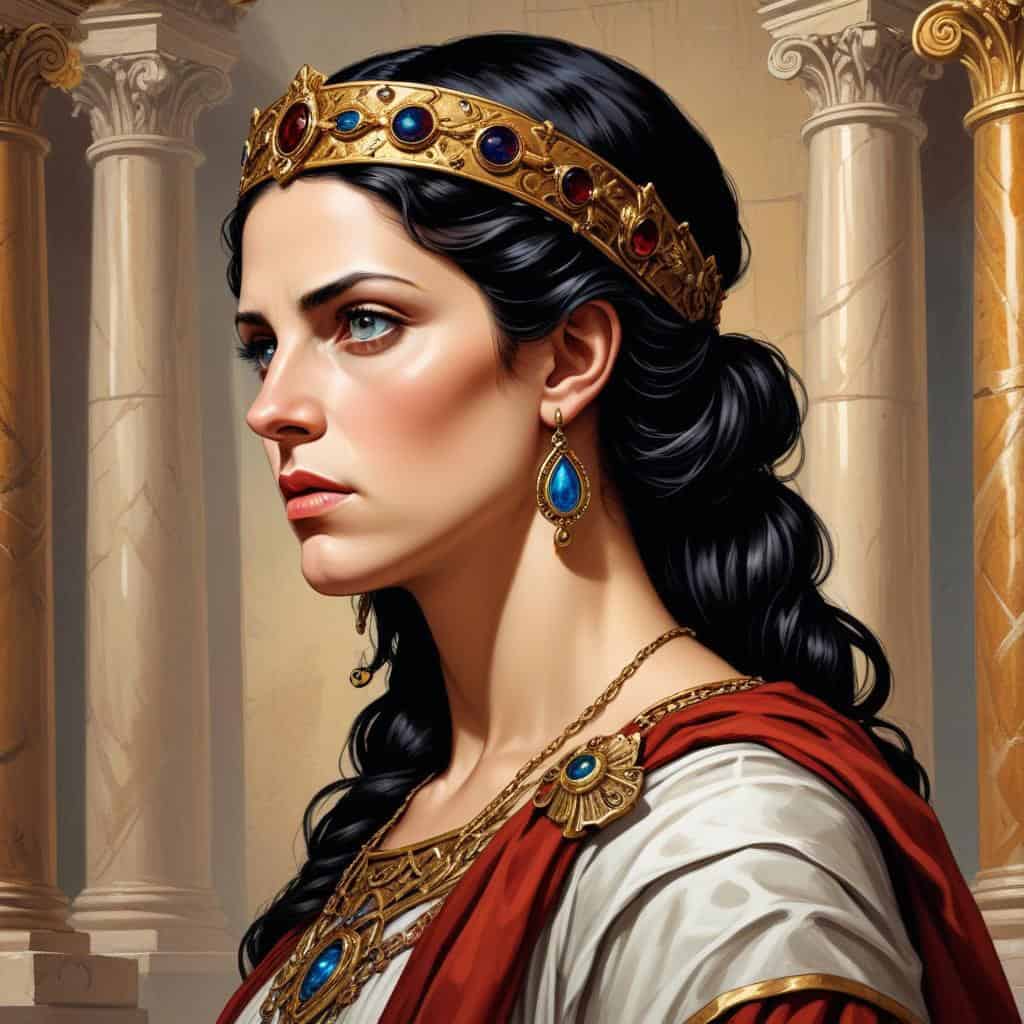
Livia Drusilla
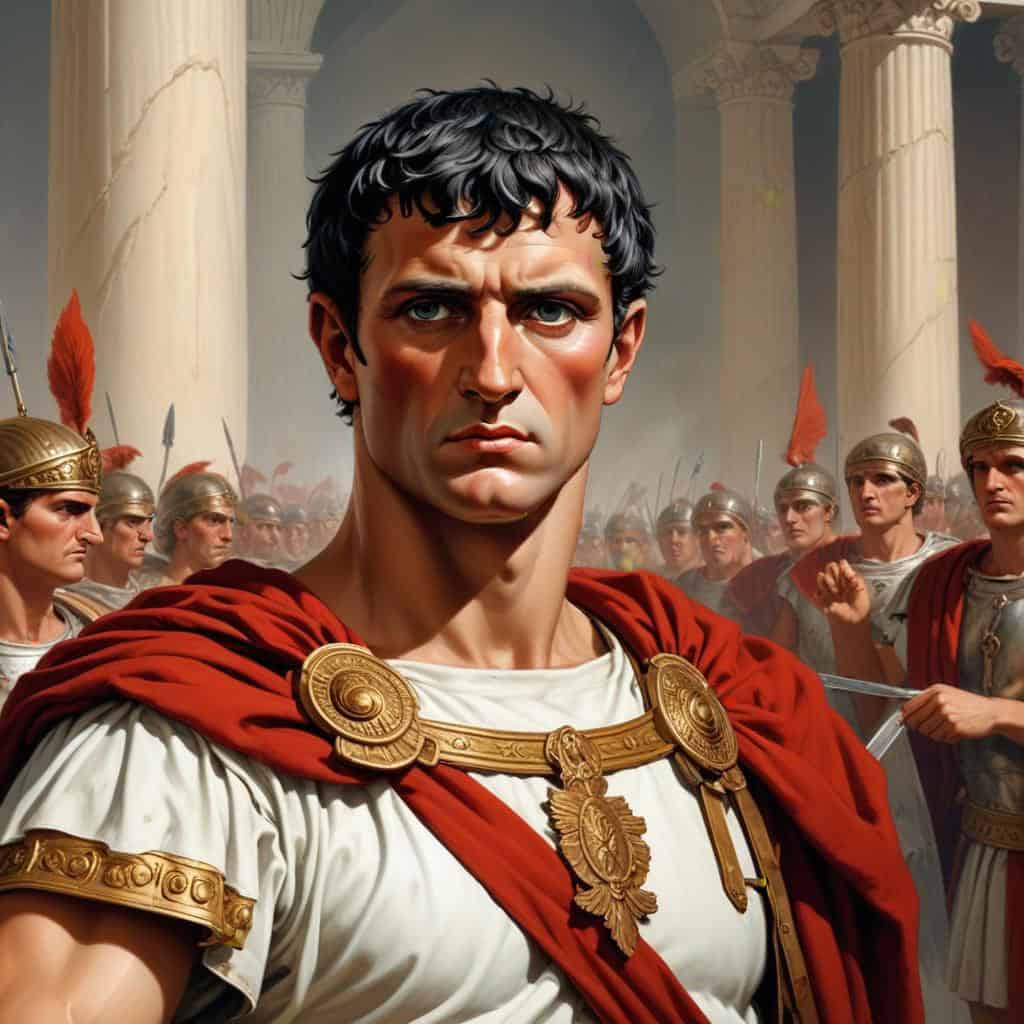
Germanicus
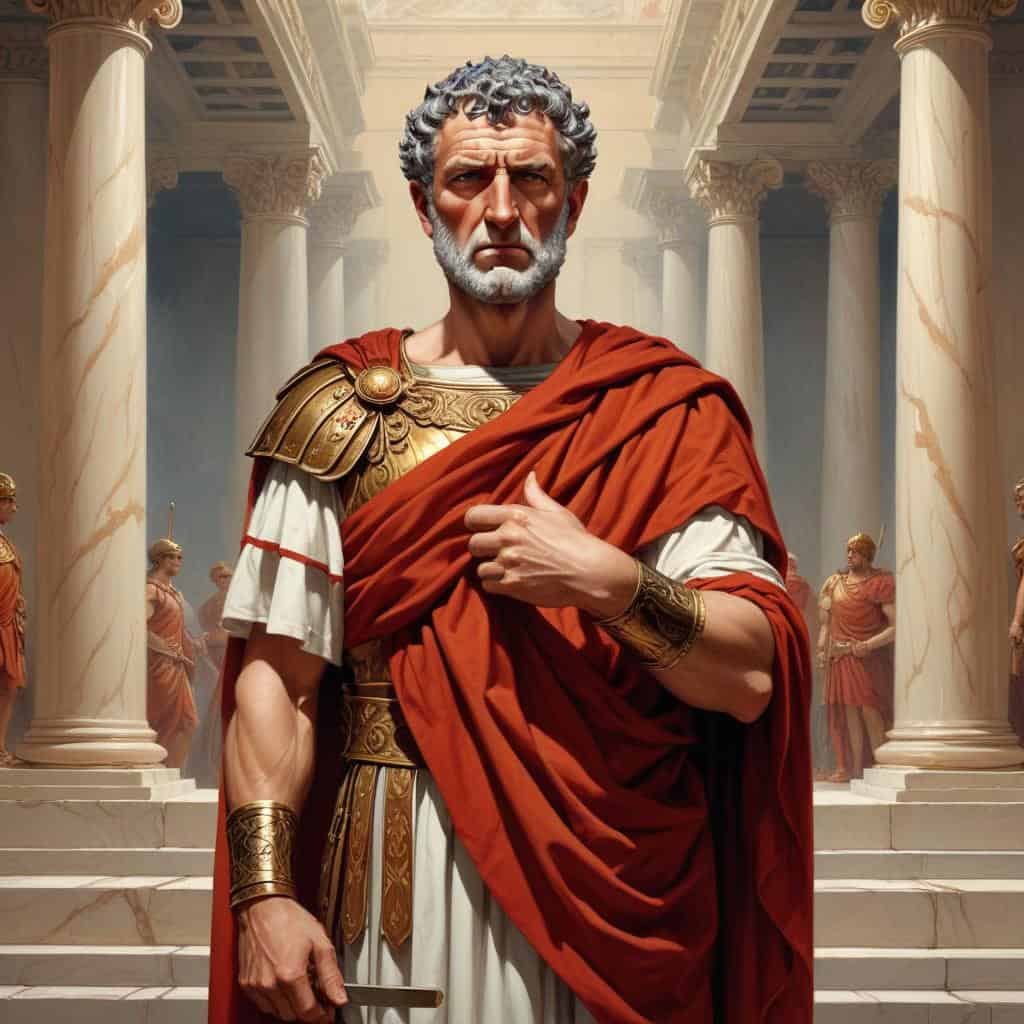
Sejanus
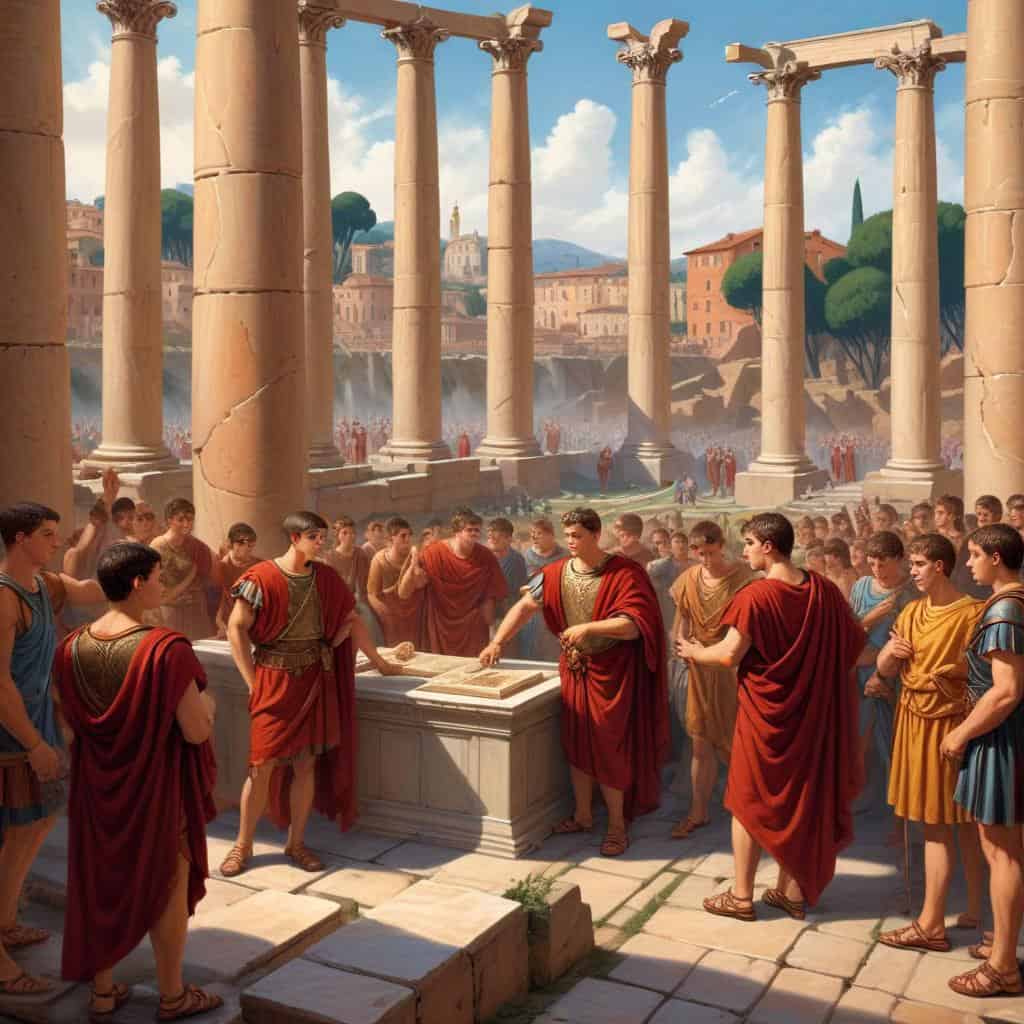
The Early Life of Tiberius
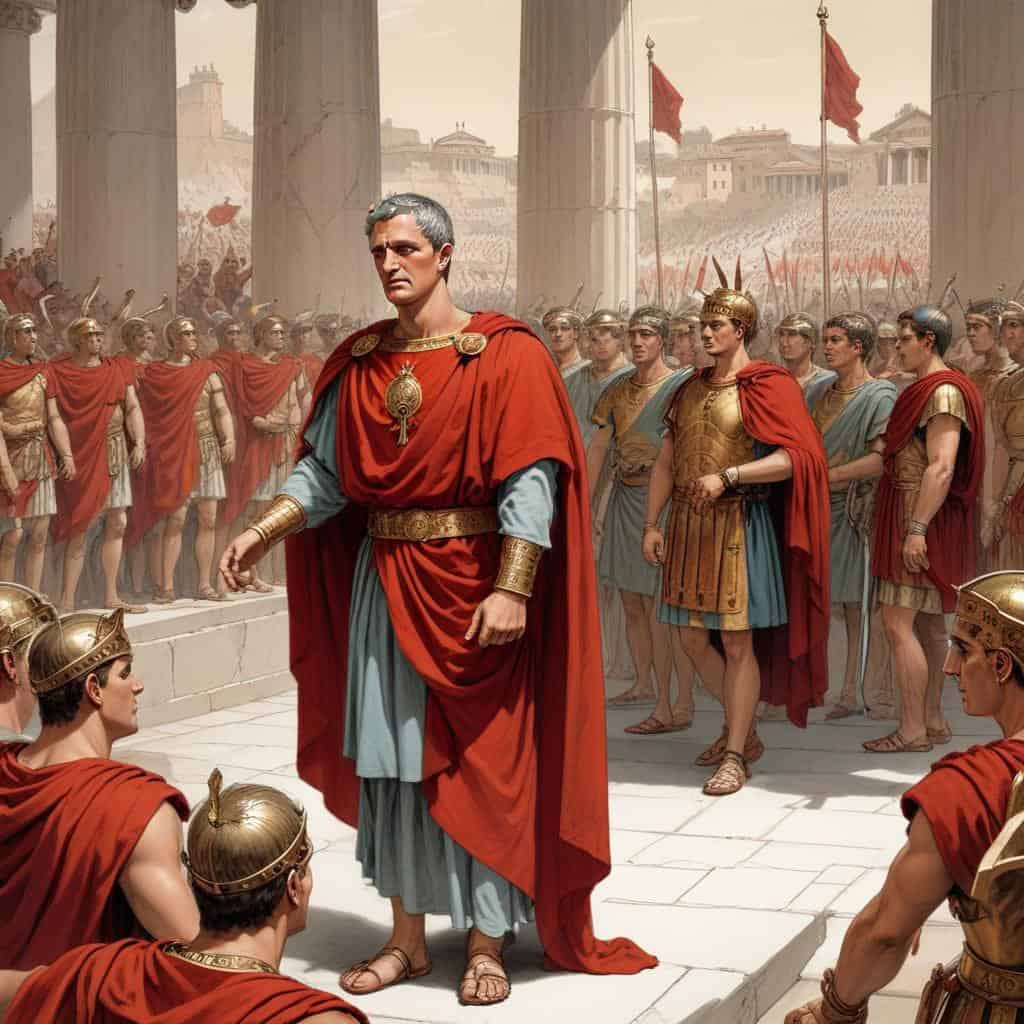
Rise to Power
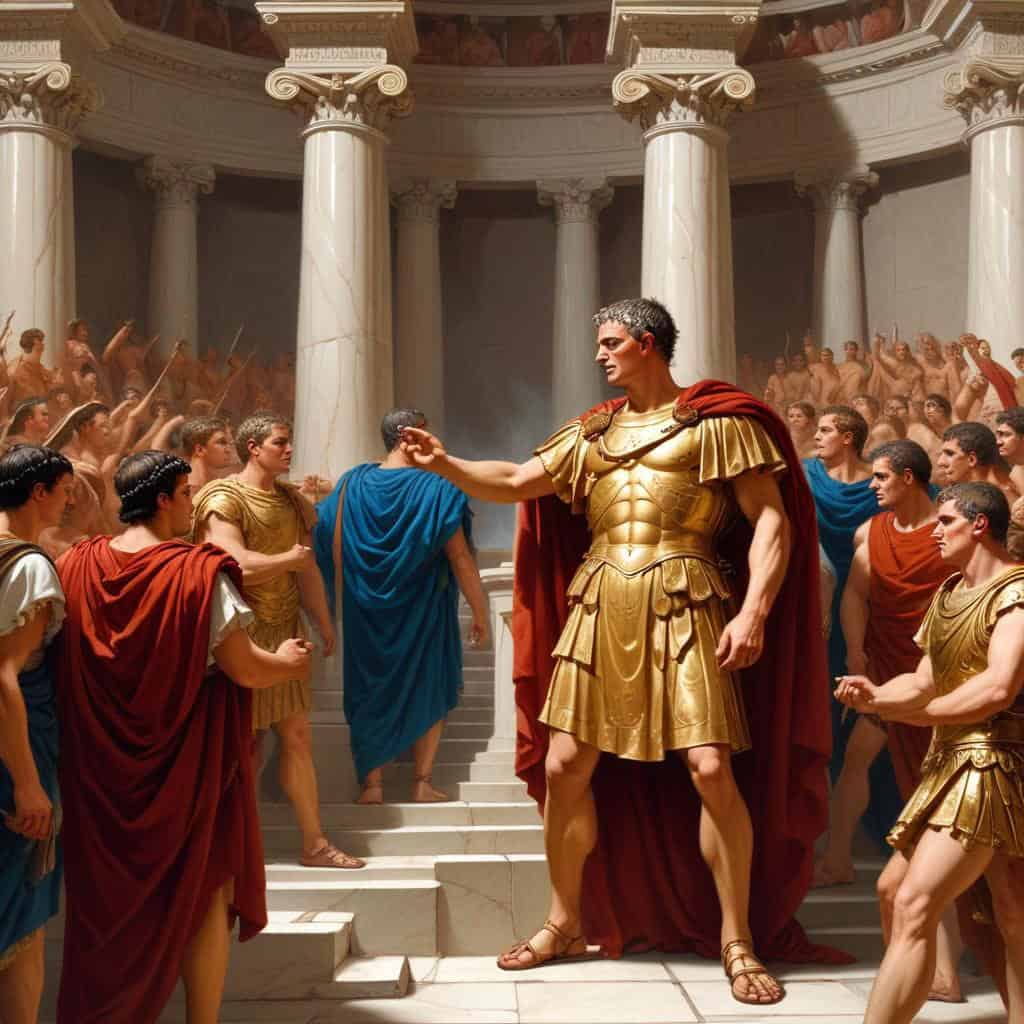
Challenges and Controversies

Retreat to Capri

Legacy of Tiberius

Historical Assessment
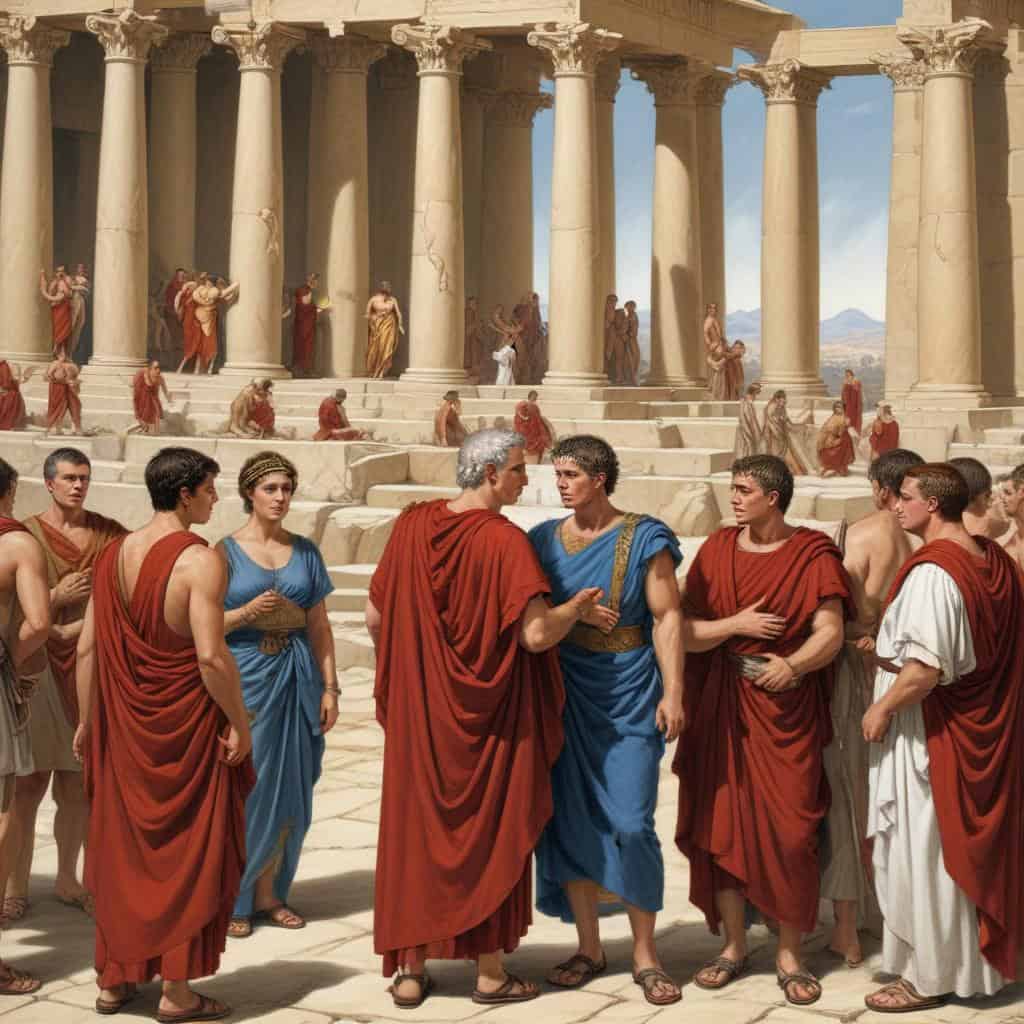
Personal Life and Relationships
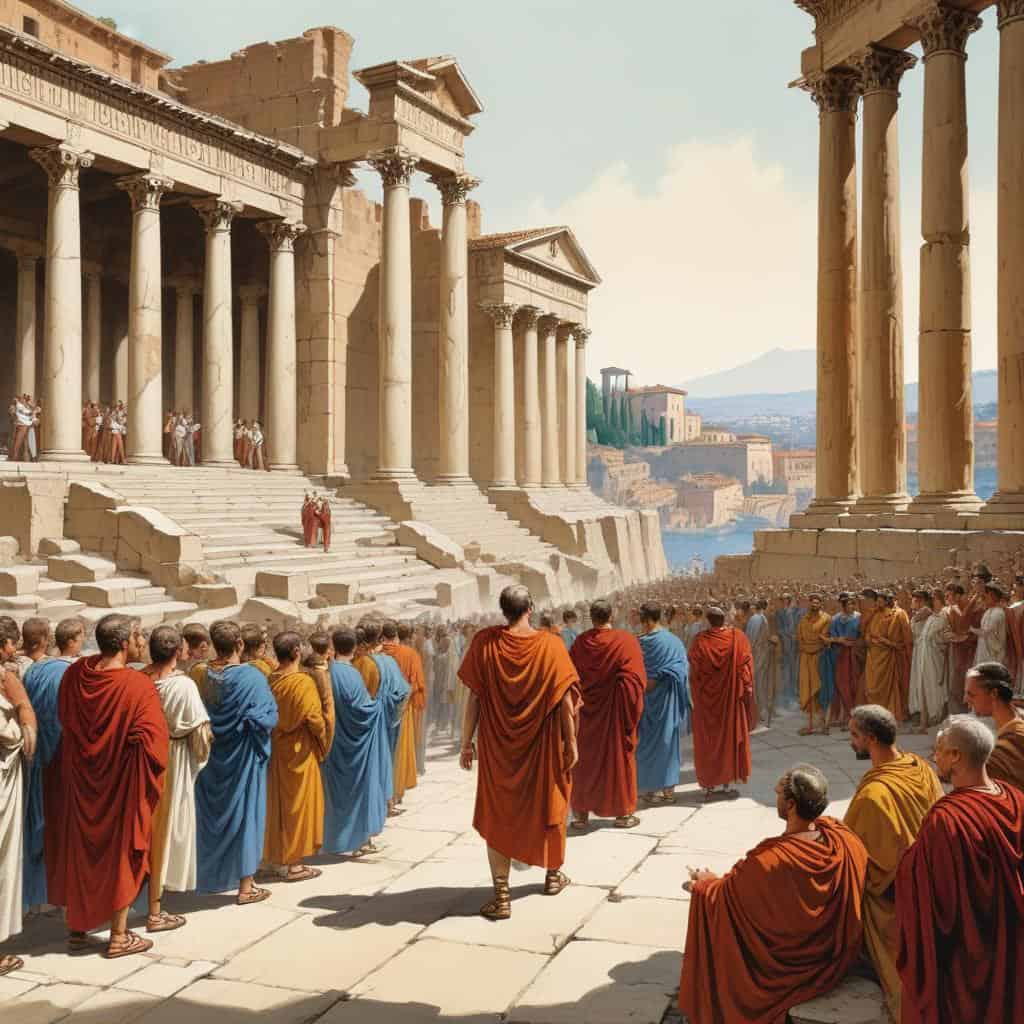
Art and Culture
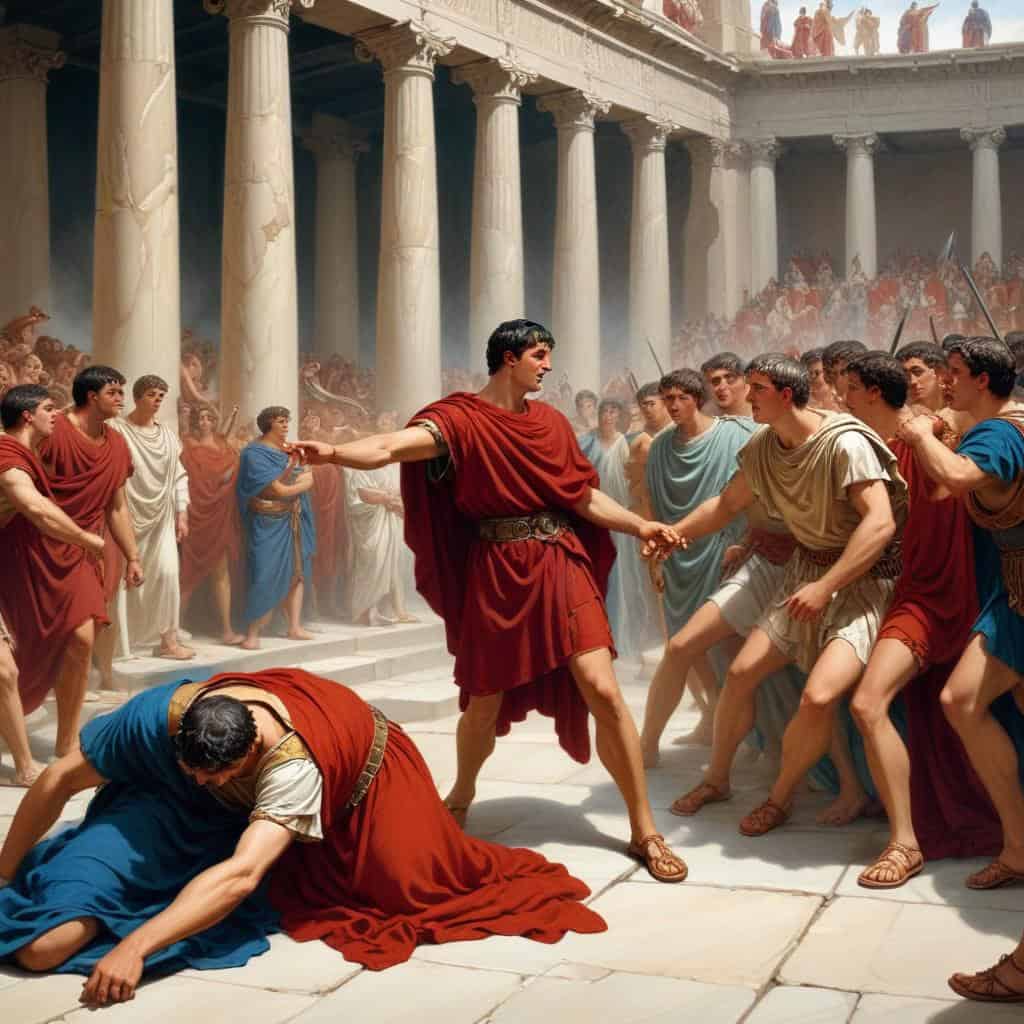
Death and Succession
Lesson Details & Resources
In a Nutshell
- Who: Roman Emperor
- When: Lived: 42 BC – 37 AD
- Known For: Reigning as Emperor of Rome from 14 AD to 37 AD
- Legacy: His controversial rule and complex personality have been the subject of much historical debate and scrutiny
Timeline of Tiberius: A Roman Emperor’s Biography
Tiberius is born in Rome
Tiberius serves as a quaestor in Hispania
Tiberius marries Vipsania Agrippina
Tiberius is elected as a praetor
Tiberius divorces Vipsania Agrippina
Tiberius marries Julia the Elder
Tiberius is appointed as governor of Gaul
Tiberius's son, Drusus Julius Caesar, is born
Tiberius's stepson, Nero Claudius Drusus, dies
Tiberius is recalled from Gaul by Augustus
Tiberius is adopted by Augustus
Tiberius serves as a consul with Augustus
Tiberius's son, Drusus Julius Caesar, dies
Augustus dies and Tiberius becomes the new emperor
Tiberius suppresses a revolt in Pannonia
Tiberius establishes a system of informers and spies
Tiberius retreats to Capri and governs from there
Tiberius's trusted advisor, Sejanus, is executed for treason
Tiberius dies in Misenum
Tiberius is succeeded by his grand-nephew Caligula as emperor
Vocabulary List
- Tiberius
- Tiberius was the second Roman emperor, who ruled from 14 AD to 37 AD.
- Augustus
- Tiberius was the stepson of Augustus, the first Roman emperor.
- Rome
- Tiberius held significant power and influence in ancient Rome during his reign.
- Senate
- Tiberius often clashed with the Roman Senate over various political matters.
- Julius Caesar
- Tiberius was the adopted son of Augustus and the biological son of Livia Drusilla and Tiberius Claudius Nero, making him the grandson of the famous Julius Caesar.
- Germanicus
- Tiberius' nephew, Germanicus, was a popular military leader and was considered as a potential successor to Tiberius.
- Capri
- Tiberius spent the latter part of his reign on the island of Capri, where he built luxurious villas.
- Praetorian Guard
- Tiberius heavily relied on the Praetorian Guard, an elite group of soldiers tasked with protecting the emperor.
- Gaius Caligula
- Tiberius was succeeded by his grand-nephew, Gaius Caligula, who became the third Roman emperor.
- Livia
- Tiberius' mother, Livia, was a powerful and influential figure in Roman politics.
Key Facts
This is the information used in the fact matching game
- Tiberius was the second Roman emperor, ruling from AD 14 to AD 37.
- Tiberius was born Tiberius Claudius Nero on November 16, 42 BC.
- Tiberius was the stepson of the first Roman emperor, Augustus.
- Tiberius was a skilled military commander and led several successful campaigns during his reign.
- Tiberius was known for his reclusive and paranoid behavior in his later years.
- Tiberius was the father of the Roman general Drusus and the infamous emperor Caligula.
- Tiberius established a system of informers and spies to root out potential threats to his rule.
- Tiberius retired to the island of Capri during the later years of his reign.
- Tiberius was known for his cruelty and brutality towards his political enemies.
- Tiberius was responsible for the construction of several impressive buildings and structures in Rome.
- Tiberius was succeeded by his grandnephew Caligula, who became emperor after his death.
- Tiberius was an avid patron of the arts and supported many Roman poets and writers during his reign.
- Tiberius was known for his frugality and reluctance to spend money on lavish displays of wealth.
- Tiberius was a skilled politician and diplomat, able to navigate the complex power dynamics of the Roman Empire.
- Tiberius was rumored to have engaged in various acts of debauchery and immorality during his time on Capri.
- Tiberius was often compared unfavorably to his predecessor Augustus, who was seen as a more effective and benevolent ruler.
- Tiberius was born in Rome and spent much of his early life in the city, where he received a thorough education in rhetoric and philosophy.
- Tiberius was married three times during his life, with his third wife Julia becoming infamous for her scandalous behavior.
- Tiberius was a stern and aloof figure, often keeping his distance from his subjects and courtiers.
- Tiberius died on March 16, AD 37, and was succeeded by his grandnephew Caligula.
Analysis & Significance
Major Accomplishments
Tiberius was a renowned Memory Wizard known for his groundbreaking research on mnemonic techniques. He developed innovative memory strategies that revolutionized the field and earned him international recognition.
Impact on the World
His work had a profound impact on education, with his methods being widely adopted to improve memory retention and learning. Tiberius’s contributions to the art of memory continue to influence cognitive science and memory studies to this day.
Enduring Legacy
Today, Tiberius is remembered as a pioneer in the field of memory enhancement. His legacy lives on through the continued use of his mnemonic techniques and his lasting influence on how we understand and improve memory function. He remains a significant historical figure in the realm of memory research and education.
Tiberius: A Roman Emperor’s Biography Games


Take Your Learning Offline
Want a convenient, print-ready study guide for this lesson? Become a Memory Wizards Pro member to unlock the downloadable " Memory Scrolls" for this topic and our entire library!
- ✓ Complete Vocabulary Lists
- ✓ Key Facts & Timelines
- ✓ Beautifully Formatted for Print & Mobile