
Theodosius I: The Emperor’s Biography
Theodosius I: The Roman Emperor who united the Eastern and Western Empires.
How Do You Learn Best?
Learn by Reading
Immerse yourself in the 10-minute visual lesson for a comprehensive understanding of the topic.
Learn by Reviewing
Jump directly to the key facts, timeline, and vocabulary lists to build a solid foundation of details.
Learn by Doing
Challenge yourself! Jump straight into the interactive games to learn by trial, error, and discovery.
Theodosius I: The Emperor’s Biography in 10 Minutes
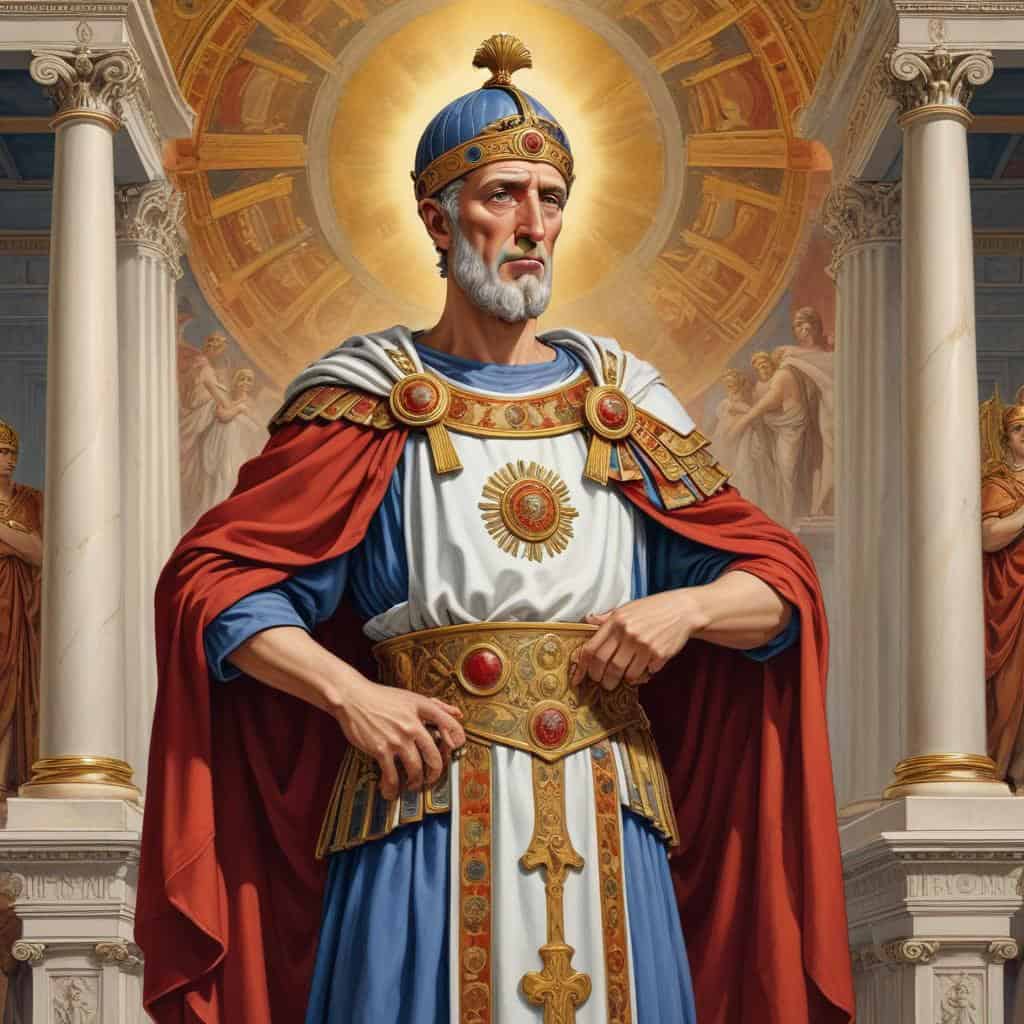
Introduction
Arcadius
Honorius
Galla Placidia
Valentinian II
Pulcheria
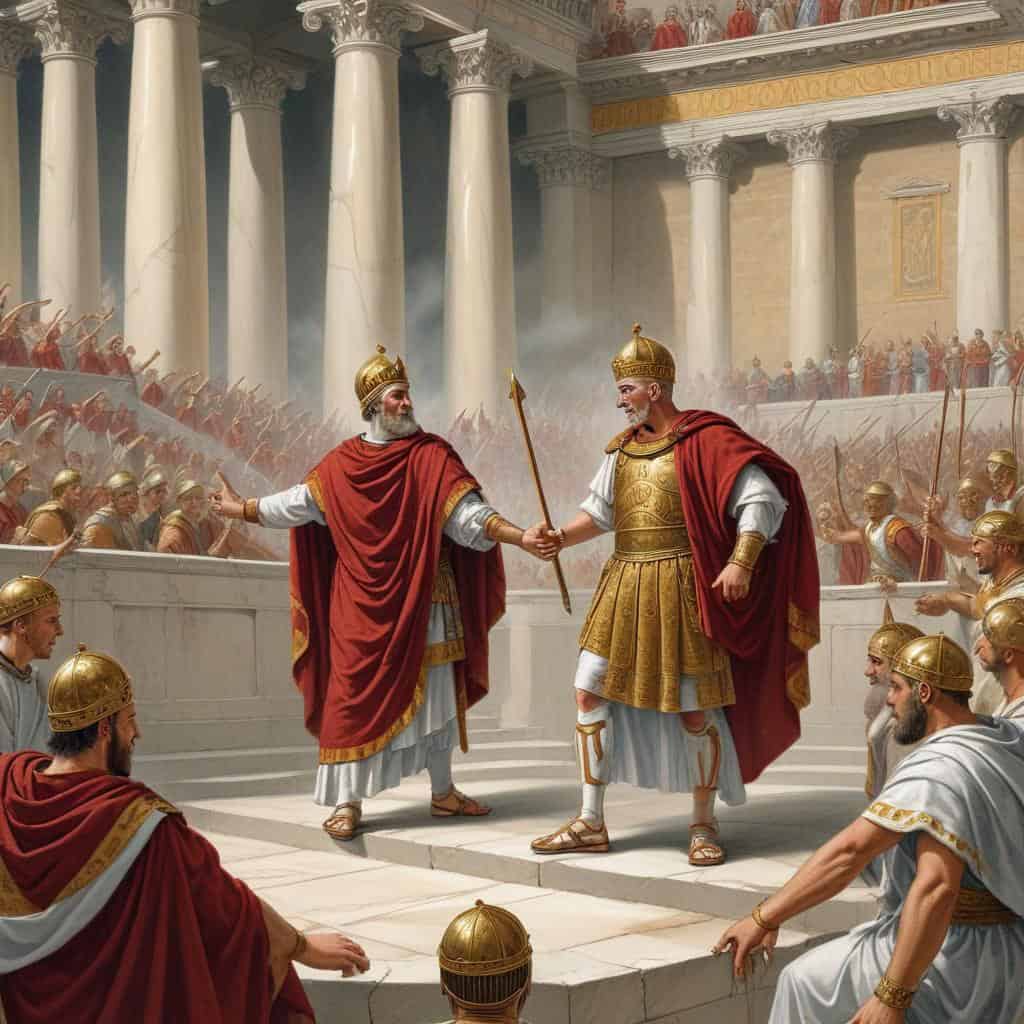
Theodosius I Becomes Emperor
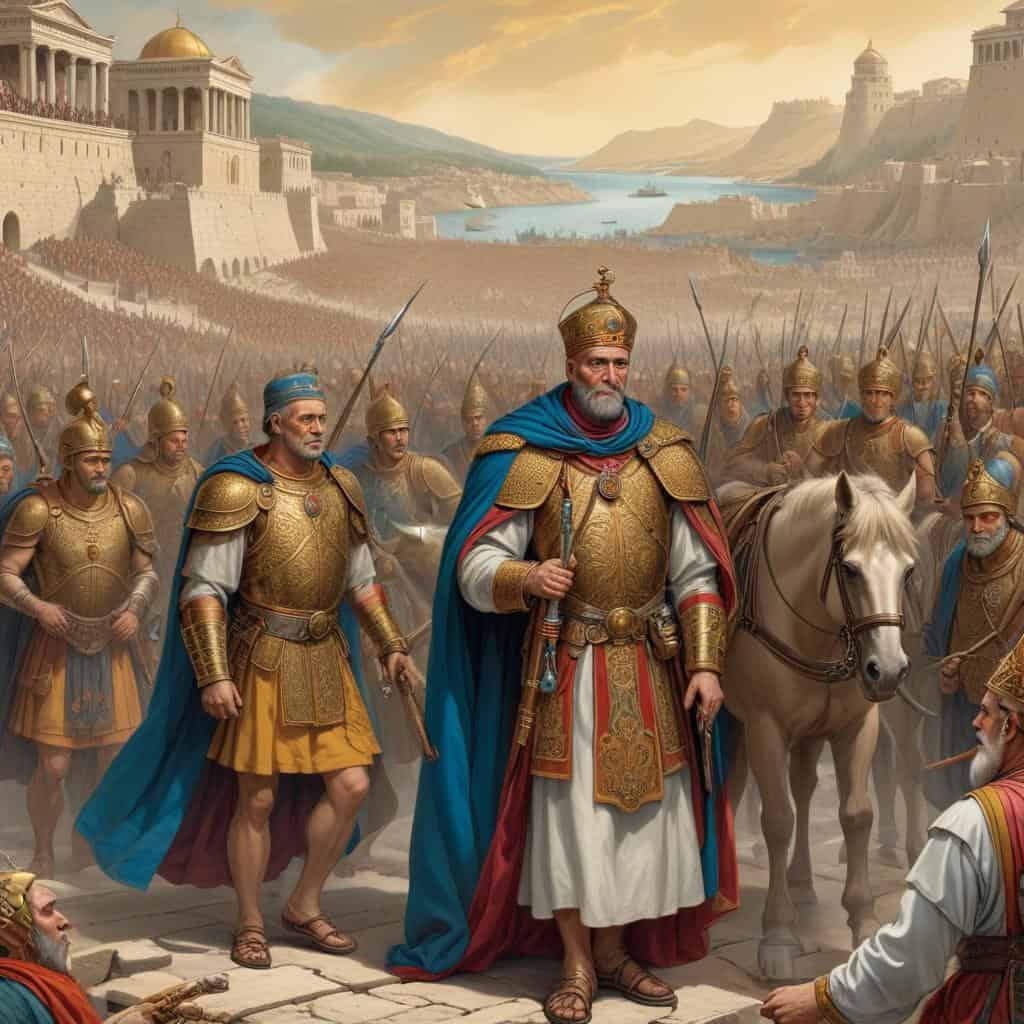
Restores Order in the Empire
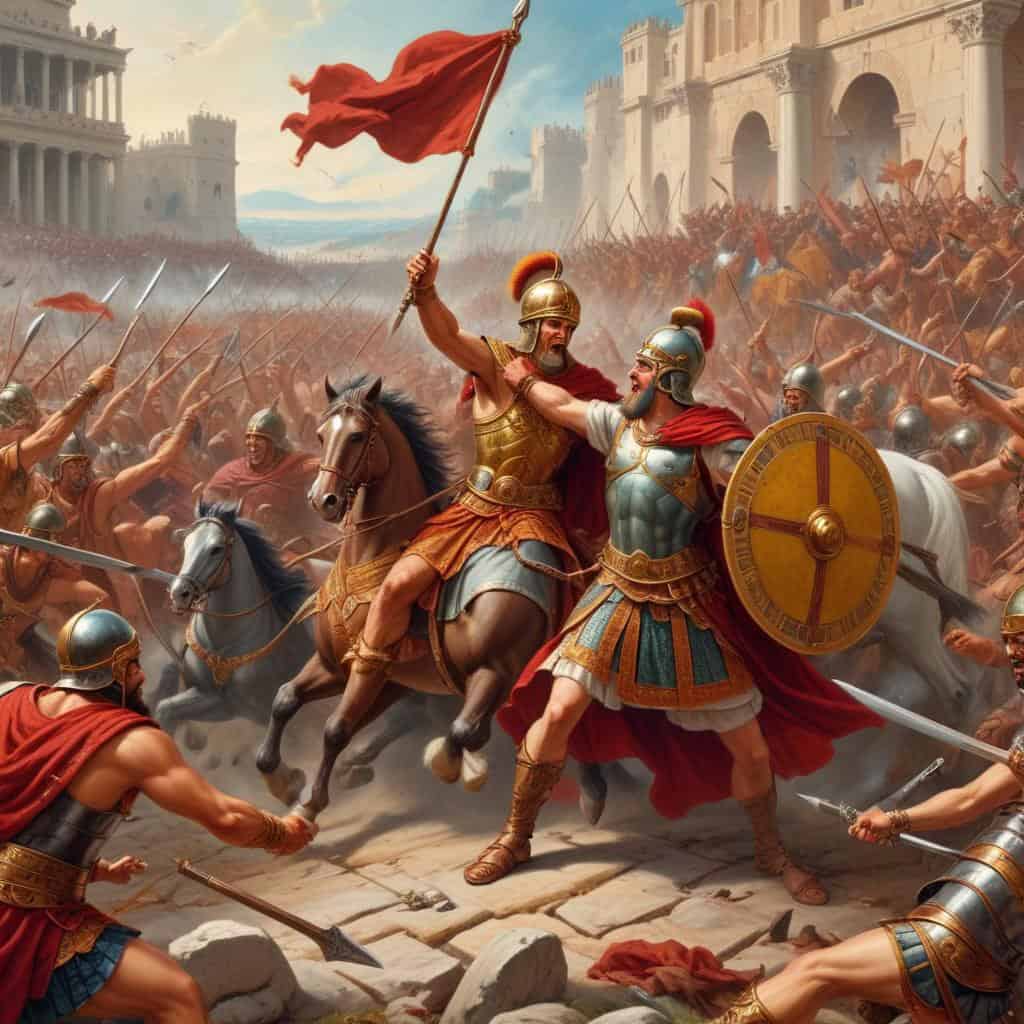
Defeats the Barbarian Invaders
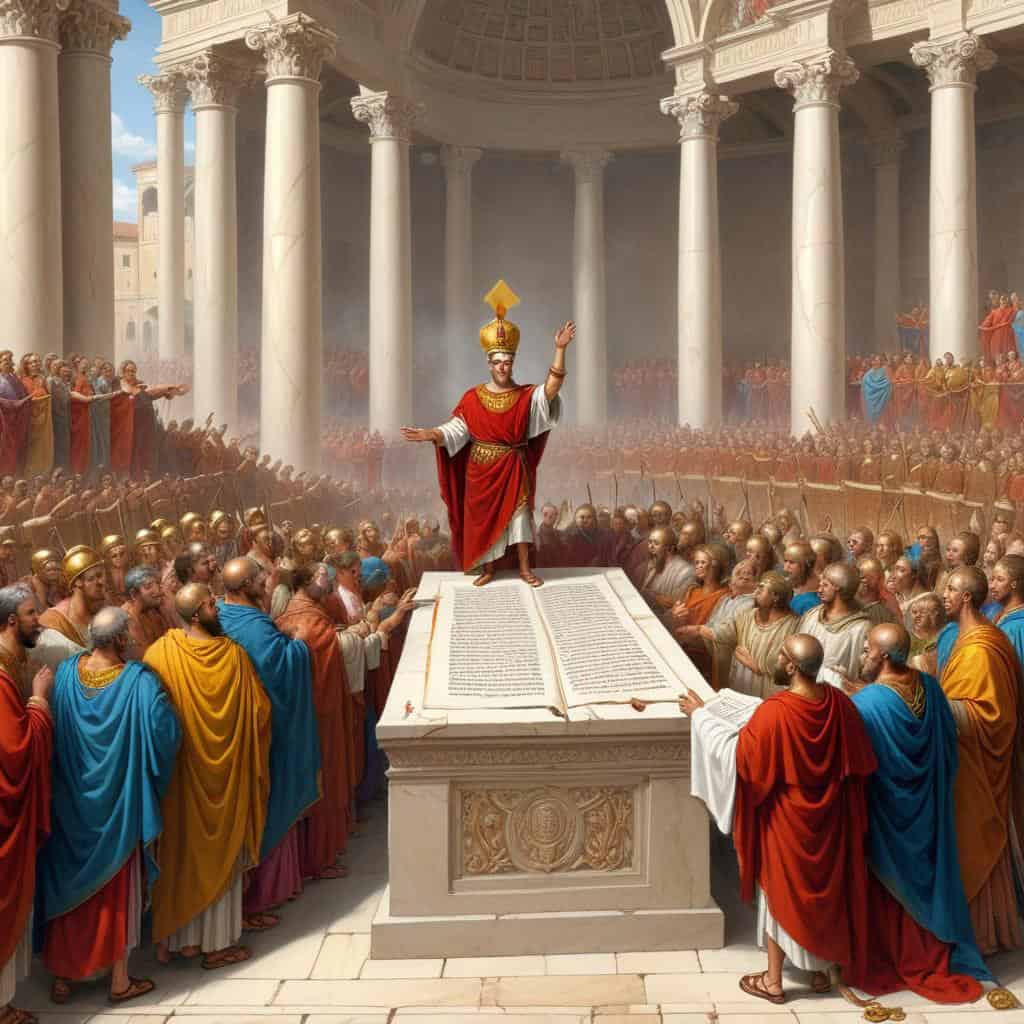
Declares Christianity the Official Religion
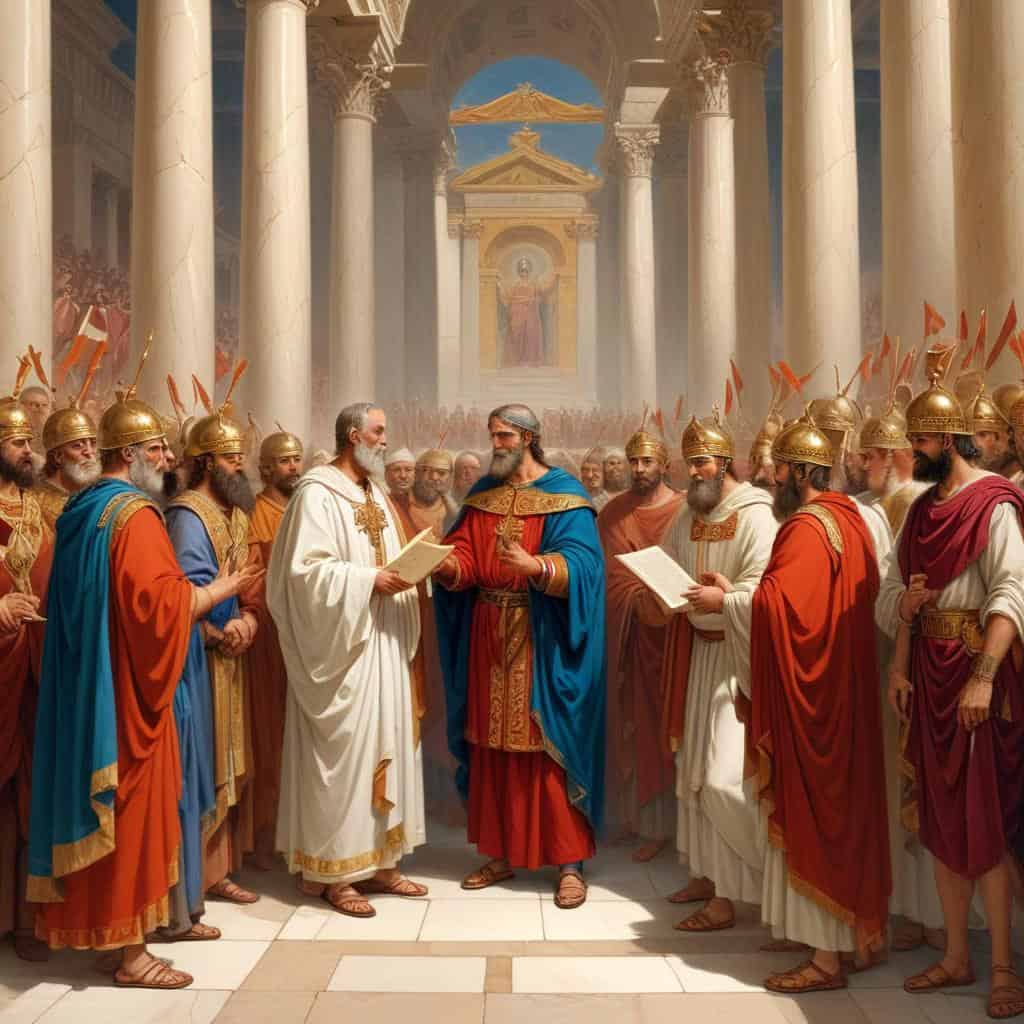
Edict of Thessalonica
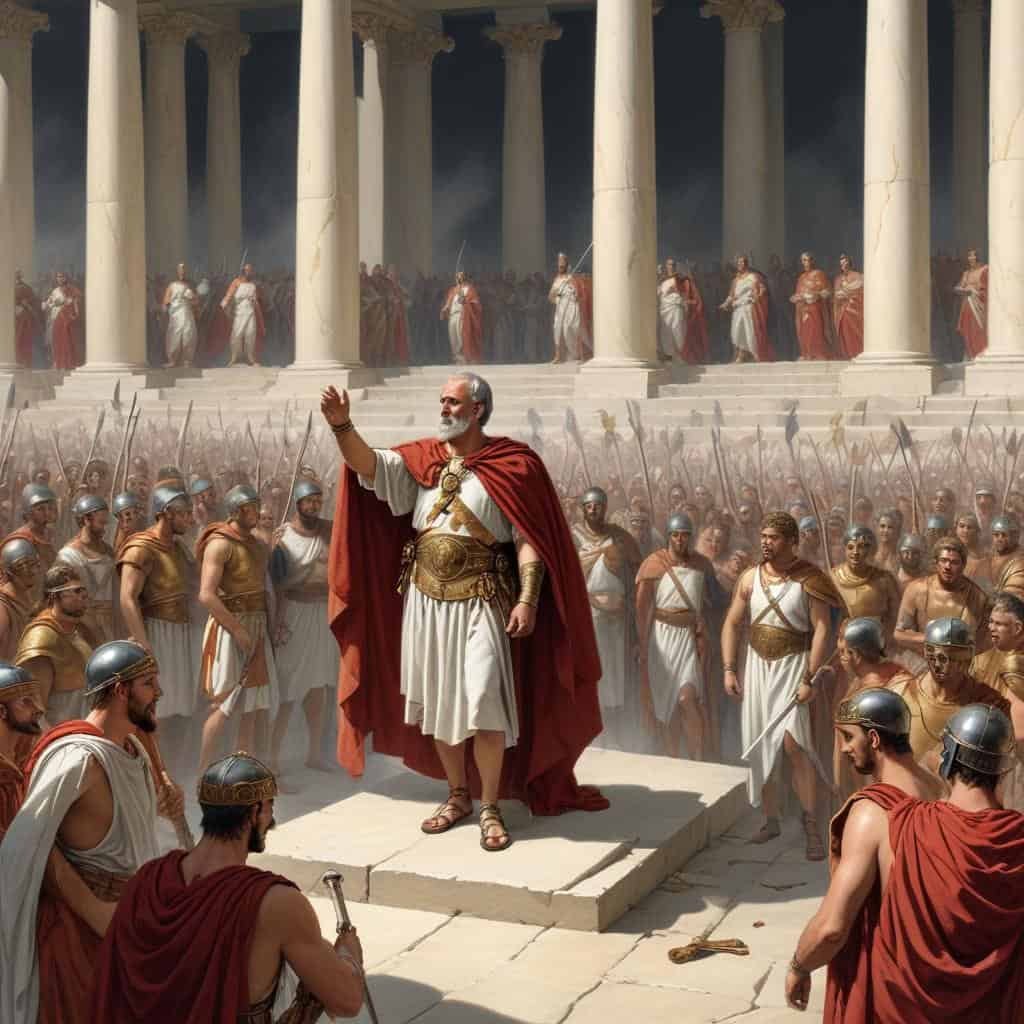
Death and Legacy
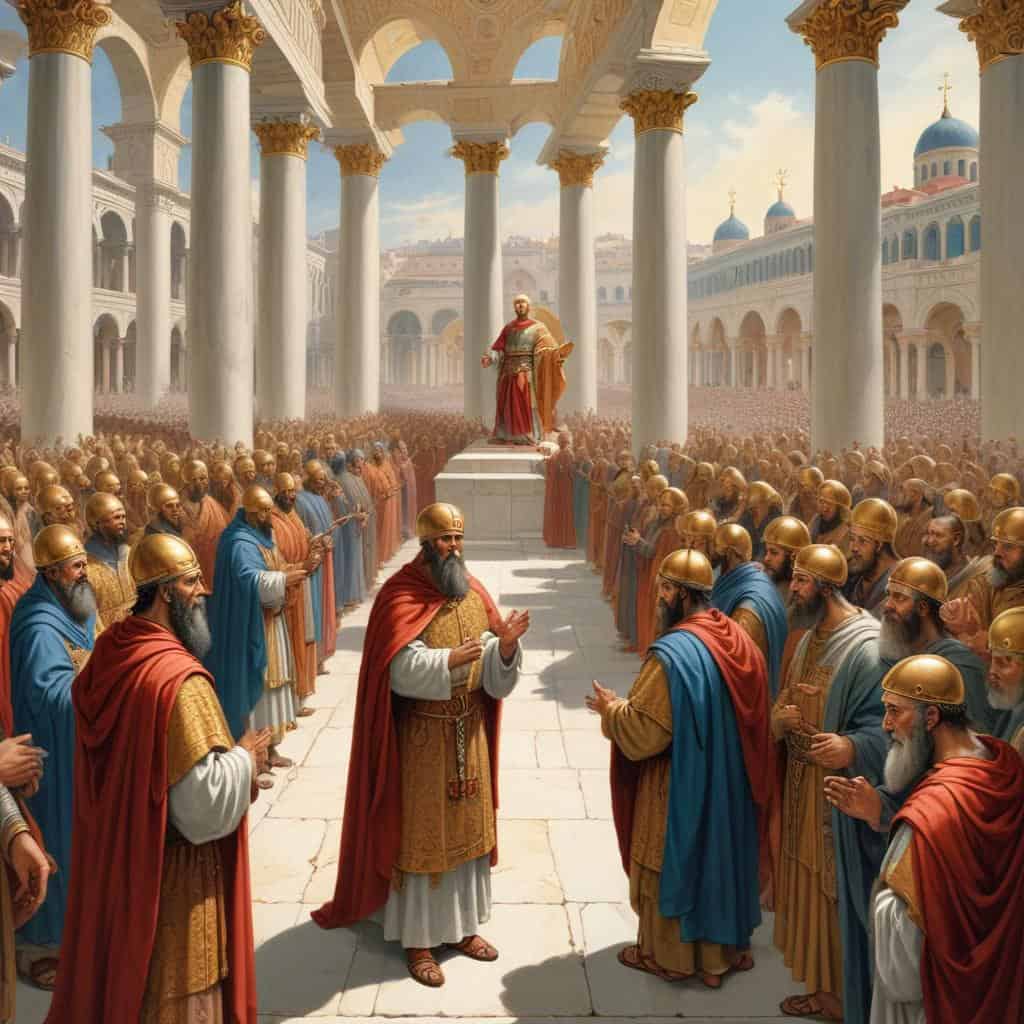
Impact on Christianity
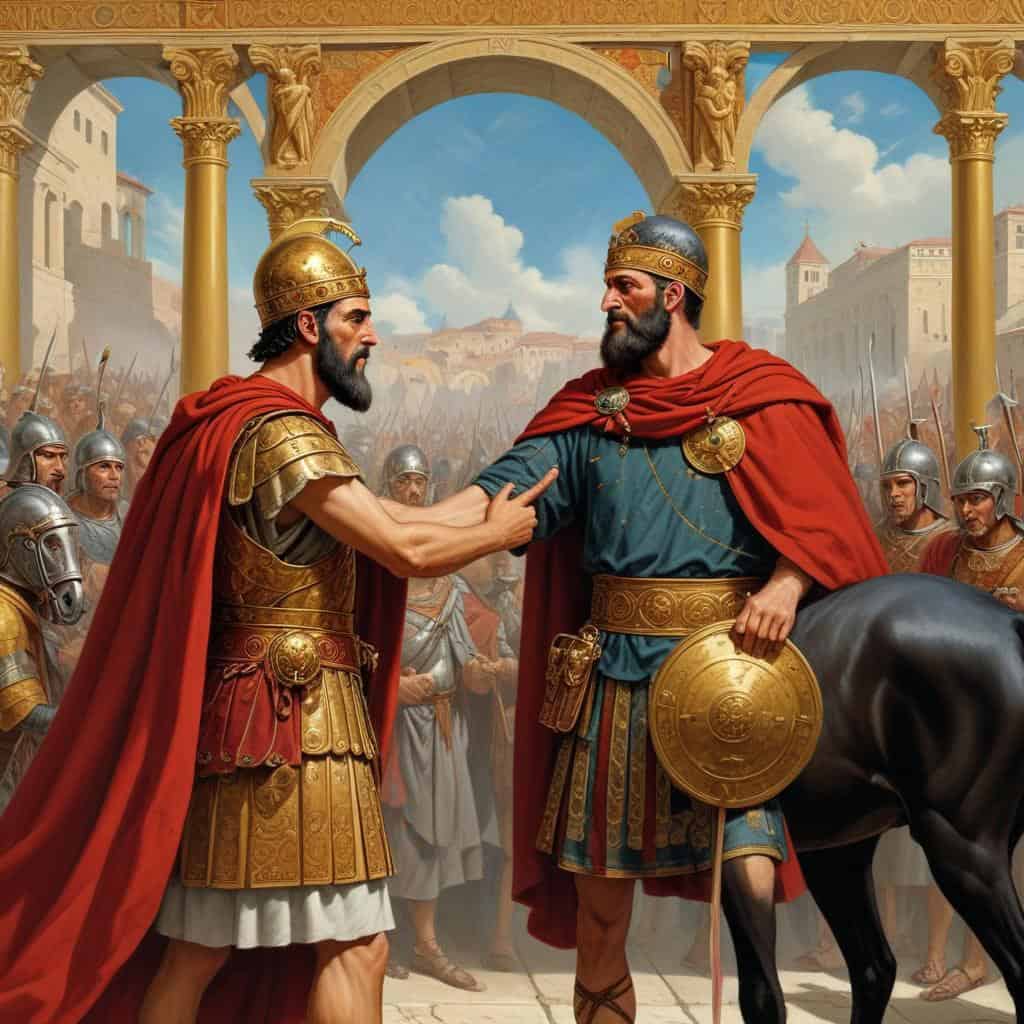
Relations with the Eastern Roman Empire

Building Projects
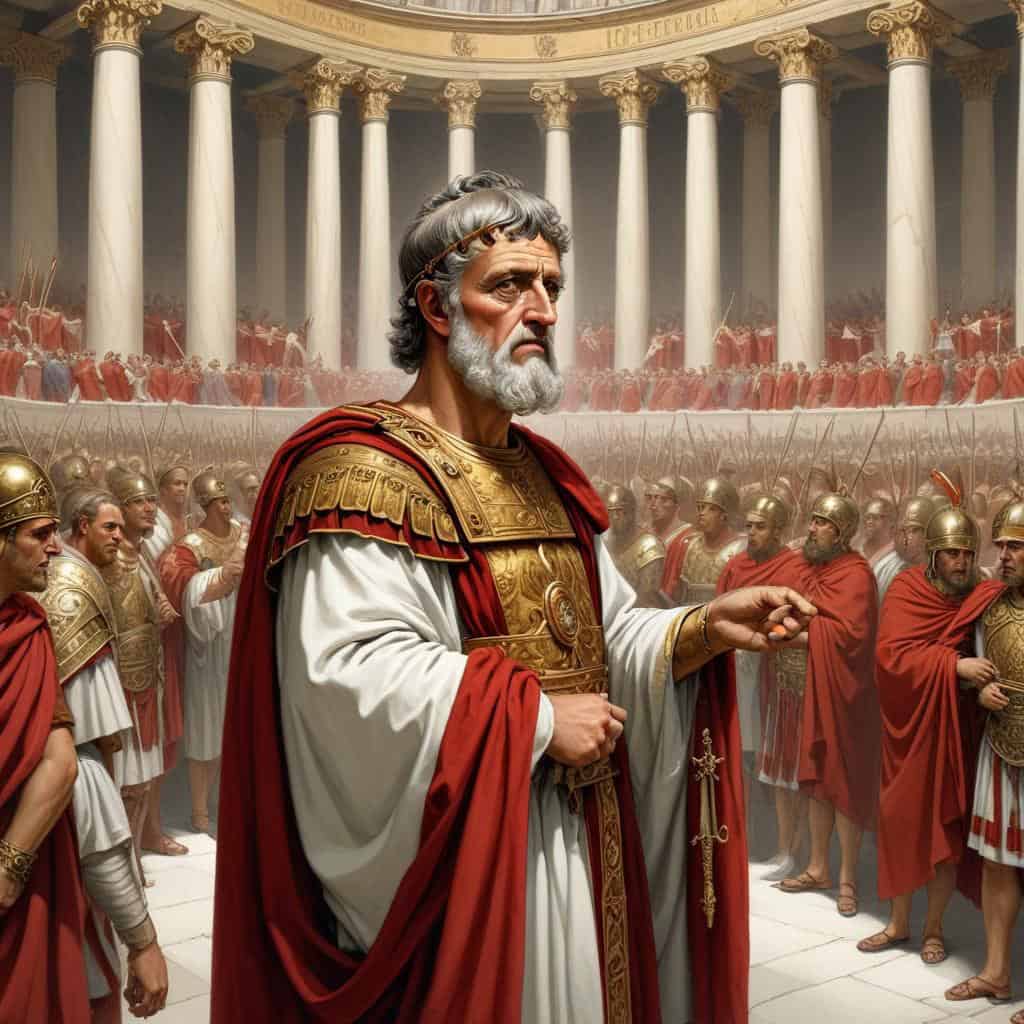
Final Years
Lesson Details & Resources
In a Nutshell
- Who: Roman Emperor
- When: Lived: 347 – 395
- Known For: Consolidating and strengthening the Roman Empire
- Legacy: Theodosian Code, which influenced medieval European legal systems
Timeline of Theodosius I: The Emperor’s Biography
Theodosius I is born in Hispania
Theodosius I serves as a military commander in the Roman army
Theodosius I is appointed as the military commander of Moesia
Valentinian I appoints Theodosius I as co-emperor of the Eastern Roman Empire
Theodosius I defeats the usurper Magnus Maximus at the Battle of the Frigidus
Theodosius I becomes the sole emperor of the Roman Empire
Theodosius I issues the Edict of Thessalonica, making Nicene Christianity the official state religion
Theodosius I bans pagan rituals and sacrifices
Theodosius I convenes the Second Ecumenical Council at Constantinople
Theodosius I dies in Milan
Theodosius I is succeeded by his sons Arcadius and Honorius
Theodosius I is canonized as a saint by the Eastern Orthodox Church
Theodosius I's laws against paganism are enforced by his successors
Theodosius I's reign marks the beginning of the decline of the Western Roman Empire
Theodosius I is known for his efforts to maintain the unity of the Roman Empire
Theodosius I's reign is marked by conflicts with various barbarian tribes
Theodosius I is remembered as a strong and effective ruler
Theodosius I's reign is considered a turning point in Roman history
Theodosius I's legacy has had a lasting impact on European history
Vocabulary List
- Emperor
- Theodosius I was the Roman Emperor from 379 to 395 AD.
- Christianity
- Theodosius I was known for his support of Christianity and making it the official religion of the Roman Empire.
- Edict
- Theodosius I issued the Edict of Thessalonica in 380 AD, declaring Christianity as the official religion of the Roman Empire.
- Theodosian Code
- Theodosius I commissioned the Theodosian Code, a compilation of laws that helped unify and govern the Roman Empire.
- Barbarian
- Theodosius I faced threats from barbarian invasions during his reign.
- Constantinople
- Theodosius I made Constantinople the capital of the Eastern Roman Empire.
- Council of Constantinople
- Theodosius I convened the Council of Constantinople in 381 AD to address theological disputes within the Christian church.
- Visigoths
- Theodosius I negotiated with the Visigoths and allowed them to settle in the Roman Empire.
- Catholicism
- Theodosius I supported the Nicene Creed and promoted Catholicism as the dominant form of Christianity.
- Dynasty
- Theodosius I belonged to the Theodosian dynasty, which ruled the Roman Empire in the late 4th and early 5th centuries.
Key Facts
This is the information used in the fact matching game
- Theodosius I was born in Spain in 347 AD.
- He became the Roman emperor in 379 AD.
- Theodosius I was known for his efforts to promote Christianity and suppress paganism.
- He issued the Edict of Thessalonica in 380 AD, declaring Nicene Christianity as the official state religion.
- Theodosius I was the last emperor to rule over both the eastern and western halves of the Roman Empire.
- He defeated the usurper Magnus Maximus in 388 AD.
- Theodosius I married Galla, the daughter of Valentinian I, in 376 AD.
- He had two sons, Arcadius and Honorius, who succeeded him as emperors.
- Theodosius I died in 395 AD in Milan, Italy.
- He was known for his strict enforcement of Roman laws and his efforts to maintain order in the empire.
- Theodosius I was the first emperor to be baptized as a Christian while in office.
- He was given the title 'the Great' by the Roman Catholic Church.
- Theodosius I is considered a saint in the Eastern Orthodox Church.
- He is credited with defeating the Goths at the Battle of the Frigidus in 394 AD.
- Theodosius I established his capital in Constantinople, the eastern capital of the Roman Empire.
- He issued laws that prohibited pagan rituals and sacrifices in the empire.
- Theodosius I was known for his military campaigns against the Visigoths, Ostrogoths, and other barbarian tribes.
- He was the second emperor to be born outside of Italy, after his predecessor Valentinian I.
- Theodosius I was buried in the Church of the Holy Apostles in Constantinople.
- He was known for his strong leadership and his efforts to restore the unity of the Roman Empire.
Analysis & Significance
Major Accomplishments
Theodosius I, also known as Theodosius the Great, was the last Roman emperor to rule over both the eastern and western portions of the Roman Empire. He is best known for his efforts to consolidate Christianity as the state religion, culminating in the Edict of Thessalonica in 380 AD.
Impact on the World
Theodosius I’s promotion of Christianity had a profound and lasting impact on the world, as it paved the way for the eventual establishment of Christianity as the dominant religion in Europe. His policies and edicts helped shape the religious landscape of the Roman Empire and influenced the course of Western civilization.
Enduring Legacy
Today, Theodosius I is remembered as a key figure in the history of Christianity and the Roman Empire. His legacy as the emperor who officially embraced Christianity has solidified his place in history as a significant historical figure. Theodosius I’s reign marked a pivotal moment in the transition of the Roman Empire from paganism to Christianity, leaving a lasting imprint on the world.
Theodosius I: The Emperor’s Biography Games


Take Your Learning Offline
Want a convenient, print-ready study guide for this lesson? Become a Memory Wizards Pro member to unlock the downloadable " Memory Scrolls" for this topic and our entire library!
- ✓ Complete Vocabulary Lists
- ✓ Key Facts & Timelines
- ✓ Beautifully Formatted for Print & Mobile