
Tacitus: A Historian’s Biography
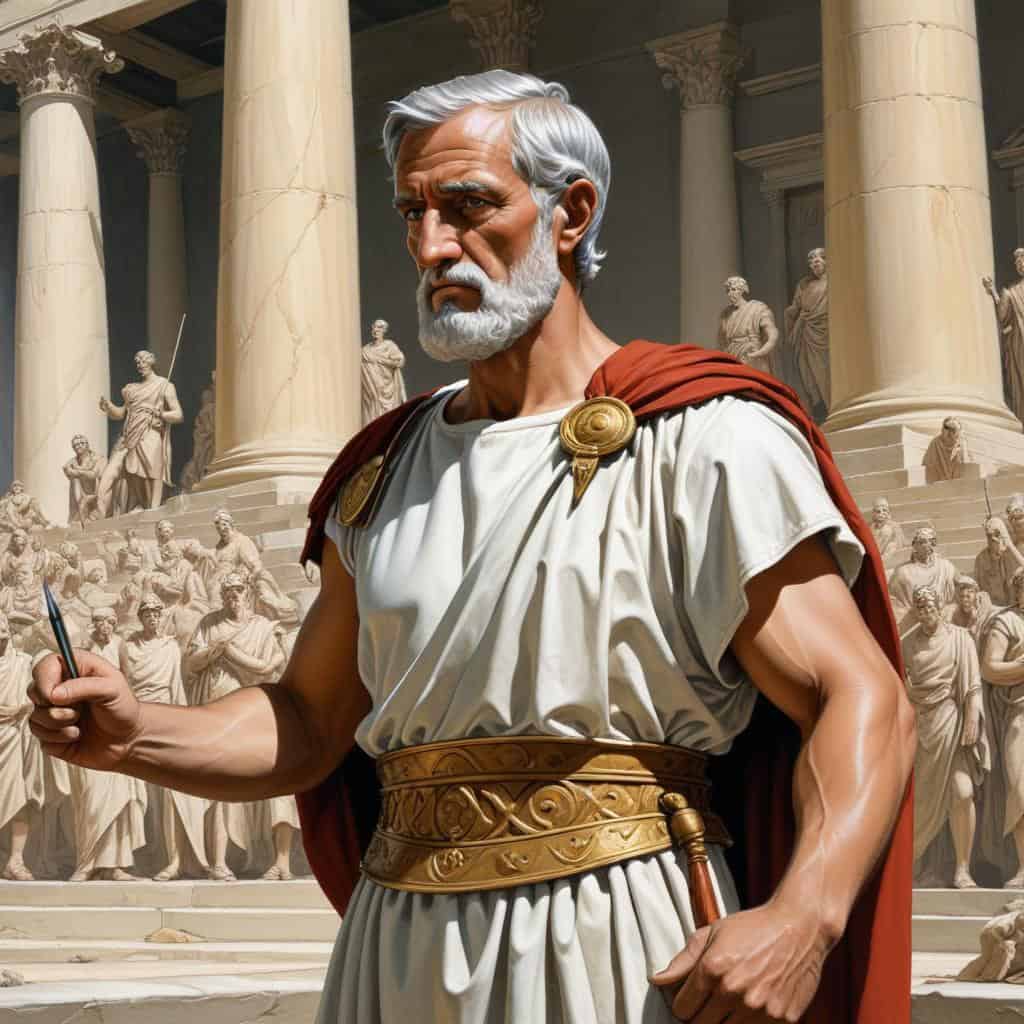
Tacitus: The Roman historian who chronicled the rise and fall of empires.
How Do You Learn Best?
Learn by Reading
Immerse yourself in the 10-minute visual lesson for a comprehensive understanding of the topic.
Learn by Reviewing
Jump directly to the key facts, timeline, and vocabulary lists to build a solid foundation of details.
Learn by Doing
Challenge yourself! Jump straight into the interactive games to learn by trial, error, and discovery.
Tacitus: A Historian’s Biography in 10 Minutes
Introduction
Julius Agricola
Pliny the Younger
Vespasian
The Early Life of Tacitus
His Rise to Prominence
The Works of Tacitus
Historical Significance
Style and Themes
Legacy of Tacitus
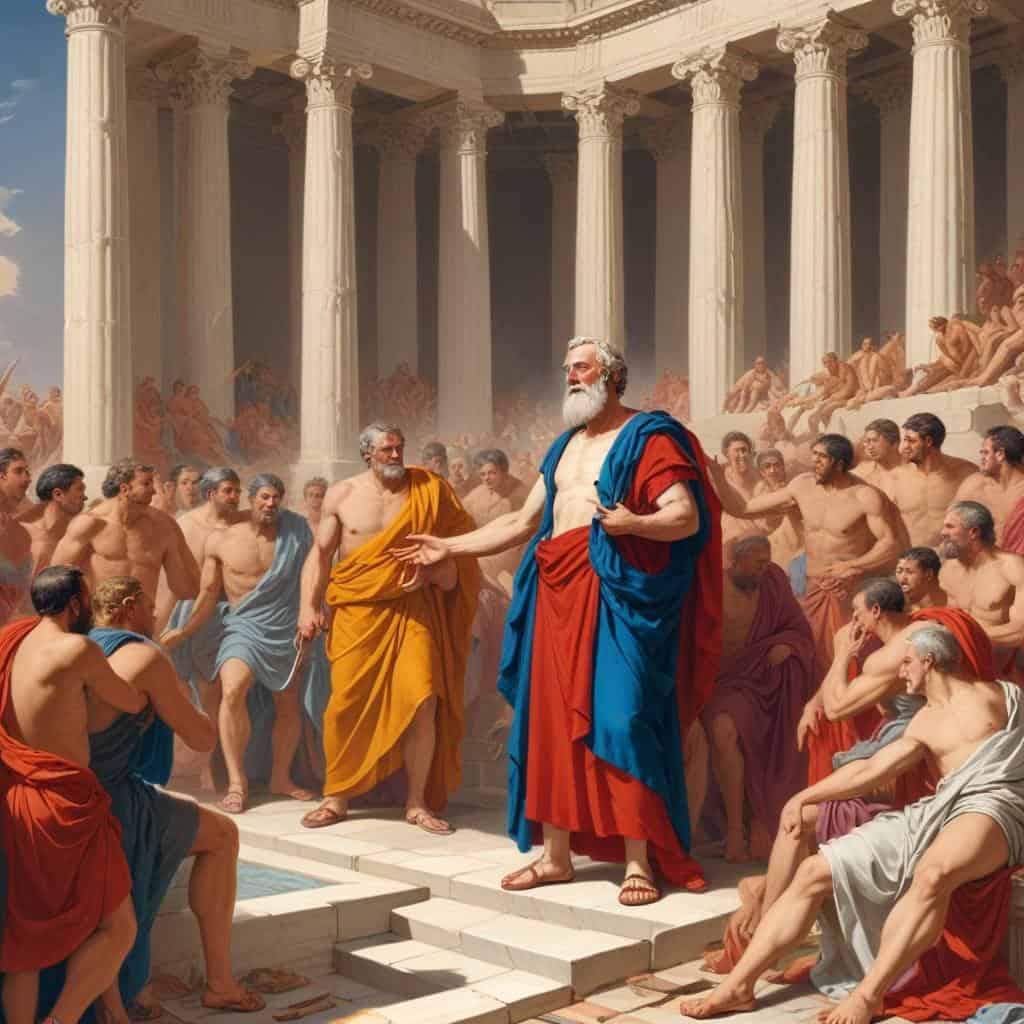
Challenges and Controversies
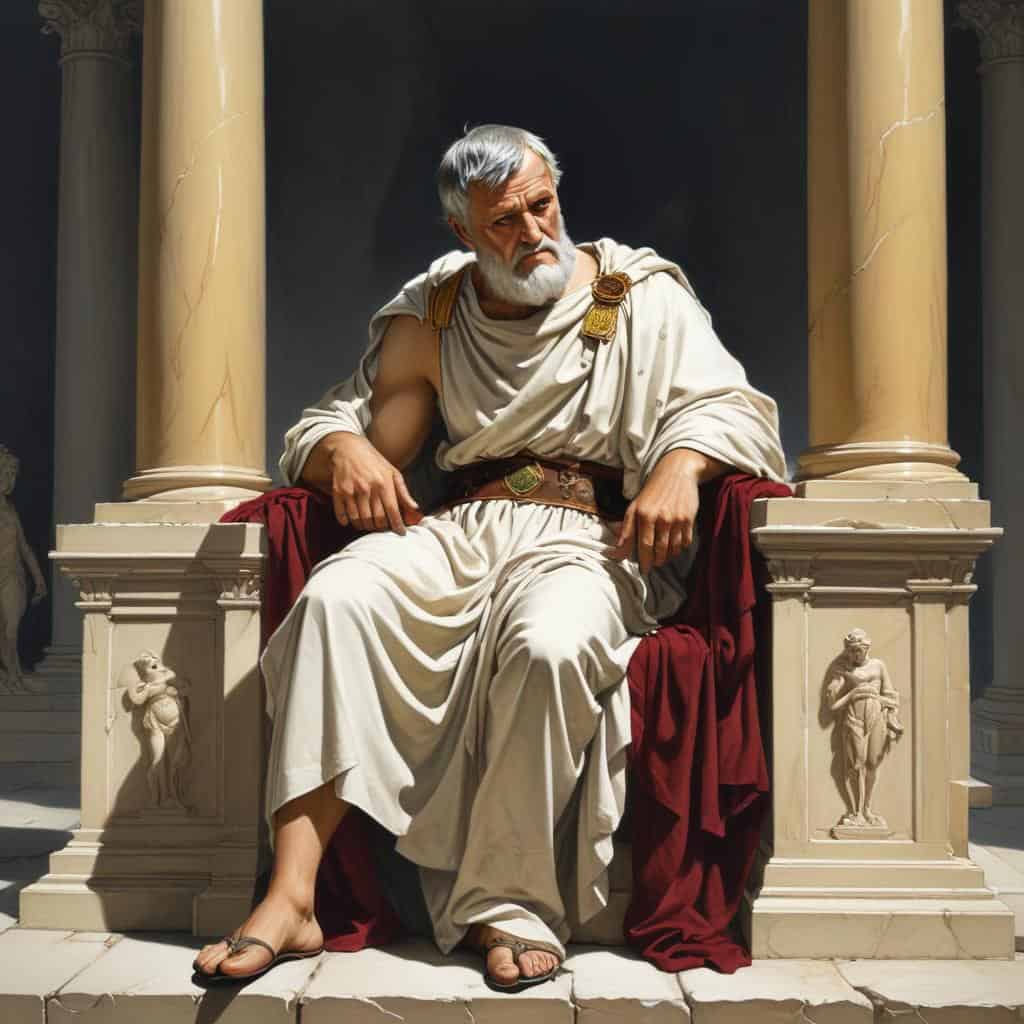
Personal Life and Death
Lesson Details & Resources
In a Nutshell
- Who: Roman historian and politician
- When: Lived: 56 AD – c. 120 AD
- Known For: Known for his works on the history of the Roman Empire
- Legacy: His writings have had a lasting impact on the study of ancient Rome and continue to be influential in the field of history
Timeline of Tacitus: A Historian’s Biography
Tacitus is born in 56 AD
Tacitus serves as a military tribune in Britain
Tacitus marries the daughter of Julius Agricola
Tacitus is elected quaestor and serves in Africa and Asia
Tacitus is appointed praetor
Tacitus becomes a member of the Roman Senate
Tacitus serves as governor of Asia
Tacitus writes his first major work, Agricola
Tacitus writes Germania, a study of the German tribes
Tacitus is appointed consul
Tacitus is appointed governor of Britannia
Tacitus writes his Histories
Tacitus writes The Annals, covering the reign of Tiberius to Nero
Tacitus is sent to Bithynia as proconsul
Tacitus returns to Rome and continues to write
Tacitus dies in Rome
Vocabulary List
- Annals
- Tacitus' work that covers the history of the Roman Empire from the death of Augustus to the death of Nero.
- Germania
- Tacitus' ethnographic work on the Germanic tribes beyond the Rhine.
- Histories
- Tacitus' work that covers the history of the Roman Empire from the Year of the Four Emperors to the Year of the Four Emperors.
- Agricola
- Tacitus' biography of his father-in-law, Gnaeus Julius Agricola, a Roman general who conquered Britain.
- Tacitean
- Adjective used to describe something related to or characteristic of Tacitus.
- Roman Empire
- The empire that Tacitus wrote about, covering the period from the death of Augustus to the death of Nero.
Key Facts
This is the information used in the fact matching game
- Tacitus was a Roman historian and senator.
- He is considered one of the greatest historians of ancient Rome.
- Tacitus is known for his works 'The Histories' and 'Annals'.
- His writings provide valuable insights into the Roman Empire during the first century AD.
- Tacitus was born in 56 AD in the Roman Empire.
- He held various political offices during his career.
- Tacitus was a contemporary of Pliny the Younger and Suetonius.
- He was known for his critical views on the emperors of Rome.
- Tacitus' works were not always favorable towards the ruling powers of his time.
- He wrote about the reigns of emperors such as Tiberius, Caligula, Claudius, and Nero.
- Tacitus' writings were known for their vivid and dramatic storytelling.
- He is believed to have died around 120 AD.
- Tacitus' works have influenced later historians and writers.
- He is often cited as a source for information about ancient Rome.
- Tacitus' writing style was characterized by its precision and eloquence.
- He is considered a master of Latin prose.
- Tacitus' works were rediscovered during the Renaissance.
- His writings continue to be studied by historians and scholars today.
- Tacitus' works provide valuable information about the political and social climate of ancient Rome.
- He is regarded as one of the preeminent historians of the ancient world.
Analysis & Significance
Major Accomplishments
Tacitus was a renowned Roman historian and senator known for his works “The Annals” and “Histories”, which provide valuable insights into the Roman Empire during the first century AD.
Impact on the World
Tacitus’s writings have had a lasting impact on the study of Roman history and politics. His critical analysis of the emperors and the Senate has shaped our understanding of the power dynamics and corruption within the Roman Empire.
Enduring Legacy
Tacitus is remembered today as one of the greatest historians of ancient Rome. His works continue to be studied for their detailed accounts of the Roman Empire, making him a significant figure in the field of classical studies.
Tacitus: A Historian’s Biography Games


Take Your Learning Offline
Want a convenient, print-ready study guide for this lesson? Become a Memory Wizards Pro member to unlock the downloadable " Memory Scrolls" for this topic and our entire library!
- ✓ Complete Vocabulary Lists
- ✓ Key Facts & Timelines
- ✓ Beautifully Formatted for Print & Mobile