
Summary of The Roman Conquest of Britain
Unveil the ancient mysteries of Roman Britain's epic conquest in 43 AD.
How Do You Learn Best?
Learn by Reading
Immerse yourself in the 10-minute visual lesson for a comprehensive understanding of the topic.
Learn by Reviewing
Jump directly to the key facts, timeline, and vocabulary lists to build a solid foundation of details.
Learn by Doing
Challenge yourself! Jump straight into the interactive games to learn by trial, error, and discovery.
The Roman Conquest of Britain in 10 Minutes
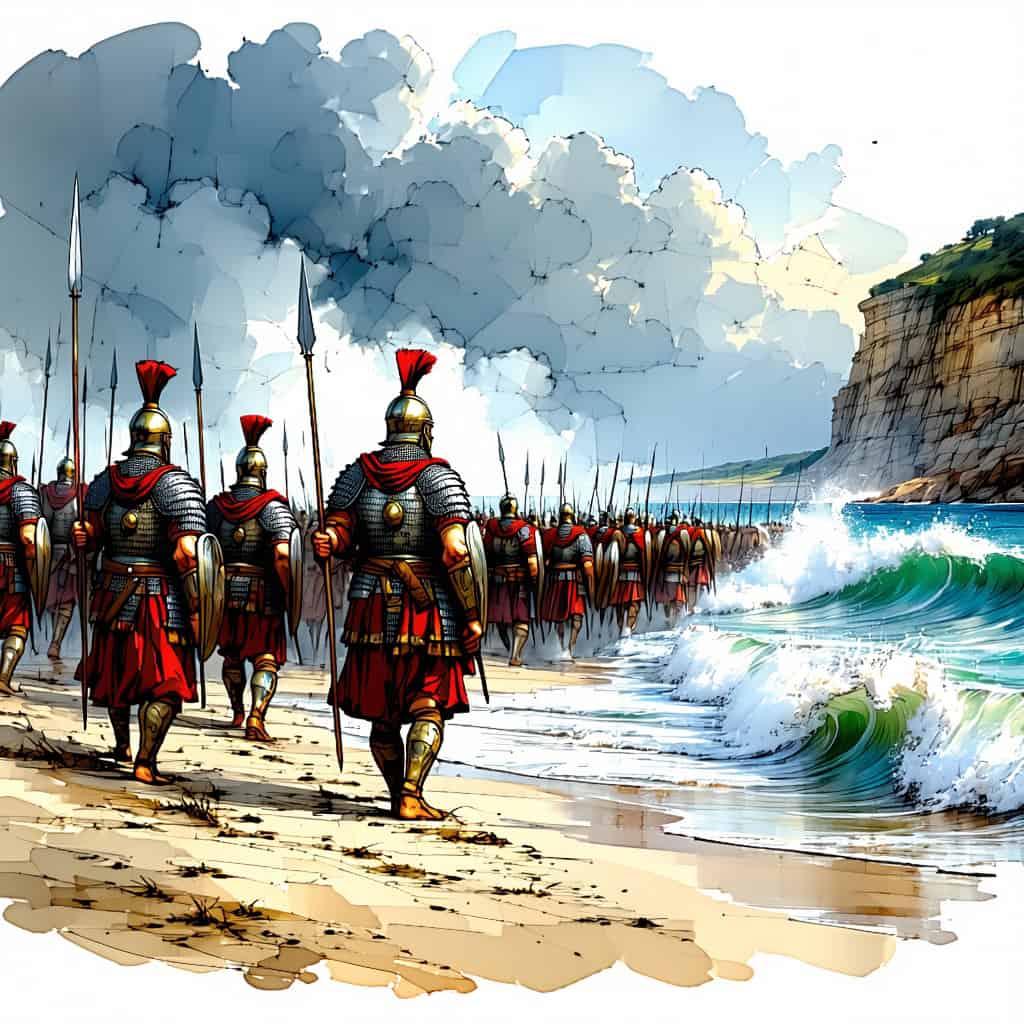
Introduction
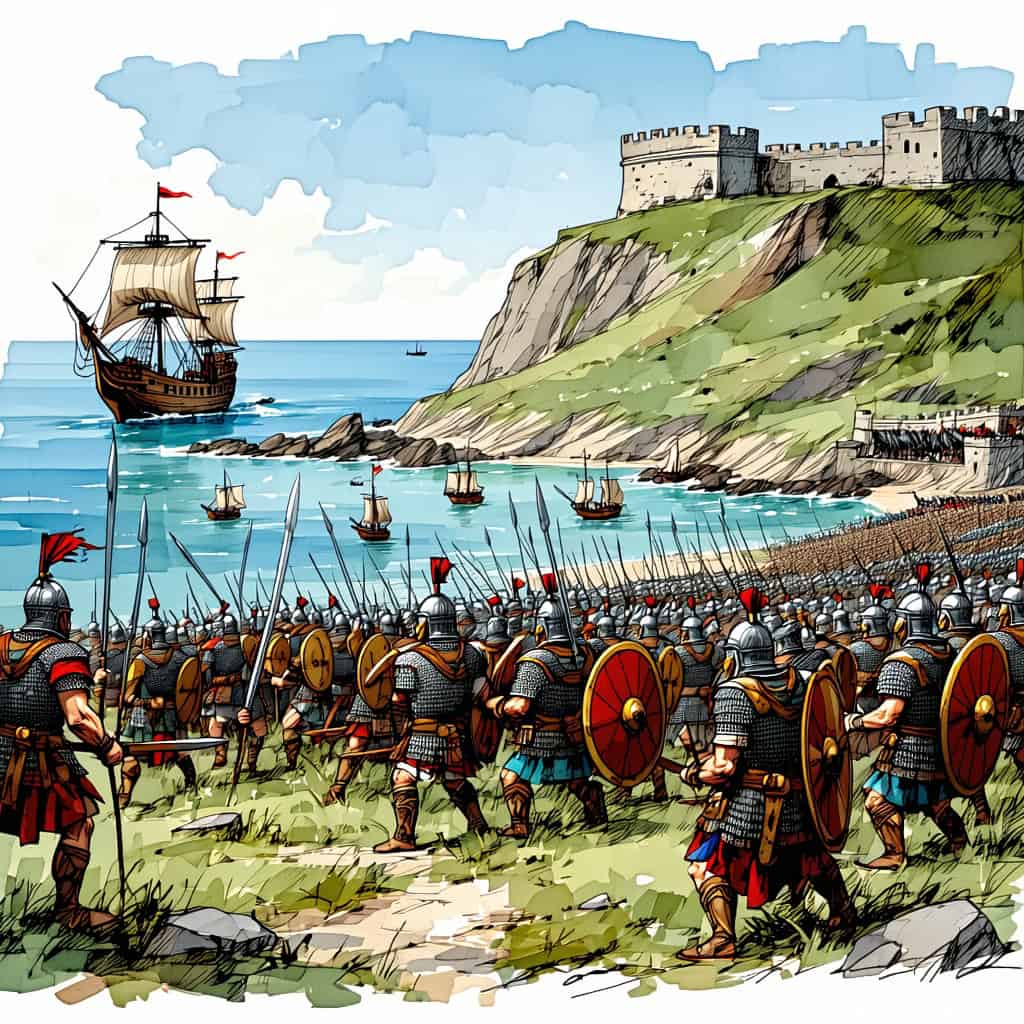
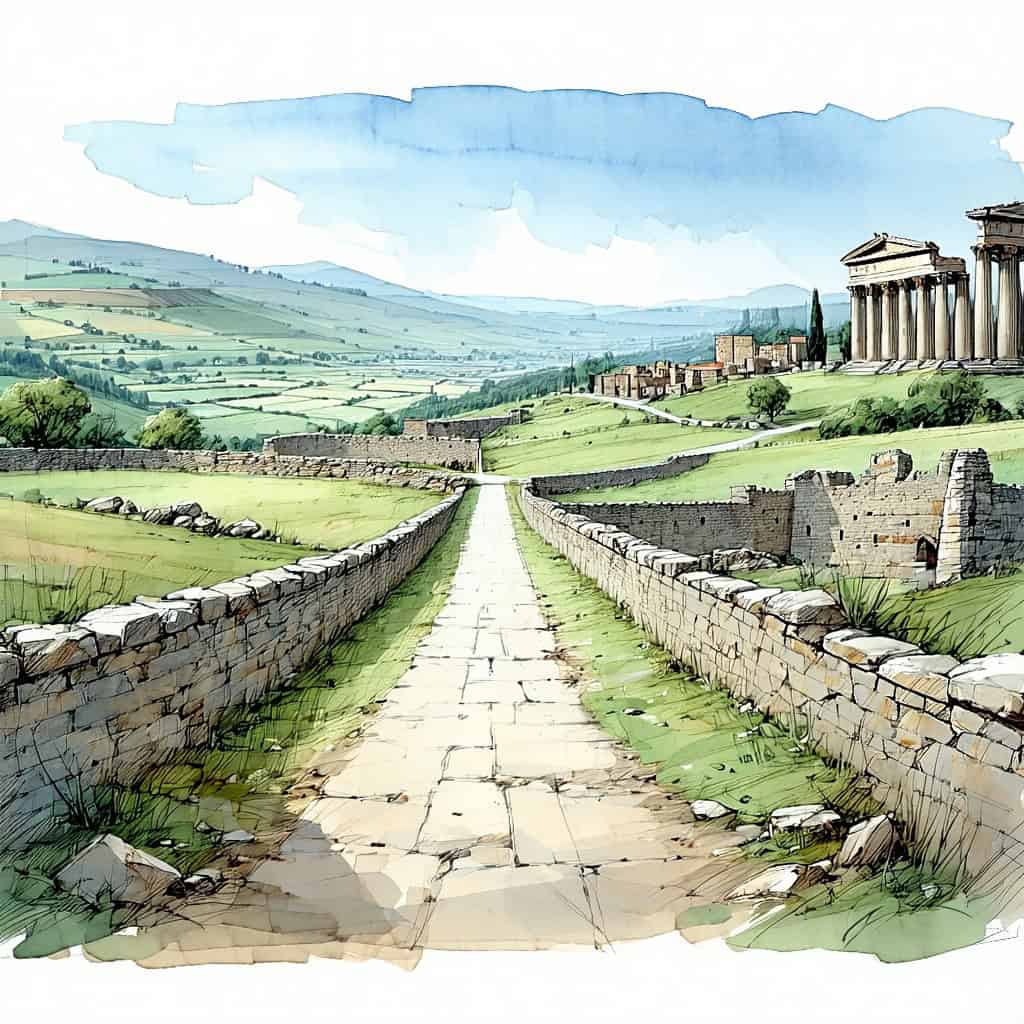
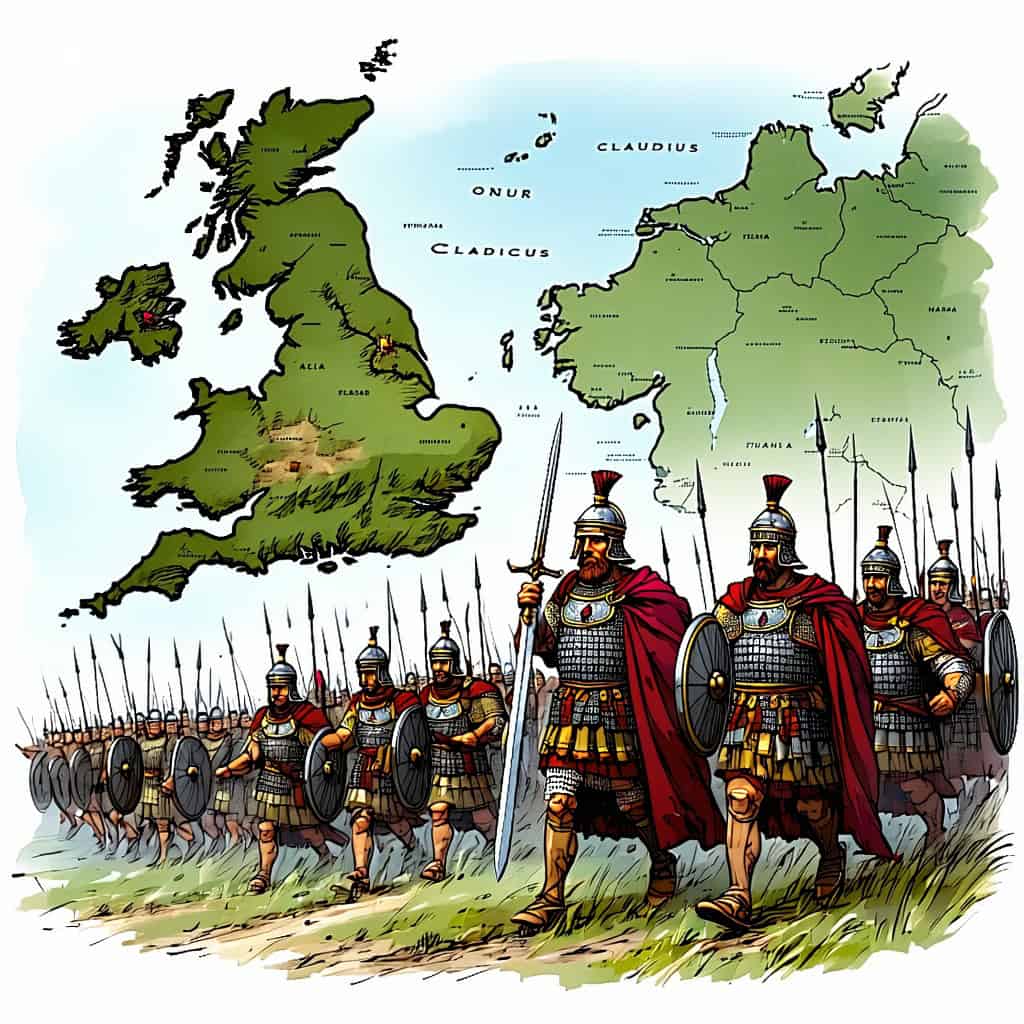
Emperor Claudius
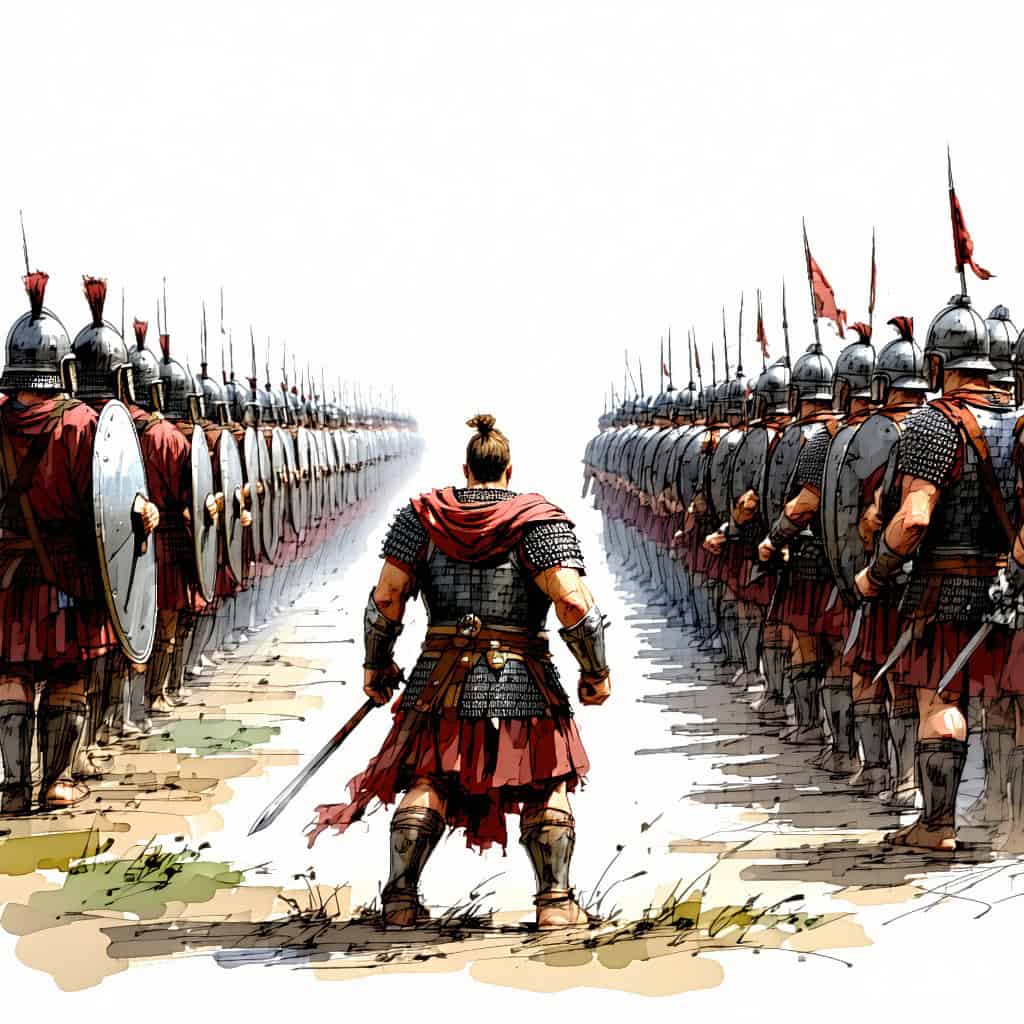
Caratacus
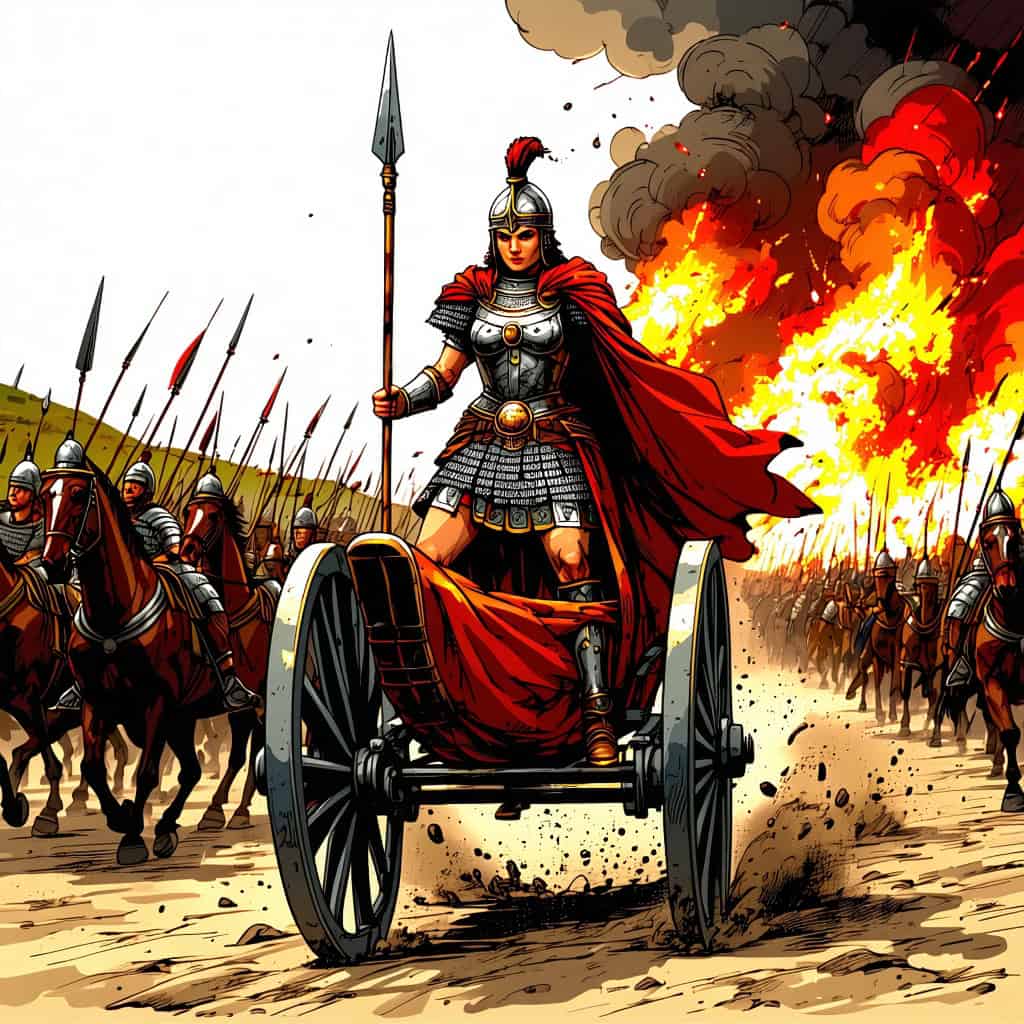
Boudica
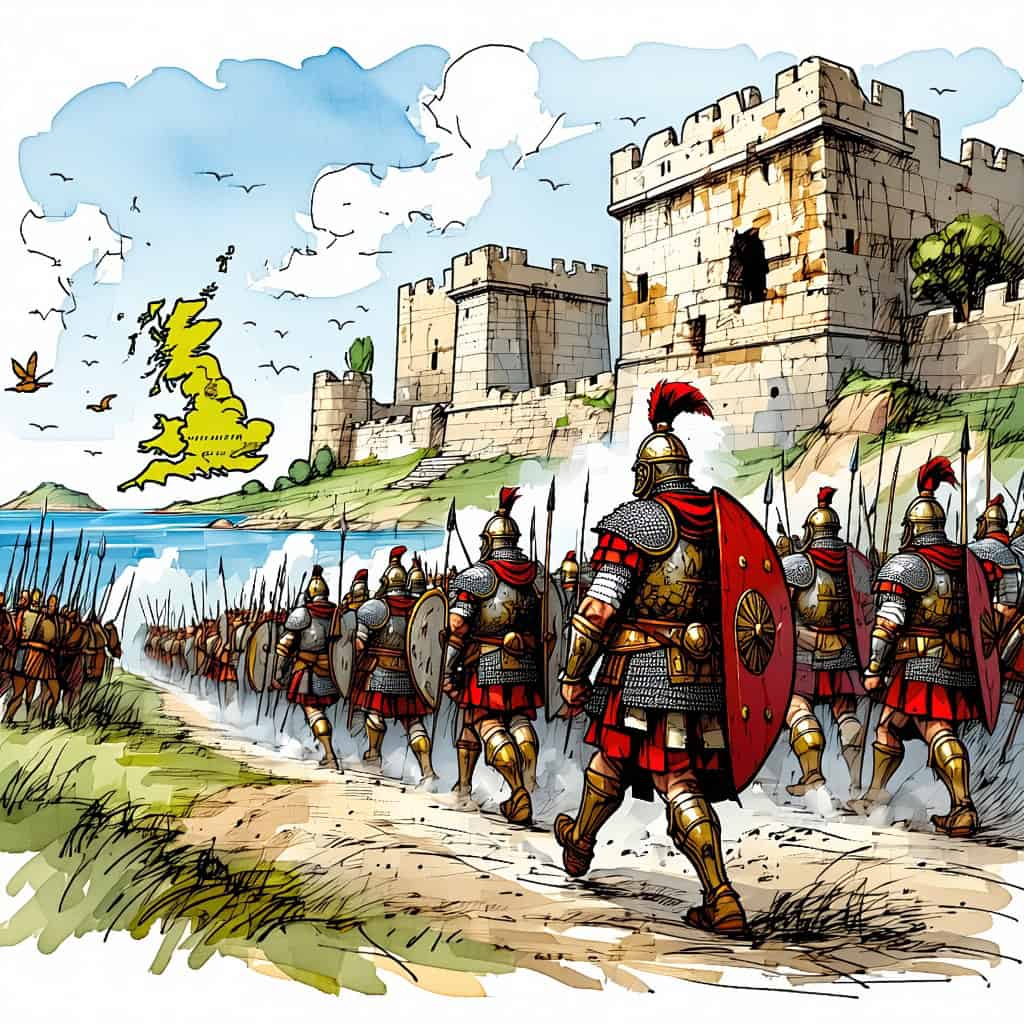
Gnaeus Julius Agricola

The Roman Invasion Begins

Resistance from the Celtic Tribes

The Battle of Medway

Establishment of Roman Rule

Resistance in the North

Hadrians Wall

The Romanization of Britain
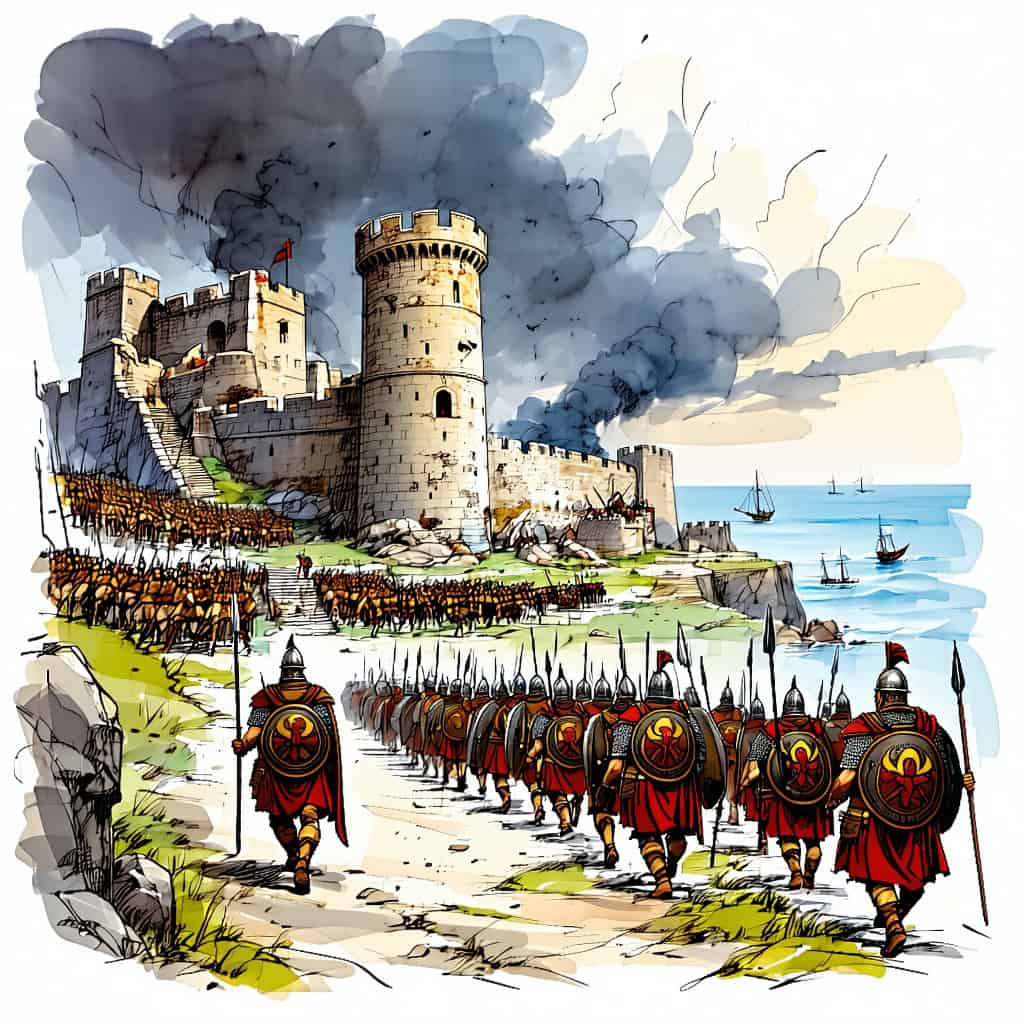
The End of Roman Rule
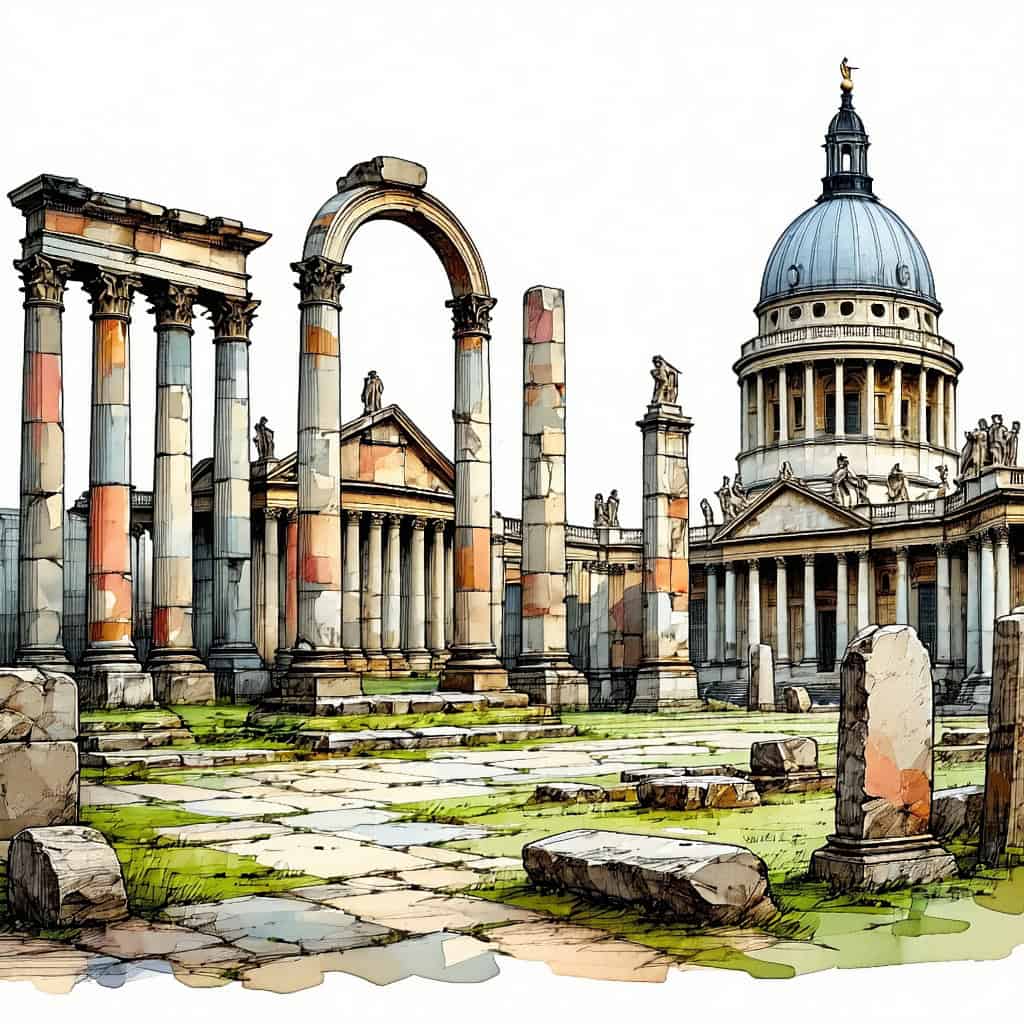
The Legacy of the Roman Conquest
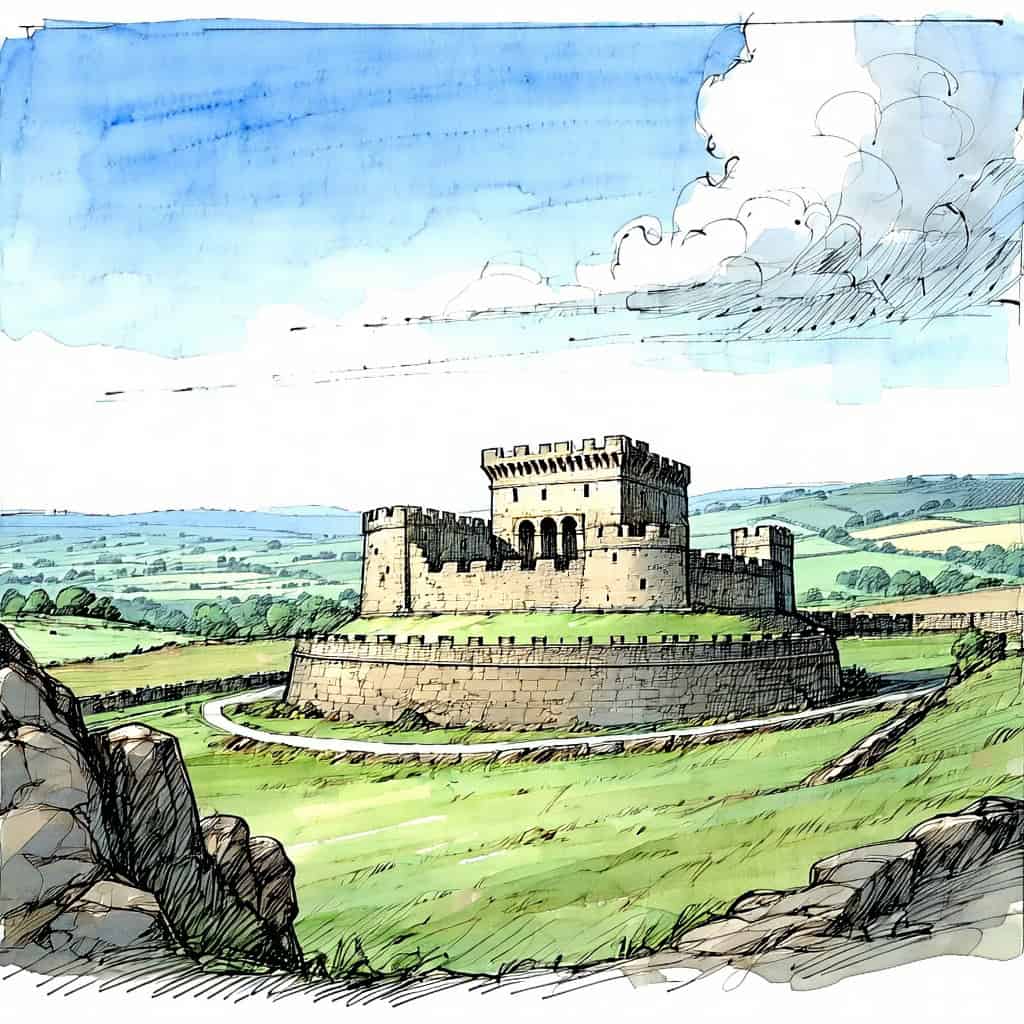
Lesson Details & Resources
In a Nutshell
- What: The Roman Conquest of Britain (43 AD)
- When: 43 AD
- Who: Roman Empire, Celtic tribes of Britain
- Outcome: Roman invasion led to the establishment of Roman rule in Britain
Famous Figures in the The Roman Conquest of Britain
-
Roman Emperor Claudius
The Roman Emperor Claudius led the invasion of Britain in 43 AD, seeking to expand Roman territory and exert control over the island.
-
Roman General Aulus Plautius
Roman General Aulus Plautius commanded the initial invasion force, landing in southeastern Britain and securing a foothold for the Roman forces.
-
Roman Governor Vespasian
Roman Governor Vespasian played a crucial role in the invasion, leading the capture of several tribal settlements and establishing Roman control.
-
Roman Historian Tacitus
Roman Historian Tacitus chronicled the events of the Roman conquest of Britain, providing valuable insights into the military campaigns and interactions with the native tribes.
-
Celtic Queen Boudica
Celtic Queen Boudica famously rebelled against the Roman occupation, leading an uprising against Roman forces in 60 AD.
-
Roman General Gnaeus Julius Agricola
Roman General Gnaeus Julius Agricola was appointed as governor of Britain and successfully expanded Roman control into northern Britain, reaching as far as modern-day Scotland.
-
Roman Emperor Hadrian
Roman Emperor Hadrian visited Britain in 122 AD and ordered the construction of Hadrian's Wall to fortify the northern frontier of Roman Britain.
-
Roman Emperor Septimius Severus
Roman Emperor Septimius Severus further consolidated Roman control over Britain, launching military campaigns against native tribes and strengthening Roman presence.
-
Celtic Warrior Caratacus
Celtic Warrior Caratacus bravely resisted Roman forces for several years before he was captured and brought to Rome as a prisoner.
-
British Chieftain Togodumnus
British Chieftain Togodumnus fought against the Roman invasion but was ultimately killed during the Roman conquest of Britain.
Timeline of The Roman Conquest of Britain
Emperor Claudius orders the Roman conquest of Britain
Roman invasion force led by General Aulus Plautius lands in Britain
Battle of the Medway
Romans capture the tribal capital of Camulodunum (modern-day Colchester)
Emperor Claudius arrives in Britain to celebrate the initial victories
Roman forces push westward and capture Verulamium (modern-day St. Albans)
Emperor Claudius returns to Rome, leaving General Aulus Plautius in charge
Boudicca's rebellion against Roman rule begins
Boudicca's forces sack and destroy Camulodunum
Boudicca's forces defeat the Roman Ninth Legion at the Battle of the River Medway
Boudicca's forces destroy Verulamium
Roman governor Gaius Suetonius Paulinus defeats Boudicca's forces at the Battle of Watling Street
Roman control is reestablished in Britain
Construction of Hadrian's Wall begins
Hadrian's Wall is completed
Roman Emperor Septimius Severus launches a campaign in northern Britain
Severus dies in York, and his son Caracalla abandons the northern campaign
Construction of Antonine Wall begins
Antonine Wall is abandoned and Roman forces retreat to Hadrian's Wall
Roman rule in Britain continues until the withdrawal of troops in the early 5th century
Vocabulary List
- Legion
- A unit of the Roman army, typically consisting of around 5,000 soldiers
- Conquest
- The act of taking control of a country or region by force
- Emperor
- The supreme ruler of an empire
- Tribe
- A social group consisting of families or communities who share common customs, language, and culture
- Fortification
- A defensive structure or system designed to protect against attacks
- Centurion
- A professional officer of the Roman army who commanded a century of around 80 soldiers
- Cavalry
- Soldiers who fight on horseback
- Chariot
- A two-wheeled vehicle pulled by horses and used in ancient warfare and racing
- Garrison
- A group of soldiers stationed in a particular location to defend it
- Province
- A territory or region governed as a political or administrative division of a country or empire
- Siege
- A military operation in which a city, fort, or other location is surrounded and cut off to force its surrender
- Rebellion
- An act of defiance or resistance against authority or control
- Barracks
- A building or group of buildings used to accommodate soldiers
- Auxiliary
- A military unit provided by a foreign country to assist in warfare
- Vassal
- A person or state in a subordinate position to a more powerful entity
- Boudicca
- A queen of the British Celtic Iceni tribe who led an uprising against the Roman Empire
- Tribute
- Money or goods paid by a conquered people to their conquerors as a sign of submission
- Charioteer
- A person who drives a chariot
- Decimation
- The killing or execution of a large proportion of a group or population as punishment for rebellion or disobedience
- Amphitheater
- An oval or circular building with tiers of seats around an open space used for public events, such as gladiator fights.
Key Facts
This is the information used in the fact matching game
- The Roman conquest of Britain began in 43 AD
- It was led by the Roman general Aulus Plautius
- The invasion was ordered by Emperor Claudius
- The Roman army landed in modern-day Kent
- The Celtic tribes of Britain were led by Caratacus
- The Romans defeated Caratacus in the Battle of Medway
- The Romans established their first major fortress at Colchester
- The legendary Celtic queen Boudicca led a rebellion against the Romans
- Boudicca's rebellion resulted in the destruction of Londinium (London)
- The Romans rebuilt Londinium after suppressing the rebellion
- The Romans constructed a network of roads to connect their fortresses
- Hadrian's Wall was built by the Romans to defend against northern tribes
- The wall spanned 73 miles across northern England
- The Romans established the province of Britannia
- Roman influence brought new technologies and urban development to Britain
- Roman towns like Bath and York flourished during this period
- The Romans introduced a legal system and Latin language to Britain
- Roman rule lasted for nearly 400 years in Britain
- The Roman withdrawal from Britain began in the early 5th century
- The Roman presence in Britain left a lasting impact on its culture and infrastructure.
Analysis & Significance
Immediate Consequences
The Roman conquest of Britain in 43 AD marked the beginning of Roman rule over the island. This led to immediate changes in governance, infrastructure, and trade, as well as the introduction of Roman culture and customs to the Britons.
Long-Term Impact
The long-term impact of the Roman conquest of Britain was significant. It brought about lasting changes in language, law, and architecture, shaping the future development of the British Isles. Roman influence can still be seen in modern British society, particularly in the remnants of Roman forts, roads, and city layouts.
Cultural Significance Today
The cultural significance of the Roman conquest of Britain is evident in the continued fascination with Roman history and archaeology in the region. It has also contributed to the cultural diversity of Britain, as Roman influence has blended with indigenous Celtic traditions to create a unique cultural heritage that continues to be celebrated and studied today.
The Roman Conquest of Britain Games



Take Your Learning Offline
Want a convenient, print-ready study guide for this lesson? Become a Memory Wizards Pro member to unlock the downloadable " Memory Scrolls" for this topic and our entire library!
- ✓ Complete Vocabulary Lists
- ✓ Key Facts & Timelines
- ✓ Beautifully Formatted for Print & Mobile