
Summary of the Decline of Roman Britain
Unravel the mystery of Britain's lost Roman influence in the tapestry of history.
How Do You Learn Best?
Learn by Reading
Immerse yourself in the 10-minute visual lesson for a comprehensive understanding of the topic.
Learn by Reviewing
Jump directly to the key facts, timeline, and vocabulary lists to build a solid foundation of details.
Learn by Doing
Challenge yourself! Jump straight into the interactive games to learn by trial, error, and discovery.
the Decline of Roman Britain in 10 Minutes
Emperor Honorius
Emperor Honorius was the ruler of the Western Roman Empire during the decline of Roman control in Britain. His focus on defending Italy and the western provinces left Britain vulnerable to attacks from invading tribes.
Barbarian Invaders
Various barbarian tribes, including the Saxons, Angles, and Jutes, began to raid and settle in Britain as Roman control weakened. These invasions contributed to the destabilization of Roman rule in the region.
Roman Legions
The withdrawal of Roman legions from Britain by Emperor Honorius in the early 5th century further weakened Roman control in the region. Without the presence of these military forces, the local population was left to fend for themselves against invading tribes.
Roman Officials
As Roman control in Britain declined, the authority of Roman officials in the region waned. Many local leaders began to assert their own power and authority, further undermining Roman governance in the province.
Local Britons
The native Britons faced increasing pressure from barbarian invasions and the weakening of Roman control. Many Britons were forced to fend for themselves and establish their own systems of defense and governance in the face of these challenges.
The Fall of Roman Rule in Britain
1. Roman rule in Britain began to decline in the early 5th century, as the Roman Empire faced numerous challenges across its vast territories. With the Roman army stretched thin and facing constant threats from barbarian tribes, the once powerful empire struggled to maintain control over its distant provinces.2. In 410 AD, the Roman Emperor Honorius withdrew Roman troops from Britain to defend the mainland from invading barbarian forces. This left Britain vulnerable to attacks from Picts, Scots, and Anglo-Saxons, who took advantage of the weakened Roman presence to raid and plunder the island.
The Rise of Independent Kingdoms
3. With Roman troops gone, local Romano-British leaders began to assert their independence and establish their own kingdoms in different regions of Britain. These new kingdoms were often in conflict with each other, further weakening any sense of unity or central authority.4. The Anglo-Saxons, a Germanic tribe from present-day Germany and Denmark, began to settle in Britain during this period, further disrupting the existing social and political order. The Anglo-Saxons gradually gained control of large parts of eastern and southern Britain, establishing their own kingdoms and pushing the Romano-British further west.
The Decline of Roman Influence
5. By the mid-5th century, Roman influence in Britain had largely collapsed, with the remaining Romano-British communities struggling to maintain their way of life amidst increasing chaos and instability. The once prosperous Roman towns and villas fell into disrepair, as trade routes were disrupted and social order broke down.6. The Romano-British population faced constant threats from invading tribes and internal conflicts, leading to a period of decline and fragmentation. Without the protection and stability provided by Roman rule, many Britons were forced to fend for themselves and seek protection from local warlords.
The Legacy of Roman Britain
7. Despite the decline of Roman rule in Britain, the legacy of Roman civilization continued to influence the island in many ways. Roman roads, towns, and buildings remained in use for centuries after the fall of the empire, serving as a reminder of Britain's Roman past.8. The Roman occupation also left a lasting impact on the culture and society of Britain, introducing new technologies, agricultural practices, and legal systems that would shape the future development of the island. The Romano-British population continued to speak Latin and adhere to Roman customs long after the empire had withdrawn its troops.
The End of an Era
9. By the early 6th century, the last remnants of Roman influence in Britain had faded away, as the island entered a new era of Anglo-Saxon dominance. The Romano-British kingdoms were gradually absorbed or conquered by the Anglo-Saxon invaders, leading to the establishment of the Anglo-Saxon Heptarchy.10. The fall of Roman rule in Britain marked the end of an era, as the island transitioned from being a part of the Roman Empire to becoming a battleground for competing Anglo-Saxon kingdoms. The decline of Roman control in Britain set the stage for the formation of a new British identity, blending Roman, Celtic, and Anglo-Saxon influences into a unique cultural heritage.
In conclusion, the decline of Roman control in Britain was a complex process influenced by a variety of factors. From economic challenges to invasions by barbarian tribes, the empire struggled to maintain its hold on the region.Ultimately, the withdrawal of Roman troops in the early 5th century marked the end of Roman rule in Britain. Despite this, the legacy of Roman civilization continued to influence the culture and society of the British Isles for centuries to come.
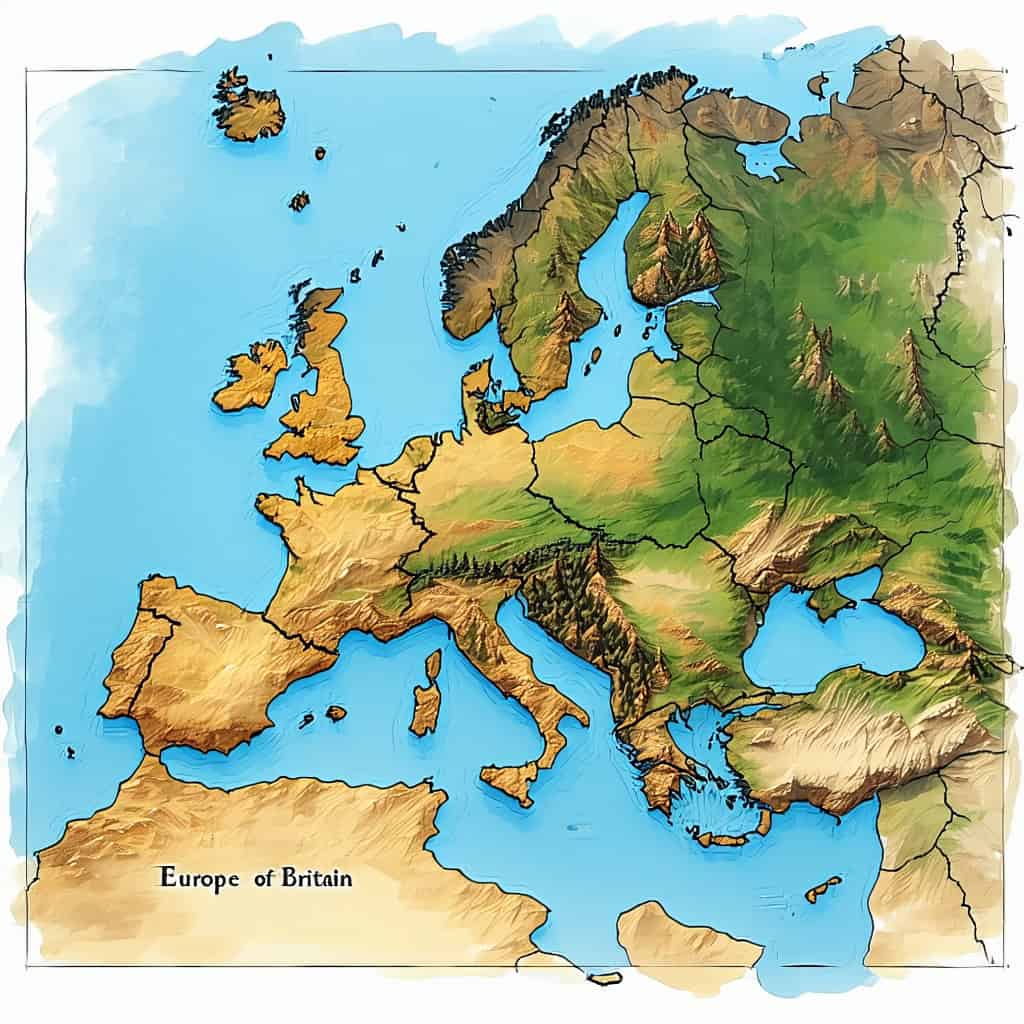
Introduction
Lesson Details & Resources
In a Nutshell
- What: The decline of Roman control in Britain
- When: 5th century AD
- Who: Roman soldiers, Romano-British leaders, Anglo-Saxon invaders
- Outcome: Roman troops withdrew from Britain, leading to the Anglo-Saxon period
Famous Figures in the the Decline of Roman Britain
-
Emperor Honorius
Emperor Honorius was the Western Roman Emperor during the time of the decline of Roman control in Britain.
-
Stilicho
Stilicho was a prominent Roman general who played a role in the defense of Britain against barbarian invasions.
-
Constantine III
Constantine III was a Roman general who declared himself emperor in Britain, marking a significant challenge to Roman authority.
-
Vortigern
Vortigern was a warlord who played a part in the fragmentation of Roman control in Britain.
-
Emperor Romulus Augustus
Emperor Romulus Augustus was the last Western Roman Emperor, whose deposition marked the end of Roman rule in Britain.
-
Odoacer
Odoacer was a Germanic chieftain who deposed Romulus Augustus and became the first King of Italy, solidifying the fall of Roman control in Britain.
Timeline of the Decline of Roman Britain
Battle of Medway
Emperor Hadrian's Wall Construction
Withdrawal of Roman Troops from Antonine Wall
Battle of Mons Graupius
Roman Emperor Septimius Severus' Visit
Beginning of Pictish Raids
Saxon Pirate Raids
Barbarian Invasions and Saxon Shore forts abandoned
End of Roman Rule in Britain
Rise of Romano-British Kingdoms
Anglo-Saxon Invasion
Battle of Badon
Battle of Mount Badon
Battle of Dyrham
Kingdom of East Anglia conquered by Mercia
Viking Raids
Kingdom of Wessex becomes dominant
Battle of Edington
Treaty of Wedmore
Danelaw Established
Vocabulary List
- Barbarian
- The invasion of barbarian tribes weakened Roman control in Britain.
- Anglo-Saxons
- The Anglo-Saxons gradually took over Britain from the Romans.
- Hadrian's Wall
- Hadrian's Wall marked the northern boundary of Roman control in Britain.
- Romanization
- The decline of Romanization in Britain contributed to the loss of Roman control.
- Withdrawal
- The Roman withdrawal from Britain left the island vulnerable to external threats.
- Vortigern
- Vortigern, a British warlord, invited Germanic tribes to help defend against the Picts and Scots but ended up losing control.
- End of Roman rule
- The end of Roman rule in Britain occurred around the early 5th century.
- Roman legions
- The recall of Roman legions from Britain weakened Roman control and defense.
- Roman administration
- The decline of Roman administration in Britain led to a loss of centralized control.
- Economic decline
- The economic decline in Britain further weakened Roman control and infrastructure.
Key Facts
This is the information used in the fact matching game
- The decline of Roman control in Britain began in the 4th century AD.
- In 410 AD, the Roman emperor Honorius told the Romano-Britons to fend for themselves.
- The Roman legions stationed in Britain were gradually withdrawn to defend other parts of the empire.
- The Roman economy in Britain suffered due to increased taxation and decreased trade.
- Barbarian invasions from the north and east put pressure on Roman control in Britain.
- The Romano-Britons faced internal conflict and power struggles among local leaders.
- The Roman administration in Britain became less effective and corrupt over time.
- The Roman military presence in Britain declined as resources were redirected to other parts of the empire.
- The Romano-British cities and infrastructure fell into disrepair as Roman influence waned.
- Local tribes and kingdoms began to assert their independence from Roman authority.
- The Romanized population of Britain started to adopt more native customs and languages.
- Roman soldiers in Britain were increasingly recruited from local populations rather than from the Roman heartlands.
- The Roman government in Britain struggled to maintain control over distant provinces as communication and transportation deteriorated.
- The decline of Roman control in Britain was part of a larger pattern of decline and fragmentation in the Western Roman Empire.
- The Roman withdrawal from Britain led to the establishment of independent Anglo-Saxon kingdoms in the region.
- The decline of Roman control in Britain marked the end of Roman civilization in the region.
- The Romano-British population faced increasing threats from Pictish and Irish raiders after the Roman withdrawal.
- Many Romano-British individuals sought refuge in other parts of the empire as Roman control waned.
- The decline of Roman control in Britain had long-lasting effects on the culture and society of the region.
- The legacy of Roman rule in Britain can still be seen in the country's infrastructure and place names.
Analysis & Significance
Immediate Consequences
The decline of Roman control in Britain led to immediate chaos and power struggles among local tribes and factions. The absence of centralized authority resulted in increased raids, invasions, and instability throughout the region.
Long-Term Impact
This period marked the beginning of the end of Roman influence in Britain and paved the way for the Anglo-Saxon invasion and the eventual establishment of the Anglo-Saxon kingdoms. The decline of Roman control in Britain also had significant implications for the development of British culture and identity.
Cultural Significance Today
The decline of Roman control in Britain is still remembered as a pivotal moment in British history, symbolizing the transition from Roman to Anglo-Saxon rule. The legacy of this event can be seen in the rich tapestry of British history and the lasting impact it has had on the cultural identity of the British people.
the Decline of Roman Britain Games


Take Your Learning Offline
Want a convenient, print-ready study guide for this lesson? Become a Memory Wizards Pro member to unlock the downloadable " Memory Scrolls" for this topic and our entire library!
- ✓ Complete Vocabulary Lists
- ✓ Key Facts & Timelines
- ✓ Beautifully Formatted for Print & Mobile