
Summary of Boudicca’s Rebellion
Unleash the fiery spirit of Boudicca's epic uprising in ancient Britain.
How Do You Learn Best?
Learn by Reading
Immerse yourself in the 10-minute visual lesson for a comprehensive understanding of the topic.
Learn by Reviewing
Jump directly to the key facts, timeline, and vocabulary lists to build a solid foundation of details.
Learn by Doing
Challenge yourself! Jump straight into the interactive games to learn by trial, error, and discovery.
Boudicca’s Rebellion in 10 Minutes

Introduction
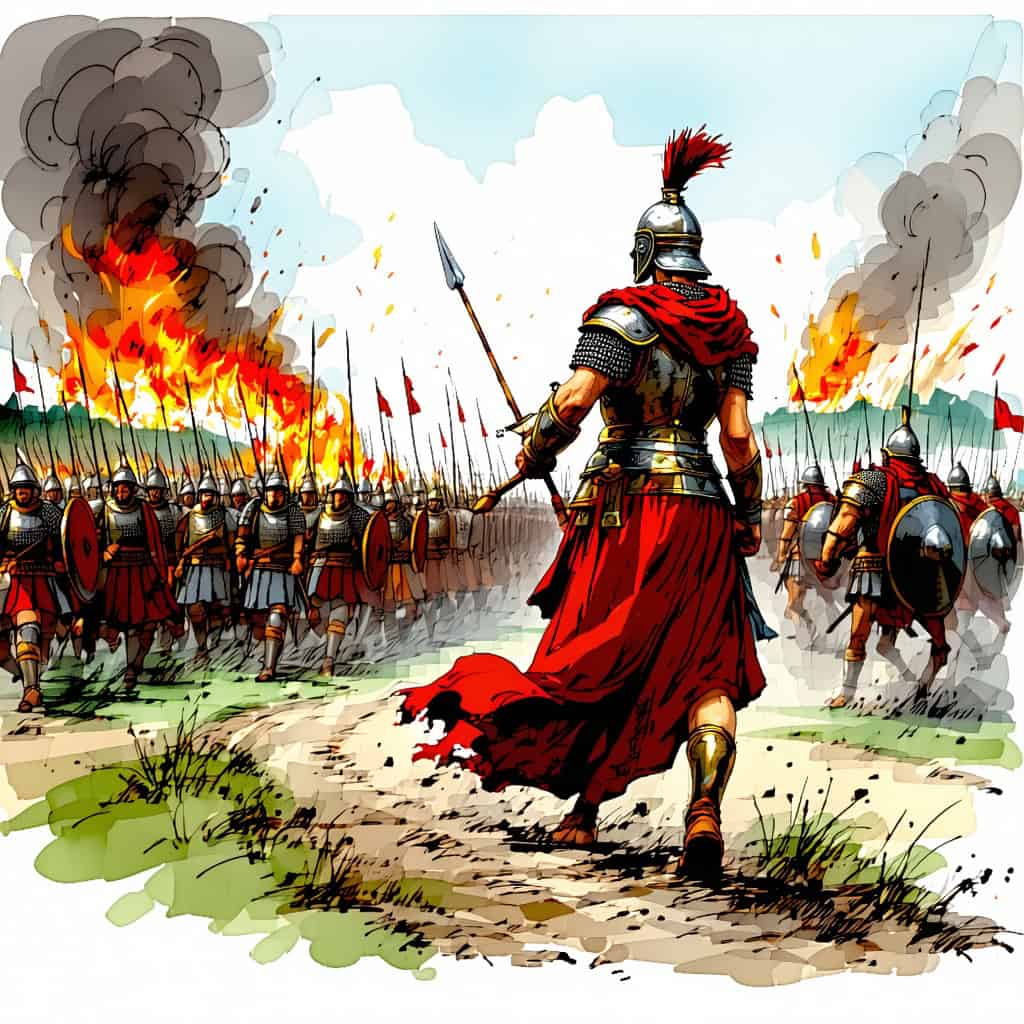
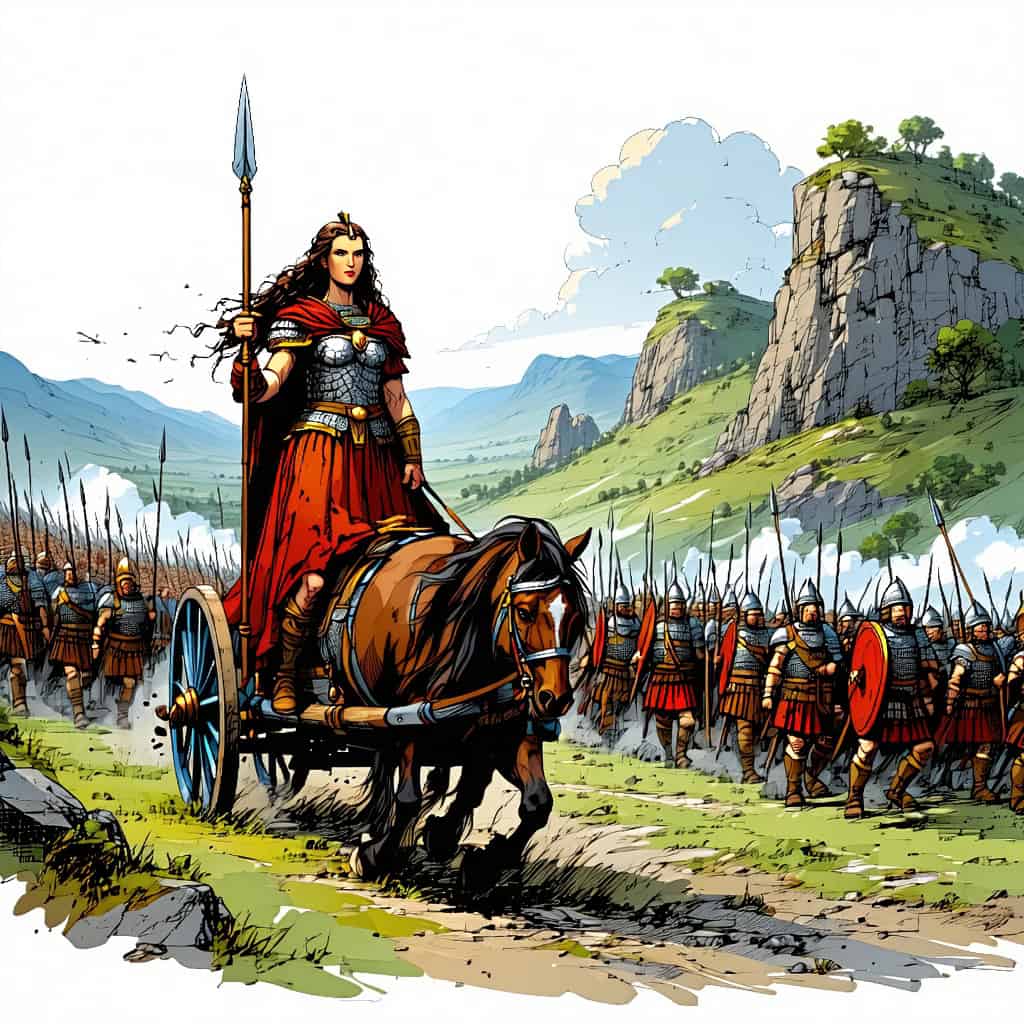
Boudicca
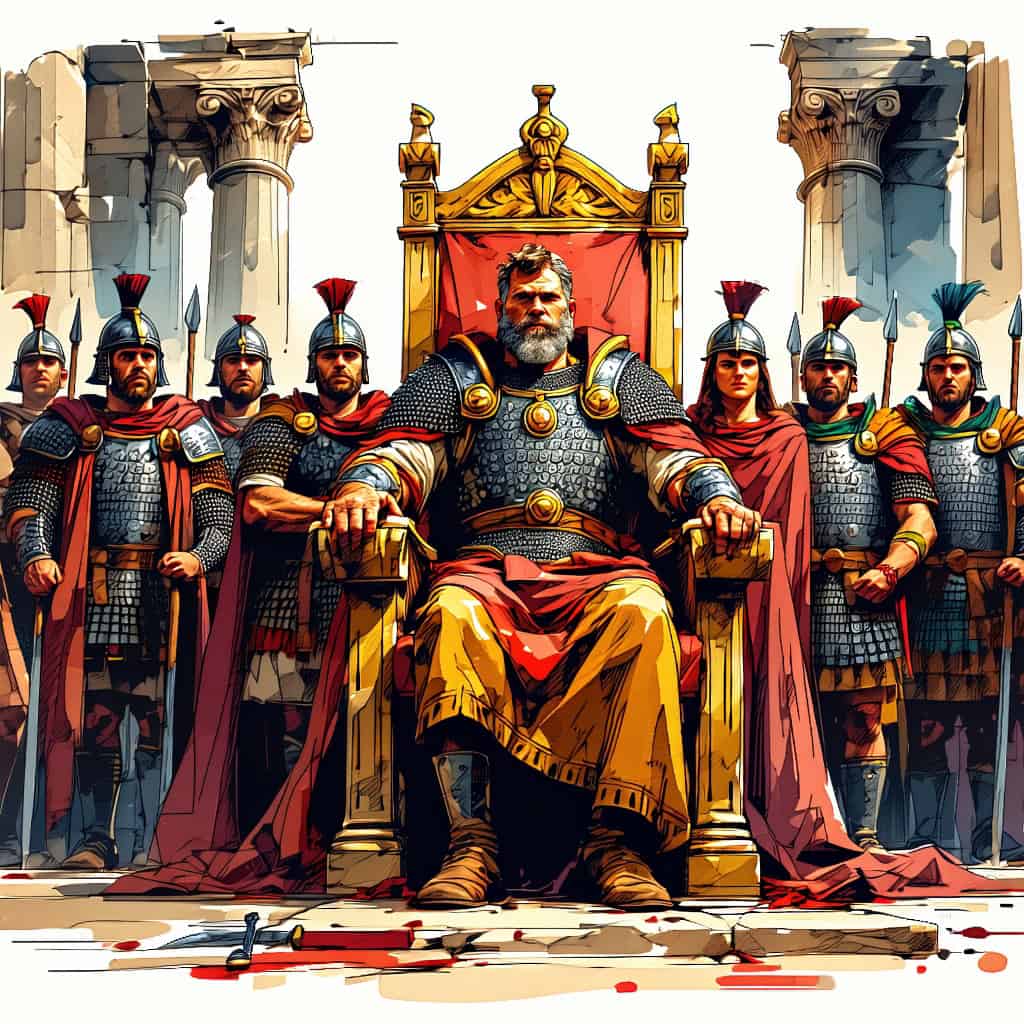
Prasutagus

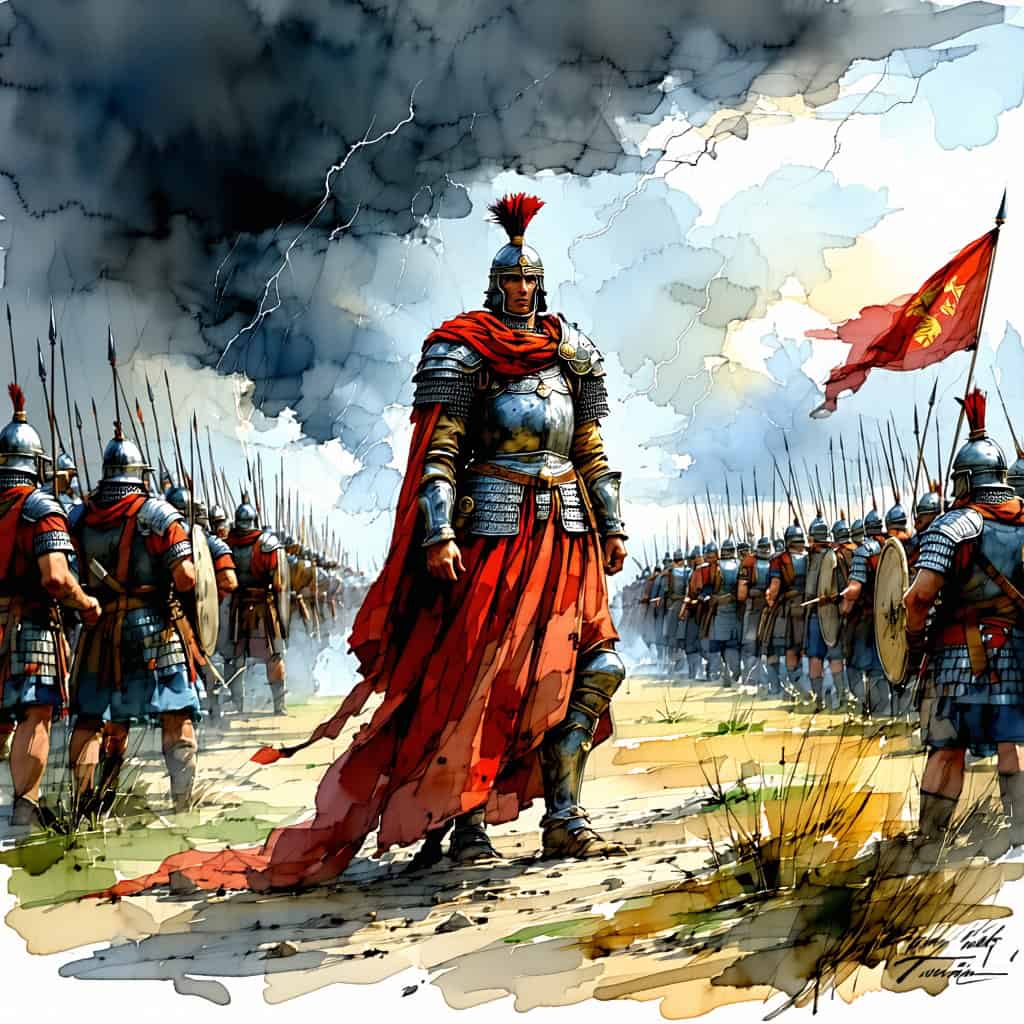
Suetonius Paulinus
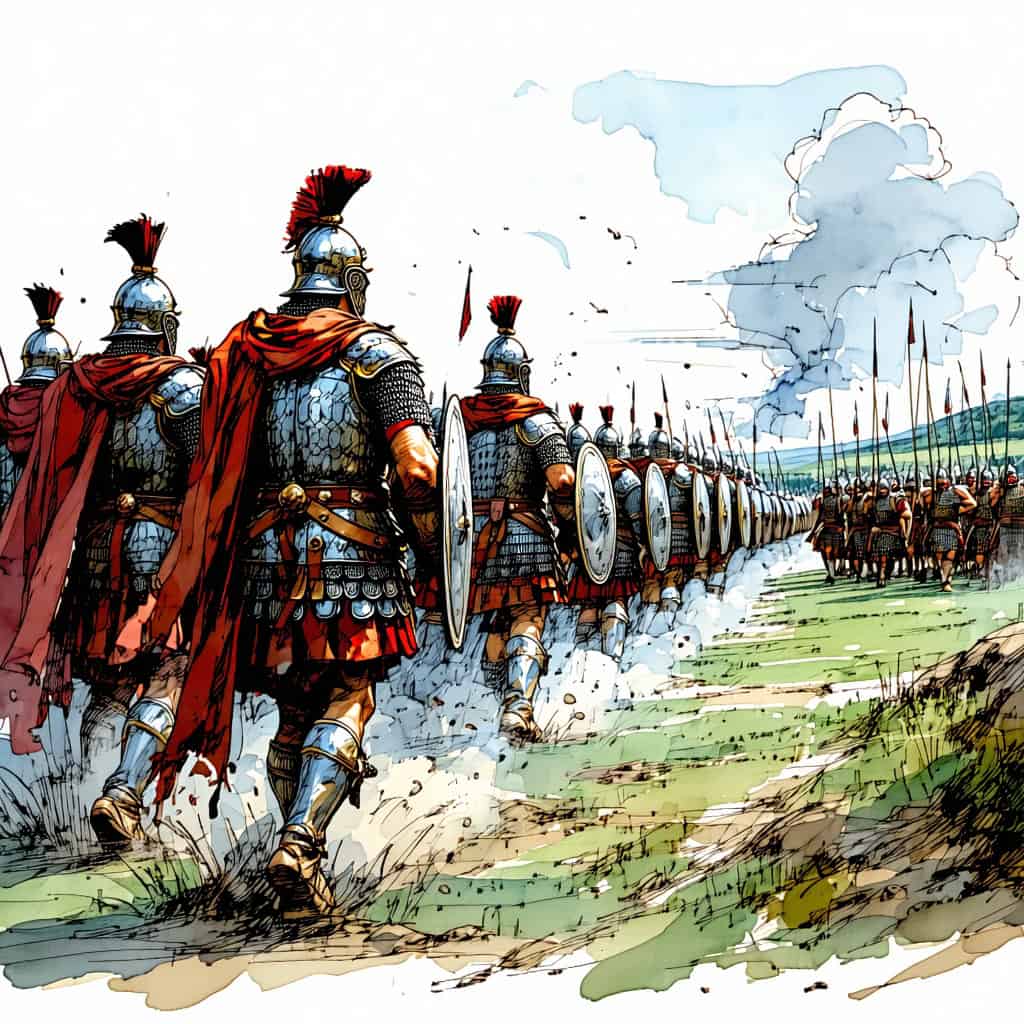
Roman Soldiers
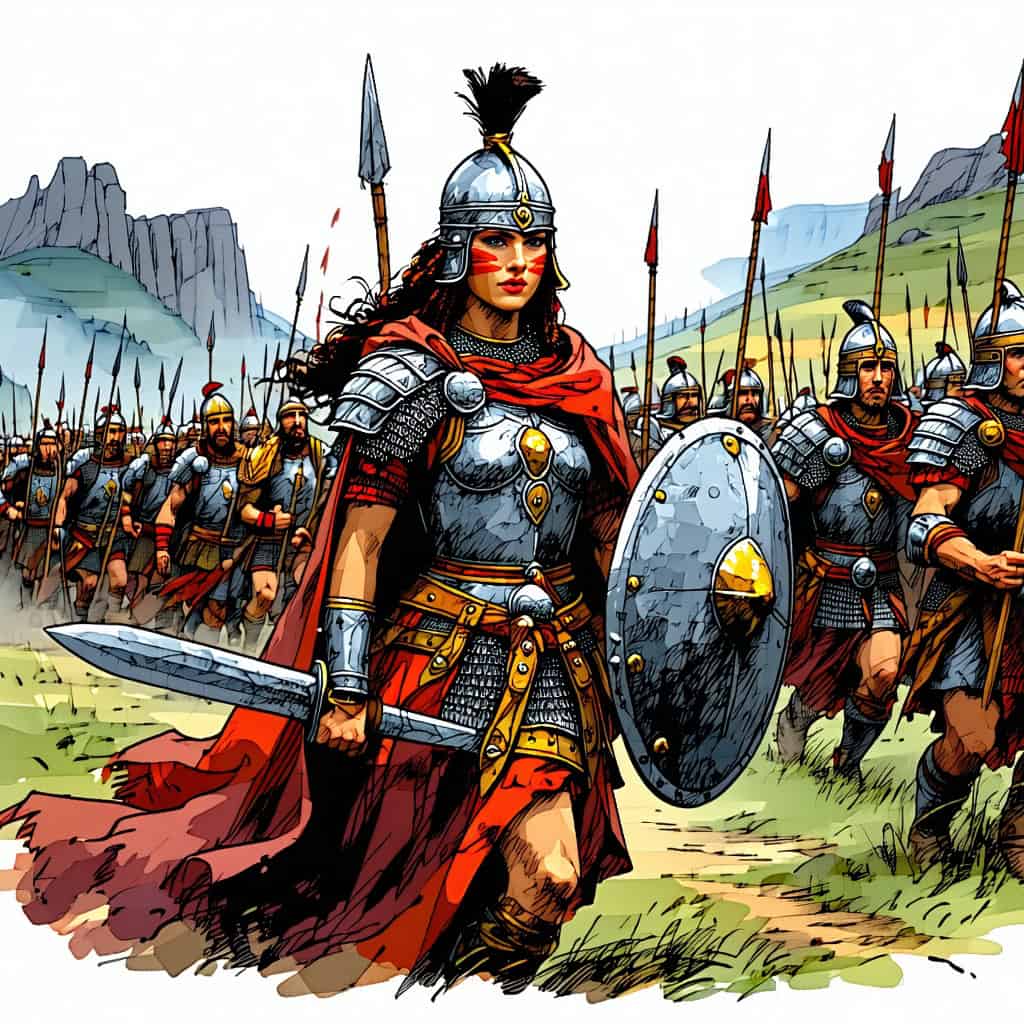
Celtic Tribes

The Early Life of Boudicca
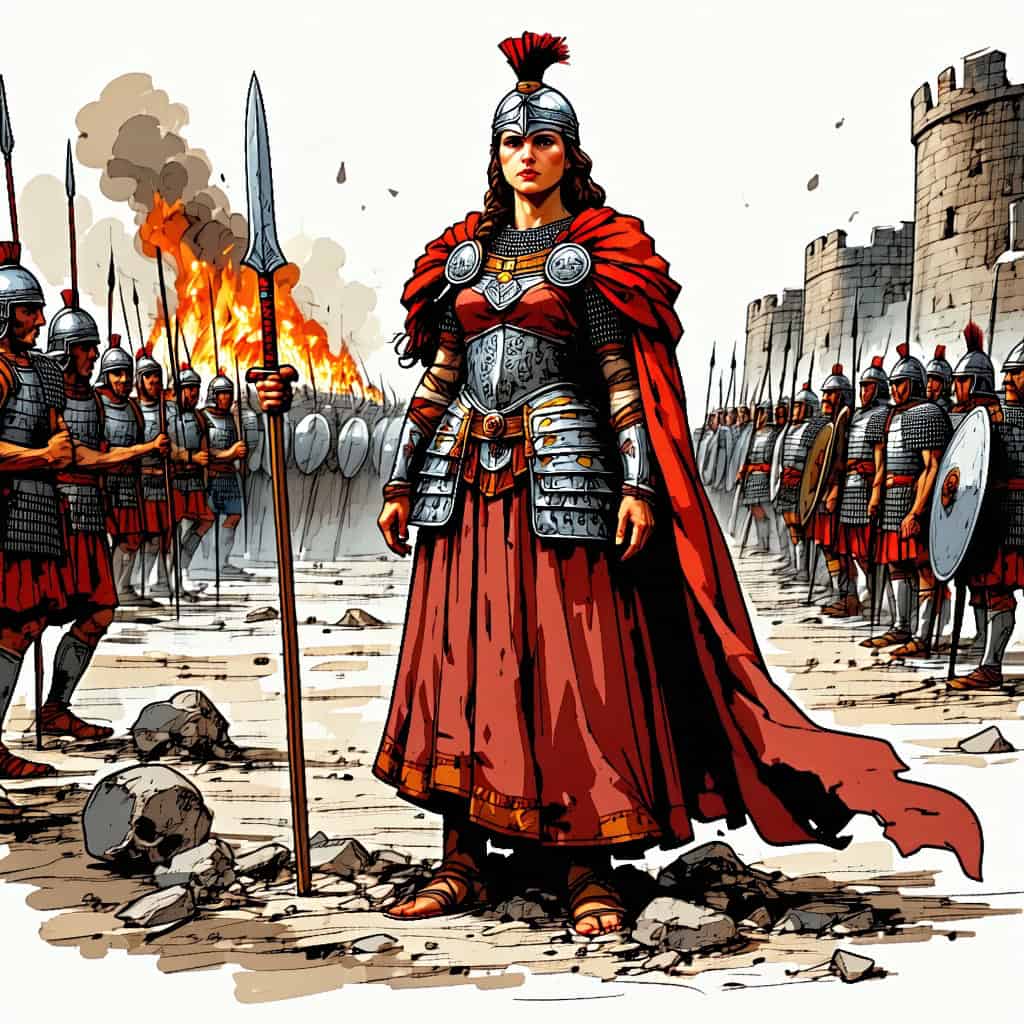
The Roman Invasion

The Rebellion Begins

Boudiccas Army Grows

The Battle of Watling Street

Boudiccas Fate

The Legacy of Boudicca
Lesson Details & Resources
In a Nutshell
- What: A major rebellion led by Boudicca, Queen of the Iceni tribe, against the Roman Empire.
- When: 60/61 AD
- Who: Boudicca, Queen of the Iceni tribe, Roman Empire
- Outcome: Boudicca’s rebellion was initially successful, but ultimately crushed by the Roman forces. It led to significant destruction and loss of life in Roman Britain.
Famous Figures in the Boudicca’s Rebellion
-
Boudicca
Boudicca: Queen of the Iceni tribe who led the rebellion against Roman rule in Britain.
-
Prasutagus
Prasutagus: King of the Iceni tribe and husband of Boudicca, whose death sparked the rebellion.
-
Suetonius Paulinus
Suetonius Paulinus: Roman governor of Britain who led the Roman forces against Boudicca's rebellion.
-
Gaius Julius Alpinus Classicianus
Gaius Julius Alpinus Classicianus: Adviser to the Roman governor and an important figure during the rebellion.
-
Catus Decianus
Catus Decianus: Roman procurator who was responsible for imposing heavy taxes on the Iceni tribe, leading to their revolt.
Timeline of Boudicca’s Rebellion
Boudicca's husband, King Prasutagus of the Iceni tribe, dies
Roman governor Gaius Suetonius Paulinus leads an expedition to conquer the island of Mona (Anglesey)
The Romans seize the Iceni tribe's lands and confiscate their property
Roman soldiers publicly flog Boudicca, and her daughters are raped
Boudicca rallies the Iceni, Trinovantes, and other tribes to revolt against Roman rule
Boudicca's forces launch a surprise attack on the Roman city of Camulodunum (Colchester)
The Romans are caught off guard and suffer heavy casualties in the initial attack
Boudicca's army burns Camulodunum to the ground, including the temple dedicated to Emperor Claudius
Boudicca's forces head towards Londinium (London)
The Romans evacuate Londinium before Boudicca's arrival
Boudicca's army attacks and destroys Londinium, leaving no survivors
Boudicca's forces march towards Verulamium (St. Albans)
The Romans defend Verulamium but eventually surrender, resulting in its destruction
Boudicca's army clashes with the Roman forces under the leadership of Gaius Suetonius Paulinus
Despite being heavily outnumbered, the Romans defeat Boudicca's forces in the Battle of Watling Street
Boudicca either dies (exact cause unknown) or commits suicide to avoid capture
The rebellion is considered quashed, and Roman control is reestablished
Vocabulary List
- Boudicca
- The leader of the rebellion, Queen Boudicca, played a crucial role in organizing the uprising against the Roman occupation.
- Rebellion
- Boudicca's rebellion was a major uprising against Roman rule in Britain during the year 60/61 AD.
- Roman occupation
- The rebellion was a response to the Roman occupation of Britain and the oppressive policies implemented by the Roman authorities.
- Uprising
- Boudicca's rebellion was a significant uprising that aimed to challenge and overthrow Roman control in Britain.
- Warrior queen
- Boudicca is often referred to as a warrior queen due to her leadership in the rebellion and her involvement in battle.
- Celtic tribes
- Boudicca united various Celtic tribes in Britain to form a formidable force against the Romans during the rebellion.
- Camulodunum
- The rebellion started with an attack on the Roman city of Camulodunum (modern-day Colchester), which was a symbol of Roman authority.
- Ruthless
- Boudicca's rebellion was characterized by the ruthless tactics employed by both sides, resulting in widespread destruction and bloodshed.
- Revenge
- One of the motivations behind the rebellion was seeking revenge for the mistreatment, humiliation, and abuse suffered by Boudicca and her people at the hands of the Romans.
- Tacitus
- The Roman historian Tacitus provided a detailed account of Boudicca's rebellion in his work 'Agricola' and 'Annals'.
Key Facts
This is the information used in the fact matching game
- Boudicca was the queen of the Iceni tribe in ancient Britain.
- Boudicca's Rebellion took place in 60/61 AD during the Roman occupation of Britain.
- The rebellion was triggered by the mistreatment of Boudicca and her daughters by the Romans.
- Boudicca's husband, Prasutagus, had left his kingdom jointly to his daughters and the Roman Emperor in his will, but the Romans disregarded it and seized control of the Iceni lands.
- Boudicca rallied several Celtic tribes, including the Trinovantes and the Catuvellauni, to join her rebellion.
- The Roman governor Gaius Suetonius Paulinus was leading a campaign in North Wales when the rebellion broke out, leaving the province vulnerable.
- Boudicca's army successfully defeated the Roman Ninth Legion and destroyed the Roman capital of Roman Britain, Camulodunum (modern-day Colchester).
- The rebellion resulted in the massacre of thousands of Roman citizens and allies, including the destruction of the cities of Camulodunum, Londinium (modern-day London), and Verulamium (modern-day St Albans).
- Boudicca's army is estimated to have numbered around 100,000 warriors.
- The Roman governor eventually gathered his forces and decisively defeated Boudicca's rebellion in a battle in the West Midlands.
- Boudicca's fate after the rebellion is unknown. Some sources claim she died or committed suicide, while others suggest she disappeared.
- Boudicca's rebellion left a lasting impact on Roman-British relations and highlighted the resistance of Celtic tribes against Roman rule.
- The rebellion led to reforms in Roman policy towards the treatment of conquered peoples in Britain.
- Boudicca is often portrayed as a symbol of British resistance and female leadership.
- Despite her defeat, Boudicca's rebellion has been romanticized and celebrated in literature and art over the centuries.
- The exact location of Boudicca's final battle against the Romans is not known.
- Boudicca's rebellion is considered one of the largest and most significant uprisings against Roman rule in Britain.
- The revolt caused significant economic and political disruption in Roman Britain.
- Boudicca's rebellion serves as a symbol of resistance and national pride in modern Britain.
- The events of Boudicca's rebellion have been interpreted differently by different historians, leading to some debate and varying accounts.
Analysis & Significance
Immediate Consequences
Boudicca’s Rebellion in 60/61 AD had immediate consequences that shook Roman Britain. The uprising led to the destruction of three major Roman settlements, including Londinium (modern-day London), and resulted in the death of thousands of Roman citizens and soldiers.
Long-Term Impact
The long-term impact of Boudicca’s Rebellion was significant. It weakened Roman control in Britain and highlighted the vulnerability of Roman rule in the province. The rebellion also influenced future Roman policies towards the native Britons, leading to changes in governance and military strategies in the region.
Cultural Significance Today
Boudicca’s Rebellion remains a symbol of resistance and defiance against oppression. Her legacy is remembered in British folklore and history as a courageous leader who stood up against a powerful empire. The rebellion continues to inspire movements for independence and equality, reminding us of the enduring power of individuals to challenge injustice.
Boudicca’s Rebellion Games


Take Your Learning Offline
Want a convenient, print-ready study guide for this lesson? Become a Memory Wizards Pro member to unlock the downloadable " Memory Scrolls" for this topic and our entire library!
- ✓ Complete Vocabulary Lists
- ✓ Key Facts & Timelines
- ✓ Beautifully Formatted for Print & Mobile