
Summary of The Xiongnu Invasion (215 BCE)
Uncover the ancient mystery of the Xiongnu's legendary invasion tactics.
How Do You Learn Best?
Learn by Reading
Immerse yourself in the 10-minute visual lesson for a comprehensive understanding of the topic.
Learn by Reviewing
Jump directly to the key facts, timeline, and vocabulary lists to build a solid foundation of details.
Learn by Doing
Challenge yourself! Jump straight into the interactive games to learn by trial, error, and discovery.
The Xiongnu Invasion in 10 Minutes

Introduction
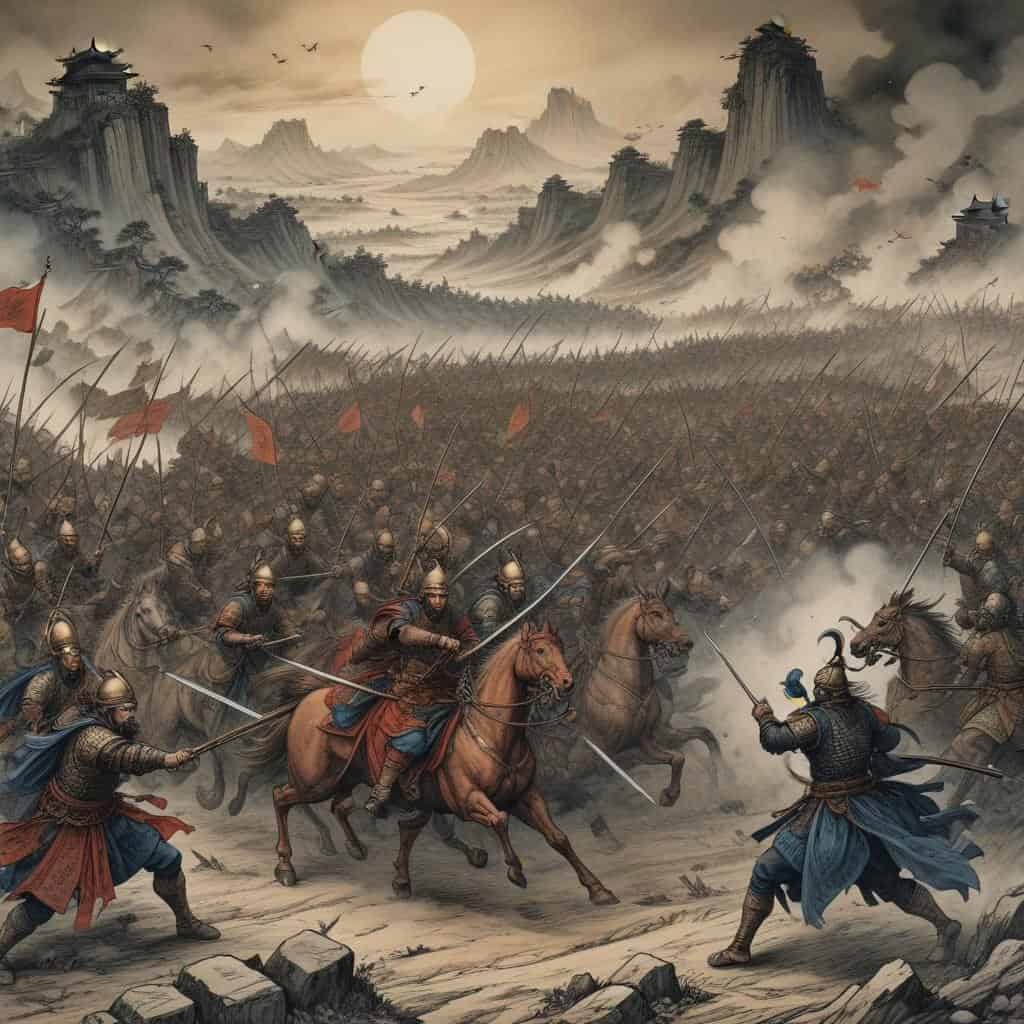
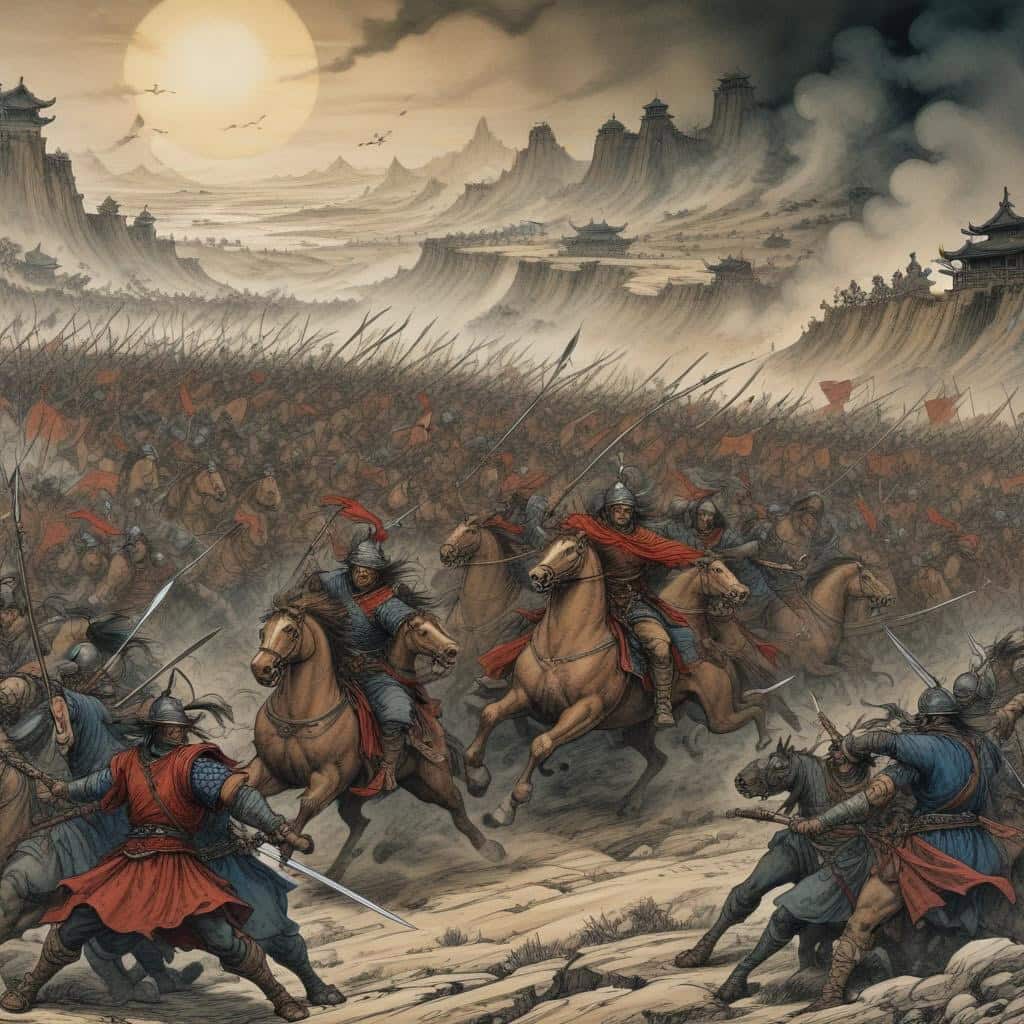
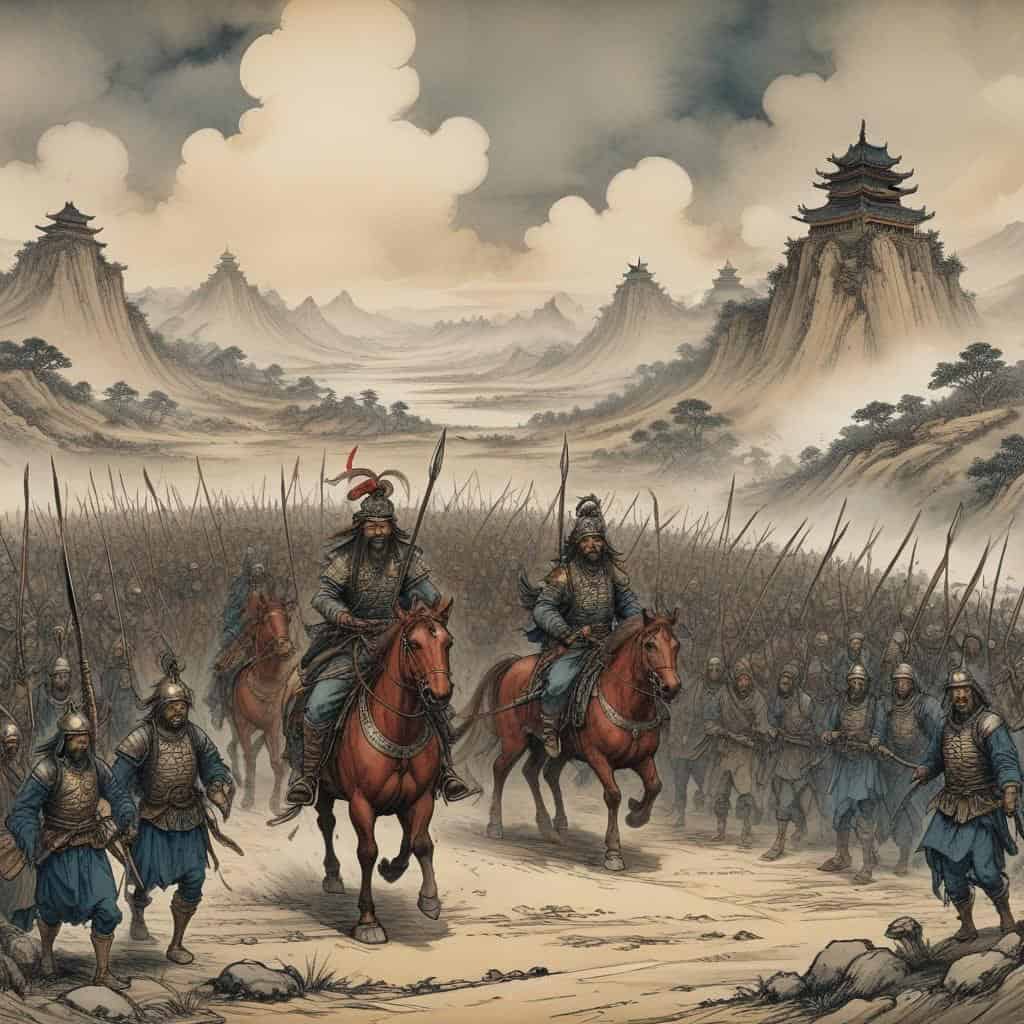
Modu Chanyu
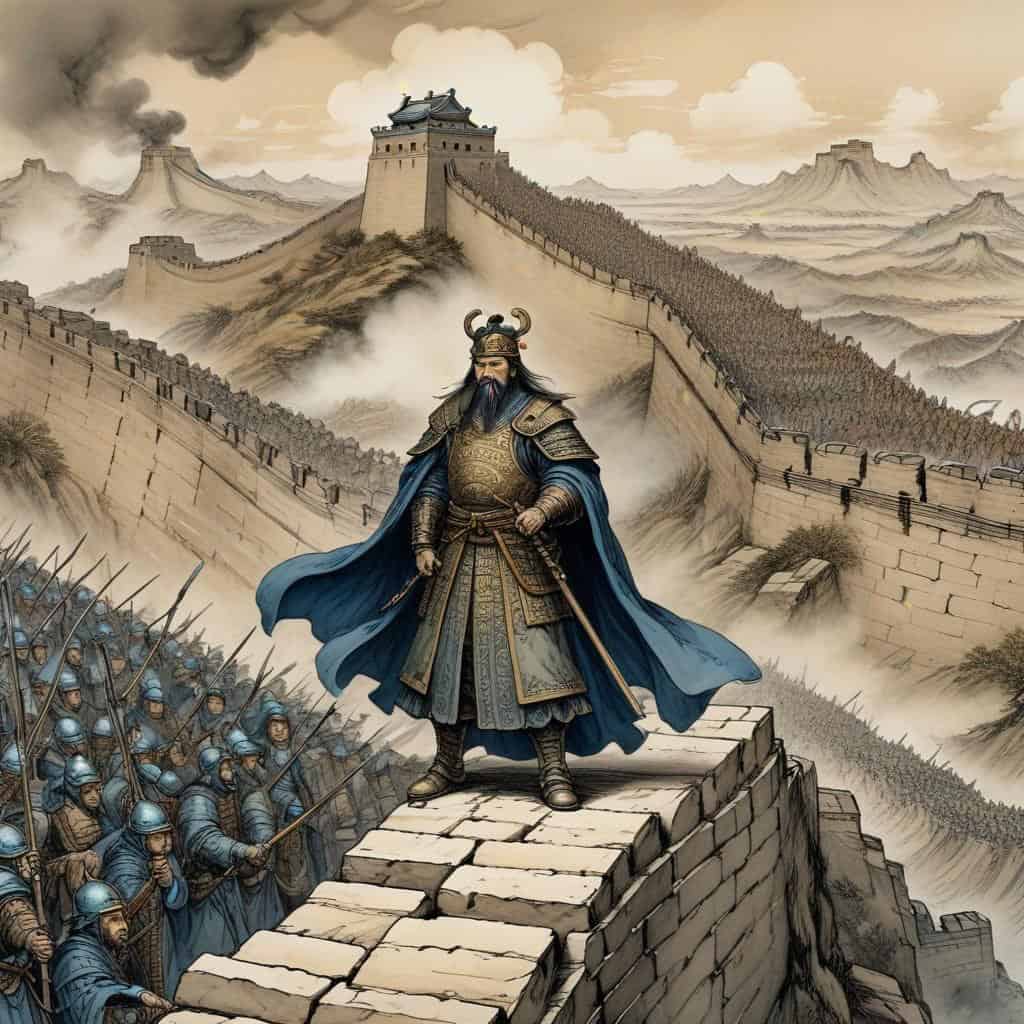
Emperor Qin Shi Huang
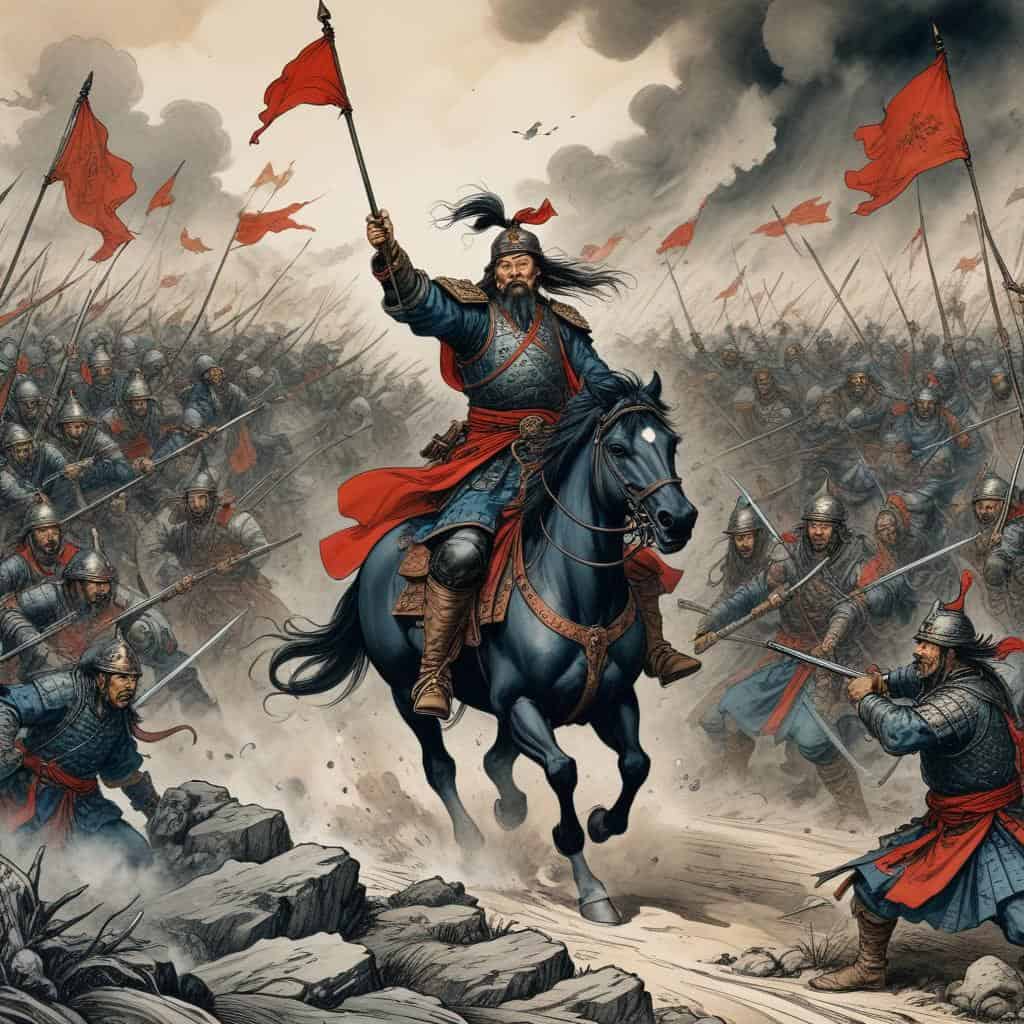
General Meng Tian
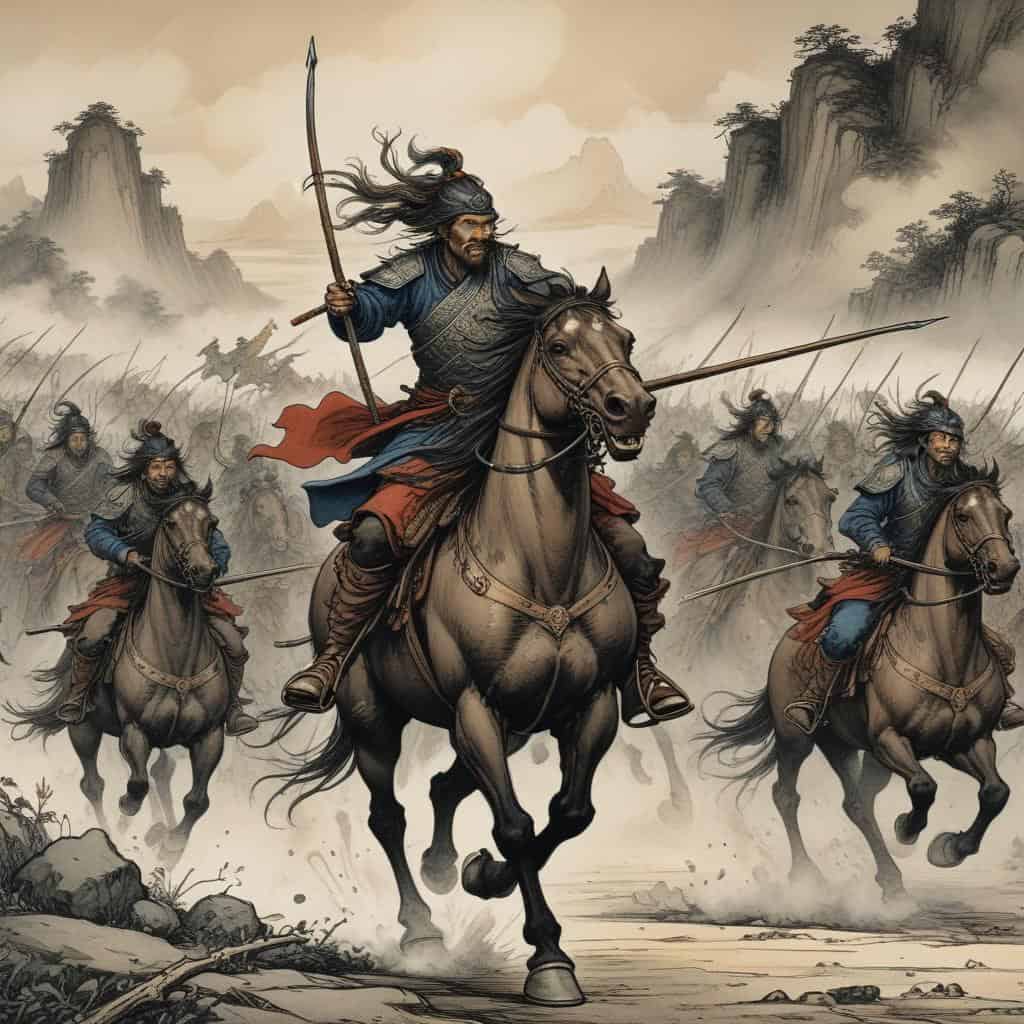
Xiongnu Warriors

The Xiongnu Invasion Begins

The Qin Dynasty Prepares for Battle

The First Battles Erupt

The Qin Dynastys Defeats

The Xiongnu Advance

The Turning Point

The Xiongnu Retreat

The Aftermath

The Legacy of the Xiongnu Invasion
Lesson Details & Resources
In a Nutshell
- What: The Xiongnu Invasion of China
- When: 215 BCE
- Who: Xiongnu nomadic confederation, Chinese Han Dynasty
- Outcome: The Xiongnu invasion led to significant losses for the Han Dynasty and the establishment of the Great Wall of China as a defense mechanism.
Famous Figures in the The Xiongnu Invasion
-
Emperor Qin Shi Huang
Emperor Qin Shi Huang was the first emperor of China and responsible for the unification of China.
-
Modu Chanyu
Modu Chanyu was the founder of the Xiongnu Empire and led the invasion of China in 215 BCE.
-
Li Guang
Li Guang was a general of the Qin dynasty who fought against the Xiongnu invasion.
-
Wang Jian
Wang Jian was a general of the Qin dynasty who also fought against the Xiongnu invasion.
-
Huo Qubing
Huo Qubing was a general of the Han dynasty who successfully repelled the Xiongnu invasion and expanded Han territory.
Timeline of The Xiongnu Invasion
Xiongnu tribe migrates westward from northern China
Xiongnu tribe establishes dominance over neighboring nomadic tribes
Xiongnu tribe begins raiding Han Dynasty territory
Emperor Qin Shi Huang of the Qin Dynasty sends troops to defend against Xiongnu incursions
First major battle between Xiongnu and Han forces
Han Dynasty suffers significant losses in battle against the Xiongnu
Xiongnu continue to raid and pillage Han Dynasty territory
Han Dynasty seeks alliances with neighboring tribes to counter Xiongnu threat
Xiongnu launch a large-scale invasion of Han Dynasty territory
Han Dynasty mobilizes its military forces to repel the Xiongnu invasion
Han Dynasty suffers defeats in initial engagements with the Xiongnu forces
Emperor Qin Shi Huang calls for reinforcements from vassal states to aid in the defense against the Xiongnu invasion
Allied forces from vassal states join the Han Dynasty in the fight against the Xiongnu invaders
Han Dynasty forces, with the help of allied troops, launch a counteroffensive against the Xiongnu invaders
Xiongnu forces are pushed back and retreat to their homeland in northern China
Han Dynasty consolidates its control over the territories previously held by the Xiongnu
Treaty is signed between the Han Dynasty and the Xiongnu tribe, establishing boundaries and terms for peaceful coexistence
Emperor Qin Shi Huang declares victory over the Xiongnu invaders and praises the bravery of his troops and allies
Xiongnu tribe regroups and begins planning for future incursions into Han Dynasty territory
Han Dynasty strengthens its defenses and prepares for potential future conflicts with the Xiongnu tribe
Vocabulary List
- Xiongnu
- The Xiongnu were a nomadic confederation that invaded China in 215 BCE.
- Invasion
- The Xiongnu invasion of China in 215 BCE was a significant event in Chinese history.
- Confederation
- The Xiongnu were a confederation of different tribes that banded together for military purposes.
- Nomadic
- The Xiongnu were a nomadic people who moved from place to place in search of pasture for their livestock.
- Warfare
- The Xiongnu were skilled in the art of warfare and posed a significant threat to the Chinese dynasties.
Key Facts
This is the information used in the fact matching game
- The Xiongnu were a nomadic confederation of Central Asian tribes.
- The Xiongnu invaded the Han Dynasty in 215 BCE.
- The Xiongnu were known for their skilled horsemen and archers.
- The Xiongnu Invasion marked the beginning of a long period of conflict between the Xiongnu and the Han Dynasty.
- The Xiongnu Invasion led to the construction of the Great Wall of China as a defense against further invasions.
- The Xiongnu were eventually defeated by the Han Dynasty in 60 BCE.
- The Xiongnu Invasion had a significant impact on the economy and stability of the Han Dynasty.
- The Xiongnu were known for their use of tactics such as hit-and-run raids and ambushes.
- The Xiongnu were able to maintain their independence from the Han Dynasty for several centuries.
- The Xiongnu Invasion forced the Han Dynasty to adopt new military strategies and technologies.
- The Xiongnu were skilled in the art of diplomacy and often formed alliances with other nomadic tribes.
- The Xiongnu Invasion led to increased trade and cultural exchange between Central Asia and China.
- The Xiongnu were known for their distinctive clothing and hairstyle, which often included topknots.
- The Xiongnu Invasion resulted in the displacement of many Chinese farmers and villagers.
- The Xiongnu were skilled in the art of horsemanship and were able to cover long distances quickly.
- The Xiongnu Invasion led to the development of new military tactics and technologies in China.
- The Xiongnu were known for their use of chariots in battle.
- The Xiongnu Invasion had a lasting impact on the political and social structure of China.
- The Xiongnu were able to maintain their control over vast territories through a system of alliances and tribute payments.
- The Xiongnu Invasion led to the eventual downfall of the Xiongnu confederation.
Analysis & Significance
Immediate Consequences
The Xiongnu Invasion of 215 BCE had immediate consequences on the Han Dynasty, leading to significant territorial losses and forcing the Chinese to pay tribute to the Xiongnu in exchange for peace. This invasion also marked the beginning of a series of conflicts between the two powers.
Long-Term Impact
The lasting impact of the Xiongnu Invasion was the eventual weakening of the Han Dynasty, as they struggled to contain the Xiongnu threat for centuries. This event also paved the way for the Silk Road trade route, connecting East and West, as the Chinese sought to establish diplomatic relations with neighboring states to counter the Xiongnu.
Cultural Significance Today
The Xiongnu Invasion remains a significant event in Chinese history, symbolizing the challenges of maintaining power and stability in a vast empire. The legacy of this invasion can be seen in modern Chinese military strategies and diplomatic relations, highlighting the importance of learning from historical conflicts to shape future decisions.
The Xiongnu Invasion Games


Take Your Learning Offline
Want a convenient, print-ready study guide for this lesson? Become a Memory Wizards Pro member to unlock the downloadable " Memory Scrolls" for this topic and our entire library!
- ✓ Complete Vocabulary Lists
- ✓ Key Facts & Timelines
- ✓ Beautifully Formatted for Print & Mobile