
Summary of The Great Wall Construction
Witness the monumental beginning of an architectural wonder in ancient China.
How Do You Learn Best?
Learn by Reading
Immerse yourself in the 10-minute visual lesson for a comprehensive understanding of the topic.
Learn by Reviewing
Jump directly to the key facts, timeline, and vocabulary lists to build a solid foundation of details.
Learn by Doing
Challenge yourself! Jump straight into the interactive games to learn by trial, error, and discovery.
The Great Wall Construction in 10 Minutes
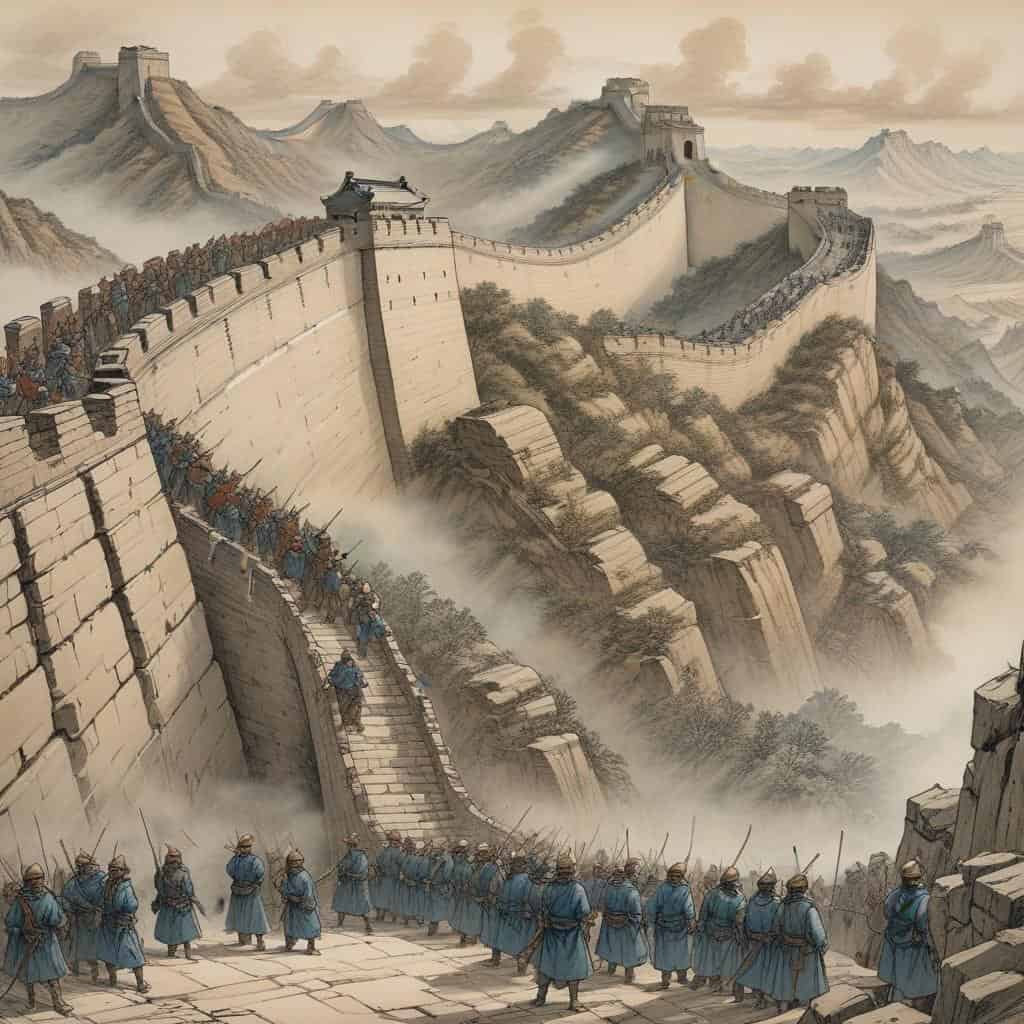
Introduction
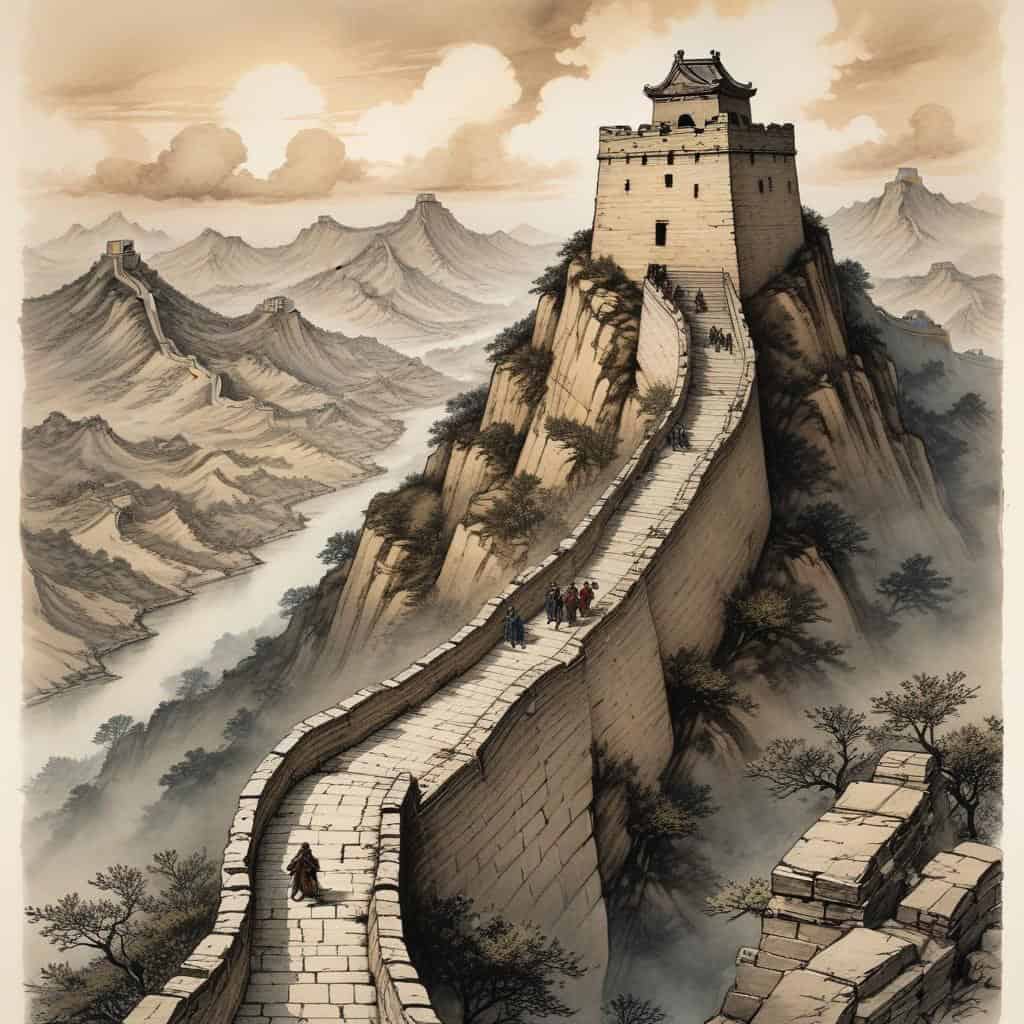
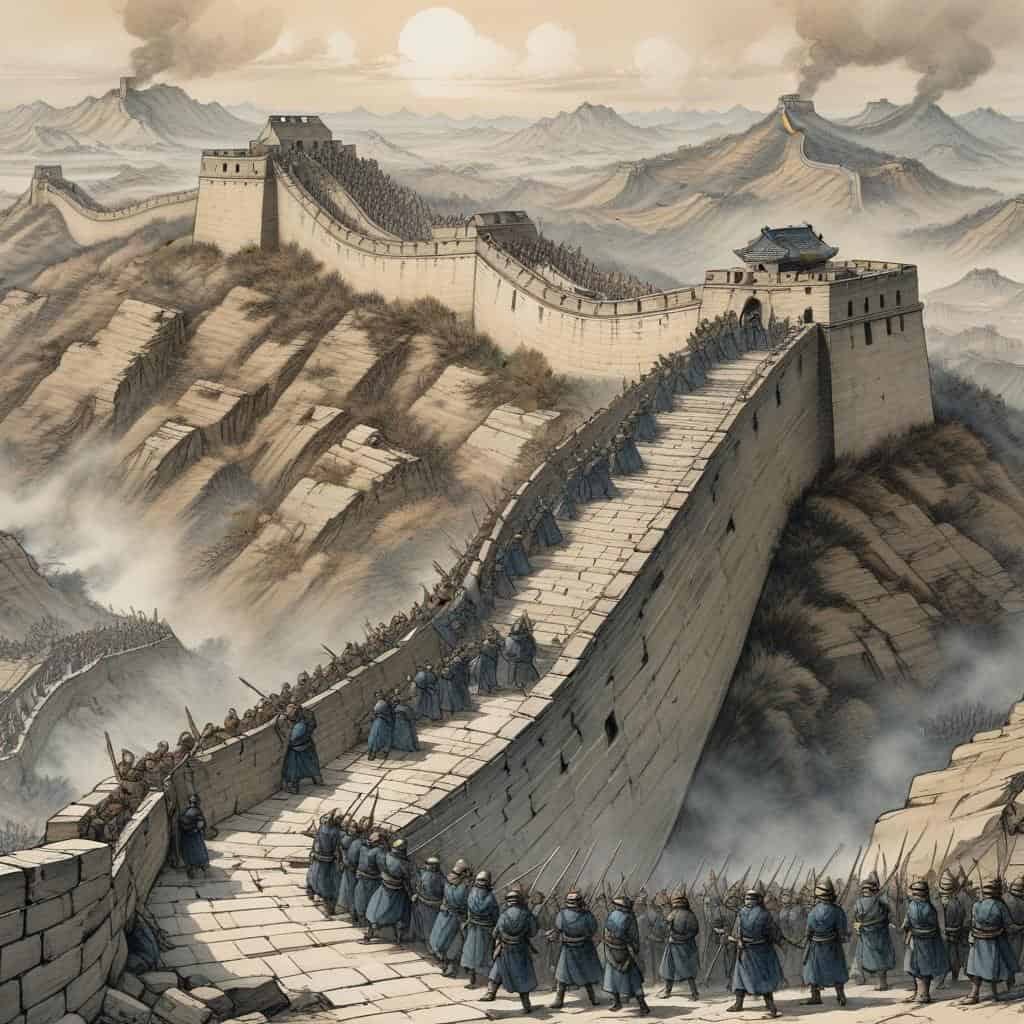
Emperor Qin Shi Huang
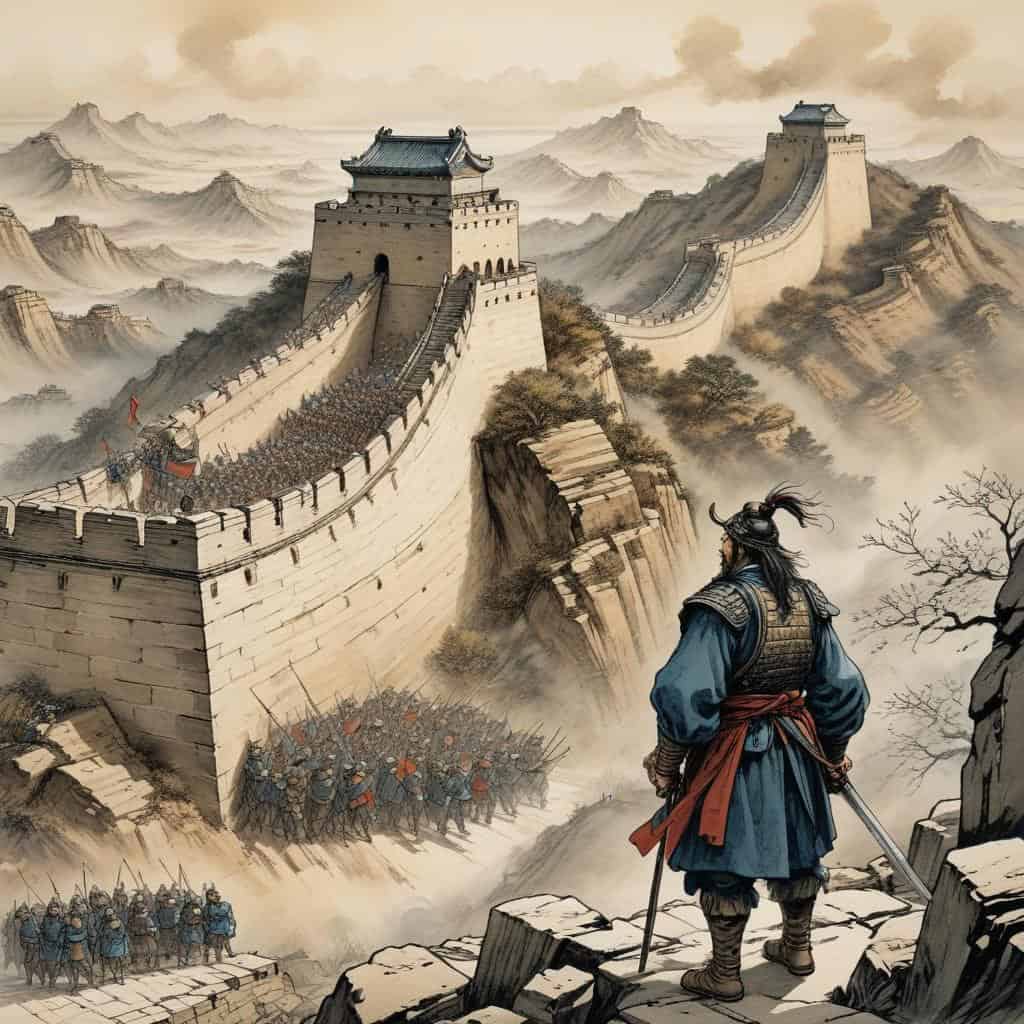
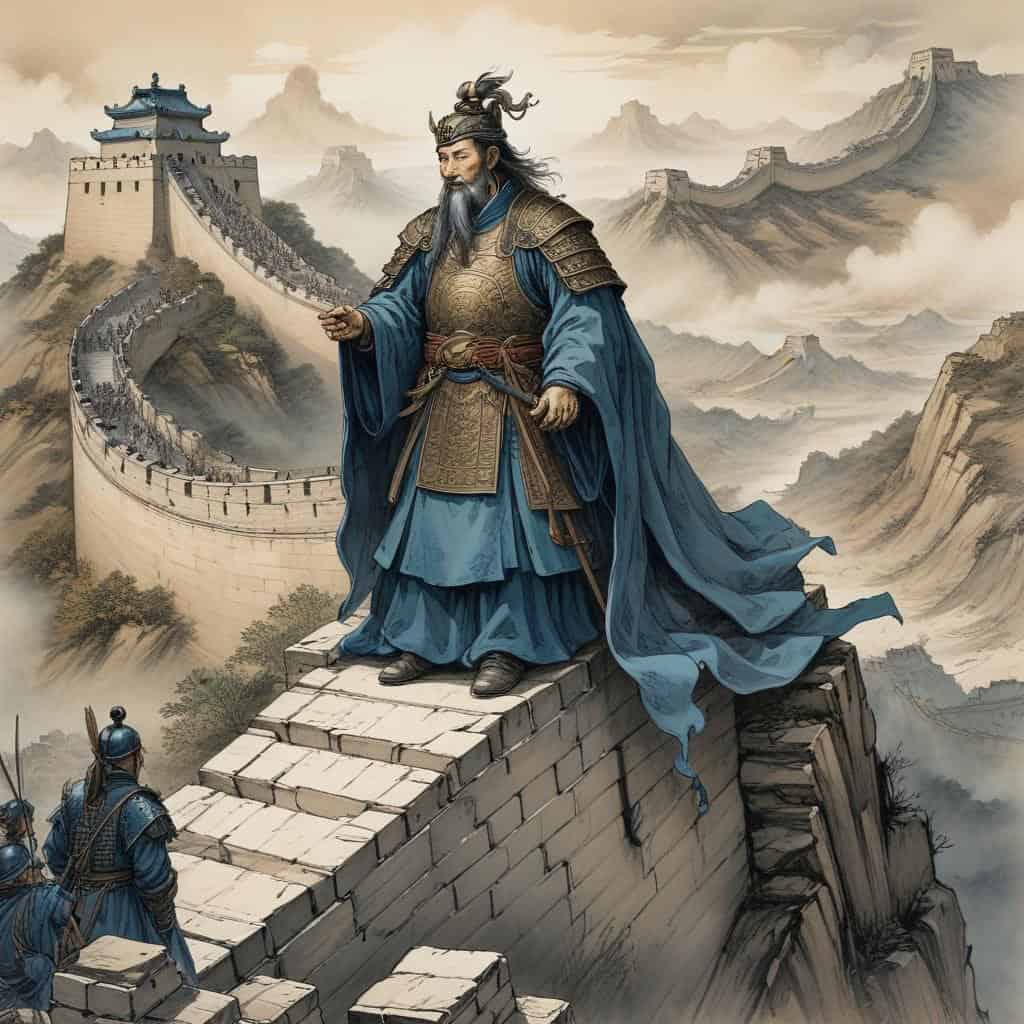
General Meng Tian
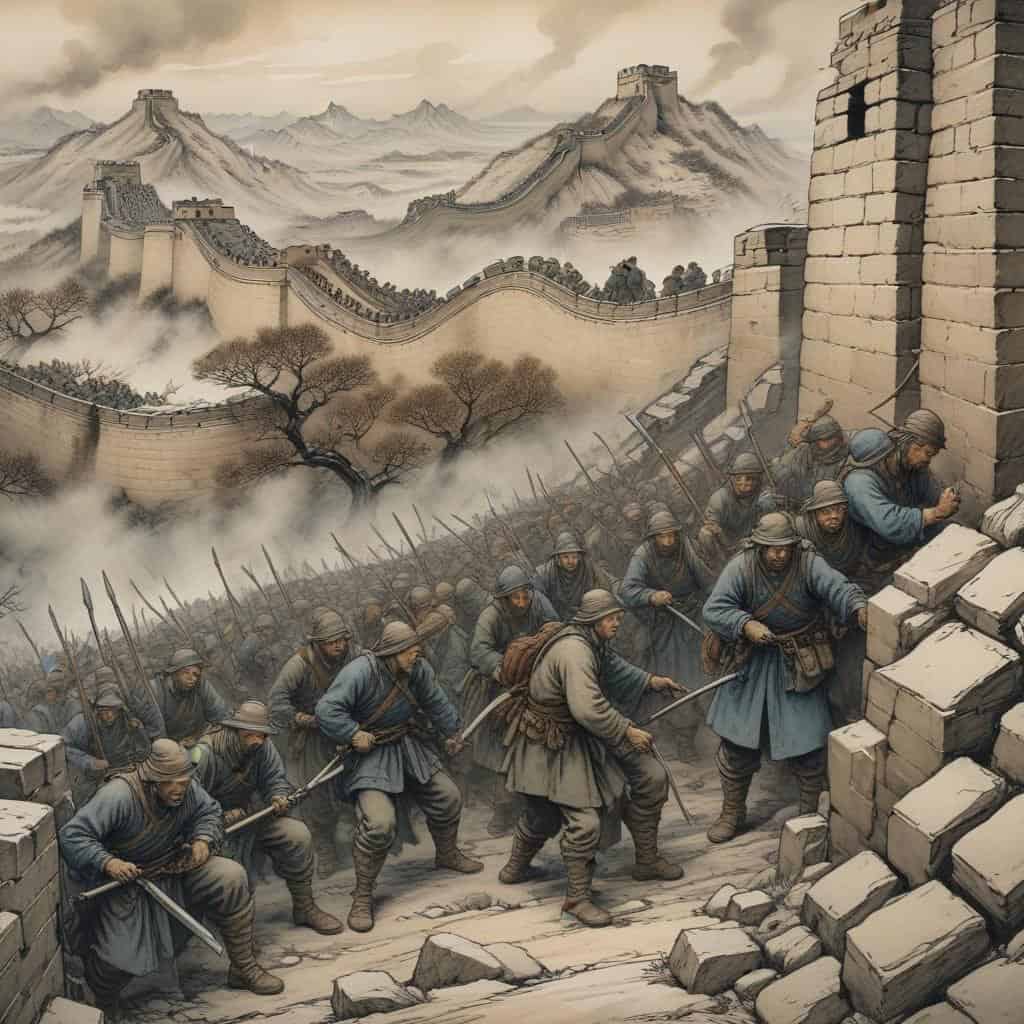
Soldiers and Laborers

The Plan to Build a Great Wall

Organization and Coordination

Selection of Materials

Construction Techniques

Protective Features

Challenges Faced

Significance of the Great Wall

Legacy of the Great Wall

Historical Impact

Continued Maintenance and Preservation
Lesson Details & Resources
In a Nutshell
- What: The beginning of the construction of the Great Wall of China
- When: 214 BCE
- Who: Qin Shi Huang, Chinese laborers
- Outcome: The Great Wall became a symbol of China’s strength and unity
Famous Figures in the The Great Wall Construction
-
Qin Shi Huang
Qin Shi Huang was the first emperor of China who ordered the construction of the Great Wall to protect the northern borders.
-
General Meng Tian
General Meng Tian was a military leader who oversaw the initial stages of the Great Wall construction.
-
General Sima Qian
General Sima Qian was a historian and official who documented the construction of the Great Wall in his work 'Records of the Grand Historian'.
Timeline of The Great Wall Construction
Qin Shi Huang becomes the first Emperor of China
Construction of the Great Wall of China begins
Qin Dynasty completes the first version of the Great Wall
Qin Dynasty is overthrown by the Han Dynasty
Han Dynasty extends and repairs the Great Wall
Great Wall is further extended during the Northern Wei Dynasty
Great Wall is rebuilt and reinforced during the Ming Dynasty
Great Wall is breached by the Manchus, leading to the fall of the Ming Dynasty
Great Wall undergoes reconstruction and repairs during the Qing Dynasty
Last major construction on the Great Wall takes place during the Qing Dynasty
Great Wall is largely abandoned and falls into disrepair during the 19th and early 20th centuries
Great Wall is recognized as a UNESCO World Heritage Site
Great Wall becomes a popular tourist destination
Vocabulary List
- Emperor Qin Shi Huang
- The Great Wall construction was ordered by Emperor Qin Shi Huang in 214 BCE.
- Defensive fortifications
- The Great Wall was intended to be a series of defensive fortifications along the northern border of China.
- Labor force
- A large labor force was used to build the Great Wall, consisting of soldiers, prisoners, and conscripted civilians.
- Watchtowers
- Watchtowers were built along the Great Wall to provide a vantage point for guards to watch for potential invaders.
- Strategic locations
- The Great Wall was built in strategic locations, such as mountain passes and river crossings, to maximize its defensive capabilities.
- Masonry
- The Great Wall was constructed using a combination of masonry and other building materials, such as earth and wood.
- Signal fires
- Signal fires were used along the Great Wall to alert nearby sections of any impending attacks.
- Invasions
- The construction of the Great Wall was in response to frequent invasions by nomadic tribes from the north.
Key Facts
This is the information used in the fact matching game
- The construction of the Great Wall of China began in 214 BCE during the Qin Dynasty.
- The purpose of the Great Wall was to protect China from invasions by nomadic tribes from the north.
- The construction of the Great Wall was overseen by General Meng Tian.
- The initial construction of the Great Wall was made of rammed earth and wood.
- The Great Wall was built using forced labor from soldiers, peasants, and criminals.
- The construction of the Great Wall continued for over 2,000 years, with different dynasties adding to its length and strength.
- The Great Wall stretches over 13,000 miles from east to west across China.
- The Great Wall is not a single continuous wall but a series of walls and fortifications built by different dynasties.
- The Great Wall was not very effective in preventing invasions, as it was breached several times throughout history.
- The Great Wall is one of the most iconic symbols of China and is a UNESCO World Heritage site.
- The Great Wall was not only used for defense but also served as a means of transportation and communication.
- The Great Wall was heavily guarded with watchtowers, beacon towers, and troops stationed along its length.
- The Great Wall was also used for border control, immigration, and customs duties.
- The Great Wall fell into disrepair during the Ming Dynasty but was later restored and reinforced.
- The Great Wall was made a UNESCO World Heritage site in 1987.
- The Great Wall attracts millions of tourists from around the world each year.
- The Great Wall has been featured in numerous films, books, and artworks, making it a cultural icon.
- The Great Wall is one of the Seven Wonders of the Medieval World.
- The Great Wall is a symbol of China's enduring strength and determination to protect its borders.
- The construction of the Great Wall was a monumental feat of engineering and human labor that has stood the test of time.
Analysis & Significance
Immediate Consequences
With the construction of the Great Wall beginning in 214 BCE, the immediate consequences were felt in the strengthening of the defense mechanisms of the Qin Dynasty. The wall served as a barrier against invasions from nomadic tribes, providing security and protection for the Chinese empire.
Long-Term Impact
The Great Wall’s construction had a lasting impact on Chinese history, culture, and military strategies. It became a symbol of China’s strength and determination to protect its borders. The wall also facilitated trade and communication along the Silk Road, contributing to the exchange of ideas, goods, and cultures between East and West.
Cultural Significance Today
The Great Wall continues to be a symbol of Chinese resilience and unity. It is a UNESCO World Heritage Site and a popular tourist destination, attracting millions of visitors each year. The wall’s legacy serves as a reminder of the importance of protecting one’s heritage and the enduring impact of ancient civilizations on modern society.
The Great Wall Construction Games


Take Your Learning Offline
Want a convenient, print-ready study guide for this lesson? Become a Memory Wizards Pro member to unlock the downloadable " Memory Scrolls" for this topic and our entire library!
- ✓ Complete Vocabulary Lists
- ✓ Key Facts & Timelines
- ✓ Beautifully Formatted for Print & Mobile