
Summary of The Construction of the Qin Canal (221 BCE)
Unravel the ancient secrets of China's remarkable engineering marvel.
How Do You Learn Best?
Learn by Reading
Immerse yourself in the 10-minute visual lesson for a comprehensive understanding of the topic.
Learn by Reviewing
Jump directly to the key facts, timeline, and vocabulary lists to build a solid foundation of details.
Learn by Doing
Challenge yourself! Jump straight into the interactive games to learn by trial, error, and discovery.
The Construction of the Qin Canal in 10 Minutes
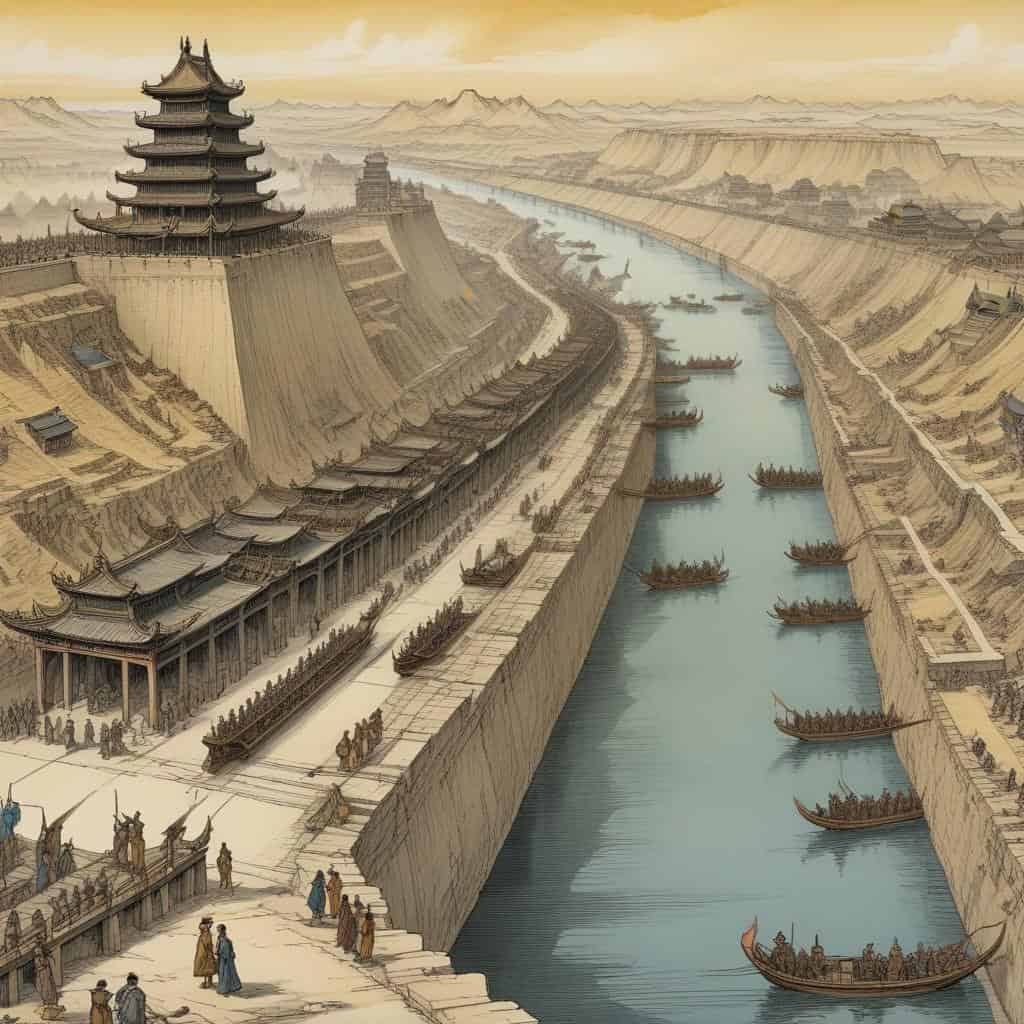
Introduction
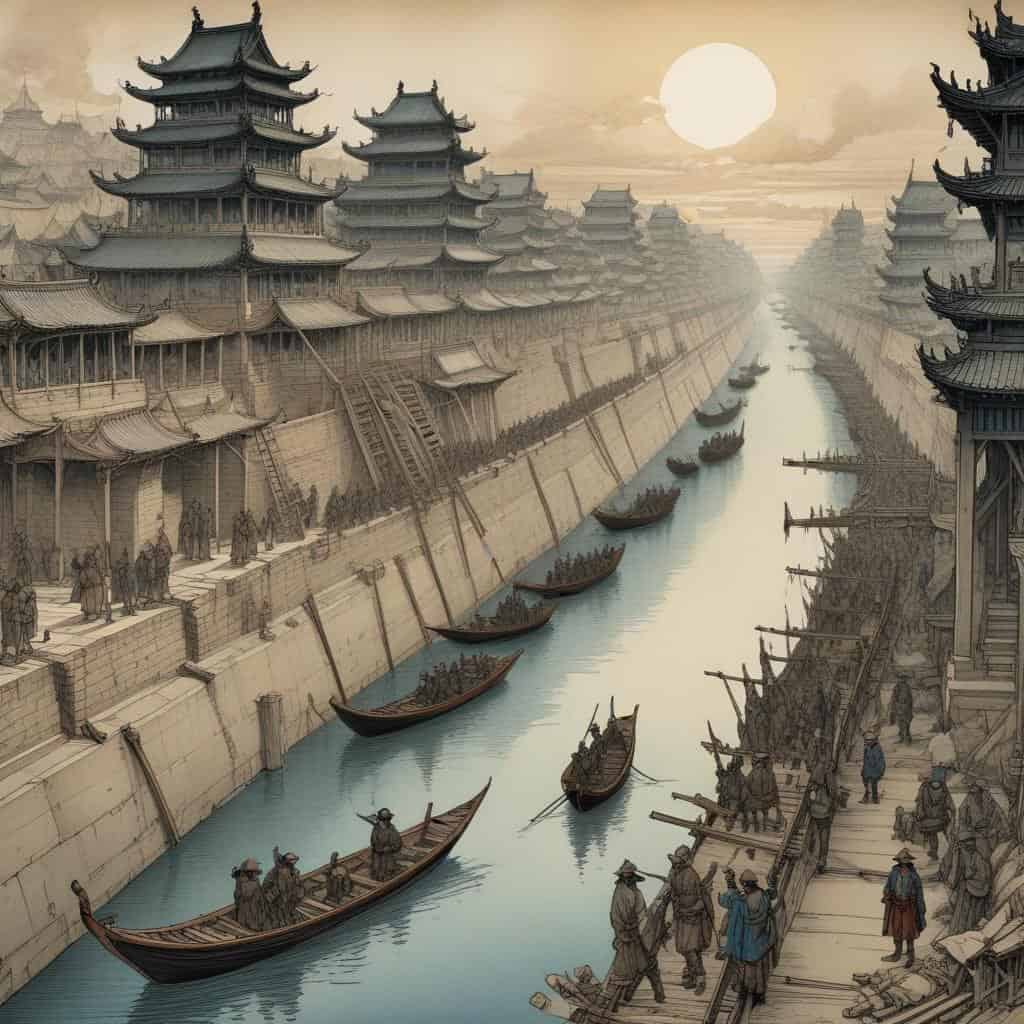
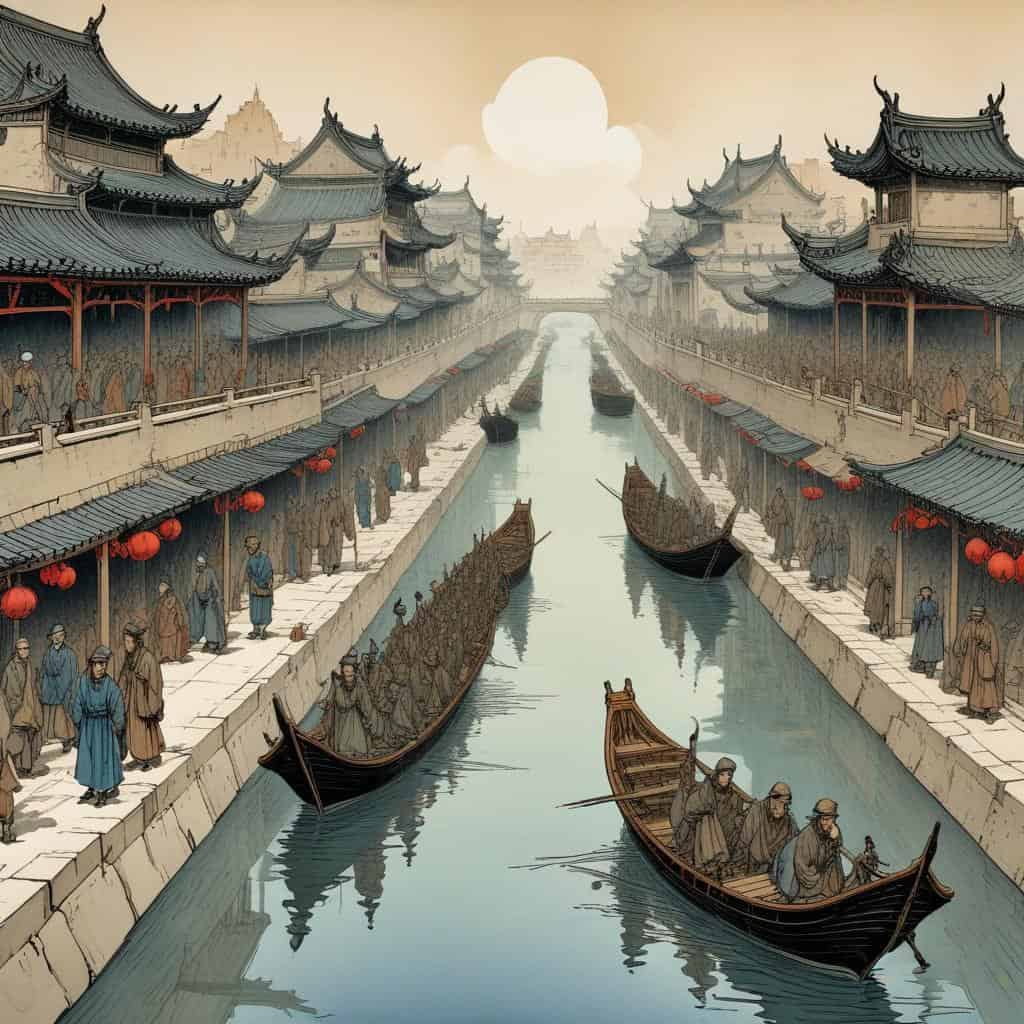
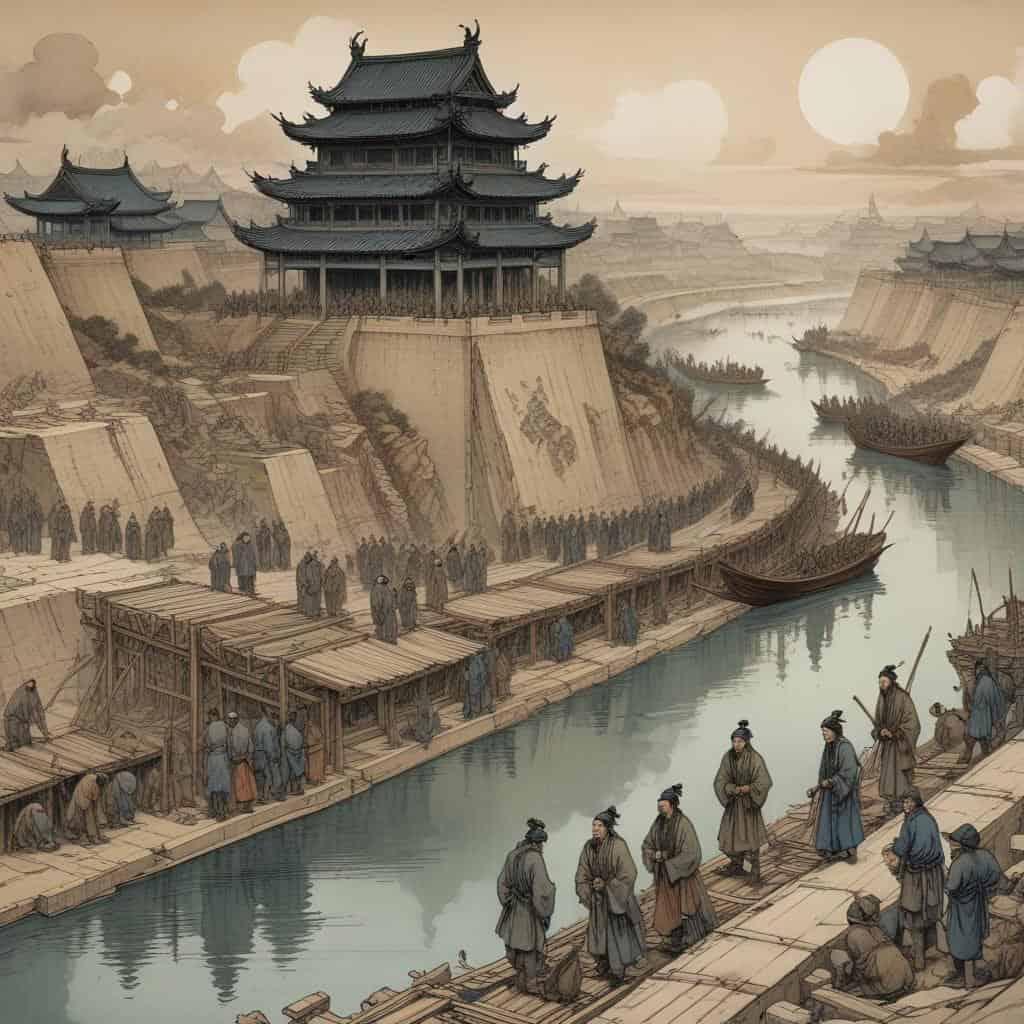
Qin Shi Huang
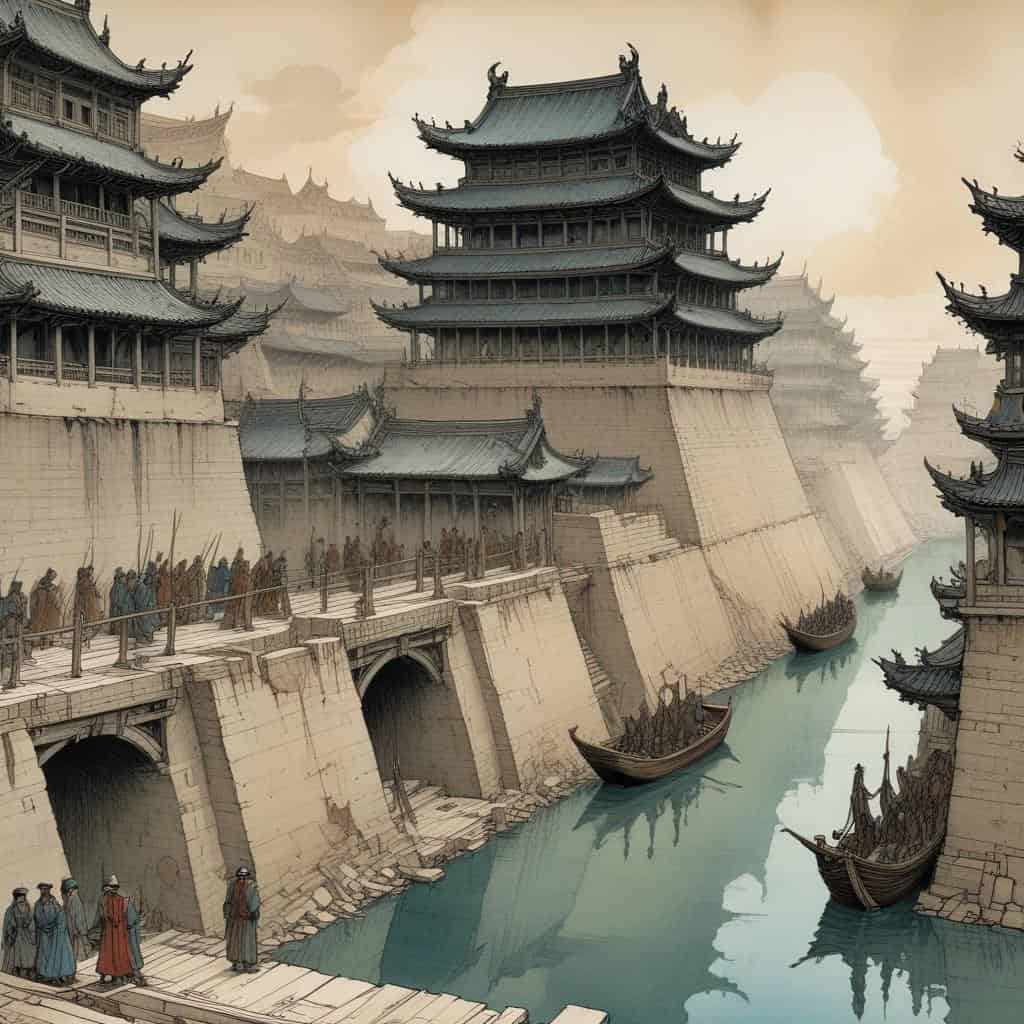
Liang Xu
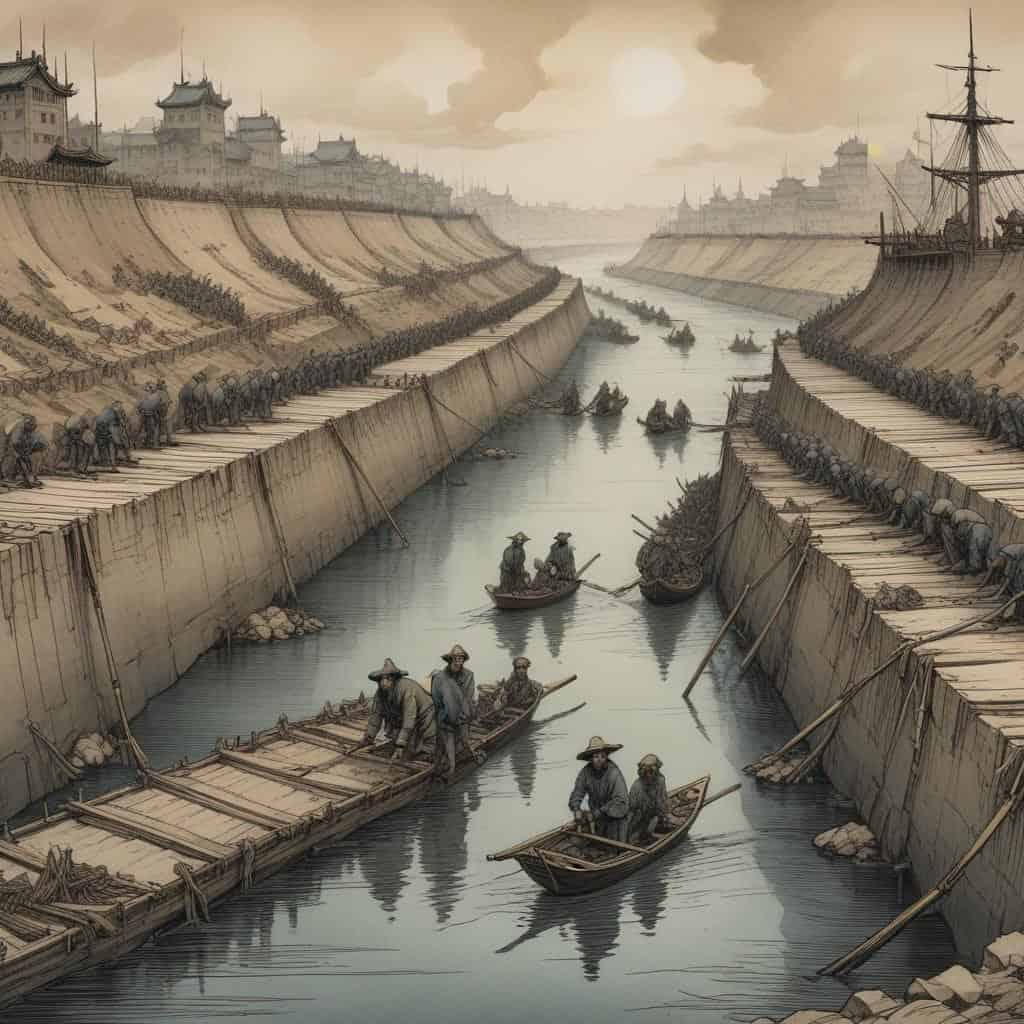
Qin Canal Laborers
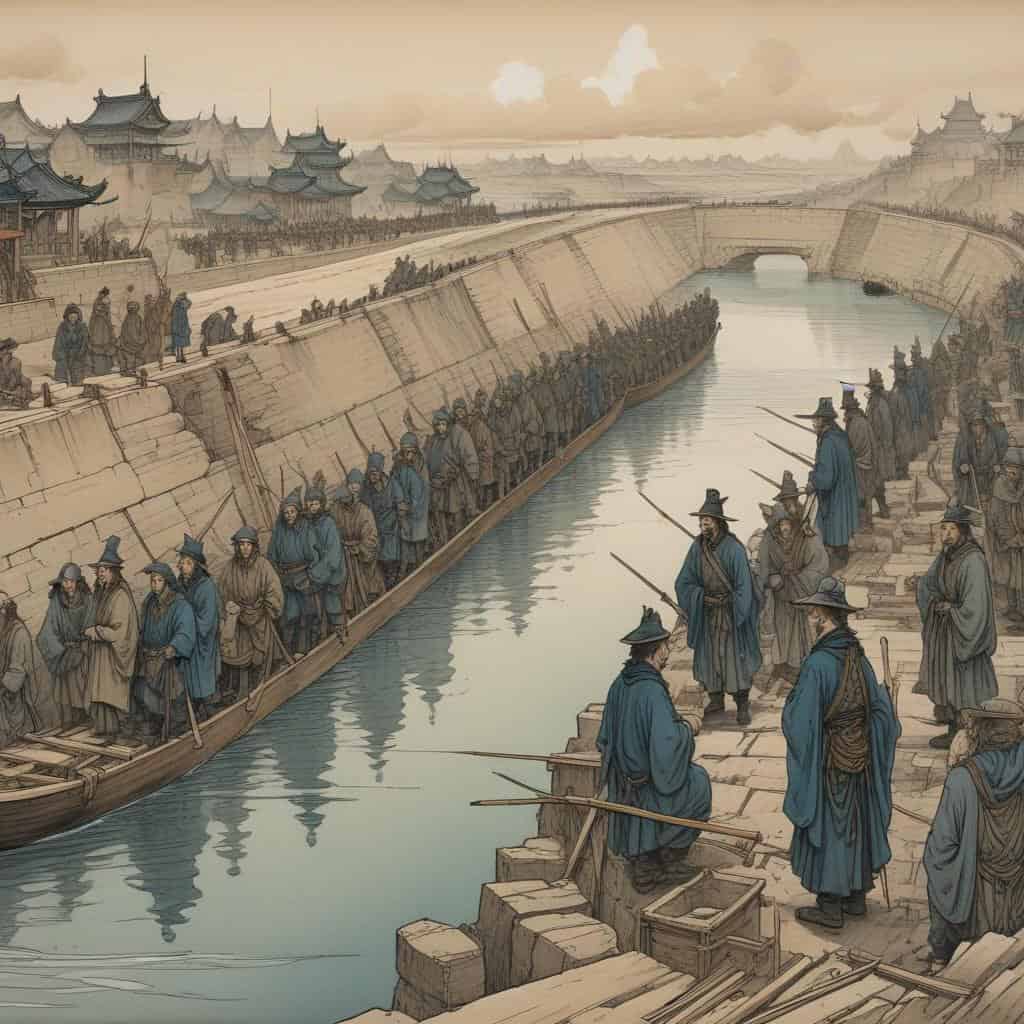
Local Officials

Merchants and Traders

The Vision of Emperor Qin Shi Huang
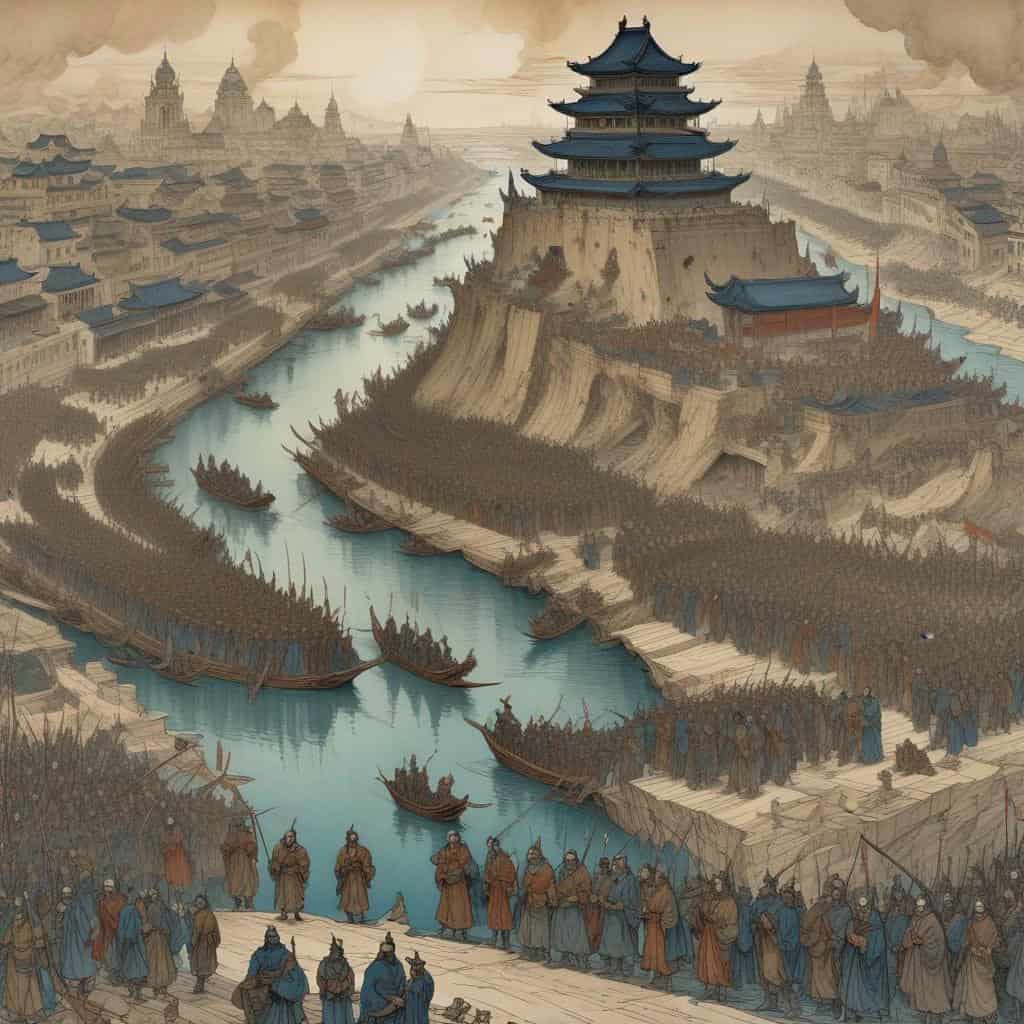
The Planning and Preparation
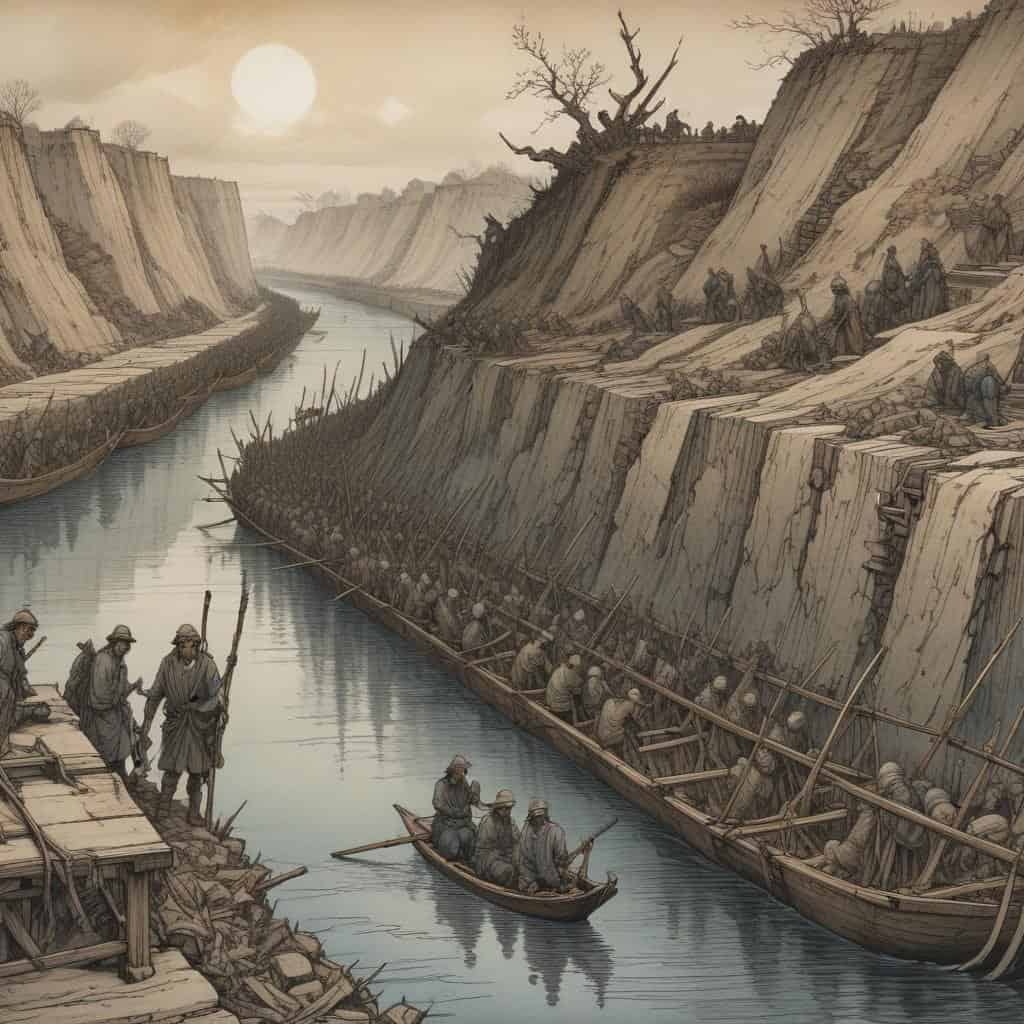
The Start of Construction

The Engineering Challenges
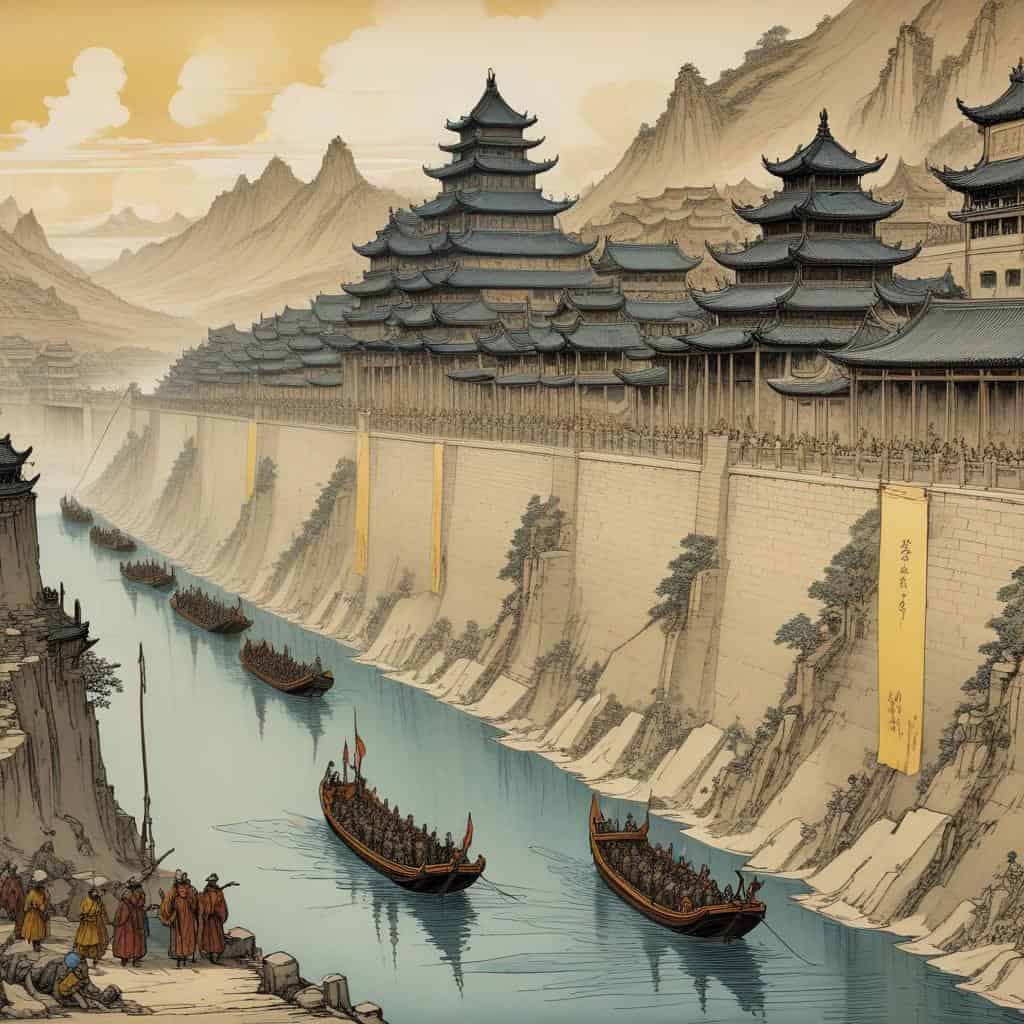
The Completion of the Canal
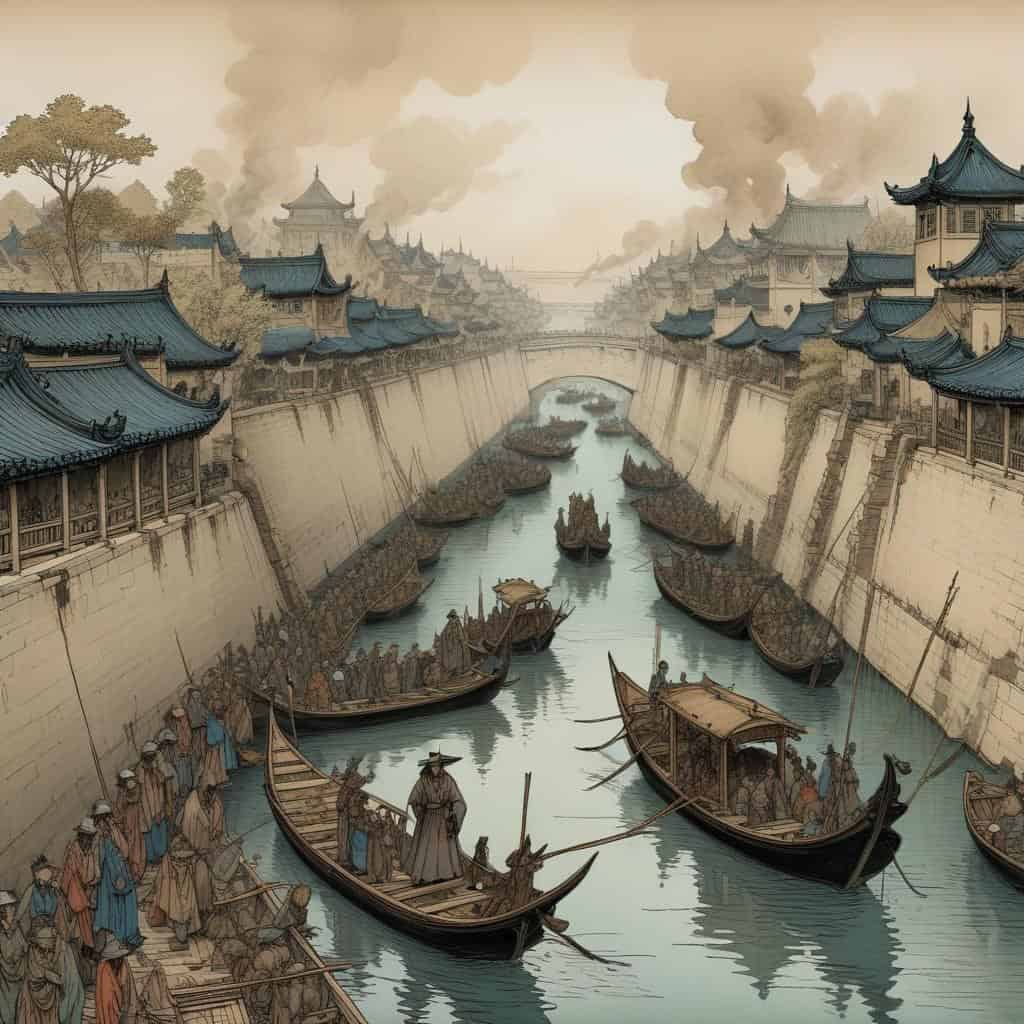
The Legacy of the Qin Canal

The Decline of the Qin Dynasty

The Restoration and Expansion

The Modern-Day Qin Canal
Lesson Details & Resources
In a Nutshell
- What: A significant construction project in ancient China.
- When: 221 BCE
- Who: Emperor Qin Shi Huang
- Outcome: Creation of a waterway connecting the Yangtze and Yellow Rivers, facilitating transportation and trade.
Famous Figures in the The Construction of the Qin Canal
-
Qin Shi Huang
Qin Shi Huang was the first emperor of China who ordered the construction of the Qin Canal as a way to improve transportation and irrigation.
-
Li Bing
Li Bing was a Chinese engineer and administrator who supervised the construction of the Qin Canal, which was a major engineering feat of its time.
-
Yu Gong
Yu Gong is a legendary figure in Chinese folklore who is said to have attempted to dig a canal to divert floodwaters, similar to the construction of the Qin Canal.
Timeline of The Construction of the Qin Canal
Construction of the Qin Canal begins
Qin Shi Huang becomes the first emperor of China
Qin Canal completed
Canal connects Xiang River and Li River
Canal used for transportation of goods and military purposes
Improvements made to the canal during the Han Dynasty
Canal becomes part of the Grand Canal system during the Sui Dynasty
Canal plays a crucial role in unifying China under Sui and Tang Dynasties
Canal undergoes renovations and expansions during the Song Dynasty
Canal becomes the longest artificial waterway in the world
Mongol invasions disrupt canal operations
Canal restored and expanded during the Ming Dynasty
Canal used for transportation of grain, silk, and other goods
Canal operations disrupted during Qing Dynasty due to neglect and wars
Canal modernized and expanded during the Republic of China era
Canal plays a crucial role in Chinese economy and transportation system
UNESCO designates the Grand Canal as a World Heritage Site
Vocabulary List
- Canal
- The construction of the Qin Canal was a major engineering feat in ancient China.
- Qin Dynasty
- The construction of the Qin Canal took place during the rule of the Qin Dynasty in China.
- Irrigation
- The Qin Canal was built to improve irrigation and transportation in the region.
- Waterway
- The Qin Canal served as an important waterway for trade and communication in ancient China.
- Engineering
- The construction of the Qin Canal required advanced engineering techniques for its completion.
- Navigation
- The Qin Canal allowed for easier navigation of boats and ships through the region.
- Agriculture
- The Qin Canal supported agriculture by providing water for irrigation to farms in the area.
Key Facts
This is the information used in the fact matching game
- The Qin Canal was constructed in 221 BCE during the Qin Dynasty in ancient China.
- The canal was built to connect the Yangtze River and the Huai River, serving as a major transportation route for goods and people.
- The construction of the Qin Canal required extensive labor and engineering expertise.
- The canal was designed to improve communication and trade between different regions of China.
- The Qin Canal was one of the earliest large-scale water projects in Chinese history.
- The canal played a crucial role in the economic development of the Qin Dynasty.
- Construction of the canal involved digging, dredging, and building levees along the waterway.
- The Qin Canal was over 34 miles long and had a width of around 65 feet in some places.
- The canal included locks and sluices to control water flow and allow boats to navigate different water levels.
- The Qin Canal was a significant engineering achievement of its time, showcasing the advanced skills of the Qin Dynasty.
- The construction of the canal required thousands of laborers and took several years to complete.
- The Qin Canal facilitated the transportation of food, goods, and troops, contributing to the stability and prosperity of the Qin Dynasty.
- The canal also helped to control flooding in the region by regulating water levels and diverting excess water.
- The Qin Canal connected several important cities and regions, enhancing cultural exchange and economic growth.
- The canal played a key role in the unification of China under the Qin Dynasty, as it facilitated the movement of troops and supplies during military campaigns.
- The construction of the Qin Canal had a lasting impact on the development of water infrastructure in China, influencing future projects and engineering practices.
- The canal was a testament to the power and ambition of the Qin Dynasty, demonstrating their ability to undertake large-scale public works projects.
- The Qin Canal continued to be used for centuries after its construction, serving as an important waterway for trade and transportation in China.
- The legacy of the Qin Canal can still be seen in the modern water management systems and canals that exist in China today.
- The construction of the canal marked a significant milestone in the history of Chinese engineering and infrastructure development.
Analysis & Significance
Immediate Consequences
The construction of the Qin Canal in 221 BCE immediately facilitated transportation and trade, allowing for the efficient movement of goods and resources across different regions of ancient China. This boosted economic growth and stimulated cultural exchange between various communities along the canal.
Long-Term Impact
The lasting impact of the Qin Canal on history is profound, as it served as a model for future canal-building projects in China and influenced the development of transportation infrastructure in the region. The canal also played a significant role in the unification of China under the Qin Dynasty, setting the stage for the centralized governance that followed.
Cultural Significance Today
Today, the legacy of the Qin Canal endures as a symbol of ancient China’s engineering prowess and innovation. The canal continues to be a source of pride for the Chinese people, showcasing their rich history and heritage. Furthermore, the canal’s impact on trade and commerce has left a lasting impression on modern transportation networks and economic systems in China.
The Construction of the Qin Canal Games




Take Your Learning Offline
Want a convenient, print-ready study guide for this lesson? Become a Memory Wizards Pro member to unlock the downloadable " Memory Scrolls" for this topic and our entire library!
- ✓ Complete Vocabulary Lists
- ✓ Key Facts & Timelines
- ✓ Beautifully Formatted for Print & Mobile