
Summary of The Burning of Books and Burying of Scholars (213 BCE)
Uncover the ancient mystery of lost knowledge and silenced voices.
How Do You Learn Best?
Learn by Reading
Immerse yourself in the 10-minute visual lesson for a comprehensive understanding of the topic.
Learn by Reviewing
Jump directly to the key facts, timeline, and vocabulary lists to build a solid foundation of details.
Learn by Doing
Challenge yourself! Jump straight into the interactive games to learn by trial, error, and discovery.
The Burning of Books and Burying of Scholars in 10 Minutes
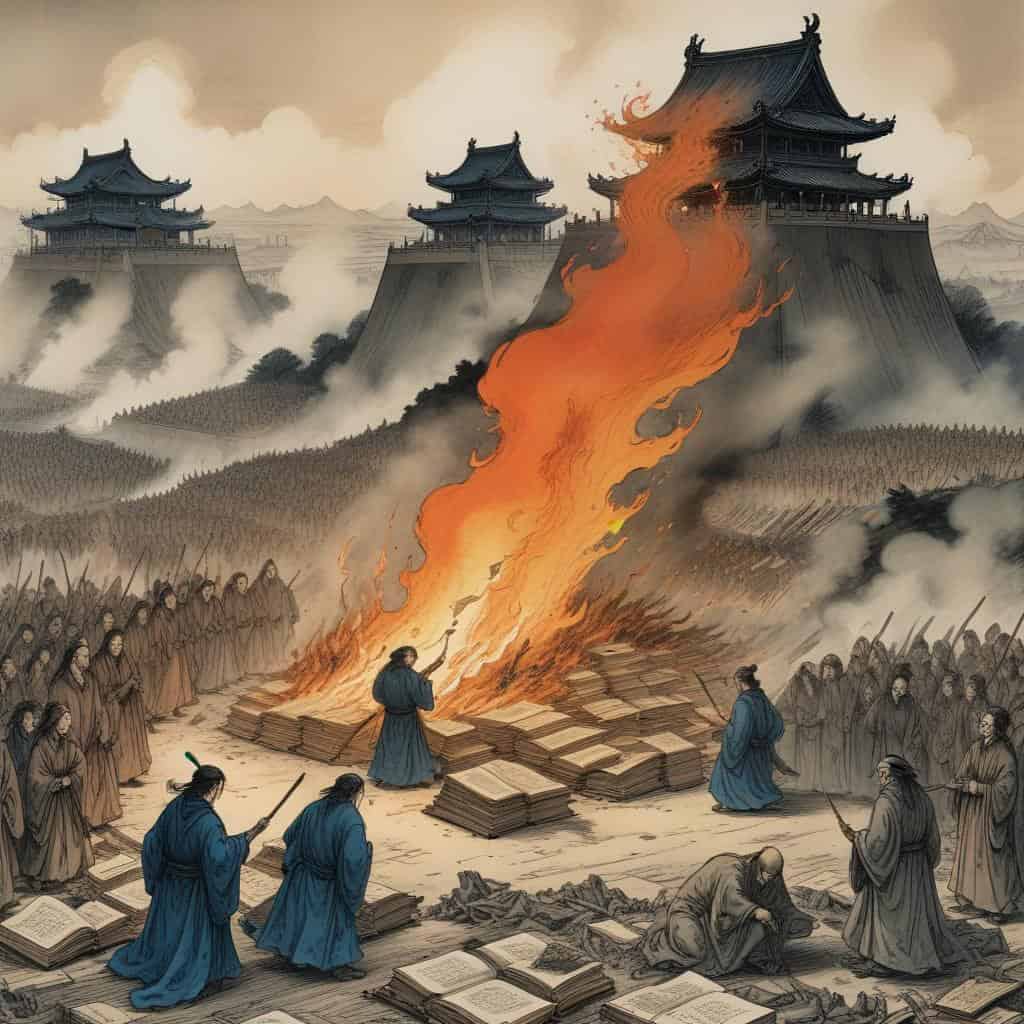
Introduction
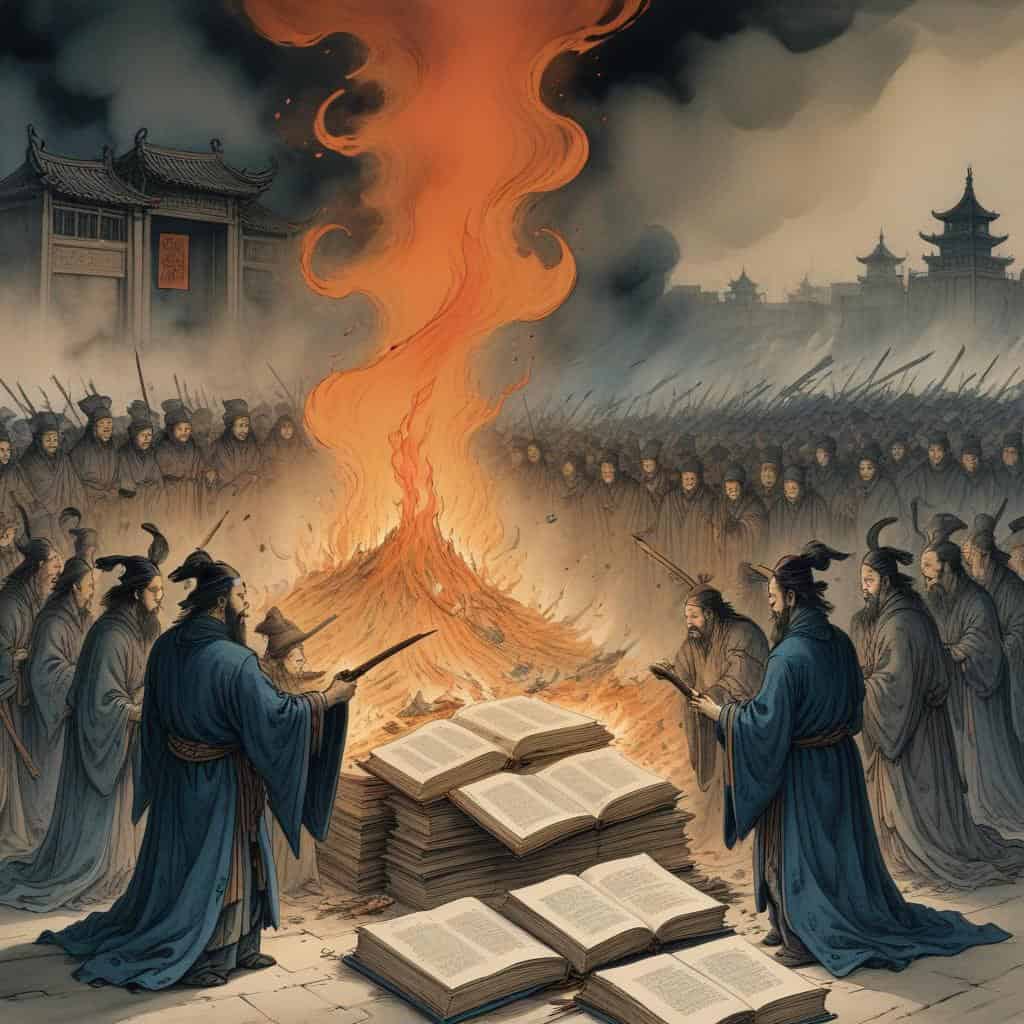
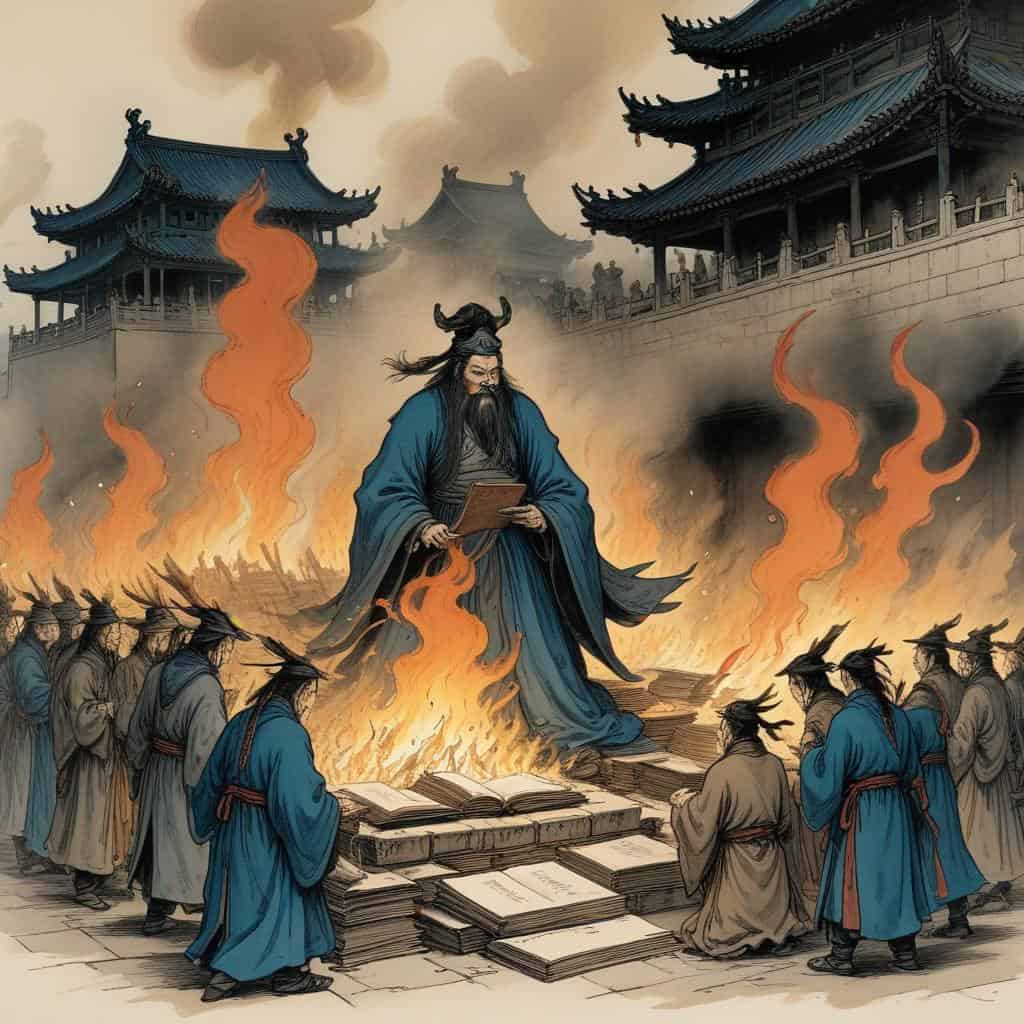
Emperor Qin Shi Huang
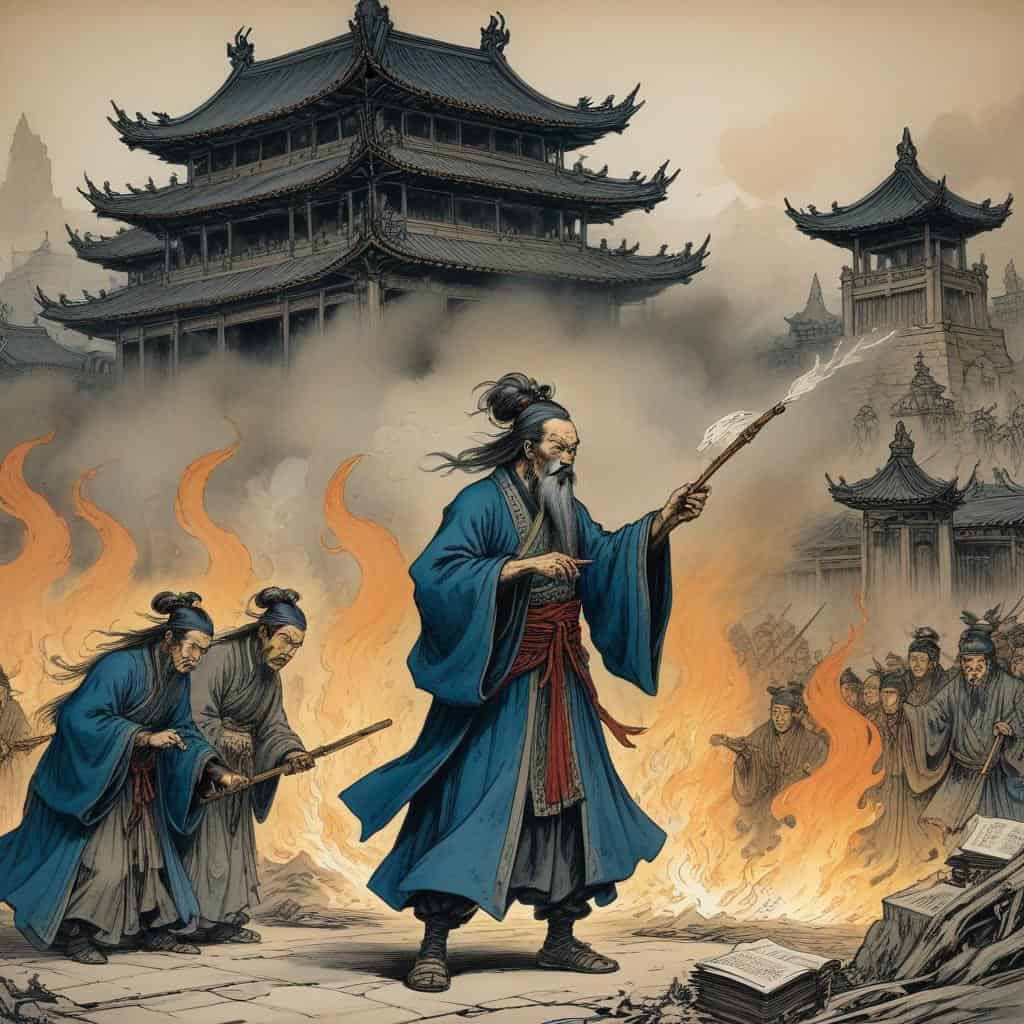
Li Si
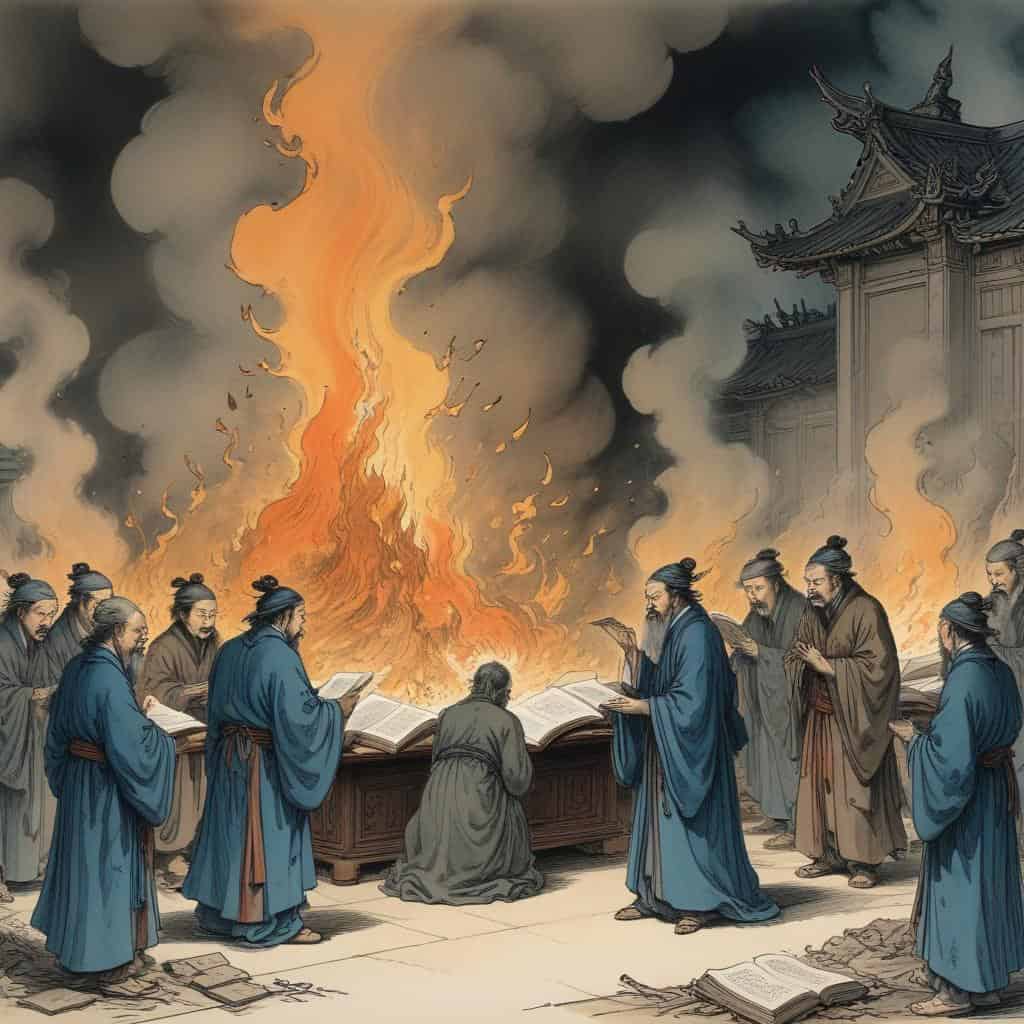
Confucian Scholars
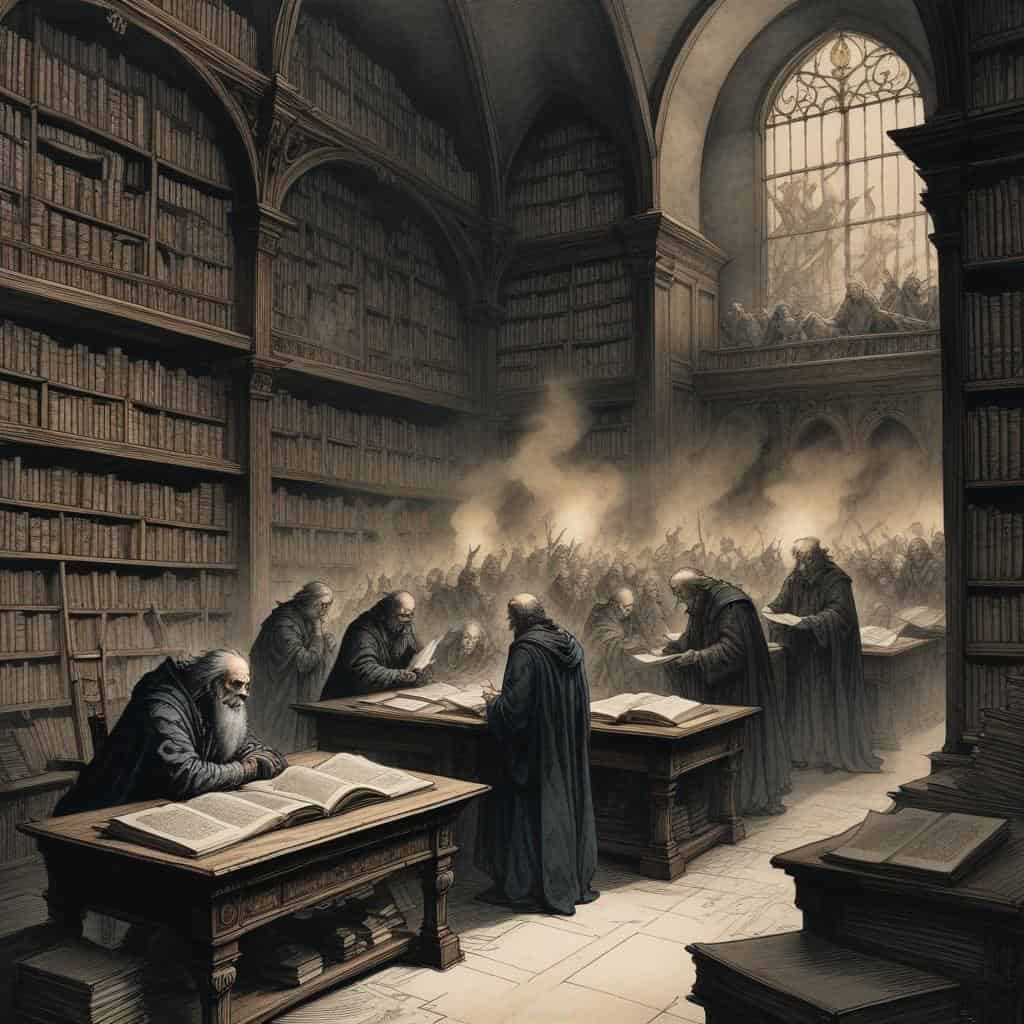
Historians and Philosophers
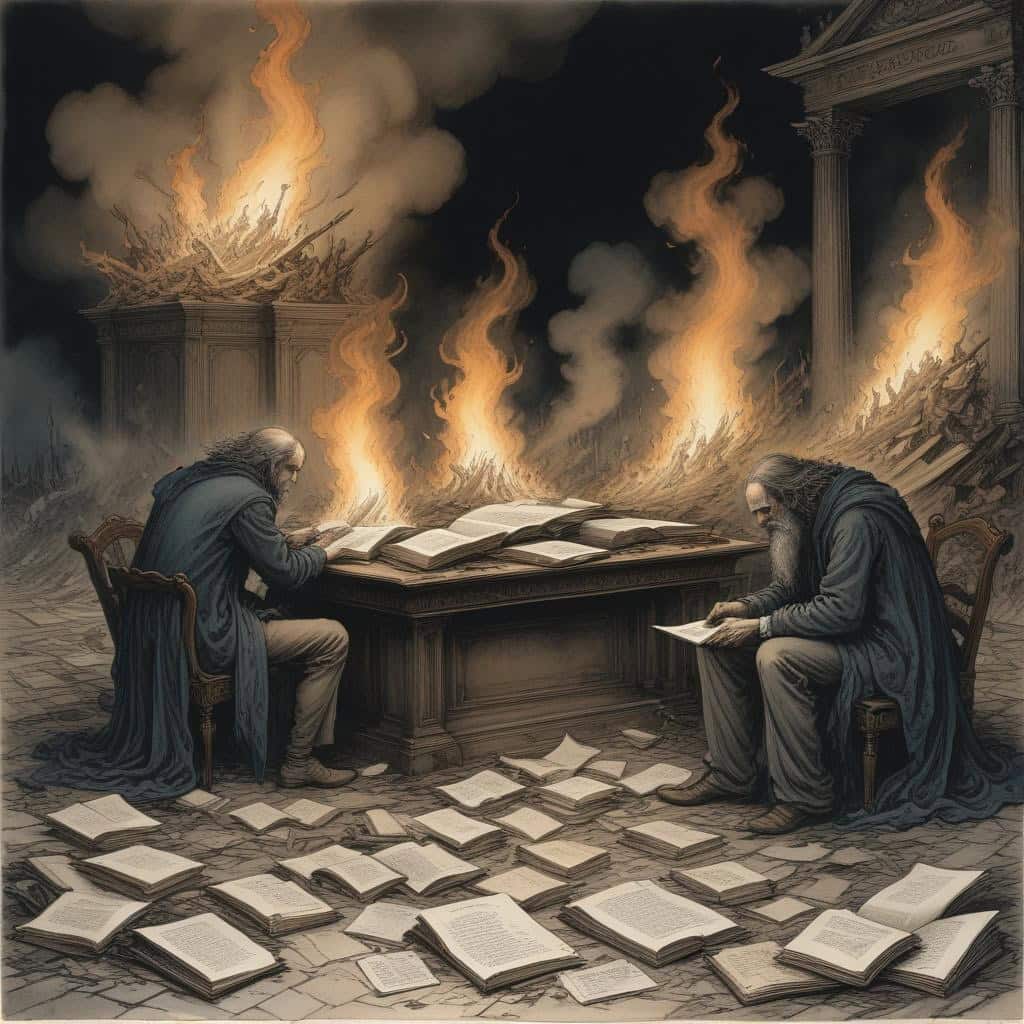
Artists and Poets

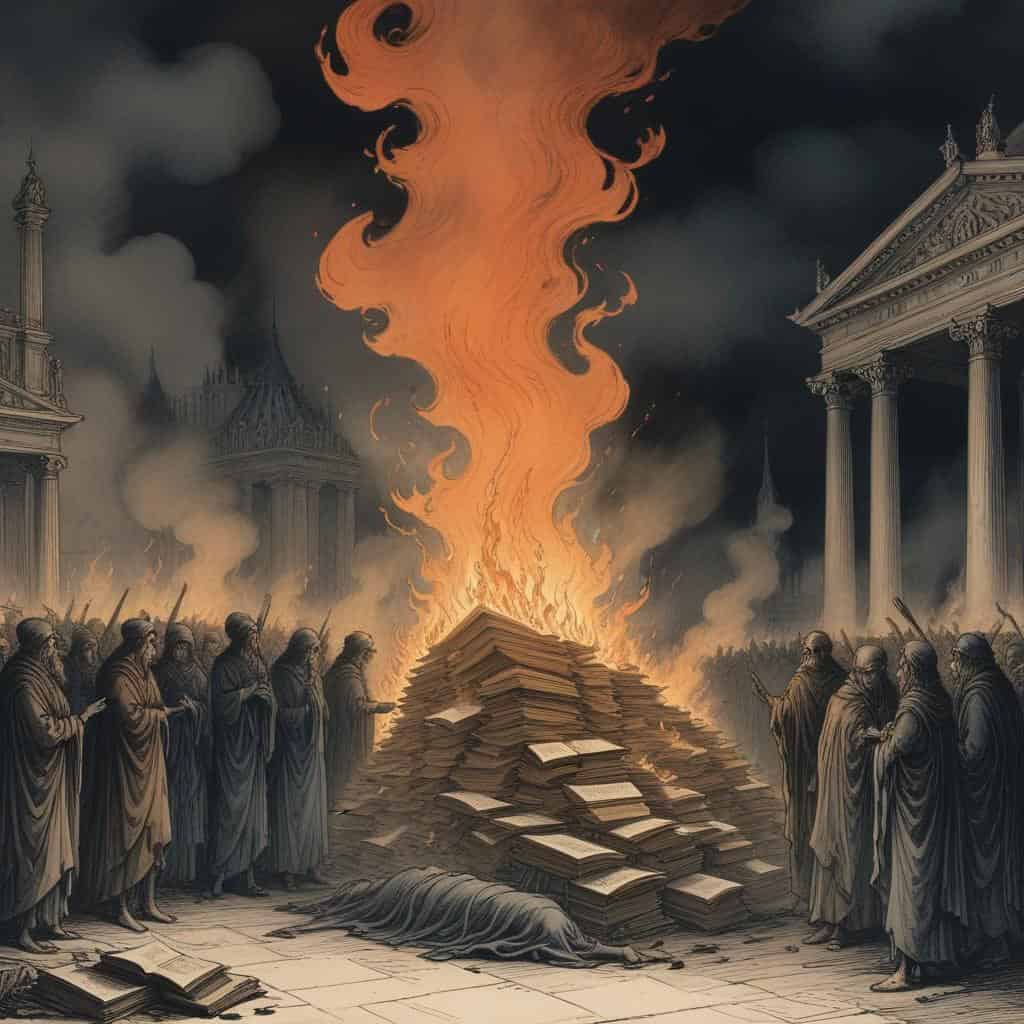
The Burning of Books

The Burying of Scholars

Impact on Chinese History

Legacy of Censorship

Historical Accounts
Lessons Learned

Memory and Remembrance

Recovery and Reconstruction

Continued Vigilance

Reflection and Commemoration
Lesson Details & Resources
In a Nutshell
- What: The Burning of Books and Burying of Scholars
- When: 213 BCE
- Who: Qin Dynasty of China
- Outcome: Destruction of many historical texts and the persecution of intellectuals.
Famous Figures in the The Burning of Books and Burying of Scholars
-
Emperor Qin Shi Huang
Emperor Qin Shi Huang ordered the burning of books and burying of scholars in an attempt to suppress dissent and unify thought in ancient China.
-
Li Si
Li Si was a prominent Chinese politician during the Qin dynasty who played a key role in implementing Emperor Qin Shi Huang's policies, including the burning of books and burying of scholars.
-
Confucius
Confucius was a Chinese philosopher whose teachings were targeted during the book burning and scholar burying campaign led by Emperor Qin Shi Huang.
-
Mencius
Mencius was a Chinese philosopher who followed in the footsteps of Confucius and also faced persecution during the Qin dynasty's suppression of intellectual thought.
Timeline of The Burning of Books and Burying of Scholars
Qin Dynasty establishes the first unified Chinese empire
Qin Shi Huang becomes the first emperor of China
Burning of books and burying of scholars decree issued by Qin Shi Huang
Thousands of books and scholars are burned and buried alive
Confucian texts and scholars targeted for destruction
Qin Dynasty collapses after the death of Qin Shi Huang
Liu Bang founds the Han Dynasty and becomes Emperor Gaozu of Han
Confucianism begins to experience a revival during the Han Dynasty
Emperor Wen of Han relaxes censorship and encourages the study of Confucian texts
Confucianism becomes the official state ideology of China under Emperor Wu of Han
Confucian texts are collected and preserved in the Imperial Library
Confucian scholars are honored and revered in Chinese society
Burning of books and burying of scholars decree is denounced as a dark chapter in Chinese history
Confucianism becomes deeply ingrained in Chinese culture and philosophy
Emperor Wu of Han launches the Xiongnu campaign to protect China's northern borders
Emperor Wu of Han expands the Chinese empire through military conquests
Confucianism continues to shape Chinese society for centuries to come
Confucian principles influence Chinese government, education, and social structure
Confucianism remains a dominant force in Chinese culture to this day
Vocabulary List
- Book burning
- The act of destroying written materials deemed to be subversive or heretical.
- Scholars
- Intellectual individuals who have studied and specialized in a particular field of knowledge.
- Censorship
- The suppression or prohibition of any parts of books, films, news, etc. that are considered obscene, politically unacceptable, or a threat to security.
- Oppression
- The prolonged cruel or unjust treatment or control over a group of people.
- Authoritarianism
- A form of government characterized by strong central power and limited political freedoms.
- Ideology
- A system of ideas and ideals, especially one that forms the basis of economic or political theory and policy.
- Propaganda
- Information, especially of a biased or misleading nature, used to promote a political cause or point of view.
- Totalitarianism
- A political system where the state recognizes no limits to its authority and seeks to regulate every aspect of public and private life.
Key Facts
This is the information used in the fact matching game
- The Burning of Books and Burying of Scholars occurred during the Qin Dynasty in China in 213 BCE.
- The event was ordered by Qin Shi Huang, the first emperor of China.
- Qin Shi Huang wanted to suppress dissent and consolidate his power by destroying books and killing scholars.
- It is estimated that thousands of books were burned and hundreds of scholars were buried alive during this period.
- The burning of books was a way to control the spread of ideas that the Qin government deemed as subversive.
- Confucian texts were specifically targeted during the Burning of Books and Burying of Scholars.
- Qin Shi Huang believed that Confucianism promoted ideas that were contrary to his authoritarian rule.
- The destruction of books and persecution of scholars lasted for several years during the Qin Dynasty.
- The Burning of Books and Burying of Scholars had a significant impact on the intellectual and cultural landscape of ancient China.
- Despite the efforts to eradicate certain ideas, some texts and teachings survived through oral traditions and hidden manuscripts.
- The event marked a turning point in Chinese history and the beginning of the Qin Dynasty's authoritarian rule.
- The Burning of Books and Burying of Scholars is considered one of the most infamous acts of censorship in history.
- The destruction of books and persecution of scholars was a means of ideological control by the Qin government.
- The event reflected the ruthless and tyrannical nature of Qin Shi Huang's rule.
- The Burning of Books and Burying of Scholars led to a loss of valuable knowledge and cultural heritage in ancient China.
- The legacy of the Burning of Books and Burying of Scholars continues to be studied and remembered in Chinese history.
- The event has been a subject of debate and controversy among historians and scholars for centuries.
- The Burning of Books and Burying of Scholars is often cited as an example of the dangers of censorship and intellectual repression.
- Qin Shi Huang's actions during this period were aimed at consolidating his power and maintaining control over the people of China.
- The event had a lasting impact on Chinese society and the development of Chinese culture.
Analysis & Significance
Immediate Consequences
The burning of books and burying of scholars in 213 BCE resulted in the destruction of countless valuable texts and the loss of intellectual knowledge. Scholars were killed, and libraries were destroyed, leading to a significant setback in the advancement of knowledge and culture.
Long-Term Impact
This event had a lasting impact on Chinese history, as it marked the beginning of the suppression of intellectual freedom and the control of knowledge by the ruling powers. The loss of ancient texts and the persecution of scholars had a profound effect on the development of Chinese philosophy, literature, and science for centuries to come.
Cultural Significance Today
The burning of books and burying of scholars continue to serve as a cautionary tale about the dangers of censorship, intellectual repression, and the importance of preserving knowledge and freedom of thought. It reminds us of the fragility of intellectual heritage and the need to protect and uphold the values of free expression and academic inquiry in today’s world.
The Burning of Books and Burying of Scholars Games


Take Your Learning Offline
Want a convenient, print-ready study guide for this lesson? Become a Memory Wizards Pro member to unlock the downloadable " Memory Scrolls" for this topic and our entire library!
- ✓ Complete Vocabulary Lists
- ✓ Key Facts & Timelines
- ✓ Beautifully Formatted for Print & Mobile