
An Analysis of The Pythagorean School
Unlocking the mysteries of the universe: What truly defines a triangle?
How Do You Learn Best?
Learn by Listening
Start with the 3-minute audio summary to get the key facts and narrative highlights quickly.
Learn by Reading
Immerse yourself in the 10-minute visual lesson for a comprehensive understanding of the topic.
Learn by Reviewing
Jump directly to the key facts, timeline, and vocabulary lists to build a solid foundation of details.
Learn by Doing
Challenge yourself! Jump straight into the interactive games to learn by trial, error, and discovery.
Audio Library
As one of our featured lessons, this topic includes premium audio guides.
Unlock the Wizard's Cram Session
This powerful audio study guide is a Pro-exclusive feature. Upgrade to Memory Wizards Pro to access this and all of our premium learning tools.
Upgrade to ProAn The Pythagorean School in 10 Minutes
Introduction


Pythagoras

Philolaus

Hippasus

The Origins of The Pythagorean School
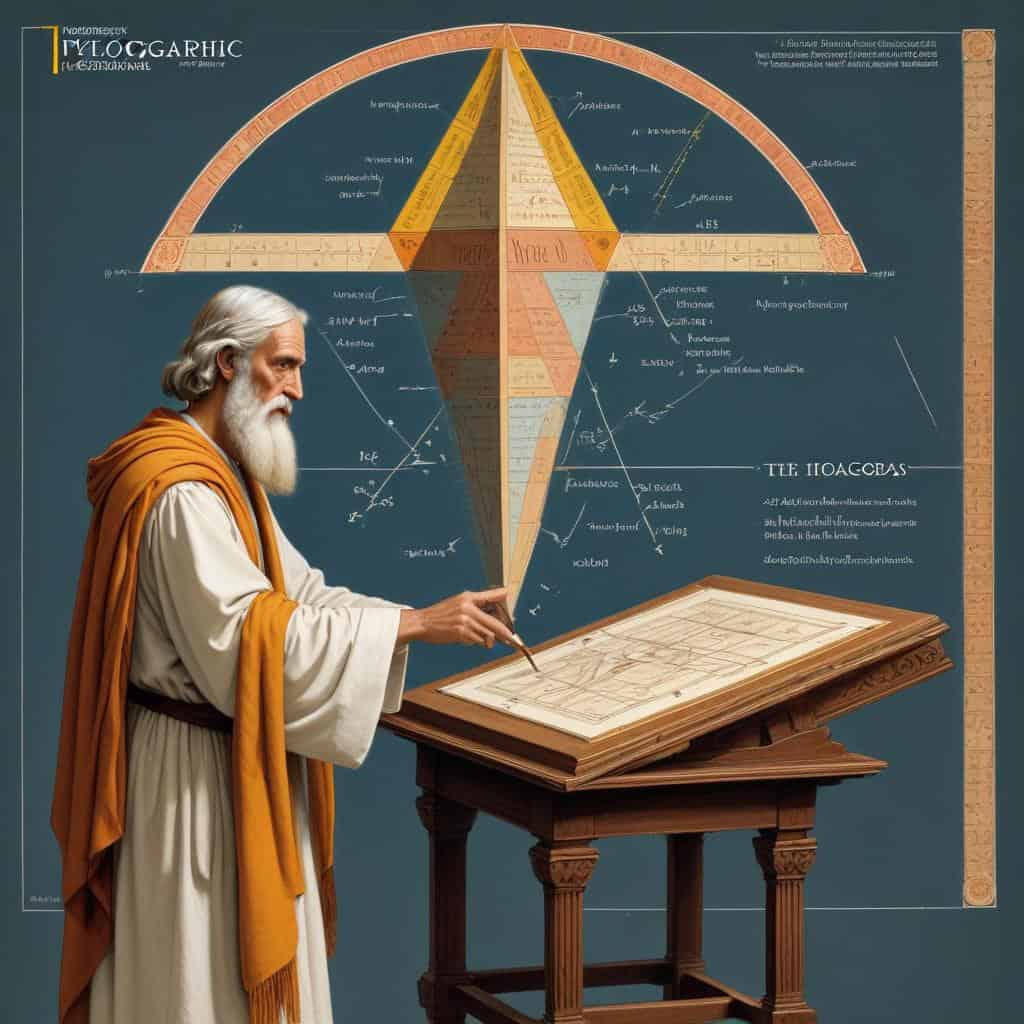
The Teachings of Pythagoras
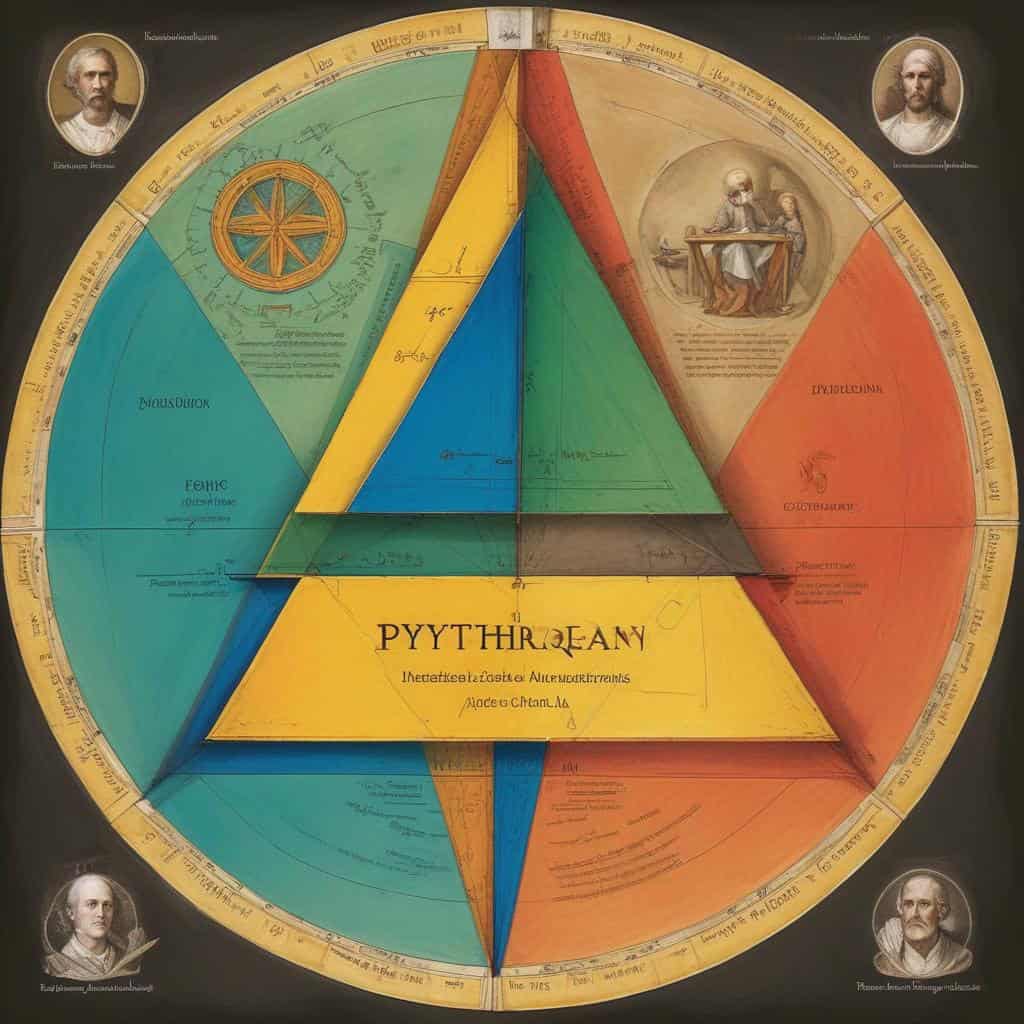
The Influence of The Pythagorean School

The Pythagorean Theorem

The Importance of Music and Harmony
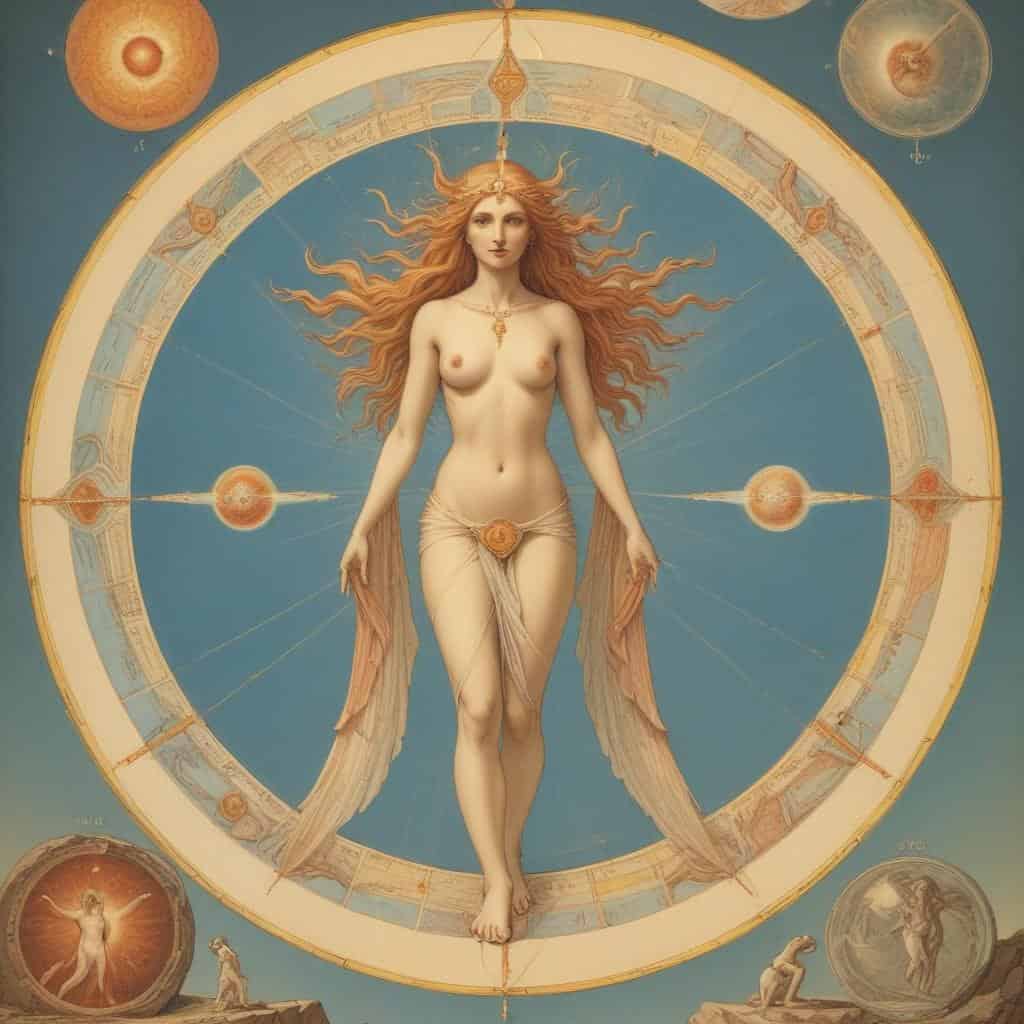
The Concept of Reincarnation

The Decline of The Pythagorean School

The Legacy of The Pythagorean School

Lesson Details & Resources
In a Nutshell
- Concept: A philosophical school founded by Pythagoras.
- Thinkers: Pythagoras, 6th century BC.
- Central Question: How can numbers and mathematical relationships help us understand the universe?
- Core Implication: The belief in the harmony and order of the cosmos through mathematical principles.
Timeline of An The Pythagorean School
Vocabulary List
- Pythagorean theorem
- The Pythagorean theorem is a fundamental principle in mathematics that states a^2 + b^2 = c^2, where a and b are the two shorter sides of a right triangle and c is the hypotenuse.
- Mathematics
- The Pythagorean School in Philosophy emphasized the importance of mathematics in understanding the world.
- Cosmology
- The Pythagoreans believed in a harmonious universe governed by mathematical principles, a concept known as cosmic harmony.
- Metempsychosis
- The Pythagoreans believed in the concept of metempsychosis, or the transmigration of souls, as part of their belief in reincarnation.
- Harmony
- The Pythagorean School in Philosophy believed that harmony in music, mathematics, and the cosmos was essential to understanding the nature of reality.
- Philosophy
- The Pythagoreans were not only mathematicians but also philosophers who sought to understand the underlying principles of the universe.
- Number theory
- The Pythagoreans were interested in number theory and believed that numbers held symbolic and mystical significance.
- Dualism
- The Pythagoreans believed in a dualistic worldview, where opposites such as light and darkness, good and evil, were in constant tension.
- Commensurability
- The Pythagoreans were interested in the concept of commensurability, or the relationship between different quantities that can be expressed as a ratio of integers.
- Geometry
- The Pythagoreans made significant contributions to geometry, including the discovery of the Pythagorean theorem.
- Reincarnation
- The Pythagoreans believed in the concept of reincarnation, where the soul is reborn into a new body after death.
- Monism
- While the Pythagoreans believed in dualism, they also held monistic beliefs that all reality could be reduced to a single principle or substance.
Key Facts
This is the information used in the fact matching game
- The Pythagorean School was founded by Pythagoras in the 6th century BC.
- The Pythagorean School believed in the concept of numbers as the basis of reality.
- The Pythagorean School emphasized the importance of mathematics and geometry in understanding the universe.
- Pythagoreanism influenced later Greek philosophers, such as Plato and Aristotle.
- The Pythagorean School believed in the transmigration of souls.
- Pythagoras is credited with discovering the Pythagorean theorem in geometry.
- The Pythagorean School had a strict code of conduct for its members, including vegetarianism.
- The Pythagorean School believed in the harmony of the cosmos and the importance of music in achieving this harmony.
- Pythagoras was known for his contributions to music theory and the concept of the musical scale.
- The Pythagorean School believed in the power of numbers to explain the natural world and human behavior.
- Pythagoreanism had a strong influence on the development of Western mathematics and philosophy.
- The Pythagorean School was a secret society with rituals and symbols.
- Pythagoras was believed to have mystical powers and was often associated with supernatural abilities.
- The Pythagorean School believed in the importance of moderation and self-control in all aspects of life.
- Pythagoras is credited with introducing the concept of the spherical Earth.
- The Pythagorean School believed in the concept of a harmony of opposites in the universe.
- Pythagoreanism had a strong emphasis on the study of astronomy and the movements of the heavenly bodies.
- The Pythagorean School believed in the power of reason and intellect to uncover the truths of the universe.
- Pythagoras was known for his mathematical discoveries, such as the concept of irrational numbers.
- The Pythagorean School believed in the immortality of the soul and the importance of ethical living.
Analysis & Significance
The Core Argument
The Pythagorean School believed that everything in the universe could be explained by numbers and mathematical relationships. They saw numbers as the key to understanding the underlying order and harmony of the cosmos, and believed that through the study of mathematics, one could uncover the secrets of the universe.
Criticisms and Counterarguments
Critics of the Pythagorean School argued that their emphasis on mathematics as the fundamental principle of reality was overly simplistic and reductionist. They questioned the school’s reliance on abstract mathematical concepts to explain the complexities of the natural world, and raised concerns about the limitations of this approach in addressing the full range of human experience.
Modern Relevance
The Pythagorean idea of seeking order and harmony through mathematical understanding continues to be relevant in modern society. In an era marked by technological advancements and scientific discoveries, the importance of mathematics in shaping our understanding of the world has only grown. Additionally, the pursuit of balance and unity, as advocated by the Pythagoreans, remains a timeless aspiration for individuals seeking meaning and coherence in their lives.
An The Pythagorean School Games


Take Your Learning Offline
Want a convenient, print-ready study guide for this lesson? Become a Memory Wizards Pro member to unlock the downloadable " Memory Scrolls" for this topic and our entire library!
- ✓ Complete Vocabulary Lists
- ✓ Key Facts & Timelines
- ✓ Beautifully Formatted for Print & Mobile