
An Analysis of Empedocles and the Four Elements
Do the elements shape us, or do we shape them?
How Do You Learn Best?
Learn by Listening
Start with the 3-minute audio summary to get the key facts and narrative highlights quickly.
Learn by Reading
Immerse yourself in the 10-minute visual lesson for a comprehensive understanding of the topic.
Learn by Reviewing
Jump directly to the key facts, timeline, and vocabulary lists to build a solid foundation of details.
Learn by Doing
Challenge yourself! Jump straight into the interactive games to learn by trial, error, and discovery.
Audio Library
As one of our featured lessons, this topic includes premium audio guides.
Unlock the Wizard's Cram Session
This powerful audio study guide is a Pro-exclusive feature. Upgrade to Memory Wizards Pro to access this and all of our premium learning tools.
Upgrade to ProAn Empedocles and the Four Elements in 10 Minutes
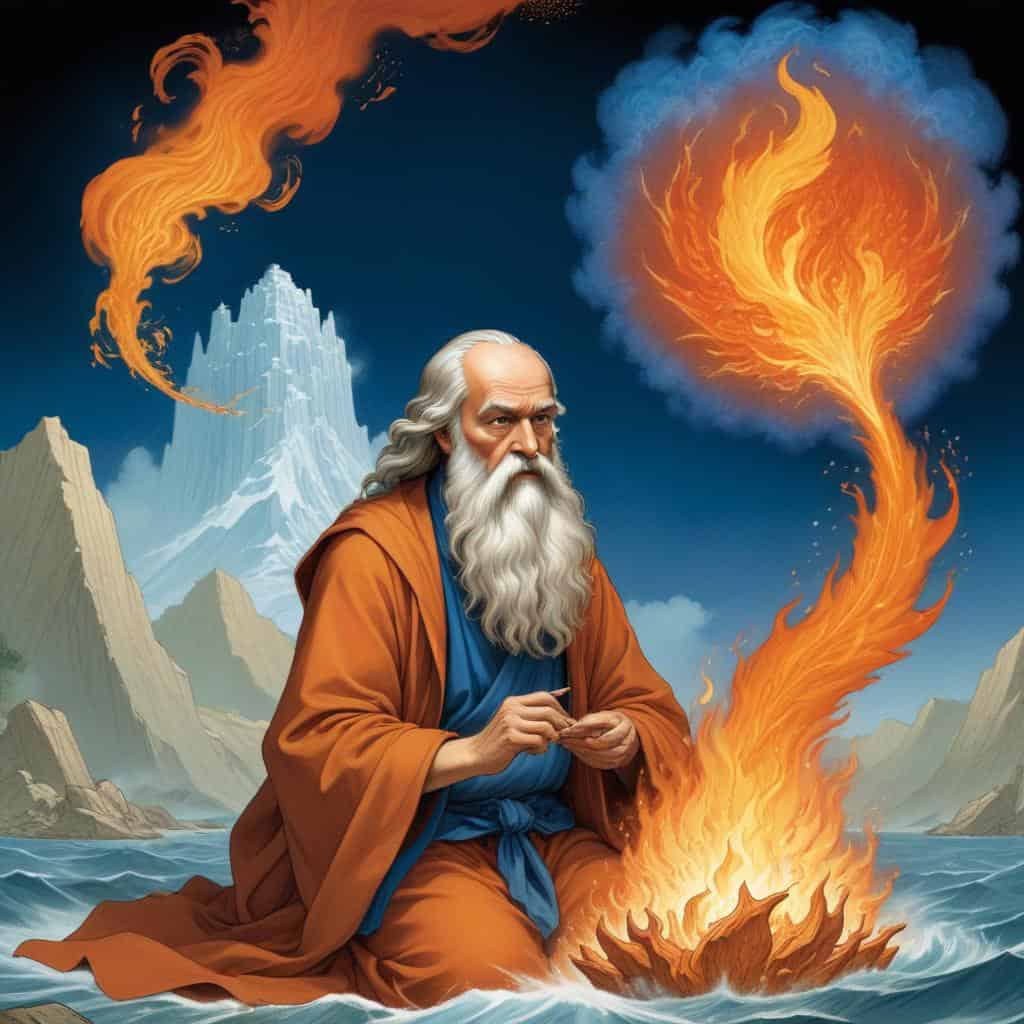
Introduction

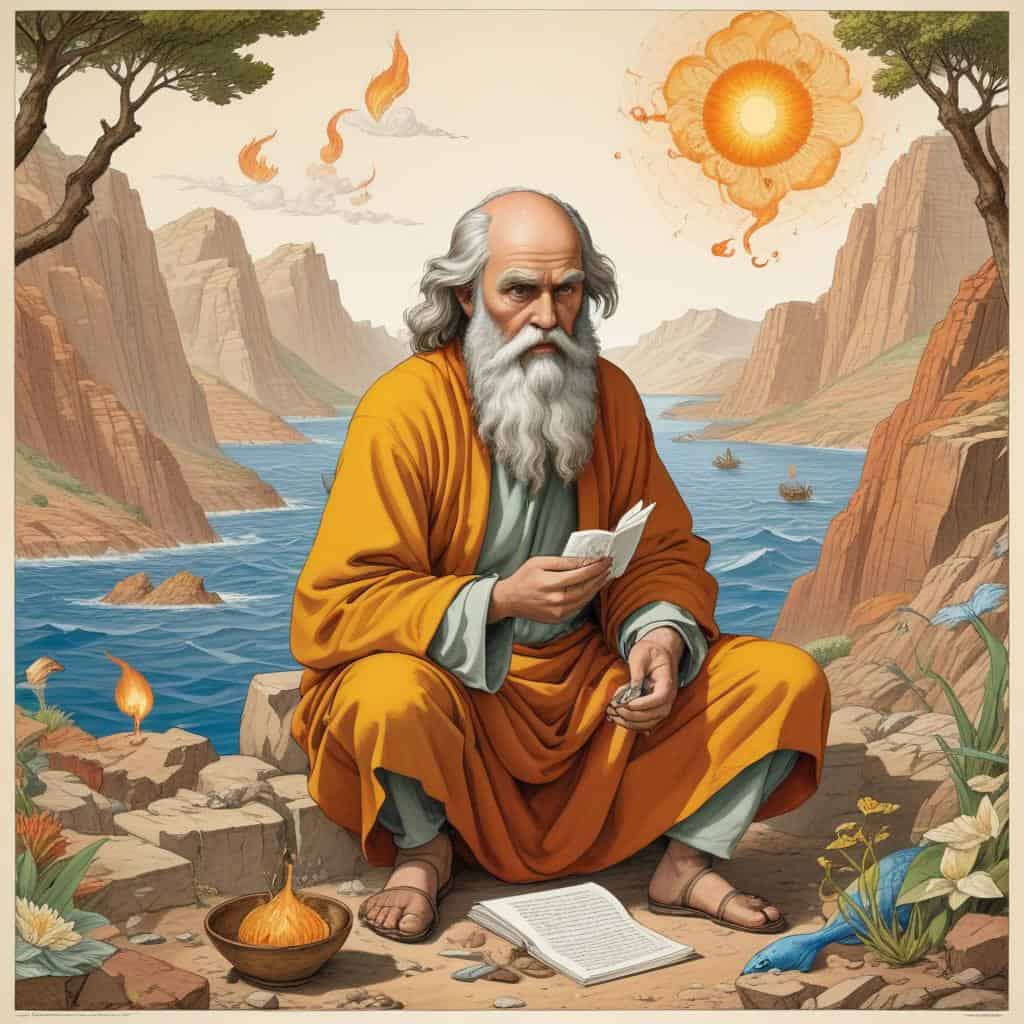
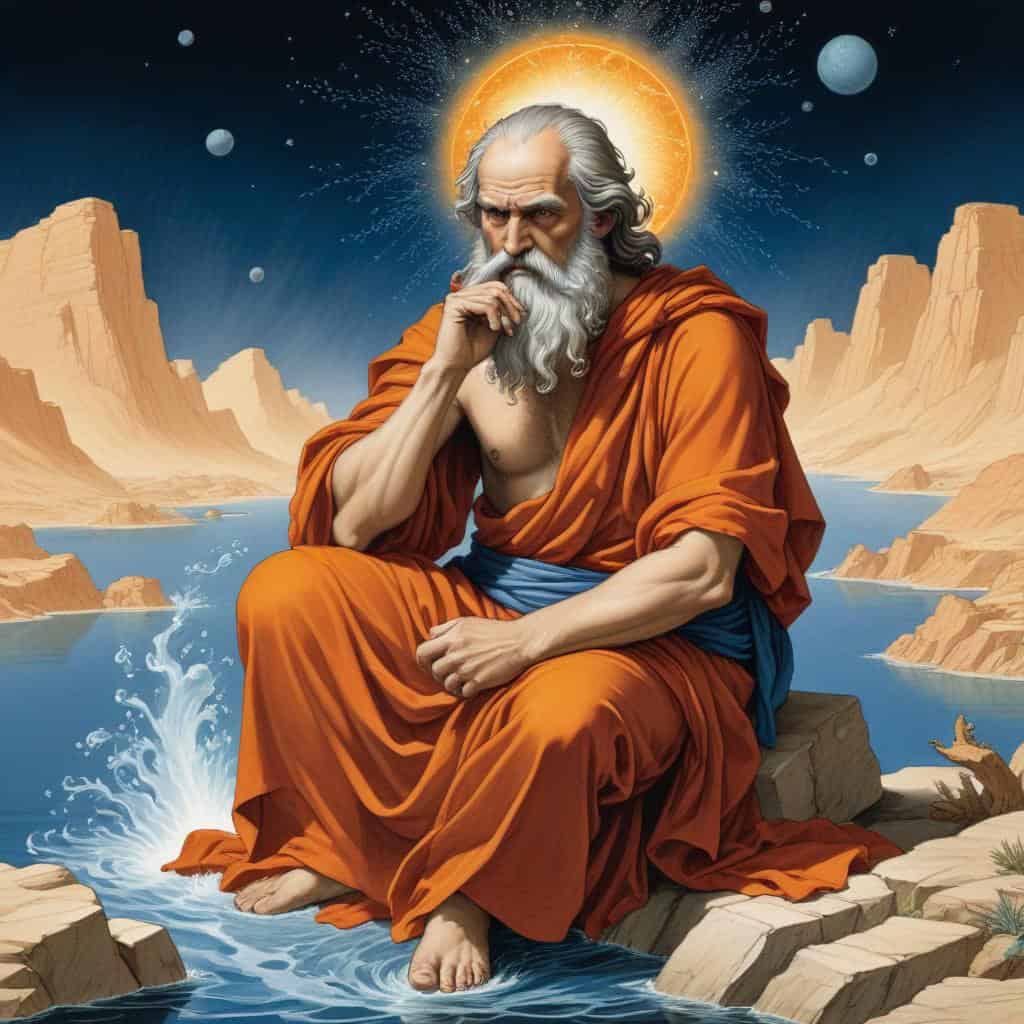
Empedocles
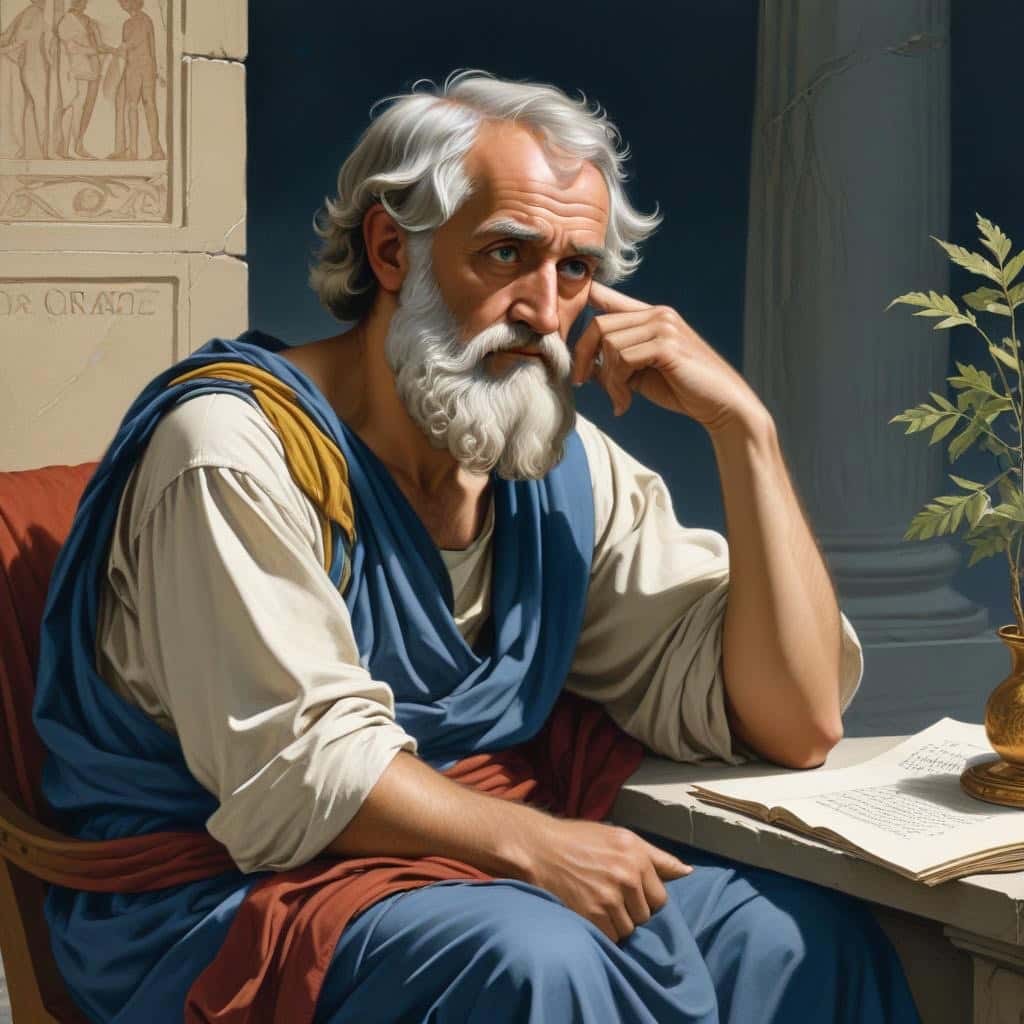
Aristotle
Galileo Galilei
Isaac Newton
1. The Life of Empedocles
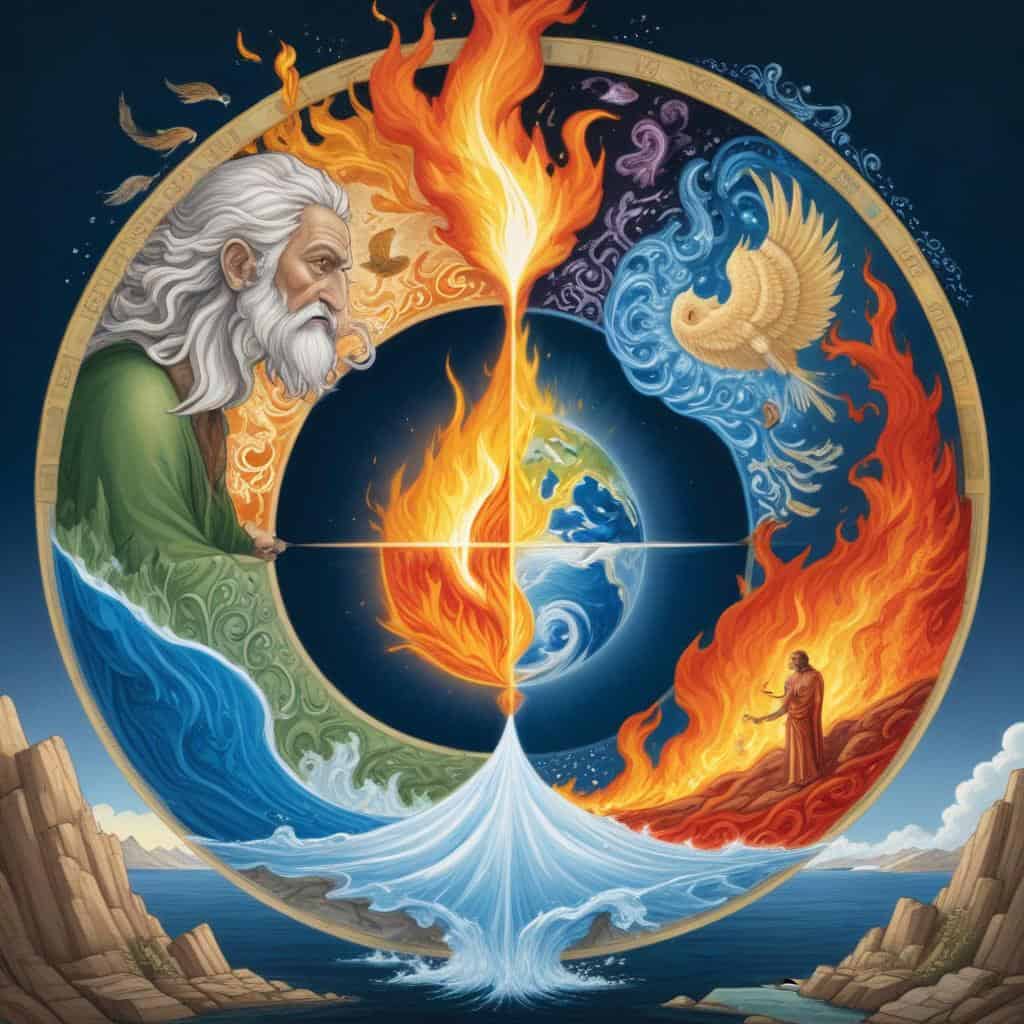
2. The Four Elements

3. Love and Strife
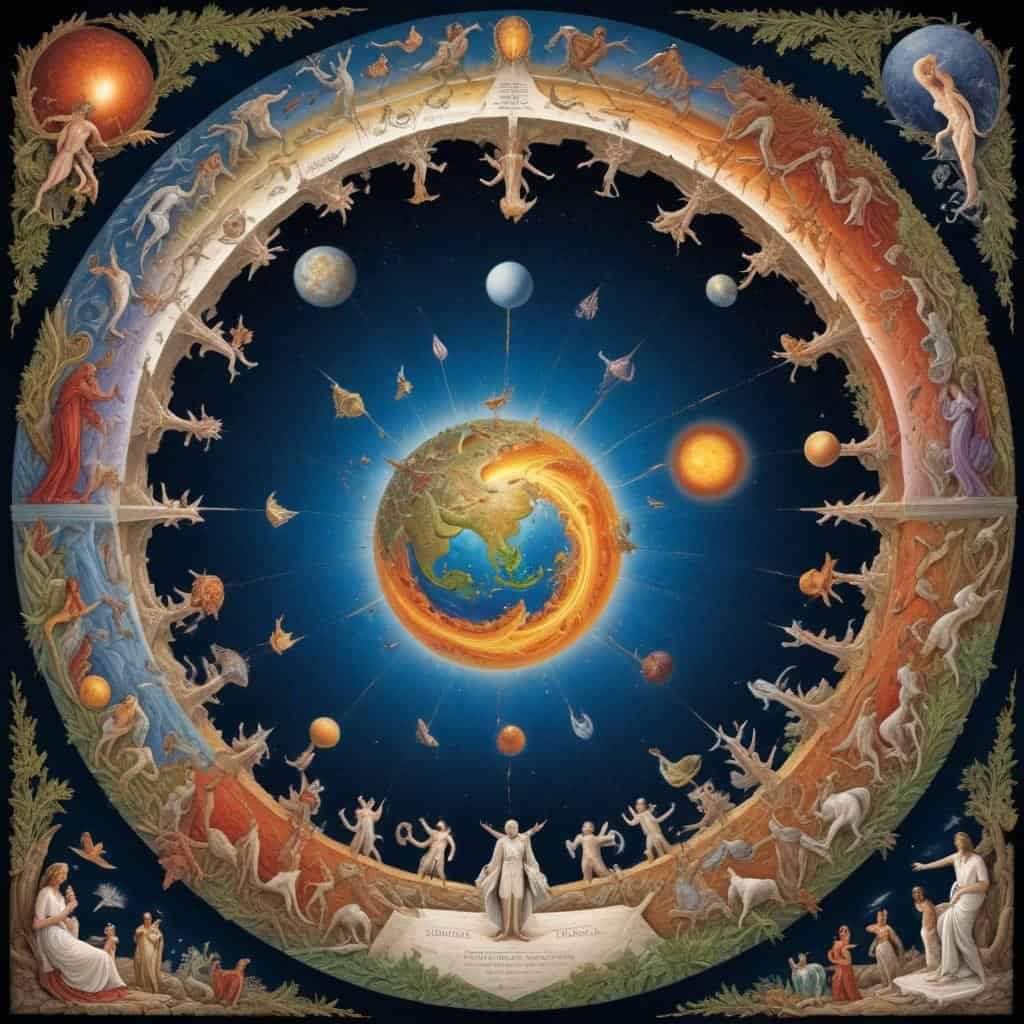
4. The Cycle of Life

5. The Theory of Evolution
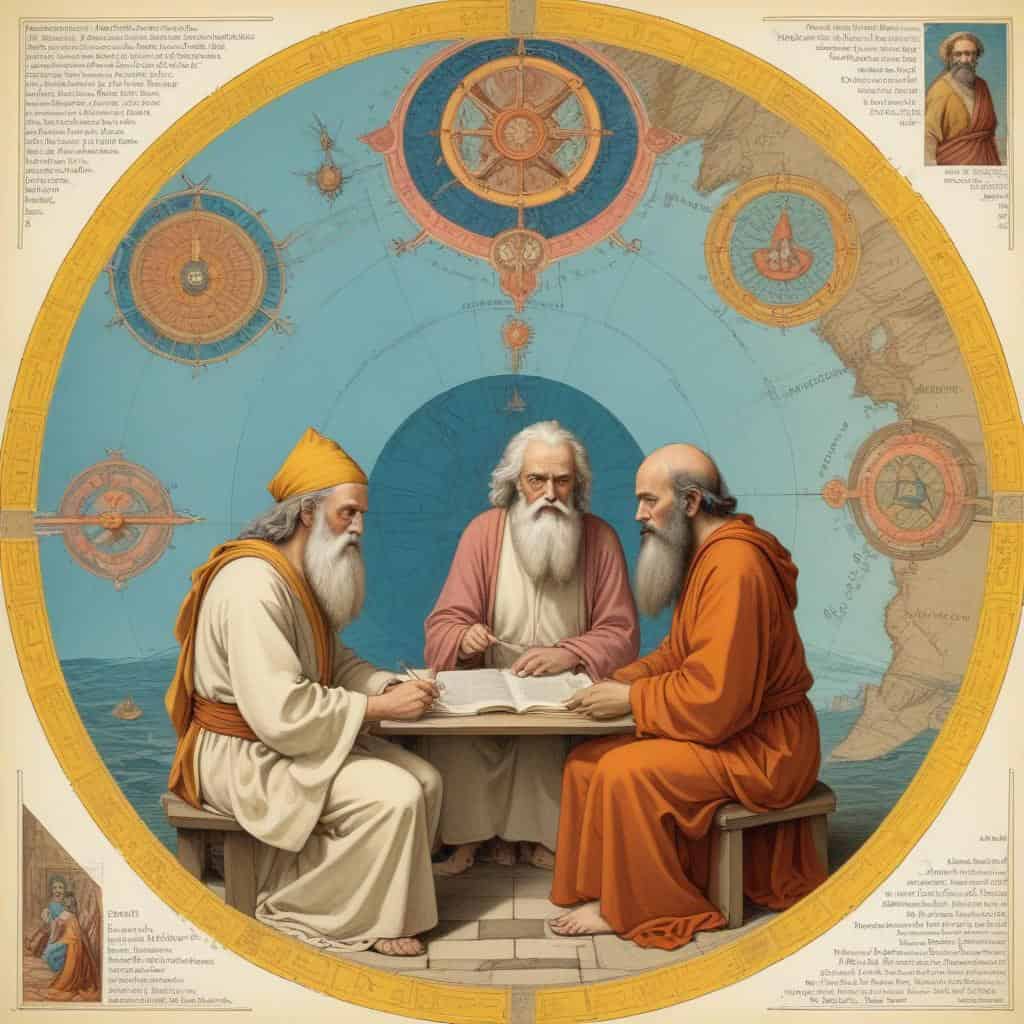
6. Influence on Later Philosophers
7. Legacy of Empedocles
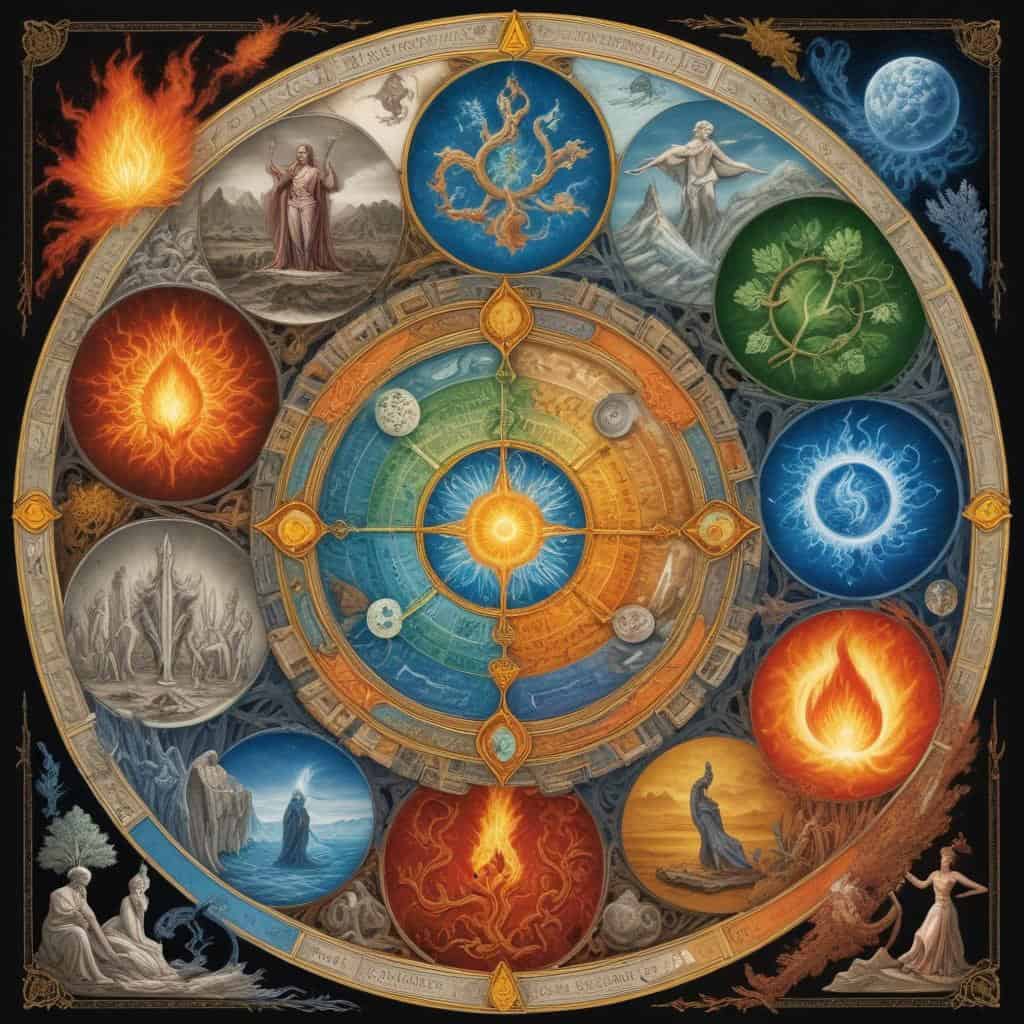
8. Relevance Today
9. Continued Debate
Lesson Details & Resources
In a Nutshell
- Concept: The four elements theory proposed by Empedocles, an ancient Greek philosopher.
- Thinkers: Empedocles, 5th century BC.
- Central Question: What are the fundamental building blocks of the universe?
- Core Implication: All matter is composed of varying combinations of earth, water, air, and fire.
Timeline of An Empedocles and the Four Elements
Empedocles is born in Acragas (modern-day Agrigento, Sicily)
Empedocles develops his theory of the Four Elements (earth, air, fire, water) as the building blocks of the universe
Empedocles introduces the concept of Love (Philotes) and Strife (Neikos) as forces that govern the interactions of the Four Elements
Empedocles writes his poem 'On Nature' outlining his philosophical ideas
Empedocles is believed to have jumped into the crater of Mount Etna in a failed attempt to prove his immortality
Empedocles' ideas influence later philosophers such as Plato and Aristotle
Plato incorporates Empedocles' theory of the Four Elements into his own philosophy in works like 'Timaeus'
Aristotle critiques Empedocles' theory of the Four Elements in his work 'Meteorology'
Empedocles' ideas continue to be debated and studied by philosophers and scientists throughout the centuries
Empedocles' theory of the Four Elements becomes a key component of medieval alchemy and natural philosophy
Renaissance thinkers like Paracelsus and Giordano Bruno draw upon Empedocles' ideas in their own work
Empedocles' concept of the Four Elements influences the development of modern chemistry and physics
Empedocles' ideas are explored in the context of modern psychology and metaphysics
Contemporary philosophers continue to engage with Empedocles' ideas and their relevance to contemporary science and philosophy
Vocabulary List
- Empedocles
- Greek philosopher who proposed the theory of the Four Elements - earth, air, water, and fire - as the fundamental building blocks of the universe.
- Four Elements
- The ancient Greek belief that all matter is composed of four basic elements: earth, air, water, and fire.
- Aether
- The fifth element proposed by Empedocles, representing the celestial realm and the divine.
- Cosmos
- The ordered universe as perceived by Empedocles, shaped by the interactions of the Four Elements.
- Harmony
- The balance and proportion of the Four Elements in the universe, according to Empedocles.
- Strife
- The force of discord and separation in Empedocles' philosophy, disrupting the harmony of the Four Elements.
- Love
- The force of attraction and unity in Empedocles' philosophy, bringing the Four Elements together in harmony.
- Sphere
- The shape symbolizing the unity and wholeness of the cosmic cycle in Empedocles' philosophy of the Four Elements.
- Isolation
- The state of being separated from the unity of the Four Elements, leading to disharmony and chaos.
- Cycle
- The eternal process of creation and destruction within the harmonious interplay of the Four Elements in Empedocles' philosophy.
Key Facts
This is the information used in the fact matching game
- Empedocles was a Greek philosopher who believed that the universe was composed of four elements: earth, air, fire, and water.
- Empedocles believed that these four elements combined and separated through the forces of love and strife.
- Empedocles thought that all matter was made up of these four elements in varying proportions.
- Empedocles believed that the elements were eternal and unchanging.
- Empedocles believed that the elements were constantly mixing and separating in cycles.
- Empedocles' theory of the four elements influenced later philosophers such as Aristotle and Galen.
- Empedocles believed that each element had its own unique qualities and characteristics.
- Empedocles associated earth with cold and dryness, air with cold and wetness, fire with hot and dryness, and water with hot and wetness.
- Empedocles believed that the elements were responsible for the growth and decay of all things in the universe.
- Empedocles believed that the balance and interactions of the four elements determined the health and well-being of living beings.
- Empedocles' ideas about the four elements were a precursor to the modern scientific understanding of matter and energy.
- Empedocles believed that the elements were in a constant state of flux, creating a dynamic and ever-changing universe.
- Empedocles' theory of the four elements was a significant departure from earlier cosmological theories that relied on a single substance.
- Empedocles believed that the interactions of the elements were guided by the forces of love and strife, which acted as cosmic principles of attraction and repulsion.
- Empedocles' theory of the four elements was a key component of his broader philosophical system, which also included ideas about the transmigration of souls.
- Empedocles' writings on the four elements have survived only in fragments, but they have had a lasting impact on Western philosophy and science.
- Empedocles' theory of the four elements laid the groundwork for later theories of matter and energy, such as the atomic theory of Democritus.
- Empedocles' ideas about the four elements were part of his broader philosophical project to explain the nature of the universe and the human soul.
- Empedocles' theory of the four elements was a major influence on later philosophers such as Plato and Aristotle, who built upon his ideas in their own work.
- Empedocles' theory of the four elements continues to be studied and debated by philosophers and scientists today, as it remains a foundational concept in the history of Western thought.
Analysis & Significance
The Core Argument
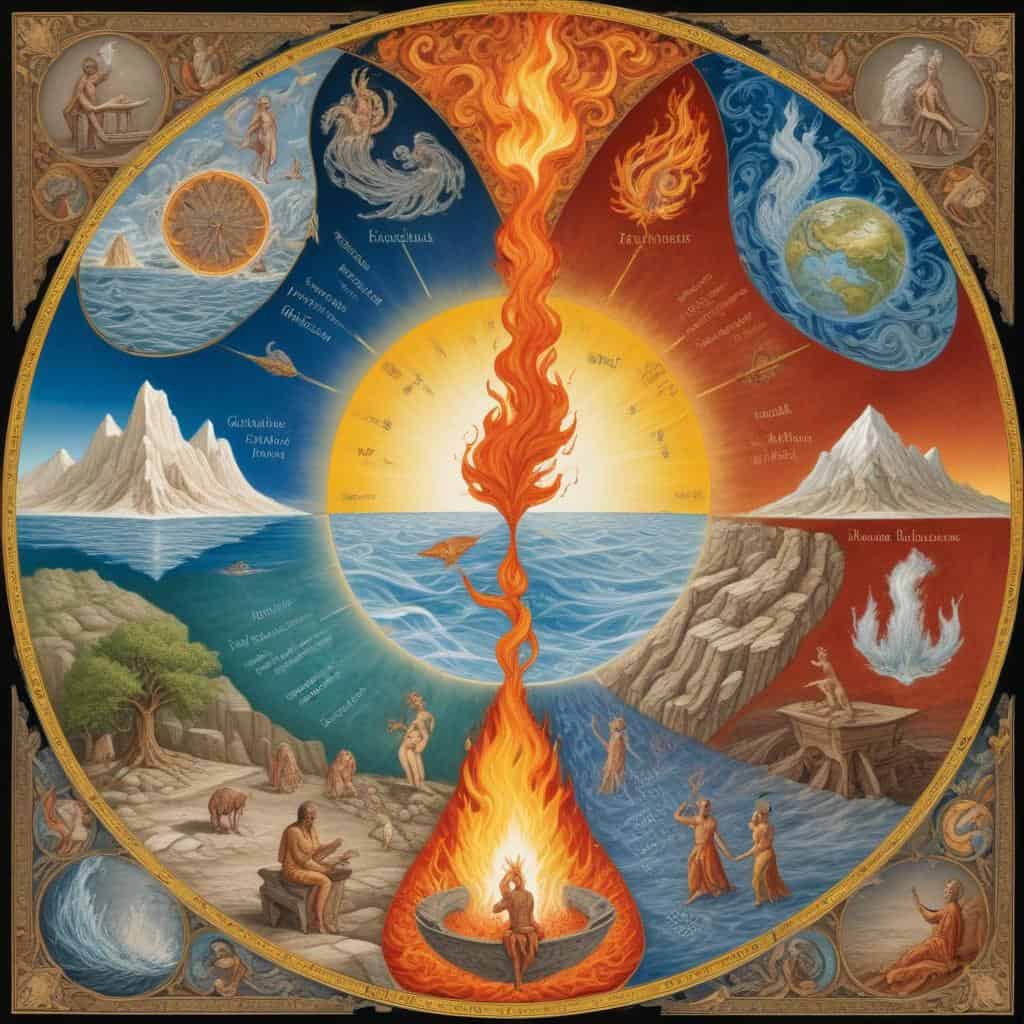
Empedocles, an ancient Greek philosopher, proposed the concept of the Four Elements – earth, air, fire, and water – as the basic building blocks of all matter. He believed that these elements combined and separated through the forces of Love and Strife, shaping the world as we know it.
Criticisms and Counterarguments
Some philosophers criticize Empedocles’ theory for being overly simplistic and lacking empirical evidence. Others argue that the idea of Love and Strife as driving forces behind the elements is too abstract and metaphysical to be taken seriously. Additionally, modern science has disproven the notion of four primary elements governing all matter.
Modern Relevance
Despite its shortcomings, Empedocles’ concept of the Four Elements still holds value in modern times as a metaphor for understanding the complexities of the natural world. It serves as a reminder of the interconnectedness of all things and the constant flux of change. This idea can be applied to environmental issues, social dynamics, and personal relationships, highlighting the importance of balance and harmony in our lives.
An Empedocles and the Four Elements Games


Take Your Learning Offline
Want a convenient, print-ready study guide for this lesson? Become a Memory Wizards Pro member to unlock the downloadable " Memory Scrolls" for this topic and our entire library!
- ✓ Complete Vocabulary Lists
- ✓ Key Facts & Timelines
- ✓ Beautifully Formatted for Print & Mobile