
An Analysis of Anaximander and the Boundless
What lies beyond the edge of all things known?
How Do You Learn Best?
Learn by Listening
Start with the 3-minute audio summary to get the key facts and narrative highlights quickly.
Learn by Reading
Immerse yourself in the 10-minute visual lesson for a comprehensive understanding of the topic.
Learn by Reviewing
Jump directly to the key facts, timeline, and vocabulary lists to build a solid foundation of details.
Learn by Doing
Challenge yourself! Jump straight into the interactive games to learn by trial, error, and discovery.
Audio Library
As one of our featured lessons, this topic includes premium audio guides.
Unlock the Wizard's Cram Session
This powerful audio study guide is a Pro-exclusive feature. Upgrade to Memory Wizards Pro to access this and all of our premium learning tools.
Upgrade to ProAn Anaximander and the Boundless in 10 Minutes

Introduction
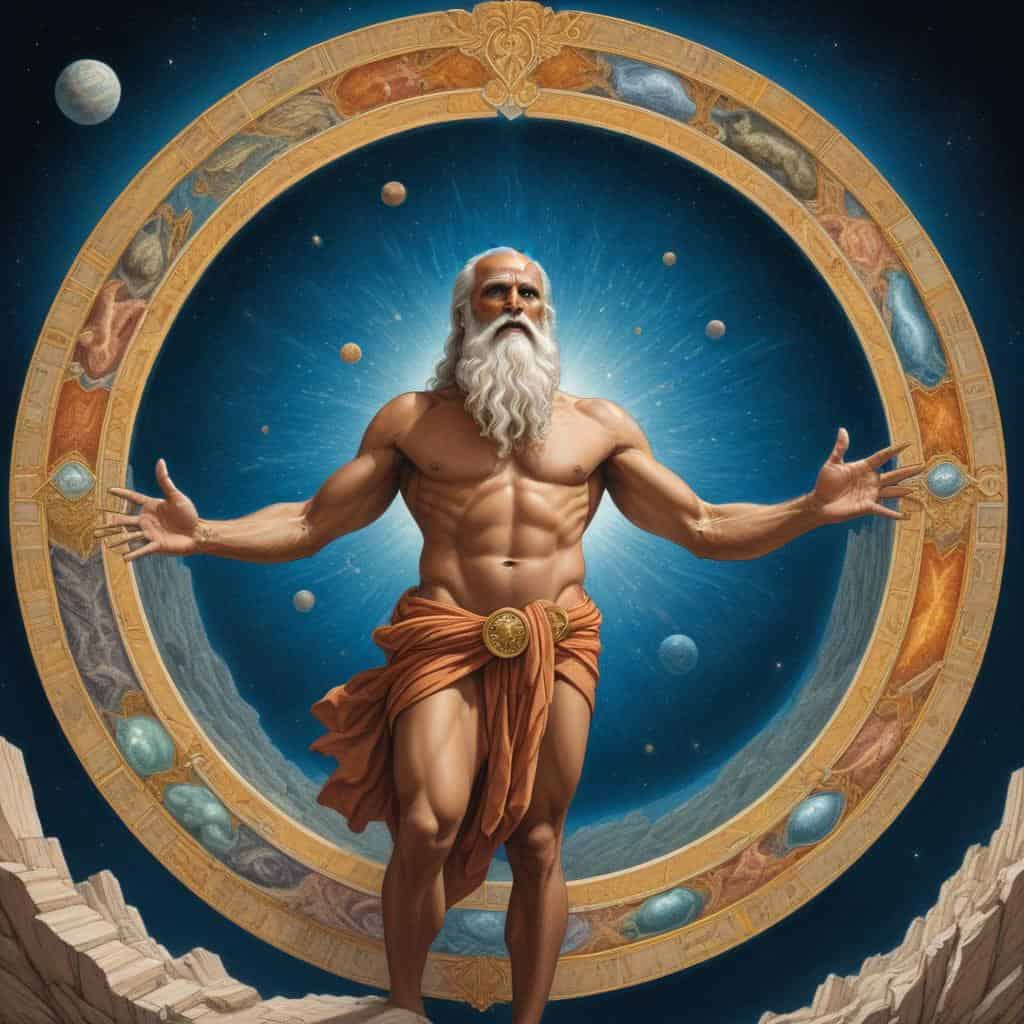
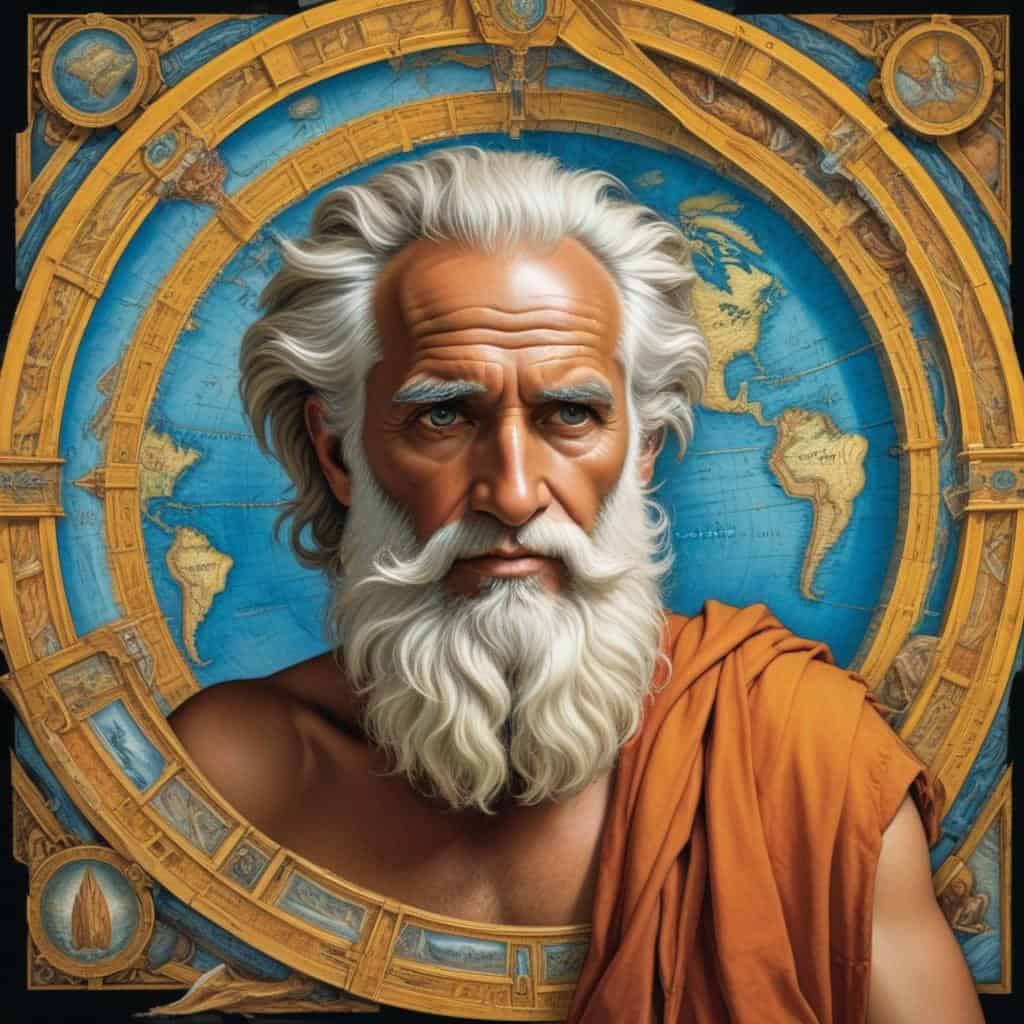
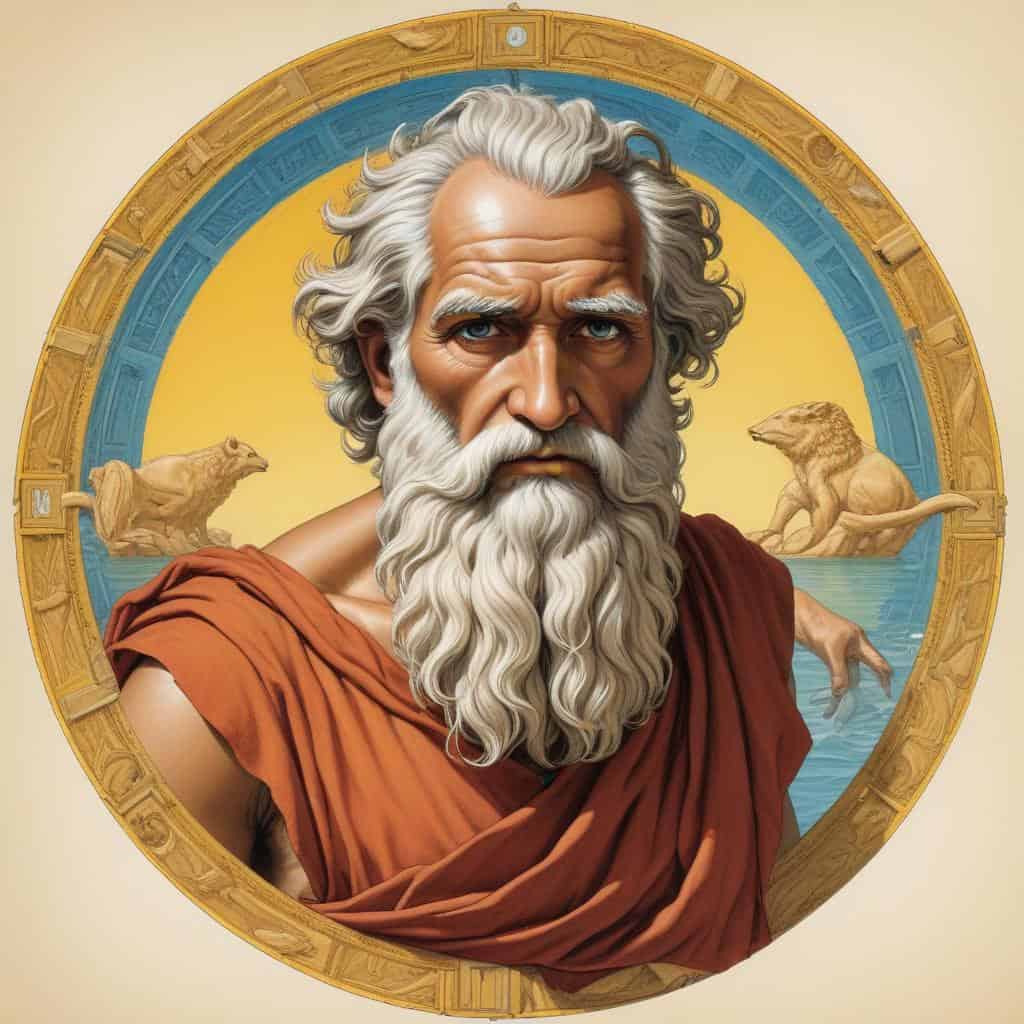
Anaximander
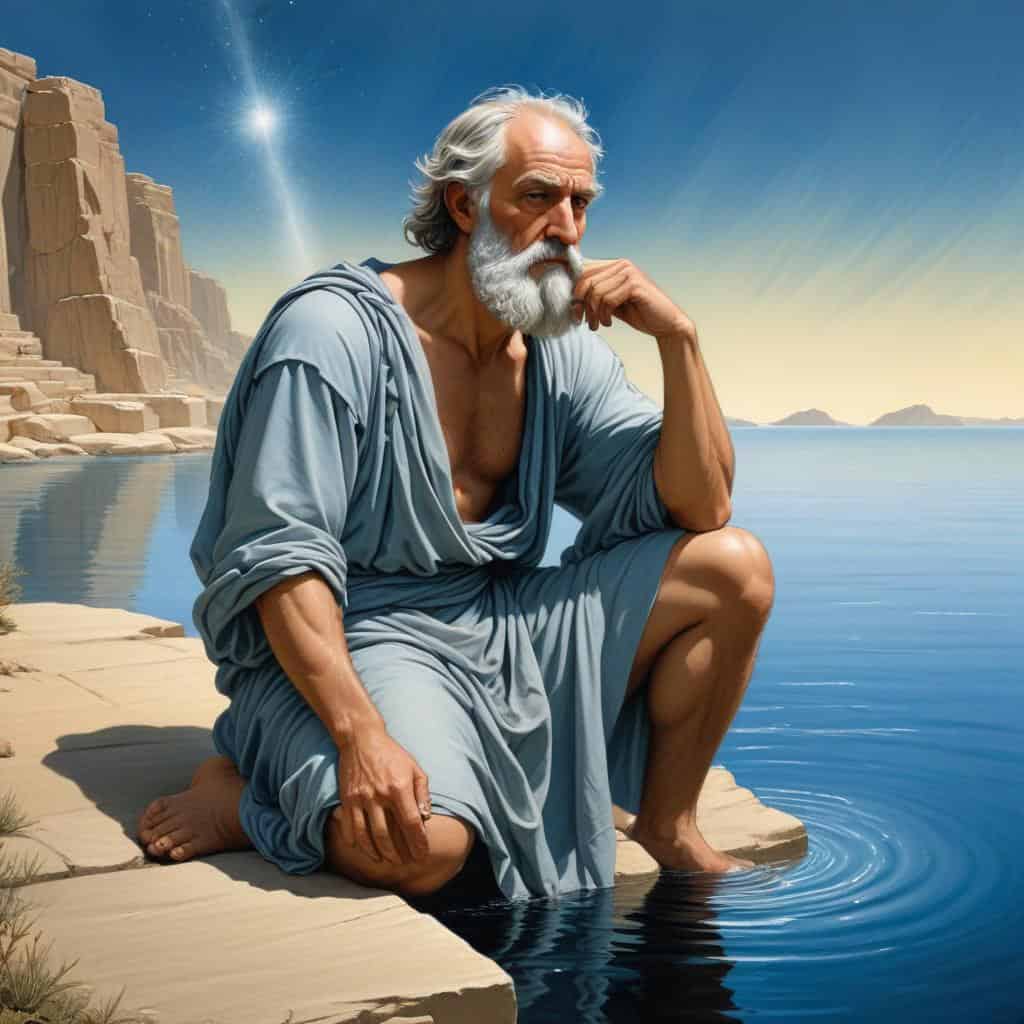
Thales
Pythagoras
Heraclitus

Parmenides
Anaximanders Early Life
The Concept of the Boundless
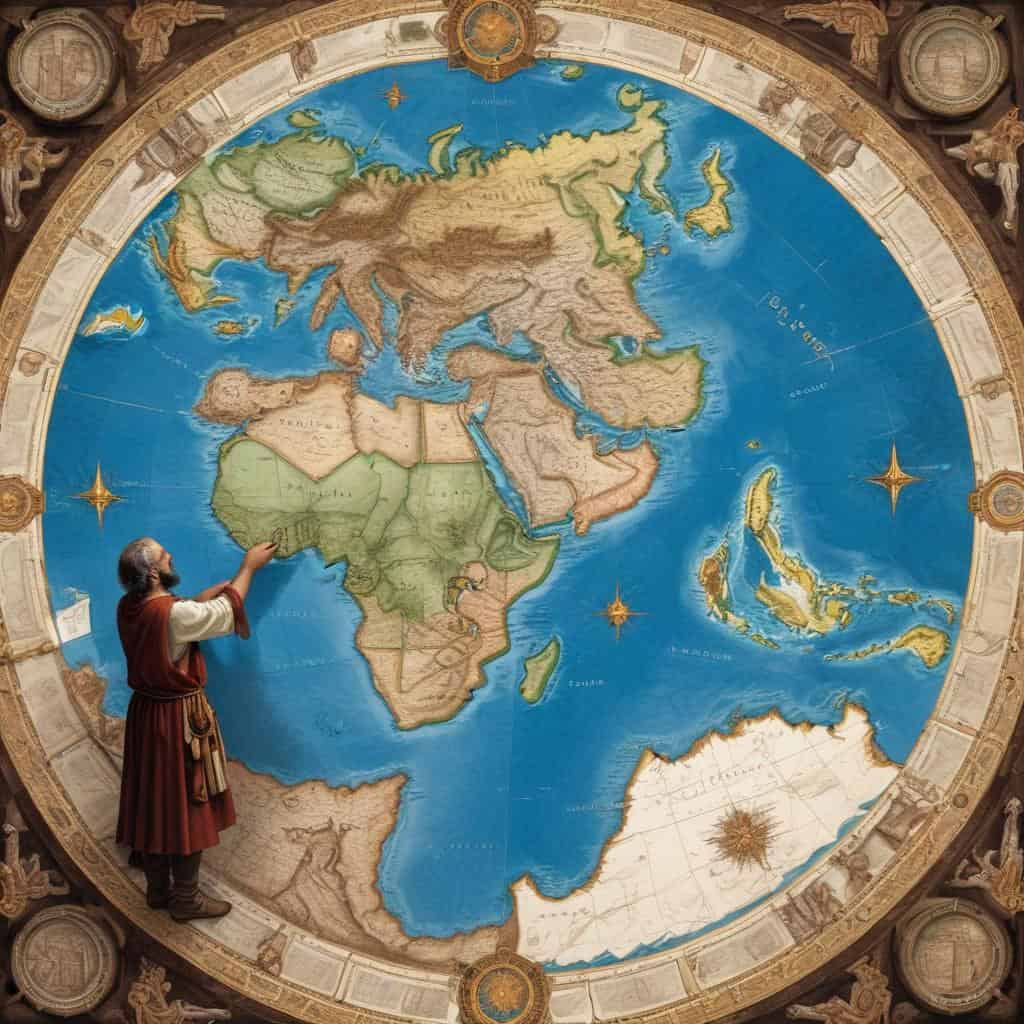
The First Known Map

The Theory of Evolution
The Infinite Universe
The Importance of Balance
Legacy in Philosophy
Controversies and Criticisms
End of Anaximanders Life

Lesson Details & Resources
In a Nutshell
- Concept: A philosophical concept that explores the idea of the boundless or infinite nature of the universe.
- Thinkers: Anaximander, 6th century BC.
- Central Question: What is the ultimate substance or principle that underlies all things?
- Core Implication: The belief in a boundless, indefinite, and eternal reality as the source of all existence.
Timeline of An Anaximander and the Boundless
Anaximander is born in Miletus
Anaximander becomes a student of Thales
Anaximander presents his theory of the Boundless (Apeiron)
Anaximander's work 'On Nature' is written
Anaximander introduces the concept of the apeiron as the principle of all things
Anaximander theorizes the existence of multiple worlds and the cyclical nature of the universe
Anaximander is credited with creating the first known map of the world
Anaximander's student, Anaximenes, develops his own theory of the Boundless based on air
Anaximander's work influences later philosophers such as Heraclitus and Parmenides
Anaximander dies in Miletus
Anaximander's ideas continue to be debated and studied by philosophers throughout history
Anaximander's concept of the Boundless remains a key element in the development of early Greek philosophy
Anaximander's work lays the foundation for the later development of metaphysics and cosmology
Anaximander's influence can be seen in the works of later philosophers such as Aristotle and Plato
Vocabulary List
- Anaximander
- Anaximander believed that the Boundless was the primary substance from which everything in the universe originated.
- Boundless
- Anaximander's concept of the Boundless as the primary substance was a departure from earlier theories that focused on specific elements like water or air.
- Philosophy
- Anaximander's philosophy focused on explaining the origins and nature of the universe through the concept of the Boundless.
Key Facts
This is the information used in the fact matching game
- Anaximander was a pre-Socratic philosopher who believed in the concept of the Boundless as the origin of all things.
- Anaximander believed that the Boundless was an indefinite and unlimited substance from which all things arise and to which they return.
- Anaximander's concept of the Boundless is often referred to as 'apeiron', which means 'the indefinite' or 'the infinite'.
- Anaximander's idea of the Boundless challenged the traditional mythological explanations of the origins of the universe.
- Anaximander believed that the Boundless was eternal and unchanging, serving as the ultimate source of all things.
- Anaximander's concept of the Boundless influenced later philosophers, such as Heraclitus and Parmenides.
- Anaximander's Boundless was not a physical substance but rather a metaphysical principle that underlies the physical world.
- Anaximander believed that the Boundless was the source of all opposites and contradictions in the world.
- Anaximander's concept of the Boundless laid the foundation for the development of cosmology as a scientific discipline.
- Anaximander's theory of the Boundless challenged the anthropocentric view of the universe prevalent in ancient Greek thought.
- Anaximander believed that the Boundless was in a state of constant motion and change, giving rise to the diversity of phenomena in the world.
- Anaximander's concept of the Boundless influenced the later development of the concept of the 'infinite' in Western philosophy.
- Anaximander's theory of the Boundless marked a shift from mythological explanations of the origins of the universe to rational and naturalistic explanations.
- Anaximander's concept of the Boundless raised questions about the nature of existence, change, and causality in the universe.
- Anaximander's theory of the Boundless is considered one of the earliest attempts to explain the origins of the universe through naturalistic principles.
- Anaximander's concept of the Boundless laid the groundwork for the development of the concept of 'infinite potentiality' in later philosophical thought.
- Anaximander's theory of the Boundless has been interpreted in various ways by modern scholars, leading to debates about its implications for contemporary philosophy.
- Anaximander's concept of the Boundless has been compared to the modern scientific concept of the 'singularity' as a point of infinite density and energy.
- Anaximander's theory of the Boundless has been seen as a precursor to the modern concept of a 'unified theory of everything' that seeks to explain the fundamental laws of the universe.
- Anaximander's concept of the Boundless continues to provoke philosophical inquiries into the nature of existence, reality, and the limits of human understanding.
Analysis & Significance
The Core Argument
Anaximander, a pre-Socratic philosopher, proposed the concept of the Boundless (apeiron) as the source of all things. He argued that this Boundless is eternal, infinite, and the origin of the cosmos. Anaximander believed that everything in the universe comes from this primal substance, which is beyond human comprehension and transcends finite boundaries.
Criticisms and Counterarguments
Critics of Anaximander’s philosophy have questioned the idea of the Boundless as the ultimate source of existence. Some argue that his concept lacks specificity and fails to provide a coherent explanation for the diversity and complexity of the natural world. Others challenge the notion of an infinite and eternal substance as the foundation of reality, raising concerns about the limitations of human knowledge and the nature of causation.
Modern Relevance
The philosophical concept of Anaximander and the Boundless continues to spark debates in contemporary discussions on metaphysics and cosmology. In a world where scientific discoveries constantly push the boundaries of human understanding, the idea of an infinite and unknowable source of existence prompts reflection on the limits of human knowledge and the mysteries of the universe. This concept also invites contemplation on the interconnectedness of all things and the nature of reality in an ever-changing world.
An Anaximander and the Boundless Games


Take Your Learning Offline
Want a convenient, print-ready study guide for this lesson? Become a Memory Wizards Pro member to unlock the downloadable " Memory Scrolls" for this topic and our entire library!
- ✓ Complete Vocabulary Lists
- ✓ Key Facts & Timelines
- ✓ Beautifully Formatted for Print & Mobile