
How Do You Learn Best?
Learn by Reading
Immerse yourself in the 10-minute visual lesson for a comprehensive understanding of the topic.
Learn by Reviewing
Jump directly to the key facts, timeline, and vocabulary lists to build a solid foundation of details.
Learn by Doing
Challenge yourself! Jump straight into the interactive games to learn by trial, error, and discovery.
Letters of Pliny the Younger in 10 Minutes

Introduction

Pliny the Younger

Pliny the Elder

Emperor Trajan

Calpurnia

Corellius Rufus
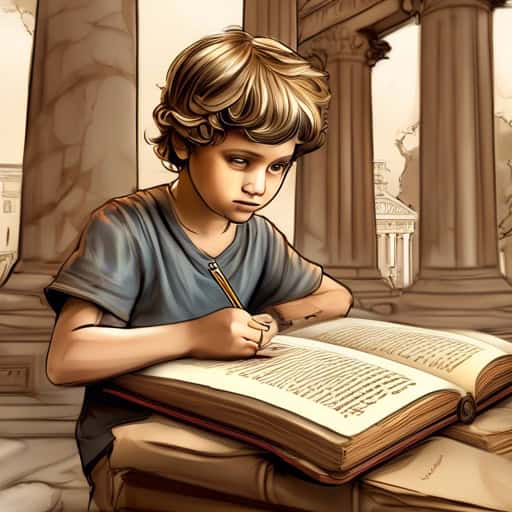
1. Plinys Early Life and Education
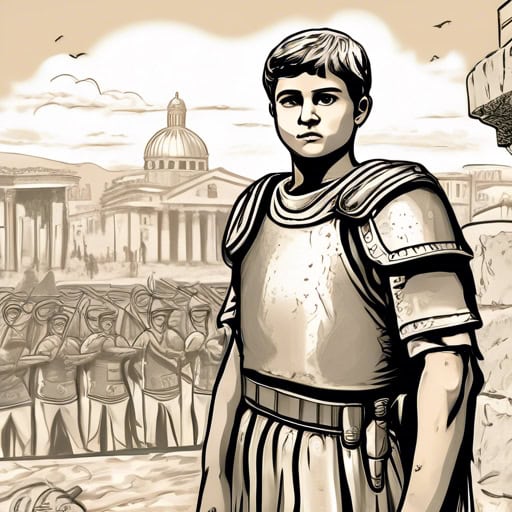
2. Plinys Political Career

3. Plinys Correspondence with Emperor Trajan
4. Themes in Plinys Letters
5. Plinys Style of Writing
6. Relationship with his Wife Calpurnia
7. Plinys Observations on Nature
8. Plinys Legacy

9. The Value of Plinys Letters
10. Conclusion
Lesson Details & Resources
In a Nutshell
- What: The Letters of Pliny the Younger
- When: Written in the Roman Empire
- Who: Pliny the Younger
- Theme: Epistolary correspondence, life in ancient Rome
List of Characters in Letters of Pliny the Younger
-
Pliny the Younger
Pliny the Younger is the author of the Letters of Pliny the Younger, a collection of his correspondence with various Roman figures.
-
Pliny the Elder
Pliny the Elder was the uncle and mentor of Pliny the Younger, and a renowned naturalist and author.
-
Emperor Trajan
Emperor Trajan was the Roman Emperor during the time of Pliny the Younger, and is featured in some of the letters.
-
Servianus
Servianus was a close friend and advisor to Pliny the Younger, and is mentioned in several of the letters.
Timeline of Letters of Pliny the Younger
Pliny the Younger is born in 61 AD in Como, Italy.
Pliny the Younger is adopted by his uncle, Pliny the Elder, a renowned naturalist and author.
Pliny the Younger begins his education in Rome and pursues a career in law.
Pliny the Younger becomes a senator and serves in various government positions.
Pliny the Younger is appointed as governor of Bithynia and Pontus in 111 AD.
During his time as governor, Pliny the Younger corresponds with Emperor Trajan and writes letters detailing his experiences and seeking advice.
Pliny the Younger returns to Rome in 113 AD and continues his career in law and politics.
Pliny the Younger's letters to Trajan are compiled and published as 'Letters of Pliny the Younger' after his death.
Vocabulary List
- Emperor
- Pliny the Younger often wrote letters to the emperor Trajan.
- Province
- Pliny the Younger served as a governor of a province in the Roman Empire.
- Roman
- The Letters of Pliny the Younger provide insights into daily life in ancient Roman society.
- Correspondence
- The Letters of Pliny the Younger are a collection of his correspondence with various individuals.
- Friendship
- Pliny the Younger's letters often discuss the importance of friendship and loyalty.
- Governor
- Pliny the Younger held the position of governor in multiple provinces during his lifetime.
- Literature
- The Letters of Pliny the Younger are considered an important work of Roman literature.
- Legacy
- Pliny the Younger's legacy as a writer and statesman is preserved in his letters.
- Philosophy
- Pliny the Younger's letters touch on philosophical topics such as ethics and morality.
- Senate
- Pliny the Younger was a member of the Roman Senate and his letters often reflect his political duties.
- Virtue
- Pliny the Younger's letters often emphasize the importance of virtue and integrity.
- Wealth
- Pliny the Younger's letters discuss the challenges and responsibilities that come with wealth and social status.
- Youth
- Pliny the Younger's letters offer advice and guidance to younger individuals on various topics.
- Justice
- Pliny the Younger's letters touch on the concept of justice and the rule of law in Roman society.
Key Facts
This is the information used in the fact matching game
- Pliny the Younger was a Roman author and administrator during the 1st century AD.
- Pliny the Younger is best known for his collection of letters, known as the Letters of Pliny the Younger.
- The letters of Pliny the Younger provide valuable insight into Roman society, politics, and culture.
- Pliny the Younger's letters were written to a variety of recipients, including friends, family members, and government officials.
- The letters of Pliny the Younger cover a wide range of topics, from philosophy and religion to everyday life and current events.
- Pliny the Younger's letters are considered some of the finest examples of Latin prose.
- Pliny the Younger served as a governor in several Roman provinces, including Bithynia and Pontus.
- Pliny the Younger's letters often reflect his duties as a Roman administrator and the challenges he faced in his official capacity.
- Pliny the Younger's letters also provide glimpses into his personal life, including his relationships with his wife and friends.
- Pliny the Younger's letters are written in a formal style, reflecting his education and social status.
- The letters of Pliny the Younger were widely read and admired in ancient Rome.
- Pliny the Younger's letters have been studied by scholars for centuries and continue to be a valuable resource for historians and classicists.
- Pliny the Younger's letters are often cited as important sources for understanding the history and culture of ancient Rome.
- Pliny the Younger's correspondence with the emperor Trajan is especially famous and provides insight into Roman politics and governance.
- Pliny the Younger's letters were highly regarded by his contemporaries and later generations of writers and thinkers.
- The Letters of Pliny the Younger are still widely read and studied today for their historical and literary value.
- Pliny the Younger's letters reveal his keen observations of human nature and his skill in rhetoric.
- Pliny the Younger's letters provide a window into the daily life and concerns of the Roman elite during the early imperial period.
- Pliny the Younger's letters have been translated into many languages and are still widely read and admired by scholars and general readers alike.
- Pliny the Younger's letters are considered essential reading for anyone interested in the history and literature of ancient Rome.
Analysis & Significance
Impact on Literature
Pliny the Younger’s ‘Letters’ have had a profound impact on the development of the epistolary genre in literature. His vivid descriptions of daily life, philosophical reflections, and personal anecdotes set a standard for the form that continues to influence writers today.
Enduring Themes
The timeless themes of friendship, duty, morality, and the pursuit of knowledge explored in Pliny’s letters still resonate with modern audiences. His musings on human nature and the complexities of relationships continue to be relevant in today’s society.
Cultural Significance Today
Pliny the Younger’s ‘Letters’ remain a valuable source of insight into Roman society and culture. They have been studied and referenced by historians, philosophers, and writers for centuries, and continue to be adapted into various forms of media, showcasing their enduring cultural significance in today’s world.
Letters of Pliny the Younger Games


Take Your Learning Offline
Want a convenient, print-ready study guide for this lesson? Become a Memory Wizards Pro member to unlock the downloadable " Memory Scrolls" for this topic and our entire library!
- ✓ Complete Vocabulary Lists
- ✓ Key Facts & Timelines
- ✓ Beautifully Formatted for Print & Mobile