
How Do You Learn Best?
Learn by Reading
Immerse yourself in the 10-minute visual lesson for a comprehensive understanding of the topic.
Learn by Reviewing
Jump directly to the key facts, timeline, and vocabulary lists to build a solid foundation of details.
Learn by Doing
Challenge yourself! Jump straight into the interactive games to learn by trial, error, and discovery.
Panegyricus in 10 Minutes
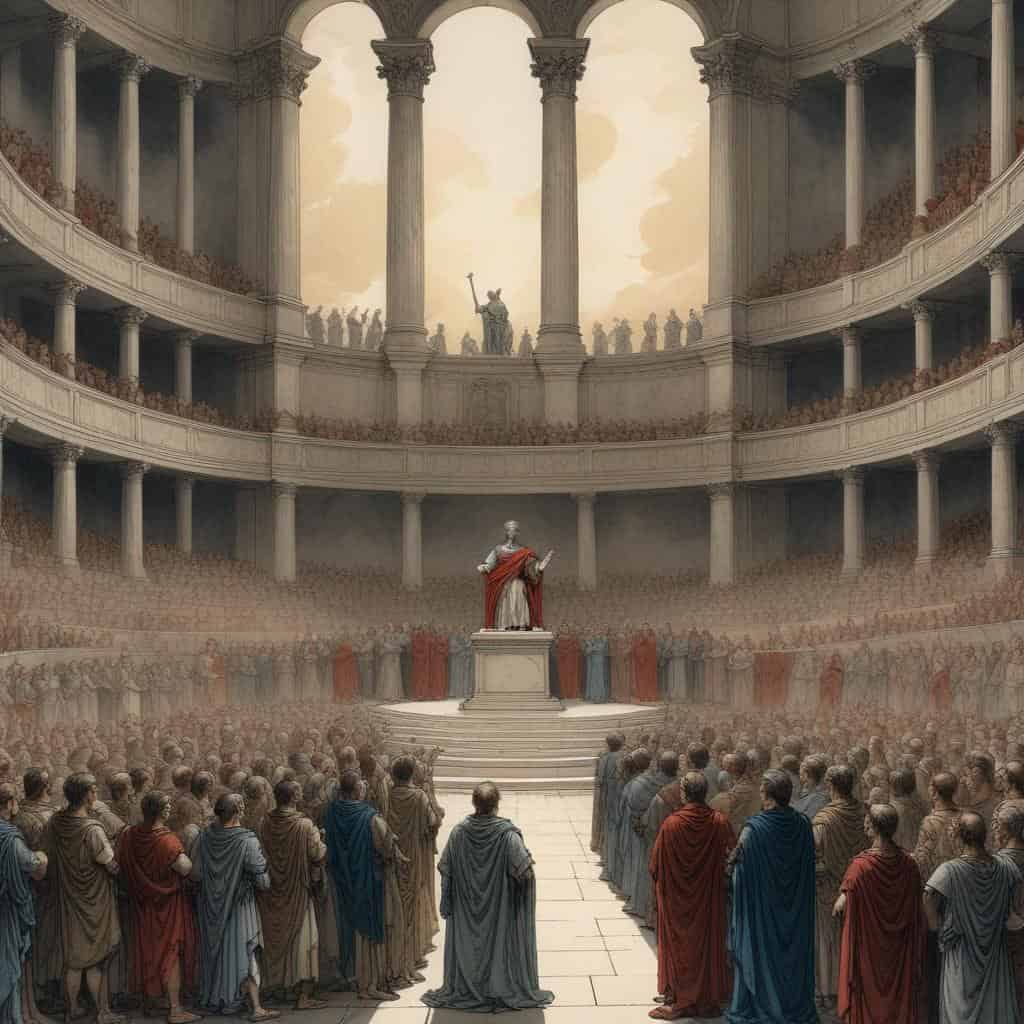
Introduction



Pliny the Younger

Trajan

Emperor Hadrian

Roman Senate

The Early Life of Pliny the Younger

The Composition of Panegyricus

The Themes of Panegyricus

The Influence of Panegyricus
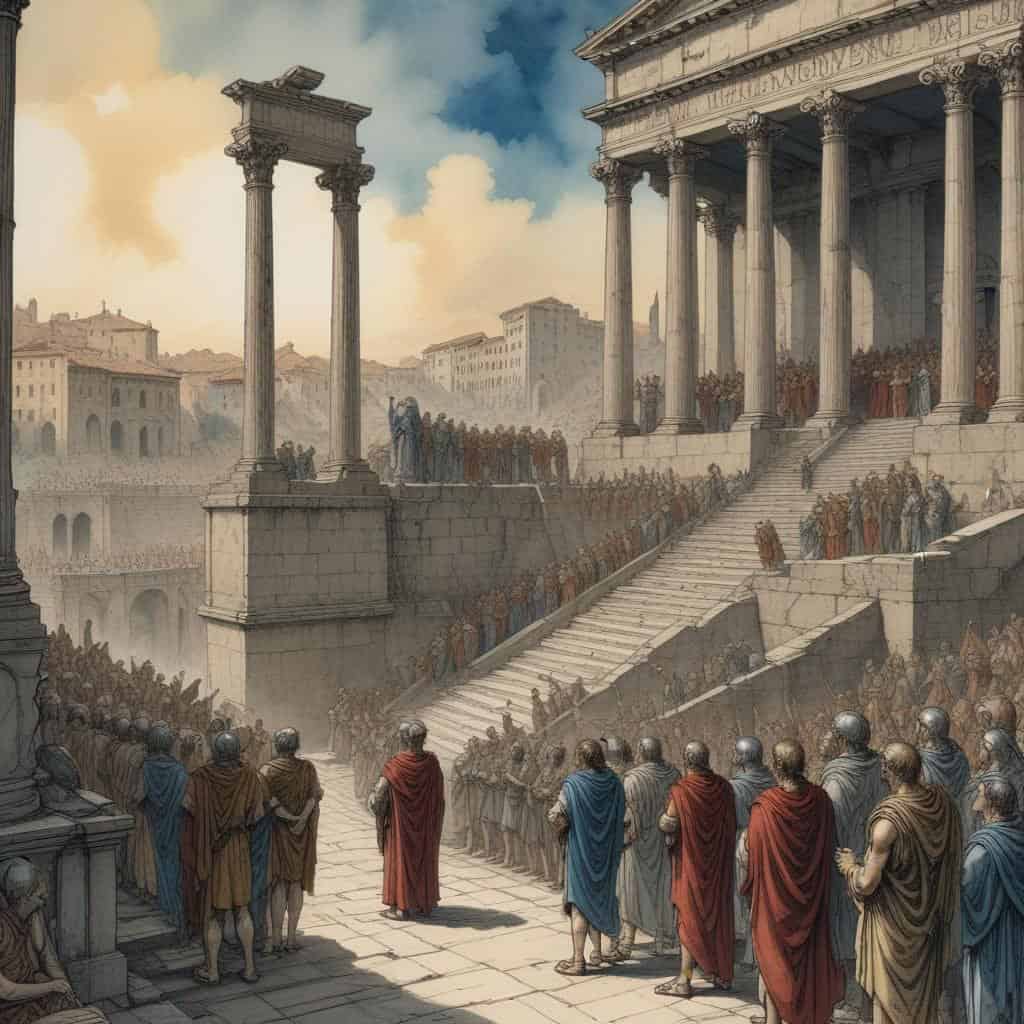
The Legacy of Panegyricus
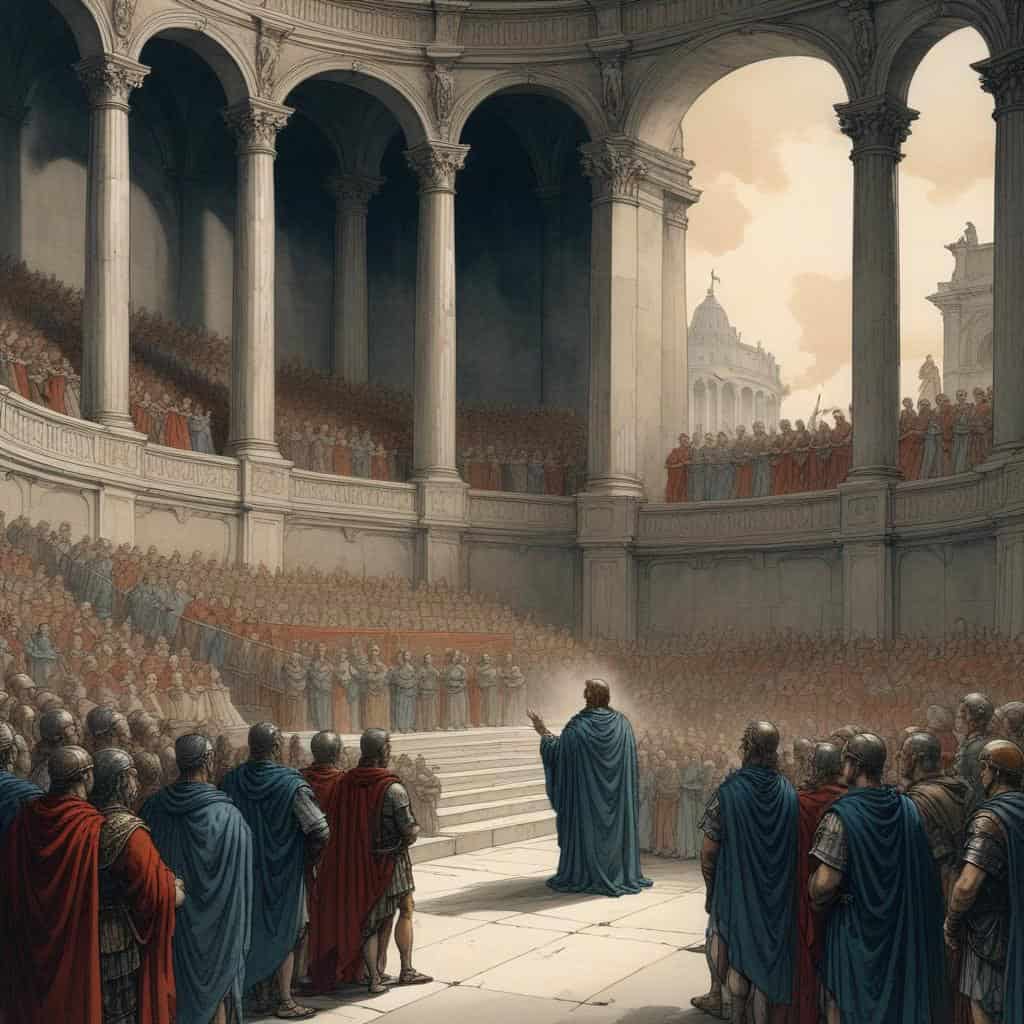
Lesson Details & Resources
In a Nutshell
- What: ‘Panegyricus’ by Isocrates
- When: Written in the 4th century BC
- Who: Isocrates
- Theme: Praise and celebration of Athens
List of Characters in Panegyricus
-
Pliny the Younger
Pliny the Younger was a Roman senator and author who wrote the Panegyricus as a eulogy for Emperor Trajan.
-
Trajan
Trajan was a Roman emperor who was the subject of the Panegyricus, praised for his military conquests and good governance.
-
Suetonius Tranquillus
Suetonius Tranquillus was a Roman historian and friend of Pliny the Younger, mentioned in the Panegyricus.
-
Cornelius Tacitus
Cornelius Tacitus was a Roman historian and senator who may have been present at the delivery of the Panegyricus.
Timeline of Panegyricus
Pliny the Younger writes Panegyricus, a speech praising Trajan, around 100 AD.
Panegyricus is delivered in front of Trajan and the Roman Senate, receiving praise for its eloquence and flattery.
The speech is widely circulated and becomes known as a classic example of Roman oratory.
Panegyricus is later included in Pliny the Younger's published works, ensuring its lasting impact on Roman literature.
Vocabulary List
- Panegyricus
- The title of the speech written by Pliny the Younger in honor of Trajan.
- Orator
- Pliny the Younger was known for being a skilled orator, as demonstrated in his Panegyricus.
- Emperor
- Trajan, the subject of Pliny the Younger's Panegyricus, was a Roman emperor.
- Rhetoric
- Pliny the Younger's Panegyricus is an example of classical rhetoric.
- Praise
- The Panegyricus is a work of praise dedicated to Emperor Trajan.
- Honor
- Pliny the Younger's Panegyricus is a testament to the honor and respect he had for Trajan.
- Speech
- The Panegyricus is a written speech that Pliny the Younger delivered in front of the Roman Senate.
- Eulogy
- The Panegyricus can be seen as a eulogy for Emperor Trajan.
- Oration
- Pliny the Younger's Panegyricus is a famous oration from ancient Rome.
- Patriotism
- Pliny the Younger's Panegyricus reflects his deep sense of patriotism for the Roman Empire.
Key Facts
This is the information used in the fact matching game
- The Panegyricus is a speech written by Pliny the Younger in praise of Emperor Trajan.
- It was delivered in 100 AD during Trajan's visit to the city of Rome.
- Pliny the Younger was a Roman senator and writer known for his letters and speeches.
- The Panegyricus is one of the earliest surviving examples of a Roman panegyric, a type of speech praising a public figure.
- The speech was delivered in the Roman Senate and was likely attended by Trajan himself.
- Pliny the Younger was a close friend and supporter of Trajan, which may have influenced the tone of the speech.
- The Panegyricus emphasizes Trajan's military achievements and virtues as a ruler.
- Pliny praises Trajan for his clemency, justice, and generosity towards his subjects.
- The speech also emphasizes Trajan's humility and willingness to listen to advice from his advisors.
- Pliny compares Trajan to famous Roman emperors such as Augustus and Vespasian.
- The Panegyricus was likely intended to curry favor with Trajan and secure Pliny's own political advancement.
- The speech is written in a highly rhetorical style typical of Roman oratory.
- Pliny uses elaborate language and imagery to praise Trajan's virtues and achievements.
- The Panegyricus is considered one of Pliny's most important works and a key source for understanding Trajan's reign.
- The speech reflects the political culture of the Roman Empire and the importance of public praise and flattery.
- Pliny's praise of Trajan in the Panegyricus may have been exaggerated for rhetorical effect.
- The Panegyricus was likely circulated widely in Rome and throughout the Empire after its delivery.
- Pliny the Younger's letters provide further insights into his relationship with Trajan and his admiration for the emperor.
- The Panegyricus has been studied by scholars for its insights into Roman politics, rhetoric, and the relationship between emperors and their subjects.
- Pliny the Younger's writings, including the Panegyricus, have been influential in shaping modern perceptions of the Roman Empire and its rulers.
Analysis & Significance
Impact on Literature
‘Panegyricus’ holds a pivotal place in the history of literature as it showcases the power of rhetoric and eloquence in persuasive writing. Its intricate structure and persuasive language have influenced countless writers and orators, shaping the way we communicate and present arguments in written form.
Enduring Themes
The timeless themes of praise, flattery, and persuasion explored in ‘Panegyricus’ continue to resonate with modern audiences. The work delves into the complexities of human nature and the art of persuasion, offering insights into the ways in which language can be used to influence and manipulate others.
Cultural Significance Today
‘Panegyricus’ remains a relevant text in today’s society, with its themes of power, manipulation, and rhetoric still prevalent in politics, media, and everyday discourse. Its legacy can be seen in famous adaptations and modern interpretations that continue to explore the art of persuasion and the impact of language on society.
Panegyricus Games


Take Your Learning Offline
Want a convenient, print-ready study guide for this lesson? Become a Memory Wizards Pro member to unlock the downloadable " Memory Scrolls" for this topic and our entire library!
- ✓ Complete Vocabulary Lists
- ✓ Key Facts & Timelines
- ✓ Beautifully Formatted for Print & Mobile