
The Allegory Of The Cave
Are we truly seeing reality or just shadows on the wall?
How Do You Learn Best?
Learn by Listening
Start with the 3-minute audio summary to get the key facts and narrative highlights quickly.
Learn by Reading
Immerse yourself in the 10-minute visual lesson for a comprehensive understanding of the topic.
Learn by Reviewing
Jump directly to the key facts, timeline, and vocabulary lists to build a solid foundation of details.
Learn by Doing
Challenge yourself! Jump straight into the interactive games to learn by trial, error, and discovery.
Audio Library
As one of our featured lessons, this topic includes premium audio guides.
Unlock the Wizard's Cram Session
This powerful audio study guide is a Pro-exclusive feature. Upgrade to Memory Wizards Pro to access this and all of our premium learning tools.
Upgrade to ProThe Allegory Of The Cave in 10 Minutes
Introduction
1. The Prisoners

2. The Puppeteers
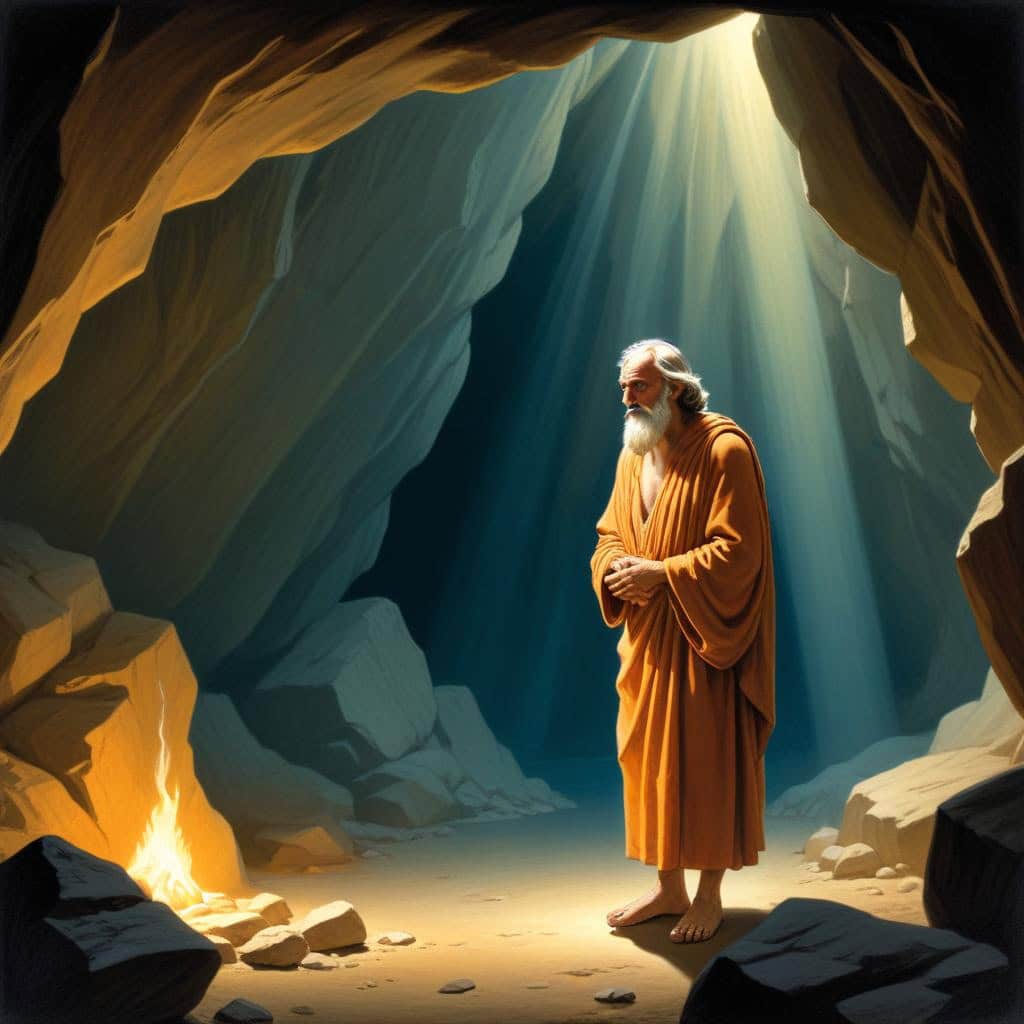
3. The Philosopher

4. The Sun
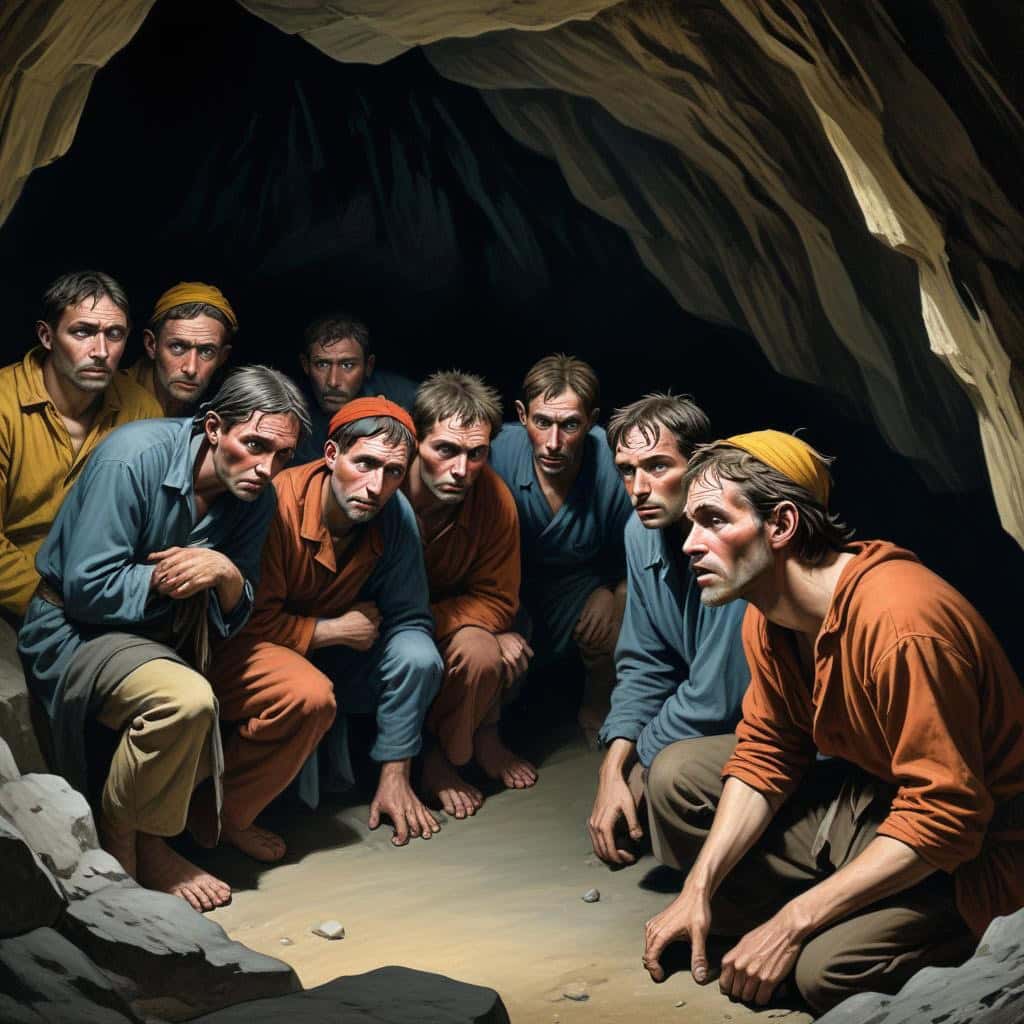
The Prisoners in the Cave
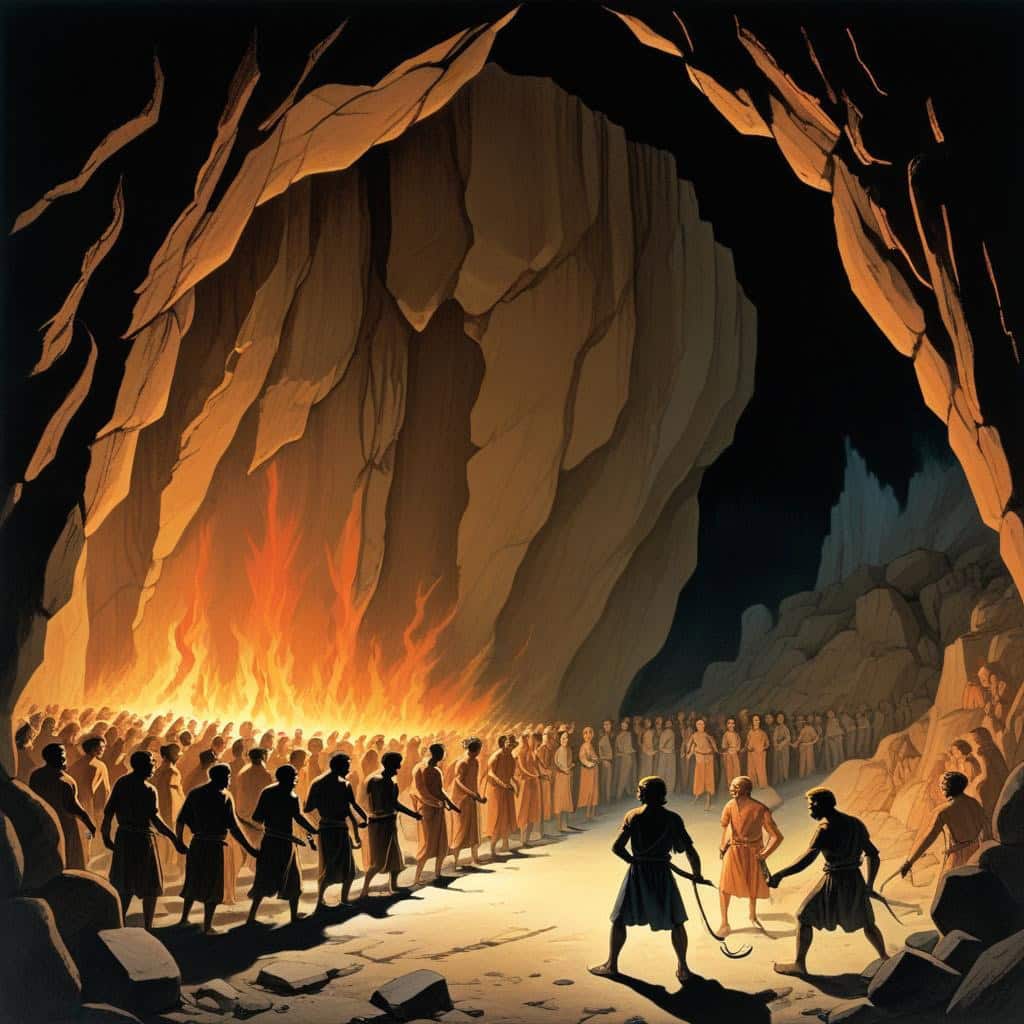
The Shadows on the Wall

The Release of a Prisoner
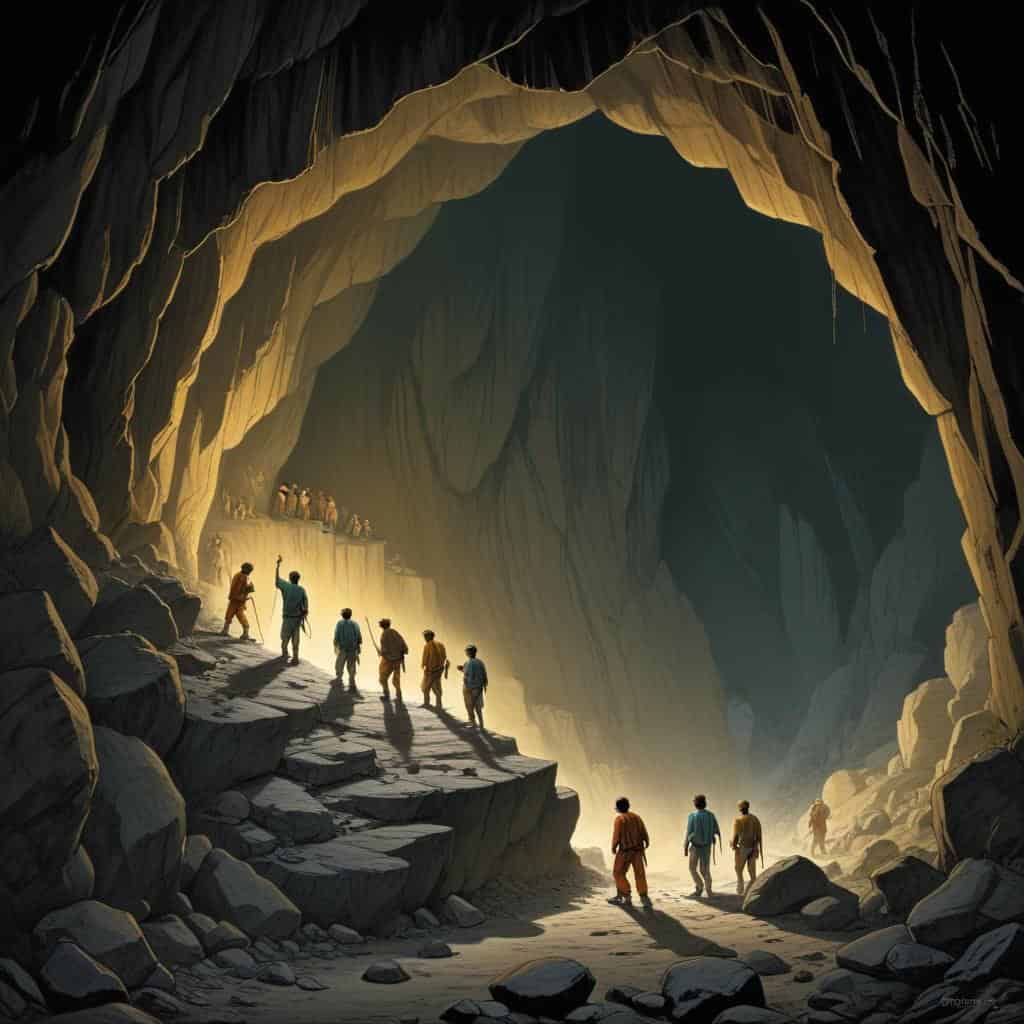
The Return to the Cave
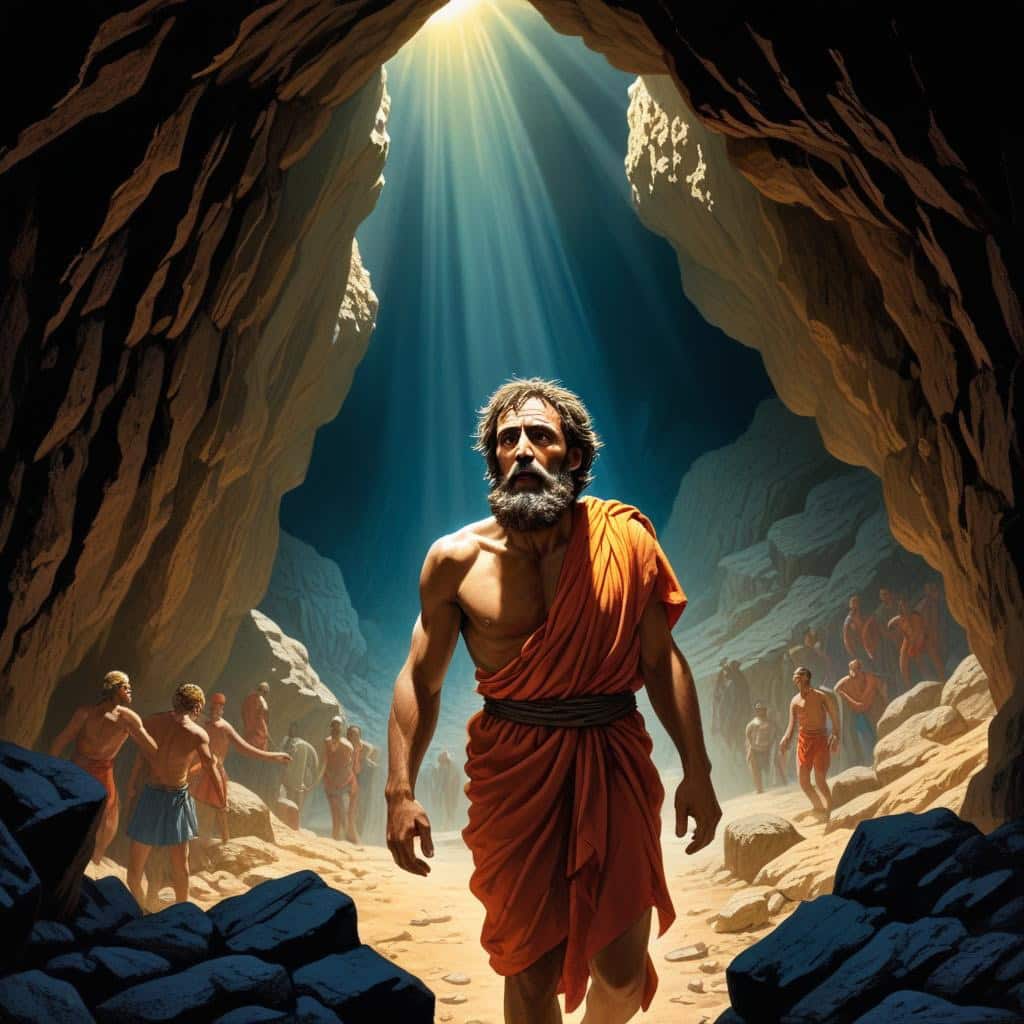
The Sunlight and the Real World

The Enlightenment of the Prisoners

The Journey to Truth

The Philosopher-King
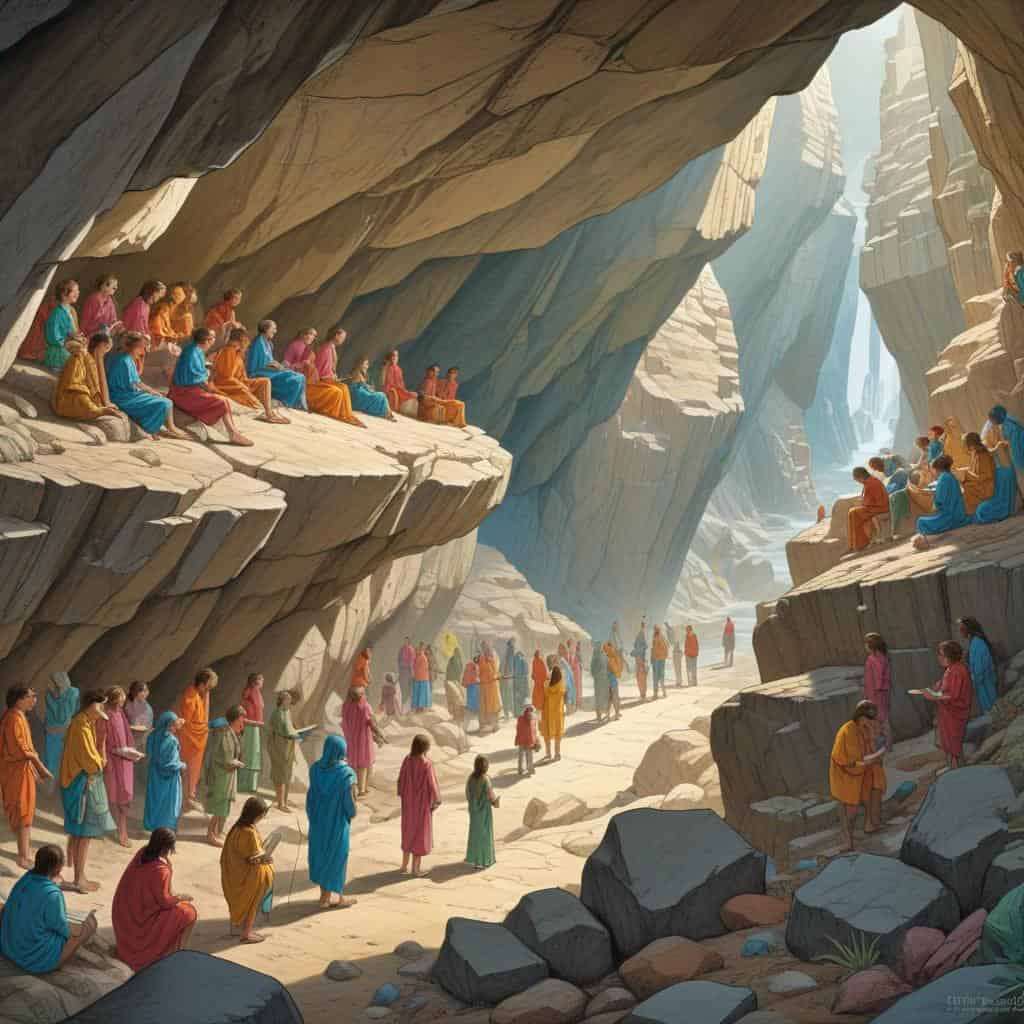
The Importance of Education
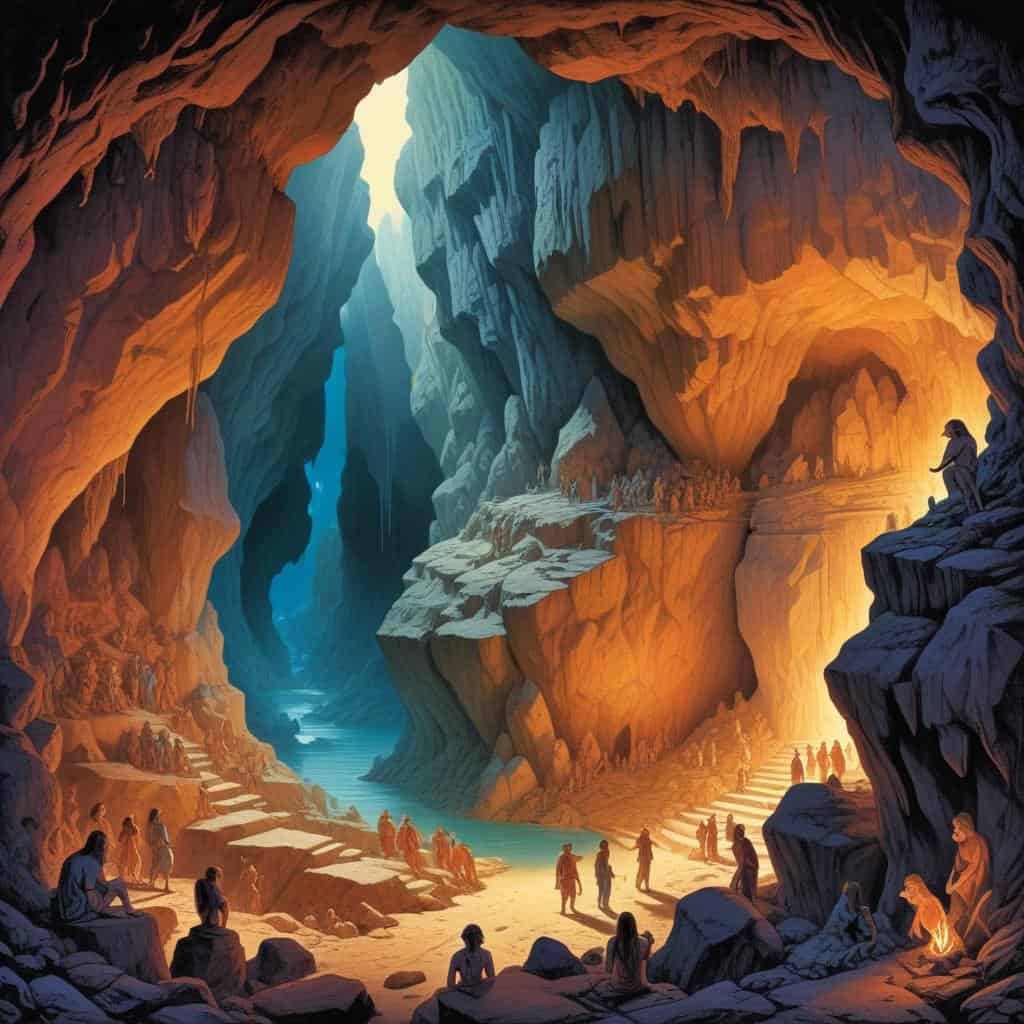
The Legacy of The Allegory of the Cave
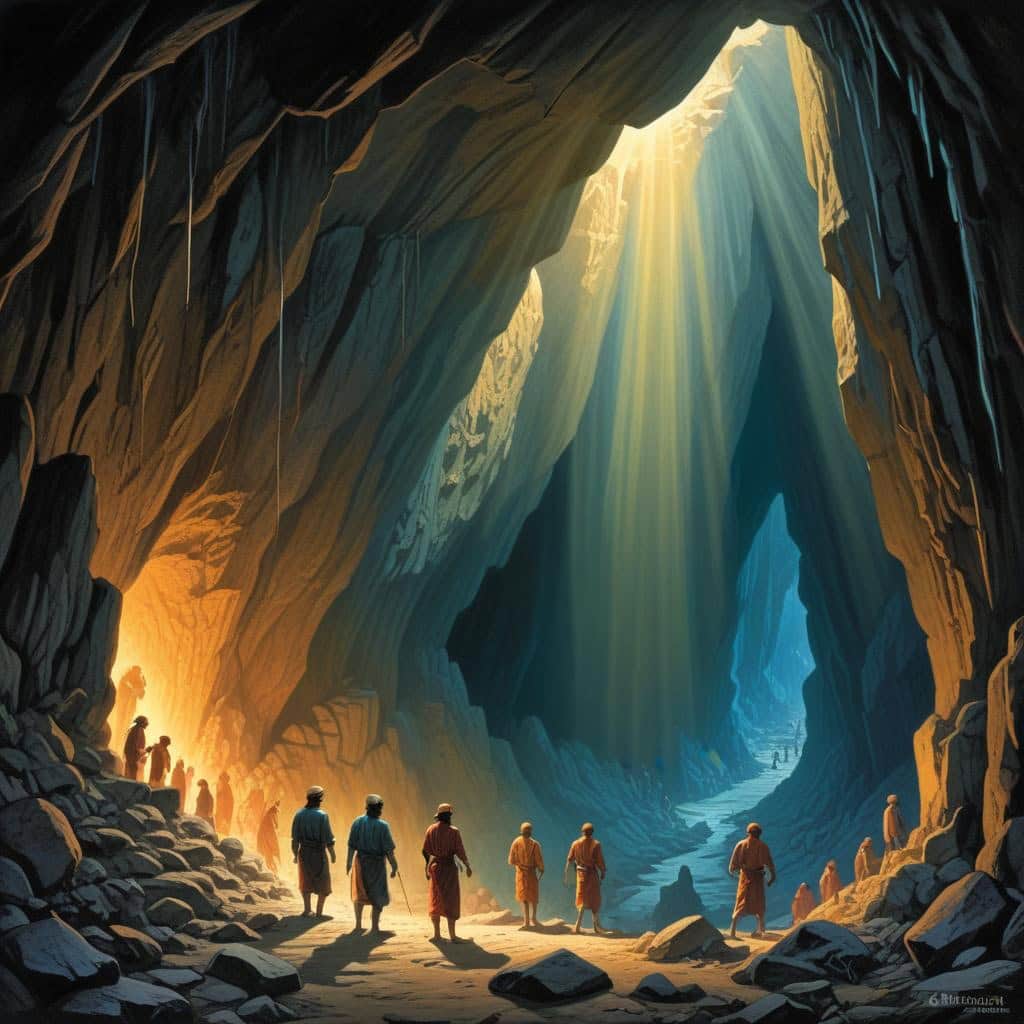

Lesson Details & Resources
In a Nutshell
- Concept: A philosophical concept presented by Plato in his work "The Republic".
- Thinkers: Plato, Ancient Greece.
- Central Question: What is the nature of reality and how do we come to know it?
- Core Implication: The importance of critical thinking, self-awareness, and the ability to question our perceptions and beliefs.
Timeline of The Allegory Of The Cave
Plato's Allegory of the Cave is written
Plato's Republic is published, containing the Allegory of the Cave
The Allegory of the Cave is first presented in Athens
The Allegory of the Cave is discussed by Plato's students at the Academy
The Allegory of the Cave influences other ancient Greek philosophers
The Allegory of the Cave is translated into Latin by Cicero
The Allegory of the Cave is referenced in the works of Plotinus
The Allegory of the Cave gains popularity in medieval Europe
The Allegory of the Cave is interpreted by Renaissance thinkers
The Allegory of the Cave is studied by Enlightenment philosophers
The Allegory of the Cave is analyzed in depth by German Idealists
The Allegory of the Cave is explored in existentialist philosophy
The Allegory of the Cave is discussed in contemporary philosophy courses
The Allegory of the Cave is referenced in popular culture and media
Vocabulary List
- Allegory
- The Allegory of the Cave is a famous allegory written by Plato.
- Cave
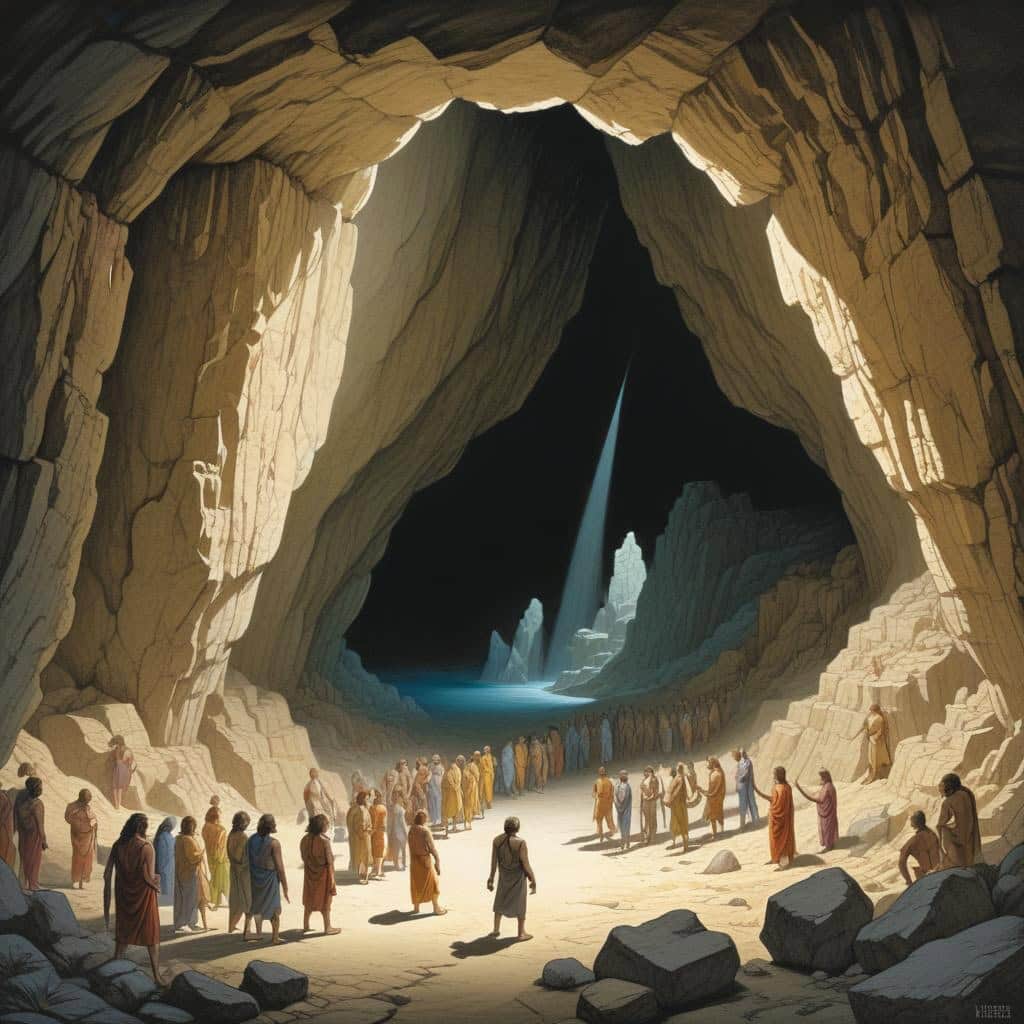
- The Allegory of the Cave takes place in a dark cave.
- Shadows
- In the Allegory of the Cave, prisoners see only shadows on the wall.
- Prisoners
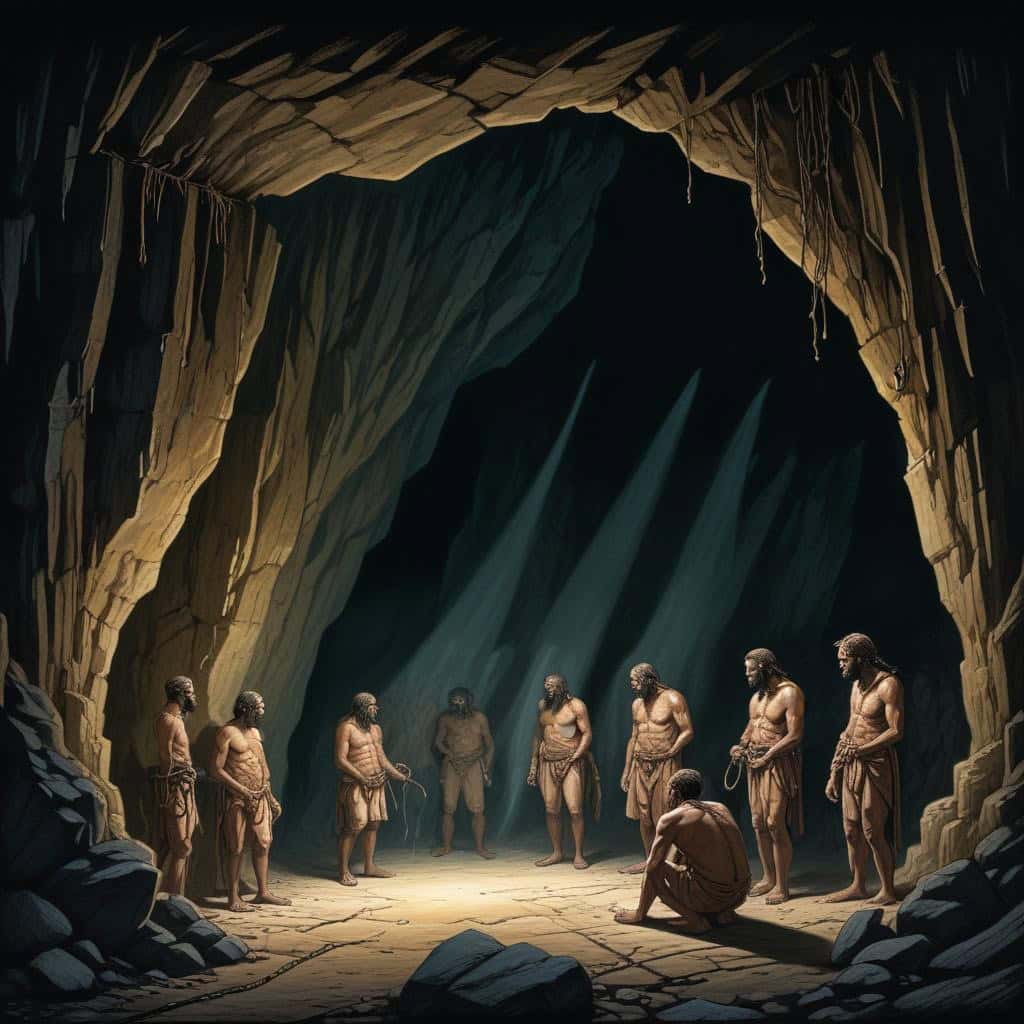
- The prisoners in the Allegory of the Cave are chained and cannot turn their heads.
- Forms
- In Plato's philosophy, the Forms are the true reality behind the shadows in the Allegory of the Cave.
- Philosophy
- The Allegory of the Cave is a key text in the study of philosophy.
Key Facts
This is the information used in the fact matching game
- The Allegory of the Cave is a philosophical concept presented by Plato in his work 'The Republic'.
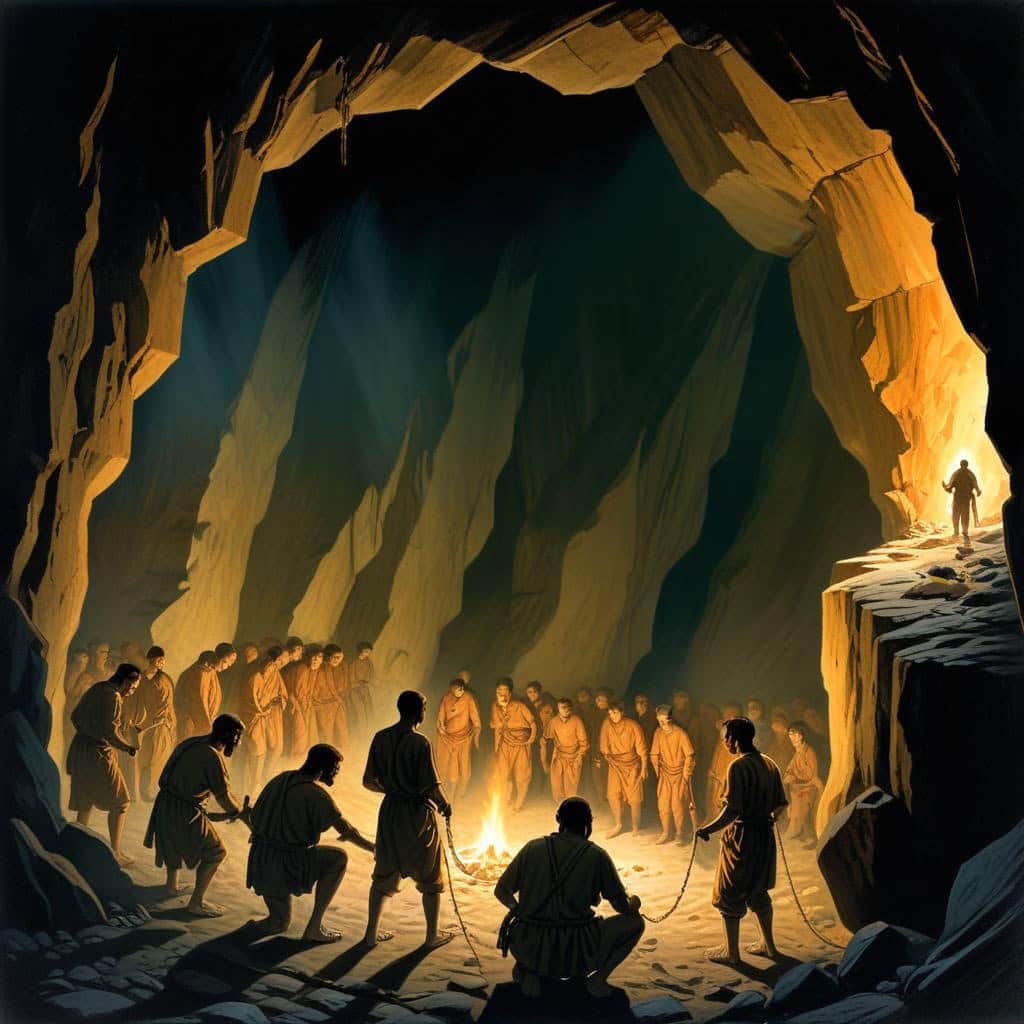
- In the allegory, prisoners are chained in a cave and only see shadows on the wall, mistaking them for reality.
- The shadows in the cave represent the illusions of the material world that people mistake for reality.
- The philosopher in the allegory represents someone who has escaped the cave and sees the true forms of things.
- The process of enlightenment in the allegory involves leaving the cave, facing the blinding light of the sun, and gradually gaining knowledge of the true forms.
- The Allegory of the Cave is often used to illustrate the concept of enlightenment and the journey from ignorance to knowledge.
- Plato uses the allegory to highlight the importance of education and critical thinking in understanding the world.
- The shadows on the cave wall represent the superficial and deceptive nature of the physical world.
- The philosopher in the allegory represents the ideal ruler or leader who has the wisdom to guide society towards the truth.
- The Allegory of the Cave challenges individuals to question their perceptions and beliefs about reality.
- Plato believed that true knowledge could only be gained through rational thought and contemplation of the forms.
- The allegory serves as a metaphor for the journey of self-discovery and intellectual growth.
- The prisoners in the cave represent the majority of people who are trapped in ignorance and false beliefs.
- The fire in the cave symbolizes the limited understanding and perception of the prisoners.
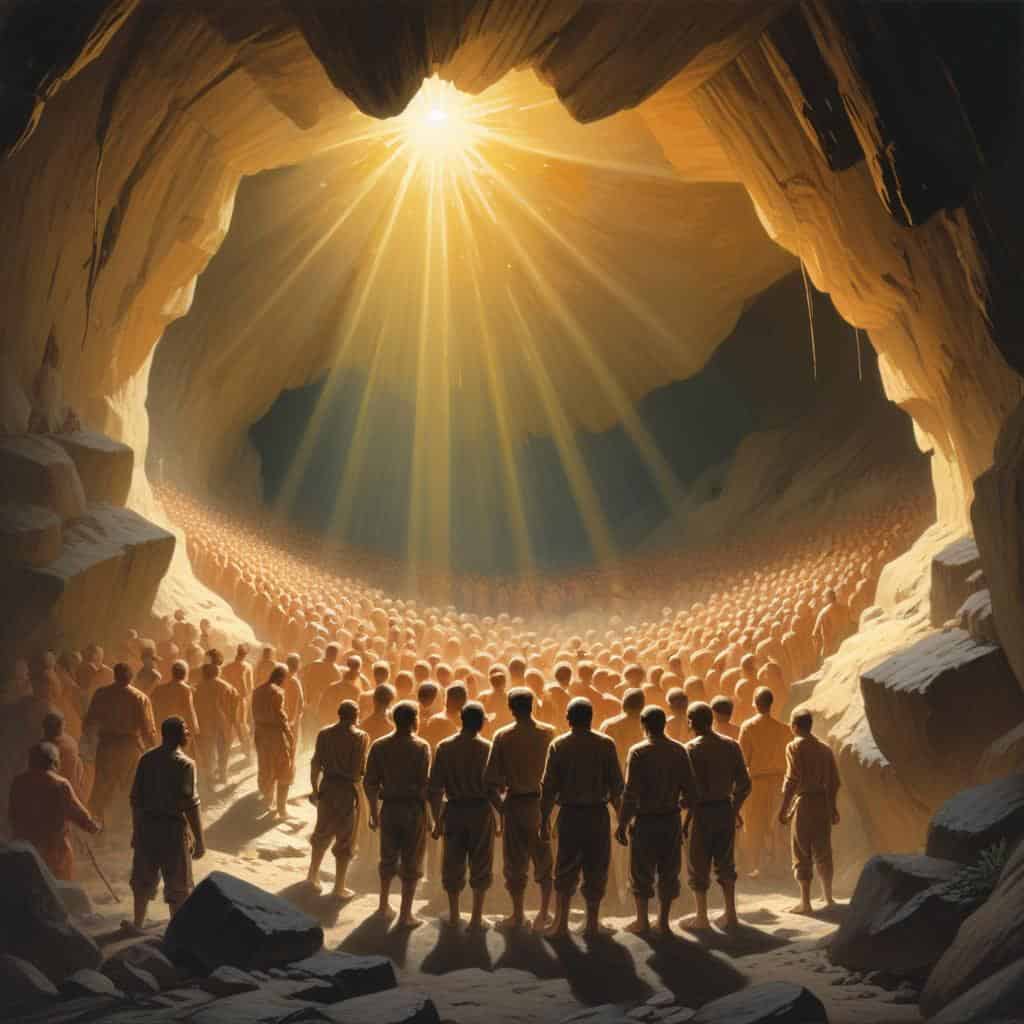
- The sun outside the cave represents the ultimate truth and source of knowledge that the philosopher seeks.
- The journey out of the cave is not easy, as it requires courage, perseverance, and a willingness to challenge one's beliefs.
- The allegory emphasizes the transformative power of education and the pursuit of philosophical truth.
- Plato's allegory has been influential in Western philosophy and continues to be studied and debated by scholars.
- The Allegory of the Cave remains a powerful and enduring metaphor for the quest for knowledge and enlightenment.
- The allegory challenges individuals to question the nature of reality and the sources of their beliefs and knowledge.
Analysis & Significance
The Core Argument
The Allegory of the Cave, as presented by Plato in his work “The Republic,” explores the idea of knowledge and perception. It suggests that our reality may be limited by our perceptions and beliefs, and that true knowledge can only be gained through philosophical inquiry and education.
Criticisms and Counterarguments
Critics of the Allegory of the Cave argue that it may oversimplify the complexities of human cognition and the nature of reality. Some philosophers question the idea of an objective truth that can be uncovered through philosophical reflection, while others argue that the allegory neglects the role of emotions and experiences in shaping our understanding of the world.
Modern Relevance
In today’s society, the Allegory of the Cave remains relevant as we grapple with issues of fake news, misinformation, and the manipulation of perception through media and technology. It prompts us to question the sources of our beliefs and to seek a deeper understanding of the world beyond the shadows of ignorance and deception.
The Allegory Of The Cave Games


Take Your Learning Offline
Want a convenient, print-ready study guide for this lesson? Become a Memory Wizards Pro member to unlock the downloadable " Memory Scrolls" for this topic and our entire library!
- ✓ Complete Vocabulary Lists
- ✓ Key Facts & Timelines
- ✓ Beautifully Formatted for Print & Mobile