
How Do You Learn Best?
Learn by Reading
Immerse yourself in the 10-minute visual lesson for a comprehensive understanding of the topic.
Learn by Reviewing
Jump directly to the key facts, timeline, and vocabulary lists to build a solid foundation of details.
Learn by Doing
Challenge yourself! Jump straight into the interactive games to learn by trial, error, and discovery.
Parmenides in 10 Minutes
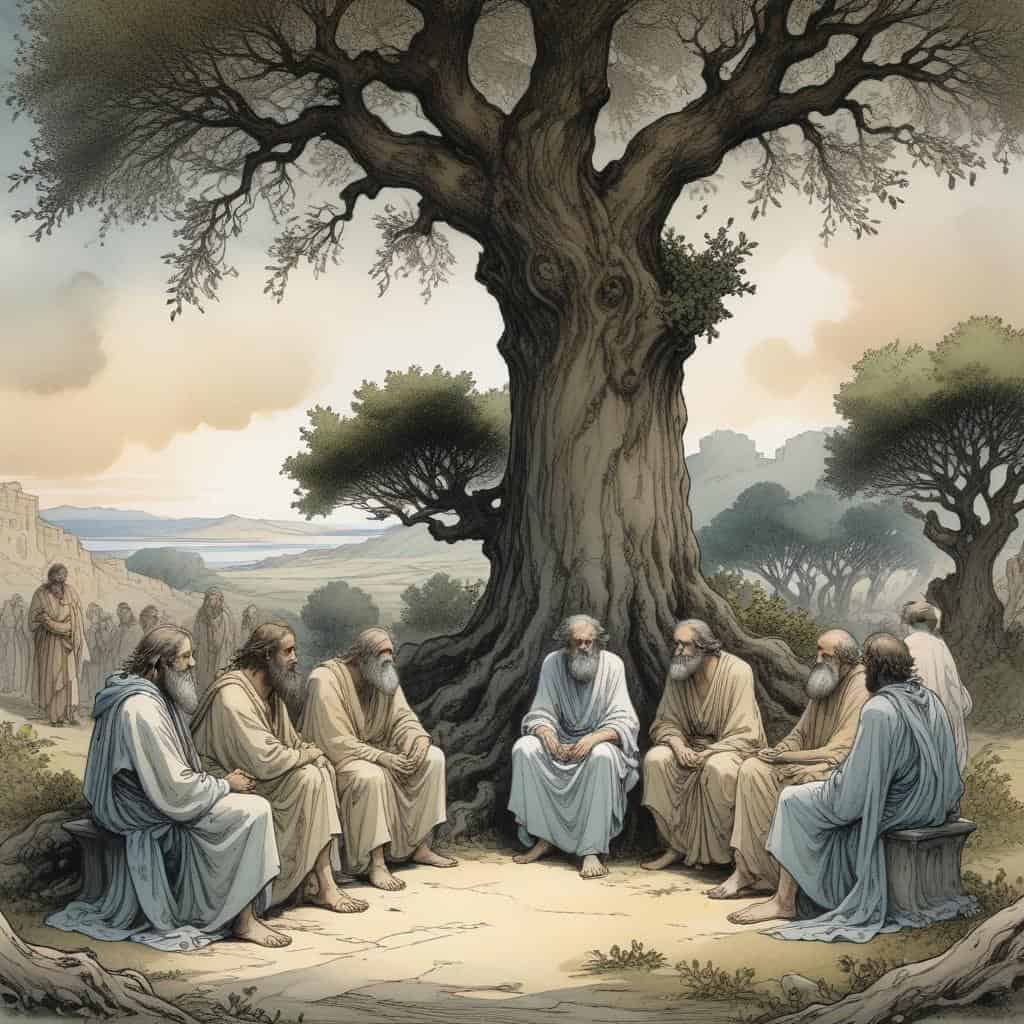
Introduction


Plato

Parmenides
Zeno of Elea

Aristotle
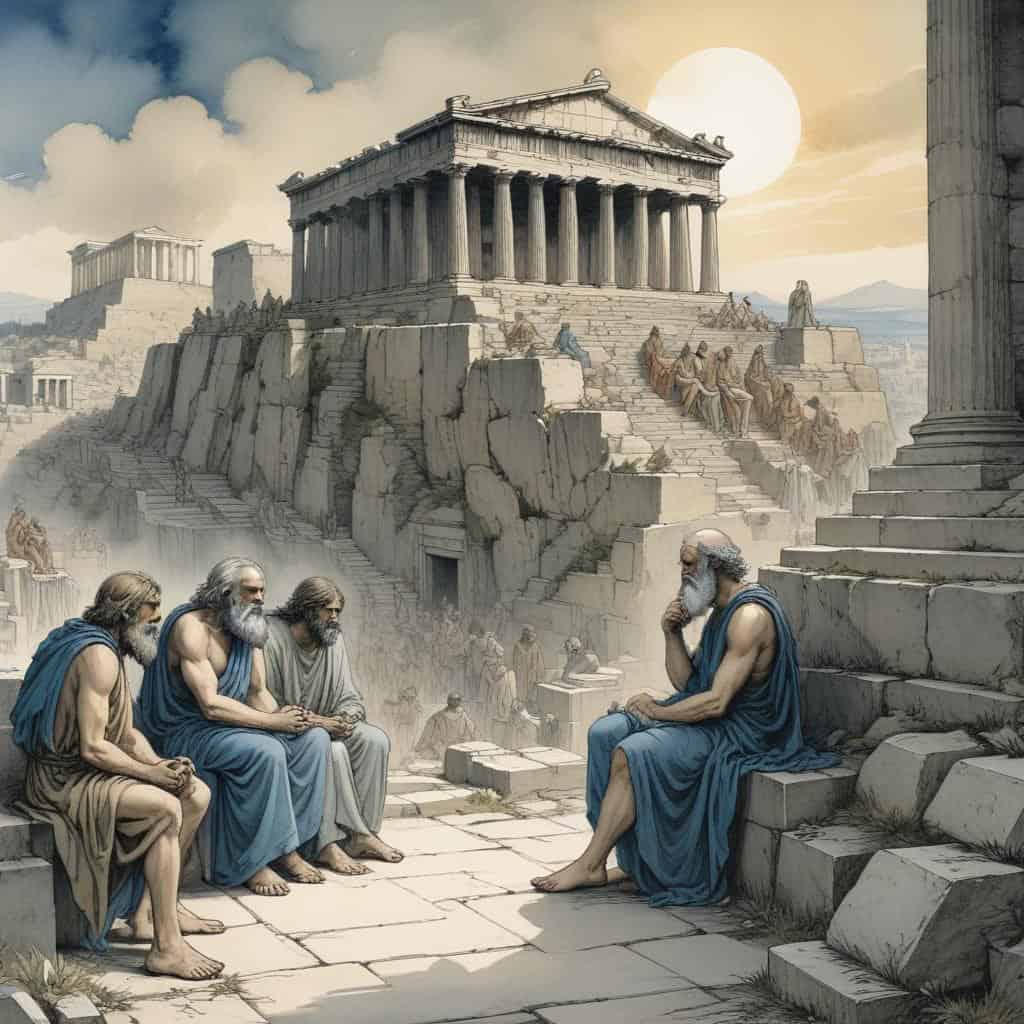
The Journey to Understanding Parmenides
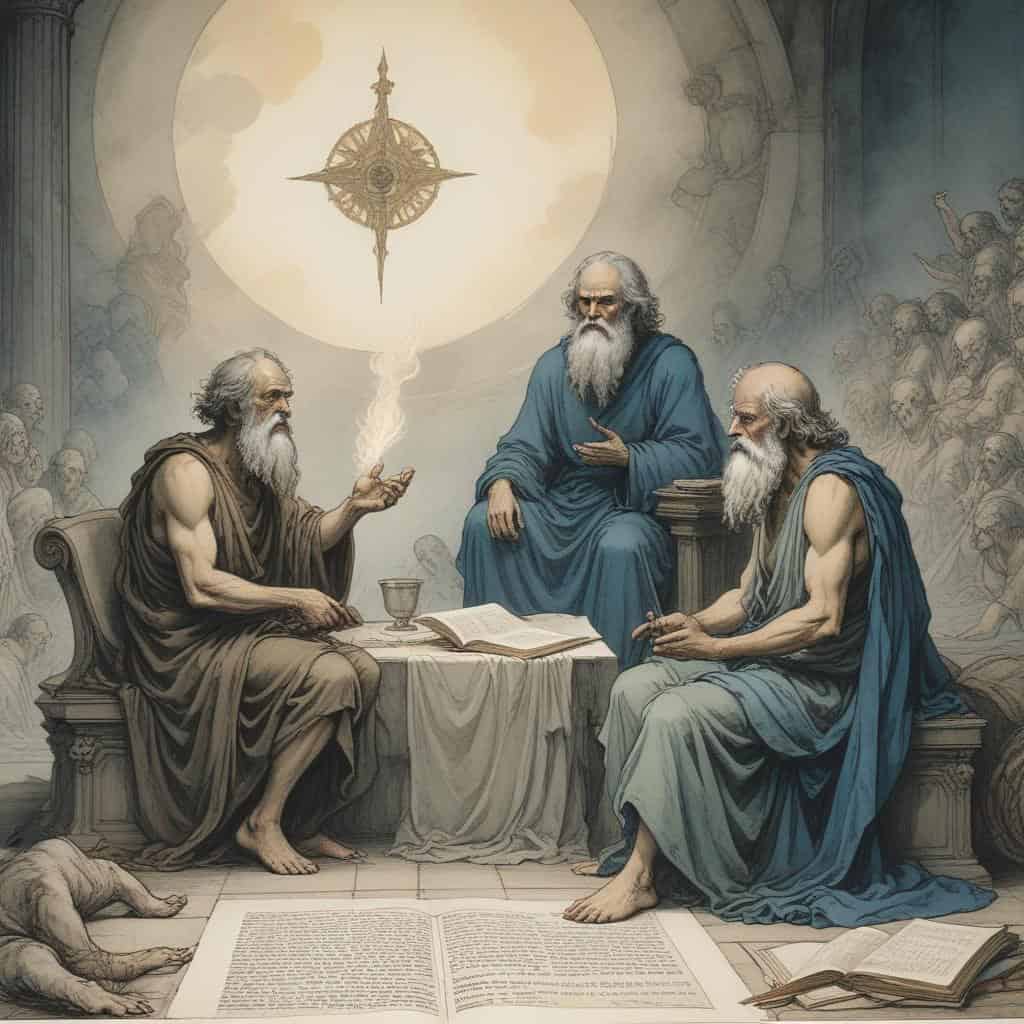
Challenging the Doctrine of Parmenides
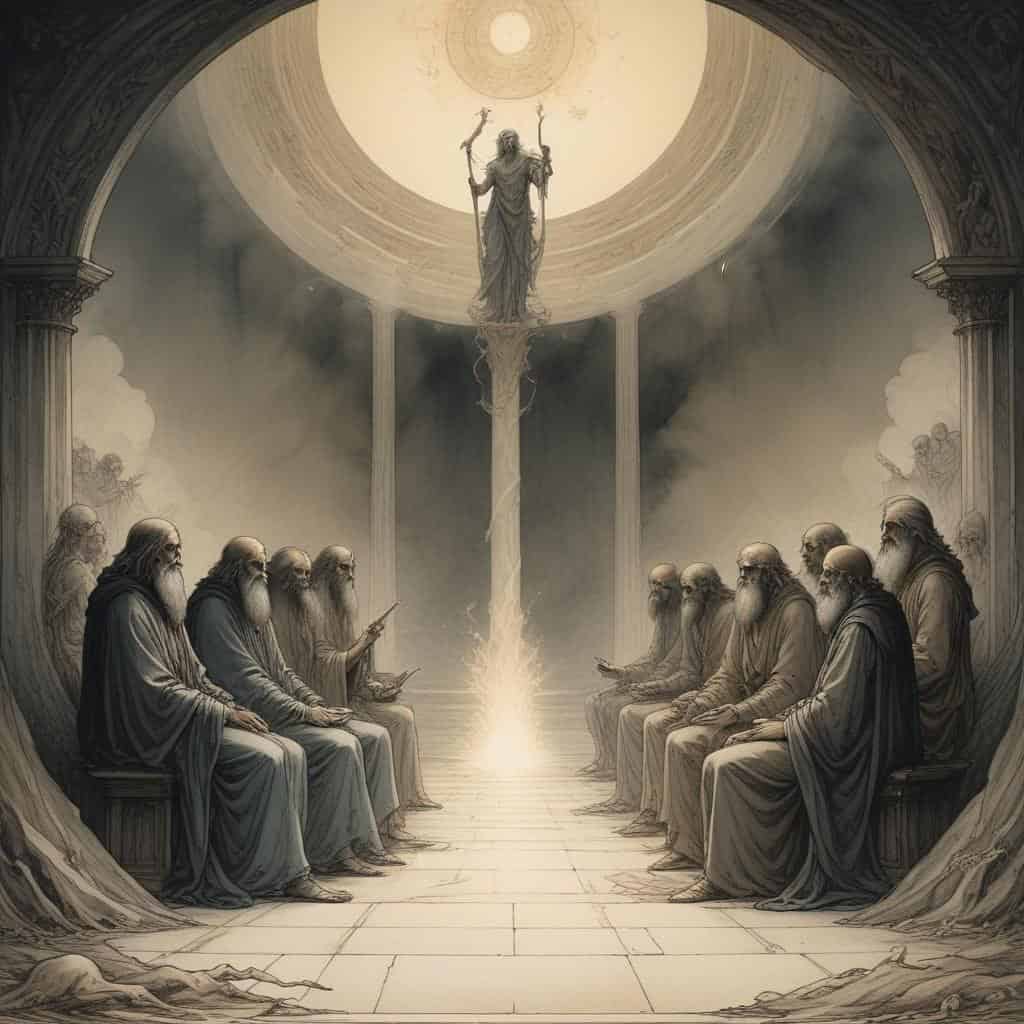
The Theory of the Forms

Examining the Nature of Being

The Challenge of the Many
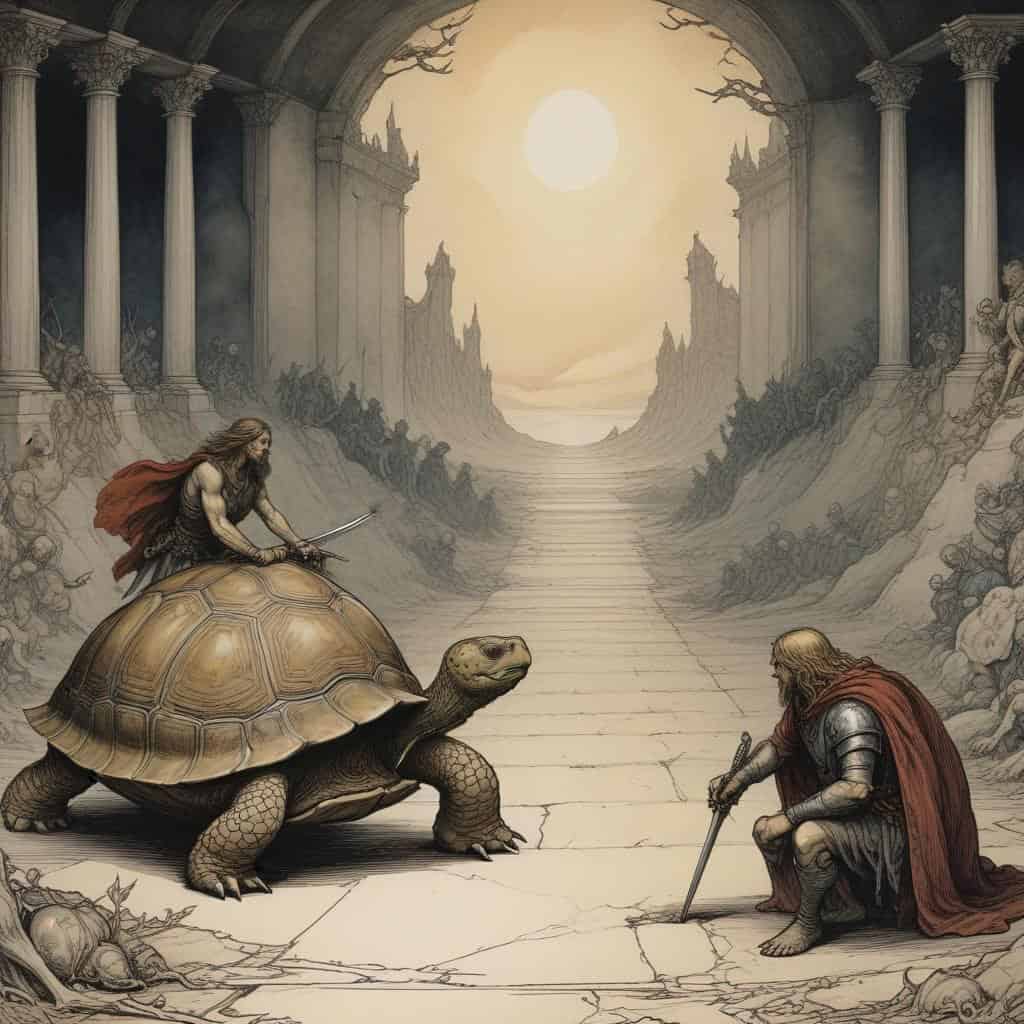
The Paradoxes of Zeno
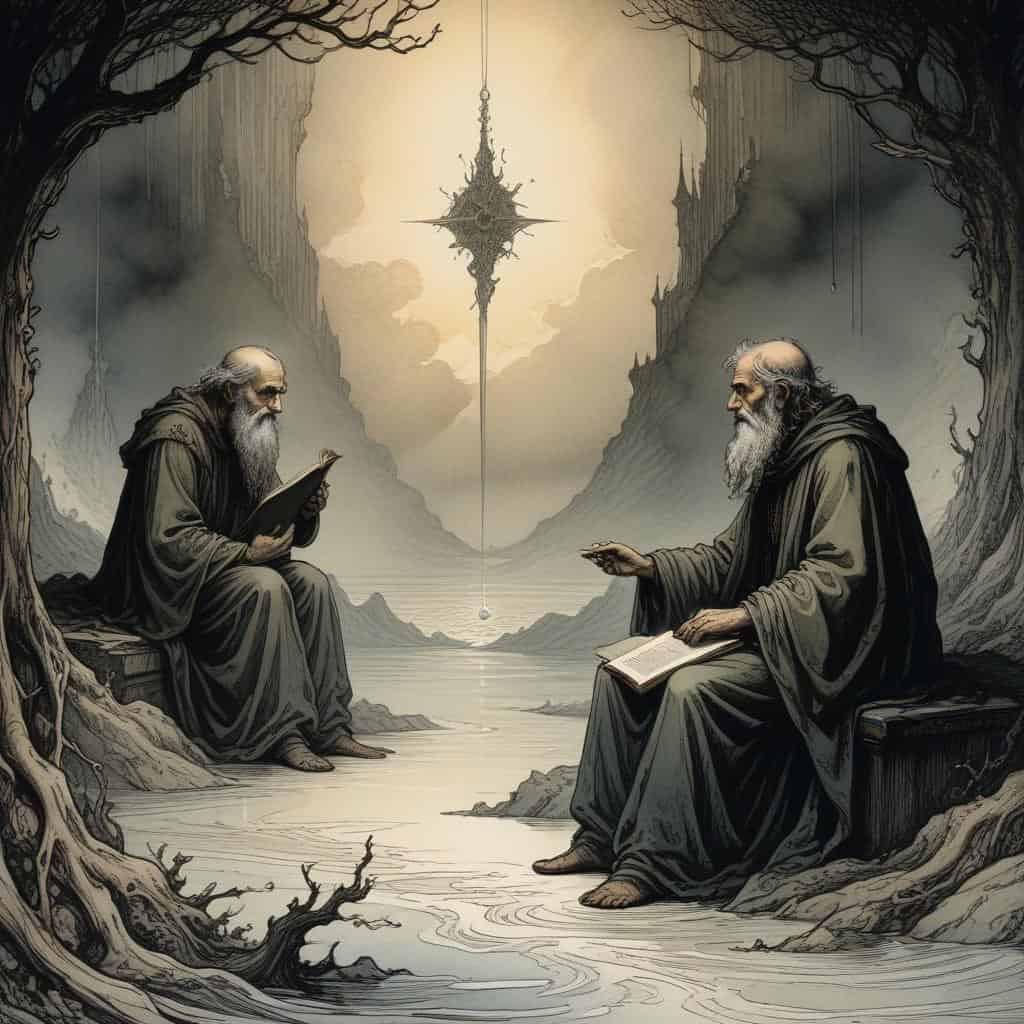
The Dilemma of the One and the Many

The Legacy of Parmenides
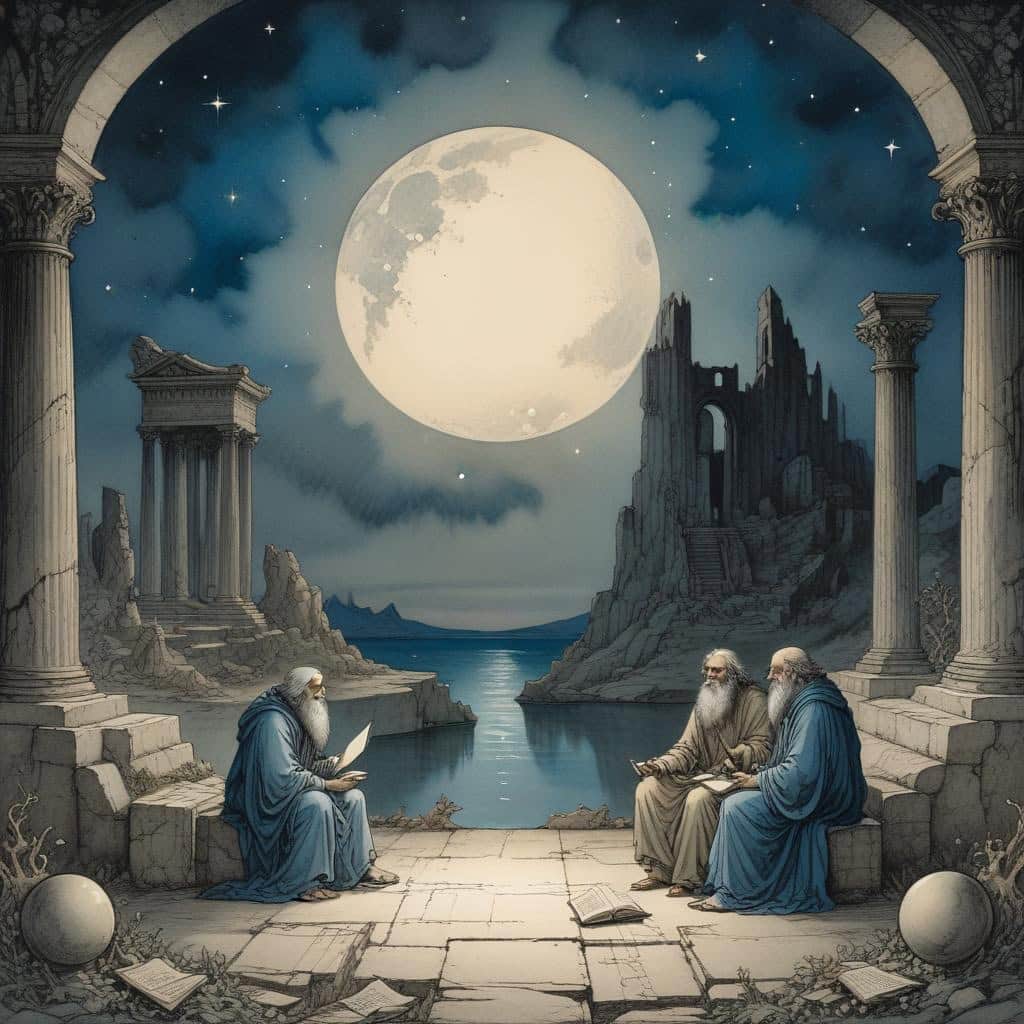
The Quest for Truth

Embracing the Paradox

Lesson Details & Resources
In a Nutshell
- What: 'Parmenides' by Plato
- When: Written in the Classical period
- Who: Parmenides
- Theme: Philosophy and the nature of reality
List of Characters in Parmenides
-
Parmenides
Parmenides was a philosopher and the central figure in the dialogue by Plato.
-
Zeno
Zeno was a disciple of Parmenides and is known for his paradoxes.
-
Socrates
Socrates was a philosopher who is also mentioned in the dialogue.
-
Pythagoras
Pythagoras was a mathematician and philosopher who influenced Parmenides.
Timeline of Parmenides
Parmenides meets Socrates in Athens and engages in a philosophical discussion.
Parmenides presents his theory of the Forms, arguing that reality is unchanging and eternal.
Parmenides challenges Socrates' beliefs and discusses the nature of being.
Parmenides presents his famous paradoxes, including the argument that change is impossible.
Parmenides critiques the theory of the Forms and offers his own perspective on reality.
Parmenides discusses the relationship between reason and reality, and the limitations of human knowledge.
Parmenides concludes that truth is ultimately unknowable and that the search for knowledge is a never-ending journey.
Parmenides' ideas influence later philosophers such as Plato and Aristotle, shaping the development of Western philosophy.
Vocabulary List
- Parmenides
- The philosopher who is the main character in Plato's dialogue.
- Being
- The concept of existence or reality, as discussed in Parmenides' philosophy.
- Unity
- The idea that all things are ultimately one and interconnected, a key theme in Parmenides' work.
- Truth
- The pursuit of ultimate truth and understanding, as explored by Parmenides.
- Opinion
- The contrast between true knowledge and mere opinion, which Parmenides discusses in his dialogue.
- Change
- The concept that Parmenides rejects, arguing that true reality is unchanging and eternal.
- Illusion
- The idea that the material world is illusory and deceptive, according to Parmenides.
- Knowledge
- The pursuit of true knowledge and understanding of reality, as discussed by Parmenides.
- Mortals
- Human beings who are subject to the limitations of perception and opinion, as opposed to divine knowledge.
- Way of Truth
- Parmenides' method of philosophical inquiry, focusing on reason and logic to uncover ultimate reality.
Key Facts
This is the information used in the fact matching game
- Parmenides is a dialogue by Plato that explores metaphysical questions about the nature of reality.
- In the dialogue, Parmenides is portrayed as a wise old man who engages in a philosophical discussion with a young Socrates.
- Parmenides argues that reality is unchanging and indivisible, and that change and plurality are illusory.
- Parmenides introduces the concept of the 'One' as the ultimate reality that is beyond the reach of human senses.
- Parmenides' philosophy has been interpreted as a critique of Heraclitus' theory of constant change and flux.
- The dialogue also explores the relationship between appearance and reality, and the nature of knowledge and belief.
- Parmenides' argument has been influential in the development of metaphysics and epistemology in Western philosophy.
- Plato's Parmenides is one of the most challenging and enigmatic dialogues in the Platonic corpus.
- Parmenides' philosophy has been compared to the ideas of the Eleatic school, which emphasized the unity and stability of reality.
- The dialogue raises questions about the nature of existence, the possibility of knowledge, and the limits of human understanding.
- Parmenides' argument has been interpreted as a defense of the rationalist approach to philosophy, which emphasizes reason and logic over sensory perception.
- The dialogue also includes a critique of the theory of forms, a central concept in Plato's philosophy.
- Parmenides' argument has been seen as an early example of the ontological argument for the existence of God.
- The dialogue has been a subject of intense debate among scholars, with competing interpretations of its meaning and significance.
- Parmenides' philosophy has been compared to the ideas of the pre-Socratic philosopher Pythagoras, who also emphasized the unity and harmony of reality.
- The dialogue explores the possibility of knowledge through reason alone, without relying on sensory experience.
- Parmenides' argument has been seen as a precursor to the rationalist tradition in Western philosophy, which includes thinkers like Descartes and Spinoza.
- The dialogue challenges traditional beliefs about the nature of reality and invites readers to reconsider their assumptions about the world.
- Parmenides' argument has been interpreted as a rejection of the Heraclitean view of reality as a constant process of change and becoming.
- The dialogue raises questions about the limits of human reason and the possibility of transcending the constraints of the physical world.
Analysis & Significance
Impact on Literature
Parmenides is a foundational work in the history of philosophy, influencing later thinkers such as Plato and Aristotle. Its exploration of the nature of reality and the concept of being has had a lasting impact on literature, inspiring writers to delve into metaphysical questions and challenge conventional wisdom.
Enduring Themes
The themes of truth, existence, and the nature of reality explored in Parmenides are still relevant today. The work’s emphasis on rational inquiry and the search for ultimate truths continues to resonate with modern audiences, prompting readers to contemplate the nature of existence and the limitations of human knowledge.
Cultural Significance Today
Parmenides remains a key text in the Western philosophical tradition, with its ideas continuing to shape debates in metaphysics, epistemology, and ontology. Its influence can be seen in various literary works, as well as in popular culture adaptations that explore the boundaries of reality and the nature of being.
Parmenides Games


Take Your Learning Offline
Want a convenient, print-ready study guide for this lesson? Become a Memory Wizards Pro member to unlock the downloadable " Memory Scrolls" for this topic and our entire library!
- ✓ Complete Vocabulary Lists
- ✓ Key Facts & Timelines
- ✓ Beautifully Formatted for Print & Mobile