
How Do You Learn Best?
Learn by Reading
Immerse yourself in the 10-minute visual lesson for a comprehensive understanding of the topic.
Learn by Reviewing
Jump directly to the key facts, timeline, and vocabulary lists to build a solid foundation of details.
Learn by Doing
Challenge yourself! Jump straight into the interactive games to learn by trial, error, and discovery.
Meno in 10 Minutes
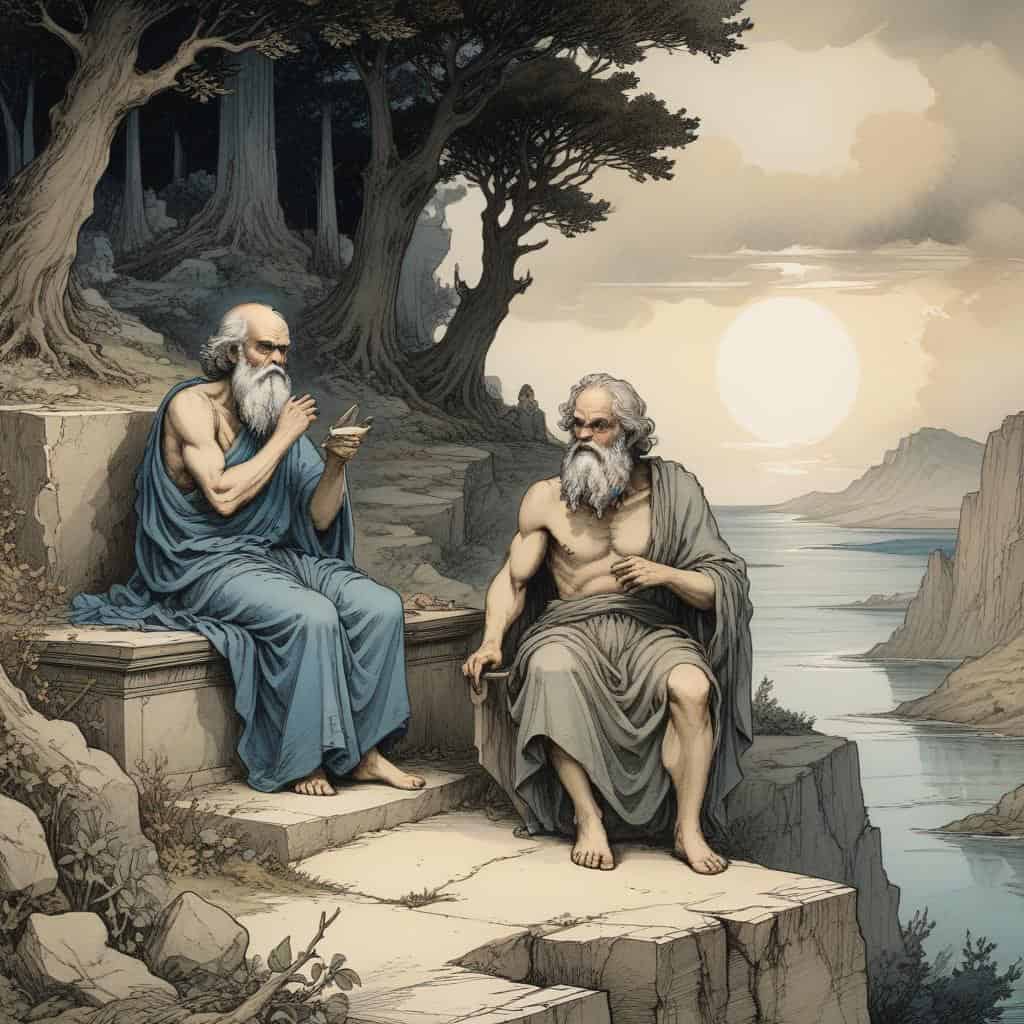
Introduction
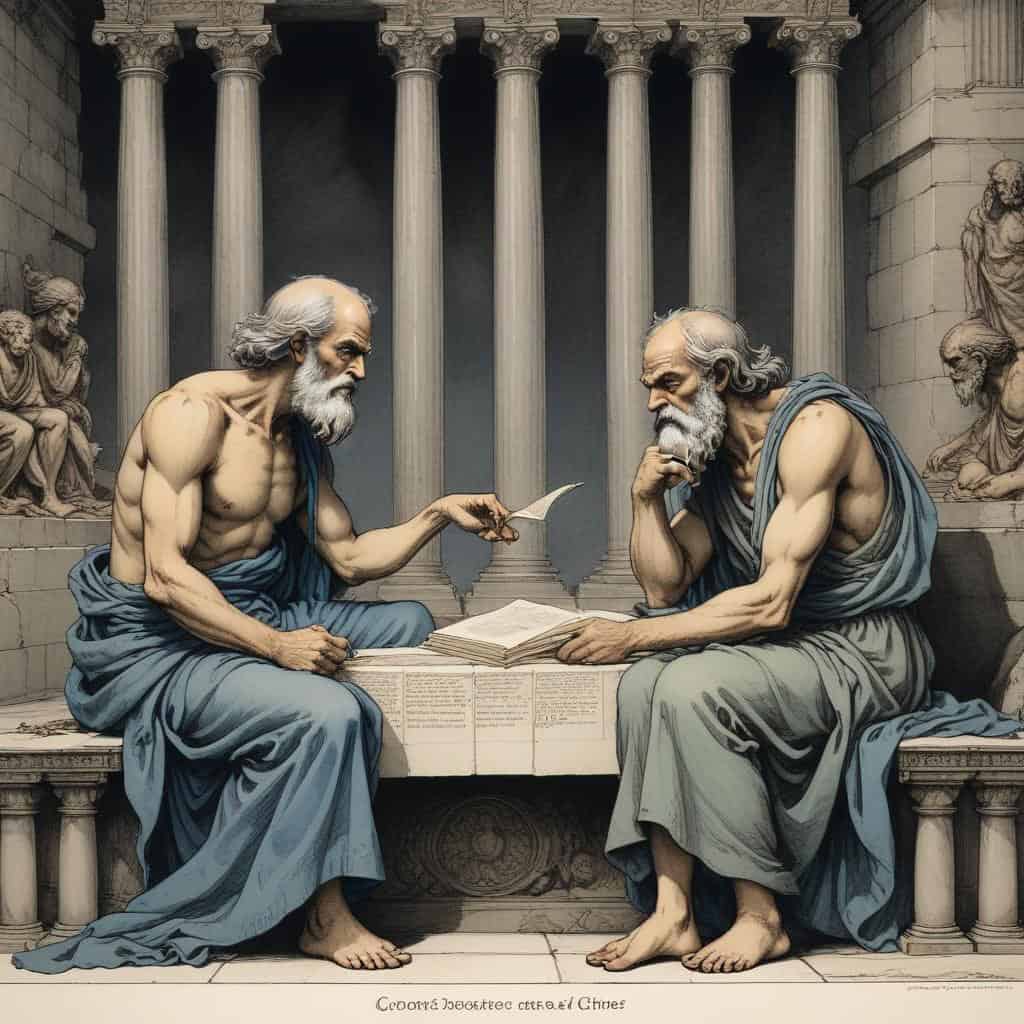

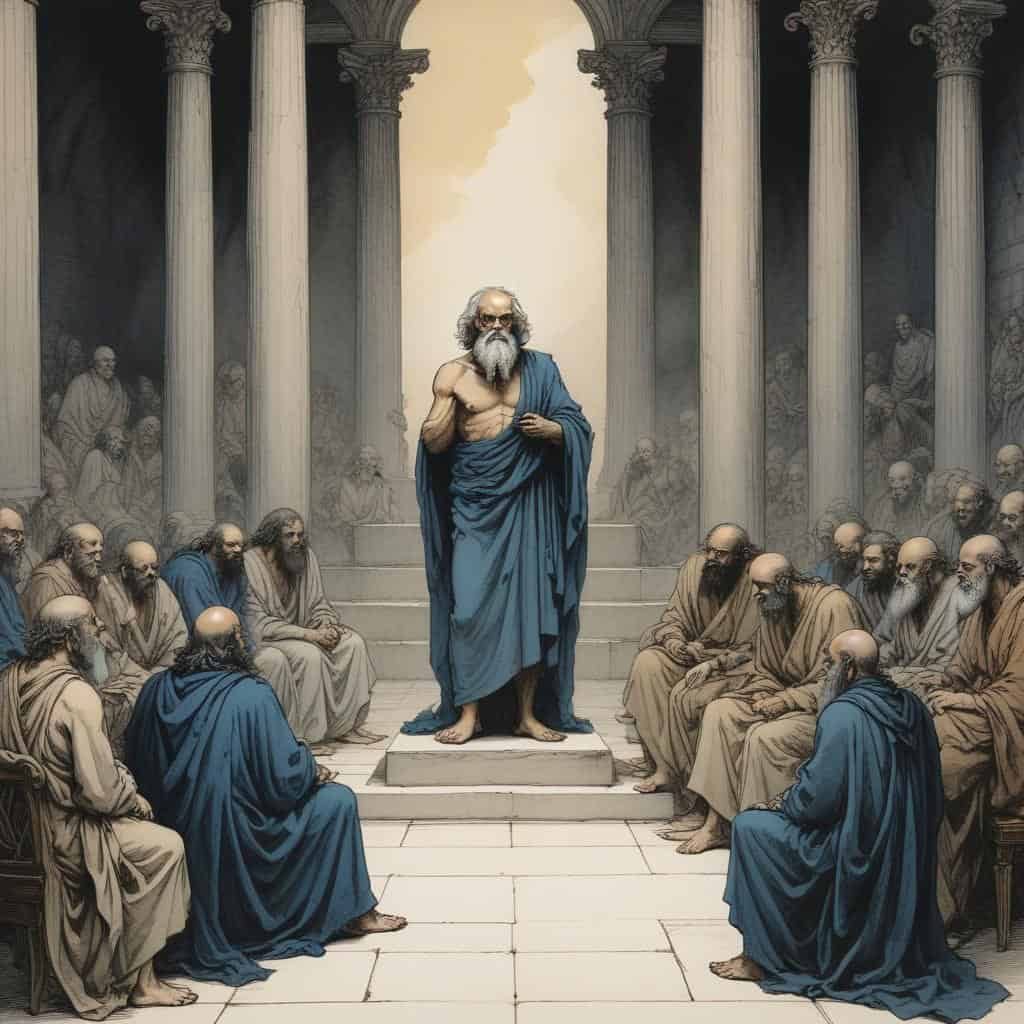
Socrates

Meno

Anytus

Menexenus
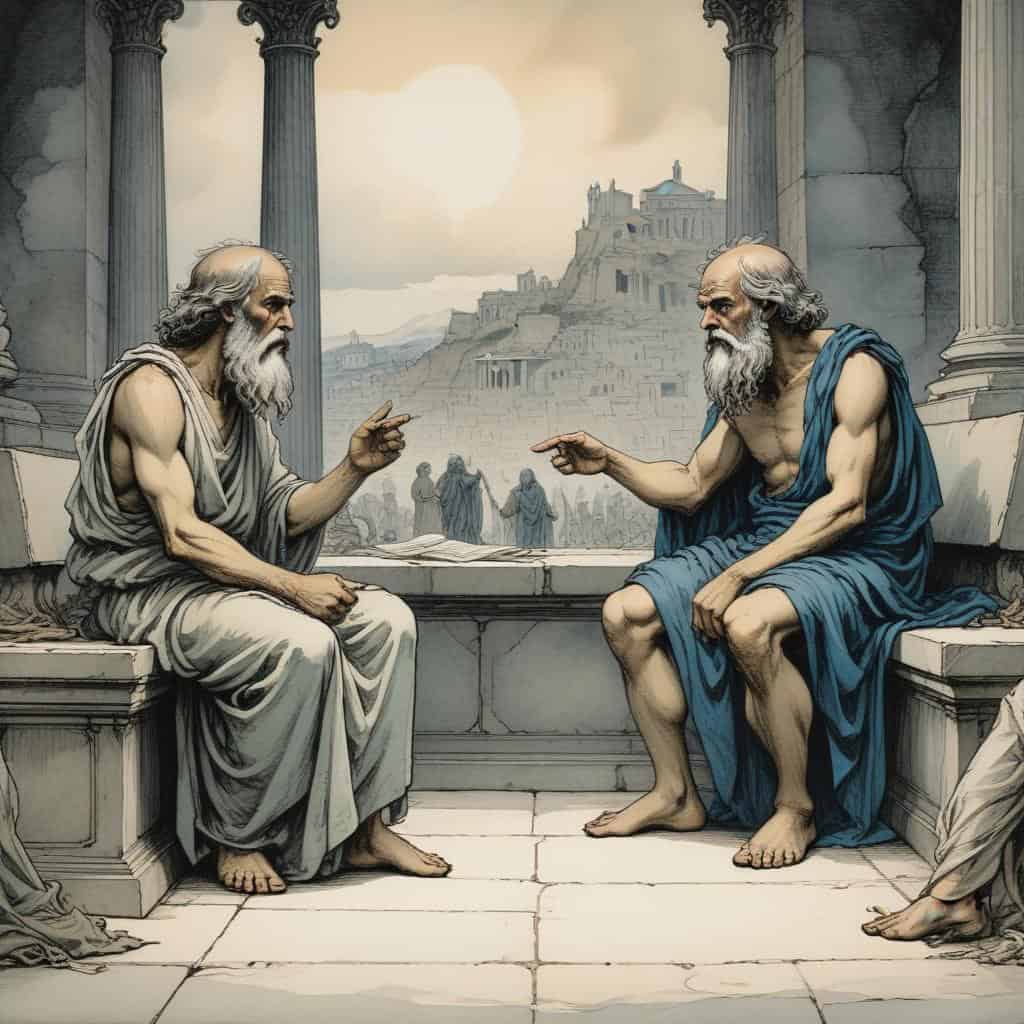
Meno Meets Socrates
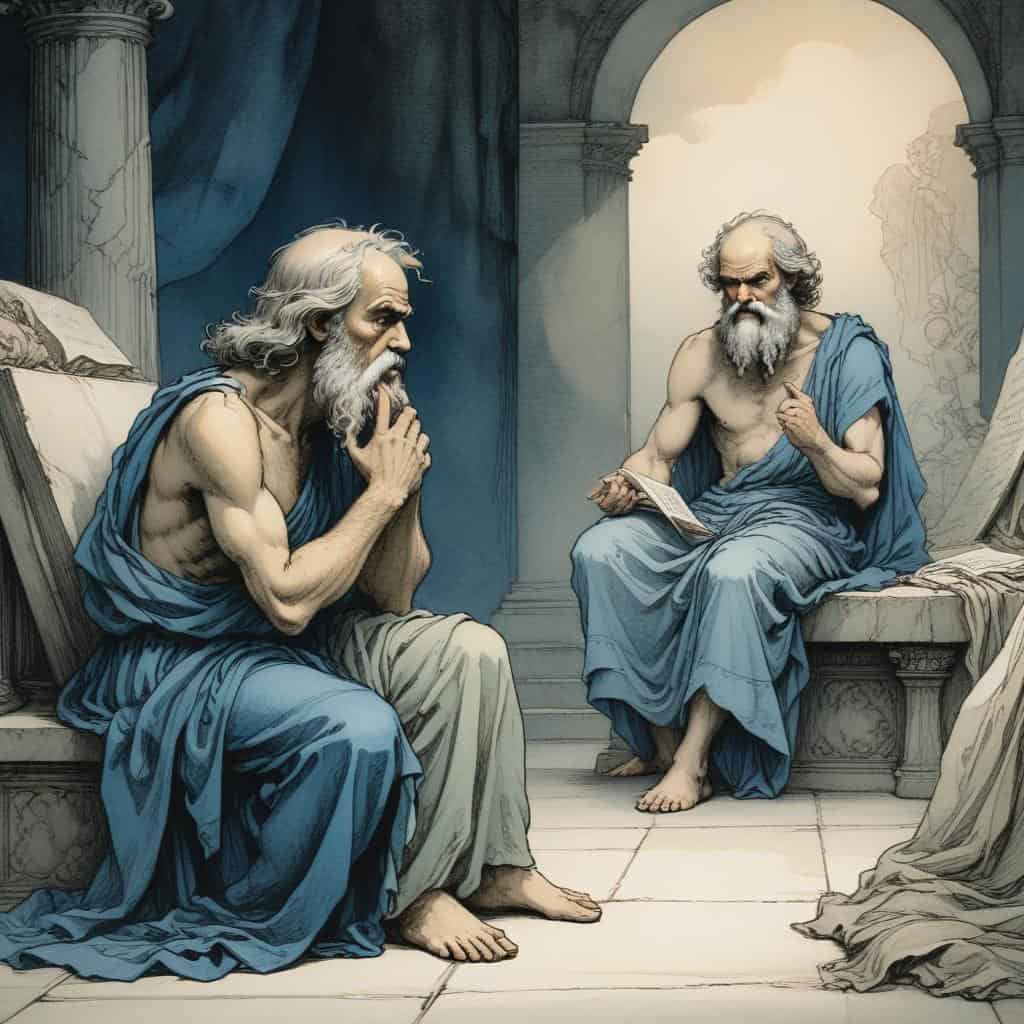
The Nature of Virtue
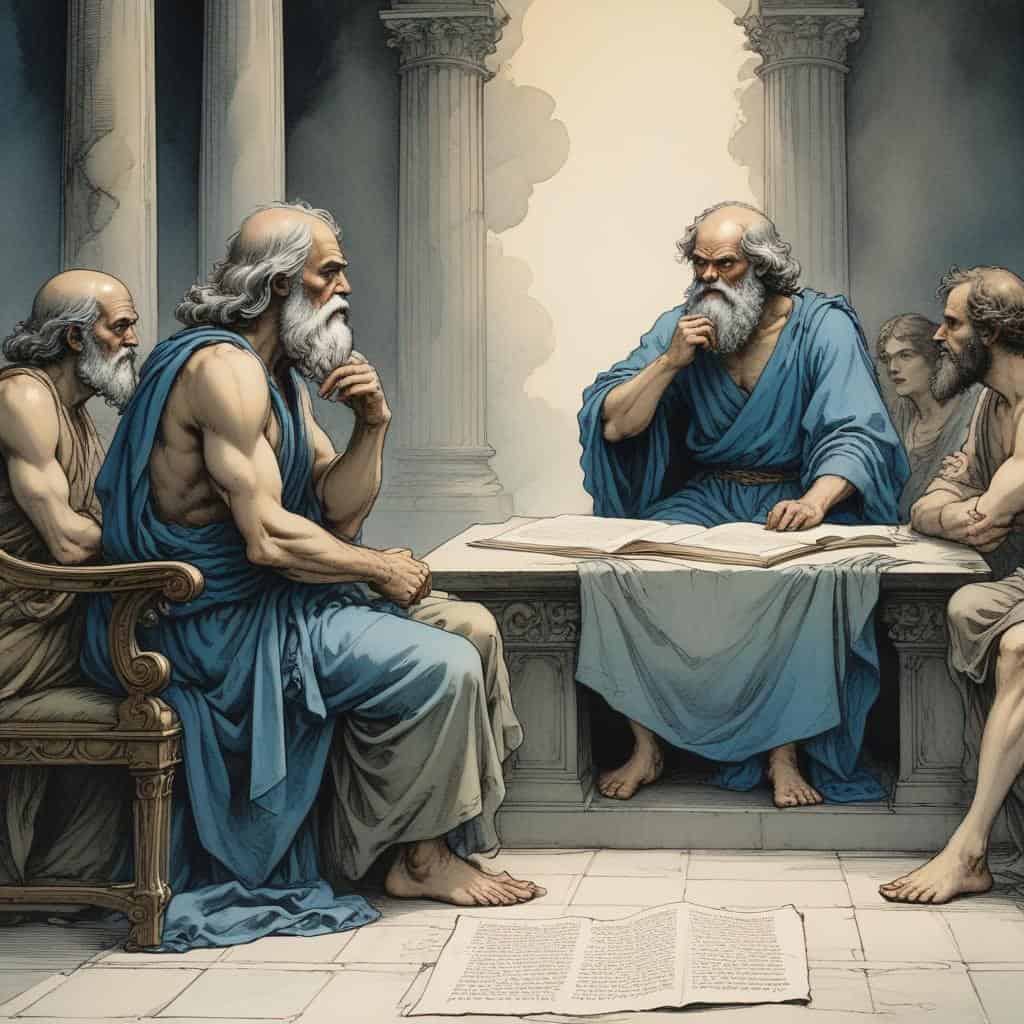
The Paradox of Inquiry
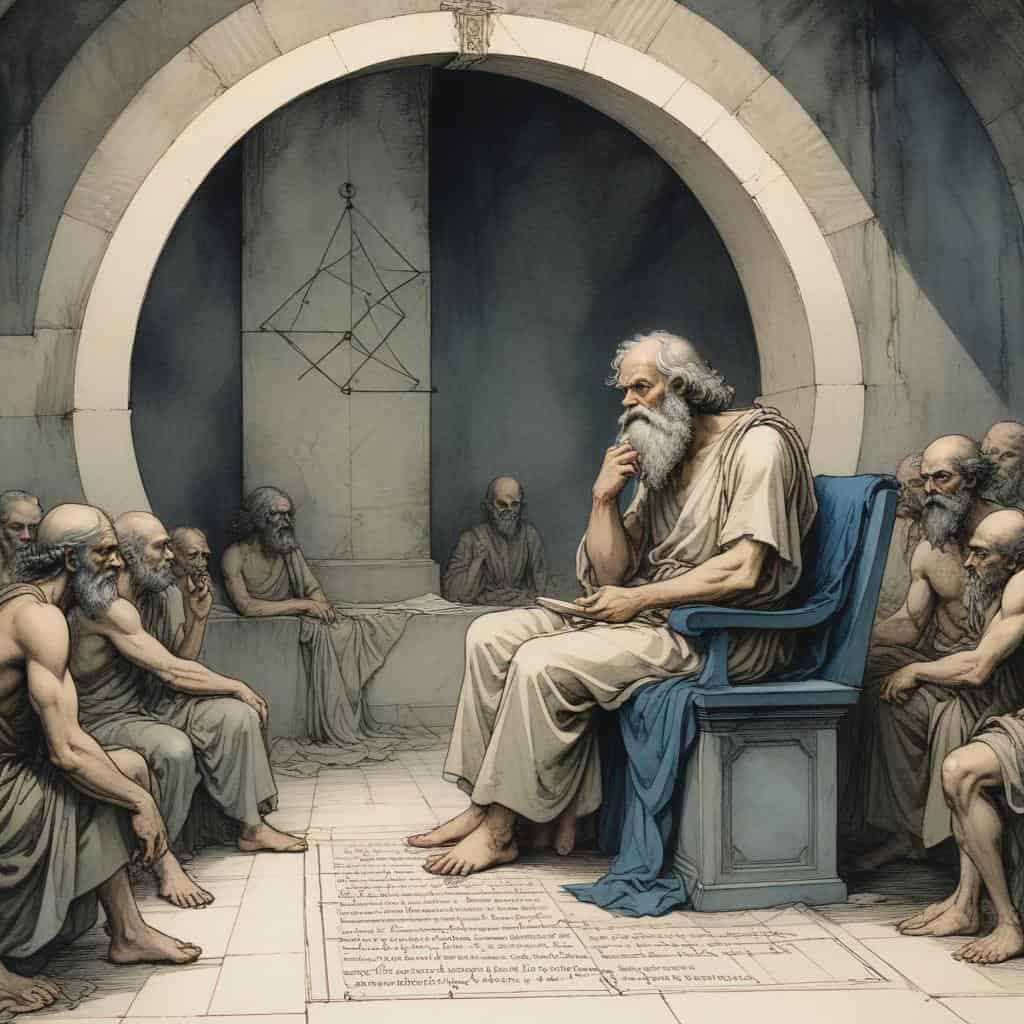
The Theory of Recollection
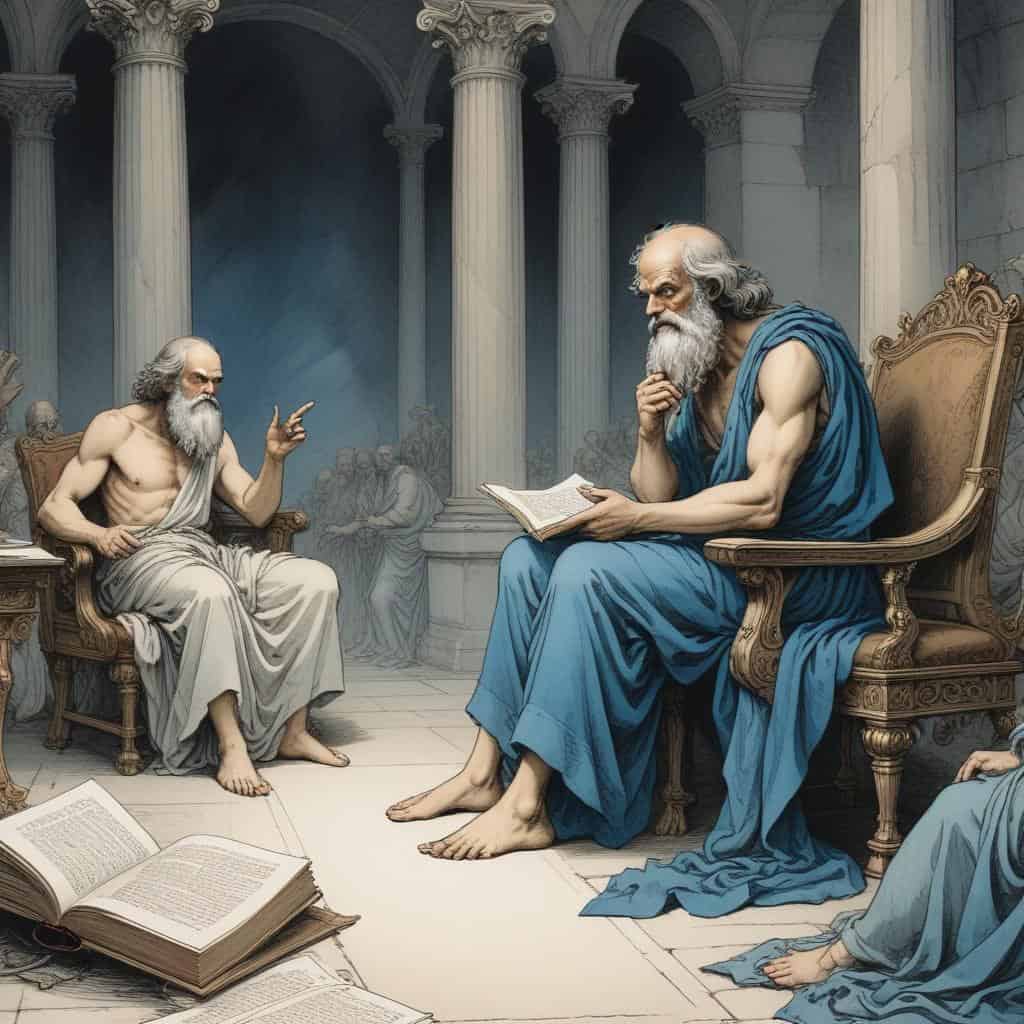
Virtue as Knowledge
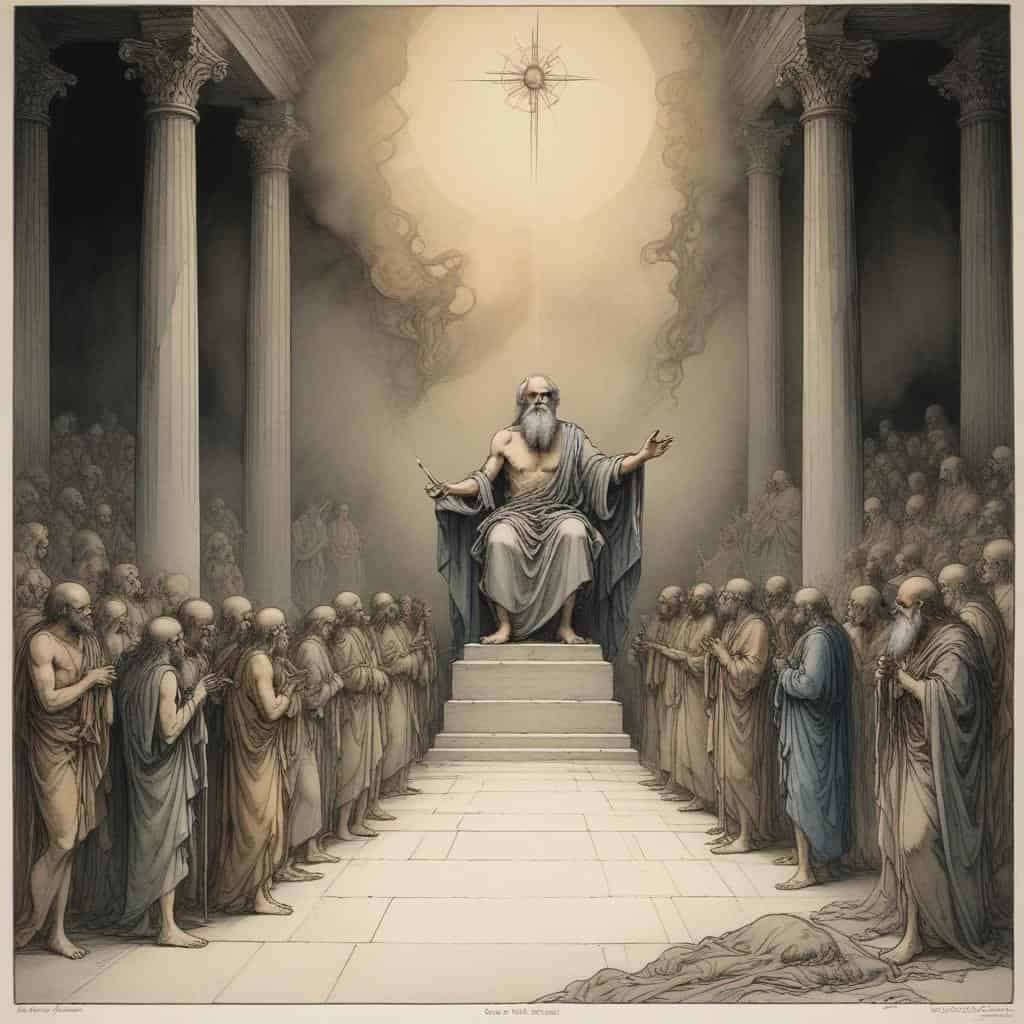
The Doctrine of Anamnesis

The Dilemma of Virtue
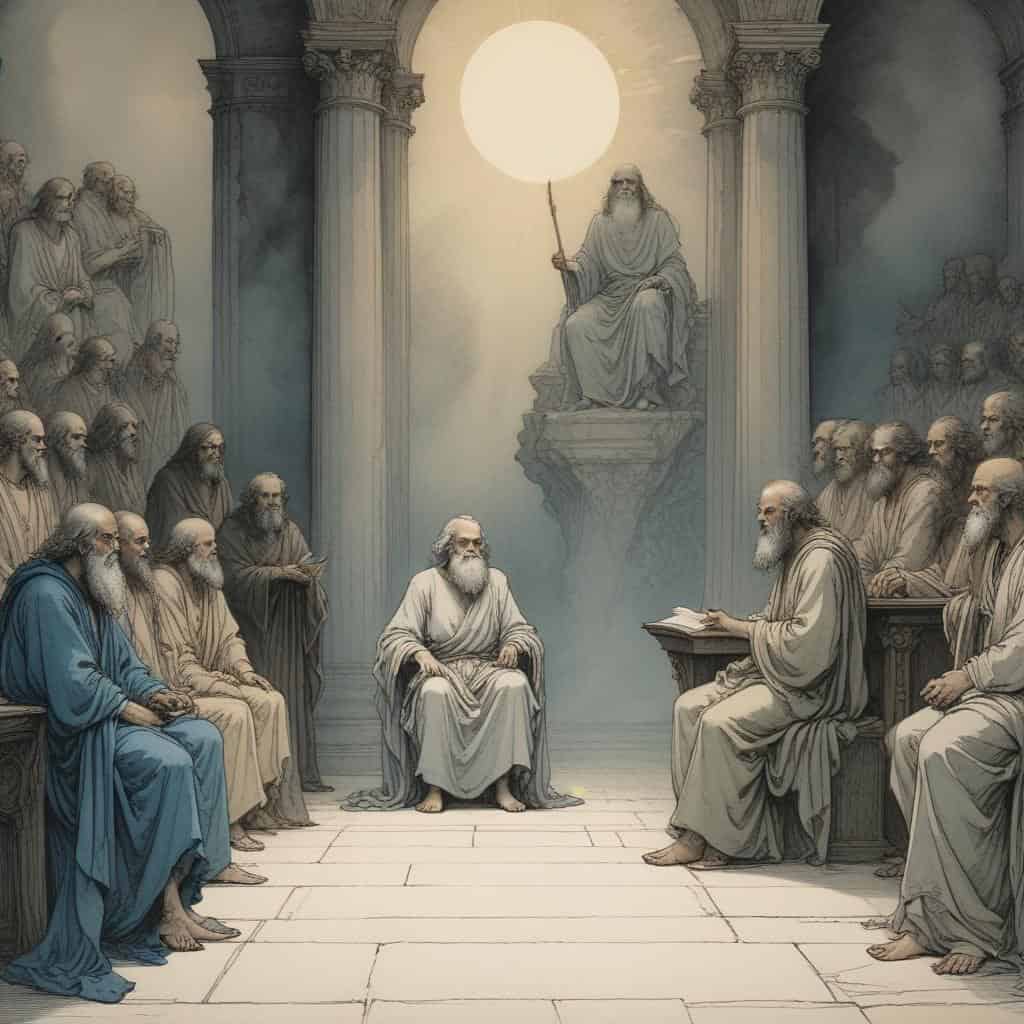
The Virtue of Good Men
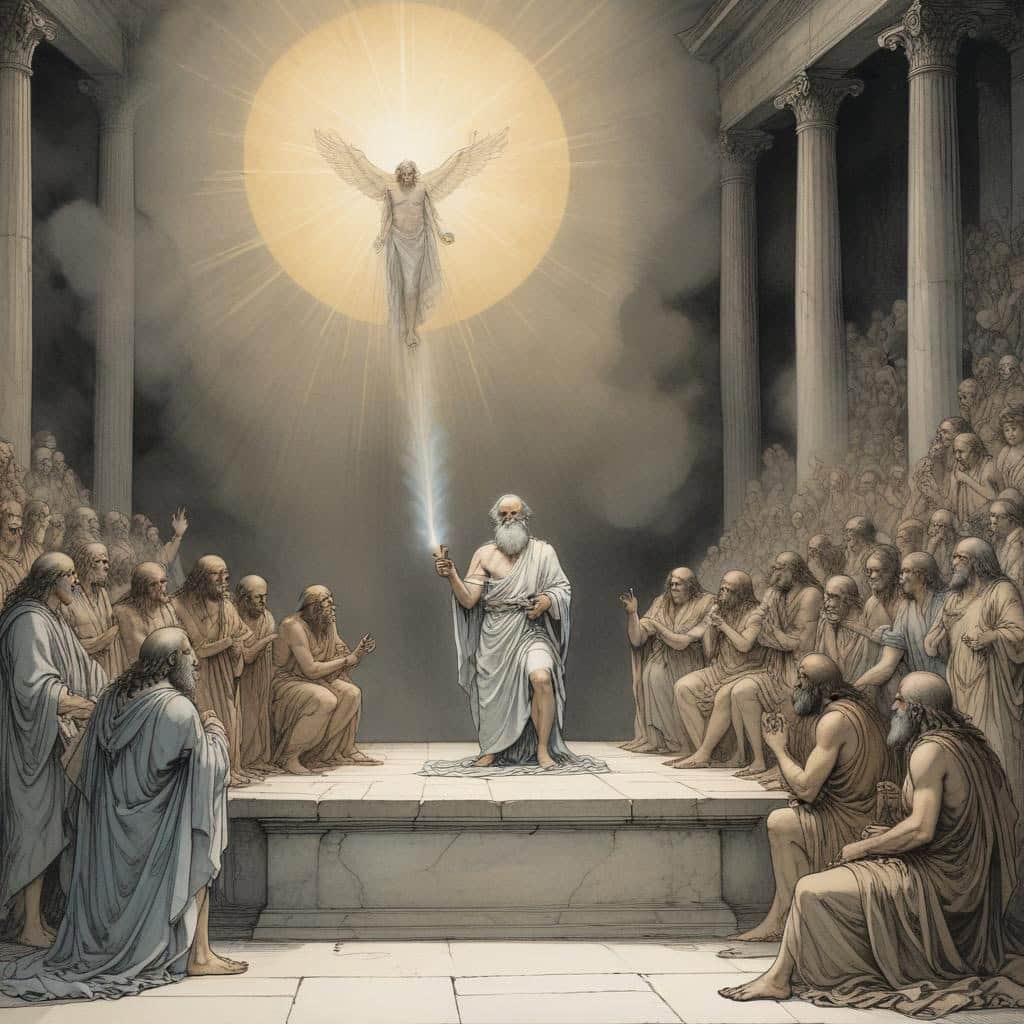
The Role of Divine Inspiration
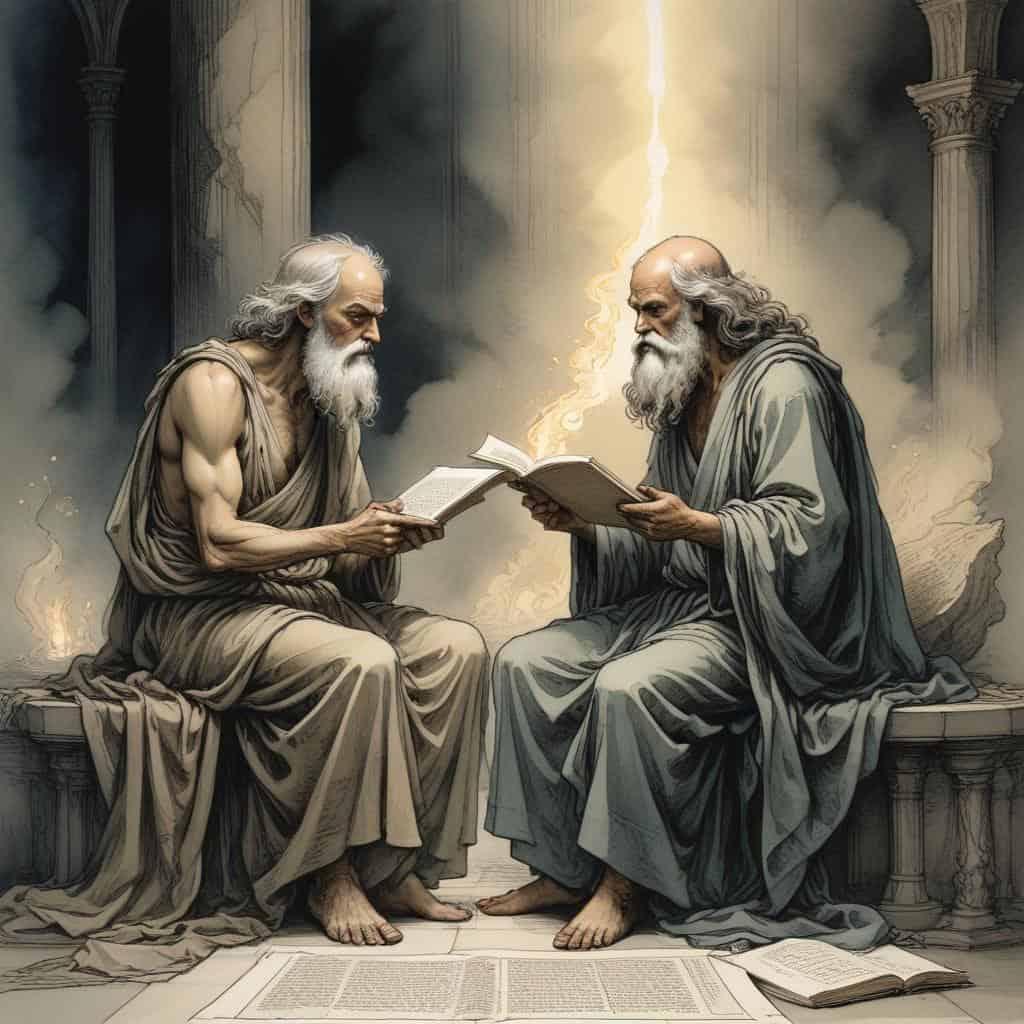
The Legacy of Meno
Lesson Details & Resources
In a Nutshell
- What: 'Meno' by Plato
- When: Written in the Classical period
- Who: Meno
- Theme: The nature of virtue and whether it can be taught
List of Characters in Meno
-
Meno
Meno is a young Thessalian aristocrat who is eager to learn from Socrates about the nature of virtue.
-
Socrates
Socrates is a philosopher who questions Meno about the definition of virtue and leads him to question his own beliefs.
-
Anytus
Anytus is a prominent Athenian politician who becomes angry with Socrates for corrupting the youth and eventually plays a role in his trial and execution.
Timeline of Meno
Meno, a young Thessalian nobleman, meets Socrates in Athens and asks him whether virtue can be taught.
Socrates engages Meno in a discussion about the nature of virtue, leading Meno to offer a definition of virtue as the desire for good things and the power to acquire them.
Socrates challenges Meno's definition of virtue and begins to question him on the nature of knowledge and whether virtue can be taught.
Socrates introduces the concept of anamnesis, or the idea that knowledge is innate and can be recollected through questioning.
Socrates and Meno engage in a famous dialogue about the nature of virtue and whether it can be taught or acquired through practice.
Socrates uses the example of a slave boy to demonstrate his theory of anamnesis and the idea that knowledge can be recollected.
Socrates concludes that virtue is a form of knowledge that can be recollected through questioning and dialectic.
Meno is left puzzled by Socrates' arguments and questions whether he truly understands the nature of virtue.
The dialogue between Socrates and Meno ends with Socrates suggesting that they continue their discussion at a later time.
Vocabulary List
- Virtue
- Socrates questions Meno about the nature of virtue and whether it can be taught.
- Knowledge
- Socrates argues that true knowledge is recollection of what the soul knew in a past life.
- Learning
- Meno believes that virtue can be taught through learning and instruction.
- Recollection
- Socrates uses the idea of recollection to explain how true knowledge is obtained.
- Definition
- Socrates challenges Meno to provide a clear definition of virtue.
- Belief
- Socrates distinguishes between true belief and knowledge in the pursuit of virtue.
Key Facts
This is the information used in the fact matching game
- Meno is a Socratic dialogue written by Plato.
- The dialogue is set in 402 or 401 B.C. in Athens.
- Meno is a young and wealthy aristocrat.
- The dialogue explores the nature of virtue and how it can be taught.
- Meno is initially skeptical that virtue can be taught.
- Socrates uses the dialogue to question Meno about his understanding of virtue.
- The dialogue introduces the concept of the 'Socratic paradox'.
- Socrates claims that nobody desires evil and that all wrongdoing is the result of ignorance.
- Meno proposes that virtue is the desire for good things and the power to acquire them.
- Socrates challenges Meno to define virtue in a way that applies to all virtues.
- The dialogue features the famous 'Meno's paradox' about the nature of learning.
- Socrates uses an example of a slave boy to demonstrate his theory of recollection.
- The dialogue ends inconclusively, with Socrates suggesting that true knowledge can only be gained through philosophical inquiry.
- Meno is depicted as a willing participant in the dialogue, despite his initial skepticism.
- The dialogue raises questions about the nature of teaching and learning.
- Socrates uses irony and questioning to lead Meno to a deeper understanding of virtue.
- Many scholars consider Meno to be one of Plato's most important dialogues.
- The dialogue has influenced Western philosophy for centuries.
- Meno is often studied alongside other dialogues such as the Republic and the Phaedo.
- The character of Meno serves as a foil to Socrates, highlighting the differences in their approaches to knowledge and virtue.
Analysis & Significance
Impact on Literature
‘Meno’ by Plato is a foundational work in the Western philosophical tradition that explores the nature of virtue and the concept of innate knowledge. It has influenced countless works of literature and philosophy, shaping the way we think about ethics, education, and the pursuit of knowledge.
Enduring Themes
The themes of virtue, wisdom, and the nature of knowledge explored in ‘Meno’ are still relevant today. The questions raised by Plato about how we acquire knowledge and what it means to be virtuous continue to resonate with modern audiences, making this work a timeless exploration of fundamental human concerns.
Cultural Significance Today
‘Meno’ remains culturally significant today for its role in shaping Western philosophy and literature. Its ideas have been adapted and reinterpreted in various forms, influencing everything from academic debates to popular culture. The work’s legacy can be seen in the continued fascination with Plato’s writings and their impact on contemporary thought.
Meno Games


Take Your Learning Offline
Want a convenient, print-ready study guide for this lesson? Become a Memory Wizards Pro member to unlock the downloadable " Memory Scrolls" for this topic and our entire library!
- ✓ Complete Vocabulary Lists
- ✓ Key Facts & Timelines
- ✓ Beautifully Formatted for Print & Mobile