
How Do You Learn Best?
Learn by Reading
Immerse yourself in the 10-minute visual lesson for a comprehensive understanding of the topic.
Learn by Reviewing
Jump directly to the key facts, timeline, and vocabulary lists to build a solid foundation of details.
Learn by Doing
Challenge yourself! Jump straight into the interactive games to learn by trial, error, and discovery.
Laws in 10 Minutes

Introduction
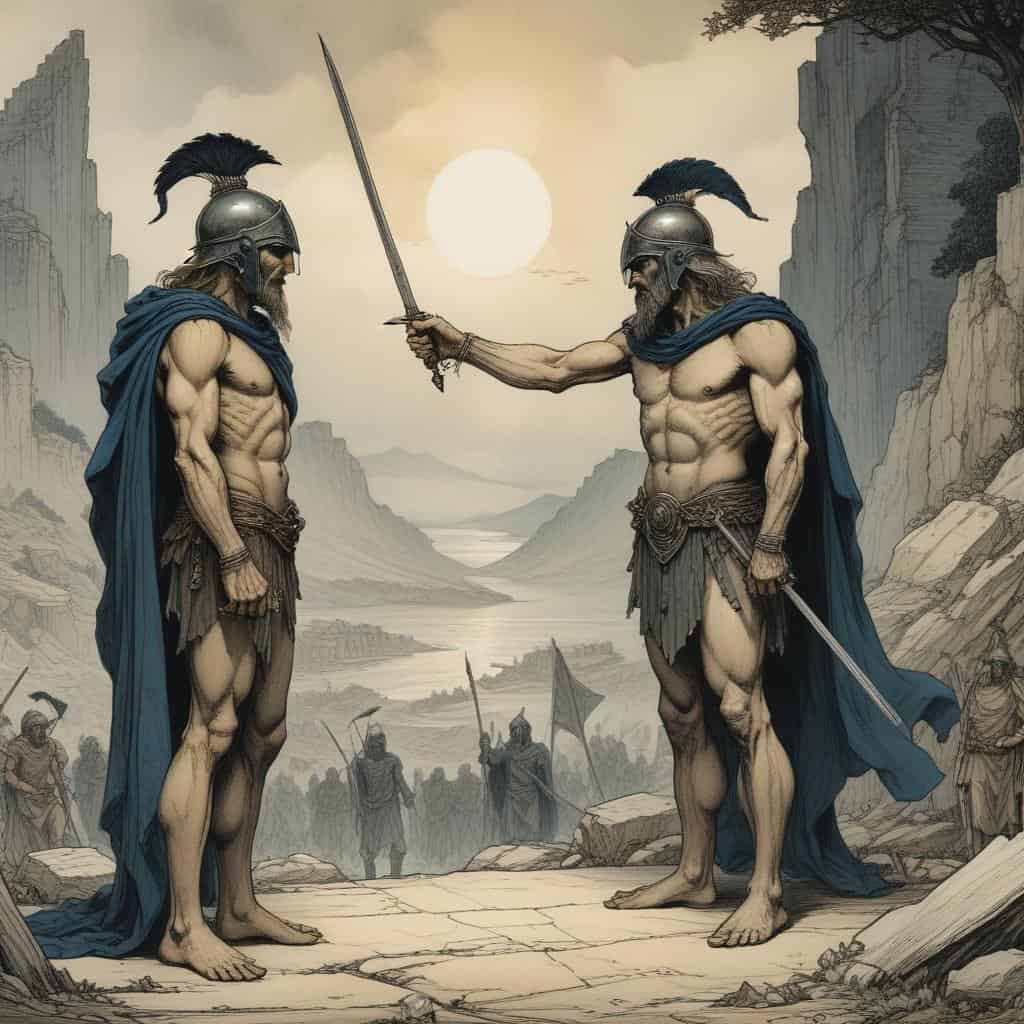
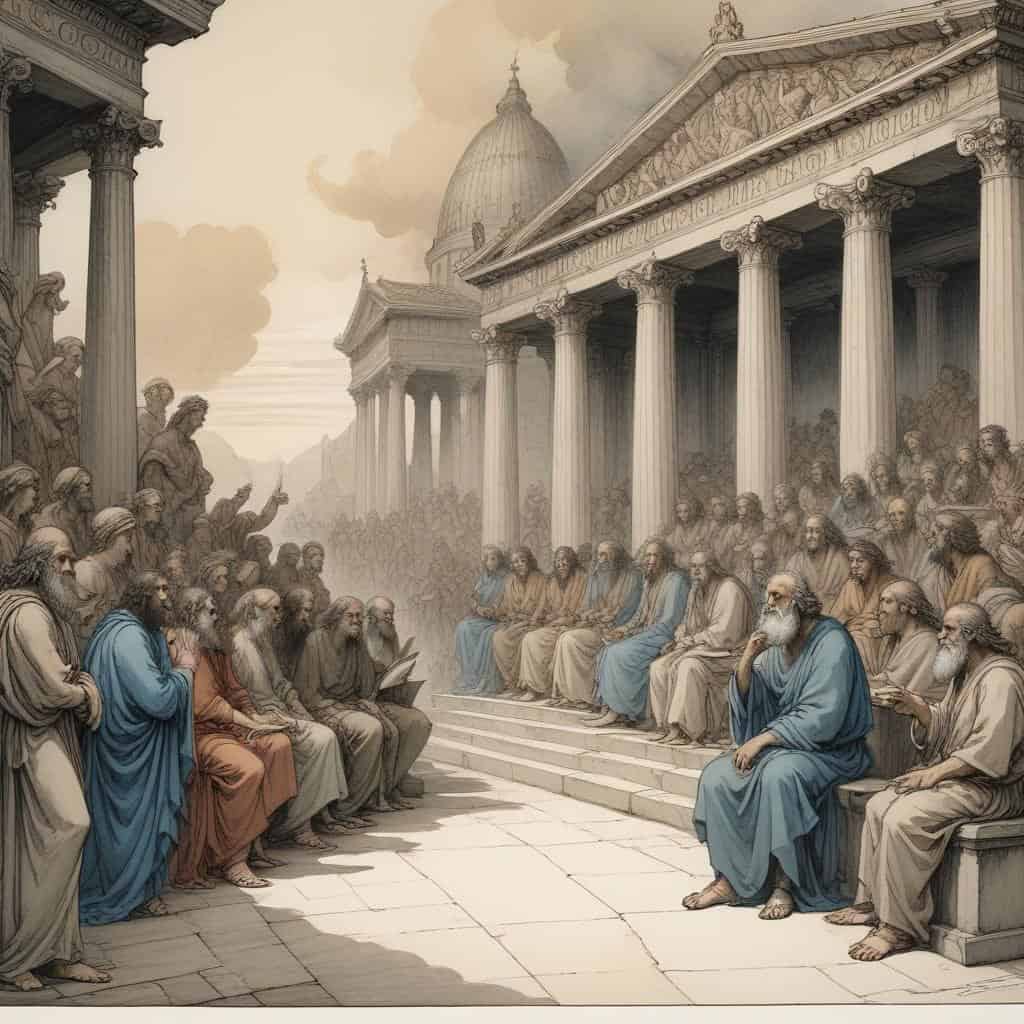

Socrates

The Athenian Stranger

Cleinias

Megillus

The Laws
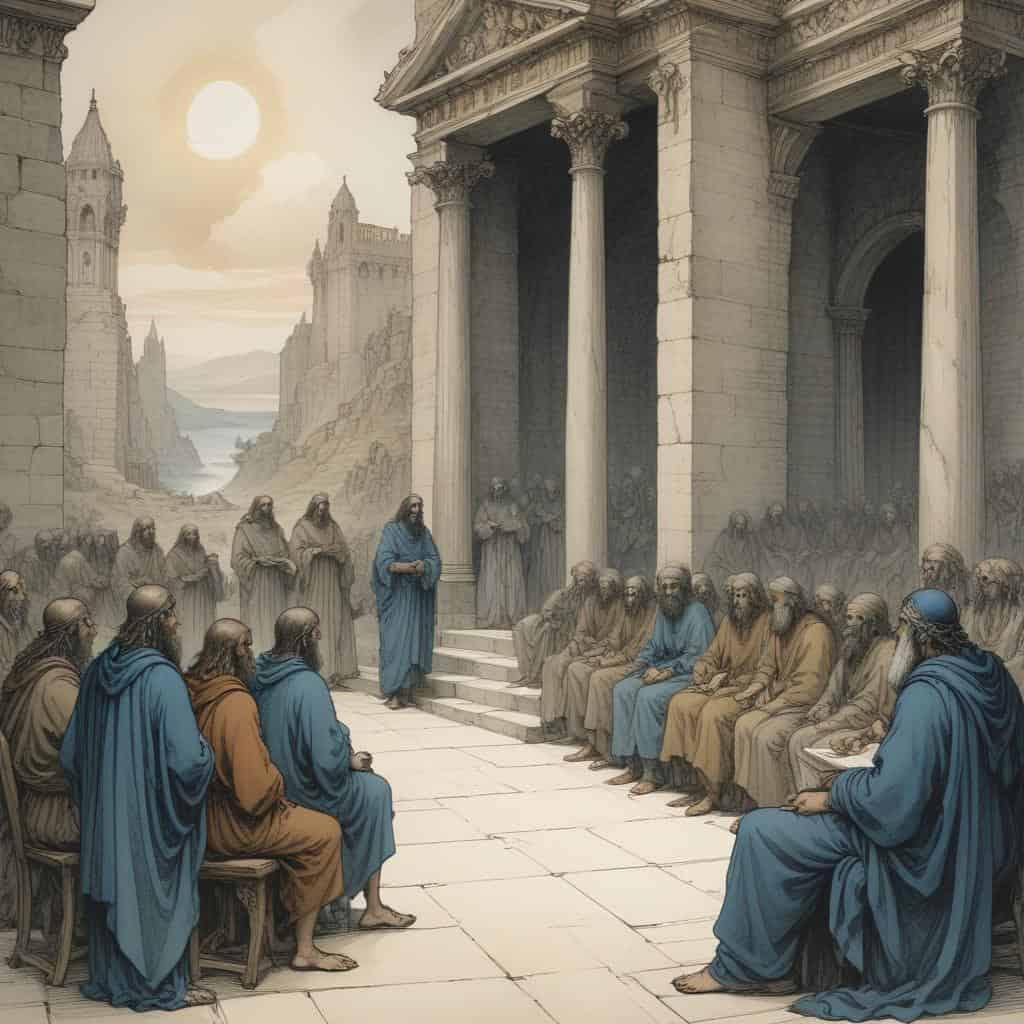
Introduction to Platos Laws

The Three Participants
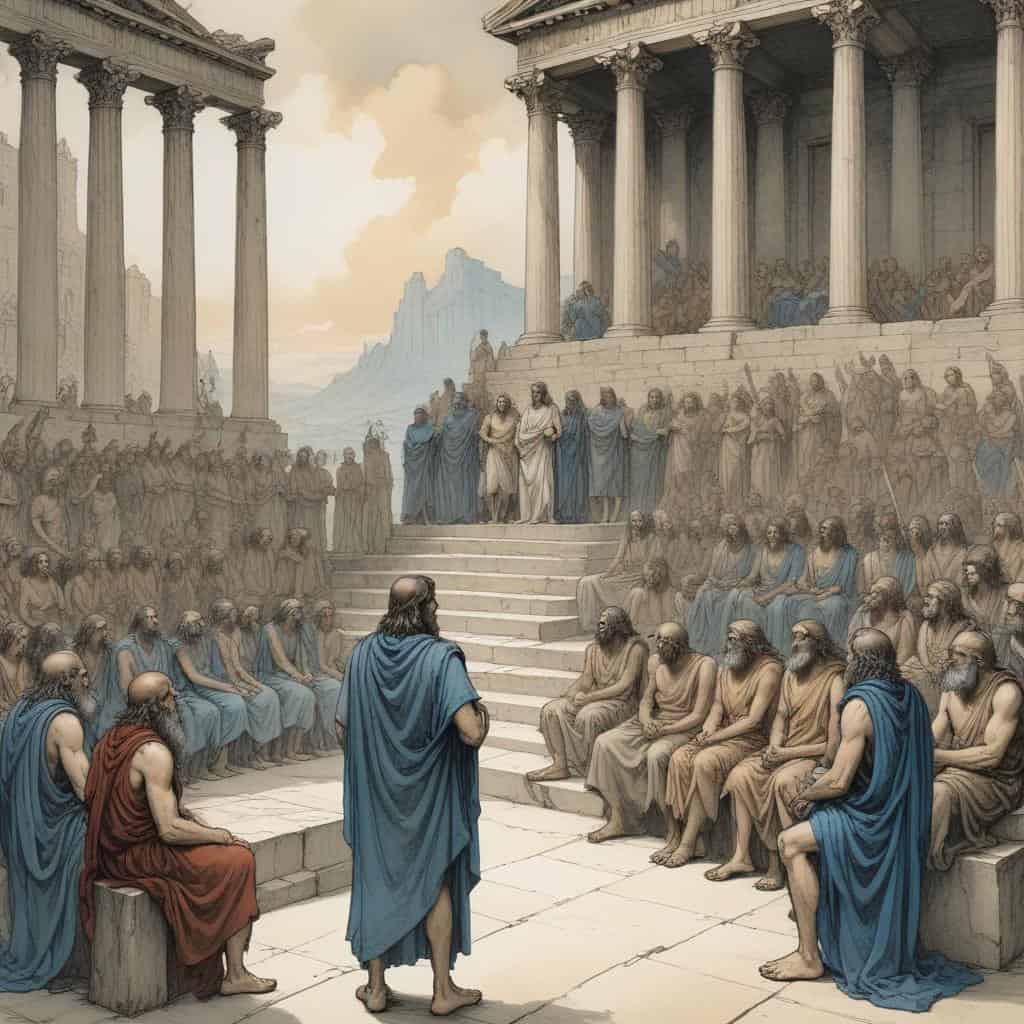
The Purpose of Laws

The Importance of Education
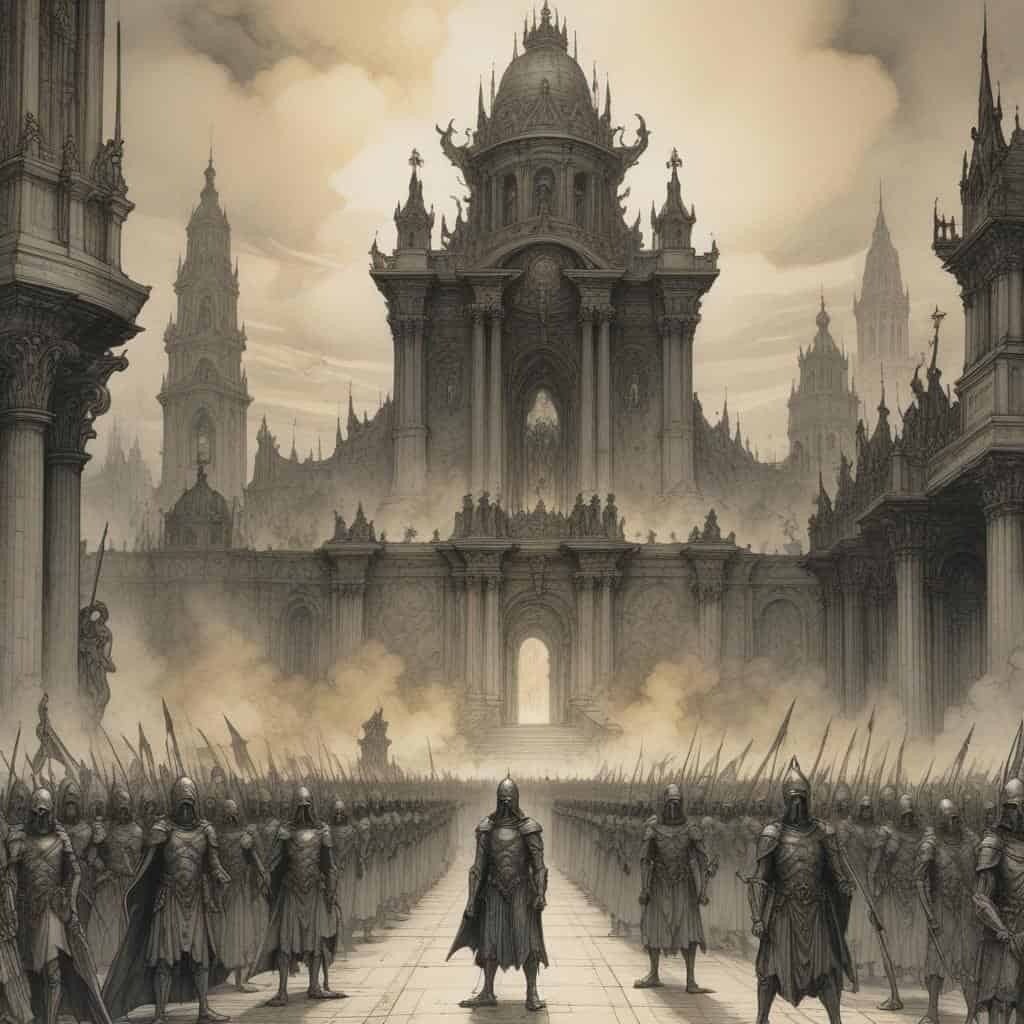
The Role of the Guardians

The Concept of Justice
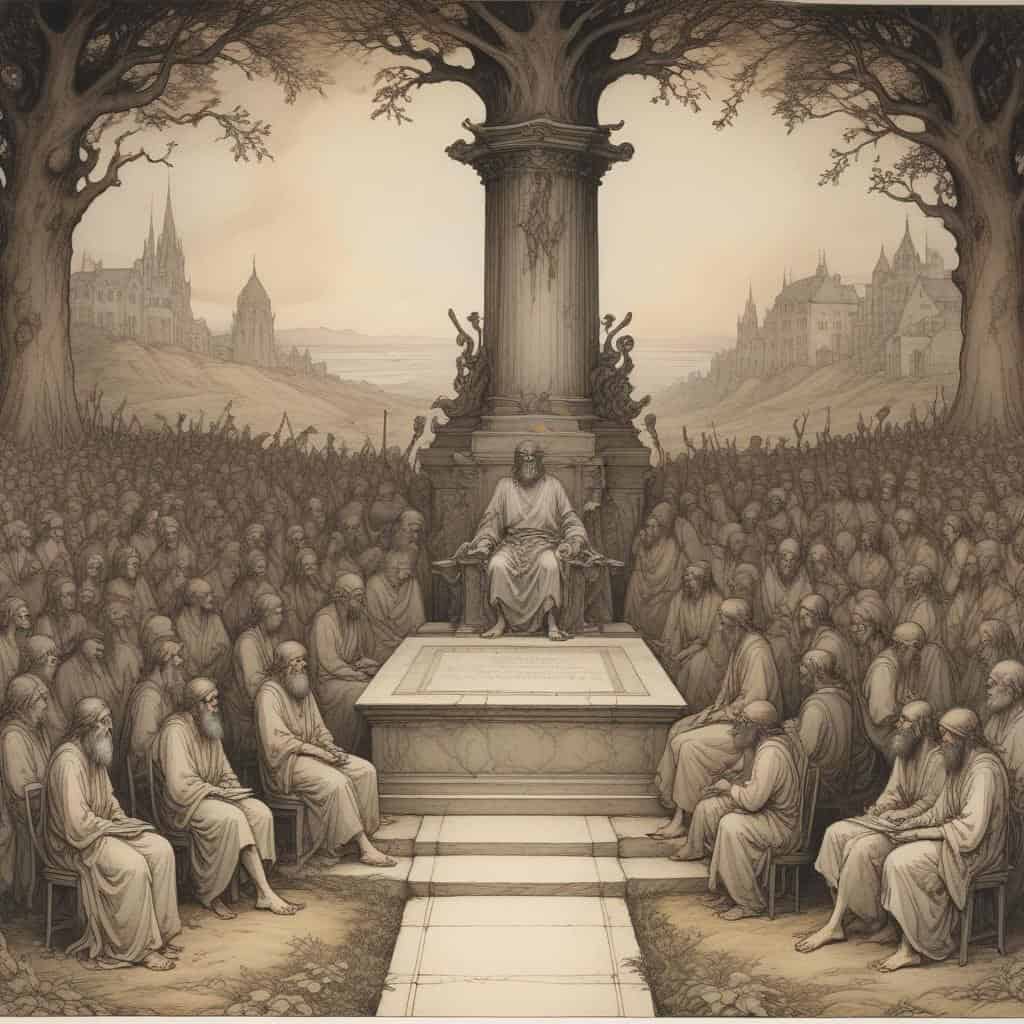
The Importance of Virtue

The Role of Religion

The Laws of Magnesia

Criticism and Legacy
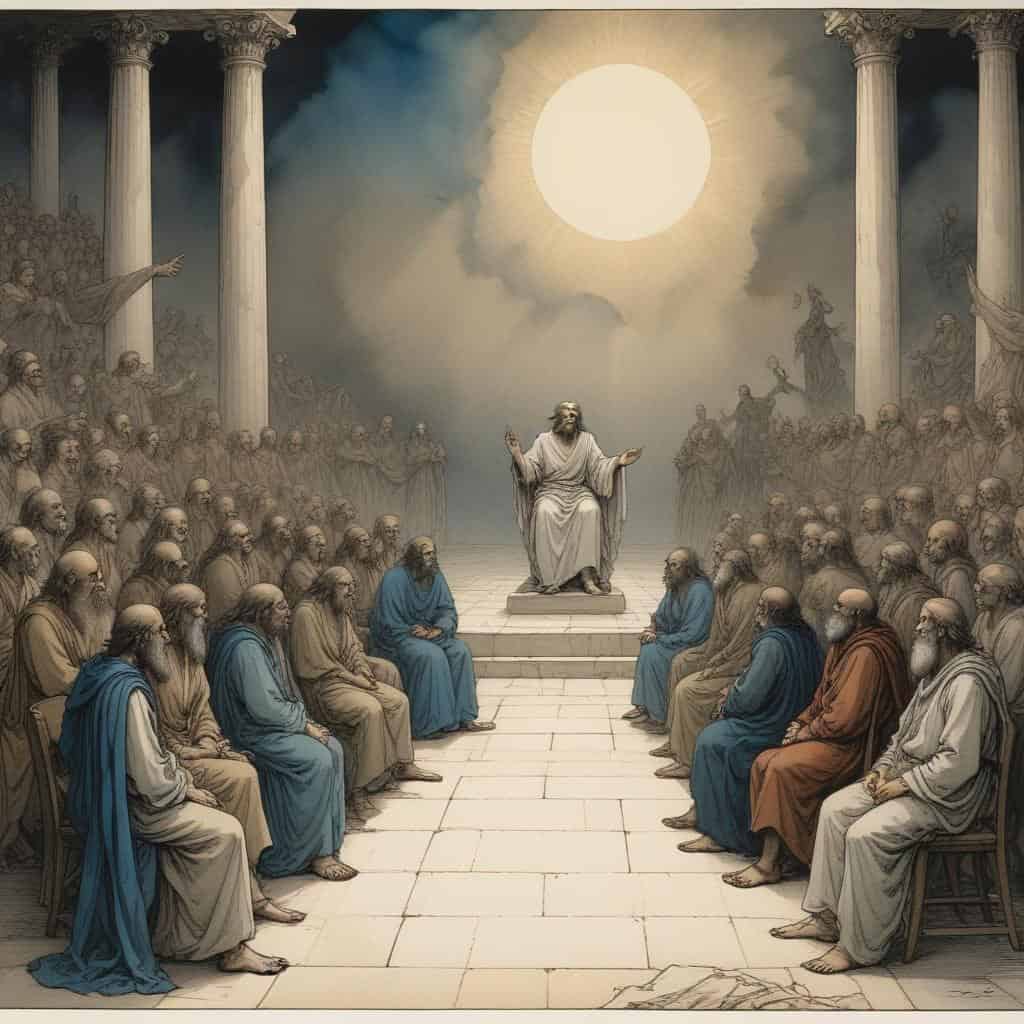
Lesson Details & Resources
In a Nutshell
- What: 'Laws' by Plato
- When: Written in ancient Greece
- Who: Main characters include Athenian Stranger
- Theme: The nature of law and justice
List of Characters in Laws
-
Socrates
Socrates is the main character and philosopher who engages in dialogues about justice and the ideal city.
-
Thrasymachus
Thrasymachus is a sophist who argues that justice is the advantage of the stronger.
-
Cephalus
Cephalus is an elderly man who begins the discussion on justice but then leaves the conversation.
-
Glaucon
Glaucon and Adeimantus are brothers who challenge Socrates to provide a more convincing argument for justice.
-
Adeimantus
Polemarchus is a friend of Socrates who also participates in the dialogue on justice.
-
Polemarchus
Gorgias is a famous sophist and orator mentioned in passing during the dialogue.
Timeline of Laws
Plato is born in Athens, Greece in 427 BC.
Plato becomes a student of Socrates and is deeply influenced by his teachings.
After the death of Socrates, Plato travels to Italy and Sicily to study with other philosophers.
Plato founds the Academy in Athens, which becomes one of the most influential philosophical schools in ancient Greece.
Plato writes 'Laws', a dialogue discussing the nature of justice, the ideal state, and the role of law in society.
In 'Laws', Plato argues that laws should be based on reason and serve the common good.
Plato's 'Laws' is considered one of his most important works and has a lasting impact on Western philosophy and political thought.
Plato dies in 347 BC, leaving behind a legacy of philosophical writings that continue to be studied and debated to this day.
Vocabulary List
- Justice
- Plato explores the concept of justice in his dialogue 'The Republic'.
- Virtue
- Plato argues that virtue is knowledge in 'Protagoras'.
- Sophistry
- Plato criticizes sophistry in his dialogues, such as 'Gorgias'.
- Philosopher king
- In 'The Republic', Plato discusses the idea of a philosopher king ruling society.
- Ideal state
- Plato describes his ideal state in 'The Republic'.
- Education
- Plato emphasizes the importance of education in shaping individuals and society in his works.
- Censorship
- Plato discusses the role of censorship in maintaining a just society in 'The Republic'.
- Forms
- Plato introduces the theory of Forms, or Ideas, in his dialogues, such as 'Phaedo'.
- Dialectic
- Plato uses dialectic as a method of philosophical inquiry in his dialogues.
- Tyranny
- Plato warns against the dangers of tyranny in his dialogues, such as 'The Republic'.
Key Facts
This is the information used in the fact matching game
- Plato believed that laws should be based on reason and justice rather than on the whims of rulers.
- Plato argued that laws should aim to promote the common good and the well-being of the citizens.
- Plato believed that laws should be just and fair, and should apply equally to all citizens.
- Plato thought that laws should be clear and easily understood by all citizens.
- Plato believed that laws should be enforced impartially and without favoritism.
- Plato argued that laws should be stable and not subject to frequent changes.
- Plato believed that laws should reflect the natural order and harmony of the universe.
- Plato thought that laws should be based on the principles of wisdom and virtue.
- Plato believed that laws should aim to cultivate the moral character of the citizens.
- Plato argued that laws should be designed to promote the stability and unity of the state.
- Plato believed that laws should aim to prevent injustice and promote social harmony.
- Plato thought that laws should be based on the principles of reason and logic rather than on tradition or custom.
- Plato believed that laws should be enacted by a wise and just legislative body.
- Plato argued that laws should be based on the principles of equality and fairness.
- Plato believed that laws should aim to promote the happiness and well-being of the citizens.
- Plato thought that laws should be designed to promote the virtues of courage, wisdom, and moderation.
- Plato believed that laws should be designed to promote the common good rather than the interests of any particular class or group.
- Plato argued that laws should be based on the principles of justice and fairness rather than on the interests of the powerful or wealthy.
- Plato believed that laws should aim to promote the intellectual and moral development of the citizens.
- Plato thought that laws should be based on the principles of harmony and balance rather than on conflict or discord.
Analysis & Significance
Impact on Literature
‘Laws’ is a groundbreaking work that revolutionized the way memory is portrayed in literature. Its innovative use of magical realism and intricate storytelling techniques set a new standard for exploring the complexities of memory and its impact on identity. This work has inspired countless authors to push the boundaries of storytelling and delve deeper into the intricate workings of the human mind.
Enduring Themes
The themes of memory, identity, and the blurred lines between reality and illusion in ‘Laws’ continue to resonate with modern audiences. The exploration of how memories shape our perceptions of the world and ourselves is a timeless topic that sparks reflection and introspection in readers of all generations. These enduring themes ensure that ‘Laws’ remains relevant and impactful in the literary world.
Cultural Significance Today
‘Laws’ has left a lasting legacy in literature and has been adapted into various forms of media, including stage productions and films. Its profound exploration of memory and identity has sparked critical discussions on the nature of reality and the impact of memory on our lives. The work’s influence can be seen in contemporary literature, art, and popular culture, solidifying its place as a cultural touchstone in today’s society.
Laws Games


Take Your Learning Offline
Want a convenient, print-ready study guide for this lesson? Become a Memory Wizards Pro member to unlock the downloadable " Memory Scrolls" for this topic and our entire library!
- ✓ Complete Vocabulary Lists
- ✓ Key Facts & Timelines
- ✓ Beautifully Formatted for Print & Mobile