
The Nature Of Mental States
Can we ever truly escape the web of our thoughts?
How Do You Learn Best?
Learn by Reading
Immerse yourself in the 10-minute visual lesson for a comprehensive understanding of the topic.
Learn by Reviewing
Jump directly to the key facts, timeline, and vocabulary lists to build a solid foundation of details.
Learn by Doing
Challenge yourself! Jump straight into the interactive games to learn by trial, error, and discovery.
The Nature Of Mental States in 10 Minutes
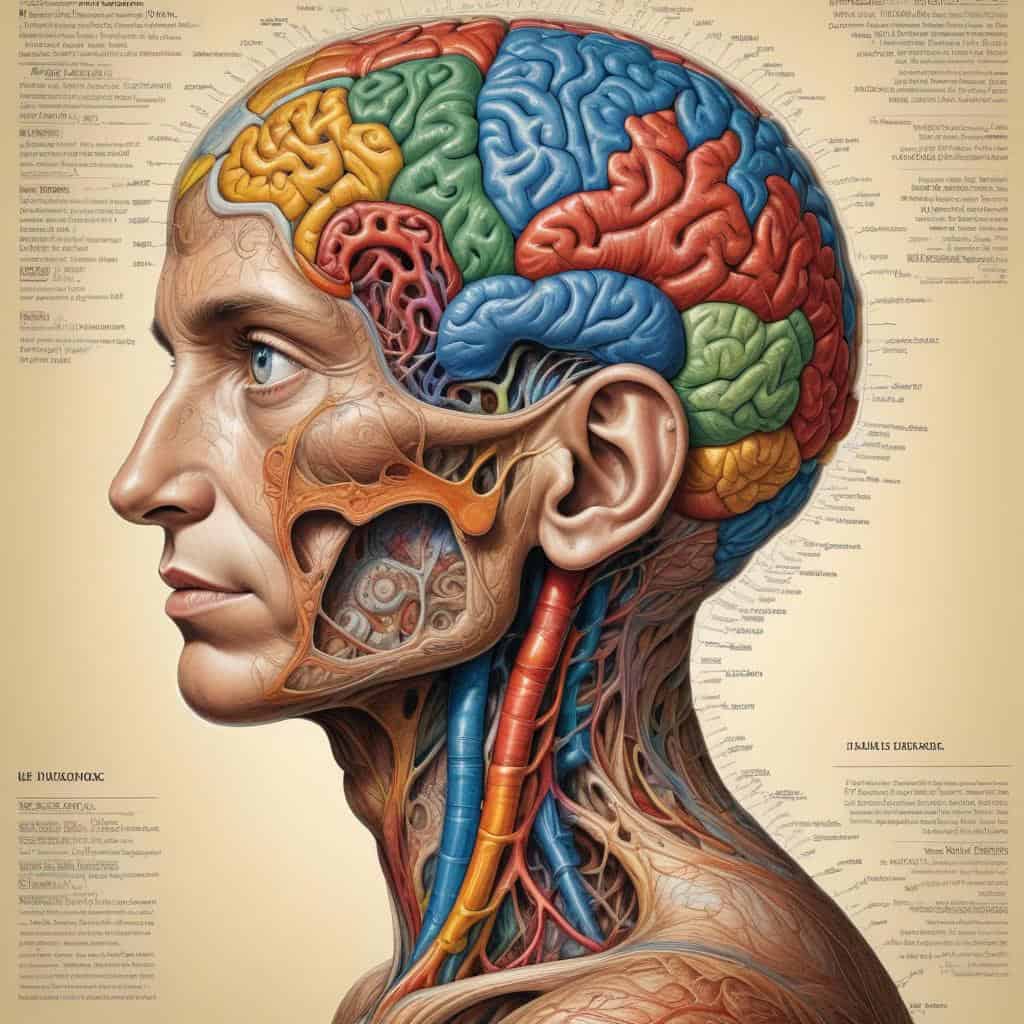
Introduction

1. John Locke

2. René Descartes
3. Gilbert Ryle
4. Daniel Dennett

5. Thomas Nagel
Defining Mental States
Dualism vs. Materialism
Functionalism and Behaviorism

Intentionality and Consciousness

Qualia and Mental Content
The Problem of Other Minds
Cognitive Science and Artificial Intelligence
Philosophical Implications
Continuing Debate


Lesson Details & Resources
In a Nutshell
- Concept: The Nature of Mental States is a philosophical concept that explores the nature and characteristics of mental states.
- Thinkers: Philosophers such as René Descartes, Gilbert Ryle, and David Chalmers have contributed to this concept over different time periods.
- Central Question: What is the relationship between the mind and the body, and how do mental states relate to physical states?
- Core Implication: The core implication of this concept is that mental states are not reducible to physical states, leading to debates about the nature of consciousness and the mind-body problem.
Timeline of The Nature Of Mental States
Plato introduces the concept of mental states in his dialogues, such as 'Phaedo' and 'The Republic'
Aristotle distinguishes between the rational and irrational aspects of the soul in his work 'De Anima'
Descartes proposes the mind-body dualism in 'Meditations on First Philosophy'
John Locke's 'An Essay Concerning Human Understanding' discusses the nature of mental states and the concept of tabula rasa
David Hume's 'Treatise of Human Nature' challenges traditional views on mental states and causality
Immanuel Kant's 'Critique of Pure Reason' introduces the concept of transcendental idealism and the limitations of human knowledge
Georg Wilhelm Friedrich Hegel's 'Phenomenology of Spirit' explores the development of self-consciousness and mental states
Sigmund Freud's psychoanalytic theory revolutionizes the understanding of unconscious mental states
Bertrand Russell's 'The Analysis of Mind' introduces behaviorism and logical positivism to the study of mental states
Gilbert Ryle's 'The Concept of Mind' critiques Cartesian dualism and introduces the concept of the 'ghost in the machine'
Donald Davidson's 'Mental Events' argues for the identity theory of mental states and physical processes
Daniel Dennett's 'Consciousness Explained' challenges traditional views on mental states and proposes a computational theory of mind
Patricia Churchland's 'Neurophilosophy' explores the relationship between brain states and mental states
John Searle's 'The Rediscovery of the Mind' criticizes reductionist approaches to mental states and argues for a biological naturalism
Thomas Metzinger's 'Being No One' discusses the nature of self-awareness and mental representation
David Chalmers' 'The Conscious Mind' introduces the hard problem of consciousness and the concept of dual-aspect monism
Andy Clark and David Chalmers' 'The Extended Mind' proposes the idea that mental states can extend beyond the brain and body
Jesse Prinz's 'The Conscious Brain' explores the neural basis of consciousness and mental states
Lisa Feldman Barrett's 'How Emotions Are Made' challenges traditional views on emotions and mental states
Philip Goff's 'Galileo's Error' argues for a panpsychist view of consciousness and mental states
Vocabulary List
- Intentionality
- In philosophy of mind, intentionality is often discussed in relation to how mental states represent objects or events in the world.
- Dualism
- Descartes is famous for his dualist view, which posits that the mind and body are separate entities.
- Materialism
- Materialists argue that mental states can be explained solely in terms of neurobiological processes.
- Functionalism
- Functionalists argue that mental states can be understood in terms of how they function within a larger cognitive system.
- Qualia
- Philosophers debate the nature of qualia and whether they can be fully understood through physical explanations.
Key Facts
Analysis & Significance
The Core Argument
The nature of mental states delves into the fundamental question of what it means to have thoughts, feelings, and consciousness. Philosophers explore whether mental states are purely physical phenomena or if there is a non-physical aspect to them, ultimately shaping our understanding of the mind-body relationship.
Criticisms and Counterarguments
Critics argue that reducing mental states to physical processes oversimplifies the complexity of human experience and consciousness. They raise concerns about the inability of physicalism to account for qualia, subjective experiences, and the unity of consciousness, challenging the idea that mental states can be fully explained by brain activity alone.
Modern Relevance
The debate on the nature of mental states has significant implications for contemporary discussions on artificial intelligence, mental health, and personal identity. Understanding the nature of mental states is crucial in addressing ethical dilemmas surrounding AI ethics, mental health treatments, and the rights of individuals with different mental capacities in our increasingly interconnected world.
The Nature Of Mental States Games


Take Your Learning Offline
Want a convenient, print-ready study guide for this lesson? Become a Memory Wizards Pro member to unlock the downloadable " Memory Scrolls" for this topic and our entire library!
- ✓ Complete Vocabulary Lists
- ✓ Key Facts & Timelines
- ✓ Beautifully Formatted for Print & Mobile