
The Hard Problem Of Consciousness
Can we truly understand the essence of our own consciousness?
How Do You Learn Best?
Learn by Reading
Immerse yourself in the 10-minute visual lesson for a comprehensive understanding of the topic.
Learn by Reviewing
Jump directly to the key facts, timeline, and vocabulary lists to build a solid foundation of details.
Learn by Doing
Challenge yourself! Jump straight into the interactive games to learn by trial, error, and discovery.
The Hard Problem Of Consciousness in 10 Minutes

Introduction



David Chalmers

Thomas Nagel
Christof Koch

Patricia Churchland

Defining the Hard Problem

The Mystery of Experience

Consciousness vs. Physical Processes
Theories of Consciousness

The Role of Qualia
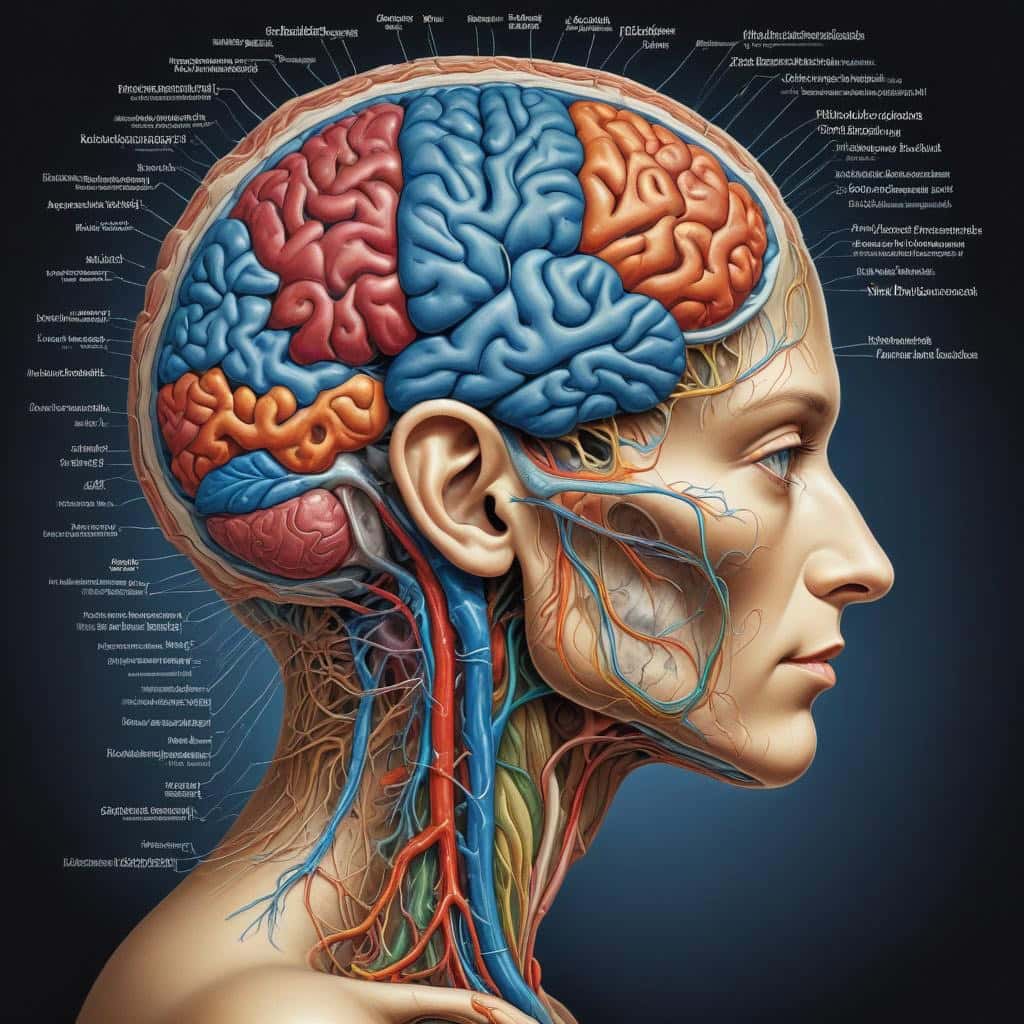
Neuroscience and Consciousness

The Evolutionary Perspective
The Limits of Science

Implications for Ethics and Morality

The Search for Answers


Lesson Details & Resources
In a Nutshell
- Concept: The Hard Problem of Consciousness is the philosophical question of why and how physical processes in the brain give rise to subjective experiences.
- Thinkers: David Chalmers, 20th-21st Century.
- Central Question: How can we explain the experience of consciousness in purely physical terms?
- Core Implication: The hard problem suggests that there may be aspects of consciousness that are fundamentally beyond scientific explanation.
Timeline of The Hard Problem Of Consciousness
Vocabulary List
- Consciousness
- The Hard Problem of Consciousness revolves around the question of how subjective experiences and personal awareness arise from physical processes in the brain.
- Qualia
- One of the key aspects of the Hard Problem of Consciousness is the challenge of explaining how physical processes in the brain give rise to qualia.
- Dualism
- Dualism is one of the proposed solutions to the Hard Problem of Consciousness, suggesting that consciousness is a separate, non-physical entity.
- Physicalism
- Physicalism is another proposed solution to the Hard Problem of Consciousness, arguing that consciousness is entirely reducible to physical processes in the brain.
- Emergentism
- Emergentism is a middle-ground position on the Hard Problem of Consciousness, suggesting that consciousness arises from the complexity of neural processes in the brain.
- Epiphenomenalism
- Epiphenomenalism is a challenging position in discussions of the Hard Problem of Consciousness, as it raises questions about the causal role of consciousness in the physical world.
Key Facts
This is the information used in the fact matching game
- The Hard Problem of Consciousness refers to the difficulty of understanding how physical processes in the brain give rise to subjective experiences.
- The Hard Problem was famously articulated by philosopher David Chalmers in 1995.
- It is distinct from the 'easy problems' of consciousness, which involve understanding cognitive functions like attention and memory.
- The Hard Problem raises questions about the nature of consciousness itself and why it feels like something to be conscious.
- Some philosophers argue that the Hard Problem is unsolvable within the current framework of science and philosophy.
- Others propose that a new theoretical framework may be necessary to fully understand consciousness.
- The Hard Problem has implications for our understanding of artificial intelligence and the possibility of creating conscious machines.
- It also raises ethical questions about the treatment of conscious beings, including animals and potentially AI.
- Some theories propose that consciousness emerges from complex interactions between different brain regions.
- Others suggest that consciousness is a fundamental aspect of the universe, akin to space and time.
- Philosopher Daniel Dennett has criticized the concept of the Hard Problem, arguing that it is based on a misunderstanding of how consciousness works.
- Some researchers believe that advances in neuroscience and technology may eventually shed light on the Hard Problem.
- The study of altered states of consciousness, such as meditation or psychedelic experiences, can provide insights into the nature of consciousness.
- The Hard Problem has implications for theories of personal identity and the nature of the self.
- Some philosophers argue that consciousness may be a fundamental property of the universe, rather than an emergent phenomenon.
- The Hard Problem highlights the limitations of reductionist approaches to understanding consciousness.
- It challenges traditional views of the mind-body relationship and the notion of physicalism.
- The Hard Problem has implications for debates about free will and determinism.
- Some philosophers argue that consciousness cannot be fully explained by scientific methods alone.
- The Hard Problem has sparked interdisciplinary research in fields such as neuroscience, psychology, and philosophy.
Analysis & Significance
The Core Argument
The Hard Problem of Consciousness, as famously articulated by philosopher David Chalmers, questions why and how physical processes in the brain give rise to subjective experiences. It challenges the traditional materialist view that consciousness can be fully explained by neural activity and raises doubts about the reducibility of consciousness to purely physical phenomena.
Criticisms and Counterarguments
Critics argue that the Hard Problem is based on a false assumption that subjective experiences are inherently different from physical processes. Some propose that consciousness may emerge from complex interactions of neural networks, while others question the validity of positing consciousness as a separate entity that needs explaining in the first place.
Modern Relevance
The Hard Problem of Consciousness has significant implications for modern debates on artificial intelligence, ethics, and personal identity. It challenges our understanding of what it means to be conscious, how we relate to others, and the ethical implications of creating conscious machines. In a world increasingly driven by technology, grappling with the Hard Problem is crucial for shaping the future of society and our relationships with advanced AI systems.
The Hard Problem Of Consciousness Games


Take Your Learning Offline
Want a convenient, print-ready study guide for this lesson? Become a Memory Wizards Pro member to unlock the downloadable " Memory Scrolls" for this topic and our entire library!
- ✓ Complete Vocabulary Lists
- ✓ Key Facts & Timelines
- ✓ Beautifully Formatted for Print & Mobile