
Mental Causation
What shapes our thoughts and reality?
How Do You Learn Best?
Learn by Reading
Immerse yourself in the 10-minute visual lesson for a comprehensive understanding of the topic.
Learn by Reviewing
Jump directly to the key facts, timeline, and vocabulary lists to build a solid foundation of details.
Learn by Doing
Challenge yourself! Jump straight into the interactive games to learn by trial, error, and discovery.
Mental Causation in 10 Minutes
Introduction

David Chalmers

Jaegwon Kim
Donald Davidson

Kimberly Brown

1. The Concept of Mental Causation
2. Dualism vs. Physicalism

3. The Problem of Causal Exclusion

4. Mental Causation and Free Will

5. The Role of Mental Properties

6. Emergentism and Mental Causation

7. Psychophysical Laws and Mental Causation
8. Mental Causation in Everyday Life
9. Challenges and Criticisms

10. The Future of Mental Causation
Lesson Details & Resources
In a Nutshell
- Concept: The philosophical concept that explores the relationship between mental states and physical events.
- Thinkers: Donald Davidson, late 20th Century.
- Central Question: How can mental states cause physical events in a world governed by physical laws?
- Core Implication: Mental causation poses a challenge to the idea of a purely physicalist worldview.
Timeline of Mental Causation
Descartes proposes the mind-body dualism theory, asserting that the mind and body are separate substances
David Hume introduces the concept of causation as constant conjunction
Immanuel Kant argues for the existence of mental causation in his Critique of Pure Reason
Wilhelm Wundt founds the first psychology laboratory in Leipzig, Germany
William James publishes his influential book 'The Principles of Psychology'
Sigmund Freud develops psychoanalytic theory, emphasizing the role of the unconscious mind in mental causation
Behaviorism becomes a dominant school of thought in psychology, focusing on observable behavior rather than mental processes
Gilbert Ryle criticizes Descartes' theory of mind-body dualism in his book 'The Concept of Mind'
Donald Davidson introduces the anomalous monism theory, arguing for the compatibility of mental causation and physical determinism
Jaegwon Kim proposes the causal exclusion argument, suggesting that mental causation is incompatible with physicalism
David Chalmers introduces the concept of the 'hard problem of consciousness', highlighting the challenge of explaining how mental states cause physical events
Kim argues for the overdetermination problem in mental causation, suggesting that mental and physical events can both cause the same outcome
Hedda Hassel Mørch proposes a non-reductive account of mental causation, emphasizing the causal powers of mental properties
Daniel Dennett criticizes the concept of mental causation, arguing for a physicalist approach to explaining consciousness
Philosophers continue to debate the nature and implications of mental causation in contemporary discussions on the mind-body problem
Vocabulary List
- Mental Causation
- In the philosophy of mind, the issue of mental causation explores how thoughts, desires, and intentions can lead to physical actions and changes in the world.
- Dualism
- Dualism is often invoked in discussions of mental causation to explain how mental states can have a causal impact on physical events without being reducible to physical processes.
- Physicalism
- Physicalism poses a challenge to theories of mental causation that rely on the distinctiveness of mental states, as it suggests that mental events are ultimately reducible to physical events.
- Epiphenomenalism
- Epiphenomenalism is a controversial position in the debate over mental causation, as it denies the existence of any causal relationship between mental and physical states.
- Supervenience
- Supervenience is often invoked in discussions of mental causation to explain how mental states can be dependent on physical states while still exerting causal influence over physical events.
Key Facts
Analysis & Significance
The Core Argument
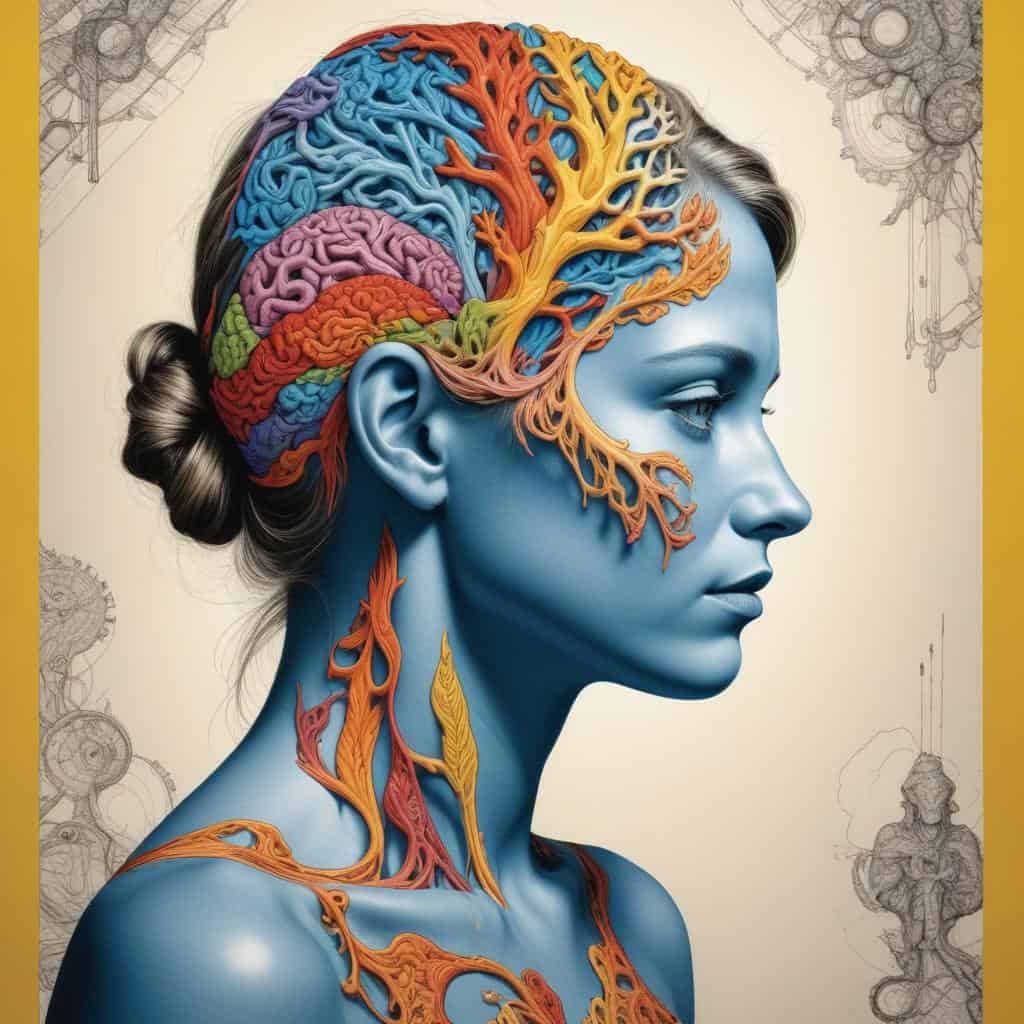
Mental causation is the philosophical concept that addresses the relationship between our mental states and physical events. It grapples with the question of whether our thoughts and intentions have the power to cause physical actions in the world, or if they are merely byproducts of brain processes.
Criticisms and Counterarguments
Critics of mental causation argue that if mental states have causal power, it would imply a violation of the laws of physics, particularly the principle of conservation of energy. Some philosophers contend that mental causation is an illusion and that our actions are solely determined by physical processes in the brain.
Modern Relevance
The concept of mental causation is relevant in contemporary debates about free will and moral responsibility. It informs discussions on whether individuals can be held accountable for their actions if their mental states are predetermined by physical causes. Understanding mental causation also sheds light on the complexities of consciousness and the mind-body problem in the age of artificial intelligence and neuroscientific advancements.
Mental Causation Games


Take Your Learning Offline
Want a convenient, print-ready study guide for this lesson? Become a Memory Wizards Pro member to unlock the downloadable " Memory Scrolls" for this topic and our entire library!
- ✓ Complete Vocabulary Lists
- ✓ Key Facts & Timelines
- ✓ Beautifully Formatted for Print & Mobile